Best final albums from bands and artists who are no longer with us, broke up, or haven’t released anything for a decade.
At first I thought I was going to sit this one out, because I didn’t think I could find thirty great albums that were final albums, given how many janky post-reunion albums are routinely released. However a more focused deep dive revealed albums that are definitely worth talking about.
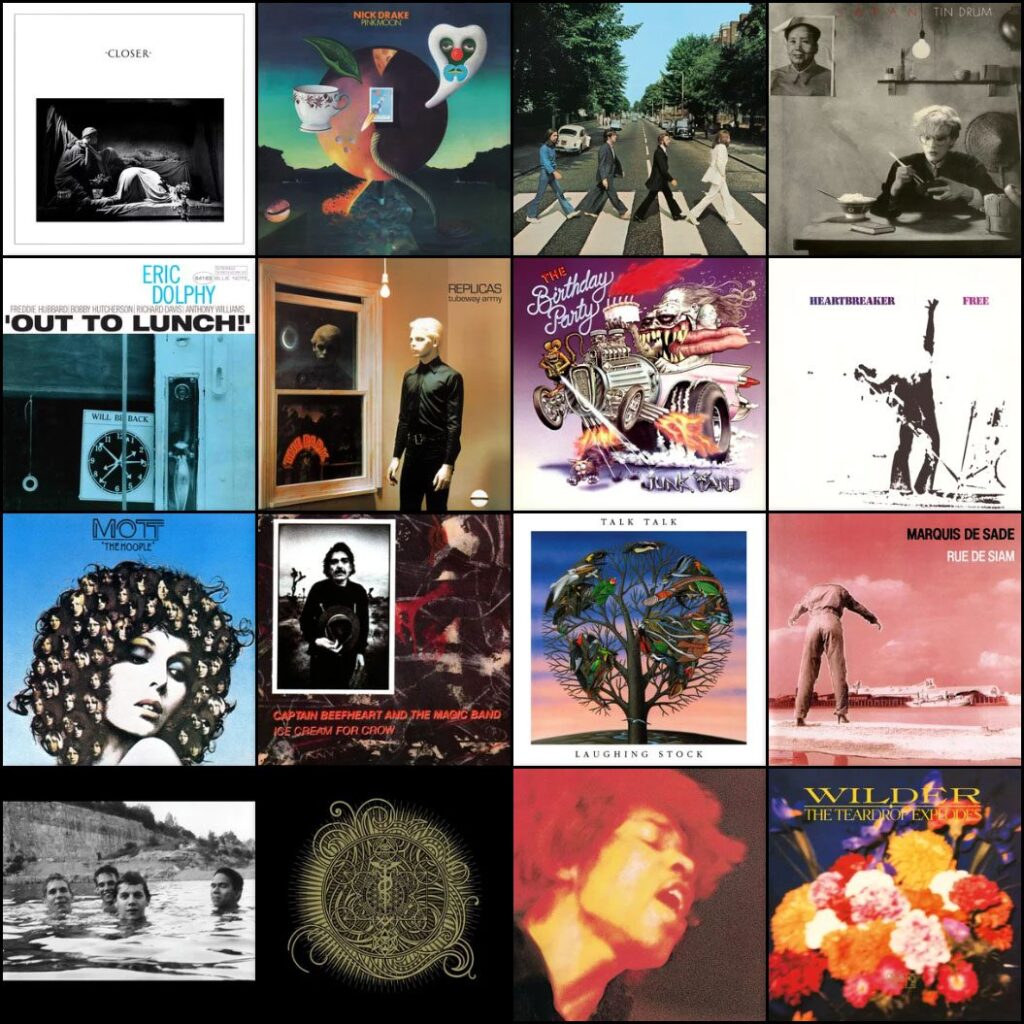
1. Joy Division – Closer (1980)
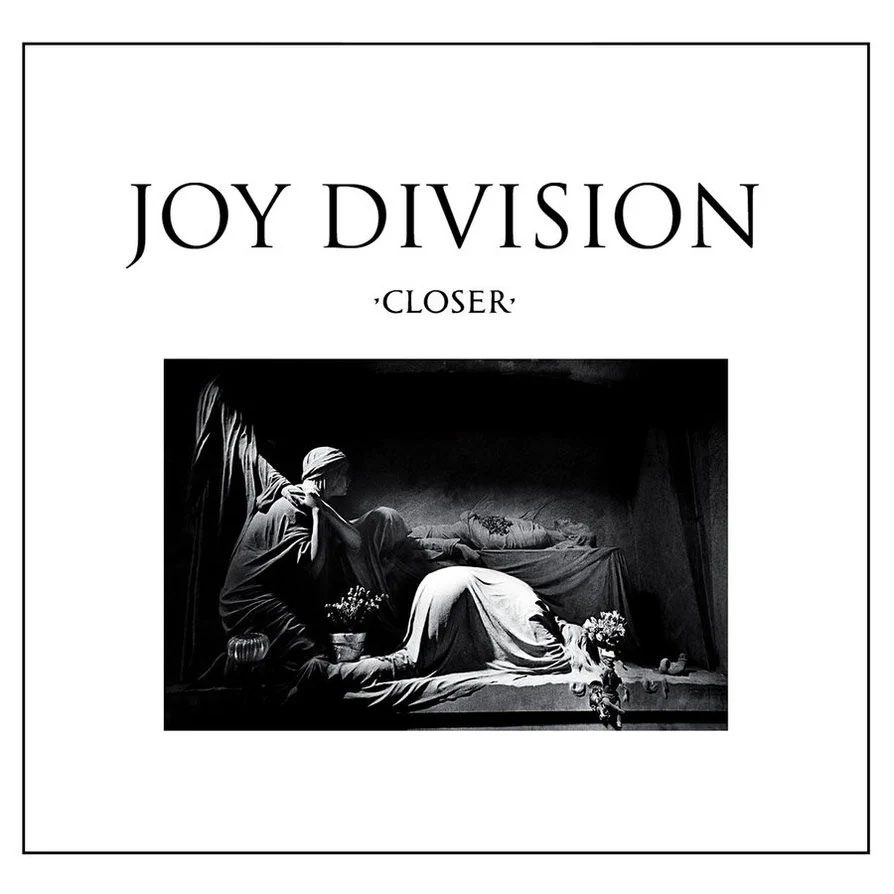
This album looms over us like a dark obelisk, sucking in light and leaving the bands in its wake appearing more faded and puny than before the arrival of Joy Division. It isn’t that the band were superior in every way, but they introduced a psychic heaviness that shook the post-punk world, its reverberations eventually reaching far and wide to genres as seemingly remote as country music. Many artists have attempted to match this intensity, and for the most part, from the baddest of industrial to the fiercest of death metal bands, they come off as children play-acting in comparison. While the title is generally pronounced as the adjective of getting nearer in distance or time, it could also be the noun, the album as a concluding event. Did Ian Curtis think the album was getting closer to his artistic vision, or did he plan it to be his epitaph? It’s the ambiguity and imbues it with mystery.
What’s not in doubt is that the band, with producer Martin Hannett refined their sound into something colder and more spacious, cavernous, controlled and spectral. Beautiful, unsettling and devastating.
Post-Punk | Goth | Coldwave | RYM #91
2. Nick Drake – Pink Moon (1972)
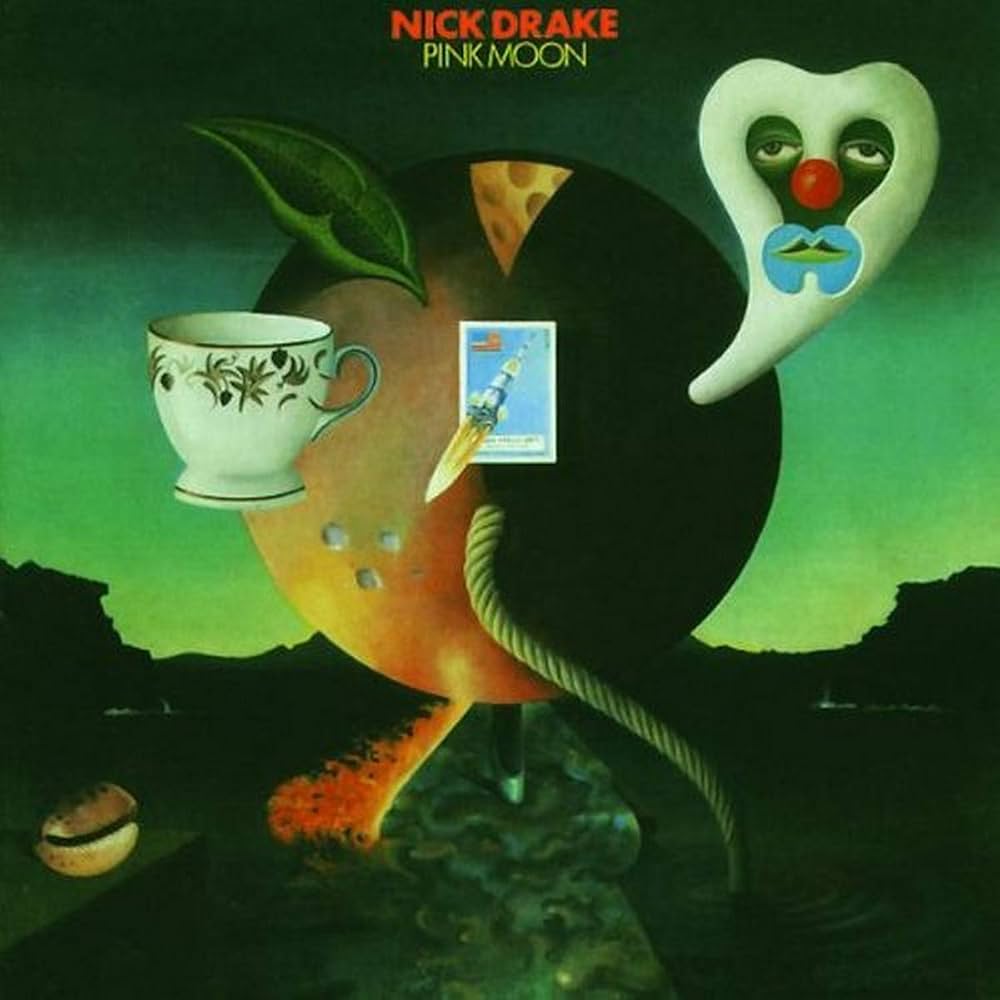
I recently read Joe Boyd’s White Bicycles: Making Music in the 1960s, and he had a pretty close relationship with Drake, as close as one can be with a depressive introvert. While Boyd was most proud of his baroque production work on Bryter Layter (1971), Drake’s least acclaimed of his three albums, Drake finally got his way in recording a very stripped down album without all the fancy arrangements, and it suited the hypnotic zen nature of his songs perfectly. Island and Chris Blackwell tried to get him to tour to support his music, but he had a breakdown, and was sent to Spain to recuperate. He was never to overcome his depression, but just after Spain, he and producer John Wood snaked into Sound Techniques like thieves in the night and urgently recorded this album in just two nights. Just Nick’s voice, his guitar, and just one piano track on the title tune.
He wanted the album to “stand naked” and indeed it stood, or rather towered over any other singer-songwriter folk album of the era. A complete self portrait, it’s affect on audiences defies analysis. Unfortunately it took a while to catch on, and Drake was deeply affected by the world’s indifference to the album and left it a couple years later. It also took years for critics to realize these songs are more than just studies in depression — the lyrical arc mirrors William Blake’s Songs of Innocence and Dylan Thomas’ Fern Hill. The aesthetic goal wasn’t minimalism, but rather removing every barrier between Drake’s close-mic’d vocals/guitar and the listener. My own experience, from when I first heard it 40 years ago until now, is to freeze up in enthrallment to the raw vulnerability, brutal honesty and enigmatic wisdom. One of the most haunting, intimate albums ever.
Folk | Singer-Songwriter | Folk Baroque | RYM #37
3. The Beatles – Abbey Road (1969)
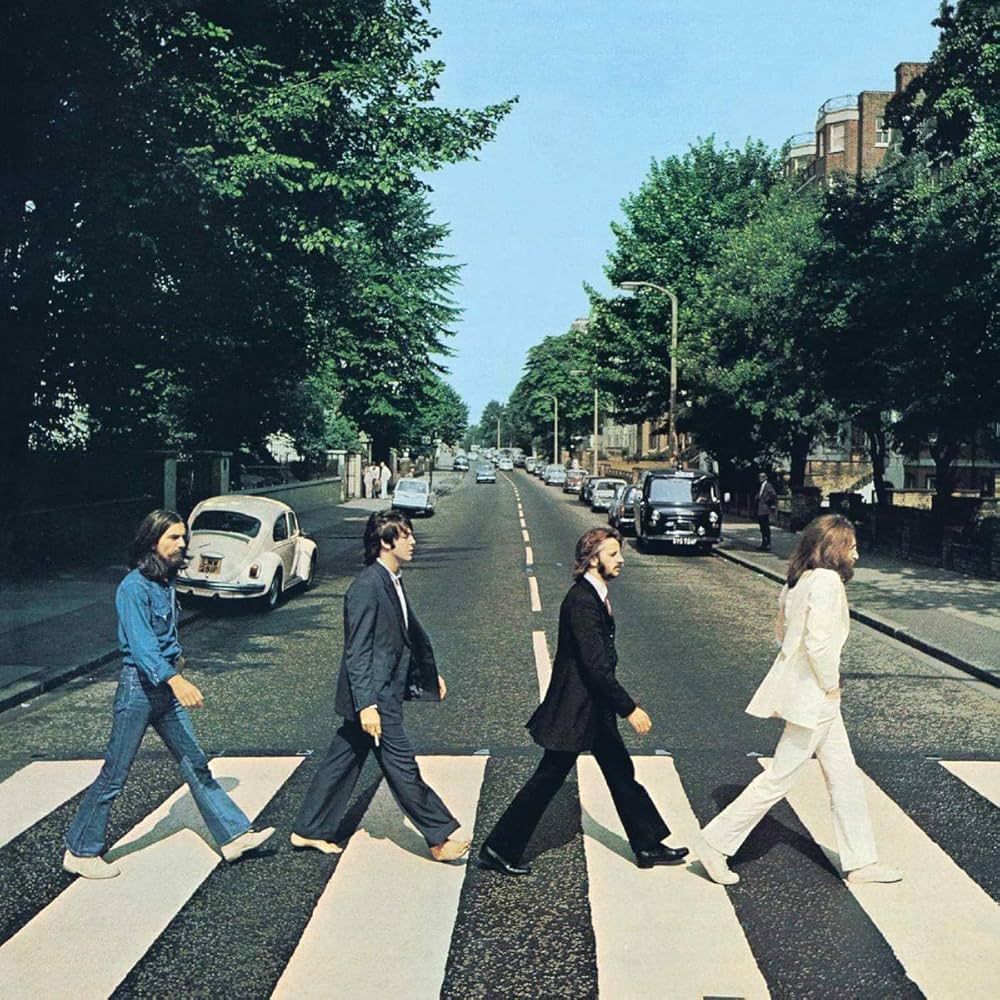
This is up for some debate, as while this contains their final recording sessions, Let It Be, which has been thoroughly documented, showing the band falling apart, took place earlier, with the slightly shambolic results patched together by Phil Spector, but released in 1970. Whatever, Abbey Road is the proper finale, and has the band back at peak powers one last time. “GOOOOLDEN slumbers fill yer EYESSS. SMIIIILES awake you when you RIISE…”
Pop Rock | Psychedelic Pop | Prog Pop | Blue Rock | Art Pop | RYM #11
4. Japan – Tin Drum (1981)
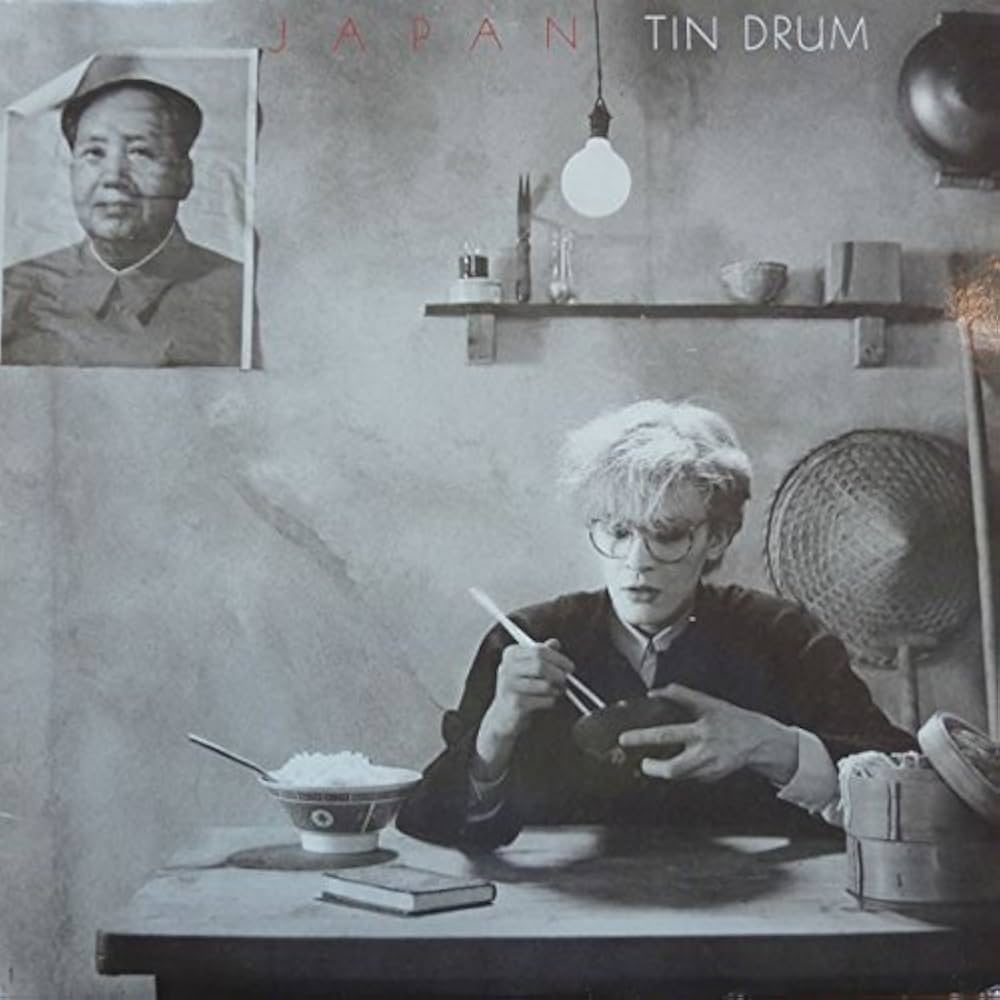
Starting out as a kind of raucous glam band with some early dance-punk and funk elements, Japan took some huge steps in progression by the end of their five album run that anticipated the artistic growth of the likes of Talk Talk and Radiohead. Their final album is a masterpiece of spare, taut, Eastern-inflected art pop that sounds like nothing else at the time. They took Chinese and Japanese ceremonial polyrhythms and glazed them with icy electronics, anchored by Mick Karn’s distinctly fretless bass. David Sylvian put forth his most confident vocals which would be his signature going forward with his solo work, a mannered baritone croon, exemplified on their hit single “Ghosts,” one of the most original sounding tracks to top the charts in an era chock full of original sounds. A groundbreaking work of intercultural art pop that sounds sculpted.
Art Pop | New Wave | Sophisti-Pop | Prog Pop | Synth Funk | Global | Chinese Folk
5. Eric Dolphy – Out To Lunch! (1964)
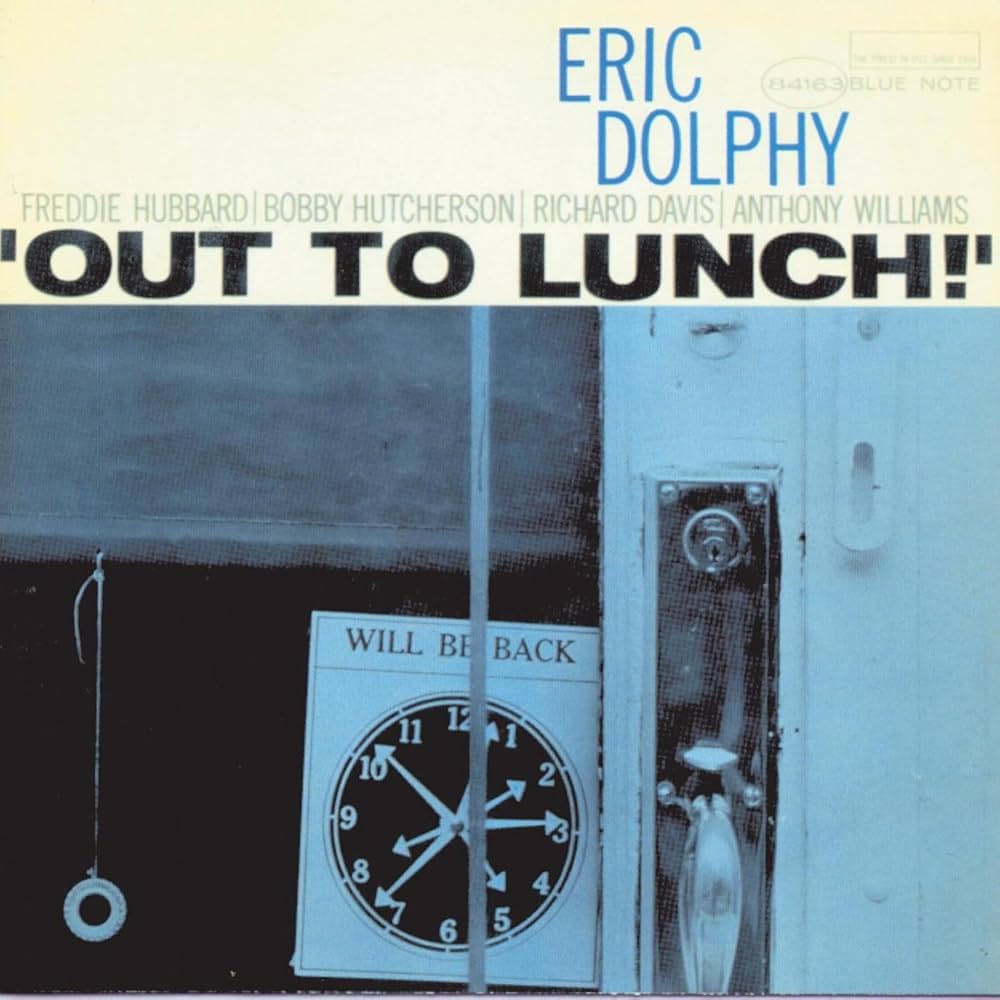
Eric Dolphy played with many of the biggest names in jazz in the early 60s, from Charles Mingus and John Coltrane to Ornette Coleman, and one of my personal favorite’s Oliver Nelsons’s The Blues and the Abstract Truth. While he had a series of important albums under his own name, including Outward Bound, Out There (1960) and Far Cry (1962), his final album (and only Blue Note release) before his tragically untimely death two months later was his masterpiece — an avant-garde classic. A high point of ’60s experimental jazz, or the New Thing, it consisted of a dream team Telepathic Quintet including Freddie Hubbard, Bobby Hutcherson, Richard Davis and an 18 year-old Tony Williams on drums. It pulsed with menace and humor, angular lines and classical structure. One of the all-time great jazz albums.
Avant-Jazz | Post-Bop | Free Jazz | RYM #3
6. Tubeway Army – Replicas (1979)
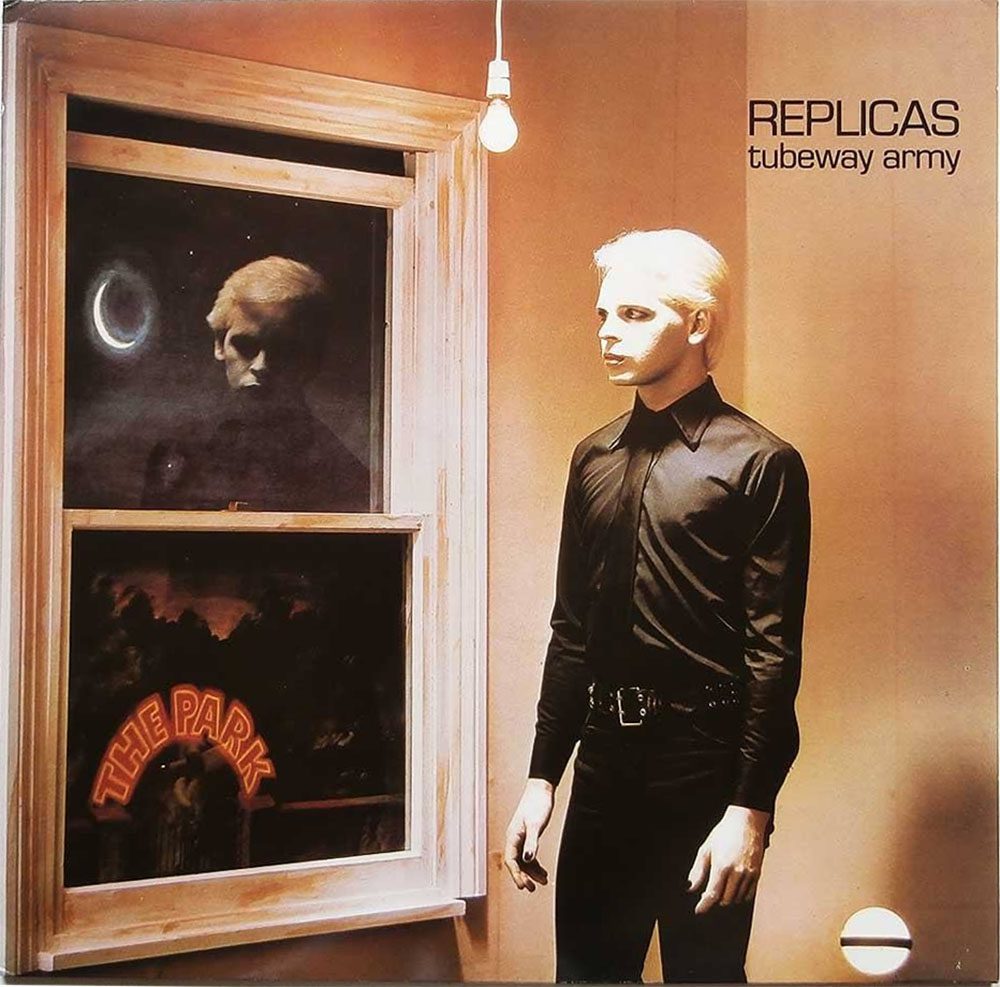
Along with Japan and Ultravox, Tubeway Army were the bridge between glam, Bowie and post-punk/synthpop. Gary Numan just stumbled upon a Mini-Moog synth in the studio and started noodling with it, using it more extensively on their second and last album, but the beginning of Numan’s “machine” trilogy which would extend to his groundbreaking solo albums. Numan took an unfinished attempt at a dystopian SF novel heavily influenced by Philip K. Dick and turned it into this concept album involving android Machmen and the shadowy Grey Men pulling the strings. Urban decay, isolation, detachment, mechanization, this could have been the soundtrack to Blade Runner (1982). Massively influential, not just decades later, but immediately, thanks to the #1 UK single “Are Friends’ Electric?” The bleak, cinematic account of android violence in “Down in the Park” and the chugging “Me! I Disconnect From You” and the title track ensure this album sounds fresh decades later.
Synthpop | New Wave | Post-Punk | Glam
7. The Birthday Party – Junkyard (1982)

Melbourne’s original cowboy junkies nail their third consecutive winner while on the verge of collapse.
When the somewhat mannered Melbourne post-punk band The Boys Next Door transformed into the bleak, slaveringly unhinged unit as heard on their second album, they decided it merited a name change to The Birthday Party. Their brutal shift in sound might have seemed unprecedented at the time, but they at least had a couple things in common with The Fall. Both were inspired by Captain Beefheart, Pere Ubu and deconstructed rockabilly, and both were hugely misanthropic, bad-mouthing all other bands in the London scene, where the band had relocated to, except for maybe The Pop Group. The Fall’s misanthropy was based partly in intellectual snobbery, whereas the Birthday Party magnified their hatred into something visceral, degenerate and greasy. It sounds repulsive but it’s kind of sexy in a gross way, inspiring cartoon hearts and skulls in the eyes of boys and girls throughout the world. linked by a love of proto-goth (Bauhaus), apocalyptic dirges (P.i.L., Killing Joke), free jazz and no wave (DNA, The Contortions) and trashy pop culture and horror (The Cramps, Misfits). The Birthday Party might have aimed to be feared and hated, but even in their smack-addled haze, they were quite fun.
Vocalist/shrieker Nick Cave’s pretensions were starting to rear their hydra heads in his lyrics, including perversions of Flanner O’Connor’s Southern Gothic character studies, and the dark romanticism of Rimbaud and Baudelaire. But here he still sounded genuinely dangerous and unpredictable, with one of the most original vocal performances since Iggy Pop on Fun House (1970). And unlike most no-wave, or the early industrial scene, there was a twisted sensuality that added a welcome dimension, thanks partially to Cave’s girlfriend Anita Lane, who co-wrote “Dead Joe,” possibly inspired by J.G. Ballard’s novel Crash, and “Kiss Me Black,” with Cave hoarsely slurring come-ons in your ear, stinking of bourbon and absinthe. The single “Release the Bats” flirted with goth cliches via “sex vampires,” but they get a pass as they did it first. Those tracks, along with “Big-Jesus-Trash-Can” (evoking the whacky, classic Ed Roth cover art) got repeated rotations on the Fester’s Bucket O’ Nasties post-punk radio show, never failing to give a jolt of depraved energy, but also somehow fit snugly in next to the dark atmospherics of Pere Ubu, Beefheart and P.i.L.
The band were on the verge of collapse, as the chaos began to devour them from the inside out. They’d abandoned London by this time for West Berlin. Bassist Tracy Pew (the one with the cowboy hat, porn ‘stache, undulating in leather pants) was in jail for part of the recording, and drummer Phill Calvert was fired. Both Cave and guitarist Rowland S. Howard had serious heroin habits. Nevertheless, they kept it together enough to load the album with more great songs like the 6+ minute dirge “She’s Hit,” and “The Dim Locator,” where Howard’s guitar is the equivalent of a dozen tarantulas crawling over your face. The lurching “Several Sins” is their version of sea shanty, and the murderous “6” Gold Blade” (written by multi-instrumentalist secret weapon Mick Harvey) is still chilling.
Much was made of their influence on goth music. I suppose. But to my ears, the two most important successors were fellow Aussies Scientists, who underwent a similar feral transformation right when Junkyard was released, and over in Austin, Texas, Scratch Acid, and later The Jesus Lizard. Before the following EPs The Bad Seed and Mutiny! were released, the band had broken up. It’s just as well, as gorgeous as some of the noir balladry is, the literary direction Cave took with The Bad Seeds wouldn’t have suited such an unpredictable, untamable band. I was tempted to include The Bad Seed/Mutiny! (1983), which was always a single CD album to me and bridged Cave’s progression in The Bad Seeds, but I stuck with the rules.
Post-Punk | Noise | Punk Blues | Garage Punk | Deathrock
8. Free – Heartbreaker (1973)
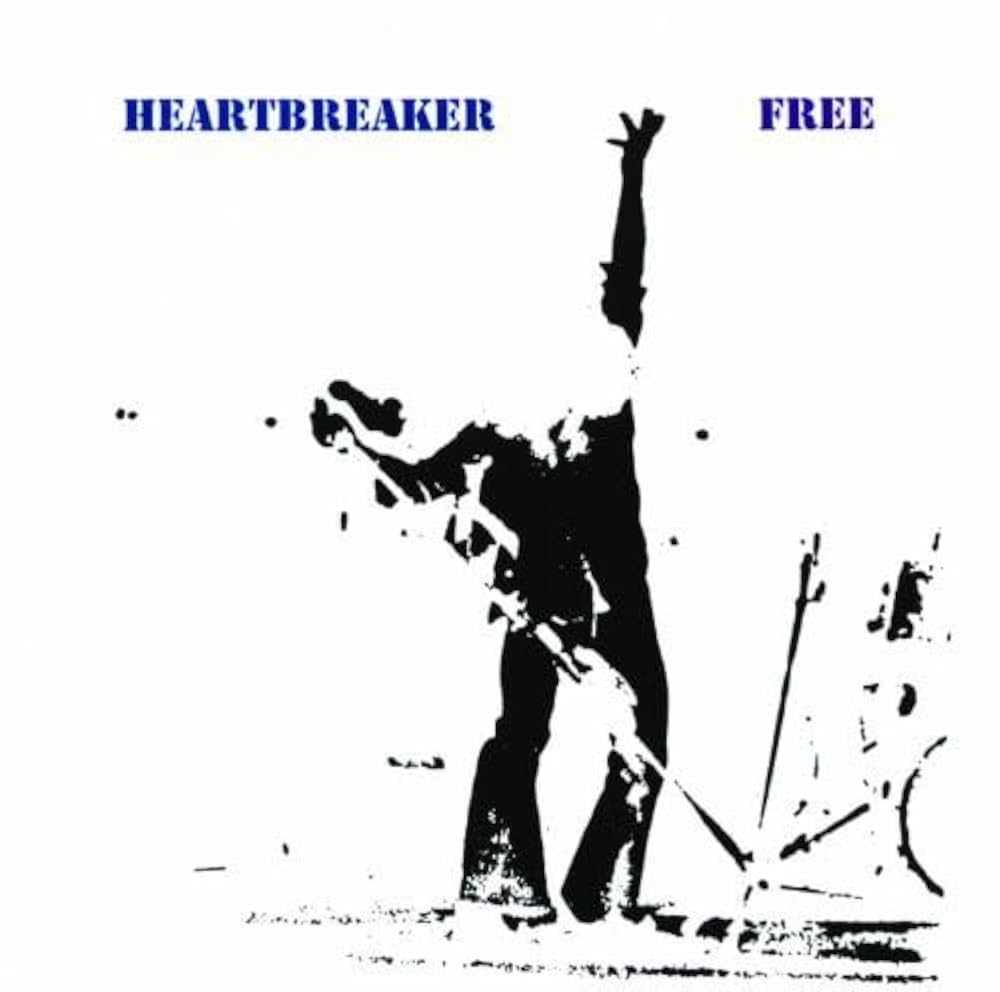
The band of bands, Free were admired by musicians as wide ranging as Lynyrd Skynyrd and Gang of Four. Their stripped down simplicity and avoidance of show-offy jams led some to underestimate their masterful musicianship, but not their acolytes. Paul Kossoff’s substance problem started becoming an issue by Highway (1970), leading to a brief breakup. Like Lynyrd Skynyrd and Thin Lizzy, their last album was a bit of a resurgence, reigniting the passion found in their earlier work. “Wishing Well,” the title track, not a dud in the bunch, making it strong competition for Fire and Water (1970) as their best 70s album. But really, one of the most perfect six album runs along with Sabbath and Zep.
Blues Rock | Hard Rock
9. Mott The Hoople – The Hoople (1974)
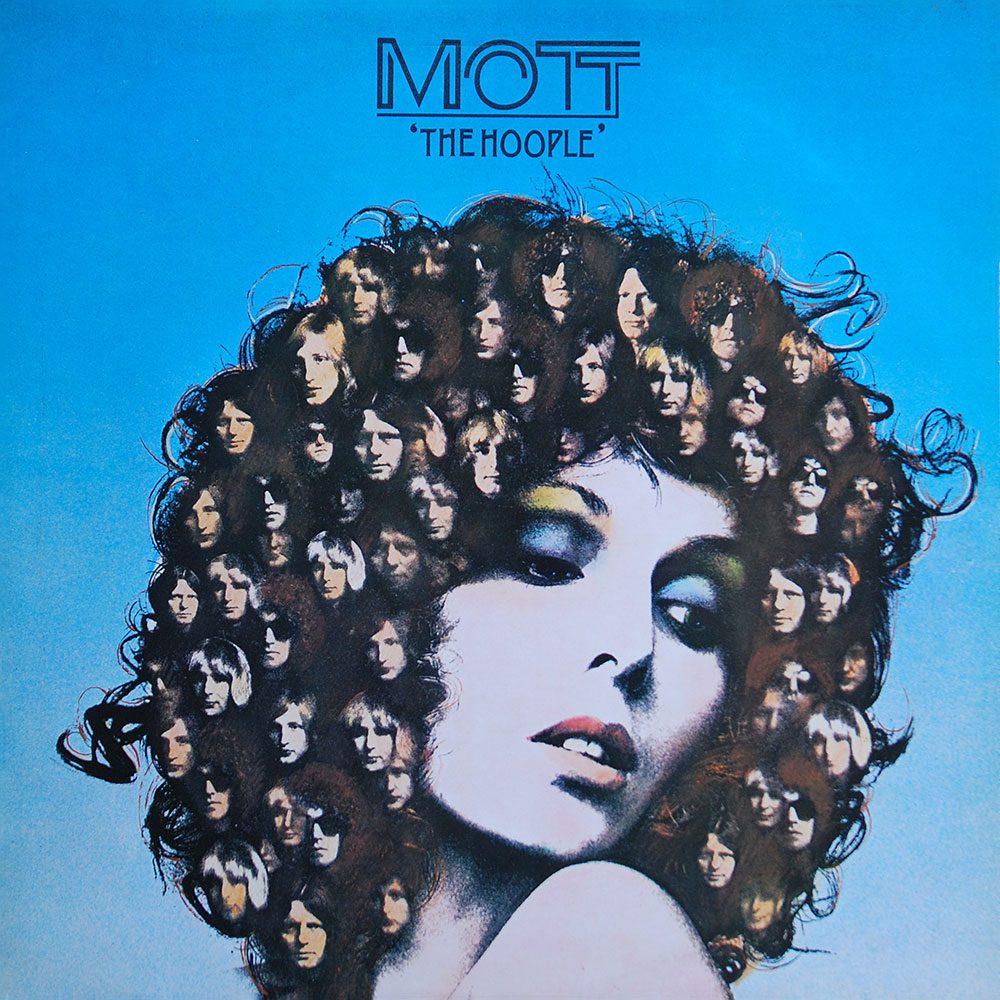
No wonder the Mott were splitting. Their final album was bursting with cognitive dissonance, torn between glitter and grime, celebration and lamenting the decline of rock ‘n’ roll, the normally swaggering Ian Hunter documenting his burnout. It’s bold, theatrical, but hollow and self referential. Glam’s meta tombstone. It’s the only album with guitarist Ariel Bender, who replaced Mick Ralphs, who joined Bad Company. The whole glam thing was ill-fitting in the first place. For the first four of their seven albums they were just a grubby rock ‘n’ roll band until Bowie wrote them a hit and they became associated with the trendy genre. I like what they did with it, but it was just a costume. The timing was just right, calling it quits, as they shut it down while still at the peak of their craft.
Glam | Piano Rock
10. Captain Beefheart & The Magic Band – Ice Cream For Crow (1982)

The Cap’n concludes the musical chapter of his career with a beautifully autumnal piece of desert art rock.
Captain Beefheart & the Magic Band’s final album, Ice Cream For Crow, capped a trilogy of post-punk era albums, starting with Shiny Beast (1978), which was re-recorded from parts of the unreleased 1976 double album Bat Chain Puller, and Doc at the Radar Station (1980). All were quite different, from the relatively lush production of the former to the dense production of the latter augmented by string synths. The sound of his last album is dry and brittle, as arid as the desert he grew up in. The original desert rock (well, that and Tishoumaren that came out of Tinariwen’s Tuareg music around that time). Meat Puppets had to be listening, as “Semi-Multicoloured Caucasian,” sounds like a template for their own brand of desert rock in the mid-80s.
The title cut is Beefheart’s most chooglin’ tune since he grew fins and booglarized us in 1972. Amazingly, it’s his first single release since the 60s. Which is crazy. He’s had plenty of accessible tunes, like “Her Eyes Are A Blue Million Miles,” “The Floppy Boot Stomp,” “Love Lies,” “Hot Head.” No wonder Beefheart was pissed. For much of the album, he sounds resigned and exhausted. Possibly his multiple sclerosis was already affecting him. But as always Beefheart makes it into great art, including the cover painting. The title represents the contrast between the black of the crow and white of vanilla ice cream.
Aside from Beefheart’s poetry and singular vocal delivery, what really sells songs like “The Host the Ghost the Most Holy-O,” “Cardboard Cutout Sundown,” “Skeleton Makes Good” and “The Witch Doctor Life” (“When the witch doctor life / throws his silent bones / Some are crowned king…”) is the dual guitars of Jeff Morris Tepper and Gary Lucas. They insert tension, melody and layers of melancholy with their inventive interplay. On “Evening Bell,” Lucas, harking back to Trout Mask Replica days, painstakingly transcribed the instrumental from Beefheart’s piano study, and it’s gorgeous.
The guitarists also serve up some grime on the fuzzed out leads in the second half of “The Past Sure is Tense.” “Ink Mathematics” sounds oddly familiar, probably due to his earlier influence on post-punk bands came full circle, and that song could easily have fit into the NY avant no wave scene. “81 Poop Hatch” is one of his best unadorned spoken word pieces.
Overall the atmosphere is more subdued than his previous two albums, and autumnal. At the time probably only his wife Jan knew it would be his last, his final “fuck you very much” before he went and made a real living off his paintings. In the visual art world, Don Van Vliet was highly respected. And yet his music was consistently undervalued and misunderstood, which is a god damn shame. The music video he co-directed for the title track was rejected by MTV for being too weird. Yet no heads exploded when they played it on Late Night With David Letterman, and it was used frequently by the Museum of Modern Art.
Experimental | Blues Rock | Art Rock | Poetry
11. Talk Talk – Laughing Stock (1991)
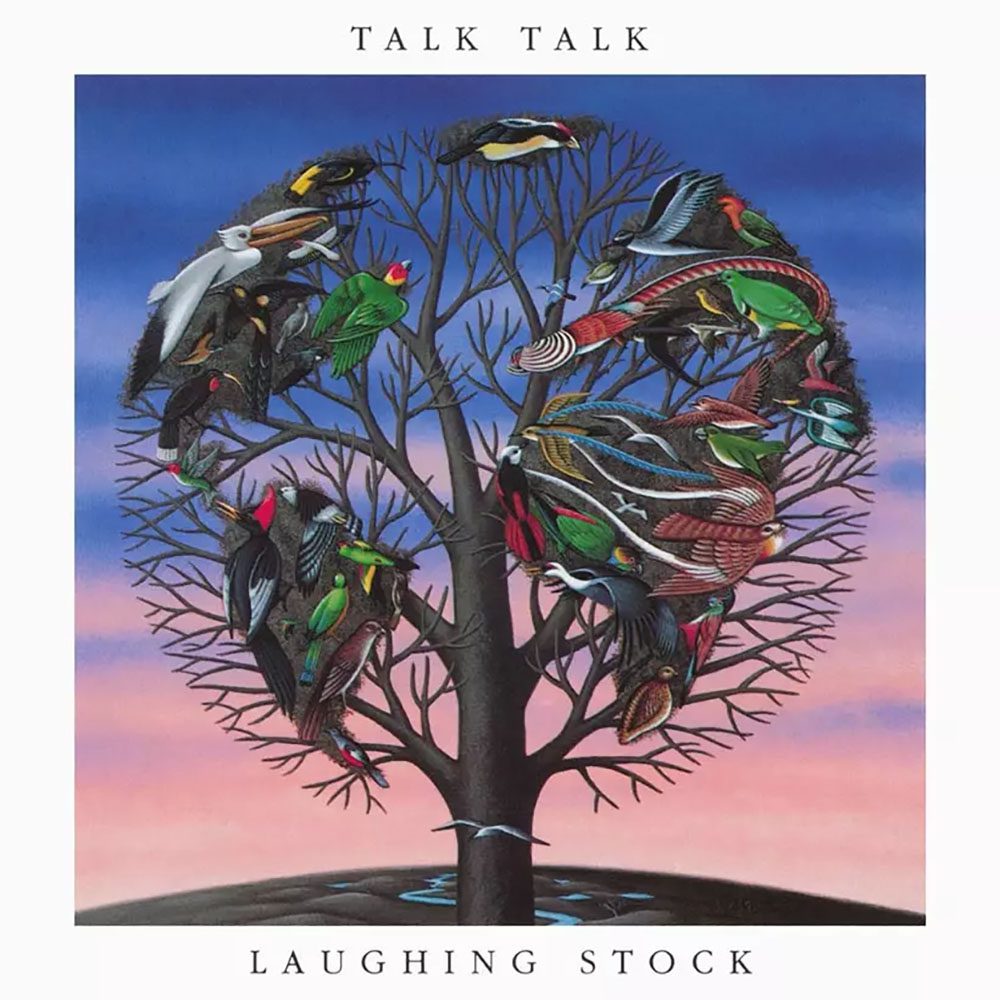
Talk Talk’s final album was such a radical departure from traditional song structures, hooks and choruses, almost no one knew what to make of it at first. Gradually it became recognized as a monument of artistic integrity and transcendence. Mark Hollis uses his voice sparingly, allowing space for the textural sounds to breathe, from near silent ambient pulses to explosive crescendos. An intense, potentially spiritual experience, and a towering influence on post-rock.
Post-Rock | Art Rock | Experimental | Jazz-Rock | Chamber Jazz | RYM #84 All-Time | Acclaimed #492
12. Marquis de Sade – Rue de Siam (1981)
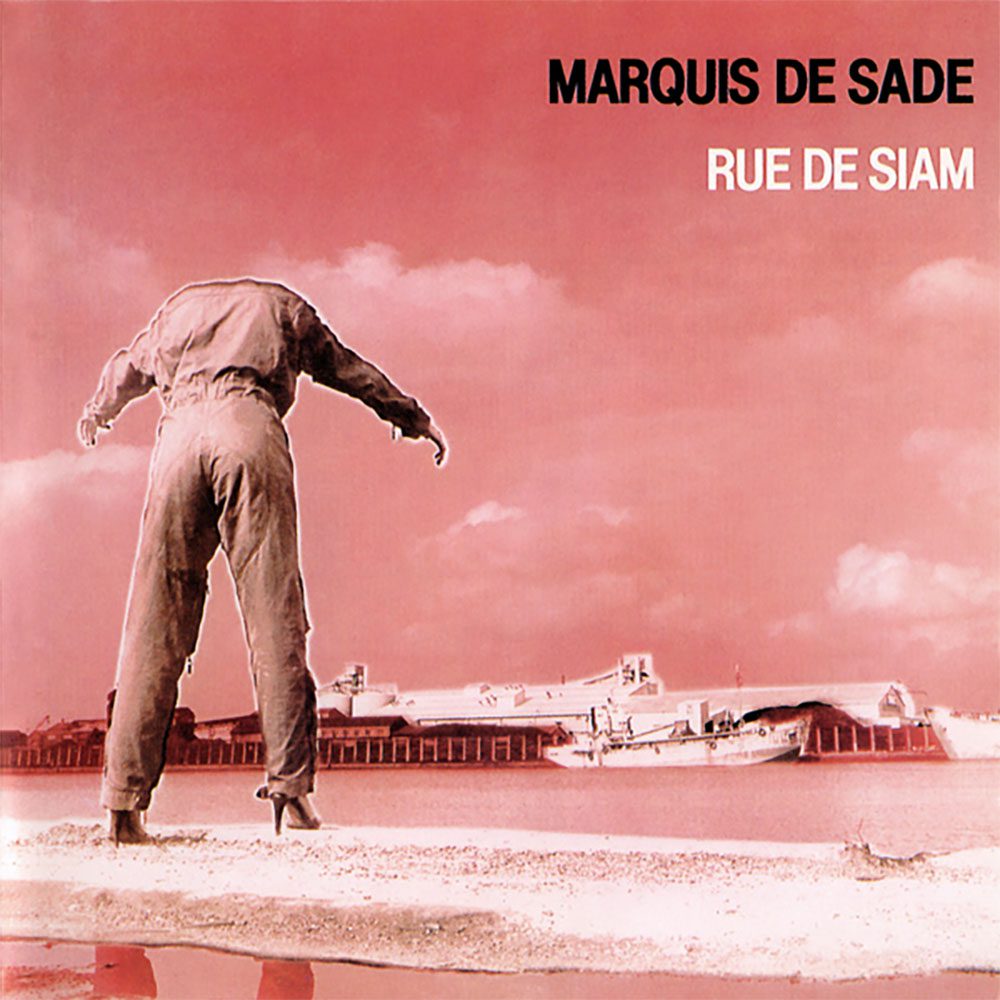
Lesser known than their British counterparts, the second and last album from Marquis de Sade is a cornerstone of the French post-punk scene, and it’s stature continues to grow with multiple reissues. With its dense, surreal atmospherics and Philippe Pascal’s haunting/haunted vocals, it’s credited as an early coldwave influence. Steve Nye’s production makes for a more polished product compared to other European post-punk, and the experimentation with saxophones and trumpet lend a unique jazz-noir flavor, with Franck Darcel’s serrated metal saw guitar work slashing through. The more rhythmically forward songs make up the first side, highlighted by “Wanda’s Loving Boy,” and the simmering elegant menace takes over on the second half, climaxing with the 7:12 long “Rue de Siam / Submarines and Icebergs.” For fans of Magazine, Tuxedomoon, early Ultravox.
13. Slint – Spiderland (1991)
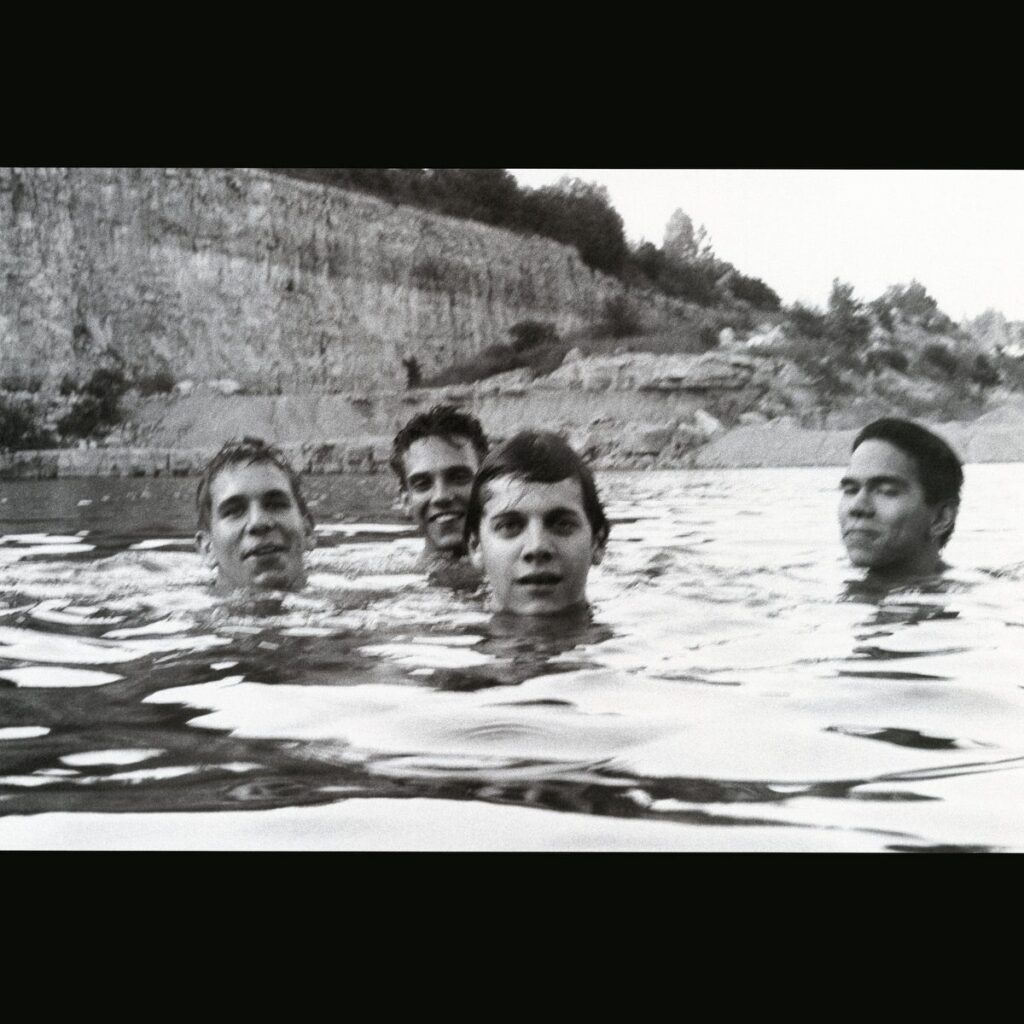
This was the most anticipated event for myself and friends in the spring of 1991. My housemate and station manager is from Louisville so we were playing Tweez (1989) regularly on our college radio shows (shout out to WMCN, 10 watts of power!). This was certainly a logical progression from that album, and also Bitch Magnet’s Ben Hur (1990), but also so intensely otherworldly, it was clearly destined to stand alone as classic of expressionist, mostly instrumental post-hardcore. Despite sprse spoken word passages, the emotional impact is undeniable. Under the sheer weight of existential anxiety and alienation, one of the members allegedly ended up hospitalized after the sessions. Later it was tagged post-rock and math rock, but they did not really exist yet. By then, Slint ceased to exist, but they left such a perfect statement, there was nothing left to be said.
14. Spirits Of The Dead – Rumours Of A Presence (2013)

I fear my enthusiasm for this band jinxed them. After putting this at the top of my Lucky 13 for 2013, they seemed to hit a writer’s block. They recorded a couple tracks meant for their fourth album, but then just disappeared. This is top tier Norwegian psych prog, and especially with this third and last album, they achieved a perfect balance of complexity and simplicity, rich sonic details and memorable melodies. 13 years later I continue to play the living s**t out of this album, wishing there was more.
15. The Jimi Hendrix Experience – Electric Ladyland (1968)
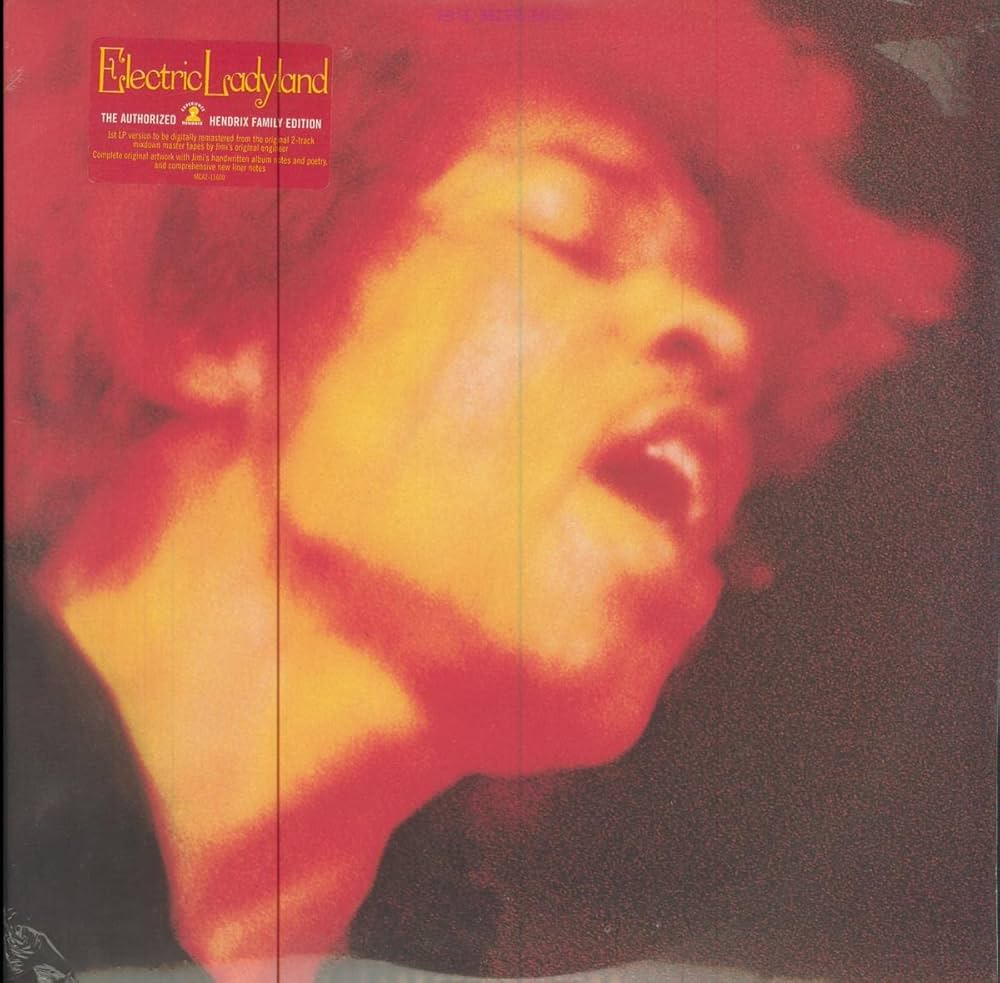
The third and last studio album in his lifetime (Band of Gypsies is a live album), this is Hendrix at his most loosey goosey and expansively experimental. Not everything works, but as a whole, it’s magnificent. One of the biggest “what if” questions of all the artists we lost too soon, Hendrix seemed to have unlimited potential.
16. The Teardrop Explodes – Wilder (1981)
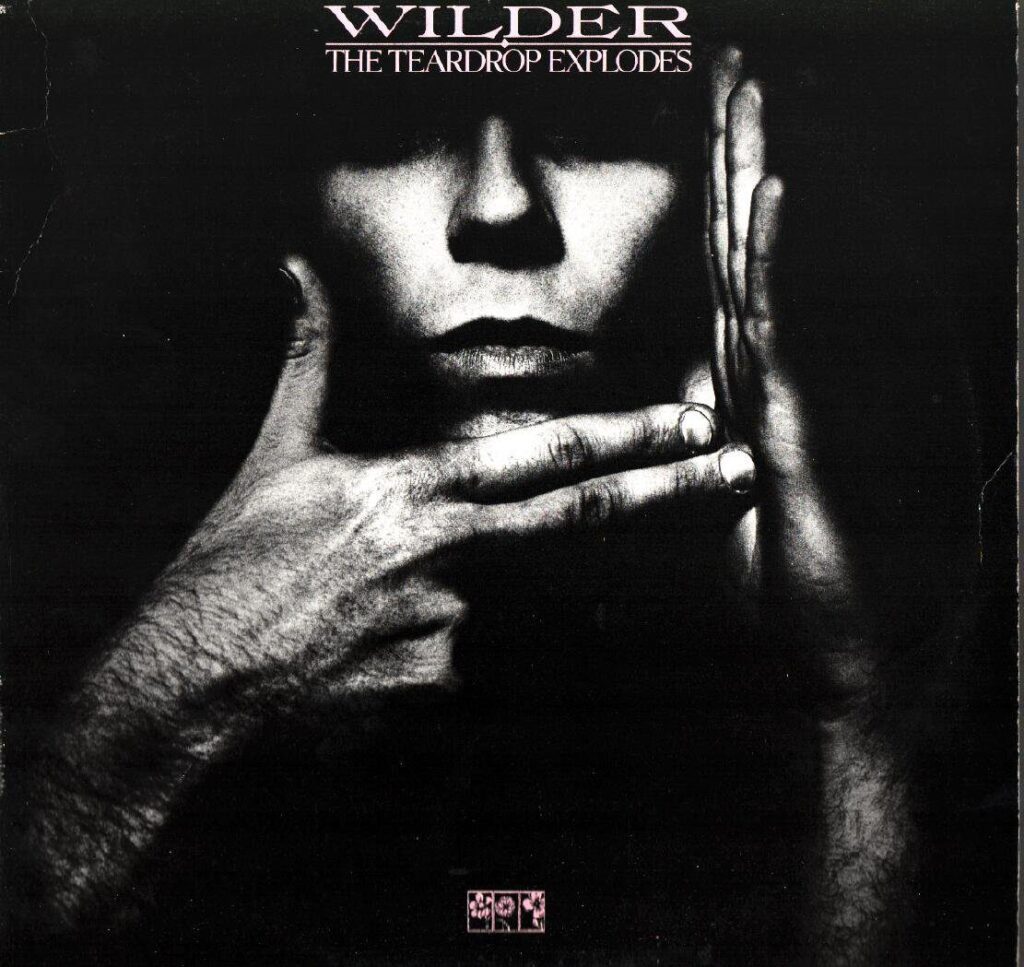
After bursting out the gate with their bouncy, colorful, energetic psychedelic post-punk debut Kilimanjaro (1980), Julian Cope quickly got weirder, more experimental and darker on their second and last official album. Like their mates Echo & the Bunnymen’s Heaven Up Here from the same year, they get more introspective, complex with dark atmospherics. It shifts away from guitars to David Balfe’s synth-heavy arrangements, such as on “The Great Dominions” and “Tiny Children.” “Passionate Friend” is one of the few tracks tied to the accessibility of the first album. The unstable stylistic flow reflects the state of the band, which would soon implode, leaving Cope to embark on his solo career and cultivate the mad psychedelic genius persona.
17. The Passions – Sanctuary (1982)
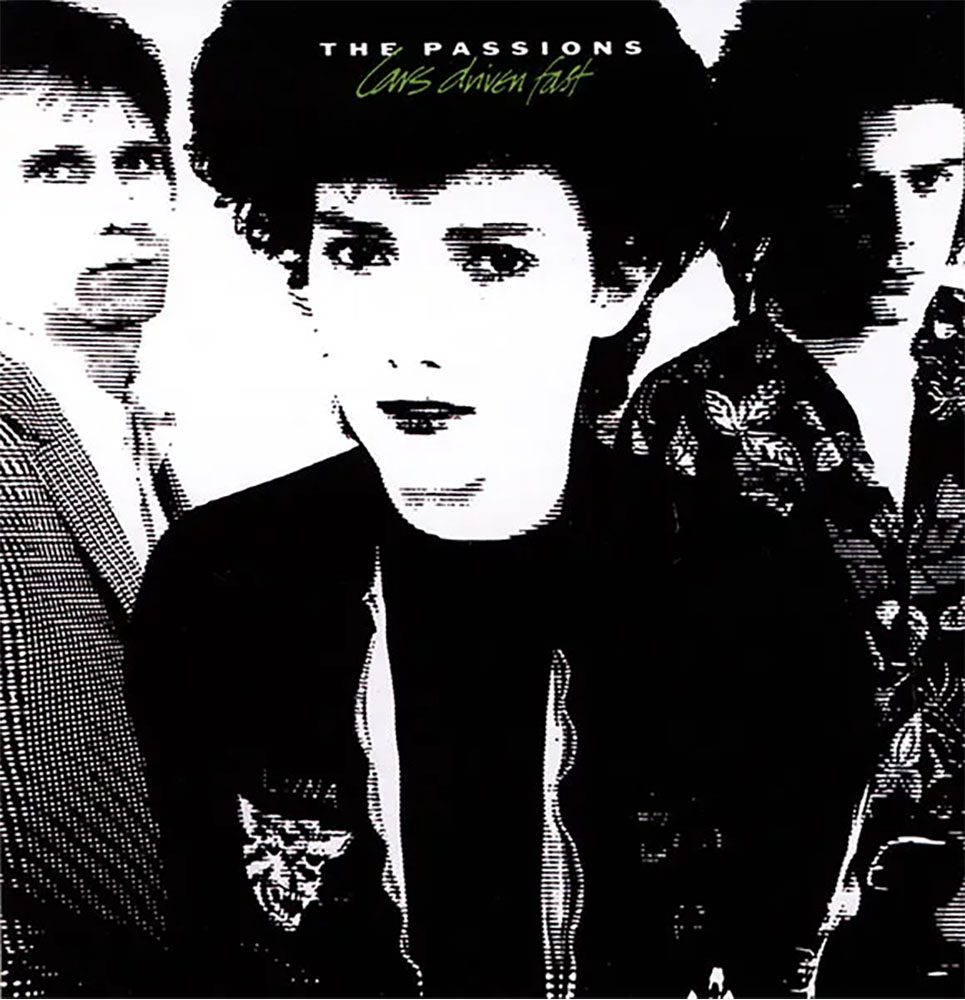
The Passions doled out anger, deceit and suspicion while keeping it sophisticated and classy. Their third and last album was their smoothest and poppiest, but kept the quality of the songs and performances top tier, considering they’re considered a one-hit wonder of the post-punk scene (“I’m in Love With a German Film Star” from their second album). Originally titled Cars Driven Fast (and released as such with a cooler cover in Germany), it’s a rare example of a post-punk/new wave band ending at their peak. The track of the same name has a fascinating dubby treatment to guitars and synths that suggest traffic sounds, a real highlight. Even bonus tracks like “Africa Mine” are outstanding. A lost classic.
18. Syd Arthur – Apricity (2016)

This was a hard one. I fell in love with their sound from their full-length debut On and On (2012) — they are literally Canterbury proggers, born and bred in Canterbury, but grew up listening to all kinds of music like hip hop and electronic music. Their euphoric, uplifting style really can’t be traced to any other band. By their third and last album, they shifted toward more modern sounds and less complex arrangements, yet is just as captivating. Unfortunately their drummer Fred Rother developed ear-related health problems and had to quit. The brothers Liam and Joel Magill had played with him since childhood and apparently felt he was not replaceable. As long as they had secret weapon, multi-instrumentalist Raven Bush (Kate Bush’s nephew) I think they would be just fine. They did, interestingly, get credited as Syd Arthur as the backing band on Jack Hues (of Wang Chung!) album Nobody’s Fault But My Own (2019). I did get to see them live, as they played Riot Fest in Chicago in 2016. It was on one of the smaller stages, and for 40 minutes I and about 30 other people left our bodies and vibrated with joy.
19. Fugazi – The Argument (2001)

This was surprising. The Argument showed Fugazi at the peak of their powers, with the best album released that year along with Opeth’s Blackwater Park and Björk’s Vespertine. There was no talk about breaking up, but after their UK tour in 2002, they said they were taking an indefinite hiatus. Back then, that often could mean just a few years. But it just might be forever, given that we’re at a quarter century later. Tantalizingly, they remain friends and even play together now and then in private, but they claim they can’t invest the time and energy required to do it properly, even though the members continue to release music as The Evens, Coriky and The Messthetics. When I can’t take for granted a band will continue on for decades, I can only go back and treasure what they have done. In this case it’s their most fully realized, sonically rich, emotionally complex, and best album.
20. Au Pairs – Sense And Sensuality (1982)

Post-punk bands tended to push themselves hard enough that they fall right off the edge, or flat on their faces in the end, which is admirable. Au Pairs’ fall was less dramatic on only the second album after their amazing debut, where they evolved their sound with icy synths in “Stepping Out Of Line,” the kind used tastefully by Magazine, and adding jazzy brass instrumentation on “That’s When It’s Worth It” and “Beat of a Machine” that align with The Jam’s concurrent sophisti-pop explorations. Between a mastering error of the original at the wrong speed and mad misogyny from critics, it was doomed to failure, but would rise again as a colossal influence generations later.
21. T. Rex – Dandy In The Underworld (1977)
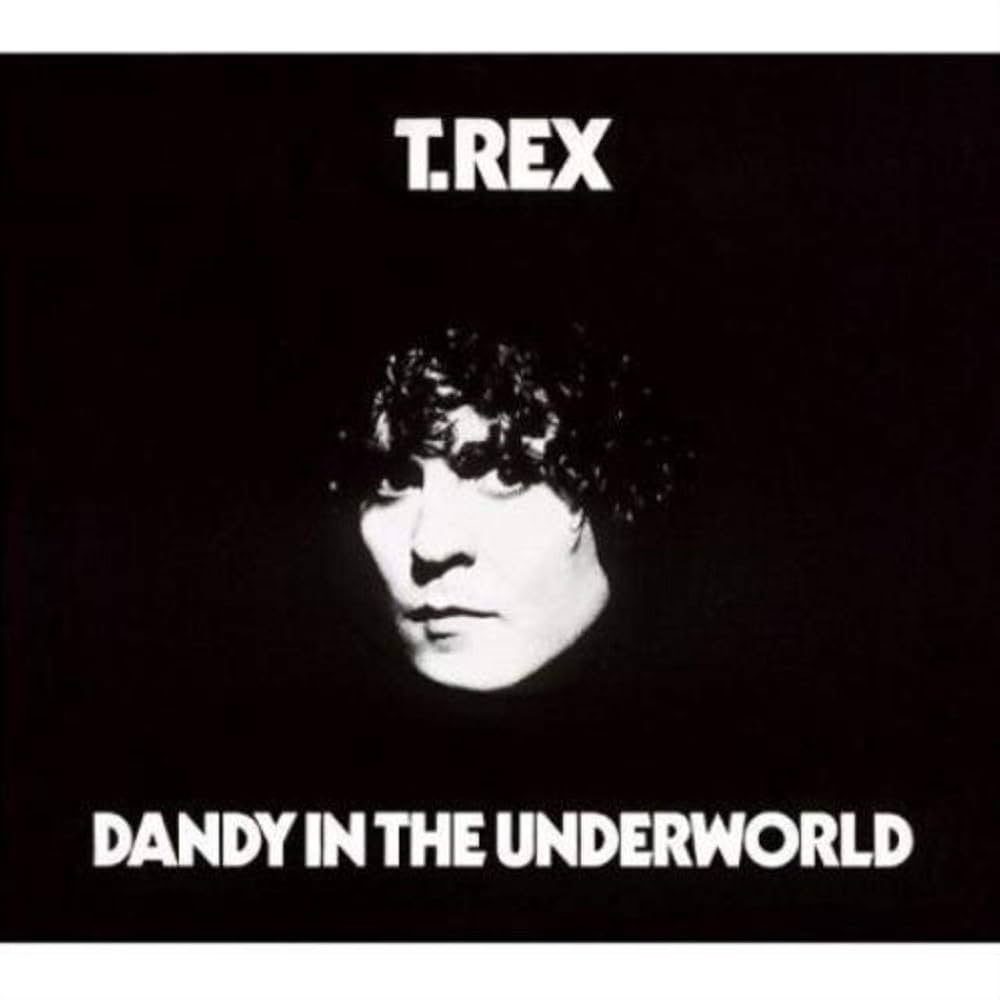
Marc Bolan is one of the rare artists who could do pretty much anything, and his charisma carried through. His music didn’t change a whole lot album to album, it was more about the ebb and flow of commerce, fashion, cult of personality, etc. He was doing his TV show and vibing with the punk kids, and this album was seen as a return to form that was never lost in the first place. Then he was gone too soon.
22. Hüsker Dü – Warehouse: Songs And Stories (1987)
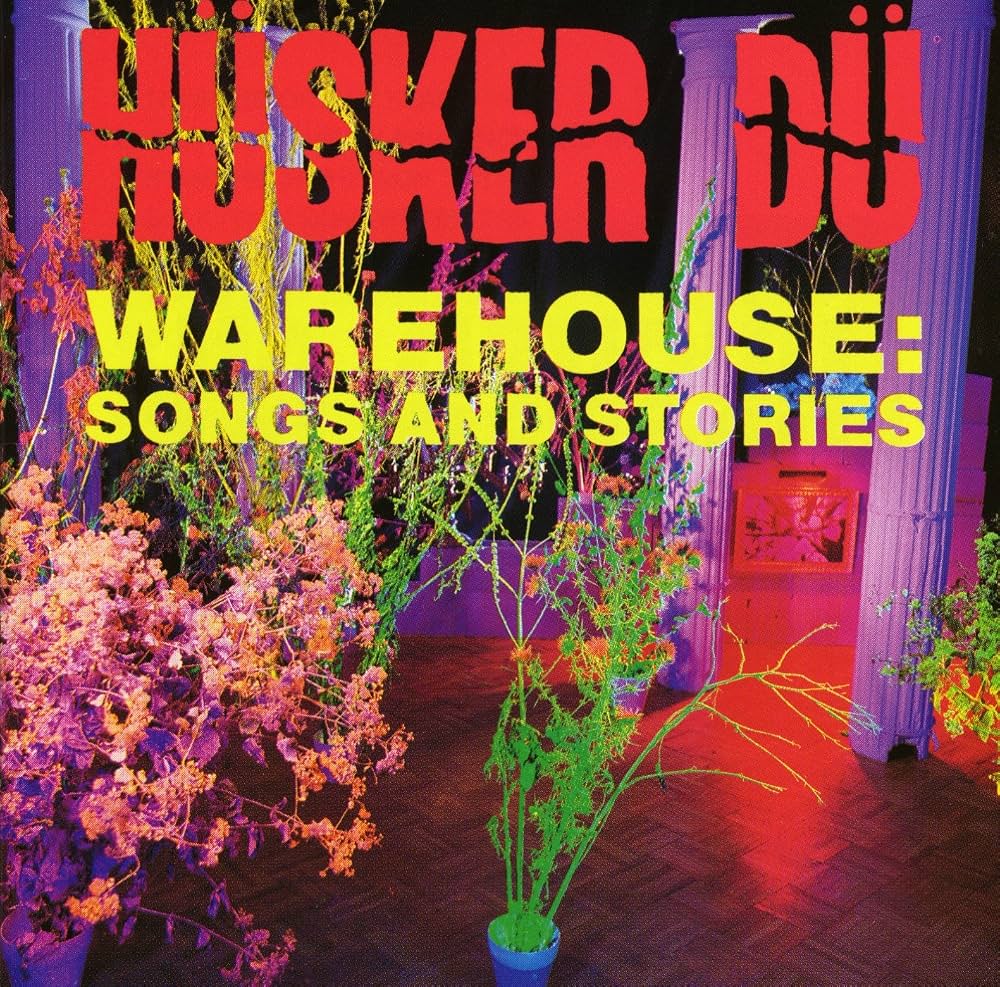
Fans were getting spoiled, with seven albums, two of them doubles, released within five years. We nitpicked that the songs were fantastic but the production a little stiff compared to earlier favorites, but this turned out to be a parting gift to be treasured. Months later the band were no more, and unlike most bands, there would be no reunion, no one-off performances, no other studio material released.
23. Purson – Desire’s Magic Theatre (2016)

I was chuffed right out the gate with Purson’s first single “Rocking Horse” in 2012. There was boom of awesome female-lead occult/psych noir bands at that time, and Purson was one of the most talented. I saw them on their sole North American tour in 2016, and was very disappointed that they called it quits the next year after just two albums and the In the Meantime EP (2014). But then I learned that Rosalie Cunningham played all the instruments in the studio anyway, so her solo career is a seamless extension of this project.
24. Radiohead – A Moon Shaped Pool (2016)

I got dangerously close to taking Radiohead for granted, as it seemed they might have finally been creatively spent after the disappointing The King of Limbs (2011). But joke’s on us, they were better than ever with this album, and while no one else mentioned it in reviews, I noted a touch of psych prog in the mix, and I was lurvin’ it. While In Rainbows (2007) became a huge fan favorite over the years, I think this one deserves just as much attention, especially now that it’s looking like it could be their final album. The Smile albums are really great, but they ain’t Radiohead.
25. Spirit Adrift – Infinite Illumination (2026)

This just came out, but Nate Garrett insists it’s the end for this project. Since he’s also moving cross country, I’m guessing closer to his wife’s family for support, I think it’s for real. He still has a solo album brewing and other projects. It also happens to be in my top 3 for best albums of the year so far.
26. The Jam – The Gift (1982)
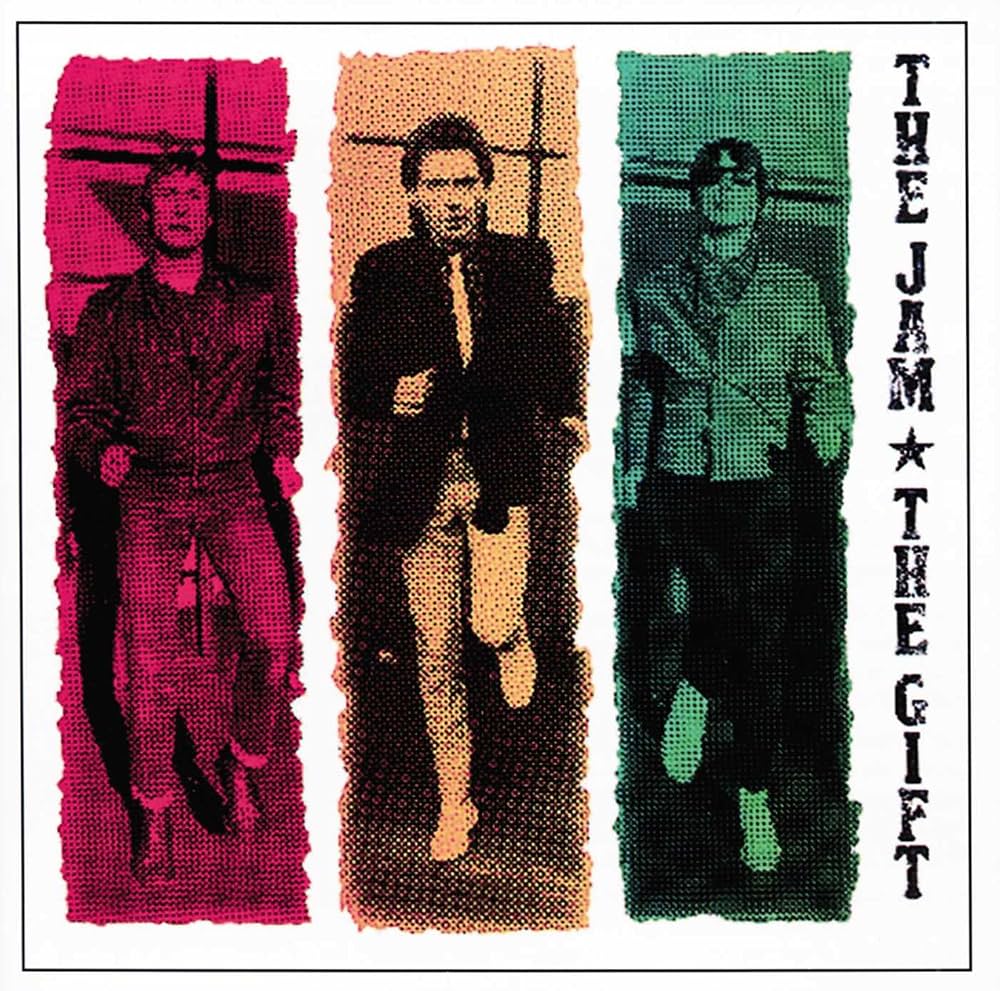
On their sixth album, The Jam closed their career at a commercial peak, their first #1 album. Their progression into Northern soul, funk and jazz resulted in some great singles (“Town Called Malice,” “Precious”) a core batch of classic tracks like “Happy Together” and “Ghosts,” and then some experiments that were less consistently successful. Overall it holds up as one of the best career closers any band could hope for.
27. Wolf People – Ruins (2016)

Not a lot of people knew this band because they broke up before they got the attention they deserved, after their third album. It was brilliant slice of rustic psych prog, incorporating literary influences like Ben Myers and Iain Banks’ The Wasp Factory, and first track “Ninth Night” quoting from ancient folkore. The music is finely honed eerie, earthy, dark psychedelia that unifies brittle dueling guitars, synths, flutes and funky drums into a unique, modern signature sound that comedian Stewart Lee affectionately called “peat bog superfuzz sphagnum moss sludge.” Fortunately, there’s more, as primary songwriter Jack Sharp continued with a project called Large Plants under which he released two albums in 2022 and 2023. More music may be coming under the name The Thorn.
28. Golden Void – Berkana (2015)

This band seems to be a secret even among Earthless fans. Isaiah Mitchell plays guitar and sings on this project, with Aaron Morgan (bass), Camilla Saufley (organ, Assemble Head in Sunburst Sound), and Justin Pinkerton (drums, Moog, Futuropaco), and the songs are fantastic. I play these two albums (including the 2012 self-titled debut) far more than Earthless. I was hugely disappointed that they disbanded before I had a chance to see them play these songs live.
I just realized to my dismay that both Small Faces and Zombies, rather having left us with their perfect albums from 1968, both reunited and released a bunch of garbage. Of course they did. So I have to circle back and add a couple that were bubbling under. Glad to include them, as SoT community is in dire need of hearing these albums.
29. Been Obscene – Night O’ Mine (2011)
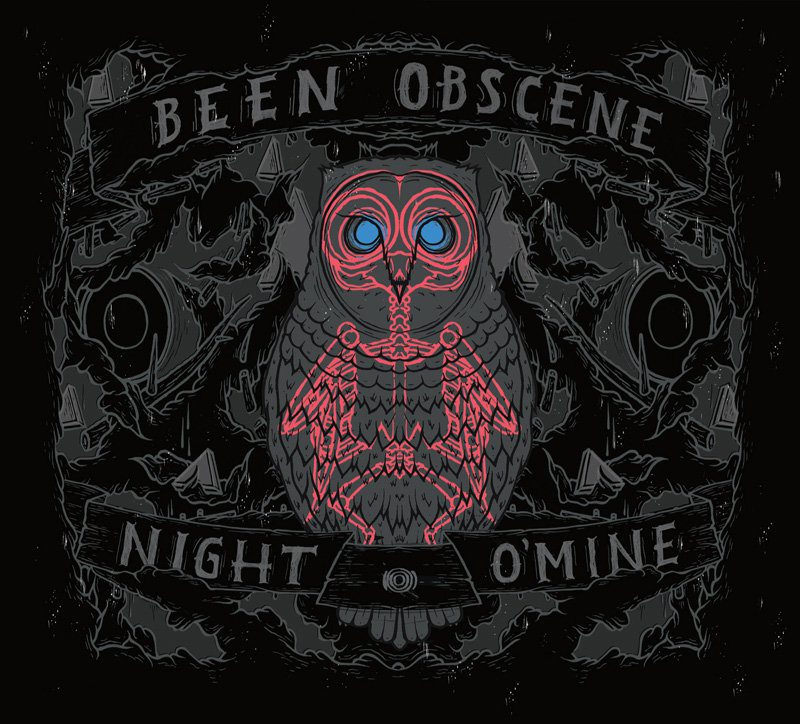
One of the best bands that weren’t Colour Haze on the Elektrohasch roster, Austria’s Been Obscene only lasted two albums. Darker and sleeker than the debut The Magic Table Dance (2010), more gloomy and mystical, it’s a psych prog hybrid that flirts with pop accessibility and crystalline production, possibly inspired by Queens of the Stone Age. In turn, Norwegian psych proggers Spirits of the Dead must have been listening, as their final album makes a fine listening companion to this.
30. Royal Headache – High (2015)
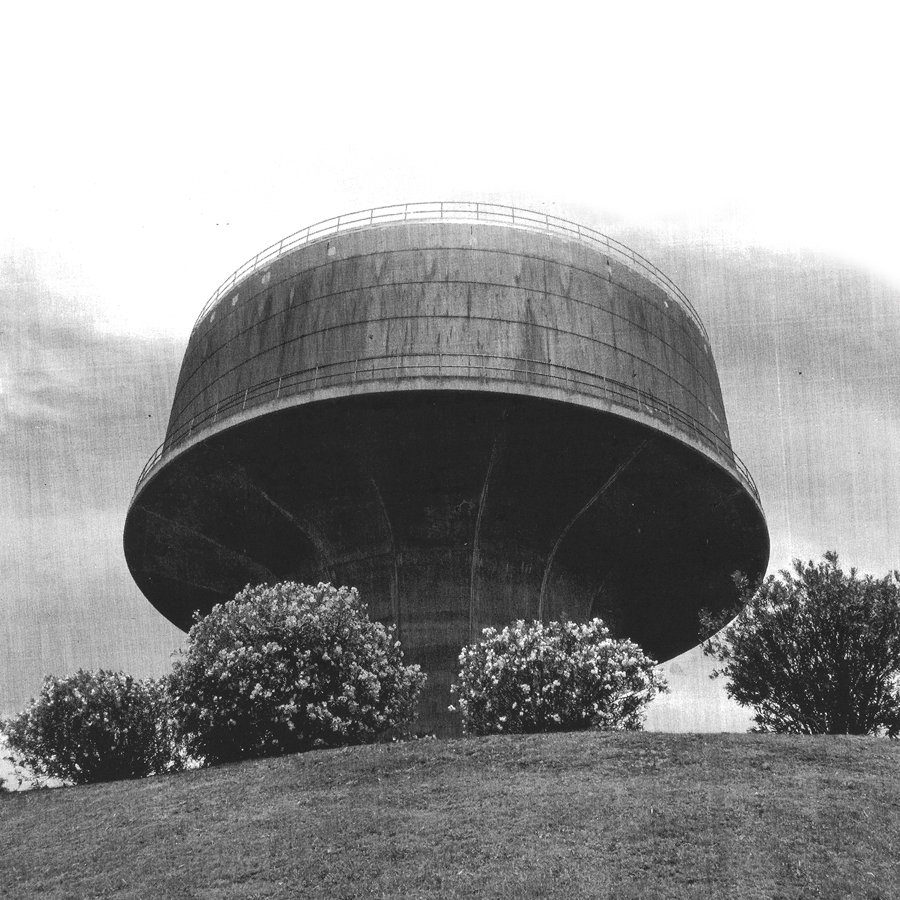
Dangit, I had Neu! for my #8, but forgot they had a reunion album. Ugh. So dippin’ further down into Fester’s bubblin’ under bucket O’ nasties, we’ve got Royal Headache, the Sydney band that called it quits after just two brilliant albums. Skinny, awkward frontman Shogun really gets under your skin with his conviction and deceptively versatile voice, sounding like a young Paul Westerberg if he were influenced by gritty soul. While their early sound of soulful punk and oi has expanded to include comparisons to The Jam and other later British bands, I think even more important is the fiery passion they have reignited from the likes of countrymen The Saints and Hunters And Collectors, particularly their tortured love and heartbreak lyrics on Human Frailty (1986). On Royal Headache’s second album High, they administer twice the impact, devastation and jubilance at less than third of the running time.
Like all the greatest breakup albums, it successfully balances the wrenching pain, loss and regret with flashbacks to the giddy joy of love at first flush, and all the complicated and mixed emotions between the beginning and the end. Case in point, the surprisingly laid back sounding, acoustic-driven “Carolina” which sports a hook worthy of the best Saints tunes, and a gravelly, soulful vocal performance that reminds me of Rod Stewart at his peak, back when seemingly peerless rock titans like Robert Plant and Paul Rodgers would kiss his ring on bent knees. The video successfully shows how Shogun puts in the same emotional energy into the song as their more energetic rockers, as he looks like he’s literally going to leap out of his skin. Fn’ great.
Garage | Power Pop | Garage Punk
- Joy Division – Closer (1980)
- Nick Drake – Pink Moon (1972)
- The Beatles – Abbey Road (1969)
- Japan – Tin Drum (1981)
- Eric Dolphy – Out To Lunch! (1964)
- Tubeway Army – Replicas (1979)
- The Birthday Party – Junkyard (1982)
- Free – Heartbreaker (1973)
- Mott The Hoople – The Hoople (1974)
- Captain Beefheart & The Magic Band – Ice Cream For Crow (1982)
- Talk Talk – Laughing Stock (1991)
- Marquis de Sade – Rue de Siam (1981)
- Slint – Spiderland (1991)
- Spirits Of The Dead – Rumours Of A Presence (2013)
- The Jimi Hendrix Experience – Electric Ladyland (1968)
- The Teardrop Explodes – Wilder (1981)
- The Passions – Sanctuary (1982)
- Syd Arthur – Apricity (2016)
- Fugazi – The Argument (2001)
- Au Pairs – Sense And Sensuality (1982)
- T. Rex – Dandy In The Underworld (1977)
- Hüsker Dü – Warehouse: Songs And Stories (1987)
- Wolf People – Ruins (2016)
- Radiohead – A Moon Shaped Pool (2016)
- Purson – Desire’s Magic Theatre (2016)
- Spirit Adrift – Infinite Illumination (2026)
- The Jam – The Gift (1982)
- Golden Void – Berkana (2015)
- Been Obscene – Night O’ Mine (2011)
- Royal Headache – High (2015)
Bubbling under
Monarch – Beyond The Blue Sky (2019)
Lola Colt – Twist Through the Fire (2016)
Dead Man – Euphoria (2008)
Nirvana – In Utero (1993)
The Smiths – Strangeways, Here We Come (1987)
This Heat – Deceit (1981)
David Bowie – ★ Blackstar (2016)
Janis Joplin – Pearl (1971)
Big Black – Songs About Fucking (1987)
The Comsat Angels – The Glamour (1995)
Artful Dodger – Rave On (1980)
The 13th Floor Elevators – Bull Of The Woods (1969)
Acrimony – Tumuli Shroomaroom (1997)
Roxy Music – Avalon (1982)
The Police – Synchronicity (1983)
Pete & the Pirates – One Thousand Pictures (2011)
Good Shoes – No Hope No Future (2010)
Om – Advaitic Songs (2012)
Troubled Horse – Revolution On Repeat (2017)
Sungrazer – Mirador (2011)
Floor – Oblation (2014)
The New Christs – Incantations (2014)
The Passage – Enflame (1983)
Torche – Admission (2019)
Messenger – Threnodies (2016)
Magic Circle – Departed Souls (2019)
Neutral Milk Hotel – In The Aeroplane Over The Sea (1998)
Unwound – Leaves Turn Inside You (2001)
Bitch Magnet – Ben Hur (1990)
Orchestre Rouge – More Passion Fodder (1983)
Jex Thoth – Blood Moon Rise (2013)
Savages – Adore Life (2016)
Serpent Venom – Of Things Seen And Unseen (2014)
What stood out to me is there are eleven final albums from 2016. Something really awful must have happened that year, huh. 1982 and 1987 also seemed significant, each with over a half dozen major final albums, of course all dicted by my own tastes.
There’s plenty more further down my list, including Bob Marley & the Wailers, Screaming Trees, The Move, Rush, Faces, The Sound, Walt Mink, The Go-Betweens, Shellac, Big Star, Be-Bop Deluxe, The White Stripes, D’Angelo, Television, King Crimson, Amy Winehouse, TV on the Radio, Black Sabbath, Kyuss, Vektor, R.E.M., Bauhaus, Radio Birdman, XTC, John Lennon, and Van Halen.
May 31, 2026
Fester’s Lucky 13: 1996
April 2, 2026
Fester’s Lucky 13: 1986
February 27, 2026
Fester’s Lucky 13: 1976