Shoegaze, Slackers, and the Reinvention of Rock 1984-1994
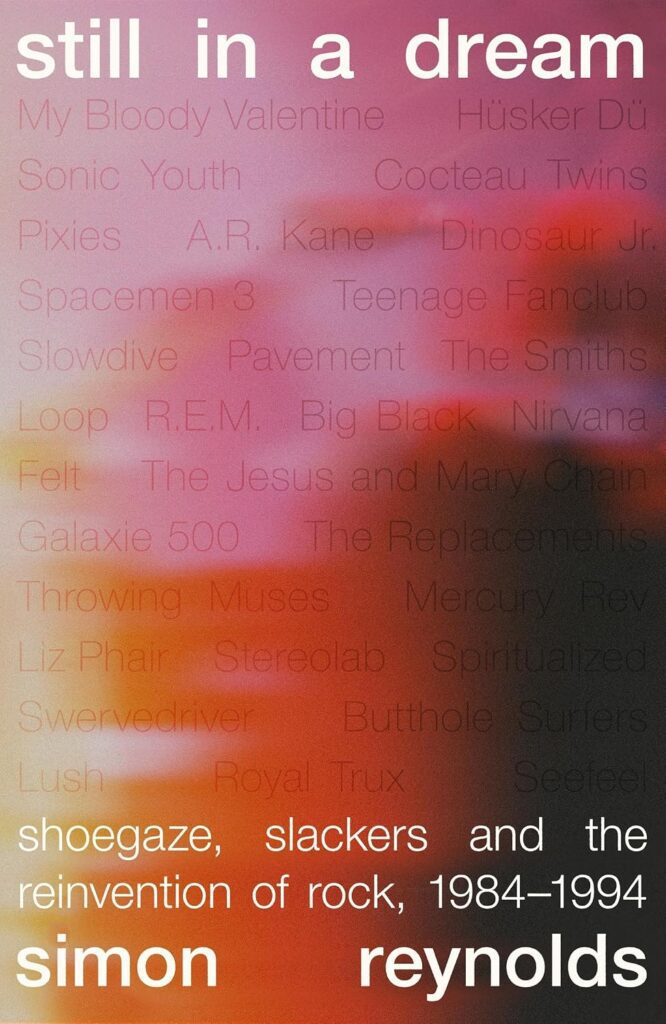
I first came across Simon Reynolds when he published his first book, Blissed Out: The Raptures of Rock (1990), a kind of remixed compilation of his pieces from mostly UK inkie Melody Maker. His enthusiasm for Hüsker Dü, Dinosaur Jr., Sonic Youth, My Bloody Valentine and his sharp critical analysis and bold writing made me an instant fan. While some have called this the successor to Rip it Up and Start Again: Postpunk 1978-1984, which certainly makes sense chronologically, to me it circles back to his first book, which a more loose, personal approach, inserting autobiographical stories throughout. It’s less a meticulously detailed history of an era as much as it’s a loving tribute to the music he was passionate about, and what it felt like to experience it for the first time. He occasionally framed it in contrast to that which he mostly didn’t like (grunge, Britpop). Despite being 464 pages, it breezed by. Reynolds mostly used original interviews he did at the time, but did go that far in depth for most artists. It might be the most brisk, easy read of any of his books, and I enjoyed it immensely. But I do have questions.
As great as Rip it Up was, it was an incomplete history. I’m not talking about hyper-obscure American bands of the post-punk era, which could make for an entirely separate book. These are pretty major bands from the UK scene that have only grown in estimation and stature since then — The Comsat Angels, The Sound, The Chameleons, and also the more obscure Modern Eon, Sad Lovers and Giants, Opposition, The Passions, Scars, TV21, Lowlife, The Distractions, etc. Their exclusion largely came down to Reynolds not really liking them, probably feeling that they didn’t offer the kind of innovation he valued. Fair enough.
He does the same in this book. I can understand his lack of interest in U2, Simple Minds, Echo & the Bunnymen, and Love and Rockets. He had the luxury of mostly covering what he wanted to back then, so he ignored those major artists. But still, I’m surprised to see no mention of The Cure and Depeche Mode. Not only did both help evolve post-punk and new wave into a massive juggernaut, but they are the closest entities, along with U2, to reimagine themselves as their own brand, transcending genre the way the likes of Pink Floyd, The Who and Led Zeppelin did. Certainly more so than The Smiths. Back when we were emailing while he was working on Rip It Up, Reynolds even said he’d developed a new appreciation for Depeche Mode’s later work. Perhaps they were left out because he didn’t cover them at the time. Or maybe there’s parts of the book that were cut to keep the length down. Hopefully he can answer that question sometime.
I was surprised that he dedicated quite a few words to The Replacements. I knew he loved their hometown frenemies Hüsker Dü, but did not expect him to be a fan of the ‘Mats. That seemed a bit of an outlier from the decidedly more ethereal thread from Cocteau Twins to Hugo Largo, Throwing Muses, Pixies, A.R. Kane, The Sugarcubes, Spacemen 3, Loop, Galaxie 500 and Flying Saucer Attack. He makes a strong case that 1988 was one of the greatest years in music, though I’d also make a case for 1986. While he mentioned The Woodentops in passing, dismissing them as part of some kind of floppy hat subgrenre, there’s no mention of The Chameleons who’s Strange Times came out the same day and is more consistent than their labelmates’ The Queen is Dead. There’s also XTC, The Church, Easterhouse, The The and Shriekback at their psychedlic post-punk/jangle peaks. While I’m not surprised Reynolds didn’t mention them, I am shocked he didn’t write more about Talk Talk, who made an amazing artistic progression from derivative New Romantics to a major influence on post-rock. But he did dedicate a chapter to, um arsequake (noise rock bands like Big Black and Butthole Surfers).
In contrast, he was more complete when discussing shoegaze, at least explaining why he didn’t favor the more rock-leaning Ride, Swervedriver, Catherine Wheel, Chapterhouse and Kitchens of Distinction rather than leaving them completely out. It was interesting to learn how he was relatively disappointed by Loveless, and he had me going back and listening to the two 1988 EPs and key tracks from Isn’t Anything that was famously included on a promo tape that he wore out. A lot of the best tracks from shoegaze bands were lost on early EPs and left off the albums, and it was illuminating going back and listening to the entire EPs from his secondary favorites Lush and Slowdive. I was also surprised though, that he didn’t have a lot to say about Souvlaki (1993), widely considered by many in hindsight as the one shoegaze album to rival Loveless.
I’m also surprised by the amount of coverage of slacker rock (a term that poppped up as a genre in Rate Your Music in recent years that I have no time for). I didn’t think he’d have any time for Pavement. I just don’t think it merits a distinction from indie rock, though he goes into an interesting bit about Richard Linklater’s first couple films. Teenage Fanclub, Mercury Rev, Sebadoh, Happy Mondays and Beck just don’t have much in common in my mind.
His section on post-rock also surprisingly doesn’t delve especially deep, with just a few extra paragraphs dedicated to favorites Seefeel, Main, Disco Inferno and Insides, a little about Pram, Laika, Bark Psychosis and nothing about Slint’s Spiderland, Codeine, Low, Tortoise, Labradford, and `O’rang, most of which he wrote plenty about back in the day. He devotes more words for criticism of grunge (with the exception of Alice in Chains, who he likes) and Britpop (save for Pulp and World of Twist).
I had a blast making a playlist while reading the book and revisiting some music I hadn’t listened to in years. Despite some quibbles, I highly recommend this to anyone who cares for any of the bands covered here. And fingers crossed this will generate some interest in covering the music from the era that Reynolds left out.
This was published on June 18 in the UK but apparently won’t be published in the US until Jan 12. That’s absurd. There’s a long list of music books that have never been properly published in the US. WTF??
October 12, 2026
Books I Read on Vacation in Costa Rica
May 31, 2026
Fester’s Lucky 13: 1996