
While my reading pace has slowed since last year as I’ve taken on catching up on movies, I had good luck in finding three contenders for my all-time top 30 favorite books and another two in my top 50.
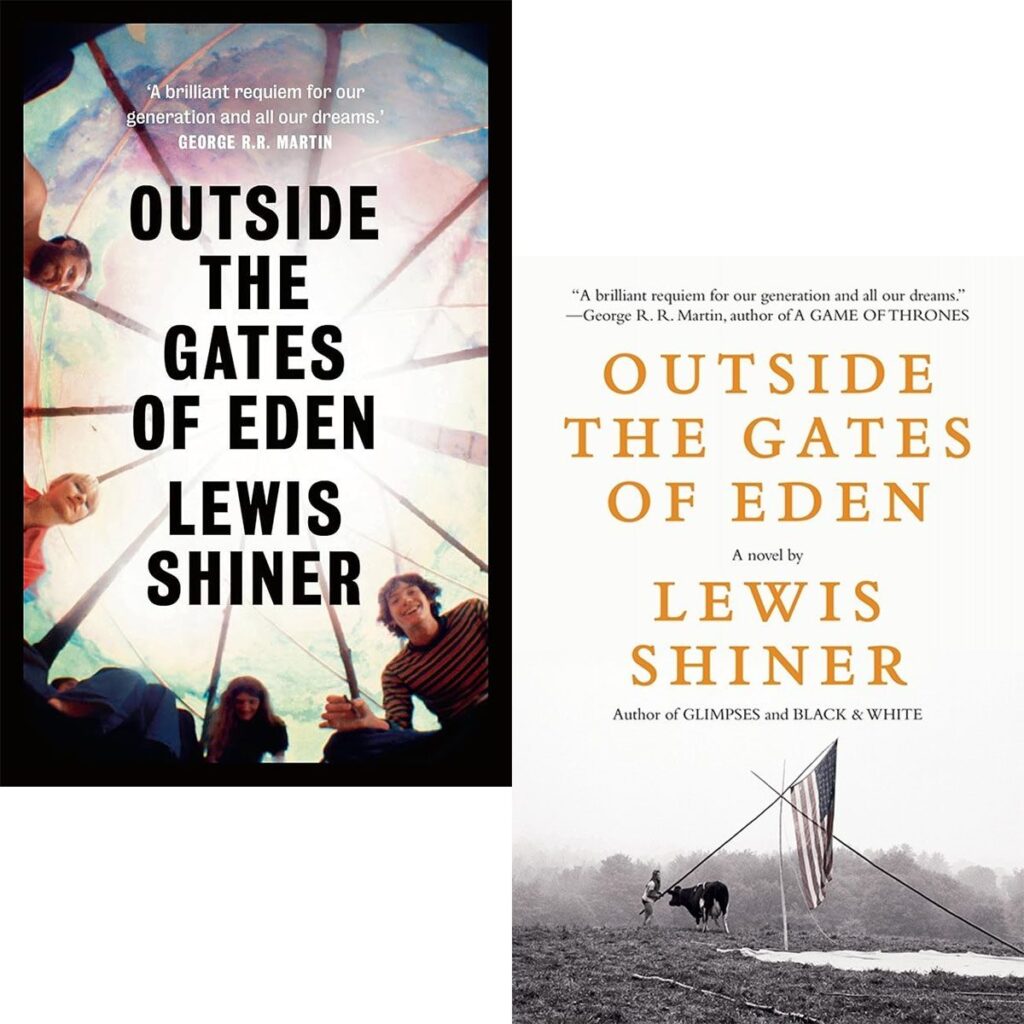
Lewis Shiner – Outside the Gates of Eden (2019)
I really enjoyed Shiner’s early cyberpunk book Frontera (1984) and Glimpses (1993), music fiction with a bit of time travel. So how the heck did I miss this book when it came out? A thousand page epic chonker, I was fully engaged the whole way through the War and Peace of 60s counterculture and music, and was left quietly devastated in a way I hadn’t since Michael Chabon’s The Amazing Adventures of Kavalier & Clay (2000) and Jonathan Lethem’s The Fortress of Solitude (2004). Having been in bands himself, this felt like a personal passion project, thoroughly researched with the helps of the likes of music writer/guru Richie Unterberger. It follows two best friends, Cole and Alex, from their first garage band in 1965 Texas (props for including the 13th Floor Elevators and Armadillo World Headquarters) through the Haight-Ashbury just after it’s Summer of Love peak, Woodstock, a Virginia farm commune, Laurel Canyon singer-songwriters and Texas Outlaw Country, and even the rise of the early 80s art loft scene in SoHo, NYC. In between there are marriages, breakups and makeup babies, academia and post-structuralist discourse, politics, Latino street gangs, gentrification, digital technology and, as always, that always lurking spectre of drug addiction to ruin everyone’s party. Thankfully that doesn’t dominate the story, and if it weren’t so well written, one might feel like boxes are being checked in trying to encompass the entirety of American counterculture from 60s optimism through disillusion to pragmatism to, just maybe, dreaming big once again.
Ken Grimwood – Replay (1988)
Having the opportunity to re-live your life with the knowledge, and allegedly wisdom, you’ve gained throughout your life is a fantasy many people have had. Ken Grimwood makes this fantasy a reality in this book, and as always, our hero Jeff gets more and less than he’d have liked. He dies at 43 to wake up as his 18 year-old self, uses his knowledge of the future to live a larger life, and then keeps repeating the cycle, accumulating wealth, trying to woo his wife again and failing, falling in with a decadent swingers scene in Paris, trying to change history, then meeting someone who would change not just his life, but many of his lives. To say much more is to go into spoiler territory, and this is too good for that. It’s funny, crass, philosophical, intense, bleak, hopeful, romantic and deeply moving. I was enthralled from start to finish, a book that will have me pondering for a lifetime or more.
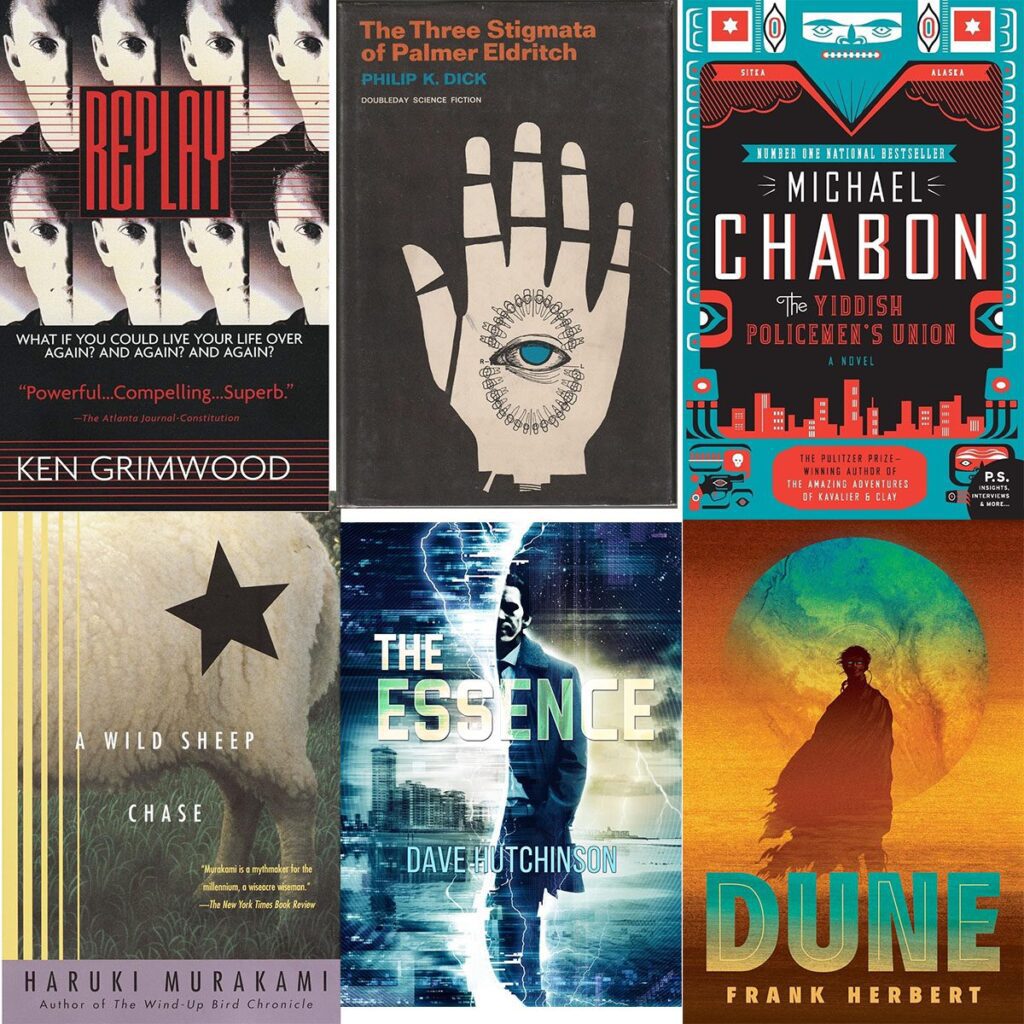
Philip K. Dick – The Three Stigmata of Palmer Eldritch (1964)
“I did not find God in the Prox system. But I found something better. God promises eternal life. I can do better; I can deliver it.”
It’s explorations of reality, religion and corporate control makes this arguably Philip K. Dick’s most influential work, shaping the stories of Ursula K. Le Guin (in The Lathe of Heaven) and the Cyberpunk genre, as well as movies like Videodrome, Dark City, the Matrix Trilogy and Inception. Jeff Hopp’s Legend of the Mind (2021) graphic novel is a direct tribute to the book, and Netflix has an adaptation in development. A future earth has become hot, overcrowded and inhospitable due to climate change, and there is a global draft to send people to even more cramped space colonies, doomed to lead miserable lives. The only escape is Can-D, an illegal hallucinogenic where people can live in a “translation” world using “Perky Pat” layouts — dollhouse-like sets based on an idealized version of 1950s earth. Meanwhile, industrialist Palmer Eldritch has brought a more powerful drug, Chew-Z, from an interstellar trip to Proxima Centauri. From his adventures he now has steel teeth, mechanical eyes and a prosthetic right arm. Those who try Chew-Z experience powerful religious epiphonies, which disconcertingly also include Eldritch, suggesting that what has returned from the stars is no longer fully human. There’s characters called precogs with psychic powers, reality-warping biomechanical technology, hallucinations-within-hallucinations, basically all the building blocks that helped classic SF transition to the 21st century.
This has book has so many twists it would leave M. Night Shyamalan an incapacitated pretzel, and I absolutely can’t wait to see what Netflix does with it.
Michael Chabon – The Yiddish Policemen’s Union (2007)
Despite the fact that Michael Chabon’s The Amazing Adventures of Kavalier & Clay (2000) is one of my favorite books, it also left me shattered, and gave me pause in tackling this one. I read and enjoyed the relatively more lightwight Telegraph Avenue (2012) and nineteen years later finally got to this one. I mean, it won both the Nebula and Hugo awards, it had to be great. It definitely is. While it won the big SF prizes, it’s more speculative fiction, an alternate history along the lines of Philip K. Dick’s The Man in the High Castle (1962), where Israel collapsed in 1948 and millions of Jewish refugees settled in Sitka, Alaska, per a temporary 60-year lease from the United States. It’s also a crime noir. In 2007, and the lease is due to end in six months, and Detective Meyer Landsman is a hot mess. Divorced, alcoholic, living in a grungy flophouse called the Hotel Zamenhof. And a murder happened in a nearby room right under his nose. The body is not just any junkie, however. It’s Mendel Shpilman, a chess prodigy and son of the powerful Verbover Rebbe (leader of a criminal Hasidic sect), and believed by many to be the Tzaddik Ha-Dor—a potential Messiah. As Landsman bumbles through the case, breaking rules, nearly getting killed and getting suspended, by his ex-wife no less, he uncovers a vast conspiracy that could lead to end times. There are many unfamiliar Yiddish words, so thankfully there’s a helpful glossary at the back. Chabon is firing on all cylinders here, his descriptive language and world building utterly immersive. It’s slowly revealed all the horrible events that lead to Landsman falling apart, and his dogged focus on this case just might be his way back to redemption, or at least a semblence of his old life, if he can just hold on to it.
Haruki Murakami – A Wild Sheep Chase (1982)
I would have loved this book even more at age 13, but it was only available in Japanese until it was finally translated in 1989. I still love it, but like the rest of the non-Japanese speaking world, I missed an opportunity for this book to imprint on my young brain. I can only settle for being a Murakami fan from my late 20s. His third novel was the first one where things clicked and he felt “the joy of telling a story” flow. A deceptively simple storyline, literally an adventure involving sheep, by the time our hero reaches the remote, snowy mountains of Hokkaido, the symbolism runs deep with possibilities. Could the Rat be a mirror image of our hero? Has he stumbled into the land of the dead? Is the sheep he seeks a sinister demon, moving from one human sock puppet to another? Nothing is ever for certain in Murakami’s surreal worlds, but the vivid imagery continue to haunt our dreams.
Dave Hutchinson – The Essence (2025)
British writer Hutchinson established himself as a talented writer with his Europe series in 2014-18, a hybrid SF/spy thriller. His brand new book, just published on Dec 9, is bracingly original, with the closest comparison I can think of being Christopher Priest’s The Glamour (1984) which I read earlier this year. Like that book, our hero Michael Brookes is in a hospital with a large gap in his memory. He’s an economist working for MI6, and though he’s unsure he’s fully recovered, let along restored his memory, they give him a sensitive assignment to the Netherlands. There, it turns out multiple groups from France, Denmark and the United States very badly want to kidnap him and extract information about a phenomenon referred to as the Essence — seemingly supernatural events that have occurred throughout history, but are becoming documented more frequently as more people have access to cameras. He has no idea how they found him, or why they want him, which suggests that someone know more about himself than he does. The book ends up with more metaphysical and philosophical questions than answers, along the lines of Philip K. Dick. It definitely has me eager to check out his previous work to see if I might have a new favorite author.
Frank Herbert – Dune (1965)
After watching the first two Villeneuve Dune movies, I figured it would be fun to compare with the book, which I hadn’t read in 40 years. While I still have reservations that it’s an all-time top ten SF great, it’s certainly influential, and interesting how Herbert modeled the story arc pretty closely on T.E. Lawrence’s Seven Pillars of Wisdom (1926), which was also the basis for the movie Lawrence of Arabia (1962). Outsiders become political instruments to strategically integrate with the desert-dwelling Arabs and Fremen, and the stories critique the white savior myth. Both receive new names, El Aurens and Muad’Dib. Both perform perceived miracles that cement their mythic status as messiahs, and there is a psychological toll for becoming such symbols. They start to believe their own myths and there are consequences beyond mere crisis of identities. Lots to chew on second time around.
Benjamin Myers – Rare Singles (2024)
Bucky Bronco cut two soul singles in 1967, but due to a tragic, violent incident in Detroit after going to a James Brown show, he and his brother are both incarcerated. 55 years later he’s an old man who never once performed his music live, is addicted to pills for his hip pain, and is grieving the one year anniversary of the death of his wife. And yet over in England, he’s a cult star, thousands of Northern Soul fans revere him and are starstruct to see him in person. He gets flown over and gets to know Dinah, who’s assigned to look after him until his big live debut. Bucky’s painful history unfolds in flashbacks, while he wanders about London in a haze of withdrawel. It gets dark before it reaches the light, a trip worth taking.
Christopher Priest – The Affirmation (1981)
I previously read The Glamour (1984), a somewhat befuddling story with unreliable narration that kept me thinking about it long after, much like J.G. Ballard. The Affirmation kicks off Priests unofficial Dream Archipelago series, a nonlinear short stories and novels linked by a metaphysical tesseract which Peter Sinclair creates when doing multiple drafts of his autobiography. Unsatisfied with his “real” life, he creates one with metaphors set in fantasy world of islands. Soon the line between the words become blurred in parallel narratives, a recursive psychological puzzle. Many people could relate, those who weave small fictions within their life stories to make them more appealing. I personally have my own variation of a dream archipelago, a recurring dream throughout my life of a town on a small peninsula off of a bluff with a port, shops, and of course a record store. In the story, Sinclair has won a lottery where the prize is athanasia (immortality), achieved by a surgical procedure on the island of Collago. Unfortunately the vast potential to the story was fettered by too much melodrama with his dysfunctional relationship with girlfriends in both worlds. Priest revisits the Archipelago in The Islanders (2011), The Gradual (2016) and The Adjacent (2013). His puzzles are intriguing enough that I suspect I too shall return.
Tomiiko Baker – What Makes Fern Curl? (2026)
Respecting coils through science! Fern is the name Jem gave her hair because it has “a mind of it’s own.” With no mother, and her dad not able to teach her how to manage her curly hair, they go to the salon where the stylist Sage drops some science, educating Jem about her hair and how it’s porosity reacts to moisture and humidity. Tomiiko Baker takes a matter of fact approach to celebrating Jem’s hair and ethnicity, but in a warmly endearing, uplifting manner that’s perfect for the recommended age range of 4-8 year-olds. The end includes Curl Facts like how coils help keep a cool head in the heat, and the C.R.O.W.N. act (Create a Respectful and Open World for Natural hair). A small but very important book that should be in every school and library.
Diane Wynne Jones – Howl’s Moving Castle (1986)
I loved the movie, but must not remember it well because the book was a completely different experience, probably because 80% is inner dialogue. For a YA book, it has some pretty sophisticated stuff about adult relationships. Pretty charming, multifaceted main characters and creative world-building, though I can see why the series was kind of forgotten once the Harry Potter series came around. I think it’s largely thanks to the movie that this first volume remains highly regarded.
Jonathan Lethem – You Don’t Love Me Yet (2007)
This may be one of Lethem’s lighter books, but as a romance set in a rock band setting, it’s quite original, complete with a stolen kangaroo. I’m a fan of everything Lethem has done, from experimental SF and noir to more serious literary fiction and even music writing with his 33-1/3 book on Talking Heads’ Fear of Music. As far as music fiction goes, this sits around the middle for me, but I enjoyed it. Told from the point of view of Lucinda, the somewhat scattered, slightly slutty bass player who works at a conceptual complaint line run in an art gallery by an entrepreneurial ex-boyfriend, she starts taking ideas for lyrics from a particularly witty, enigmatic repeat caller, “the complainer,” and feeds them to the band’s songwriter. They songs work, with one in a particular that’s a potential hit called “Monster Eyes,” which could end up being the name of the band too. But when she starts an affar with the caller, things get complicated. The Complainer, or Carl, is a character that could have been written by Tom Robbins or Christopher Moore. But I’d love to see Lethem take the comedy further.
Anna Kavan – Ice (1967)
It’s appropriate that on a mandatory work trip from Texas to frozen Chicago in December, I read this book, set in a hellish dystopia where an unspecified kind of nuclear war triggers a new ice age. The places and characters are all nameless, with the primary narrator completely unreliable — obsessing over seeking out a woman, possibly a former lover, trying to navigate reality while also repeatedly hallucinating her icy death. Paranoid and panic-stricken amidst war and an impending icy apocalypse. Good times! Some say it’s a allegory of Kavan’s relationship with heroin and struggles with mental health, with the subtext of the misery of her two failed marriages. It’s tense, stressful and confusing, and Brian Aldiss promoted it as the best SF work of the year, even though it’s more of a metaphysical thriller, or what’s become known as slipstream. The closest comparison, aside from Kafka and Beckett, is J.G. Ballard’s Crash (1973), another deeply unpleasant and unsettling book. It is an experimental work that may be worth reading for those looking for something as unique is it is bleak, but I didn’t find it nearly rewarding enough for anguish, though at least it’s mercifully fairly short.
Robert Silverburg – The Book of Skulls (1972)
Four college friends find an ancient manuscript detailing a cult hidden in the Arizona desert that promises immortality, as long as a group of four are initiated, and two die so the other two may live forever. The book rotates between narration by the inner voices of each character, taking a psychological approach to tell the story, the bulk of it taking place on the road as they travel to their destination. The problem is that none of the boys are sympathetic at all. They are all so horrible that I was rooting for them ALL to die. As highly acclaimed as Silverberg is, I feel like this would have been handled better by Stephen King. The climax came literally in the last few pages, and felt anticlimactic at that point.
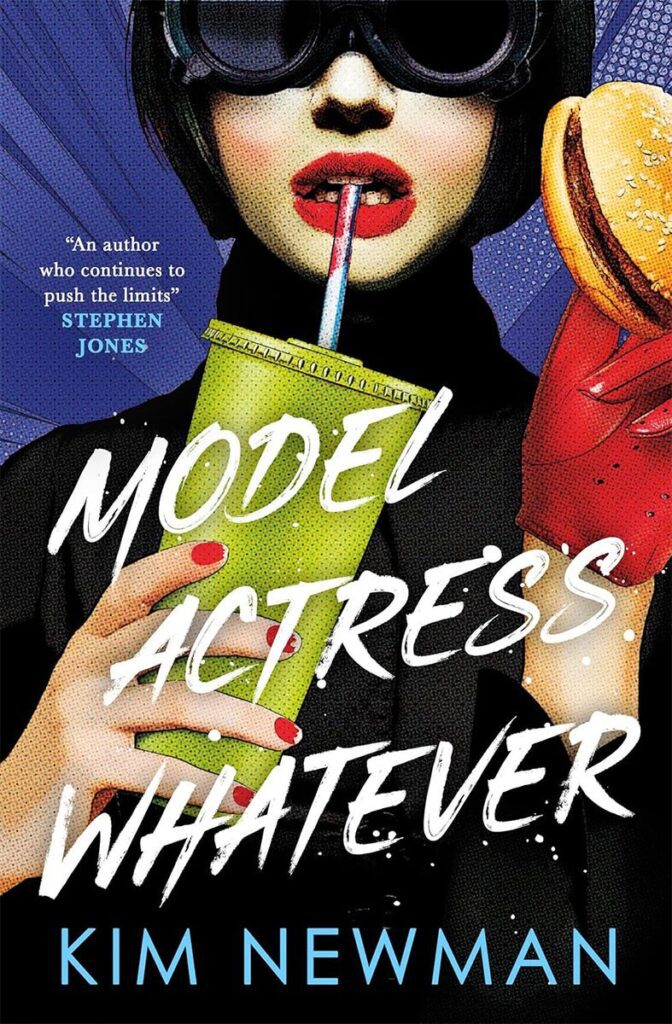
Kim Newman – Model Actress Whatever (May 12, 2026)
I just started this, am excited! Blurb:
From the acclaimed critic and award-winning author of Anno Dracula comes a bitingly satirical story of superheroism, soap opera and alternative reality — for readers of Austin Grossman’s Soon I Will Be Invincible and George R.R. Martin’s Wild Cards.
When Chrissie Chambers (model actress whatever) discovers her soap opera character is about to be killed off, she finally stops dieting and discovers hitherto untapped supernatural abilities. Meanwhile, Chrissie’s aunt – former national heroine Lady Shade – goes missing. Afraid for Jasmine’s safety and itching to costume-up, Chrissie and her ghost-possessed best friend Loulee break into Devil’s Dyke, the asylum where Jasmine works as a therapist with the most dangerous cutthroats (supervillains) in Britain… only to find the inmates have taken over… Chrissie debuts successfully as a cloak (superheroine), but who will become the arch-nemesis of Lady Shade II?
In Chrissie’s timeline, the Beatles didn’t split up and recorded a hallucinodelic album in 1972 – Never Mind (strictly, Never Mind the Beatles) – which literally changed the world. Set in an alternative 2020s London, this hugely entertaining, darkly humorous superhero tale is packed with Newman’s trademark wit, and comes with wickedly sharp edges.
Coming Soon
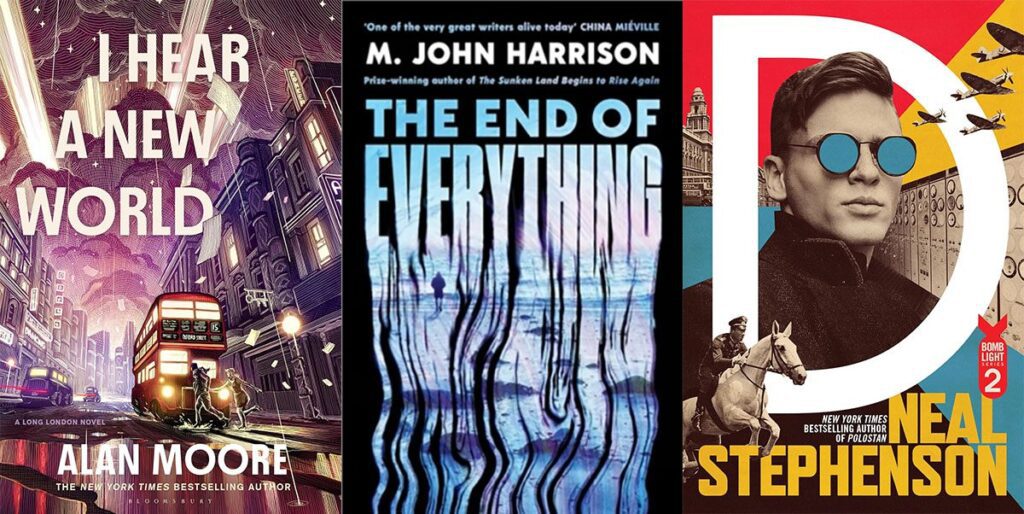
Alan Moore – I Hear A New World (Long London #2) May 26
From New York Times bestselling author and legendary storyteller Alan Moore, the second book in the Long London Series, a daringly inventive fantasy novel about murder, mayhem, and magic.
It’s 1958 and Dennis Knuckleyard has decided to leave his adventures in the Great When in the past where they belong. For nine years, he’s avoided so much as thinking about the magical version of London, until he rediscovers an unpleasant reminder of his last adventure-a key that he’d secretly brought into his own world from the other for safekeeping.
But while Dennis may believe he’s done with the Great When, it’s far from done with him. When Dennis gives the key to a friend, its magical properties reawaken, bringing creatures from the other world into Dennis’s and sparking riots in Notting Hill. Even worse, Dennis’s old crush Grace Shilling has been forced into the Great When to investigate strange happenings in both cities.
Desperate to keep Grace safe, Dennis follows her into Long London. But once inside the other city, it will not let him go away again so easily, and Dennis and Grace must fight to set things right in the Great When and their own world, or forever lose their lives-and each other.
Full of Moore’s characteristically stunning world building and rollicking prose, I Hear a New World is the extraordinary second adventure in the Long London series.
M. John Harrison – The End of Everything (Jun 18)
Phillip Tennent, a scavenger working the tideline after a mysterious global crisis retrieves a shape‑shifting creature from the sea, and is forced inland on a journey that destabilizes everything he believes about the world. Post‑apocalyptic, surreal, and darkly satirical,
Neal Stephenson – Dr. Heavy Winter (Bomb Light #2) Oct 13
The second installment in his monumental Bomb Light series—a gripping tale set on the eve of World War II, as nations race to find and control an elusive substance critical to building atomic weapons.
Europe, 1934. British journalist Owen Crisp-Upjohn is dispatched to Moscow, where his assignments quickly escalate from cultural reporting to international espionage. Before long, Owen finds himself pulled into the orbit of the enigmatic Earl of Suffolk, a maverick aristocrat, and Aurora, a curiously compelling woman with a shadowy past rooted in Soviet intelligence.
Their mission soon becomes clear: secure the earth’s only supply of deuterium—”heavy water”—before it falls into Nazi hands. The high-stakes pursuit takes them from London’s plush drawing rooms to Barcelona, ravaged by the Spanish Civil War; from far-flung Soviet aerodromes to the perilous, icy landscapes of occupied Norway. Over time, Owen evolves from a detached observer into a man forced to confront profound questions of honor, love, and moral responsibility as loyalties are tested and allegiances shift in an ever-tightening web of science, intrigue, and deceit.
Rich with historical insight, emotionally complex characters, and a relentless sense of urgency with a world on the edge of cataclysm, D: Heavy Water is a suspenseful and wildly entertaining tale of courage and consequence in which humankind’s future is shaped by decisions made in the shadows.

Haruki Murakami – The Tale of KAHO (Jul 3, but in Japanese)
Murakami’s first full‑length novel with a female protagonist; expanded from his serialized “Kaho” stories. An English translation has been started, and with luck will come out less than a year later.
More:
Douglas Stuart – John of John (May 5)
Patchett, Ann – Whistler (Jun 2)
Jake Arnott – Netherworld (Jul 25)
Emily St. John Mandel – Exit Party (Sep 15)
Stephen Baxter – Hearthspace (Sep 25)
May 31, 2026
Fester’s Lucky 13: 1996
April 2, 2026
Fester’s Lucky 13: 1986
February 27, 2026
Fester’s Lucky 13: 1976



Leave a Reply
You must be logged in to post a comment.