While I just wrote about two Between the Cracks albums last week, the double albums from The Method Actors and The Suburbs, I sometimes gnaw at something a while before I move on. In this case I was thinking, 1981 was such an amazing year in music. Have I missed anything? The answer is always yes, but the question is, can I dig up anything really great? In this case, yes I did!
One of the things I do to validate an album’s Between the Cracks status is to check polls like Pazz & Jop and Trouser Press, and one of my favorite polls, Slicing Up Eyeballs, which covered the 1980s year-by year, with over 25,000 voters. Then I commence the hunt. I can’t really tell you exactly how I do it, it involves putting on the headphones and doing a deep dive on old semi-forgotten blogs, discussion groups, comments on RYM, YouTube, etc. I must go in a trance state, as time warps and I’m up way too late.
The spoils this time are a few items that had actually seen reissues, but I either didn’t pay close attention to them at the time, or, in the case of The Sleepers, I had to wait until Superior Viaduct decided to offer digital files rather than just the stupid vinyl, eight freakin’ years after it’s reissue! Aaargh! Anyway, I snagged it on Bandcamp, and also revisited TV21, whose Snakes And Ladders compilation on Cherry Red I’ve owned since it came out in 2010. A great review of the core album, A Thin Red Line (1981), by Dave Furgess on the Headheritage site, also referenced Barracudas, Local Heroes SW9 and Empire. I know I’d heard those names before, but my mind is not always a steel trap and it takes time to get around to investigating all these bands I hear about in passing.

TV21 – A Thin Red Line (Deram, 1981)
TV21’s early singles in 1980 were similar to the post-mod pop of The Jam, while their sole album, produced by Ian Broudie, which ventured into psychedelic post-punk, is considered one of the great lost albums, an equal to contemporaries The Teardrop Explodes and Echo & the Bunnymen. They were featured on the cover of Melody Maker in 1981, and one wonders what would have happened had their singles been put out by Postcard along with their slightly more fashionable Scottish contemporaries Orange Juice and Josef K. So why aren’t TV21 household names at least in the UK at the level of Teardrop Explodes? The band thought it was over-produced, and were second guessing the use of the horns that did not set them apart from Teardrop/Bunnymen.
In retrospect, it’s hard to say that stripping it down to more along the lines of The Sound’s debut, Propaganda (a demo released as their first album) would have improved on an album that sounds pretty great to my ears. Coincidentally, “Ticking Away” and “It Feels Like It’s Starting To Rain” could have fit well with the slower tunes on The Sound’s second album, From The Lion’s Mouth. At the end of 1981, the band had drifted into the fashionable synthpop sound, heard on their last single, “All Join Hands.” It didn’t really work, and the friction between five different songwriters was too much to sustain, and the band imploded on a subsequent tour supporting The Rolling Stones, despite Mick Jagger being an enthusiastic fan. A couple members played small, brief roles in The Bluebells and The Waterboys, and Neil Baldwin and Ally Palmer were in Shame. Fans had to wait until 2009 to find out what could have been, when the band released their sophomore album, Forever 22, after first getting together in 2005 at a John Peel tribute. The band had more great music in them, even if it took 28 years to cough it up.

Empire – Expensive Sound (Dinosaur/Poorly Packaged Products, 1981)
With it’s spare, artsy cover and influential, stripped and slowed down post-punk sound that was a big influence on Dischord bands like Embrace, Hoover, Rites Of Spring and Fugazi, many would be surprised to learn Empire was founded by Generation X guitarist Bob “Derwood” Andrews and drummer Mark Laff. Whatever that band’s perceived crimes against punk, Generation X were great, and there were hints at the duo’s aspirations to grow beyond pop punk on tracks like “Wild Dub.” It was likely that their desire to go in less commercial directions is what got them booted out of the band by Billy Idol. Before they left, they recorded an interesting album with Sham 69’s Jimmy Pursey, Imagination Camouflage (1980).
On their own, the duo took bassist Simon Bernal on board, and rehearsed instrumentals while they tried to find a vocalist. Giving up on the search, Andrews took the mic, and it’s no surprise that the vocals are not up front, but integrated with the carefully arranged instrumental parts. The plain, unadorned singing ended up also influencing various post-hardcore punkers. Was “New Emotion” an inspiration for the abomination of a genre tag that plagued post-punk bands that took a direct approach toward expressing human feelings (not much of an innovation there)? Dunno, but I refuse to repeat the insultingly redundant name. Anyway, Andrews may not be an accomplished singer, but he’s an excellent communicator on “All These Things,” and especially the single “Hot Seat.”
“Electric Guitar” is one of the more uptempo tracks, with a rollicking punkabilly drive that California’s Social Distortion was starting to tap into. “Today” also features some pretty accessible melodic hooks, whereas the dirgey title track is more in line with what Joy Division, The Cure and The Comsat Angels were up to. The languid tempo and hushed tones throughout the first half of “Stand” could easily be confused with a Fugazi track, or even an early Slint outtake. Trouser Press Record Guide took the liberty to call this pace “labored and drab.” The ground this band broke is most easily assessed in hindsight. At the time, Generation X’s audience was probably bewildered, while the artier Public Image Ltd./Wire/Gang Of Four crowd mostly dismissed it. The D.C. punk scene adopting it as a seminal work probably had something to do with it eventually being reissued on CD for the first time in 2003 by Poorly Packaged Products, and Dischord sold copies through their distribution. They found one last cache and sold those off in 2013, and now the CD fetches up to and over $100 on eBay. Drastic Plastic Records reissued it on vinyl in 2015, and while it can be streamed on Spotify, digital files really should be made available on Bandcamp, as there should always be an interest in this unique album.
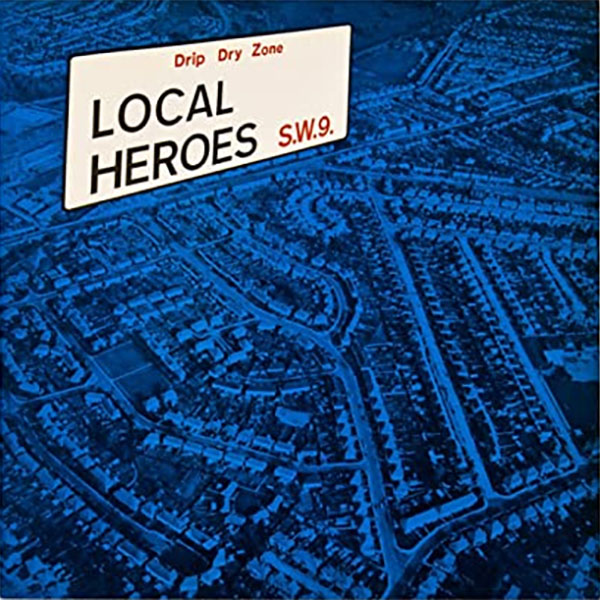
Local Heroes SW9 – Drip Dry Zone/New Opium (Oval, 1980-81)
Despite several punk bands dabbling in reggae like The Clash and Stiff Little Fingers, not many beyond Public Image Ltd., The Slits and The Ruts managed to successfully come up with a post-punk dub fusion. Bauhaus flirted with it on their monumental debut single “Bela Lugosi’s Dead.” The Police and Men At Work worked out appealing pop reggae hybrids that crossed over big time. Seemingly long forgotten are the obscure Local Heroes SW9, who did just that. More melodic than PiL and with less pointy angles than Gang Of Four, Local Heroes SW9’s leftist lyrics addressed the subtle grey areas rather than slogans. “Stabbed In The Heart Again” is a lost gem of a should-be single, while the title track shows how fun The Pop Group might have been had they been less cluttered. They even tackle a ballad on “Another Modern Romance.”
The music on New Opium is even more accomplished, but its impact was diminished by the fact that the flip side of the album was a solo effort from singer/guitarist Kevin Armstrong titled How The West Was Won, which is not included in the current digital offerings. “Hippy Street” and “New Opium” suggest what The Fall might have sounded like had they pursued a post-punk dub direction. “Competition” features a repetitive melodic vocal hook anchored by a fat, throbbing bass line, while the lovely “Love Is Essential” points in a sophisticated pop direction the band might have pursued toward greater success had they stayed together. Instead, Armstrong faded from the spotlight, contributing guitar to The Passions in 1981-82, and working with Thomas Dolby, who played keyboards on Drip Dry Zone. His only other credit is an interesting collaboration with Robyn Hitchcock, Graham Coxon and others on a cover of Syd Barrett’s “Octopus” on the 2018 soundtrack to the Philip K. Dick’s Electric Dreams TV show.
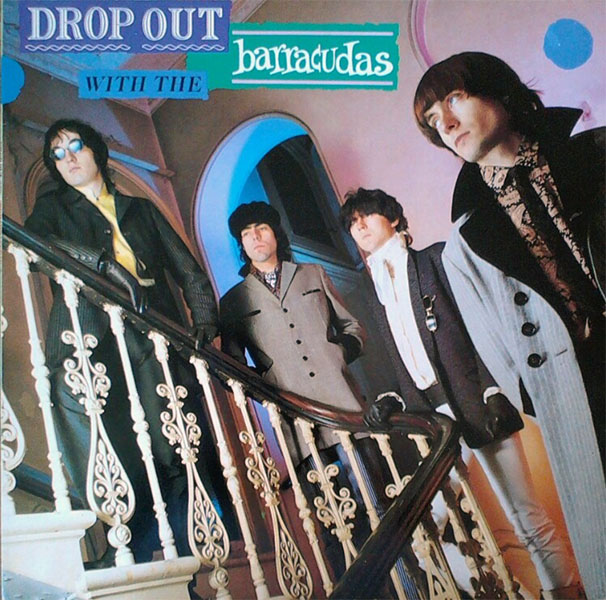
Barracudas – Drop Out (EMI/Voxx, 1981)
For a seemingly jarring change of pace, Barracudas at first glance might seem like a throwaway revivalist band with insanely energetic treatments of surf/garage and power pop with “Summer Fun,” complete with a whacky comic bit in the beginning. But dig deeper, and this band can do dark paranoia with the best of ’em on “We’re Living In Violent Times,” “Codeine” and “I Saw My Death In A Dream Last Night.” The band could hold their own against anyone live and earned the respect of all their peers, much like the Lyres and The Last did in the U.S. Their bipolar yearning for summer fun mixed with crushing depression is the perfect soundtrack to the summer of 2020.

The Passions – Thirty Thousand Feet Over China (Polydor/Cherry Red, 1981)
While not known for hooky, melodic singles, The Passions were a subtly groundbreaking band, giving post-punk a sophisticated sheen and ethereal atmospherics whose influence on literate jangle pop, sleek sophisti-pop and dream pop would grow seemingly exponentially every decade. I could list dozens of bands from the 2010s who delve in sounds that The Passions anchored their anxious, clever songs in first. The closest sounding contemporaries would be Martha and the Muffins, particularly This Is The Ice Age from that year. The album kicks off with the gently sardonic “I’m In Love With A German Filmstar,” by far their best known song. But focuses listening sessions of the whole album are very rewarding. Even “Small Stones” and “Skin Deep,” which recall the more dour post-punk of their debut Michael & Miranda (1980) are consistently compelling. Meanwhile, the upbeat “Bachelor Girls” is nearly as catchy as The Go-Go’s. Their most passionate and political song was “Africa Mine,” released as a single just after the album release, and it’s well worth seeking out. The CD currently is being offered on Amazon for just $414.79! The band released one more solid album, Sanctuary (1982) before they split. Singer Barbara Gogan was seen performing acoustic shows in New York later in the decade, and also lived in Paris and Russia, collaborating with Hector Zazou in the 90s.

Fischer-Z – Red Skies Over Paradise (Liberty)
I thought I had covered Fischer-Z previously, but I guess not. I first discovered their first two albums, Word Salad (1979) and Going Deaf For A Living (1980), pretty great mixes of new wave, post-punk and occasional bouts of The Police’s pop reggae. “So Long” was their big single that got an early video treatment, but the real monster is their third album. It’s chock full of inventive songs laced with icy synths that are more successful than anything Magazine did after 1980, digging deep into peak cold war era paranoia. John Watt released some good solo albums, and Fischer-Z are still going strong, releasing new music.
Polyrock – Changing Hearts (RCA/Wounded Bird, 1981)
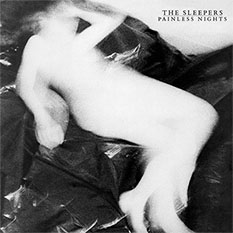
The Sleepers – Painless Nights (Adolescent/Superior Viaduct, 1981)
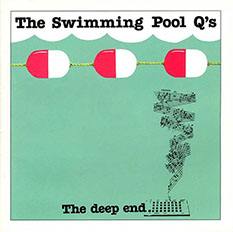
The Swimming Pool Q’s – The Deep End (DB/Armageddon, 1981)
The next few albums are from American artists who don’t sound like anyone else in the U.S., similar to The Method Actors and The Suburbs. It’s surprising how obscure NYC sextet Polyrock is, considering the fact that minimalist maestro Philip Glass produced and played on both their self-titled debut in 1980, and Changing Hearts. The band seemed to operate outside of New York’s post-disco/no wave dance scene, despite the fact that their minimalist dance tunes would sound excellent cranked up in dance club. Billy Robertson (Model Citizens) keeps his vocals unabtrusive within the mix, focusing instead on the propulsive rhythms that suggest what The Feelies might have sounded like if they switched their Eno obsession to minimalist disco. These albums, along with the Above The Fruited Plain EP (1982), must have been secretly worshiped by all kinds of bands, ranging from Stereolab to Franz Ferdinand and LCD Soundsystem.
The Sleepers were formed in San Francisco in 1978, with former Crime drummer Ricky Williams’ wild, improvised baritone careening between Peter Hammill, Scott Walker and Billy MacKenzie (The Associates). The band broke up after releasing the Seventh World EP (1978), with Michael Belfer playing in Tuxedomoon, and Williams co-founding Flipper, but being kicked out before any recordings were made for being too weird. They reformed in 1980 and embraced the weirdness on the “Mirror/Theory” single, and then Painless Nights, a minor lost classic of American post-punk. “Theory” makes a re-appearance in a much different form, true to the band’s M.O. where every live performance was unique and improvised. It’s a challenging album, but listen to it enough, and the skewed goth funk of “B-Side” starts to sound like pop. Superior Viaduct dropped the ball and left off the singles, and the band’s most impressive achievement, “Let Me Free,” which was previously included on the 1996 compilation The Less An Object. The band’s East Coast tour was cut short due to Williams’ erratic behavior due to abuse of speed. He went on to contribute vocals to Toiling Midgets from 1981-83, and died of a heroin overdose in 1992. Belfer made two albums of indie rock as Torcher in 1995-96 and played in Black Lab in 1996-99, and Tim Mooney drummed for American Music Club and Sun Kil Moon.
Atlanta, GA’s The Swimming Pool Q’s would later blend in with the post-R.E.M. jangle pop landscape, but at first they had more in common with Athens post-punkers Pylon and The Method Actors. “Big Fat Tractor” sounds a lot like The B-52’s and is understandably annoying, but thankfully it’s an anomaly. Deep End is rich with some of the most challenging post-punk East of Cleveland’s Pere Ubu, such as the Beefheartian “Rat Bait” and “Black Bug,” which makes sense, as singer/guitarist Jeff Calder spent time in the experimental jam band Hampton Grease Band. The skanking “Little Misfit” is another highlight, showcasing the vocals of Anne Richmond Boston. Other songs are more literary with quirky characters in uniquely Southern settings. While the band’s sound quickly evolved into something more commercial on their next four albums, or at least traditionally Ameri-indie, they remained a stellar band.
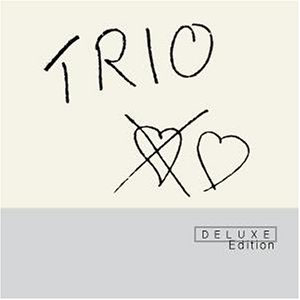
I knew nothing about Germany’s Neue Deutsche Welle scene, and when I first heard Trio’s mix of minimalist synthpop and garage punk a few years after the album’s original release in Germany, they sounded like a blast of fresh soundwaves. “Da Da Da I Don’t Love You You Don’t Love Me Aha Aha Aha” was the big novelty hit, but they were so much more. Mixing lowbrow humor with high brow concepts like Devo, their Klaus Voorman produced debut also features the addictive “Sunday You Need Love Monday Be Alone” and the charmingly heart on sleeve “Broken Hearts For You And Me” and minimalist calypso “Energie.” The American compilation Da Da Da includes highlights from their second album, Bye Bye (1983) like “Out In The Streets,” “Tutti Frutti” and “Anna – Letmeinletmeout,” plus “Boom Boom.” But fans really need to check out the deluxe double disc version of their original debut by Universal in 2003. When I was in college I felt like everyone knew this band, but in the real world, it seems few do.
Between The Cracks 1981
- The Raincoats – Ody Shape
- The Method Actors – Little Figures
- The Suburbs – Credit In Heaven
- Opposition – Breaking The Silence
- Modern Eon – Fiction Tales
- Martha and the Muffins – This Is The Ice Age
- TV21 – The Thin Red Line
- Yellow Magic Orchestra – Technodelic
- Empire – Expensive Sound
- Local Heroes SW9 – Drip Dry Zone/New Opium
- Barracudas – Drop Out
- The Passions – Thirty Thousand Feet Over China
- Fischer-Z – Red Skies Over Paradise
- Monitor – Monitor
- Sunnyboys – Sunnyboys
- Polyrock – Changing Hearts
- Second Layer – World Of Rubber
- Flesh Eaters – A Minute To Pray, A Second To Die
- The Sleepers – Painless Nights
- The Swimming Pool Q’s – The Deep End
- Cleaners From Venus – Blow Away Your Troubles
- The Fall – Slates EP
- Trio – Trio
- The Method Actors – Rhythms Of You EP
- Fingerprintz – Beat Noir
- The Raybeats – Guitar Beat
- Doll By Doll – Doll By Doll
- The Passage – For All And None
- Manuel Göttsching – E2-E4
- Roedelius – Wenn Der Südwind Weht
- Roky Erickson And The Aliens – The Evil One
- New Age Steppers – Action Battlefield
- The Vapors – Magnets
- Effigies – Haunted Town EP
- La Dusseldorf – Individuellos
- DNA – A Taste Of DNA EP
- Wah! – Nah=Poo, The Art Of Bluff
- Desmond Simmons – Alone On Penguin Island
- T.S.O.L. – T.S.O.L. EP
- Robin Lane & The Chartbusters – Imitation Life
1981 was so deep, I could go on with Suburban Lawns, The Selecter, Rip Rig + Panic, The Deep Freeze Mice, Penguin Café Orchestra, Love Tractor, Hitmen, Michael Rother, Legal Weapon, The Gordons, The Scientists, P-Model, The Clean, Dome, Tuxedomoon, Nits, Nekropolis, Jody Harris & Robert Quine, The Photos and more.
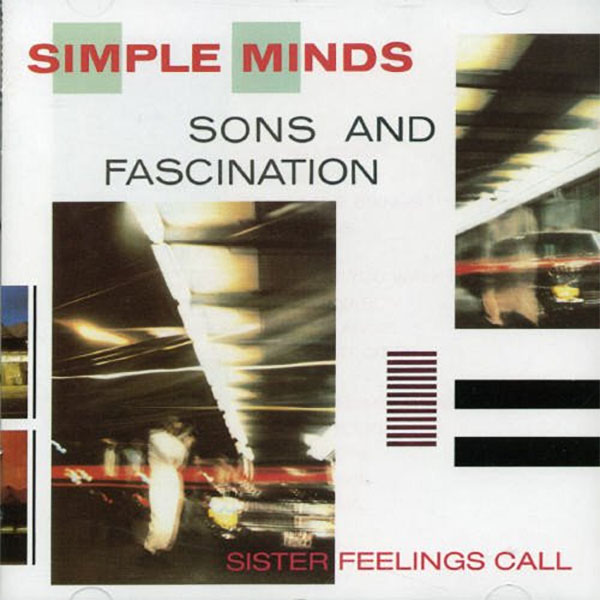
Bonus Trax: Simple Minds – Sons And Fascination/Sister Feelings Call (Virgin, 1981)
This double album was #20 in the Slicing Up Eyeballs poll, so it certainly has its following. The band was huge by the mid-80s, but I still think this album isn’t that well known in general. I mentioned it as the other interesting double album from 1981 that was produced by prog rocker Steve Hillage, and figured it’s worth recommending.
I met George and David last year from Chicago post-punk band Stations. Back in the early 80s they were recording an album with Martin Hannett (Joy Division, New Order, Buzzcocks, Magazine, OMD, Psychedelic Furs, Nico, U2), but it was never completed. It would be cool if they could master and release those tracks someday.