One of the greatest living authors gifts us with one more classic.
One downside to publishing new work when you’re 88, is people assuming it will be your last novel because you’re undoubtedly going to either croak or succumb to dementia any day now. Kind of a rude assumption, you think? He could live to be over 100 and gift us with a couple more novels. Either way, a new novel from Thomas Pynchon is a gift that I refuse to take for granted. It’s also painful to see a patronizing attitude toward Pynchon’s more recent work, with that stale attitude that great literature can’t have both gravity and humor. While Shadow Ticket, like Inherent Vice, is a brisk read and easier to parse than some of his more unwieldy doorstoppers, it doesn’t make it trivial.
While I started it the day it came out, I took my time with it, to savor every joke, absorb every zany subplot, and even read through all sixteen songs he wrote for the book. His ninth novel is the third in a loose trilogy of detective novels that include Inherent Vice (2009) and Bleeding Edge (2013). While Hicks McTaggart is the least clever of the detectives, often overwhelmed by excess and chaos around him, he’s a survivor, a former hired-muscle “big ape” with moves like Fred Astair on the dancefloor. A half century before Michael Jackson popularizes the Moonwalk, Cab Calloway taught it to Hicks.
“When trouble comes to town, it usually takes the North Shore Line. What with tough times down the Lake in Chicago, changes in the wind, Prohibition repeal just around the corner, Big Al in the federal pokey in Atlanta, Outfit affairs grown jumpy and unpredictable, anybody needing an excuse to get out of town in a hurry comes breezing up here to Milwaukee, where it seldom gets more serious than somebody stole somebody’s fish.”
That’s the fantastic first paragraph of the book. However, one of Pynchon’s quirks is that he heavily favors dialogue over exposition, more often than not declining to give setting or context, which leads you to realize for the past page you’ve had no idea who is talking and where they are or what they’re doing. You really can’t let your mind wander while reading Pynchon, but the effort is rewarded with a wildly entertaining adventure that spans from Milwaukee and Chicago to Budapest, Croatia, Fiume (Rijeka), Vienna, Geneva, Transylvania, the Balkans and more.
Hick’s ticket (investigative assignment) is supposedly to track down the cheese heiress Daphne Airmont, who’s run off with a clarinet player. Her disappearance may be linked to her father Bruno’s exile after allegedly committing “cheese fraud.”
“Oh ja, far worse than most civilians realize. Half the time don’t know what they’re eating anyway. Nor have the least idea how difficult the International Cheese Syndicate can become. The Roquefort police, the Gorgonzola squadri, even Switzerland — harmless by comparison. InChSyn are the mad dog of Cheese Enforcement, authorized to conduct special operations, come in through windows, breach walls, deploy explosives…”
This all sounds cartoonish and silly, with all kinds of subplots involving quite a bit of supernatural events/magical realism, such as the apport and asport of objects like the world’s most tasteless but valuable lamp, the rescue of a pig, and Zdenek, a miniature Czeck golem that aids Hicks in the rescue of associates from a neo-fascist biker gang called the Vladboys. The unifying thread is that even in Sheboygan, fascism is percolating and about to bubble over. It’s not just Germany, Spain and Italy, but everywhere.
Those who think Pynchon having a bit of fun means it’s his most inconsequential book are missing the point. When author Tom Robbins died in February at the age of 92, obtiuaries discussed the unfair critical dismissal of his books because they were funny. Every one of Pynchon’s books, with their shaggy dog plots and slapstick dialogue, are funny as hell. They also provide a rich alternative history of the United States and other parts of the world from 1761 (Mason & Dixon) through 2002 (Bleeding Edge), all containing warnings about the dangers of authoritarianism in it’s many guises. Those who don’t think Pynchon’s portrayal of the insidious rise of Nazis in 1932-33 isn’t relevant today have not been paying attention. To those people, Pynchon might say they’re thermodynamicists of the oblivious, achieving maximum mental entropy by actively resisting the organization of knowledge. Or possibly just, told ya so, ya nitwits.

Best Acronyms:
SMEGMA (Semi-Military Entity Greater Milwaukee Area)
BAGEL (Bureau Administering Golems Employed Locally)
IMOPIO (Infernal Machine of Presumed Italian Origin)
UTOPIAN (Unless the Opportunity Presents Itself Attack Nobody)
May 31, 2026
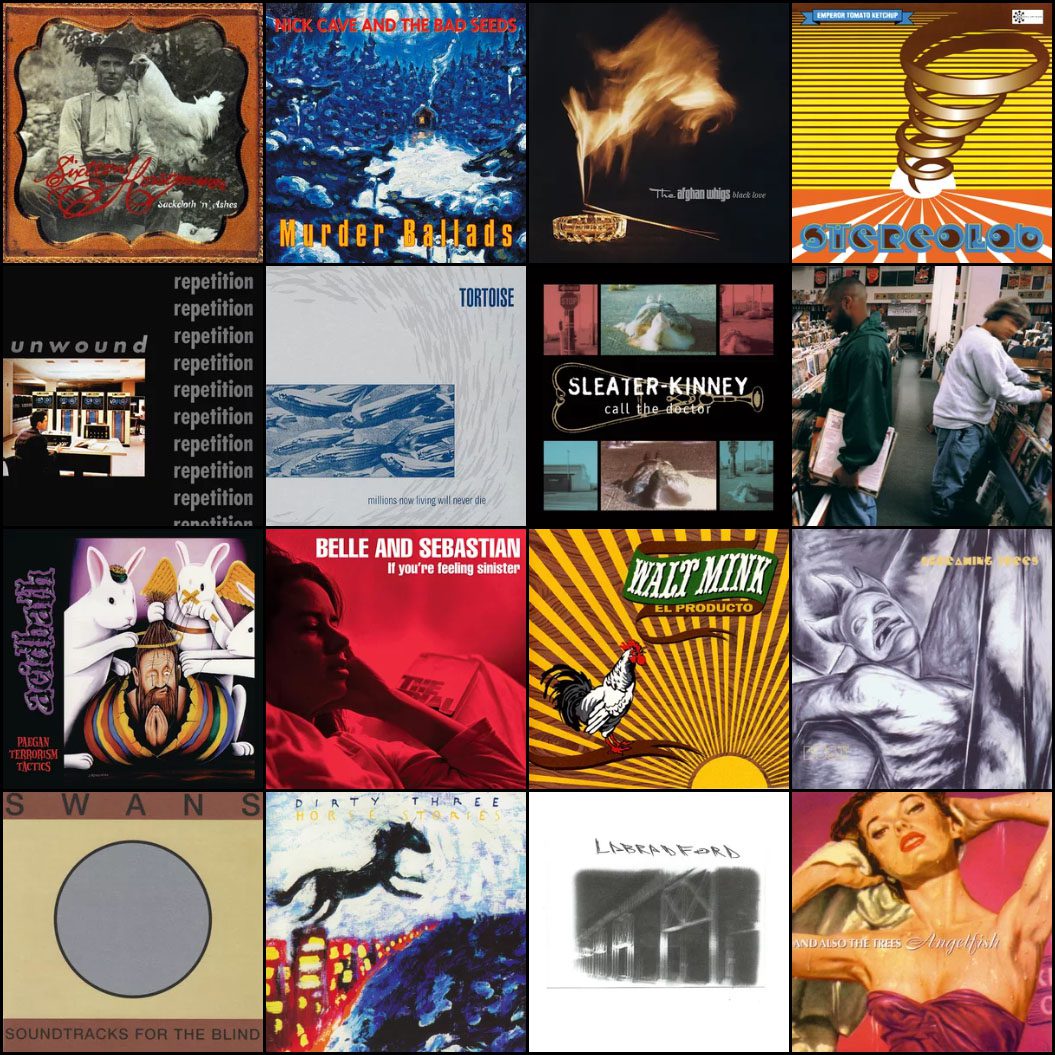
Fester’s Lucky 13: 1996

April 2, 2026
Fester’s Lucky 13: 1986