“When The Primevals first began rehearsing in February 1983 quite a few people thought it pointless to play rock ‘n’ roll music. In fact some still do. Strangely, for such a renowned hard city, Glasgow has never really rocked.” — Michael Rooney, liner notes for Eternal Hotfire (New Rose/Boutique, 1984)
What comes around goes around. When the French label New Rose added The Primevals to their roster, they recognized them as brethren of the swampy garage noir of The Cramps and The Gun Club, exclusive company that drew the admiration of an intense cult following, but overlooked by most. After their initial of run of four underground classics (I recently wrote about their second album, Sound Hole from 1986 here), they sat out the 90s and the major label pigpile on all things alt rock, which is just as well. There were a lots of disappointing albums by disillusioned bands that couldn’t fathom why they didn’t hit it big.
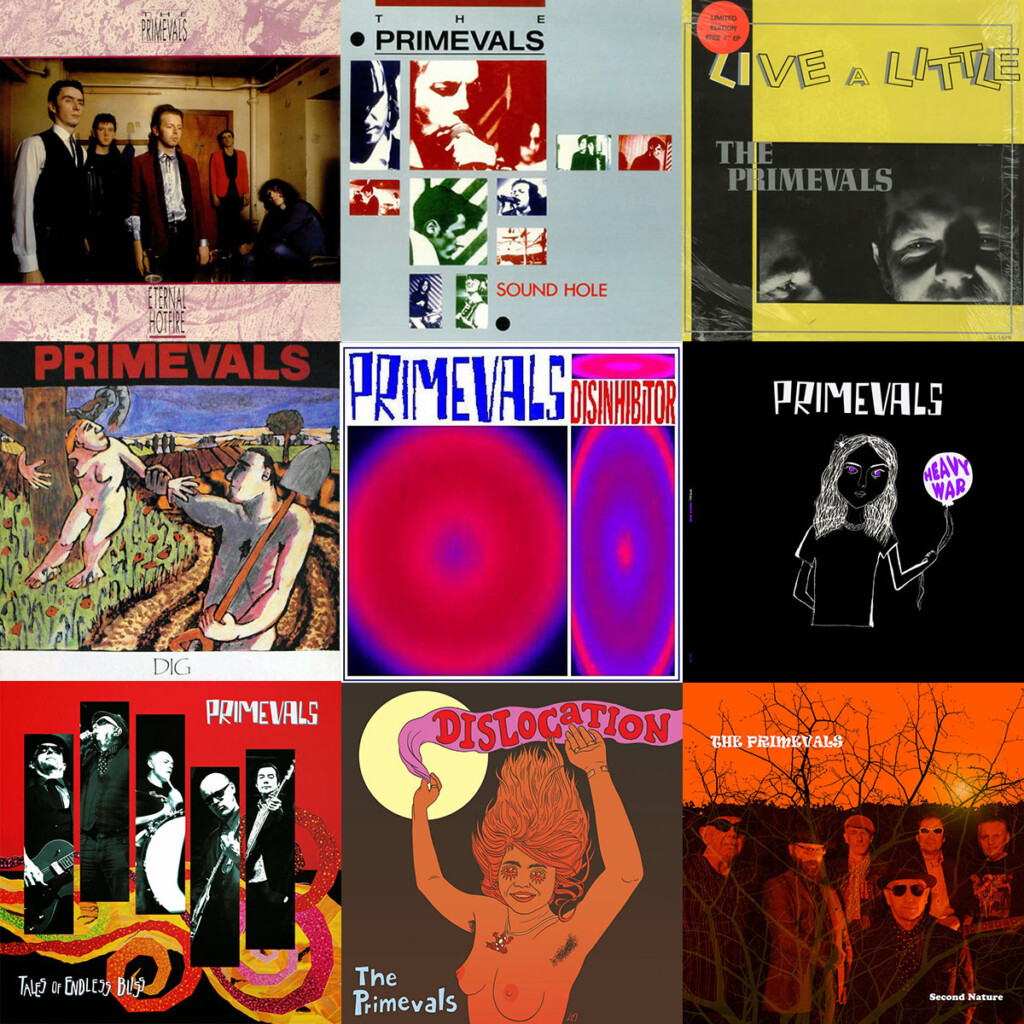
The Primevals reappeared in 2007, double guitars set to stupify once again, with their fifth album, There Is No Other Life And This Is It (Triple Wide). Since then they have consistently come out with new music every two to three years. I’ve been bingeing on the entire catalog for a couple weeks, and not a single album disappoints. Leader Michael Rooney is on such a streak he also released a collaboration with James Doak in The Elevator Mood last year. From their blues punk origins to the expansiveness of Dig (1990) along the lines of Crazy Horse, and Eleventh Dream Day and their impressive run of the last six albums, it’s been a gift for those who have sorely missed the smoky ambiance of Gallon Drunk and The Flaming Stars, to the post-Radio Birdman project of Rob Younger’s The New Christs, who have been MIA since 2014. My favorite of The Primevals Mk II is the concise, raw Tales Of Endless Bliss (2014), but their latest to come out in our year of sorrow surpasses it in many ways.
Rooney’s lyrics have evolved into more direct, pointed songs addressing both the personal and political. The band still features two guitars, including original member Tom Rafferty, but their sounds have expanded with guitarist Martyn Rodger also handling sitar and tenor sax. Original bassist John Honeyman has moved to keyboards and guitar, with Ady Gillespie handling bass duties. The album starts off with the atmospheric, brooding “We Die Young Here,” before kicking into overdrive on “The Older I Get,” Paul Bridges’ drums galloping like a runaway train choogaloogin down the mountain like prime Screaming Blue Messiahs.
With sixteen tracks in fifty two and a half minutes, you’d think it would be a bit much, but focused listening brings new rewards at every “spin.” Check out the post-Fun House sax duel between Rooney and Rodger on “Wanton Destruction.” It’s a heck of a lot more fresh and engaging than anything from The Stooges’ reunion album. Consider another slower number, “All Or Nothing Thinking,” with it’s exquisite interchanging guitar leads. How many years has it been since Nick Cave has done something this effortlessly heavy? Too damn long, which is why this should not be taken for granted. The sitar is brought out for the slow boil of “Now Is The Time,” as satisfying as Medicine Show era The Dream Syndicate. Rootsy cowpunk gives way to an eerie Ennio Morricone bridge on “Heavy Freakout.” “Wanna Be Loved” is given space to breathe with a funky, soul-blues groove that extends into “Powershake,” where Gillespie’s bass playing is the star.
In a crippled world that’s forgotten how to read, think, reason and rock, Second Nature feels like, if not an antidote, then definitely a much needed supplement. Just be careful or you just might disappear down a garage rock rabbit hole and overdose. Along with The Primevals’ ten albums, I’ve been rolling about in dozens of albums from the likes of The Nomads, The Things, The Cynics, Plan 9 and The Stomach Mouths. Yeah, I need help.
Essential

The Primevals – Sound Hole (New Rose/Boutique, 1986)
I first heard The Primevals via their contributions of “China Pig” and “Crazy Little Thing” to Fast ‘n’ Bulbous: A Tribute To Captain Beefheart in 1988. They weren’t my favorite covers, as they sounded a lot like post-peak Blasters to my ears. Man, did I miss out. Had they stuck to their signature, feral garage noir style, as the Scientists did on “Clear Spot,” I would have rampaged through the record stores like an amphetamine pumped elephant until I found their records. I don’t know why this Glasgow band was such a well kept secret, with no entry in the usually thorough Trouser Press Record Guide, and very little press in general. Most likely it was the fact that their classic 80s albums were only released on the French New Rose label, and not in the U.S. We missed out on a perfect hybrid of sinister sounding punk/blues/garage rock just as potent as anything by contemporaries the Scientists, The Gun Club, The New Christs and The Bad Seeds.
The second album after Eternal Hotfire (1984), Sound Hole finds The Primevals at their peak powers. “Prairie Chain” is a prime combo of slide guitar blues and rootsy twang, while “Saint Jack” gives a character study that measures up to what Nick Cave was up to. “Spiritual” is another highlight, with vocalist Michael Rooney adding a bit of quaver that reminds me of Wall Of Voodoo’s Stan Ridgeway, while some horns briefly enter the mix recalling The Saints. The simmering groove of cuts like “Nutmeg City” (lightened up by a bit garbled blathering via Lux of The Cramps) suggests that Australia’s Radio Birdman may have been an influence, so it wouldn’t be fair to say these Scots are fixated only on Americana. It may have been underground, but by the mid-80s, garage noir was already a global phenomenon. Their first three albums, including Live A Little (1987), were reissued by Last Call in 2006 as On The Red Eye, and the first two albums were reissued as deluxe double discs in 2015 on Boutique, part of LTM. The band is still active, and also just released a new album, Second Nature. | Buy