XTC begins transition to a studio band with their most complex, intricate work on their fifth, a double album that could have been a triple.

I’m pretty sure I’d heard some XTC by 1982, but at the time, listening to KUNI radio was like listening to a foreign language. It’s just a bunch of random sounds, until gradually it begins to make sense as you learn the vocabulary and grammar. I was a late comer, my first purchase being Skylarking (1986), circling back to their Waxworks singles compilation, then Drums And Wires (1979), then all the albums. Even then, it took decades for their fifth album, the double length English Settlement, to sink in, like an extra difficult language. It didn’t help that my bible (Trouser Press Record Guide), said it “tilts like an over-frosted wedding cake,” though admitting it doesn’t topple because XTC rule. Not quite in those words. The band took a pretty big step from Black Sea (1980), which had some progressive pop and art rock tendencies, but also kind of rocked and was meant to come across live. But being a geeked out XTC fan rewards dedication, as all their albums were great, at least up until their second double album, Oranges And Lemons (1989), with English Settlement settling into the #2 spot as my second favorite XTC album.
In 1980-81, the band were rapidly growing artistically and commercially, with singles “Making Plans For Nigel,” “Generals and Majors,” and “Respectable Street.” They underwent a massive tour with The Police, reaching stadiums full of people. Had they continued that trajectory, they might have possibly reached stardom at the level of perhaps mid-80s U2, or at least R.E.M. and Talking Heads. Instead, Andy Partridge was suffering withdrawal from Valium, which he had, incredibly, been prescribed since he was 12. After his wife threw away the pills, he went through what he called “brain melt” where at times he didn’t even know who he was. The aftereffects are more likely to have affected his stopping playing live and touring, not stage fright. He approached recording English Settlement in a way that would be difficult to replicate live for the first time. It worked pretty well for The Beatles on Revolver, so why the heck not? Well, the band was actually scheduled to headline their first U.S. tour, so maybe not the best timing.
The result was an expansion in complexity, instrumentation and lyrical scope. The cover art features the Uffington White Horse, the enigmatic Bronze Age hill figure nearby their hometown of Swindon. The exposed white chalk surrounded by green grass make it visible from miles away. The sense of wonder it evokes is precisely the kind of ambition the band was going for, and would continue to strive for. The band addressed English politics on “Melt the Guns” and Moulding’s “Ball And Chain” attacking Thatcher’s development schemes at the cost of rural villages. That and “Senses Working Overtime” were two of the band’s catchiest singles that got some airplay. The band based the latter on the Manfred Mann song “5-4-3-2-1” (1964) as a pisstake of a commercial sound, and didn’t think it was good enough to release. XTC’s garbage is the world’s gold, and come on, with the introductory medieval melody and other subtle production touches, it’s brilliant. Third single “No Thugs In Our House” didn’t fare as well, but while it lacks the same kind of sticky hook, the melodic chorus is memorable, a middle class couple confronting the horror that their son is a violent racist.
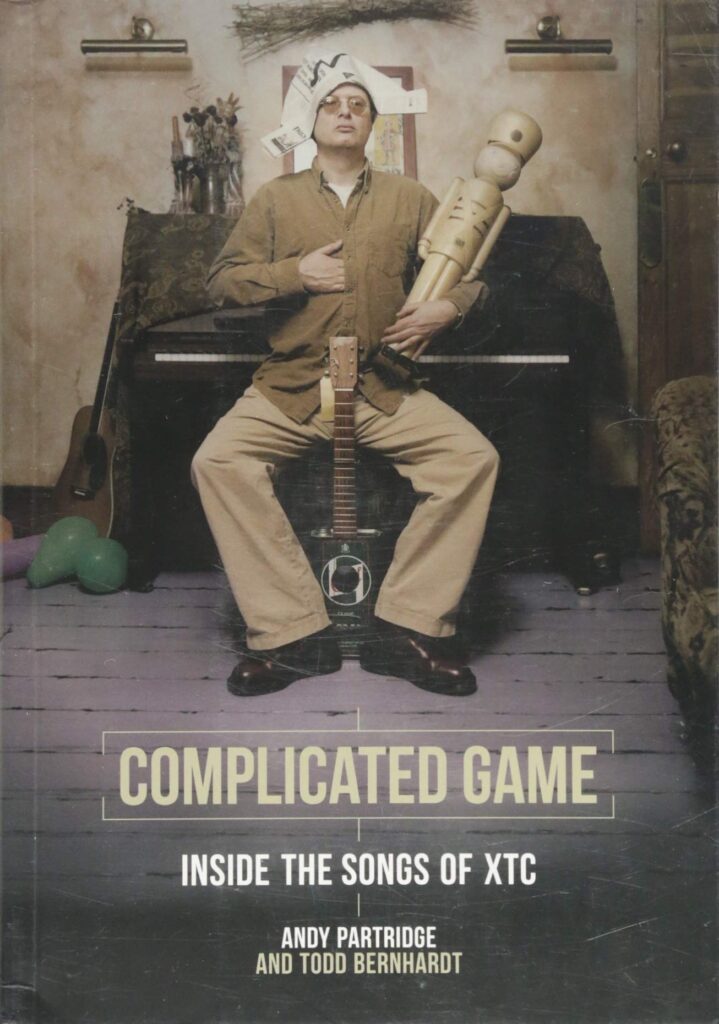
The rest of the songs kind of meander and entwine, blurring together as more a tapestry of headphone-worthy sound design and textures. The band made use of new instruments like Dave Gregory’s Rickenbacker 12-string and keyboards, Moulding’s Ibanez fretless bass and Chambers’ drum synth. The band produced the album themselves instead of Steve Lillywhite, with engineer Hugh Padgham expanding his repertoire of that soon to be dreaded gated reverb drum sound. Here the innovations are still used tastefully. A rhythmic highlight is the title track, one of the few pop songs in 5/4 time, the skanking rhythm perhaps influenced by their touring time with The Police. Chambers continues to pull his weight, driving the 6+ minute “Jason and the Argonauts” with his complex but engaging drum patterns. Partridge book Complicated Game: Inside the Songs of XTC (2016) offer a lot of fascinating insights into not only the popular songs, but the deep cuts.
The band were on a creative roll, writing 30 tunes which necessitated the double album, though the label had other ideas and stripped off 5 songs for the U.S. release, including the essential “Yacht Dance,” “Leisure,” “Knuckle Down,” “Fly on the Wall,” and “Down in the Cockpit.” The last three are not essential, but could have easily been replaced by other quality material like Partridge’s “Tissue Tigers (The Arguers)”, “Punch and Judy”, “Heaven Is Paved with Broken Glass”, “Egyptian Solution (Thebes in a Box)” and “Mantis on Parole”, Moulding’s “Blame the Weather”, and the band’s “Over Rusty Water.” I like the morse-code buzz effects on the Orwellian “Fly on the Wall,” and “Down in the Cockpit” revisiting the ska rhythms. I’ll take them all in the deluxe reissue, please. In 2014-17, Steven Wilson (Porcupine Tree) remastered five XTC albums for the Ape House label, including blu-ray discs with 5.1 mixes. English Settlement was not part of that series, and it seems like a massive missed opportunity to re-imagine it as the 22 track, 97+ minute double album it could have been.
It was to no one’s surprise that the band’s U.S. tour ended in disaster, canceled after it barely begun, and plunging the band into debt so bad they actually had to take on jobs at a car rental service to survive. Nevertheless they continued to record rewarding music that not only stood the test of time, but got better with age — Mummer (1983), The Big Express (1984), 25 O’Clock (as Dukes of Stratosphear, 1985).
#8 #5albums82
#15 Slicing Up Eyeballs
#14 Acclaimed Music
April 2, 2026
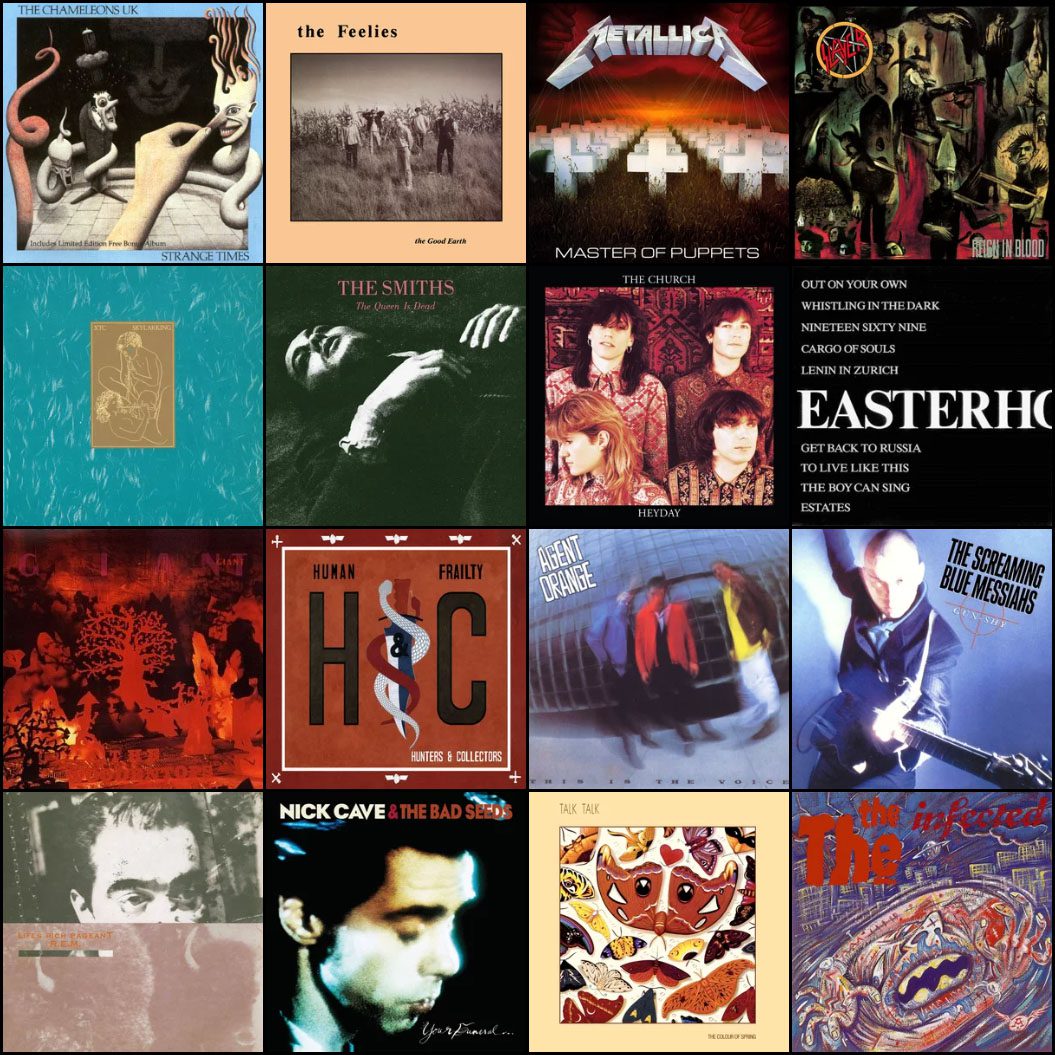
Fester’s Lucky 13: 1986
February 27, 2026
Fester’s Lucky 13: 1976
January 30, 2026
Fester’s Lucky 13: 1966