Key word is bands, not artists. The majority of top sellers and critical picks for 2023 were solo artists, which I found depressing. There’s still something magical about two or more people collaborating and creating an entity with it’s own identity that no single member can do on their own. Especially when the chemistry ignites into something amazing, whether it lasts just a few months or 62 (!) years.
All the artists in my top 30 played an important role of my youth. Of course, I’m starting to get to the point where I’d count the 2000s as my youth too, but only a few newer bands cracked the top hundred. So at the end I’ll give a separate 21st century list (nearly a quarter way through!) and solo artists.

From the first notes of the title track of the first album at the tender age of eight, I was disturbed yet transfixed. The little neighbor girl would only let me listen to those first three Black Sabbath albums that her absent father left behind, when I came over to play dolls and shit. I indulged her whims in order to hear those records, which went so deep under my skin that I didn’t feel the need to buy them myself for years after she had moved away. Like the demon in the Exorcist (1973), another cultural artifact I was exposed to at that age that scarred and changed me, Ozzy’s voice rattled around my brain when I heard things like Def Leppard and, uh Foreigner, whispering, “They’re okay but they’re no Black Sabbath.” Even after doom bands started appearing in the 80s, there was still only one Black Sabbath. The Sabbathian colonization of my brain took decades, but it was complete about 20 years ago. Since then, I’ve probably listened to, read about or thought about Black Sabbath every single day. I read all the memoirs and I’ll just say it’s amazing that they’re all still alive. Any other timeline, Bill would have burned to death from the numerous times he was set on fire by Ozzy, Ozzy would have OD’d, and Tony Iommi would have been murdered by a gang after one of his many fights. It’s okay if they don’t make another album, they served their time, and I’m grateful they all made it to relatively old age so far.

My earliest memories are of staring at the Trout Mask Replica (1969) bright red cover art in wonder, with a man in a goofy fish mask of alluring neon colors. Captain Beefheart was one word different from Captain Kangaroo, and other comical names were listed, like Drumbo, Zoot Horn Rollo and Rockette Morton. My uncle had left it behind after living with my mom and grandparents when I was a baby. I asked him later how he got it, and a hip friend had given it to him along with some Fugs and Velvet Underground. At first I assumed it was a children’s record, due to the silly art and nonsensical song titles. The phrase “A squid eating dough in a polyethylene bag is fast ‘n’ bulbous, got me?” was permanently etched into my brain at the tender age of four. And while it was pretty noisy, my assumption that it was children’s music remained until I read an archived reverential ode to it from Lester Bangs in Rolling Stone. I was mostly right. Don Van Vliet’s art, from when he was a sculpting prodigy making animals as a kid, through his 15 years in music, and then a more successful and lucrative career in painting, has always maintained an innocence. Even the sexual innuendo is juvenile. His lyrics and poetry shared qualities with James Joyce’s Ulysses and Guy Debord’s dada, simulating the experience of language being brand new to a toddler. The labels on the records featured a picture of Van Vliet at about five years old. To retain that feeling, he claimed that he got musicians who never played before. While they were actually trained musicians, he did force them to unlearn some things and play in a completely different way, as if they were children learning new instruments. For a long time all I heard was that album and Strictly Personal (1968) which I picked up used. It wasn’t until college that I started getting CD reissues of the rest of his catalog, and I heard his music mature and become mostly more accessible. He represented all the possibilities of music when it doesn’t follow rules, inspire all kinds of amazing music, and of course the name of my web site.
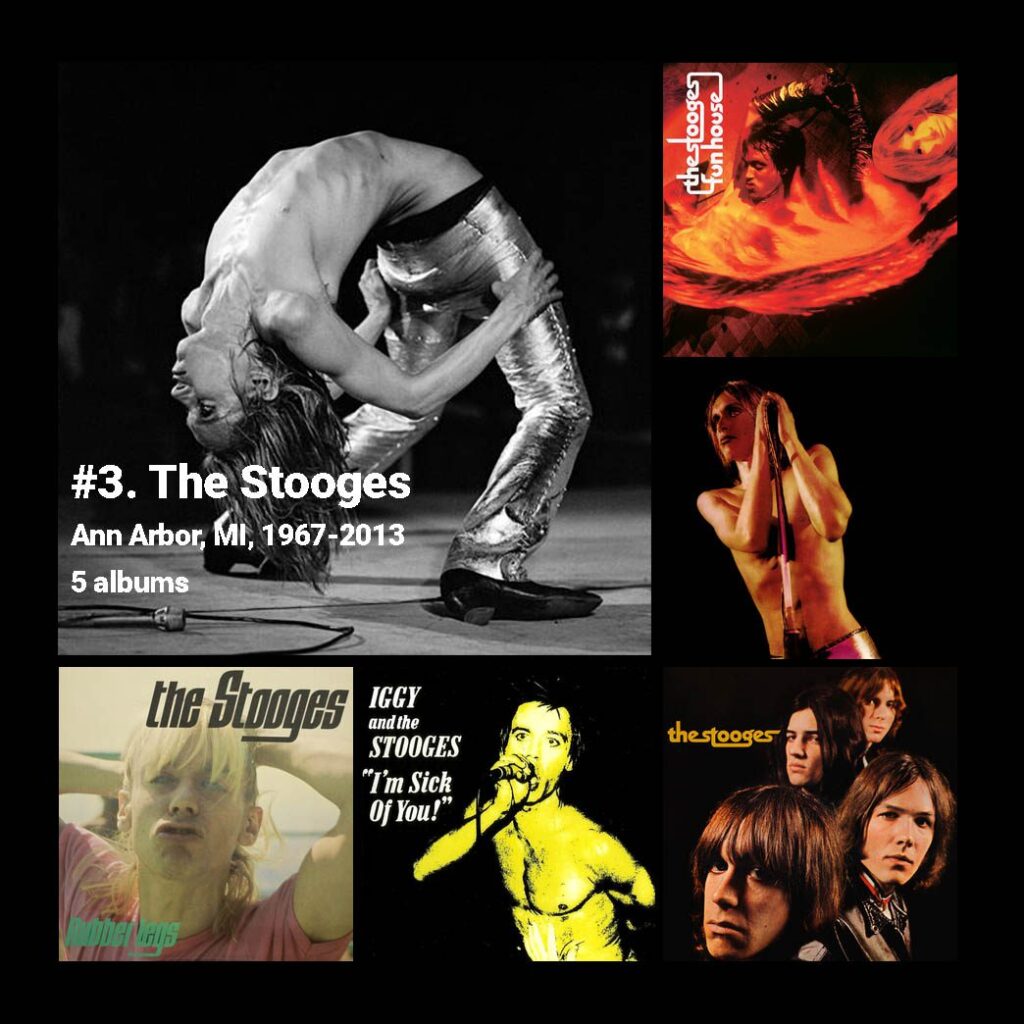
While the Stooges released only three albums in their original run, with two more in the 2010s that were pretty terrible, they more than made up for it by releasing the greatest rock album of all time, Fun House (1970), bookended by two flawed but magnificent and influential albums. The Velvet Underground’s John Cale produced the debut, helping reign in some of the excess flab from their name (Psychedelic Stooges) and experimental sprawl. Iggy took Jim Morrison’s Dionysian id to unheard of extremes that resulted in him being offered the job as Doors front man. Fun House is the perfect rock album, the songs written around Ron Asheton’s amazing riffs. Balancing their love of John Cage, Sun Ra, John Coltrane and Harry Partch with dumb rock, they fine tuned their performances with military precision. Appropriately, the label assigned Don Galluci, organist on The Kingsmen’s “Louie Louie” to attempt to get the live sound on tape. At first he didn’t think it could be done. But he stripped the L.A. studio of its carpet and drapes, hotwired Iggy’s vocals live, and let rip a song a day, in the order they’d appear on the album. Despite being on various substances, the band was incredibly focused. A year after Bowie produced Lou Reed on Transformer, he thankfully took a hands off approach with Raw Power, leaving it unblemished by anything that would carbon date it in the glam era. The original mix is a hot mess, trebly, noisy and in the red. I can’t imagine it any other way. Over a half century later, hundreds of bands have worshipped them, attempted to match the live power of The Stooges and failed.

Like many Gen Xers, The Beatles were in my DNA. I heard their music as a baby, and was most likely conceived to them. I’d listen to my mom’s 45 of “Rain” while fixing my cereal before settling down to cartoons at the age of four. There was even a Beatles cartoon. When I see reaction videos of people who supposedly are involved in music and claim they are hearing a Beatles song for the first time, I call bullshit. Unless you’re raised in a cave with no electricity, no stores with music playing, there’s no way one can live a Beatles-free life. And what a dreary-ass slog that would be. Rather than get into the music, I’ll simply recommend Revolution in the Head by Ian MacDonald (1994). Read it, listen to some damn Beatles or fuck off.
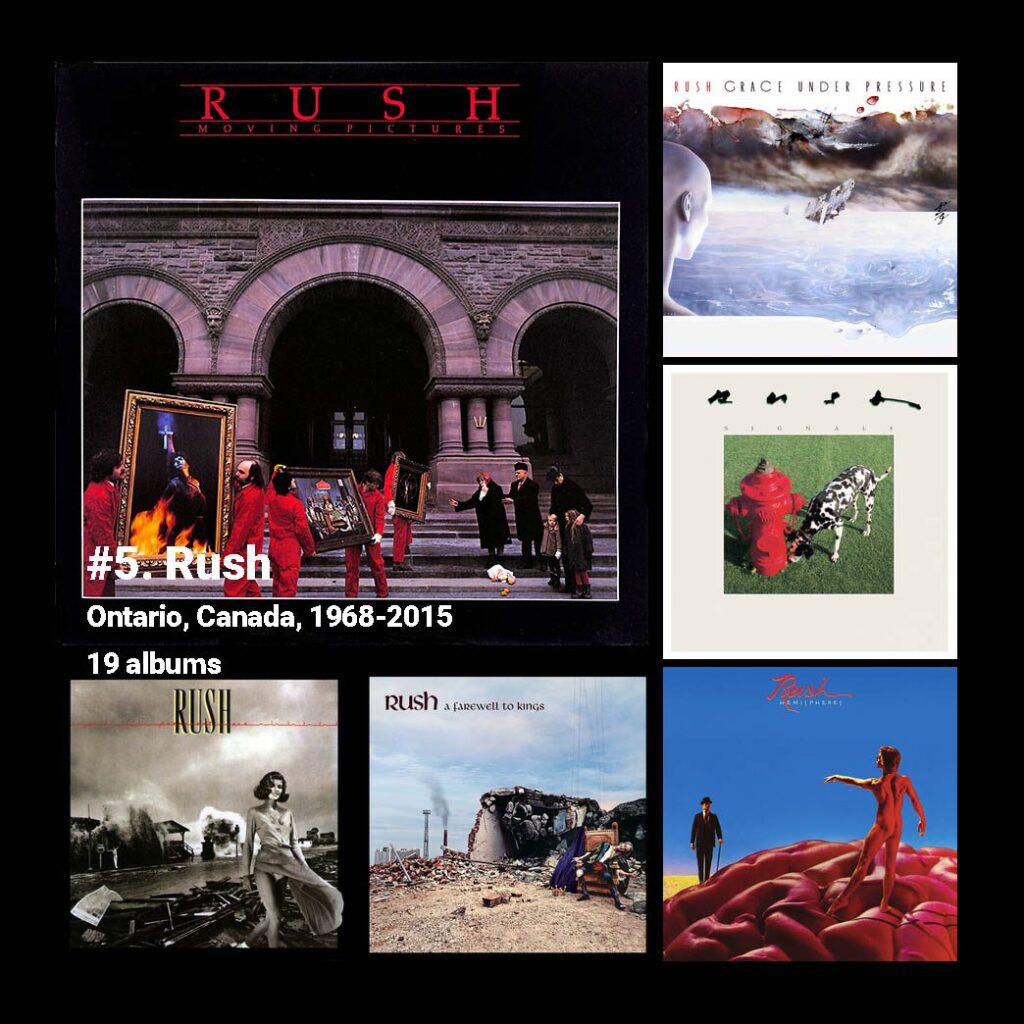
I’m an 80s Rush baby. The first song I heard was “Spirit of the Radio” from Permanenet Waves (1980). Soon I was going back and picking up 2112 (1976), which was great but still felt formative, and the All World’s A Stage live album. When Moving Pictures (1981) came out, I was primed and ready, and it blew away all expectations. The synths on Signals (1982) messed with others’ expectations, but I was all in. It’s why I greatly prefer Grace Under Pressure (1984) with it’s dense layers and intense stories, over any 70s work. They began to wobble with the brittle, synthpop production on Power Windows (1985), but overall it was one of the most astounding eight album runs ever. Like all my favorite bands from childhood, their critical reputation was gradually elevated throughout the 21st century to the point where there was an adoring documentary on them, and when I saw them in 2010, there were actually women in the audience.

The heavy metal band that all others are measured against. It took Steve Harris five years and numerous lineups to find the right twin guitar alchemy that clicked with Dave Murray and Adriam Smith, and it was worth the effort. Iron Maiden ignited the NWOBHM scene, then quickly transcended it. The Derek Riggs artwork featuring their mascot Eddie on all their early albums and their unmatched live productions helped make them more than just a metal band, but a global brand. While they went through a rough patch in the 90s like nearly all bands, once Bruce Dickinson and Adrian Smith rejoined at the end of the decade, they’d become more popular than ever. It doesn’t matter than none of the new albums would remotely match any of their first seven. Iron Maiden had us at “aaaaauuuuuuuugggggh!”

The band I listened to most during my first four years of buying records from age 9 to 12, ELO were my Beatles, prog pop that was complex but also straightforward with frequently joyous lyrics a kid could relate to. The cool spaceship repurposed from an old-time jukebox didn’t hurt either. The sound of our cheap stereo sometimes bugged me, but almost magically ELO records sounded huge and amazing even on that hunk of junk, everything from Eldorado (1974) through Time (1981) and even Secret Messages (1983), which in 2018 was reissued in it’s originally intended double album form. I got to hear the seven additional tracks while also seeing them live for the first time that year. While they weren’t ever considered cool, the band seemed to go through a critical rehabilitation after songs became ubiquitious on commercials and movie soundtracks.

Of the many musicians we lost at the insanely young age of 27, Jimi Hendrix may sting the most. While to the mainstream it might seem he came out of nowhere, he worked really hard honing his style while working for the likes of Little Richard and The Isley Brothers. His genius innovations weren’t instant, he worked at it. We saw the initial fruition in the psychedelic eruption of three albums released within 17 months. The Experience broke up, he did the Band of Gypsys live set, and then he was gone. There’s tantalizing hints of where he was going, with the tracks that were released after his death, and his jam session and plans to record with Miles Davis (who canceled 30 minutes before the scheduled session in fall ’69, demanding a ton of cash). Nearly every musician on the planet who pushed things forward in psych, prog, jazz fusion, jazz-rock, funk, hard rock and heavy metal in the 70s thought to themselves at some point, “What would Jimi have done next?” We’ll never know, but his creative spirit has inspired multiple generations since.
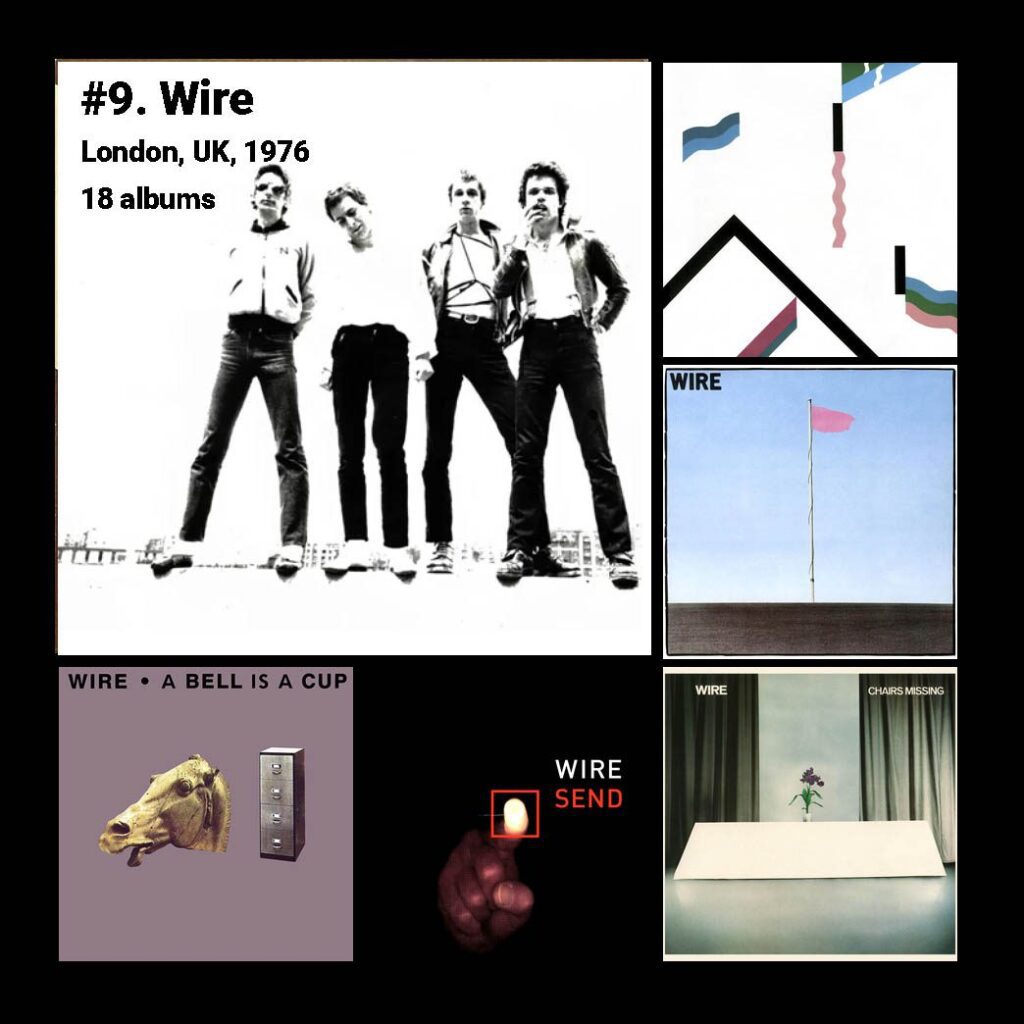
When you’re 17, seven years feels like a lifetime, or at least half a one. When I first heard Wire’s Snakedrill EP in 1986, it was cool, but the stories of their initial incarnation seemed like legends from a lost, mythical era. Pink Flag (1977) and Chairs Missing (1978) more than lived up to the hype. The debut album dismantled punk and reassembled it into a series of short bursts of artistic brilliance. Chairs Missing was post-punk before it even had a name. It took me a couple years to track down a copy of 154, but again was well worth the effort, though they lost some fans. It sounded like a secret blueprint for Sonic Youth (“Two People In A Room,” “Once Is Enough”) and The Pixies (“The 15th”). “Single K.O.” is powerfuly spooky, “On Returning” recalls an angrier Tiger Mountain era Eno, and “Map Ref. 41N 93W” is their best song ever. Lennon was a fan. After a surprisingly solid mid-80s return, they came back yet again in 2002 with a series of Read & Burn EPs full of biting industrial and noise rock with the energy of early Stooges and Motorhead. Lesson learned never to count Wire out.

Last weekend I delayed turning off the car for a minute because I had to get through the good part of “What Is and What Should Never Be” on the radio. It doesn’t matter that I’ve heard it thousands of times, and I could go inside and play the whole thing again, or that multiple times in my life I thought I was so sick of Led Zeppelin that I never needed to hear them again. Just when you don’t expect it, they grab your brain and don’t let go, and you end up driving two hours and staying overnight just to see a Zep cover band. Godfathers of heavy metal who, like Sabbath and Purple, deny any direct responsibility for it, they swan above the muck of genre categories and singles charts (they did not release singles, you are to listen to the whole damn albums) like the rock gods they were and are.

Despite flirtations with crossover success with singles like “Making Plans for Nigel,” “Senses Working Overtime” and “Dear God,” XTC has remained mostly a cult band, revered by musicians and those who dig deep into their deceptively quirky new wave that reveals unendingly rewarding, complex, usually genius prog pop. It’s a testament to their greatness that there is no solid consensus on what their best album is. My favorite has changed over the years, including Skylarking (1986) and Drums and Wires (1979), while some people even favor Oranges and Lemons (1989) and Apple Venus. Vol. 1 (1999). For the past few years my favorite is Black Sea (1980). Nearly every year I’m compelled to do a deep dive into all their albums, which is why they’ve risen to #11. All that and you get two bonus albums from their psychedelic alter-ego The Dukes of Stratosphear.

Another band mistakenly thought of as a one-hit wonder with the ubiquitous “The Boys are Back in Town,” it goes to show what a colossal mistake it is not to listen to the god damn albums. While Thin Lizzy never reached stadium headlining heights, they were beloved by everyone, from rock gods to punks. The twin guitar attack of Brian Robertson and Scott Gorham on their classic albums were a big influence on heavy metal, and even in the 2010s, there were dozens of Thin Lizzy acolytes who were practically tribute bands. I was always up for checking every single one out, because there was never enough Thin Lizzy music in the world.

While it wasn’t totally unheard of in the 60s for young bands to release their debut album while still teenagers (Andy Fraser was only 16 but already an alumnus of John Mayall’s Bluesbreakers), what was remarkable about Free was how fully formed and mature they sounded, from their musicianship (budding guitar god Paul Kossoff), Paul Rodgers’ voice, and their economical arrangements that refrained from overplaying, making them sound that much more powerful in the subtlest ways. All six albums are essential. They were a truly one-of-a-kind band, and while a world full of cretins still call them a one-hit-wonder, other bands knew what was up, and revered them, including Lynyrd Skynyrd and even Gang of Four. Your favorite band’s favorite band.

Wishbone Ash, Lizzy, Priest and Maiden may be the most famous representatives of twin guitar magic, but in the CBGBs punk scene, Television had their own special thing going on. Floating in the ether above the grime of proto-punk, they actually drew inspiration from the likes of Love, 13th Floor Elevators, Quicksilver Messenger Service and even the Grateful Dead, albeit filtered through their own distinctly original, stripped down sound that sounded both contemporary and timeless. The guitar interplay and crescendo of the 10:47 title track (extended to 15 minutes live) is one of my all-time favorite moments in music next to climax of Coltrane’s solo in “My Favorite Things.” Adventure was a great follow-up, it just didn’t have the four year gestation period that the debut did. Those hungry/starving for more beyond the so-so 1992 reunion album should check out Tom Verlaine’s first couple solo albums. There was murmurs of another Television album in the works but alas, nothing came of it before Verlaine’s death last year.
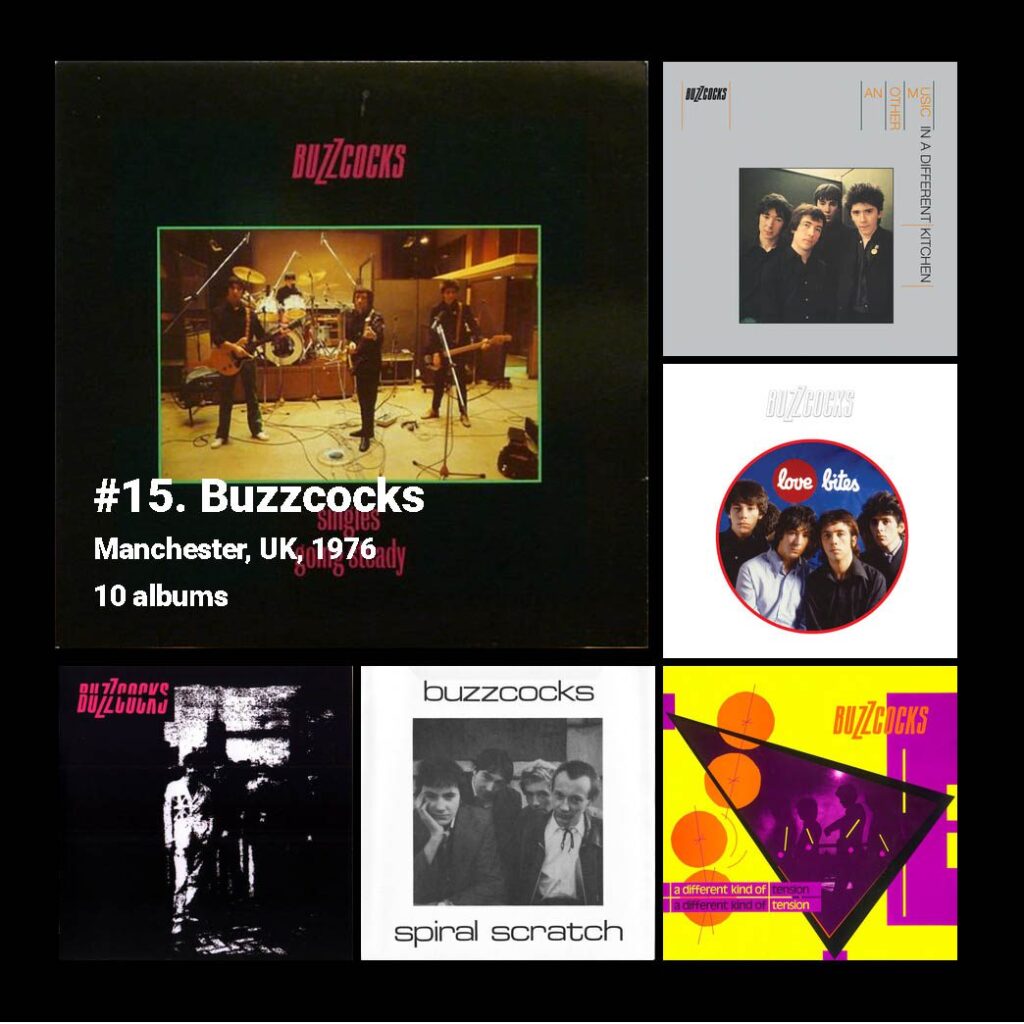
Beyond being the first punk band to self-release an EP and credited (or blamed) for pop punk, it’s not mentioned enough that Buzzcocks were also hugely influential with their queer-friendly non-gender specific songs of love and betrayal (The Smiths, R.E.M., Hüsker Dü). Those who claimed that punk was burned out and dead by 1978 need to get their heads out their asses and pay attention. Punk didn’t die, it just evolved at warp speed. While not quite as complex as the prog-tinged post-punk of former member Howard Devoto’s Magazine, their third album, A Different Kind of Tension, was an experimental masterpiece. Their post-reunion albums are non-essential, but I was just grateful for the chance to see them live a few times before Pete Shelley passed five years ago.

How can a band that played a role as genuine competition with The Beatles not make this list? Like most bands of their era, they started out playing strictly R&B, blues and soul covers. It wasn’t until manager Andrew Oldham locked them in a kitchen that they wrote some original songs, starting with “As Tears Go By.” Their string of singles was nearly unmatched, and then in 1968 to 72, they released four classic albums at their absolute peak. While they arguably have not released a great album in over 45 years (sorry, Hackney Diamonds is not even close), it’s comforting to have them out there, still rocking stadiums like immortal rock ‘n’ roll vampires.
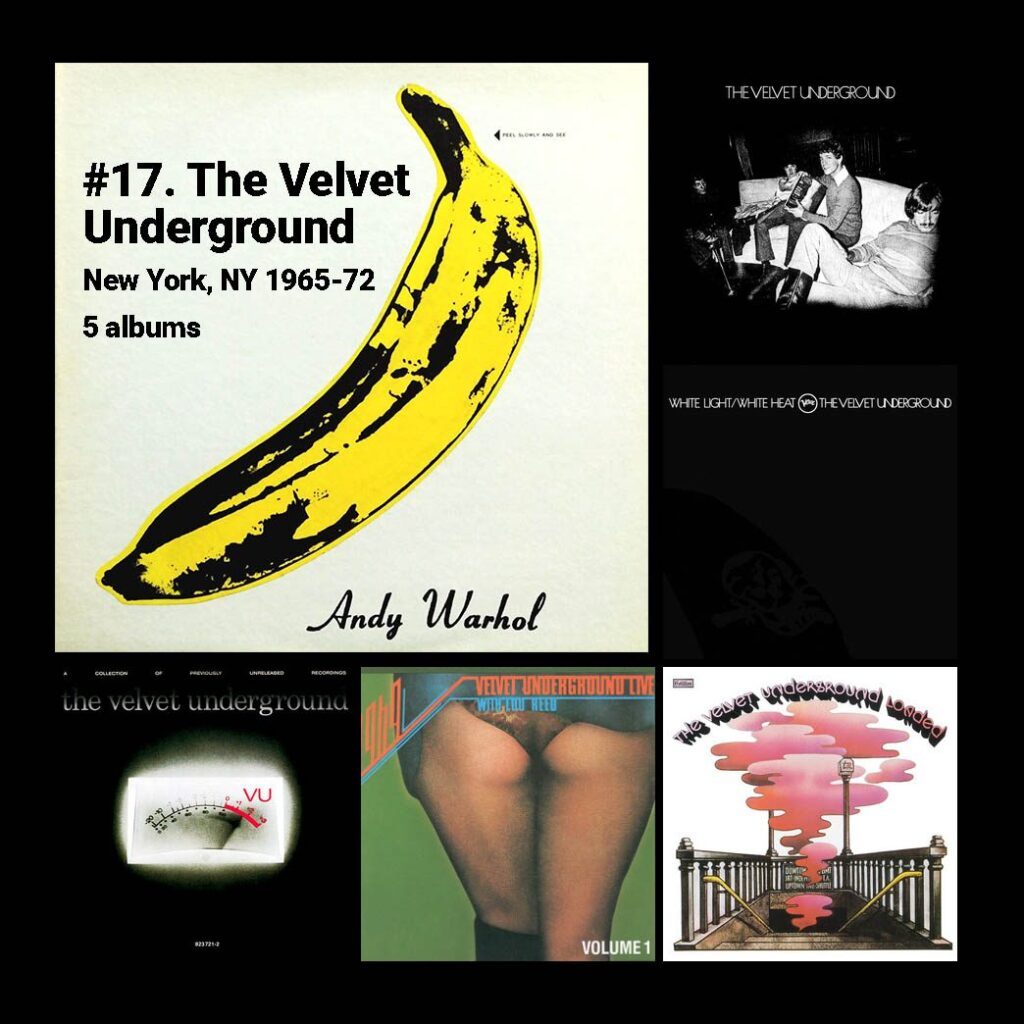
While I still enjoy blues based bands a half century later, it was true that by 1967 blues based rock was starting to be overdone. That’s what made The Velvet Underground so refreshing. Anything bluesy they came up with was immediately thrown out. They were certainly not in line with the hippies and summer of love. There was an occasional love song, but mainly Lou Reed was reporting from both the streets, scoring drugs (“I’m Waiting for my Man”) and even describing in detail how it feels to get high on opioids (“Heroin”) and the parties of New York’s social elite at Andy Warhol’s Factory and the celebrities hanging at Max’s Kansas City. Like the Stooges, their strikingly original music made a huge impact on musicians who heard it at the time, then twenty years later they became more widely popular in the wake of punk and indie.

Only a few bands effectively evoked teenage nervousness — frantic friction, fear of embarrassment, tension and release but no satisfaction. Talking Heads occasionally touched on that on their first couple albums, as did XTC. The Feelies truly nailed it. With nerdy portraits in glasses and preppy pastel outfits emblazoned on a sky blue background, they looked like their audience. They were named after the high-tech virtual reality movies that people were addicted to in Aldous Huxley’s paranoid classic, Brave New World. The first song on their 1980 album was called, appropriately, “The Boy With The Perpetual Nervousness.” Once the dry, brittle, furiously strummed dual guitars got up to three times the speed of a Lou Reed, The Feelies were a rogue train veering off its wheels with no brakes. It sounded exactly how I felt as a teen. Running with nowhere to go, crescendos without climax, wildly repetitive action without end. Their sound distilled a perfect aesthetic sensibility, and sounded like no one else.

I remember dubbing two mix tapes in high school that made a big impact on me. Judging from the hiss, they were at least tenth generation, passed furtively under desks in study halls like secret, sacred talismans. One was Bauhaus, which absolutely delighted me, and the other was Joy Division, which obliterated me. I’m not necessarily always going to favor obliteration over delight, but I can’t deny there’s a power to this band that is magnetic, it’s dense mass disturbing the orbits of other, lesser bands. This was accomplished with just two albums and some singles in less than three years. New Order could have continued as Joy Division, and for a few singles and Movement (1981), they kind of were. But nothing can compete with the two main Joy Division studio albums.
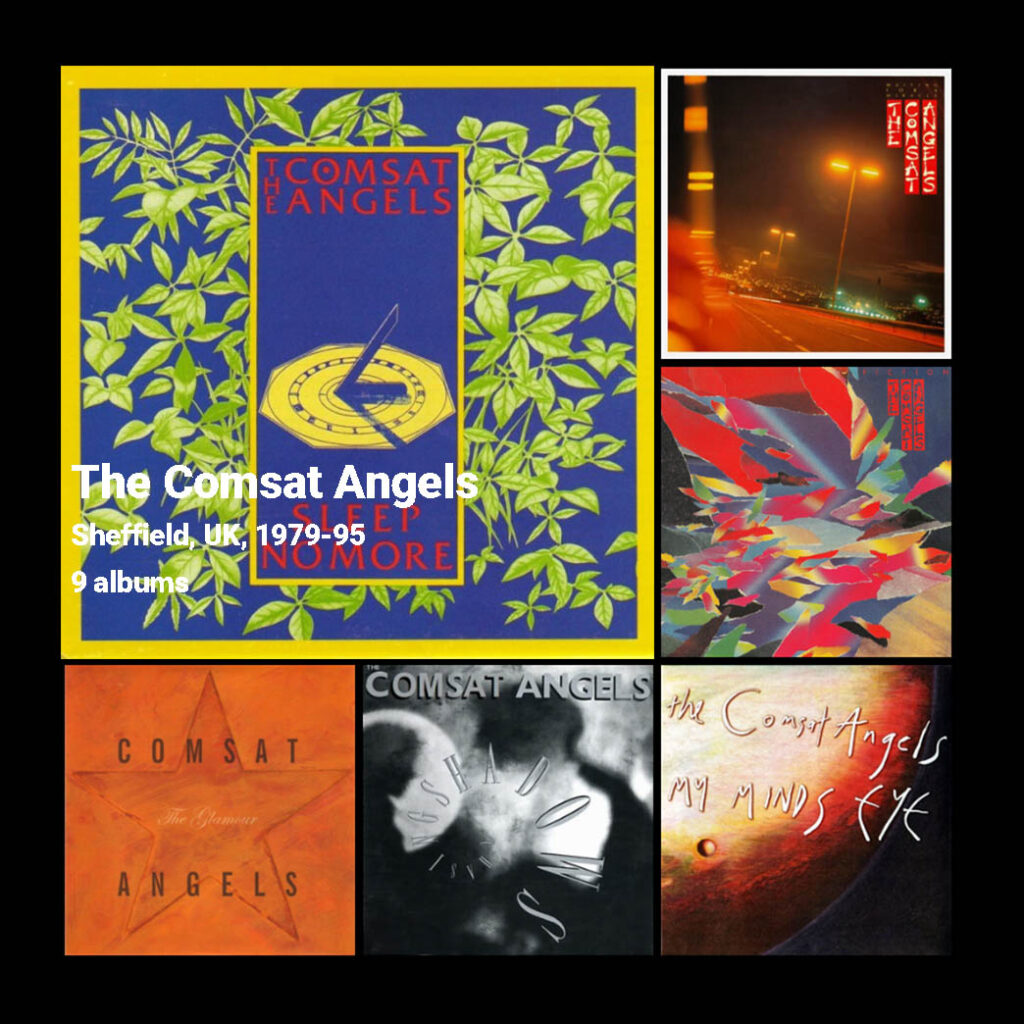
Two bands stand out as ones that I felt would be my favorites, if only I could just hear them. I discovered The Comsat Angels and The Sound around 1983 in The Trouser Press Record Guide, but couldn’t find their albums for nearly five years, when I got used vinyl copies and played them heavily on my post-punk college radio show. The band was always highly regarded, with Jack Rabid of The Big Takeover one of the more passionate advocates, but they seemed to be destined to be forgotten until Renascent finally reissued them on CD for the first time in the 00s. BBC film critic Mark Kermode, in reviewing Control (2007), the biopic on Joy Division’s Ian Curtis, said the Comsats were “the band that Joy Division should have been.” Maybe for those first three albums. Land (1983) and 7 Day Weekend (1985) were their attempts at commercial success. They weren’t bad, but ironically mainstream pop star Robert Palmer, at the peak of his popularity, was a superfan and got them on Island for Chasing Shadows (1986), a return to their beautifully dark, existential post-punk. They also had a great third act in the 90s, and again were ignored when they should have been given a hero’s reception.

Big Star’s name and title of their first album, #1 Record were aspirational at first, and later ironic, as the band had no commercial success during their initial run. Alex Chilton saw more success as a teenager with The Box Tops’ “The Letter.” And yet, the band’s pioneering blend of folk pop, power pop and jangle pop had the kind of delayed, seismic impact on bands like The Velvet Underground did. On their best album, Radio City, they also rocked shambolically, gloriously, in a way that the Stones and Aerosmith tried to in the mid-70s, but not as successfully as Big Star.

Repeat after Bootsy: I pledge allegiance to the funk, the whole funk, and nothing but the funk,
so help me James, Sly and George, Amen. George Clinton’s irreverant afro-alien lyrical themes, the outfits, the Pedro Bell covers, Eddie Hazel’s brain-ripping solo on “Maggot Brain,” Bernie Worrell’s keyboards, and Bootsy. Funkadelic is an immersive experience that all fans of rock, funk and psychedelic soul need desperately now more than ever.
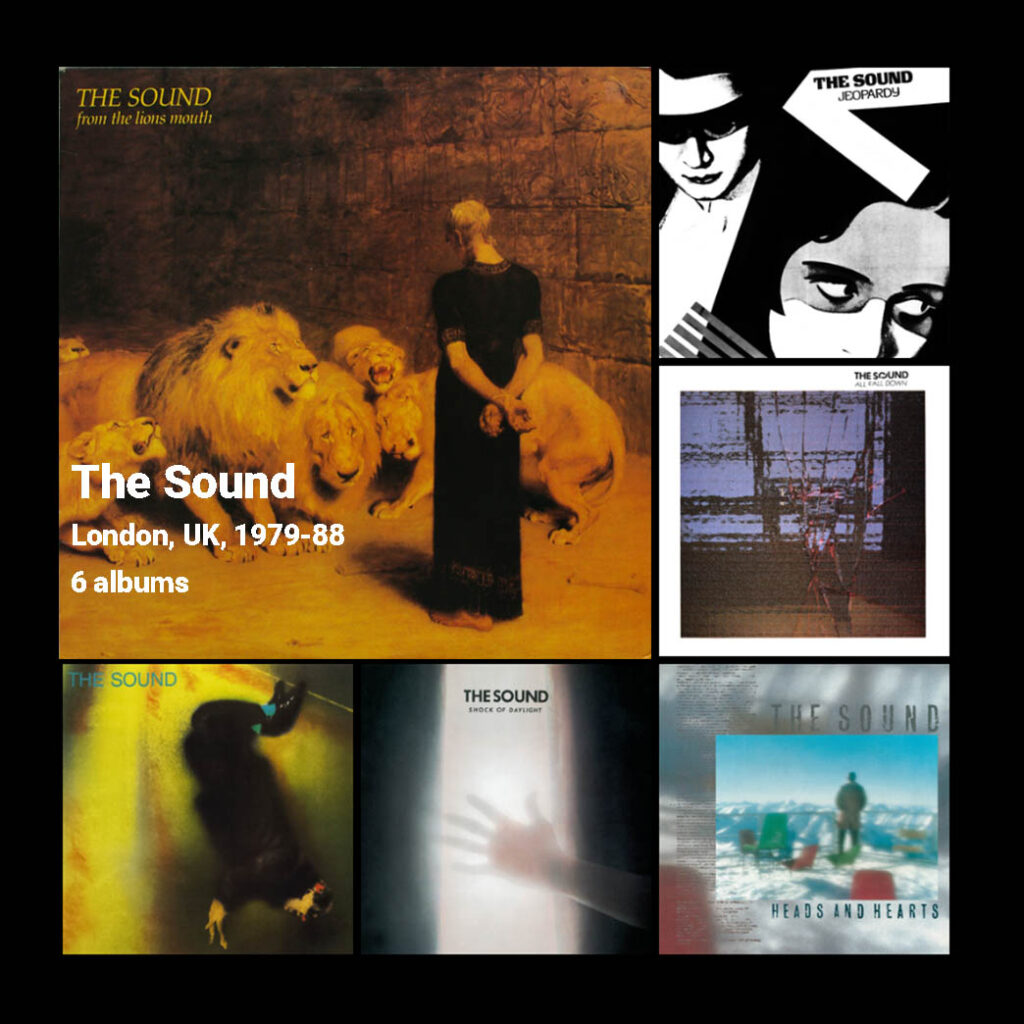
Also the recipient of reissues by Renascent in the 00s, The Sound got a bit more belated attention thanks to a rabid fanbase in the Netherlands, the documentary Walking in the Opposite Direction on Adrian Borland, who took his own life in 1999, tributes on YouTube, and most recently the biography, Destiny Stopped Screaming: The Life and Times of Adrian Borland by Simon Heavisides (2023). Now the first three albums are getting reissued for the third time by Rhino in September. In recent years, a lot of people are rating their mid-80s albums over the first three. I wouldn’t go that far, but it’s good to see their greatness recognized.
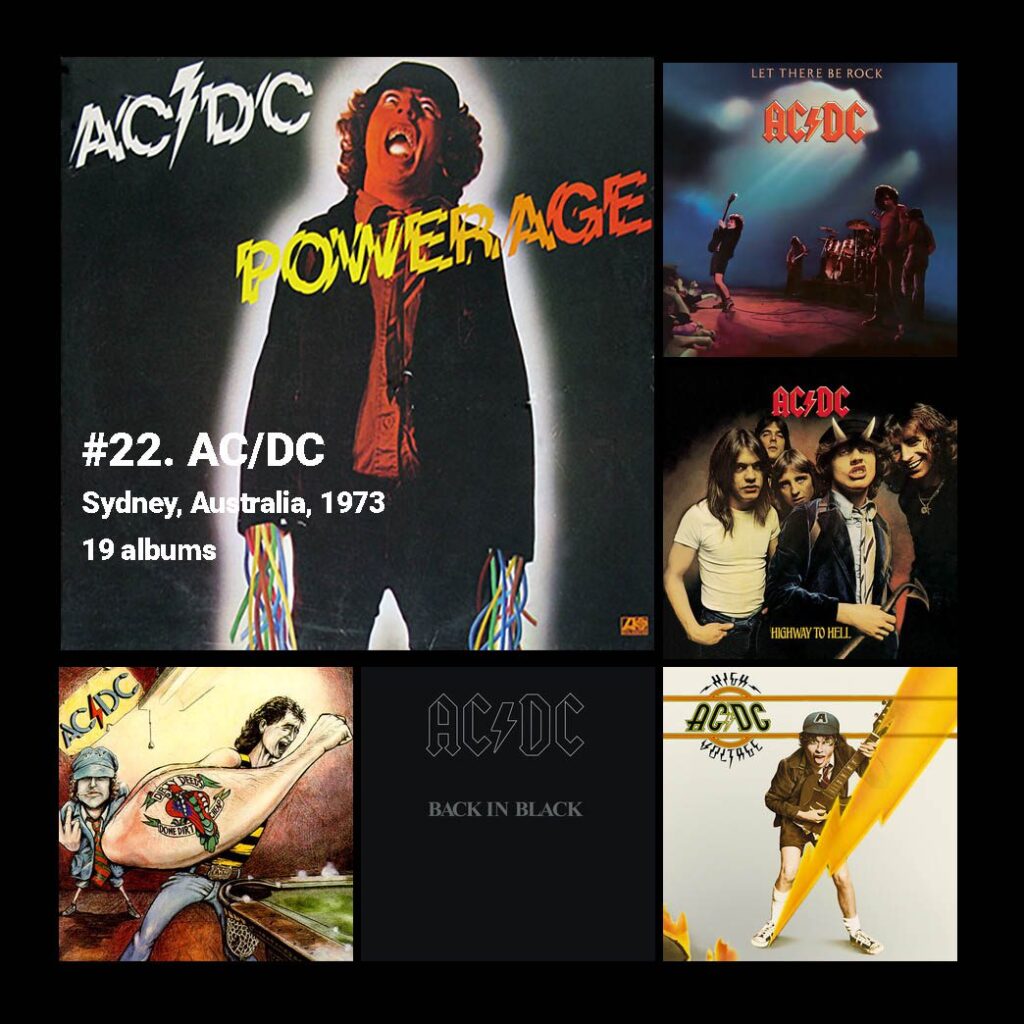
AC/DC is a band many take for granted until one day you realize that no one else does what they do nearly as well, and if they didn’t exist, there would be a hole in the musical universe the size of these Aussie (via Scotland) blokes. There must be hundreds of cover bands specializing in the Bon era, and I’d see any one of them any time. The band with Axl Rose? Eh, maybe for ten bucks I would.

The Clash’s role in punk culture and mythology threatens to overshadow the music… until you actually listen to it. Ultimately they were a great rock ‘n’ roll band, one of the very best. From “Janie Jones” and “Complete Control” to “Rudie Can’t Fail,” “Justice Tonight” and “Straight to Hell” (especially the extended 6:54 version found on the bootleg version of Rat Patrol From Fort Bragg, the double album that was shaved down to Combat Rock), they easily wrote a couple dozen of my all time favorite songs.
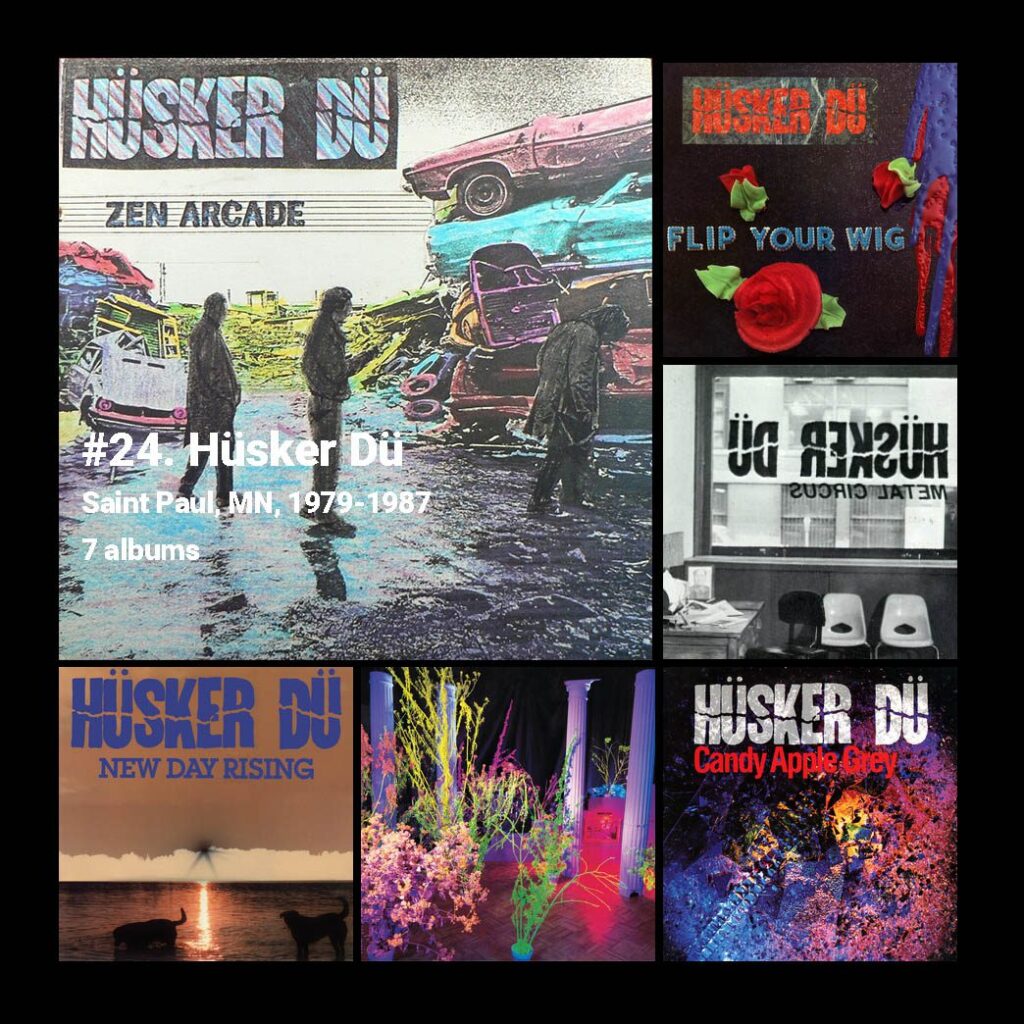
The rapid evolution of Hüsker Dü in the course of just a year that included Everything Falls Apart and Metal Circus EP in 1983, the “Eight Miles High” single and the double album Zen Arcade (1984) is legendary. They evolved from straight-up hardcore to a kaleidoscopic sound incorporating psychedelic rock, free jazz and a massive roaring guitar sound. The drums sounded like cardboard boxes, so you can’t win ’em all, but Grant Hart wrote a lot of great songs, a capable equal partner, a McCartney to Bob Mould’s angsty Lennon. And just as quickly as they ignited, they flamed out, leaving bands in their wake gasping for air, wondering what just happened. They changed rock for the better.

It’s impossible to overstate the impact Dinosaur Jr. had on me. My first day of college, I had been consistently disappointed by my favorite bands — R.E.M.’s Document had just come out and they didn’t satisfy what I was craving. Hüsker Dü seemed to be declining and would soon break up. I was just getting into Sonic Youth, which was promising. A kid heard me playing Sister (1987) from my dorm room and told me I needed to hear Dinosaur (they hadn’t yet added the Jr). He played Living All Over Me (1987) for me and my pleasure center exploded. THIS! Yes! Noisy as Sonic Youth and Hüsker Dü, but with tortured guitar solos boiling over with emotion. A wailing voice lost in the void. Discovering Dinosaur Jr. that first day was worth more to me than my entire subsequent four year liberal arts education.
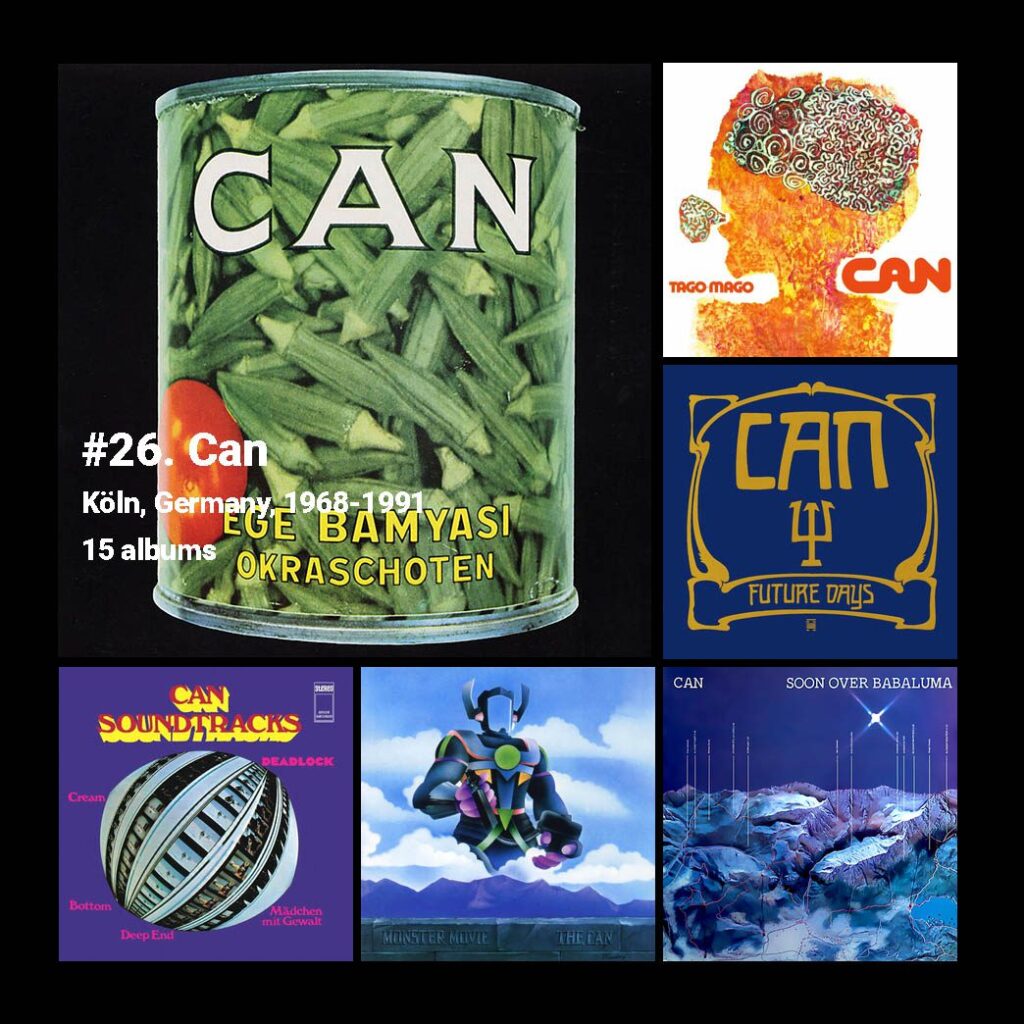
Can wins a blue ribbon for being the most accomplished Velvet Underground acolytes ever. The unique chemistry between two students of Karlheinz Stockhausen, a free jazz drummer, a young guitarist and a street musician on vocals could have been a disaster, but they clicked big time. Monster Movie (1969) with Malcolm Mooney was a strong start, but they truly locked into a monster groove when Damo Suzuki joined, exemplified by “Mother Sky,” included on Soundtracks (1970). For the next few albums, Can were simply one of the very best bands in the world. We’re still learning about the extent of their greatness via a series of archival live albums.
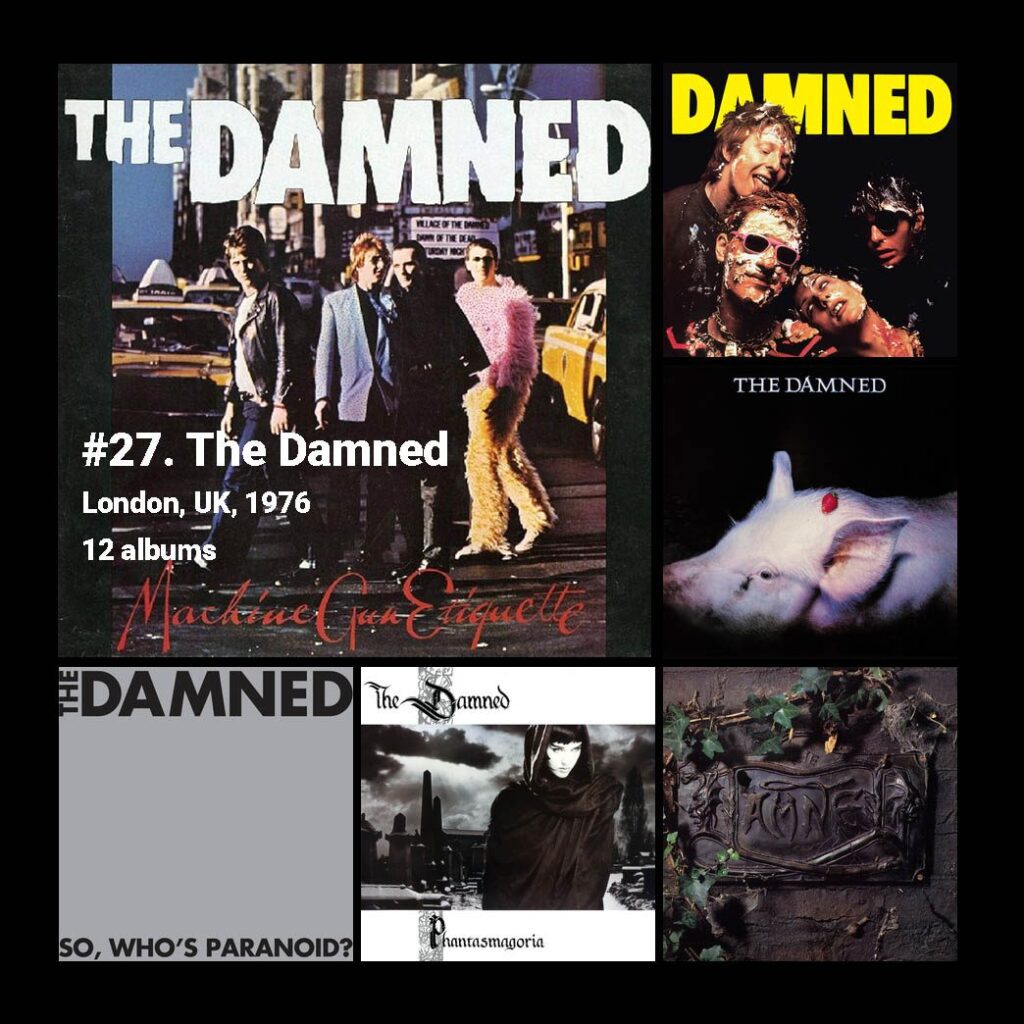
Even if The Damned broke up (again) after Machine Gun Etiquette (1979), they’d still be somewhere on my list of favorite bands based on the strength of that and Damned Damned Damned (1977). At first they were the irreverent jokesters of punk, and later, they added psych, prog and goth to the mix, continuing a run of great albums. They’re still active today, and are no joke.

Queen were my solid #2 favorite band for many years of my childhood, following first ELO, then Rush. I even stayed with them through Hot Space (1982), though by The Works (1984) I was losing interest thanks to the strength of new favorites Iron Maiden and U2. For a couple decades after Freddie’s passing, it seemed they might be relegated to a lower tier of legendary status, but thanks to movies, songs like “Bohemian Rhapsody” has re-entered the charts multiple times, and the biopic inspired even more compilation album sales and streams. Now if someone could just use “It’s Late” in something so everyone can realize what a monster jam it is.
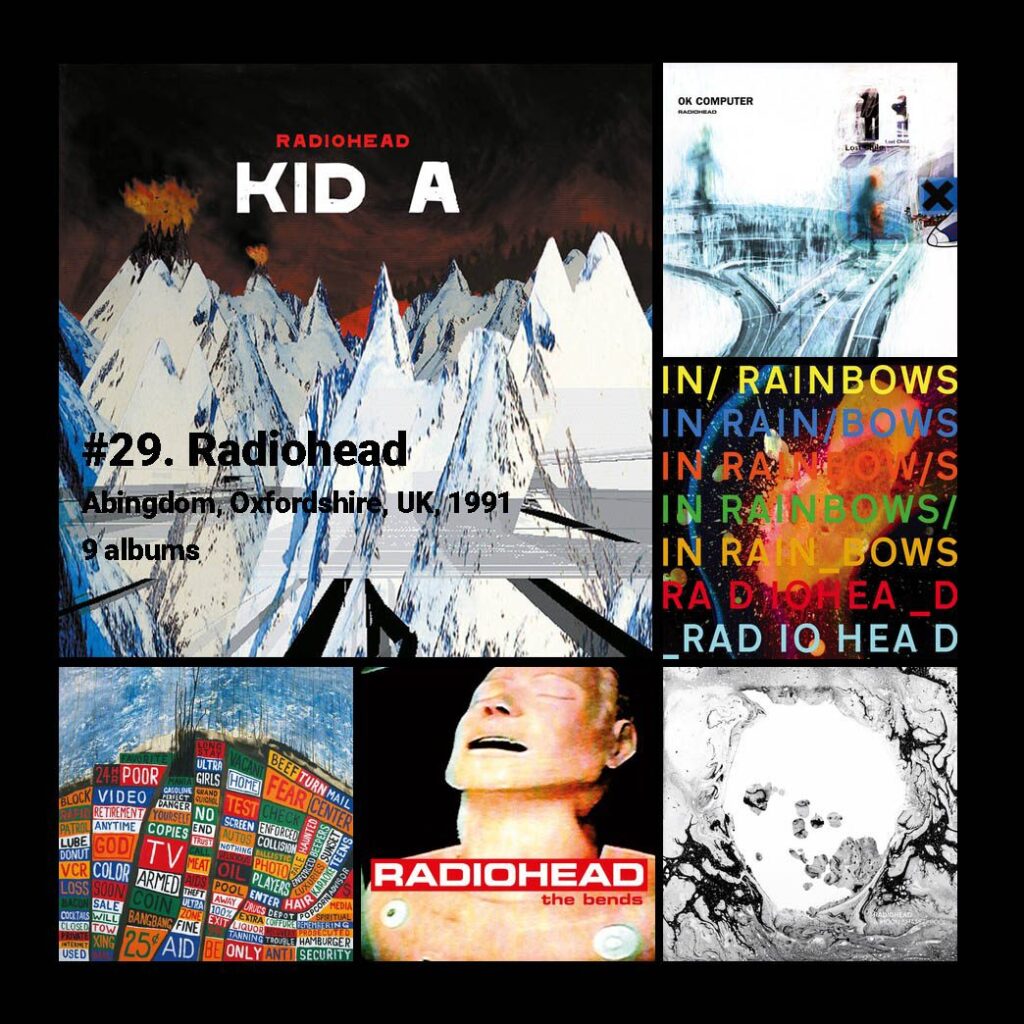
I admit that Radiohead’s first hit with “Creep” prevented me from getting into them sooner. It’s not necessarily a bad song, but wasn’t what I was into, and only when I heard “Paranoid Android” did I perk up and listen. I wasn’t really a huge fan until they gave up the stadium filling guitar riffs and released Kid A (2000). That would have been like U2 releasing a truly experimental post-industrial album instead of Achtung Baby (1991). And yet they still filled stadiums, as many fans dug the new direction, and gained new fans like myself. Rather than whine about the difficulties of being popular, they simply put their heads down and stayed true to their vision, making the music they wanted to make, not what the labels or some of the fans wanted.
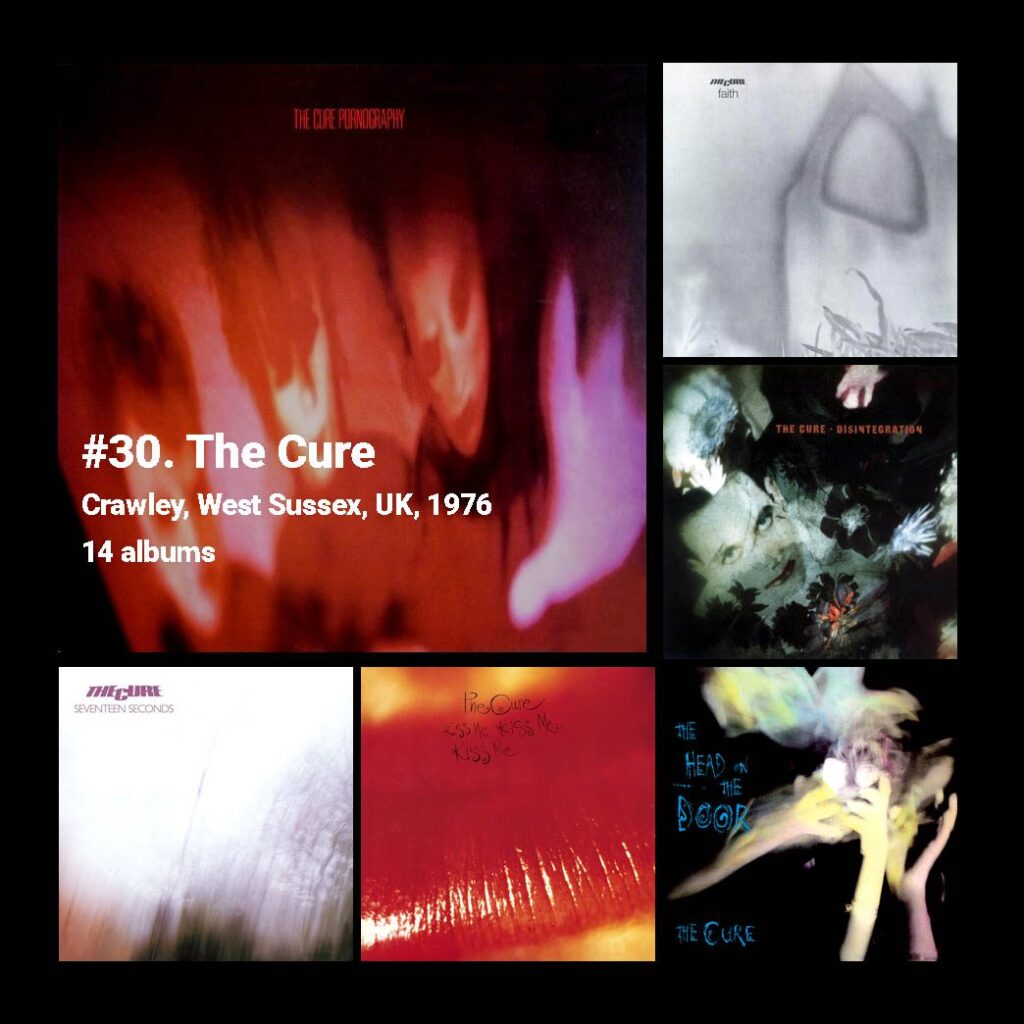
While I have often favored the mystique of lesser knowns The Sound and Comsat Angels, and the gloomy romanticism of Echo & the Bunnymen, sometimes you just have to let go and allow The Cure to possess you. It’s not their great albums that built a massive crossover mainstream following, but rather, Robert Smith’s long string of killer singles. Even at their most murky and inaccessible during their early doomy trilogy of Seventeen Seconds (1980), Faith (1981) and Pornography (1982), there were songs that made their Standing on a Beach: The Singles an all-killer comp in 1986. From their initial Wire-inspired debut, The Cure has managed to transcend genres (post-punk, new wave, goth) and become their own behemoth brand. No RIYL suggestions are needed — it’s the fucking Cure.

In 1987, when R.E.M. were promoting their fifth album, Document, I read an interview where Pete Buck said their goal is to make a timeless rock record. He felt that possibility was in the future, but the truth was that they already accomplished that with their 1983 debut, Murmur. It may not be their most accessible, or even most popular album, but it’s mystery and allure has indeed proven to be timeless. And remarkably, despite each subsequent album being just a tad less great than the previous album, at least until Automatic for the People broke that decline in ’92, all those albums are great. While they clearly lost their mojo on the last five albums, it doesn’t take away R.E.M.’s status as one of the all-time great American bands.

Not all my rankings are clear cut or set in stone. At this point, on any given day, the last spot could switch between R.E.M. The Jam, The Kinks, The Smiths, Talking Heads, The Who, Yes, Fugazi and The Pretty Things. It’s a close one with The Kinks. I rate 15 of their albums, and that isn’t even all of them, because they definitely have some duds. It’s even a more challenging opinion to definitely prefer The Jam over The Who. The Who’s importance in history and their influence goes without saying. But both with singles and top six albums, I go with The Jam. I just return to them far more often, and Setting Sons makes me feel things that few others do. For a few years, they were a perfect band with just the right mix of punk energy, mod style, pop hooks, intelligence, heart and soul.
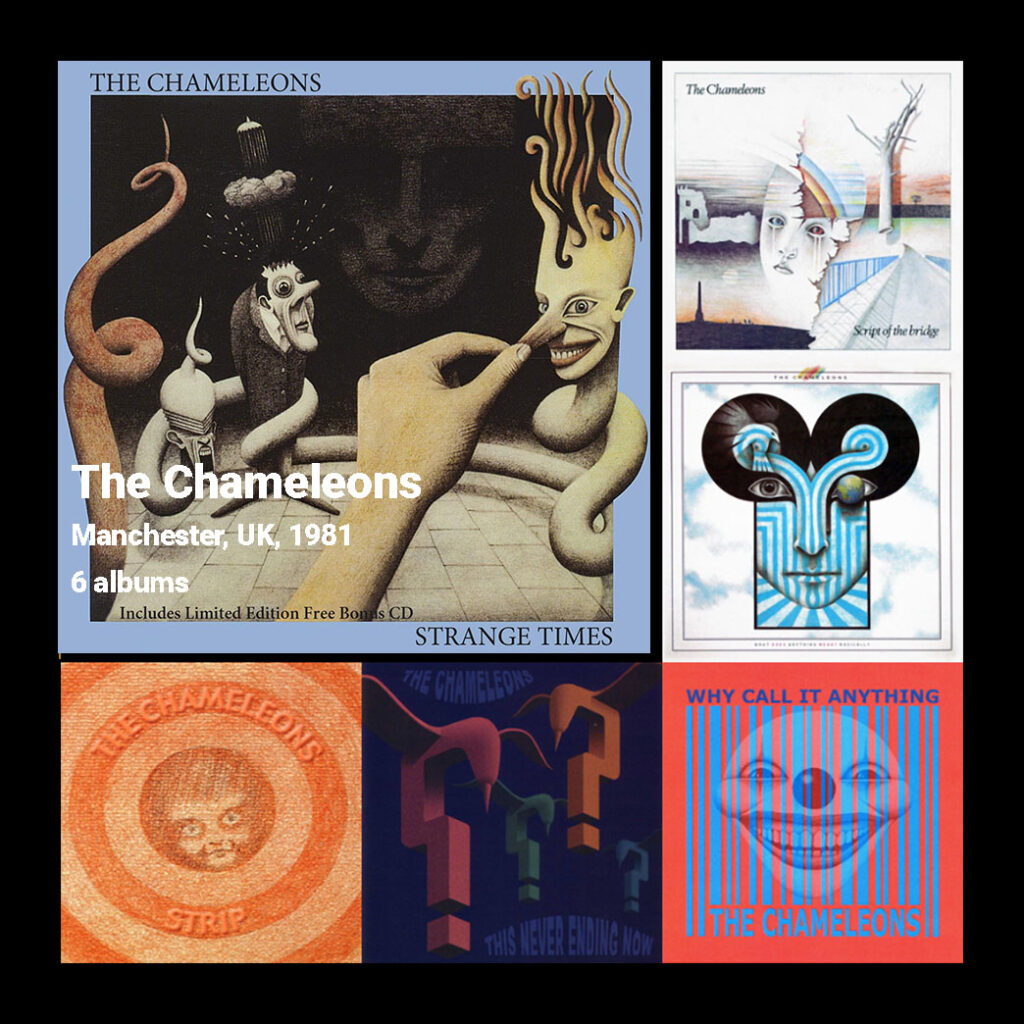
If I’m truly honest with myself, some of the bands that bring me the most joy may not have the most perfect of extended catalogs, but they do matter more to me than more widely known bands. Hence moving up The Comsat Angels, The Sound and The Chameleons. After three colossal albums that didn’t sell a bunch but were a big influence, their reunion albums are more ordinary. But that can’t take away my excitement when I get a rare chance to see Mark Burgess and whoever is backing him up live.
Top 100
- Black Sabbath
- Captain Beefheart & the Magic Band
- The Stooges
- The Beatles
- Rush
- Iron Maiden
- Electric Light Orchestra
- The Jimi Hendrix Experience
- Wire
- Led Zeppelin
- XTC
- Thin Lizzy
- Free
- Funkadelic
- Television
- Buzzcocks
- The Rolling Stones
- The Velvet Underground
- The Feelies
- Joy Division
- The Cure
- The Comsat Angels
- Big Star
- The Sound
- AC/DC
- The Clash
- Hüsker Dü
- Dinosaur Jr.
- Can
- R.E.M.
- The Damned
- Queen
- Radiohead
- The Jam
- The Chameleons
- The Kinks
- The Smiths
- Talking Heads
- The Who
- Yes
- Fugazi
- New York Dolls
- The Pretty Things
- The Fall
- X
- The Saints
- Nirvana
- King Crimson
- Sleater-Kinney
- Roxy Music
- Motörhead
- Hawkwind
- Judas Priest
- Blue Cheer
- MC5
- The Only Ones
- The Raincoats
- Echo & the Bunnymen
- Siouxsie & the Banshees
- The Birthday Party
- Killing Joke
- Magazine
- Bauhaus
- Cheap Trick
- Traffic
- Scorpions
- UFO
- Metallica
- Ramones
- T. Rex
- Radio Birdman
- Mission Of Burma
- The Ruts
- The Slits
- Pink Floyd
- The Police
- Stiff Little Fingers
- Dio
- The Stranglers
- Motorpsycho
- Kraftwerk
- Melvins
- Sparks
- Slayer
- Creedence Clearwater Revival
- Sly & the Family Stone
- The Temptations
- U2
- The Undertones
- The Gun Club
- Bad Brains
- Misfits
- The Cramps
- The Modern Lovers
- Black Flag
- Japan
- The Church
- Madness
- Small Faces
- Love
Bubbling under: Pere Ubu, The Pogues, Big Black, X-Ray Spex, Minor Threat, Sex Pistols, Kyuss, Sleep, Van Halen, Steely Dan, The Soft Boys, ZZ Top, Public Enemy, Stereolab, The Yardbirds, Monster Magnet, Nick Cave & the Bad Seeds, Minutemen, New Order, Wipers, The Replacements, Gang Of Four, The Lord Weird Slough Feg, Trouble, Saint Vitus, The Obsessed, Pentagram, The Dream Syndicate, The Associates, The Move, Madness, The Scientists, The Creation and hundreds more.
21st Century Bands
- Elder
- Colour Haze
- Truckfighters
- Graveyard
- Queens Of The Stone Age
- TV On The Radio
- Syd Arthur
- Ufomammut
- Yeah Yeah Yeahs
- Baroness
- Wolf People
- Dungen
- Large Plants
- Blood Ceremony
- …And You Will Know Us By The Trail of Dead
- Witchcraft
- Spirit Adrift
- Christian Mistress
- The Sonic Dawn
- Troubled Horse
- White Denim
- Royal Thunder
- Uncle Acid & The Deadbeats
- Hidden Masters
- Spirits Of The Dead
- Savages
- Messa
- Purson
- Magic Circle
- High On Fire
- Mastodon
- The White Stripes
- Vampire Weekend
- Causa Sui
- Spidergawd
- Torche
- The Black Angels
- Gojira
- Protomartyr
- Papir
- The Drones
- All Them Witches
- Orango
- Dozer
- The Galileo 7
- Lightning Bolt
- The Sand Pebbles
- Crippled Black Phoenix
- Kadavar
- My Sleeping Karma
Solo, Jazz, Soul, Country, Folk, Reggae, Global and Singer-Songwriters
- James Brown
- John Coltrane
- David Bowie
- Fela Kuti
- Charles Mingus
- Sam Cooke
- Chuck Berry
- Bob Dylan
- Duke Ellington
- Little Richard
- Toots & the Maytals
- Otis Redding
- Charlie Parker
- Louis Armstrong
- Nick Drake
- Lee “Scratch” Perry
- Bob Marley & the Wailers
- Curtis Mayfield
- Al Green
- Tim Buckley
- Brian Eno
- Miles Davis
- Billie Holiday
- Tom Waits
- Elvis Costello
- Van Morrison
- Joni Mitchell
- Prince
- Joáo Gilberto
- Aretha Franklin
- Nina Simone
- Johnny Cash
- Ray Charles
- Elvis Presley
- Howlin’ Wolf
- Frank Sinatra
- Buddy Holly
- King Sunny Adé
- Thelonious Monk
- Herbie Hancock
- Sun Ra
- Sarah Vaughan
- Carl Perkins
- Ella Fitzgerald
- Ornette Coleman
- Hank Williams
- T-Bone Walker
- Fats Domino
- Bo Diddley
- Tito Puente
- Jerry Lee Lewis
- Roy Orbison
- Muddy Waters
- Bill Withers
- Marvin Gaye
- Thelonious Monk
- Percy Sledge
- Wilson Pickett
- Gene Vincent
- The Meters
- Janis Joplin
- Woody Guthrie
- Bessie Smith
- John Lee Hooker
- Patsy Cline
- Bing Crosby
- Björk
- Nusrat Fateh Ali Khan
- Bruce Springsteen
- Stevie Wonder
- Neil Young
- Peter Gabriel
- Kate Bush
- Bobby “Blue” Bland
- Lightnin’ Hopkins
- Horace Andy
- PJ Harvey
- Tom Zé
- Dizzy Gillespie
- Screamin’ Jay Hawkins
- Robert Johnson
- Nat King Cole
- Serge Gainsbourg
- Burning Spear
- Django Reinhardt
- Arto Lindsay
- Peter Hammill
- Townes Van Zandt
- Solomon Burke
- Robert Wyatt
- Lou Reed
- Eddie Cochran
- Etta James
- Count Basie
- Ike & Tina Turner
- Linton Kwesi Johnson
- J.J. Cale
- Esther Phillips
- Willie Nelson
- Chet Atkins
May 31, 2026
Fester’s Lucky 13: 1996
April 2, 2026
Fester’s Lucky 13: 1986
February 27, 2026
Fester’s Lucky 13: 1976