On a dark and spooky October night thirty years ago, a site called Fast ‘n’ Bulbous was born, screaming into the cosmic abyss. Celebrate with Dr. Fester and friends.
SPOOKY SHORT STORY
Rather than a big site refresh or some laborous review of the past few decades, I decided to celebrate the 30th anniversary of Fast ‘n’ Bulbous with something different. Apologies in advance for the nightmares!
SPOOKY BOOKS
Joe Hill – NOS4A2 (2013)
I had already read Heart Shaped Box (2007) and Horns (2009) by the time I learned that Joe Hill is Joseph Hillstrom King, son of Stephen King. Understandably, it’s both a blessing and a curse. He gets a head start with publicity and interest from King fans, but has a lot of expectations to contend with. To me he was just a very promising horror writing, and I especially enjoyed Horns. I kind of lost track of him, but as I plugged into the BookTube community earlier this year, his fifth novel, King Sorrow, was one of the most anticipated books of the year, nine years since his last novel The Fireman (2016, which got mixed reviews). After watching a couple reviews of it on it’s release day, Tuesday, October 21, they confirmed it’s a big chonker and a bit of a pivot, about 80% fantasy. I haven’t lost the desire to read it, but was reminded that a popular fan favorite is NOS4A2, an original take on a vampire story, and a bit more fitting for the remaining spooky season.
It’s a chonker, at over 995 pages on Kindle, but a page-turner, and I’m already over a third of the way through after a day. After a brief but upsetting intro scene, the book jumps around to different era, to 1986 when a young girl named Vic McQueen discovers that a supernatural covered bridge appears while she’s riding her beloved blue Raleigh Tuff Burner. Whenever she’s lost something, the bridge takes her right to it. She’s not the only one with access to a portal. Charles Talent Manx discovered a creepy hideaway he calls Christmasland, accesssed with his 1938 Rolls Royce Wraith. With the help from a series of Renfield type assistants, he’s abducted dozens of children over several decades, justifying his actions that he’s rescuing them from abusive parents, but feeds on their lives, leaving them to wander Christmasland as horrid little ghouls. On one of Vic’s last jaunts to the “short way” as a child, she meets another person with this talent, a 20 year-old queer, punk librarian named Maggie who lives in Here, Iowa (not far from Cedar Rapids) and gets information about Vic and the nefarious Manx through her bottomless purple bag of Scrabble tiles. She’s my favorite character by far, and I hope she’ll resurface in the second half of the book.
As an adult, Vic’s life isn’t going all that great, and she’s tormented by supernatural phone calls from the child ghouls in Christmasland. When she finally snaps, she is determined to once and for all take care of Charles Manx once and for all, even if it kills her. It’s got just enough creepiness and anguish, but also reads like an adventure. Will Vic get a new ride? It takes a while to get there, as the story stretches out over decades, so the length is mostly justified. However it could have been tightened up. It was adapted to an AMC series in 2019 and ran for two seasons, which covered the full story arc of the novel.
If you have a subscription to the New York Times, check out Joe’s excellent essay about his father’s book and the adaptation of Salem’s Lot.
William Peter Blatty – The Exorcist (1971)
[God never talks….] but ”the Devil’s something else… Because the creep keeps doing commercials.”
All horror fans and even most non-horror fans, at least of certain generations, are familiar with The Exorcist (1973). It’s an undeniable classic, still an effectively terrifying film. Seven years later, it premiered on TV on CBS on February 12, 1980. Despite editing out certain extreme parts, it most certainly traumatized my impressionable, ten year-old brain, and would haunt my nightmares for years. I’ve seen the uncut version a few times since then, and it still holds up.
Reading the book, however, is not a redundant activity, because while the movie is most effective with the shocking images and jump scares, the book fills in the details of the characters, particularly the mother, Chris MacNeil. Despite being divorced, she’s fairly wealthy, with a successful career as a film actress, with enough to employee a staff of three, a couple who run the house, and Susan, a tutor and secretary. One odd detail was Chris looking into buyin a Ferrari but being told by her accountant she can’t afford that due to all her expenses. I think it was to show the stark contrast to how her life would completely fall apart within weeks as her twelve year-old daughter Regan’s health declines rapidly. Blatty, who also did the screenplay, rightly cuts out most of that, and the extensive consultations and tests with doctors and psychiatrists, for sake of brevity for the film.
I don’t recall the storyline of the detective investigating the death of Chris’ drunk film director friend either. The same goes for the character arc of the priest Damien Karras, who’s also a medical school trained psychiatrist. Wracked with grief and guilt over the recent death of his mother, who he left destitute when taking a vow of poverty with the Church, he’s not exactly in a good place when asked to help the MacNeils. Despite overwhelming evidence that Regan is clearly possessed by some kind of entity, he constantly comes up with scientific explanations of the incredible things he says, a priest unable to make that leap of faith. That character arc is the primary focus of much of the book. Once the Church approves the justification for a risky exorcism, the fireworks that happen when specialist Father Merrin steps in is just the icing. Well worth the read, not just for fans of the film but for those craving a relatively more recent (to Dracula and Frankenstein) horror classic.

Gou Tanabe – H.P. Lovecraft’s At the Mountains of Madness (2024)
Despite the fact that as a writer, H.P. Lovecraft was a bit of a hack, I have to put his Complete Tales collection at the top of my favorite horror list. As inefficiently repetitive as he was with description, he was still quite effective about building up a sense of dread. And as an ideas man, his Cthulhu mythos universe is absolutely brilliant. His brand of cosmic horror has had a massive influence on SF and horror fiction, movies, comics, table games, video games, and even visual art. So it makes absolute sense that Gou Tanabe’s adaptations of Lovecraft’s stories into manga comics are the gold standard. If the 115 page novella The Call of Cthulhu (1928) is the best introduction to the mythos, this is the ultimate culmination, an Antarctic expedition led by geologist William Dyer, uncovering the ancient ruins and artifacts of an advanced alien civilization—the Elder Things and their servants the shoggoths—from prehistoric times. However, it’s not all fossils they find. While the dialogue is mostly left alone, he’s not one hundred percent faithful to all the original text, which, when paired with stunning visuals, is an improvement. This hardcover edition is gorgeous, 626 pages of doom-ridden, baleful illustrations oozing with tentacles and atmosphere. I’m holding off on the other stories, waiting to see if they come out in hardcover too.
Mary Shelley – Frankenstein (1818)
While Johann Valentin Andreae’s The Chemical Wedding (1616) and Johannes Kepler’s Somnium (1634) predate Frankenstein by a couple centuries, Mary Shelley gets a lot of credit for sparking the genre of science fiction, not to mention gothic horror. We might as well throw dark academia in there too, as the first quarter of the book is Victor Frankenstein in college. The humble origins of a group of friends challenging each other to write a new story as scary as spooky old German ghost stories, and 19 year-old Shelley coming up with this massively groundbreaking novel is pretty remarkable. The fact that the story has been retold in dozens of adaptations in a variety of mediums (the lastest, Guillarmo del Toro’s treatment, out Nov 7, looks fantastic) is proof to how compelling it is. The fact that many of the versions improve on Shelley’s original is partly due to the advantage of building upon over two centuries worth of artistic input from a variety of talents. Shelley’s style of telling and not showing, glossing over the actual making and bringing to life the, uh, lab product, who remains nameless throughout, and focusing on the whingeing of both creator and creature leaves something to be desired. The original 1818 text (I previously read the more widely popular 1832 revision) shows Shelley’s age by wallowing in the raw anguish of both characters. It’s all so emo! The icy conclusion, however, is satisfyingly dramatic, and it’s such a legendary story, I think reading it before checking out the del Toro film will enhance the experience. It also shed more insight into Christopher Moore’s brilliant tribute to this as well as Alasdair Gray’s Poor Things (1992), Animus Rising, which came out earlier this year. The Poor Things (2023) movie is a must-see too.
Junji Ito – Uzumaki (1999)
I was browsing my local bookstore on a day off and was chuffed to see this on their display of spooky season books, along with Ito’s adaptation of Frankenstein. I just read Shelley’s original from 1818, so I went with this title for my impulse purchase. It feels very Lovecraftian, but with spirals rather than ancient alien overlords. It’s made up of episodic stories that are hit and miss, but they all lead toward an overall story arc, which kept me engaged and zipping through the 600+ pages in a couple days. I sense that over time this damn thing is going to haunt my nightmares, and I’ll never look at a snail the same way again, and certainly never eat escargot!
Elizabeth Hand – Wylding Hall (2015)
I was absolutely sold on the concept of this book, a supernatural gothic horror story set in the juxtaposition between psychedelic folk and the decadent British rock scene of 1972. The young band, Windhollow Faire, are contemporaries of Pentangle, Strawbs, Incredible String Band and Fairport Convention, and sent to spend part of the summer at a remote 14th century mansion to write and rehearse their second album. Very Withnail and I without Uncle Monty. The band’s lead singer/guitarist songwriter Julian Blake is a shy, moody, but immensely talented musician who hunches over to hide his height and has enormous hands that can work magic on a guitar, much like contemporary Nick Drake. As soon as they arrive he walks about like he had lived in the place in a previous life, and is prone to long walks in the woods in the morning, which for some reason raises the hackles of the local townspeople. So far so good. The set up and the atmosphere is both giddy, young hippies frolicking in very uneasy, sinister settings. There’s also references to them immersing themselves in a couple new releases of the day, such as Van Morrison’s Saint Dominick’s Preview and Todd Rundgren’s Something/Anything. However the rest of the story leaves much to be desired. The account of this summer are told by some of the members in interviews decades later, giving extremely vague, fragmented accounts of spooky incidents involving strange voices, sounds, beakless birds and yes, ghost sightings. But no matter how sinister or tragic the results are, the perspectives are decades removed, and jumbled up with all the typical static interference of band politics and interpersonal conflicts. So in the end, the book is a big disappointment in that it’s not very scary, and we know barely anything more in the end than we did in the beginning. Hand is a highly awarded, accomplished writer, so I can only assume she did exactly what she set out to do, which satisfied no one but herself.
Mark Z. Danielewski – House of Leaves (2000)
“Maturity, one discovers, has everything to do with the acceptance of ‘not knowing.”
Experimental ergotic literature, filled with extensive footnotes, puzzles and unconventional page layouts isn’t for everyone. It may not even be more me, but I couldn’t resist buying a copy and trying it. My main problem is that with all the varying typefaces, there are many pages that are in red print and teeny-tiny, nearly impossible for me to read, even with my progressive lens glasses and reading glasses. I think I need a new prescription, and until that happens, I won’t be finishing this one anytime soon. But I’m not giving up!
The basic setup is a family moves into a small home on Ash Tree Lane where they discover heir house is bigger on the inside than it is on the outside. I personally would love that, who doesn’t want more living space? But maybe not, if it contains hidden monsters, or your young children wander off and get lost. Pulitzer Prize-winning photojournalist Will Navidson and his partner were ill prepared to deal with it, the ever-growing abyss behind a closet door, and of that unholy growl behind the walls. Hey, I’ve been there, I had raccoons living under the floor for nearly a year!
Robert W. Chambers – The King in Yellow (1895)
Along with Ambrose Bierce, Robert W. Chambers is remembered as an important bridge between Edgar Allan Poe and H.P. Lovecraft, particularly the first four stories in The King in Yellow collection that are all loosely linked with references to a gothic supernatural entity referenced via a play and a sigil called the Yellow Sign. Modern readers might lose patience with the neither show nor tell style of storytelling which skirts around the ominous figure, rather than making it an active part of the plots. The effect can be haunting, and has since inspired Lovecraft’s Cthulhu mythos which has permeated popular culture a century later. The second half of the book are inexplicably love stories and poems. Not bad in their own way, but less than satisfying as a cohesive collection.
Children’s & Young Adult
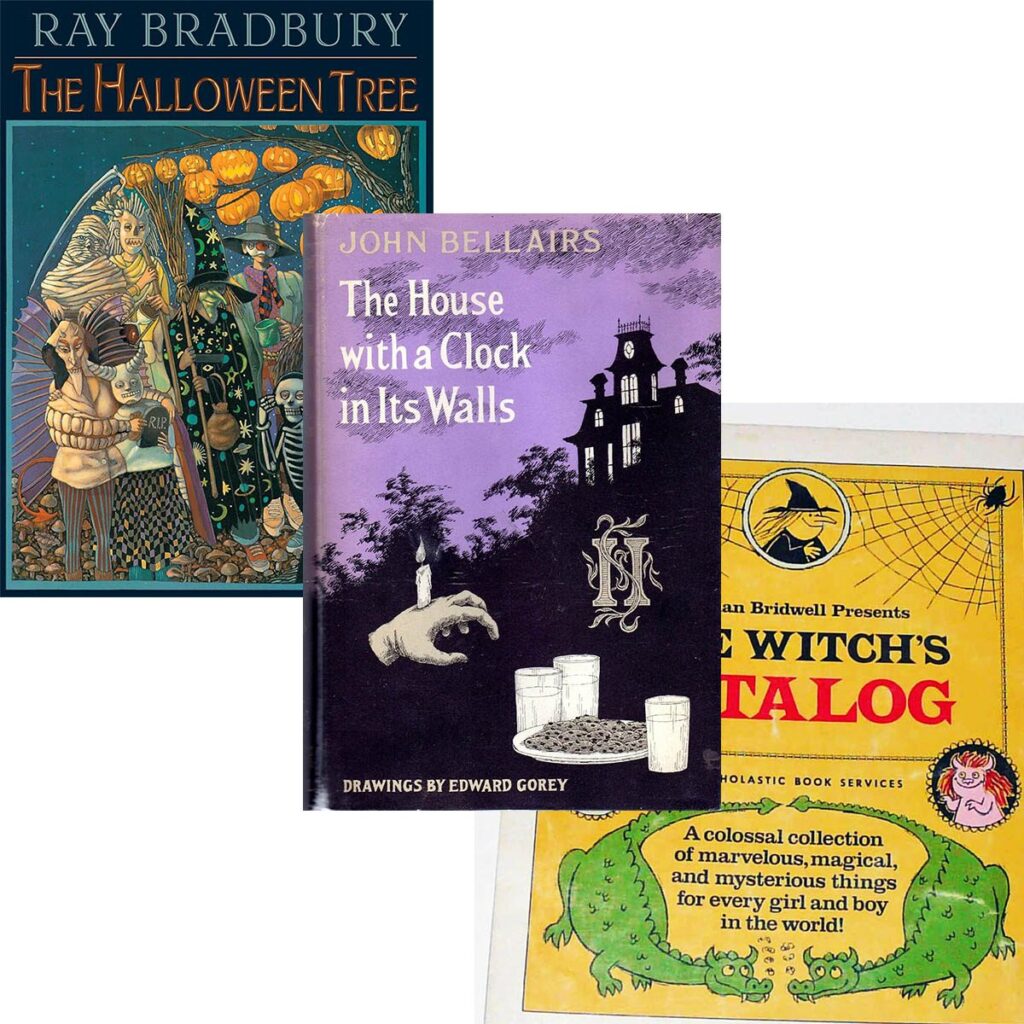
Ray Bradbury – The Halloween Tree (1972)
A thousand pumpkin smiles look down from the Halloween Tree, and twice-times-a-thousand fresh-cut eyes glare and wink and blink, as Carapace Clavicle Moundshroud leads the nine children on a leaf-tossed, kite-flying, gliding, broomstick-riding trip to learn the secret of All Hallow’s Eve. Ray Bradbury is known more for his genre-defining SF short story collections The Martian Chronicles (1950), The Illustrated Man (1951) and the dystopian classic Farenheight 451 (1953), he also wrote an influential coming-of-age story in Something Wicked This Way Comes (1962) which was a big influence on Stephen King. This illustrated children’s book is a bit of a lost classic, one that I and many of my generation feel cheated for not having a copy sitting on the shelf of our childhood bedrooms with all the other early reading classics. I would have loved this sometimes frightening, even lightly psychedelic whirlwind tour through time, visiting places like the Great Pyramids of Giza and the Day of the Dead celebrations in Mexico. I especially liked the bit about witches during the late Dark Ages, how Bradbury explained there was nothing at all supernatural about them. They were just people who wanted to be educated and live the way they had for generations, but were hunted and murdered in witch trials. This is a children’s book, so it holds off on too much historical detail, making it more or less roughly accurate (the witchhunts really got going in the 15th century, when Pope Innocent VIII became fearful of a Satanic conspiracy, and the Malleus Maleficarum (Hammer of Witches) was published in 1486, a popular witch hunting handbook for both Protestants and Catholics. The final illustration by Joseph Mugnaini is of Moundshroud, looking suspiciously like a vampire! Chilling! It’s never too late to circle back to that inner child, especially those who maintain a childlike joy for Halloween and spooky season in general.
John Bellairs – The House with a Clock in Its Walls (1973)
Joe Hill, Stephen King’s son, born in 1972, liked this book better than any Harry Potter. He of course has a bit of Gen X bias, but I agree that this is also a lost classic, despite the fact that there was an film adaptation in 2018 with Jack Black. Probably due to it’s mixed success and reviews, it did not spark a rennaissance of love for John Bellairs’ Lewis Barnavelt series. I did read the initial trilogy, which spanned from 1973-77, this first one illustrated by the great Edward Gorey. A fourth volume, The Ghost in the Mirror (1993) came out two years after Bellairs’ death, and there were outlines for two more, which Brad Strickland completed. Strickland carried on the series to a twelfth volume in 2008, as well as the Johnny Dixon mystery series that started in 1983. It was a delightful re-read, and I look forward to reading the next ones.
Normal Bridwell – The Witch’s Catalog (1976)
I’m not sure how many people knew this book, but it was a treasured item, purchased through my school in 2nd grade from the Scholastic Book Services catalog. The whimsical book starts with, “If you aren’t lucky enough to have a witch living near you, you are missing a lot of fun. For those children who do not have a witch for a friend, this catalog will be a big help. It lists all kinds of witchy things that you can pretend to order for your very own.” Items included a magic faucet, invisible suit, a pre-AI magic pencil that does the boring parts of your homework while you “read your books and study your lessons,” magic pillow that allows you to choose your dreams, a clock that speeds up through the dentist or waiting for dinner, slows down during dessert, haunted doll house, flying bat shoes, an instant invisible shield to protect from bullies, flying broom, a robot to do chores, and even pet dragons, with associated accessories (dragon cave, dragon food, leash and collar)!
Mark Shoffner – Miriam: The Witch of Glen Park (2018, Darkhouse #1)
Just as some adults find coloring books relaxing, children’s literature is a perfect way to read to your loved one, be they child or adult, in order to escort them gently into dreamland, and perhaps even evoke sweeter dreams. In times like this, a book that accomplish that is priceless. Mark Shoffner’s books don’t patronize young readers by skirting around some real world adult problems (joblessness, rent anxiety, divorce), but it takes place in a vividly colorful and gently surreal version of San Francisco that is irresistible. It’s a little spooky, with a surprising revelation in the end, but a bit of mystery remaining to be addressed in The Witches of Glen Park (2022, Darkhouse #2).
Ray Bradbury – Something Wicked This Way Comes (1962)
I’ve seen this book named as an all-time favorite more than once, and while I read it as a kid before the Disney movie came out in 1983, my memory was hazy, and I re-read it. Praised for both it’s ability to combine nostalgia (coming-of-age in a small midwestern town) with dread, Bradbury leans perhaps a bit too hard into the purple prose. While he’s always had a bit of poetic flair going back to early short stories collected in the fix-up collection The Martian Chronicles (1950), the dense slurry of allegorical poetry, metaphors collected in wobbly stacks get in the way of the story. The creepy story of an evil, supernatural carnival is a classic, however, and a massive influence on Stephen King, Neil Gaiman and many more. This story would probably be best served as a TV series.
Books TBR
- Kim Newman – Anno Dracula (1992)
- Stephen Graham Jones – The Buffalo Hunter Hunter (2025)
- Catrionna Ward – The Last House on Needless Street (2021)
- Laura Purcell – The Silent Companions (2017)
- Stephen King – Revival (2014)
- Robert R. McCammon – Boy’s Life (1991)
- Peter Straub – Ghost Story (1991)
- Anne River Siddons – The House Next Door (1978)
- Jay Anson – The Amytiville Horror (1977)
- Joan Samson – The Auctioneer (1976)
- Richard Matheson – I Am Legend (1954)
Alltime Spooky Books Favorites
- H.P. Lovecraft – The Complete Tales (1917-35)
- Edgar Allan Poe – The Complete Tales & Poems (1827-49)
- Stephen King – The Stand (1978)
- Stephen King – Salem’s Lot (1975)
- Iain Banks – The Wasp Factory (1984)
- Stephen King – Different Seasons (1982)
- William Peter Blatty – The Exorcist (1971)
- Colin Wilson – The Philosopher’s Stone (1966)
- Anne Rice – Interview With A Vampire (Vampire Chronicles #1, 1976)
- Mary Shelley – Frankenstein (1818)
- Joe Hill – NOS4A2 (2013)
- Robert Louis Stevenson – Strange Case of Dr Jekyll and Mr Hyde (1886)
- Shirley Jackson – The Haunting of Hill House (1959)
- Stephen King – Night Shift (1978)
- Ira Levin – Rosemary’s Baby (1967)
- Brett Easton Ellis – American Psycho (1991)
- Bram Stoker – Dracula (1897)
- Stephen King – Skeleton Crew (1985)
- Vivian Shaw – Strange Practice (Dr. Greta Helsing #1, 2017)
- Grady Hendrix – We Sold Our Souls (2018)
- Jason Pargin – John Dies in the End (2007)
- Stephen King – Pet Sematary (1982)
- Susan Hubbard – The Society of S (Ethical Vampires #1, 2007)
- Stephen King – The Dead Zone (1979)
- Joe Hill – Horns (2009)
SPOOKY MOVIES
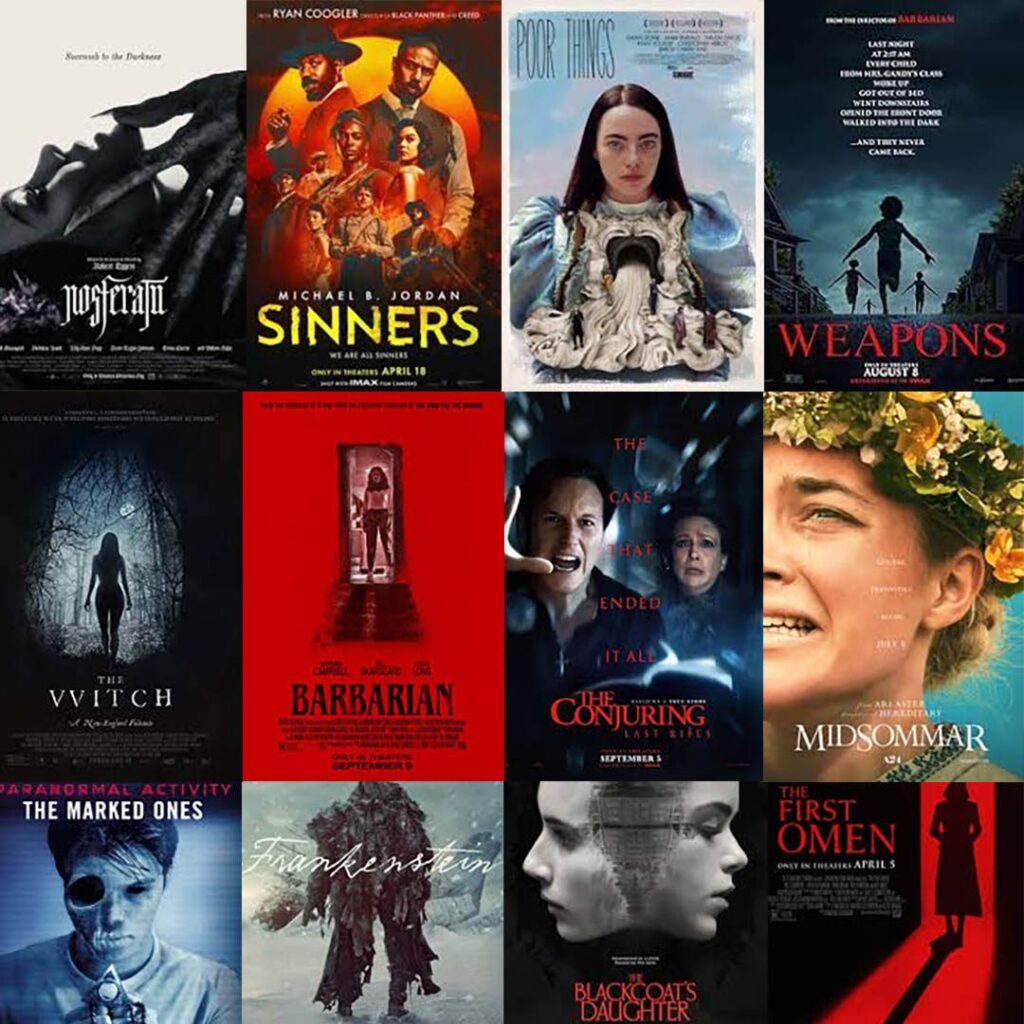
Nosferatu (Robert Eggers, 2024)
This is a late entry as I nearly forgot about this one that came out last year, so I just watched it. Overall it was very successful in restoring the gothic atmosphere and Count Orloc (Nosferatu) as the terrifying monster that he is. Lily Rose Depp was suitably spooky and intense, though a couple scenes were a bit over the top, and she distinctly reminded me of an old bipolar girlfriend. The cinemetography was on point, such as the first scene between Thomas Hutter and Count Orlac at his castle in the Carpinthian Mountains, the Count seems to teleport while simply serving tea, but it’s so subtle the audience, just as Hutter, are not quite sure it really happened. The encounters with the Gypsy villagers helped give the film a broader sense of time, place and culture too. Watching past my bedtime, I wondered, did it really have to be over 2:15 long? Yeah, it did. Undoubtably a classic, definitive vampire movie.
Sinners (Ryan Coogler, 2025)
Where did Miles Caton come from? His voice (both speaking and singing) is mesmerizing, and his portrayal of Sammie “Preacherboy” elevated the whole movie. When vampire Remmick told him, “I want your stories. And I want your songs. And you can have mine too” I had chills. A masterful symbol of cultural appropriation and all of it’s ebb and flow complexity. As well as Remmick’s false promise of assimilation into a “post-racial” existence that would cost Sammy and others their identity and heritage. There’s also the metaphor of extensive multi-generational trauma that the vampires represent, which is all too real, so not exactly a fun sort of spooky season movie, but rewarding all the same.
While I enjoyed the postscript scene of 80 year-old Sammy in a Chicago blues club in October 16 1992 (the say the horror classic Candyman was released), played by Buddy Guy who interestingly I saw perform myself at the Chicago Blues Fest just weeks after first moving to Chicago, the affectionate and benevolent behavior of the vampires seemed at odds with what happened sixty years previously. I was on board, though, with the juke joint dance scene, postmodern breakdown of linear time into a pastiche of rappers, P-Funk guitarist and dancers from different eras. From choreography to sound design, it was brilliantly done, bravo.
Poor Things – Yorgos Lanthimos (2023)
An homage to Frankenstein and The Island of Dr. Moreau, this steampunk gothic horror-romance starts out pretty alarming, and the sex throughout can be, uh, traumatizing for some, but I love the style, which reminds me of Caro-Jeunet’s Delicatessen and City of Lost Children, feminism and dark humor. Based on Alasdair Gray’s 1992 book of the same title, Christopher Moore’s book Animus Rising (2025) took a similar concept and gave it a more comedic spin. This might be kind of a masterpiece, and Emma Stone was brilliant. I’d nominate Lanthimos to do a film that finishes the abandoned story arc of the Carnivàle series. ‘Til then, we do have a spooky season/Halloween treat in Lanthimos’ newest movie Bugonia, also starring Emma Stone, comes out on Halloween!
Frankenstein (Guillermo del Toro, 2025)
I hesitated just a little bit before diving in to this movie. I kind of overdid spooky season, binging on far more horror movies and books in four weeks than I’d ever done before, including Shelley’s original 1818 version of Frankenstein. I didn’t love the book, as there were lots of problems with the original story, where Victor was still an undergrad when he accomplished making his creature far too suddenly and unceremoniously. While the film is more true to the structure of the book than any other adaptation, it definitely fills in the gaps where needed, with Victor approaching middle age, and only succeeding after (literal) trials and tribulations. In the movie, he is far less whingeing and self-pitying, and more single-minded obsessive. del Toro also takes the opportunity to feature a far stronger female character than Shelley could muster, with Mia Goth (what a perfect name) as the formidable Elizabeth. Sure, it was 1818, but Shelley’s mother, Mary Wollencraft, was a feminist who wrote the groundbreaking A Vindication of the Rights of Woman in 1792. I think she’d have been pleased by del Toro’s changes. The ending is also altered in a much more satisfying manner. del Toro’s storytelling and cinematography elevates the gothic source material into a new modern classic. A reminder that I really need to watch everything Guillermo del Toro has done.
Weapons (Zach Cregger, 2025)
I have not yet seen Barbarian (2022), and friends who raved about Weapons gave no spoilers, so I went in blind. I have to say that most of the viewing experience was frustrating. That sometimes can be a necessity when you’re building suspense and you have no idea what is going on. On the other hand, I started to notice a lot of the black humor and satire coming through, and by the film’s climax the “oh my gerd” payoff, I wasn’t quite sure if it was worth the aggravation at the time or not. But the aftertaste lingers, and pieces continue to fall into place days after watching the movie. It left me craving more context and background, but that’s just the type of movie it is, doing exactly what it set out to do. So yes, I’d say it’s worth the two plus hours.
The Witch (Robert Eggers, 2014)
[Spoilers below]
The Witch established director Robert Eggers as a master in doing deep research and truly immersing an audience in a very realistic historical setting. It’s 1630 in New England, and William is so dogmatic in his rigid Puritan beliefs, more Calvinist-influenced than the rest of the village, that he accuses them of being false Christians. Just ten years since they landed at Plymouth Rock, pilgrims are having enough trouble surviving, that they couldn’t abide a member destabalizing the community with religious disputes, and banished him and his family. They tried to establish a farm on the edge of the dark forest, but the corn was “trash,” and William, probably raised in an urban setting in England, was a terrible hunter. As they grew desperate to survive, the baby in the family suddenly disappears, and the next scene shows it in possession of the witch in the woods. That’s the point where we initially bailed ten years ago, not quite in the mood for watching babies be murdered. I finally finished it, and it was pretty much as expected, a whole lot of anguish caused by their insane beliefs. The creepiest thing to me was the Puritans themselves, witnessing the roots of religious dogma that has plagued our country ever since. Oh, and also the young twins worshipping the devil in the form of their goat, Black Peter, singing songs of praise, and clearly being manipulated by malevolant forces to tear apart the family.
I also wondered how ill-advised this whole storyline is, given the all-too real history of all the women who had been tortured and murdered in the witch trials. If nothing else, the movie is a stark reminder of how long ago 1630 was — none of the architects of the Age of Enlightenment had even been born yet. Benjamin Franklin would be born sixty six years later. It is well done, but personally I would have the movie condensed to a third of the length, and then seen what havoc a coven of witches could have wreaked on the other pilgrims.
Barbarian (Zach Cregger, 2022)
[Spoilers below]
This is why I don’t f**k with Air BnB! Most certainly not in slums on the outskirts of Detroit, where you can depend on the overtaxed police! The movie does a good job of building tension and terror. But overall it makes no damn sense. I really can’t see anyone buying that house without having any inkling of it’s history. Okay, AJ is enough of a twit I suppose it could happen. But the nutshell explanation from the neighborhood homeless guy Andrew about how this monster with extraordinary strength and ability to walk away from being crushed by an SUV because she was the product of generations of incest (“a copy of a copy of a copy”), nah. There would need to be some sort of sci fi or supernatural element, and I suppose it’s presumed there is one, but that would be too complicated, when the director simply wanted to have fun with an over the top bloody climax. There’s at least worthy elements in this, which held promise for better things to come.
Camp

Trick or Treat (Charles Martin Smith, 1986)
“What are you afraid of? It’s only rock & roll.” There’s a few dozen movies with this title, but I’m truly bummed I missed out on this first time around, as it’s a ton of fun. Gene Simmons has a small part as radio DJ Nuke, and Ozzy Osbourne shows up on the TV as a preacher condemning heavy metal, at a time when the PMRC was truly wreaking havoc with their censorship campaign IRL. If the movie had half the wit as Ozzy’s cameo, it would have been truly great. As it is, it’s not very scary nor bloody, but there’s a lot of willful destruction of perfectly good stereo equipment that kind of pained me! It has a fun glam metal style soundtrack from Fastway and is a good nostalgia trip for the time. The remaster on Blu Ray looks and sounds great. Tony Fields as the metal star turned undead villain evoked a bit of camp along the lines of Tim Curry’s Dr. Frank-N-Furter. I recognized the bully, played by Doug Savant, because he was in that awful show Melrose Place which I’m ashamed to admit I watched a couple seasons of in the 90s. Our metalhead hero Eddie Weinbauer was played by Marc Price, who was Skippy in Family Ties.
House (Nobuhiko Obayashi, 1977)
This cult horror flick from Japan is inexplicably getting 5 star reviews. For those who value camp above all else maybe, but for me, the cringe factor is too strong, from the terrible acting, the embarrassing script, and the gratuitous nude scenes of teenage girls. This is a bad movie, but I’ll give it an extra half star for the somewhat endearingly creative low budget special effects. That WTF dancing skeleton and severed fingers playing the piano, pretty funny.
TBW
- The Conjuring: Last Rites (Michael Chaves, 2025, 2:15) Rent $19.99
- Midsommar (Ari Aster, 2019, 2:17) Amzn Free
- Paranormal Activity: The Marked Ones (Christopher Landon, 2014, 1:24) Amzn $3.99
- Frankenstein (Guillermo del Toro, 2025) In theaters Nov 7
- The Blackcoat’s Daughter (Osgood Perkins, 2025, 1:33) Amzn $2.39
- The First Omen (Arkasha Stephenson, 2024, 1:59) Amzn Free
- Talk to Me (Michael & Danny Philippou, 2022, 1:35) HBO Max
- Baskin (Can Evrenol, 2022, 1:37) Amz $2.39
- Suitable Flesh (Joe Lynch, 2023, 1:39) Hulu Free
I don’t keep up with new movies like I used to, ever since a million streaming services sliced up the licensing pie and made it vastly more expensive to rent recent-ish releases, so here’s a couple MovieTubers with many more recommendations.
Sinead Hana – 5 Underrated Horror Films That Will Haunt You
PossessedbyHorror – Ranking Every Horror Movie I’ve Rated 5 Stars
SPOOKY MUSIC
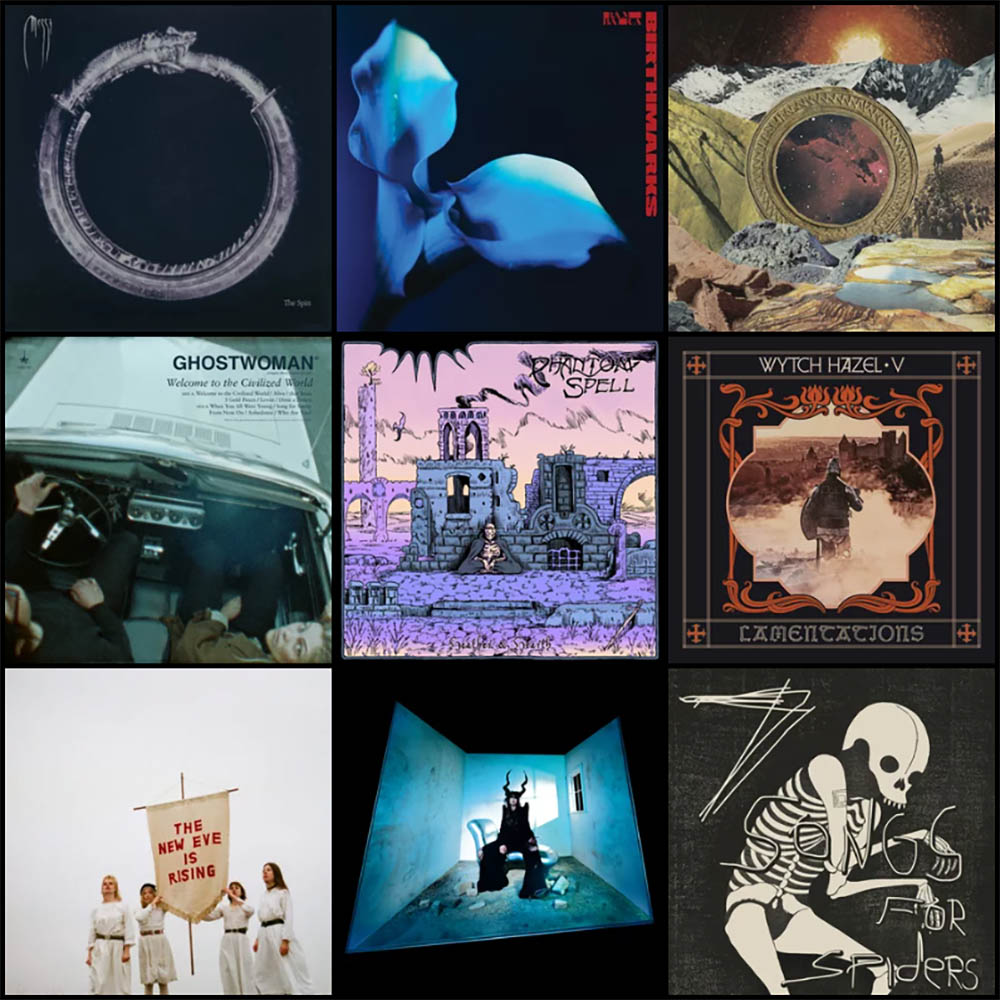
Besides the dependable Slasher Dave, no other new releases this past month jump out at me as particularly spooky, but there are a handful of albums from this year that can at least qualify as loosely autumnal.
- Messa – The Spin (Metal Blade) | Bandcamp
- Bambara – Birthmarks (Wharf Cat) | Bandcamp
- Bask – The Turning (Season of Mist) | Bandcamp
- GHOSTWOMAN® – Welcome to the Civilized World (Full Time Hobby) | Bandcamp
- Anna von Hausswolff – Iconoclasts (Full Time Hobby) | Bandcamp
- Phantom Spell – Heather & Hearth (Wizard Tower) | Bandcamp
- Wytch Hazel – V: Lamentations (Bad Omen) | Bandcamp
- The New Eves – The New Eve is Rising (Transgressive) | Bandcamp
- Circuit Des Yeux – Halo on the Inside (Matador) | Bandcamp
- Dax Riggs – 7 Songs for Spiders (Fat Possum) | Bandcamp
- Blackwater Holylight – If You Only Knew EP (Suicide Squeeze) | Bandcamp
- Witchcraft – Idag (Heavy Psych) | Bandcamp
- Creeper – Sanguivore II: Mistress of Death (Spinefarm)
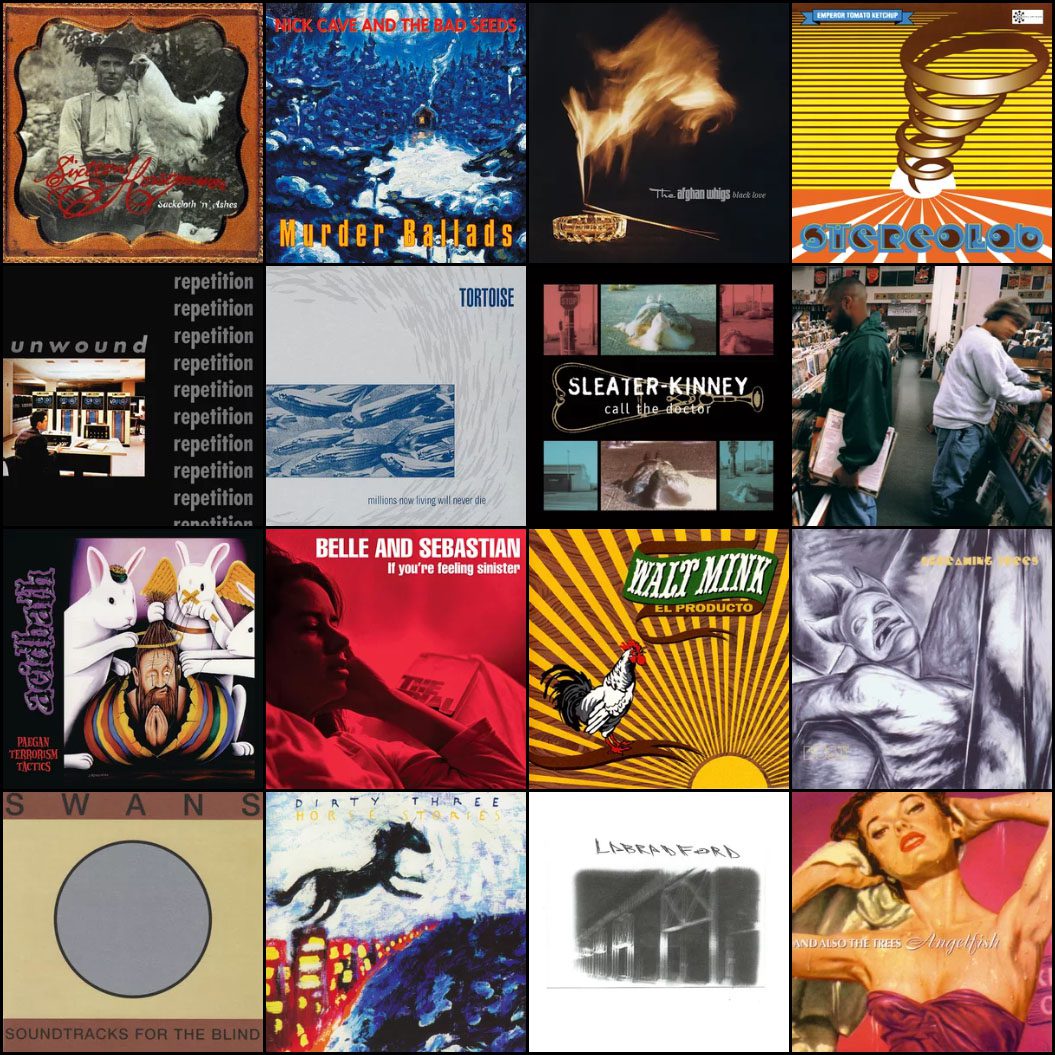
May 31, 2026
Fester’s Lucky 13: 1996
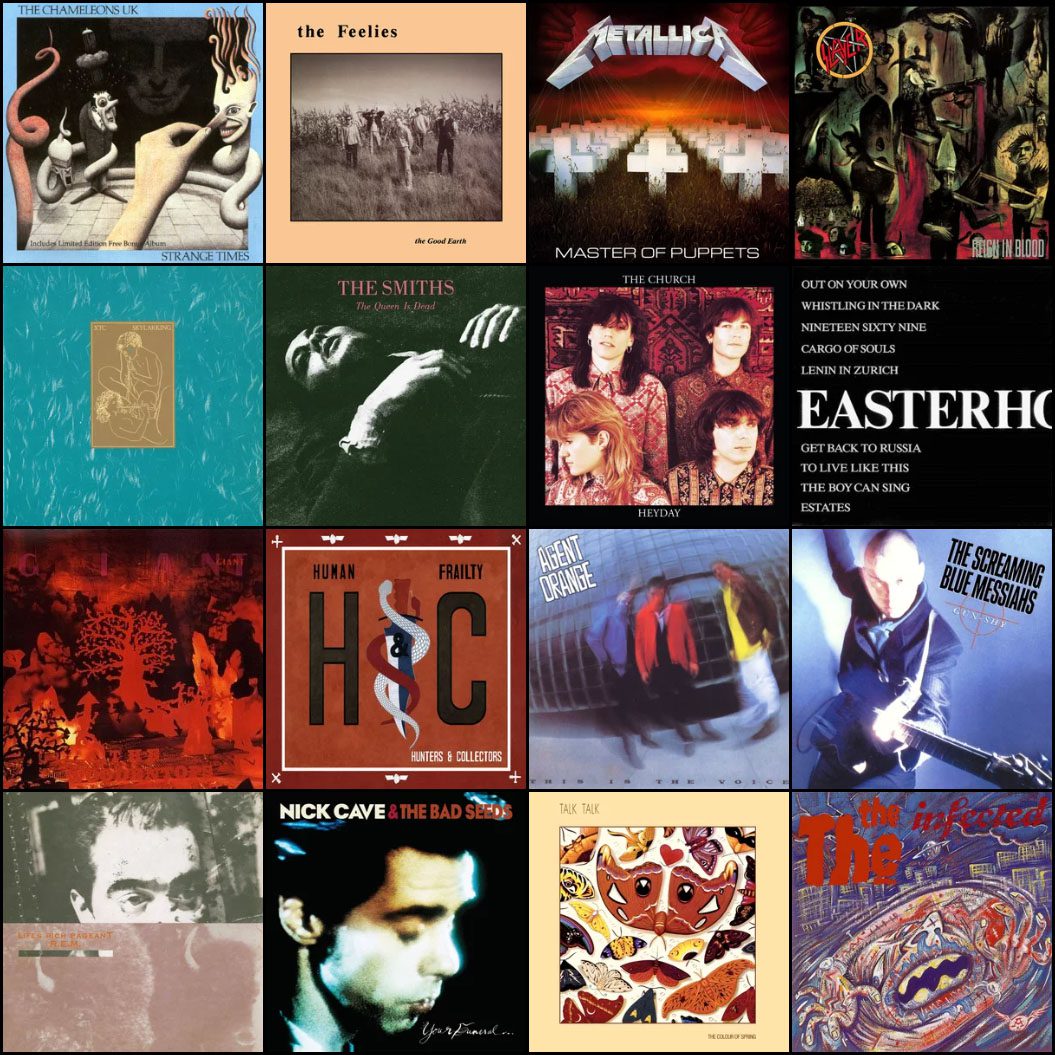
April 2, 2026
Fester’s Lucky 13: 1986