In the hot peak of sweltering summer, what better way to spend days at the beach and nights with cold drinks in hand than a fresh batch of music from the U.K. As I noted last year, there’s a lot of young bands coming out of Britain with pretty fun music. Most of it was derivative to some extent, and only a couple managed to sustain entire albums of engaging songs, but it made for a killer MP3 mix that was good for over a few hours. Again, this year a lot of the bands won’t get a fair shake because of accusations of plagiarism and general backlash against the resurgence of post-punk. It’s ironic that while every year it’s more difficult to be completely original, people are less forgiving about boring elements from the past. Consider Led Zeppelin, often cited as one of the greatest rock bands ever. Yet they did more than borrow elements from the blues. They were downright plagiarists, who also blatantly stole large sections of songs by contemporaries Moby Grape, Spirit, The Small Faces, The Chocolate Watchband and Bert Jansch. But 99% of their fans could care less. They love their Led Zeppelin.
Look at The Jam, who began as a Who tribute band. Aside from the gaff of nicking the riff from The Beatles’ “Taxman” for “Start,” the band did very well for themselves by developing their own voice. For a while in the early 70s, it was generally accepted that just about every band was in some way influenced by The Beatles. Soon a new bunch of bands expanded that palate to include The Velvet Underground, Modern Lovers, Captain Beefheart, The Stooges, MC5 and even Kosmische. Some of them also were criticized at the time for lacking originality because you can hear bits of what they grew up listening to. And so it goes. Now there’s a bunch of new bands who grew up on post-punk. Actually many are too young for that – most likely they listened to 90s Brit Pop until their older siblings turned them on to the older bands that influenced the likes of Blur and Elastica – The Buzzcocks, The Stranglers, Wire… Now XTC, Gang of Four, P.i.L., Talking Heads, Joy Division, Magazine et al. have eclipsed The Beatles, Beach Boys, Who and Stones’ influence, as they fucking should.
Like Simon Reynolds boldly announced in his new, massive volume, Rip It Up And Start Again: Post-punk 1978-1984, post-punk rivaled the sixties as a golden age for music. The main difference was that no one noticed the second golden age! This has much to do with the fact that unbridled ideas and innovation resulted in a departure from easy listening. The current crop of new bands are bringing more attention to this era by sweetening the medicine with more catchy riffs and melodies. It’s pretty amusing to hear every single band compared mainly to Joy Division and Gang of Four. It’s like if someone hears a trumpet and thinks its derivative of Miles Davis or Louis Armstrong, without recognizing the subtleties that might make a more apt comparison to Freddie Hubbard, Dizzy Gillespie or any of the other hundreds of trumpet players with distinct voices. Perhaps this resurgence might prompt people to discover previously ignored artists like Orange Juice, Josef K, Comsat Angels, The Sound, The Passage, Crispy Ambulance, etc.
While this may not be another golden age (how many are we allotted in a lifetime, anyway?), at least there’s no real plagiarism happening to the extent of Led Zeppelin, and it’s a hell of a lot more stimulating than the current chart toppers by Coldplay, Black Eyed Peas, Weezer, My Chemical Romance, etc. Not to say I don’t continue to give top rank to bands that manage to create a startlingly fresh sound, like TV On The Radio. But there’s no reason not to kick back and enjoy the best of the rest.
The Rakes – Capture/Release (V2)
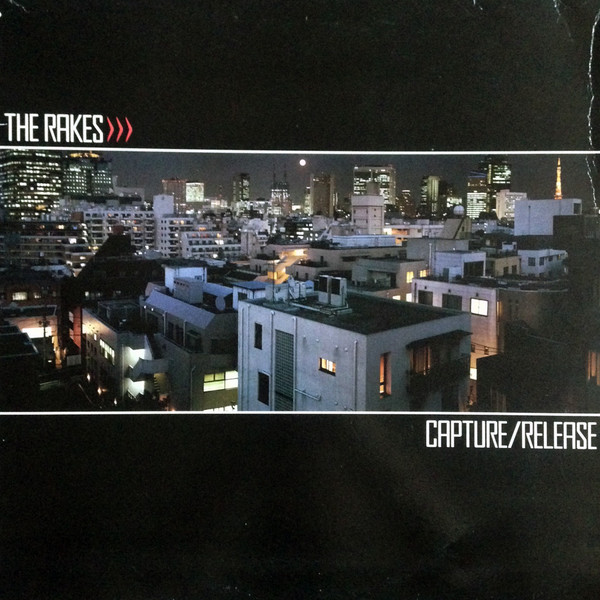
Last year’s single “22 Grand Job” sounded spindly like it was recorded on a 2-track home studio. But there was something special about the tale of a wage slave’s nervous breakdown that suggest this is part of a wave of British bands that may have been inspired by the Strokes’ needle-sharp staccato guitar tabs and early Pavement’s shambolic catchiness, but they had that special something that would enable them to transcend their humble beginnings. Indeed, the London band also taps into their own history of The Specials’ echoey rhythms and street poetry and more sober social critiques and melodic sophistication of later Madness (complete with Suggs-like ‘oh-whoas’ on “Open Book”).
Louche singer Alan Donohoe may at first sound a little flip with his heavily accented tales of debauchery, but if you focus, you’ll also hear his thoughtful, bookish side that captures the mood of our times within the dichotomy of self-righteous moralizing and escapist hedonism, tainted by the paranoia of a world gone horribly wrong. Think of a seemingly drunken, vacuous pop band that sobers up and suddenly grasps the horror of reality mid-performance, injecting venomous barbs worthy of The Fall. Produced by Paul Epworth (Bloc Party), the balance of power and clarity sounds exactly what The Rakes needed.
“Retreat” displays the perfect kind of tension to back Donohoe’s grim visions (“There’s nothing golden about Golden Lane/The smoke is heavy in my lungs and/The adverts are working”). “The Guilt” starts with the proclamation, “This is a true story,” you hear a watch alarm go off as Donohoe bellows in Mark E. Smith fashion, “I had just woke up/Everything was fucked…The guilt won’t leave my circulation.” Avoiding overt repetition, “Binary Love” is a glistening slower number that perfectly evokes loneliness (“Over and over she burns my circuits/I feel fire rushing through my wires/I can feel all the things that we can’t share”). I dare you to find a better song this year. “T Bone” is really the only throwaway on the album, and it’s still enjoyable. “Terror” establishes an epic dread that rivals The Sound’s “Missiles” from the height of the cold war, its prophecy unfortunately fulfilled after recording with the Tube bombings. “Work Work Work (Pub Club Sleep)” wraps up the album with brilliant hooks and ladders, elevating the song to pop ecstasy. The perfect antidote to the sometimes dreary workaday treadmill.
Franz Ferdinand – You Could Have It So Much Better (Domino) Oct 3
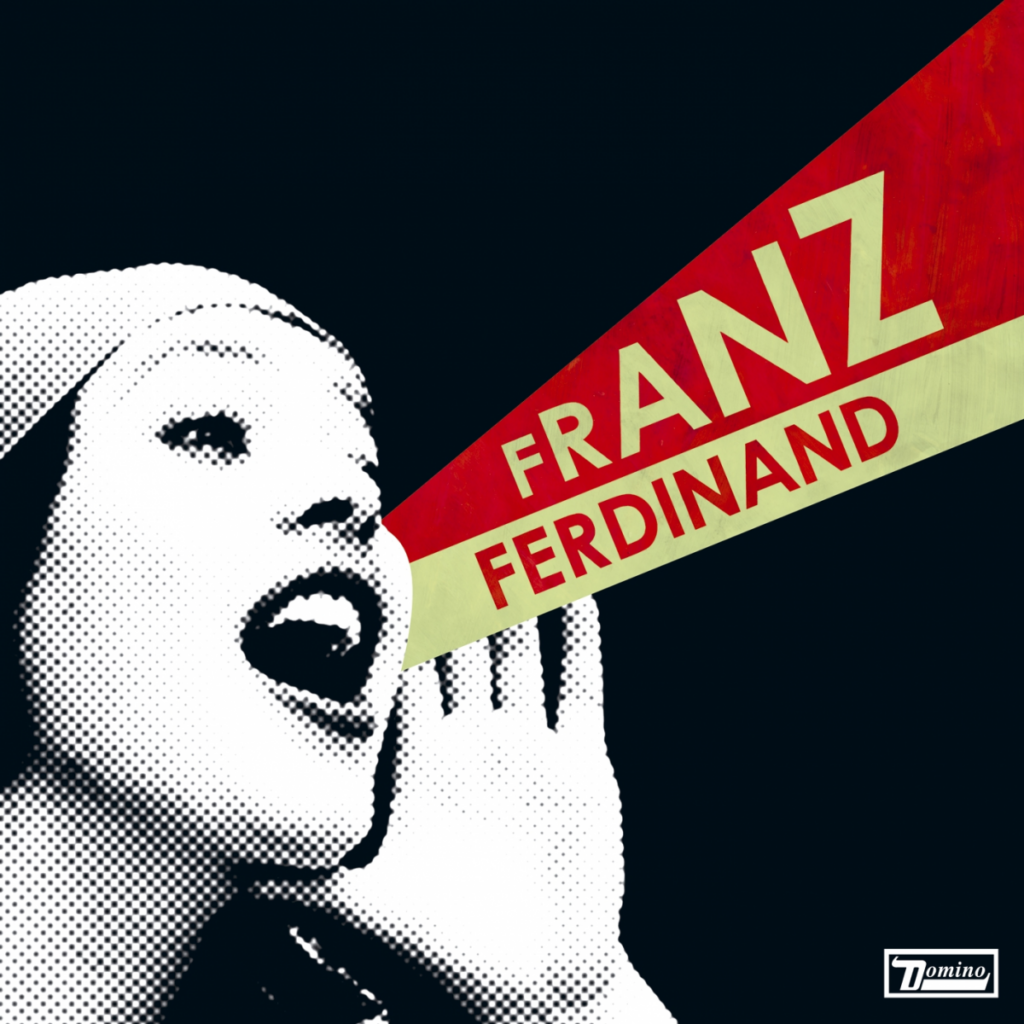
One of the key bands to kick off the renewed interest in post-punk guitar pop, Franz Ferdinand has quickly followed up their self-titled debut. Nothing quite measures up to the sly immediacy of “Take Me Out” — “Do You Want To” is a bit try-hard to the point where it’s hammering insistence will quickly grow fatiguing. However, “Walk Away,” “Eleanor Put Your Boots On” and “The Fallen” show their songwriting talents are growing, foreshadowing a more winding path into complexity taken by the likes of The Kinks, The Jam and Madness. That is, if they don’t give in to the urge to please the disco cognoscenti, ugh.
Bloc Party – Silent Alarm (Wichita/V2)
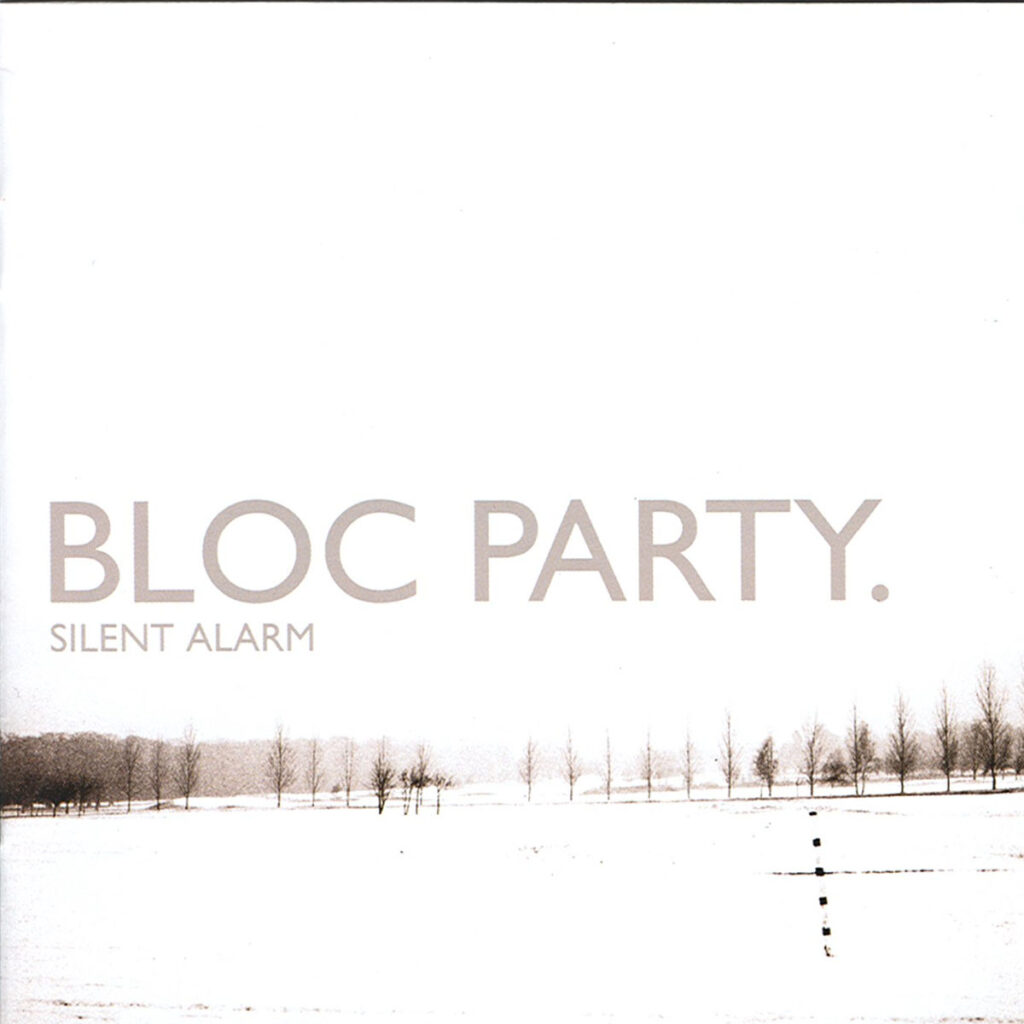
Bloc Party generated a lot of excitement starting with some singles and their debut EP in September. A preview of Silent Alarm was available for reviewers since December, so combined with the wintry landscape on the cover, it feels like a winter album. However the popularity of this album continues to build month after month, and I have a feeling this is going to stick around for a while, to the extent that I can imagine the band playing this in festivals a decade later. I have to admit that my excitement over the EP flagged a bit when I realized they were quickly moving beyond their rough hewn post-punk and going in the direction of combining dance-punk with the sweeping melodic drama of Elbow and Coldplay. It’s a more populist approach than I normally don’t love, but the consistent quality of songwriting here lends credibility to it’s staying power.
Editors – The Back Room (Kitchenware)
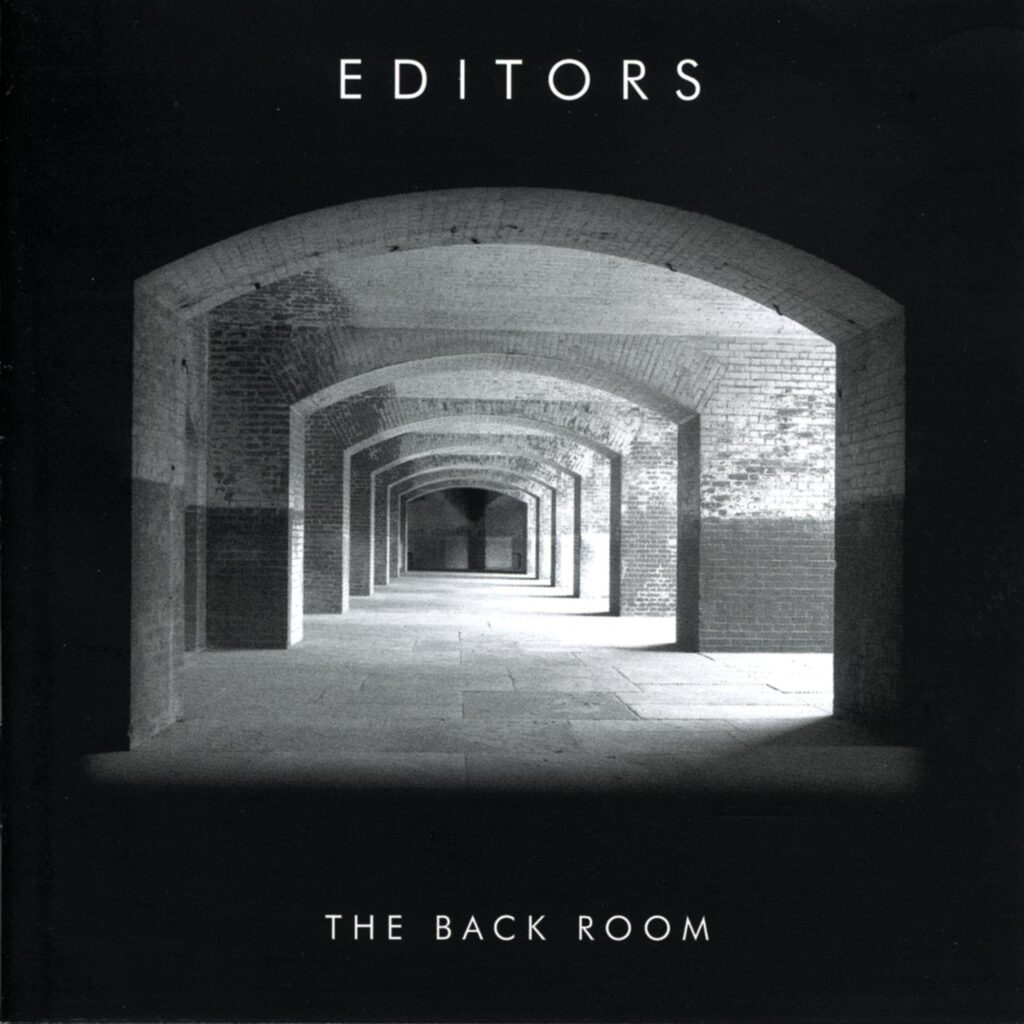
A few years back, Interpol were hounded with comparisons to Joy Division, mainly because of superficial similarities in the singers’ vocal range. Eventually the band would bristle in interviews that they don’t even *like* Joy Division. And indeed they’re right. Not only don’t they sound like Joy Division, but they’re not worthy to polish Curtis’ gravestone. Now the Birmingham based Editors are getting the same comparisons, and in turn, to Interpol. Editors’ best response is “Blood runs in our veins/That’s where our similarity ends.” Look at one possible shared influence, Echo & The Bunnymen. Interpol invoke the feel of post-Ocean Rain era Bunnymen, with empty, meaningless lyrics. In “Lights,” Editors bring to mind the Heaven Up Here era, more dark desperation and fiercely strummed rhythms, with convincingly urgent lyrics that make it a plausible proposition that love would indeed tear them apart. With ballads like “Fall” and “Camera,” Editors are more inspired by Elbow.
It’s an admirable approach, certainly better than the saccharine balladry of Coldplay. While the songs are hauntingly good and pace the album nicely, their strength lies in the more insistent, uptempo numbers like “Blood,” “Munich,” “Fingers In The Factories” and “Bullets.” The lyrics aren’t all great poetry, but in rock, simple, evocative lines like “you burn like a bouncing cigarette” and “you don’t need this disease” go a long way. Tom Smith really shows his iconic potential on “Fingers In The Factories” with his white-knuckled chorus. While not always overtly catchy, the strong songwriting is unrelentingly memorable and affecting. The crystalline reverberating guitar, thick bass, pounding drums and overall dark sheen will sound familiar to fans of early 80s bands like Teardrop Explodes, Comsat Angels and The Sound. This link to the past may not make Editors revolutionary, but neither do they rip off any specific songs. And given that hardly anyone heard those bands the first time around, they’re a welcome addition to the new crop of post-punk. The brooding “Open Your Arms” and “Distance” end the album at a dreamy, incandescent pace, lending enough time and space to reflect on the album and how perfect it all seems. What a rare thing, a debut that’s not just a grower, but capable of inspiring fandom and obsession. Hints of perfection, of course, always leave one less than satisfied, craving more. A good measure of a band’s quality is their B-sides. The bonus EP (included in the limited edition), Cuttings features many A-list worthy tracks like “Let Your Good Heart Lead You Home,” “You Are Fading” and “Release.” This makes for great odds that the band will endure for many albums to come.
Field Music – Field Music (Memphis Industries)
While this Sunderland band shares a drummer with Maximo Park and includes a former Futurehead, their sound is miles away from their neighbors. Field Music is delicate art pop with off-kilter melodies and rhythms. Imagine if Robert Wyatt joined XTC circa 1983. The songs are shy and not exactly catchy. You have to put in some effort to chase down and grab the music. Or perhaps play possum until it comes sniffing and licks your ear. The reward is some pretty, tickly piano embellishments, falsetto harmonies (courtesy of brothers Peter and David Brewis) and percussion percolating with various shakers and ringing bells. The easiest entry point, the single “You Can Decide,” with its straightforward handclaps and chorus, bring to mind a more interesting Shins. “Got To Write A Letter” starts with some cleverly sampled typewriter set to the rhythm.
The sensual acoustic guitars bring to mind a faint influence of Brazilian bossanova and The Sea And Cake. “Like When You Meet Someone Else” is the obligatory sad song always with a light touch. “Shorter Shorter” employs a small chamber orchestra that could have been borrowed from the Abbey Road era Beatles. Like snowflakes, this music is too ephemeral to stick with you for long. In a way this can be positive, as every repeated listen sounds fresh, making it a grower and a keeper.
Maximo Park – A Certain Trigger (Warp)
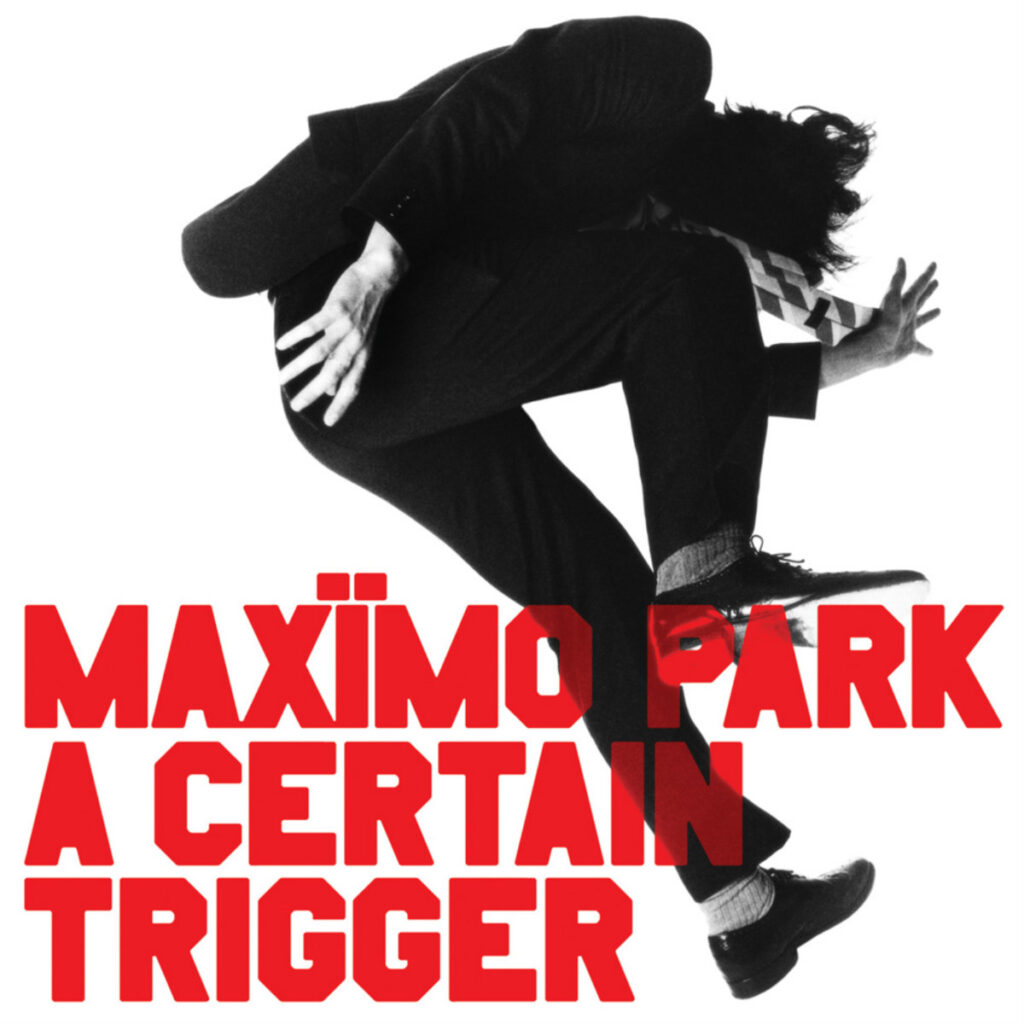
As much as I’ve liked bands influenced by early XTC, The Stranglers, The Jam and Gang of Four, I was wary when Maximo Park seemingly appeared from nowhere. Well, Newcastle to be precise, not far from North East England’s The Futureheads, who mined similar territory to considerable acclaim (and backlash). As it turns out, that band’s album did not hold up well over time aside from a few highlights. So I sat on A Certain Trigger all summer, playing it to death, waiting to see if repetition would kill it. It didn’t. While Maximo Park don’t have fancy four-part harmonies, they do have an album loaded with muscular songs that can stand up to repeated listens. The deceptively simple instrumentation and arrangements give the songs room to breathe, while Paul Smith plainly sings his eloquent lyrics with a lilting Geordie accent, always pushing forward the incessant melodies.
The album is top heavy, with the best songs taking up the first half. “Signal And Sign” builds gradually into a keyboard-driven, anthemic mod rocker. “Apply Some Pressure” is their best song, a punked out “I’ll Melt With You” that really needs to land on a good teen movie soundtrack and be immortalized in proms everywhere. The kinetic “Graffiti” is nearly as great. It roars, recalling The Wedding Present at full charge while Smith wails riddles like “I’ll do graffiti if you sing to me in French,” and “What are we doing here if romance isn’t dead?” Funny how odd words can bring a rush of emotion with a killer tune. What’s impressive is the quality is maintained for three more songs. The only reason “The Coast Is Always Changing” pales slightly is that it starts to recycle some of the earlier melodic themes. On it’s own it’s still a great tune, along with “The Night I Lost My Head” (“I spent all night trying to remember your address… Why did we have to meet/On the night I lost my head?”).
The biggest stylistic departures are the synth pop of “Limassol” and “Acrobat.” The former is has a great buzzing synth line straight from Tubeway Army or Ultravox. It brings fond memories of The Dismemberment Plan, and could point to further fruitful exploration, even though the tune isn’t quite as great as the first half dozen. The cloying “Acrobat” is the album’s only true dud, and probably will end up being the big hit or something.
The Coral – The Invisible Invastion (Deltasonic)
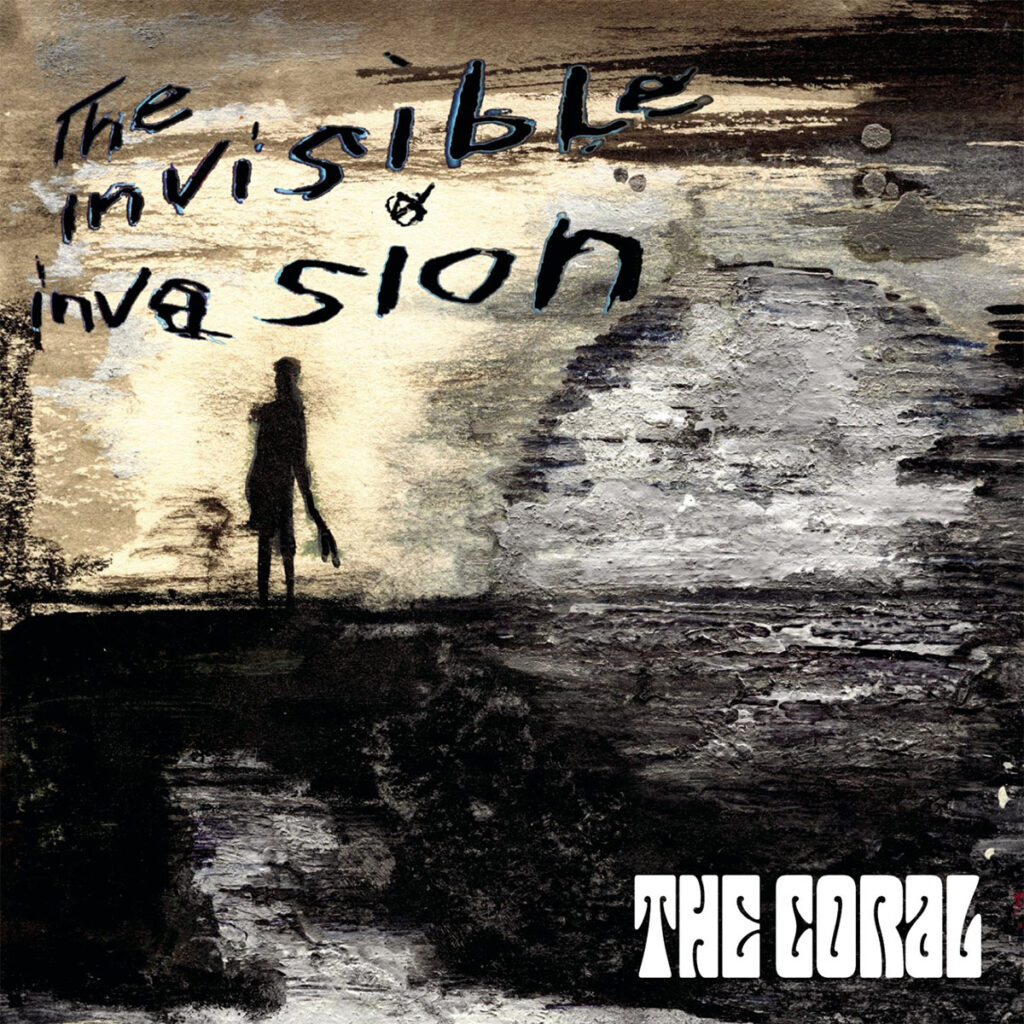
When The Coral’s debut album came out in 2002, it seemed they might create a fad for modernized sea shanties. That didn’t happen, but they did release another solid album of jangly psych pop with Magic And Medicine (2002), and then a more jagged departure with the Beefheart/The Fall infused Nightfreak and the Sons of Becker (2003) which was fun, but confused some of their fans. Their fourth album returns to the consistently solid quality of the first two, with a bit of garage noir darkness along the lines of Clinic. Four albums in four years is impressive, and I’d love to see what they could do if they took a couple years to pack an album with top notch songs that take them to the next level.
Dogs – Turn Against This Land (Island)

London may not be burning again, but it’s a simmering pot nearing boil. It may not have the verve anymore to riot, but is definitely aware it’s going to the dogs. Dogs are part of a sort of street urchin-turned rock star continuum of Jam acolytes that includes The Libertines and Razorlight. The former had their own particular twist on The Clash, and oddly enough, The Replacements’ Hootenany, while the latter incorporate everything from Thin Lizzy to the E-Street Band, Patti Smith Group and the Voidoids.
Aside from “Tuned To A Different Station,” which earned Dogs a support slot on Paul Weller’s tour, they’re harder to nail down. On the anthemic “London Bridge,” guitarist Luciano Vargas peels out sharp, inventive shards of sound not unlike Nick Zinner from the Yeah Yeah Yeah’s and Pixies’ Joey Santiago, while Rikki provides a more hypnotic bedrock. Johnny Clarke’s voice is a gruff tug-of-war between derisive sneer and hysterical abandon. Like Elvis Costello, even on the love songs you’re not sure if he’s actually gritting his teeth to avoid barking at his paramour. Not to say that Clarke is anywhere Costello’s level. But to condemn them for it is just like damning all the other lyricists who aren’t Dylan — pointless.
“Selfish Ways” makes misanthropy irresistible with its exuberant bounce. Because it takes a detour with a post-My Bloody Valentine wall of feedback, “Donkey” will be a standout to some, although it lacks the hooks and changes so evident in songs like “End Of An Era,” “Tarred And Feathered” and “Wait,” a love song more desperate (“wait, don’t leave me”) than tender. A few songs toward the end tend to become less distinguished as they rush by in a blustery blur. It’s the nature of a young band that is basically documenting their frenetic live set, which sounds like a wicked good time. The album closes with the title track, an honest to goodness (though abbreviated) ballad that doesn’t suck. Turn Against This Land may not provide food for late night debates in the student union, but as a blazing debut rock album, it blows most everyone out of the water.
Super Furry Animals – Love Kraft (XL)
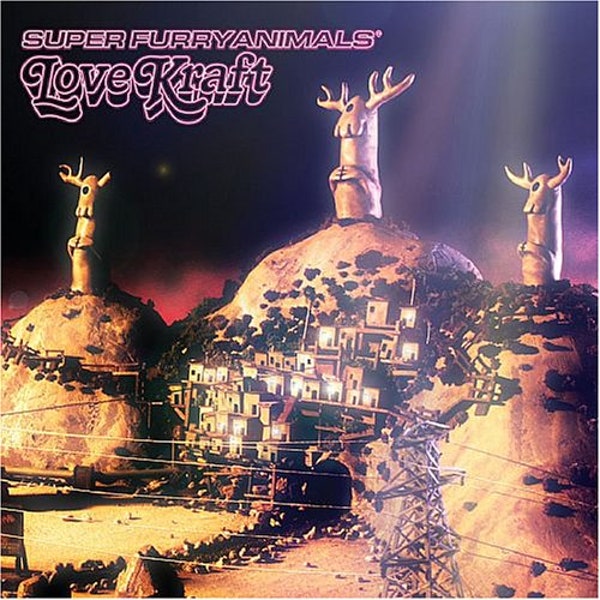
After ten years and six consistently great albums as Wales’ best band, and indeed one of the best bands anywhere, Super Furry Animals deserved a vacation. Kicking off with the splashing sound of Huw Bunford jumping into a Spanish swimming pool, Love Kraft is their slideshow, recorded in Catalunya and mixed in Rio de Janeiro. Fortunately with Super Furry Animals you’re not going to just get group photos on the beach with the band clutching their caiphirinhas. In between languid sunsets there’s evidence of some partner swapping and disintegrating relationships. “Atomik Lust” takes melodic cues from 70s Beach Boys, while Beach Boy fan Sean O’Hagan (High Llamas) arranges strings for “Walk You Home.” “Cloudberries” is all whispering oohs and aahs until the brief Latin section perks things up. It’s too bad the album wasn’t recorded in Brazil, it would have been interesting to hear the Furries mix some Tropicalia into their sound. “Lazer Beam” is the standout, saving the album from narcolepsy. It features a funky syncopated rhythm with a slew of squeaking keyboards reminiscent of Parliament as filtered through Beck. They get their freak on with “Oi Frango,” though the electronic bloops and babbling voice sample sound tossed off. Unsurprisingly, Love Kraft is their slightest effort. It’s a testament to SFA’s talent that it’s not completely a throwaway.
The Cribs – The New Fellas (Wichita)
Releasing their second full-length less than a year after their debut, The Cribs are showing a lot of confidence in their prolific songwriting abilities. Part of their strategy involves leaving their sound unchanged and their stripped down production (Edwyn Collins didn’t so much produce as rough them up) unadorned, letting the songs speak for themselves. On Hey Fellas they prove capable of matching their early highlights of “You Were Always The One” and “The Light Went Out” with more witty snipes at their own culture (“Hey Scenester!” as heard on the O.C.), narcissists (“Mirror Kissers”) and misanthropes (“I’m Alright Me” – “Take drugs! Don’t eat! Have contempt for those you meet!”). However after the surprisingly earnest singalong chorus of “We Can No Longer Cheat You” the slapped-together sound and often recycled vocal melodies make the album tiresome during the last half. Perhaps it’s their own special way of punishing the audience they obviously despise. Rip the good songs to add some sardonic scruff to this year’s mix alongside Art Brut.
Clor – Clor (EMI)
Clor are a synth pop band, but with real musicians who are as tight and fussy as prog rockers. While at times their quirky unpredictability threatens to get the better of them and veer into Oingo Boingo territory, a song pulls out another rabbit that makes you forget just how uncool they are. While singer Barry Dobbin and guitarist Luke Smith wrote the first Clor songs to play at their club night in London called ‘Bad Bunny,’ they also named their band after Polish scientific research center Centralne Laboratorium Ochrony Radiologicznej. Geeks! An example of their genre sampling is “Outlines” which starts with some twee vocal crooning, lurches into a robotic Kraftwerk keyboard riff, Gary Numan vocals, and eventually a touch of Princely funk. “Love + Pain” seems like a mindlessly jumpy synthpop ditty, until you get to the King Crimson guitar arpeggio. Not playing it safe doesn’t always yield rewards, as many of the tunes like “Stuck In A Tight Spot” and “Magic Touch” are more awkward than enjoyable. It goes to show that unique ideas and musicianship can’t make up for a lack of good songwriting. Stronger, coherent tunes like “Dangerzone,” “Making You Mine” and “Goodbye” will ensure that if Clor won’t make the big time, they’ll at least be remembered fondly by a cult audience.
Hard-Fi – Stars of CCTV (Necessary/Atlantic)
London’s Hard-Fi certainly look interesting on paper. Mixing old (Clash, Specials) with new (Gorillaz, Rapture, Daft Punk), they sound more appealing than the tuneless dead-end ska revival-meets-Radio 4 of Dead 60s. Lead track “Cash Machine” is moderately promising, kicking off with a haunting melodica. Richard Archer’s dole-class tale about insufficient funds and pregnant girlfriends is convincing enough, with an appropriately melancholy, almost yodeling vocal chorus. “Middle Eastern Holiday” is admirable with its political sentiments, but it’s missing the hooks to hold interest. “Living For The Weekend” is supposed to be another single, but at 5:51, it can’t justify its length, having exhausted its limited ideas within 40 seconds. “Move On Now” needs to just that, state its theme and get out, rather than noodle and warble for five long minutes. The only really good songs are the danceable “Hard To Beat,” “Tied Up Too Tight,” and the acoustic anthem “Stars of CCTV” that can induce goosebumps as well as The Jam’s “That’s Entertainment.” I suppose it’s a London thing, but while Hard-Fi show some promise, Stars of CCTV is far too spotty to justify its rabid praise in the UK press.
The Departure, Dirty Words (Parlophone)
On the surface, Northhampton’s The Departure seem to share similarities with The Editors. They have a sleek sounding debut produced by Steve Osborne (New Order, Depeche Mode) that seems to make tasteful references to early 80s post-punk like The Cure and U2. David Jones sounds a bit like Peter Murphy with an exaggerated Cockney accent. But dig beyond the fine singles “All Mapped Out” and “Lump In My Throat,” the overall feel starts to feel more like the mid-80s. Remember those dancey goth type bands that were sort of popular then? Neither do I. Particularly annoying is the one-dimensional XTC parody of “Talkshow,” and “Only Human” – “I am only human/Why do you look at me that way?” – which would give any reasonable person the urge to punch them out. With our luck, this will be a smash hit and kids will be singing along to this in stadiums as they wait for Kasabian Killer Chiefs to play their one good song. “Be My Enemy” benefits from a particularly sharp guitar riff that for a moment brings to mind The Birthday Party’s Rowland S. Howard. It was certainly unintentional, as the vapidly repeated chorus nearly ruins the mood before a nice fat bass break saves the day. “Changing Pilots” is driven entirely by a great bass line with reverbed guitars that recall Comsat Angels. If only the singer would shut his trap more often. Even in the better songs, there is a nagging feeling of emptiness that taints the overall impression of The Departure. Dirty Words looks pretty, but smells funny. It only takes one hit to bring a band like them to stardom, but they’ll need to develop a lot more depth if they want to be remembered as a great band.
May 31, 2026
Fester’s Lucky 13: 1996
May 29, 2026
Elder – Through Zero (Stickman)
April 13, 2026
Spirit Adrift – Infinite Illumination (20 Buck Spin)