May 30, 2023 by A.S. Van Dorston
My picks as I followed the countdown on Sea of Tranquility.
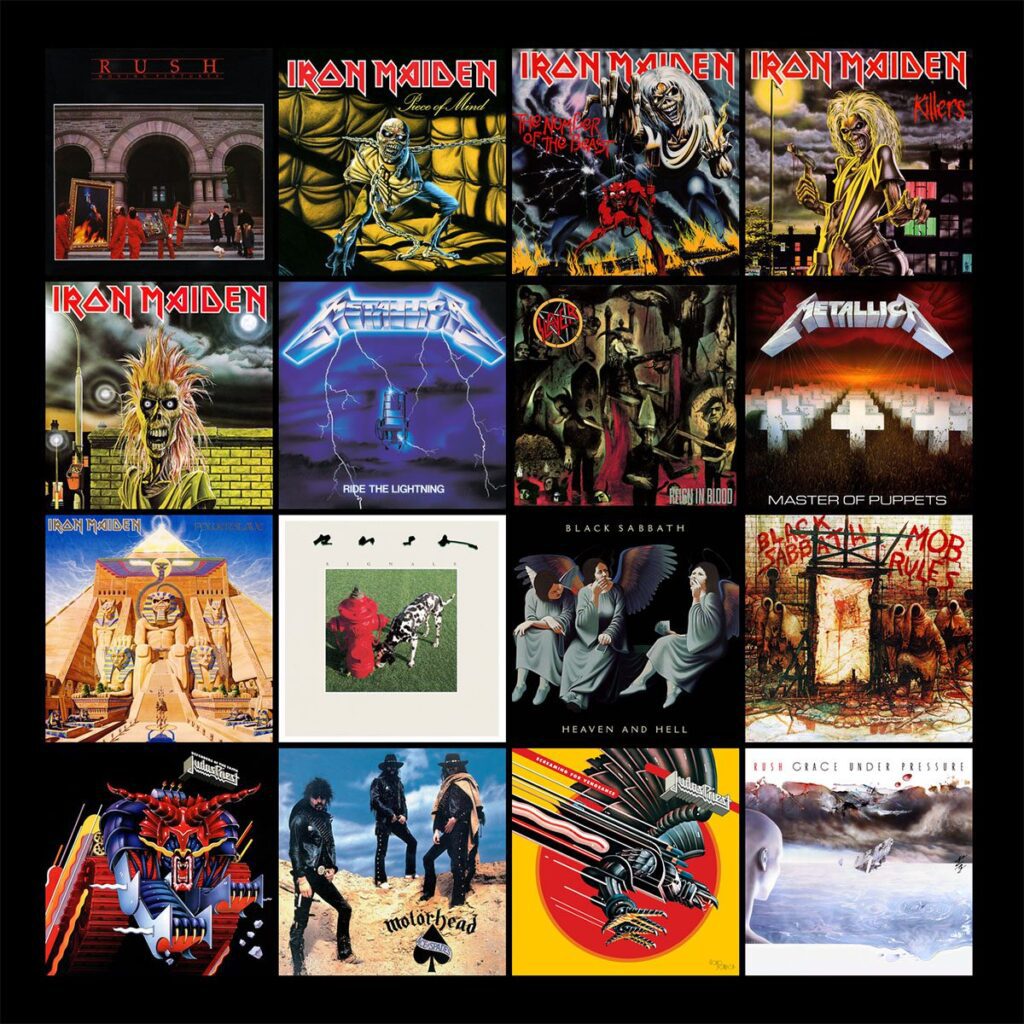
I didn’t impose rules limiting number of albums per artist, because it wouldn’t be a genuine representation of my favorites. In a decade where the quality of both genres dropped severely in the second half, replaced by post-punk, indie, noise, jangle pop, etc., the top of my list is pretty similar to a lot of people’s. The bottom portion might have some hidden gems though.
- Rush – Moving Pictures (1981)
A childhood friend who I spent a lot of time with listening to records with in his basement lair at the age of 9-10 reminded me, after we got in touch for the first time in 30 years and picked up right where we left off with our mutual love of music, that I mailed him a cassette of Moving Pictures after his family moved away. That was a big deal for me as I had so little money, but I simply had to make sure my old friend owned a copy of the best hard rock album of the 80s. - Iron Maiden – Piece Of Mind (1983)
The only Iron Maiden album that leaves me completely satisfied. “Where Eagles Dare” has the perfect intro courtesy mr McBrain, and as I wrote about recently, a seemingly small moment of when Bruce shouts “go!” before the ripping solos on “Revelations” is one of my all-time favorites. I always wished I could have seen “Still Life” performed live, my fave of their more proggy tunes, while “To Tame a Land” may not stand out like “Rime,” it also stands up better to repeated listens. The two bonus tracks on later issues “I’ve Got the Fire” and “Cross-Eyed Mary” show that, oof, the band did not have any great songs to spare. But for once, they didn’t need more. - Iron Maiden – The Number Of The Beast (1982)
A nearly perfect album, though I always treated side B, starting with the title track, a much more dramatic opener than “Invaders,” as the first side. Add “Total Eclipse,” left off the original issue to side A (the album was always frustratingly short) and move “Hallowed” so it continues to end the album, and the only thing left to make it perfect would be to swap in a better song than “Gangland,” the one filler. There’s few other albums in the 80s that I listened to more than this, which is why I’m so intimate with it that I’d have the audacity to try to improve on this masterpiece. - Iron Maiden – Killers (1981)
Iron Maiden’s second album has some of my all-time favorite Maiden moments — Steve Harris’ bass intro to “Wrathchild,” Paul Di’Anno’s rapidfire delivery on “Murders in the Rue Morgue,” and the scorching Dave Murray/Adrian Smith guitar leads on the title track. The proggy “Prodigal Son” pays homage to the past while also sounding modern, particular with the chord shapes sounding a lot like some sounds Radiohead and Porcupine Tree messed with 15 years later. While the band’s most memorable songs will come with the next album, there’s a looseness and swing heard on this album that the band will rarely return to, making this an essential document for a band not on the cusp of greatness, but already arrived there a year ago, and is just waiting for the world to catch up. - Iron Maiden – Iron Maiden (1980)
I still bear a deep, seething grudge against the rock magazines I read at the time (mostly Creem and Circus) and my local record stores, for completely shutting out Iron Maiden until “Run to the Hills” showed up on MTV two years later. That’s two years of listening to Journey and Foreigner that could have been better spent listening to Maiden. Bastards. - Metallica – Ride The Lightning (1984)
Most people didn’t hear this album until after it was reissued by Elektra on November 19. But I love Pete’s story of walking into Rock and Roll Heaven shortly after it’s Megaforce release on July 30 and have the Zazulas blasting it on the soundsystem. While the Bay area metal scene was already profoundly influenced by Metallica, this is when the rest of the world were struck by Ride the Lightning, arguably the band’s best album. - Slayer – Reign In Blood (1986)
For a band who were the primary competition with Metallica for greatest thrash metal band, Slayer gets only a tiny fraction of the media attention, probably because their fangs are still too sharp for much mainstream media. I don’t see a lot of interviews where they acknowledge their influences in detail, but hardcore punk has to be in there. A perfect balance of metal solos, riffs and concise, brutal attack. Their perfect album. - Metallica – Master of Puppets (1986)
I bought the tape the week it came out in March, but I realized my compact stereo didn’t do it justice when, a year and a half later, I was at a college house party, and someone put it on with some proper tower speakers that shook the building. Short of seeing them live, THAT was the proper way to hear to Metallica. - Iron Maiden – Powerslave (1984)
1984 was a good year to be fifteen and a fan of Iron Maiden. From the beautifully elaborate Derek Riggs cover to the Egyptian concept to the epic music, Powerslave was an album for a teen superfan to get lost in, study, and play repeatedly. I got the album on release day on September 3, of course, but I remember on Halloween, before heading out to a party, our local FM rock station played “2 Minutes to Midnight.” They almost never played heavy metal, so I figured that was the sign that Maiden were going to rule the world. Yes and no. Like the next two albums, it nearly made the top 10 in the U.S. and went platinum. But they wouldn’t truly become global juggernauts until after Bruce and Adrian left and returned to the band sixteen years later. - Rush – Signals (1982)
Rush was still kind of new to me when Signals came out. When I first heard “Spirit of the Radio,” Moving Pictures was soon to come out. I bought 2112 in the meantime, and to my ears, Rush were always changing. It was to be expected, and at the age of 13, I was still excited about the future, and it sounded to me like Rush. So I wasn’t at all disappointed, though I was a bit young for the crushing melancholy of “Losing It.” - Black Sabbath – Heaven And Hell (1980)
Many associate the legendary Rainbow Bar and Grill on the Sunset strip with Lemmy, who practically lived there the last couple decades of his life. But it was also the stalking ground of The Hollywood Vampires in the 70s, and of special significance to Ronnie James Dio, where he met both his wife Wendy, and Tony Iommi. Two meetings that had a key role in elevating his career closer to metal god status. Many Sabbath fans were resistant to Ozzy’s replacement at first, and much of music media simply ignored them (no reviews or even mentions in Creem or Rolling Stone). That would soon change, but come on, this was a big deal, and it’s crazy that anyone once thought it wasn’t. Some say, along with Judas Priest, that the changes in Sabbath were well timed in conjunction with the rise of the NWOBHM. But the fact is that audiences in North America largely had now clue what that was, and it was more about bands like Scorpions and AC/DC getting more play on rock radio. Either way, this is now recognized in hindsight as an important album, and for some one of Sabbath’s top five best albums. - Black Sabbath – Mob Rules (1981)
To be fair, in 1980-81 I was still 9-11, transitioning from Queen and ELO to Rush. Circus and Creem never seemed to mention Maiden and Sabbath during that time that I noticed, so I never got to experience those classic albums until years later. Don’t you ever want to just send records back in time to your younger self and melt your brain? - Judas Priest – Defenders Of The Faith (1984)
I’ve gone back and forth between this and Screaming for Vengeance as my favorite 80s Priest album, and the last few years Defenders comes out on top. Turbo (1986) is more fun than I remember, and even Point of Entry (1981) grew on me, but this is the best representation of their strengths, and possibly commercial peak in the U.S. My mate Ed is putting long-lost professional photos he took in the 70s of many bands including Judas Priest, and I need to ask him if he ever took shots of the audience. I wanna know when the metal fans in the Chicago area first started wearing battlevests with patches! - Motörhead – Ace Of Spades (1980)
Lemmy thought very little of the title track, with it’s clumsy and obvious card playing metaphors. But simple is often best in hard rock, just ask kindred spirits AC/DC. This still works, and instead of “Free Bird,” I’d shout this request for many years whenever the energy was flagging at a show. No one was ever brave enough to tackle it, as no one could do Lemmy like Lemmy. - Judas Priest – Screaming For Vengeance (1982)
I watched a recent video on who released the first New Wave of British Heavy Metal album that said while Judas Priest were of an older generation, starting in 1969, the same time as fellow Birmingham mates Black Sabbath, they nailed down the template with Stained Class (1978), and were also the first band to self-identify as heavy metal, when Sabbath and Deep Purple vehemently denied being metal. I’ve been saying this for years. While British Steel (1980) was their commercial breakthrough, Screaming for Vengeance is way better. Hails to the metal gods! - Rush – Grace Under Pressure (1984)
The bookend of my favorite Rush era, this album is often misunderstood and misrepresented. Yes, Signals went all in with the synths, but the follow-up has a ton of great guitar parts. It’s their darkest and heaviest album, both in musical density and lyrically. A truly profound, intense album that deserves more acclaim. - Rush – Permanent Waves (1980)
For a certain audience in the 80s, Rush were uncool. The perception was of nerdy, bookish former proggers tinkering with their new gadgets like basement scientists, not able to hang and party with the real rockers. That has of course been exposed as hogwash, such as the scene from the documentary where they talk about entertaining/tormeting KISS while high AF with “The Bag.” See for yourself if you don’t know what I’m talking about. A friend just posted photos he took from Rush shows in the late 70s where Geddy is rocking leather pants and a plunging neckline to rival David Lee Roth! This album encapsulates the balance of the different personalities of Rush as perfectly as a reverse mullet — party in the front (singles “Spirit of the Radio” and “Freewill”), business in the back (“Natural Science”). This was my introduction to the band. - Melvins – Ozma (1989)
This was the key introduction to the Melvins, with the first album tacked onto the CD as bonus tracks. While the band would continue to evolve in the 90s, this is a perfect distillation of the progress they made so far in their first six years — short songs that manage to be simultaneously lumbering, but with an attack quick as a puma. They were kind of the flip side of Napalm Death for me, two pioneering bands redefining heavy music in quick, brutal bursts. They weren’t widely known until Nirvana got big and Kurt heavily pushed them on the media as key influencers, but I felt to my core that heavy rock would never be the same after hearing this. - Slayer – South Of Heaven (1988)
It wasn’t until shortly before I bought Metallica’s …And Justice for All (1988) that I got on board with Slayer’s Reign in Blood (1986) and then South of Heaven. I’d built up my capacity for speed and power, and was finally ready for the intensity of Slayer’s third album. Because I’d heard their fourth album just a couple weeks later, I did not have the same expectations as others. No point in trying to outdo the intensity of Blood, so why not slow down the tempos, but increase the power? At that point I was aware that Rick Rubin had played a part in honing their sound into something lean and lethally hard. The classic title track, “South of Heaven” is a perfect example. I dug what he did with The Cult and Danzig who’s album came out the same day, August 25, as Justice. Now THAT disappointed me, the band’s incredibly childish hazing of their bass player to the point where they sabataged their recording. Made me wonder what would have happened if they recorded with Rubin. Probably something halfway between Justice and their next album. But in 1988, F***IN’ SLAYER ruled above all! - AC/DC – Back In Black (1980)
What can one say about this dark behemoth, the biggest selling hard rock album ever, that hasn’t already been said? It seemed like everyone had this record, and for a while I got sick of the overplayed singles, and lesser tracks like “Givin the Dog a Bone.” But it still sounds amazing, and an extensive interview with Brian Johnson in the latest issue of Metal Hammer is endearing how humble, and even terrified he was in jumping in the deep end recording the album with no preparation on his part. A car afficianado, his first big purchase after the initial success of the album was to buy … a Lamborghini Countach or a Ferrari Testarossa? Nope. He got a Chevy Blazer! What a bloke! Love that guy! - Scorpions – Blackout (1982)
Scorpions always skirted the edges of metal, their third album In Trance (1975) for sure an early proto-metal influencer along with Black Sabbath, Deep Purple, Rainbow, UFO and Thin Lizzy. But overall, they’re just a really excellent hard rock band who, in 1982, were nearing the end of a near-perfect run of seven classic albums. Song for song, Blackout may or may not be their best. “Blackout” is exhilarating as a driving album opener, way better than the following album’s “Bad Boys Running Wild,” but not as hooky as “Rock You Like A Hurricane.” “When the Smoke is Going Down” is a great, smoldering closing ballad, but a bit subdued compared to the epic “Still Loving You.” They had been honing their power ballad chops at least since “Holiday” from Lovedrive (1979) and “The Zoo” from Animal Magnetism (1980). “Arizona” was released as a video and features one of their stickiest riffs. Whatever the fan favorites are, Blackout is definitely one of the very best, fun, and catchiest hard rocking albums of 1982. - The Cult – Love (1985)
Aside from AC/DC and Rush, there wasn’t a lot of hard rock that caught my attention in the 80s. I was immersed in post-punk, post-hardcore, noise and indie rock, and jangle pop mainly. On The Cult’s second album they inhabited a nearly perfect balance between their gothy post-punk roots as Southern Death Cult, and their AC/DC inspired riffing on the Rick Rubin produced Electric (1987). The big, reverbed psychedelic guitar sounds would be a big influence on Janes Addiction, and both bands did achieve a level of stadium-level success that foreshadowed the impending popularity of Nirvana, Pearl Jam and Alice in Chains. - Dio – Holy Diver (1983)
This was no ordinary debut, but rather a culmination of an epic rock & roll journey that took Ronnie James Dio twenty-five years to end up looming over his contemporaries like Murray the demon on the album cover. From Ronnie & the Red Caps in the 50s to the Ronnie Dio & Prophets and The Electric Elves in the 60s, Elf, Rainbow and Black Sabbath, Dio’s success must have been the most hard won of anyone in that scene. With an excellent handpicked band of Vinny Appice, Vivian Campbell and Jimmy Bain, he had the perfect backing for his vocals which have never sounded better or more powerful on classics like the title track, “Rainbow in the Dark” and “Stand Up and Shout.” Like many musicians of his generation, Dio was reluctant to be pigenholed as anything more reductive than heavy rock, but as much as Sabbath, Deep Purple and Judas Priest, he helped create heavy metal as we know it, and in 1983, he embodied it heart and soul. Dio = metal. - Metallica – Kill ‘Em All (1983)
Shortly after moving from Denmark to CA, Lars Ulrich abandoned his family’s plans to become a pro tennis player and had his soul stolen by metal. First by Maiden, Saxon and Motörhead, then, via a tape-trading network, he got into lesser known bands like Diamond Head, Angel Witch and Tygers of Pan Tang. Still a teenager, he placed an ad in 1981, met James Hetfield, and they were to inject a much needed dose of teenage energy into the scene, becoming thrash pioneers along with Slayer. While NWOBHM only got going in 1979, many bands (Raven, Witchfynde, Praying Mantis and Quartz) had been at it since 1974, and Metallica quickly made many of them sound old-fashioned. Metallica’s success wasn’t overnight. The seeds were certainly planted, but they were still on an indie label, and many metal fans (like myself) around the world were unaware of them until their second album, Ride The Lightning, was reissued by Elektra on November 19, 1984. The debut sounded understandably rough ‘n’ raw for most people who heard their second album first. But there’s no denying the breathless rush of “Hit the Lights,” the 7:12 of relentless riffing on “The Four Horsemen,” the iconic “Whiplash” and “Seek & Destroy.” The young magpies managed to assemble their favorite bits and create something fresh. - Dio – The Last In Line (1984)
A year with a Dio album is always a good year for metal. Quickly following up from the blockbuster debut, a local rock radio station played the title track before the album’s July 2 release. “We. Are. Coming. HOOOOOOOOMMMMMME!” Yeah I was chuffed. At the time the only other metal album I’d bought that year was Judas Priest’s Defenders of the Faith in January. I wasn’t yet aware of Metallica, coming July 30, or Mercyful Fate, and Maiden’s next release date was still not announced. Dio scratched that metallic itch big time, and I still hadn’t even properly dug into his albums with Sabbath. I had a lot of listening and discovery ahead of me. - Motörhead – Another Perfect Day (1983)
Talk about a sleeper, for years I’d been buying various versions of Motörhead’s earliest recordings from 1975 (No Parole), and their first album. I felt like there was a hidden key to the birth of metal in those recordings, but really it was just awkward, bluesy growing pains as Lemmy figured out the formula to the most ferocious possible sound, which he finally nailed on Overkill (1979). I had the classics, Iron Fist (1982), Orgasmatron (1986), Rock ‘N’ Roll (1987), but it took decades to finally appreciate how great their sixth official studio album was. In fact, it measures up to their best. - Saint Vitus – Born Too Late (1986)
I first listened to Saint Vitus because they were on the SST label along with many other favorite bands of that era. This metal band were odd ducks on the roster, though it made sense in the context of Black Flag slowing down and growing their hair out. This may not sound better than Candlemass, but it’s Wino’s best batch of songs. - Candlemass – Epicus Doomicus Metallicus (1986)
Doom doomy doom. I tried to find out when was the first time the term “doom metal” was used in print, but I couldn’t. No one cares it seems. While Pentagram, Pagan Altar and Saint Vitus had started putting out recognizable doom in the 70s, I have a feeling Candlemass had something to do with popularizing the genre label. Nearly as perfect example of doom you can get without being Black Sabbath. - Def Leppard – Pyromania (1983)
Accept used to be in this slot, but I really don’t listen to it much these days, whereas Pyromania has been re-growing on me, aftering getting kind of sick of it for a couple decades. It may be where pop metal started going wrong, but it’s hard to blame others for wanting to copy this approach. In a weird way, My Bloody Valentine’s Loveless in my mind was their Pyromania. - Melvins – Gluey Porch Treatments (1987)
Melvins could arguably be credited for creating grunge, stoner rock, sludge metal AND drone metal, but because they experimented with so many sounds, they often don’t get ANY credit. At Rancho Bulboso they’ve earned their Platinum card and deserve to max it out and live like pharoahs. Their debut album was a stunningly original work that laid waste to most other more acclaimed and popular albums in 1987. - Riot – Fire Down Under (1981)
This New York band formed in 1975 and deserve a ton of credit for being heavy metal pioneers in the states. This third album I thought was the undisputed peak for the band, but over the past decade, their sixth album ThunderSteel (1988) has gotten a lot of love too. These guys deserved more fame than they got.

- Rush – Moving Pictures (Polygram, 1981) | Canada | 10
- Iron Maiden – Piece Of Mind (EMI, 1983) | UK | 10
- Iron Maiden – The Number Of The Beast (Capitol, 1982) | UK | 10
- Iron Maiden – Killers (Capitol, 1981) | UK | 10
- Iron Maiden – Iron Maiden (Capitol, 1980) | UK | 10
- Metallica – Ride The Lightning (Elektra, 1984) | USA | 10
- Iron Maiden – Powerslave (Capitol, 1984) | UK | 10
- Black Sabbath – Heaven And Hell (WB, 1980) | UK | 10
- Metallica – Master of Puppets (Elektra, 1986) | USA | 10
- Rush – Grace Under Pressure (Mercury, 1984) | Canada | 10
- Rush – Signals (Polygram, 1982) | Canada | 10
- Rush – Permanent Waves (Mercury, 1980) | Canada | 10
- Black Sabbath – Mob Rules (WB, 1981) | UK | 10
- Motörhead – Ace Of Spades (Roadracer, 1980) | UK | 10
- Iron Maiden – Seventh Son Of A Seventh Son (Capitol, 1988) | UK | 10-
- Iron Maiden – Somewhere In Time (Capitol, 1986) | UK | 10-
- Dio – Holy Diver (Reprise, 1983) | USA | 10-
- Def Leppard – Pyromania (Mercury, 1983) | UK | 10-
- AC/DC – Back In Black (Epic, 1980) | Australia | 10-
- Scorpions – Blackout (RCA, 1982) | Germany | 10-
- Metallica – Kill ‘Em All (Megaforce, 1983) | USA | 10-
- The Cult – Love (Beggars Banquet, 1985) | UK | 10-
- Dio – The Last In Line (WB, 1984) | USA | 10-
- Diamond Head – Lightning to the Nations (Metal Blade, 1980) | UK | 10-
- Motörhead – Another Perfect Day (Roadrunner, 1983) | UK | 10-
- Billy Squier – Don’t Say No (Capitol/American Beat, 1981) | USA | 10-
- Hawkwind – Levitation (Bronze, 1980) | UK | 10-
- Saint Vitus – Born Too Late (SST, 1986) | USA | 10-
- Def Leppard – High ‘N’ Dry (Mercury, 1981) | UK | 10-
- Candlemass – Epicus Doomicus Metallicus (Black Dragon, 1986) | Sweden | Bandcamp | 10-
- Voivod – Nothingface (Mechanic, 1989) | Canada | 10-
- Trouble – Psalm 9 (Metal Blade, 1984) | USA | Bandcamp | 10-
- Candlemass – Nightfall (Metal Blade, 1987) | Sweden | Bandcamp | 10-
- Trouble – The Skull (Metal Blade, 1985) | USA | Bandcamp | 10-
- Voivod – Dimension Hatröss (Noise, 1988) | Canada | 10-
- Riot – Fire Down Under (FireSign/Metal Blade, 1981) | USA | 10-
- Mercyful Fate – Don’t Break The Oath (Roadrunner, 1984) | Denmark | Bandcamp | 10-
- Accept – Balls To The Wall (Portrait, 1983) | Germany | 10-
- Government Issue – You (Giant, 1987) | USA | 10-
- Voivod – Killing Technology (Noise/Sanctuary, 1987) | Canada | 10-
- Metallica – …And Justice For All (Elektra, 1988) | USA | 10-
- Mercyful Fate – Melissa (Megaforce, 1983) | Denmark | Bandcamp | 10-
- Scorpions – Animal Magnetism (Mercury, 1980) | Germany | 10-
- Angel Witch – Angel Witch (Castle, 1980) | UK | 10-
- Hawkwind – The Chronicle of the Black Sword (Flicknife, 1985) | UK | 10-
- ZZ Top – Eliminator (WB, 1983) | USA | 10-
- Blue Öyster Cult – Fire Of Unknown Origin (Columbia, 1981) | USA | 10-
- Motörhead – No Remorse (Bronze, 1984) | UK | 10-
- Pentagram – Relentless (Peaceville, 1985) | USA | Bandcamp | 9+
- Deaf Dealer – Journey Into Fear (Sonic Age, 1987) | Canada | Buy | 9+
- Slayer – Haunting The Chapel EP (Metal Blade, 1984) | USA | 9+
- Manilla Road – The Deluge (Black Dragon, 1986) | USA | Bandcamp | 9+
- Slayer – Hell Awaits (Metal Blade, 1985) | USA | 9+
- Manilla Road – Mystification (Black Dragon, 1987) | USA | 9+
- The Cult – Electric (Sire, 1987) | UK | 9+
- Def Leppard – On Through The Night (Mercury, 1980) | UK | 9+
- Tygers Of Pan Tang – Spellbound (MCA, 1981) | UK | 9+
- Slayer – Show No Mercy (Metal Blade, 1983) | USA | 9+
- Thin Lizzy – Thunder And Lightning (WB, 1983) | UK | 9+
- UFO – The Wild, The Willing And The Innocent (Chrysalis, 1981) | UK | 9+
- Dio – Dream Evil (Reprise, 1987) | USA | 9+
- Manilla Road – Crystal Logic (Massacre, 1983) | USA | Bandcamp | 9+
- Twisted Sister – You Can’t Stop Rock ‘n’ Roll (Atlantic, 1983) | USA | 9+
- Van Halen – Fair Warning (WB, 1981) | USA | 9+
- Fates Warning – Awaken The Guardian (Metal Blade, 1986) | USA | Bandcamp | 9+
- Celtic Frost – To Mega Therion (Noise, 1985) | Switzerland | 9+
- Blue Öyster Cult – Cultösaurus Erectus (Columbia, 1980) | USA | 9+
- The Angels – Dark Room (Epic/Liberation Blue, 1980) | Australia | 9+
- Legal Weapon – Interior Hearts (Arsenal, 1985) | USA | 9+
- Megadeth – Peace Sells…But Who’s Buying? (Capitol, 1986) | USA | 9+
- Trouble – Run To The Light (Metal Blade, 1987) | USA | Bandcamp | 9+
- Cirith Ungol – King Of The Dead (Metal Blade, 1984) | USA | Bandcamp | 9+
- Government Issue – Government Issue (Fountain of Youth, 1986) | USA | 9+
- Chastain – Ruler of the Wasteland (Shrapnel, 1986) | USA | 9+
- Candlemass – Tales Of Creation (Music For Nations, 1989) | Sweden | Bandcamp | 9+
- Accept – Metal Heart (Portrait, 1985) | Germany | 9+
- Manilla Road – Open The Gates (Black Dragon, 1985) | USA | Bandcamp | 9+
- Witch Cross – Fit for Fight (Roadrrunner, 1984) | Denmark | 9+
- Accept – Restless And Wild (Portrait, 1982) | Germany | 9+
- Saxon – Strong Arm of the Law (Carrere, 1980) | UK | 9+
- Billy Squier – Emotions In Motion (Capitol/American Beat, 1982) | USA | 9+
- Venom – Welcome To Hell (Neat/Combat, 1981) | UK | 9+
- Soul Asylum – Hang Time (A&M, 1988) | USA | 9+
- Pagan Altar – Judgement Of The Dead (Cruz del Sur, 1982) | UK | Bandcamp | 9+
- Scavenger – Battlefields (Masusoleum, 1985) | Germany | Bandcamp | 9+
- The Lords of the New Church – The Method to Our Madness (I.R.S., 1984) | UK | 9+
- Heart – Heart (Capitol, 1985) | USA | 9+
- Griffin – Flight of the Griffin (Steamhammer, 1985) | USA | 9+
- Riot – ThunderSteel (Epic, 1988) | USA | 9+
- Girlschool – Demolition (Bronze, 1980) | UK | 9+
- Hanoi Rocks – Two Steps From The Move (Epic, 1984) | Finland | 9+
- Chastain – The 7th of Never (Leviathan, 1987) | USA | 9+
- Frank Marino & Mahogany Rush – What’s Next (Columbia, 1980) | Canada | 9+
- Pentagram – Day Of Reckoning (Peaceville/Snapper, 1987) | USA | Bandcamp | 9+
- Seduce – Seduce (Psycho-Mania, 1985) | USA | 9+
- Dio – Sacred Heart (WB, 1985) | USA | 9+
- Chastain – The Voice of the Cult (Leviathan, 1988) | USA | Bandcamp | 9+
- Satan – Court In The Act (Neat, 1983) | UK | 9+
- The Angels – Night Attack (Epic, 1981) | Australia | 9+
- Ramones – Subterranean Jungle (Sire, 1983) | USA | 9+
Posted in:
Listicles
May 31, 2026
Fester’s Lucky 13: 1996
April 2, 2026
Fester’s Lucky 13: 1986