30 Favorite Drummers of All Time

From the daily countdown on Sea of Tranquility, three favorite albums the drummer was involved with, and song with favorite performance.
1. Neil Peart (Rush)
The Professor, the master, who never stopped working at learning new things. I was 10 yrs old when my mind was blown by Permanent Waves (1980). I was soon hooked, going back for 2112, Hemispheres, the first live album, and was totally primed for the release of Moving Pictures. I wonder when the deluxe 40th anniversary reissue of GUP is coming out? “The Spirit of Radio.”
Rush – Moving Pictures (1981)
Rush – Hemispheres 1978)
Rush – Grace Under Pressure (1984)
2. Bill Ward (Black Sabbath)
Part of what makes Ward stand out amongst many other more technically accomplished drummers of his generation is the context. While many hard rock and proto-metal bands had pretty basic drummers, Ward added some jazzy swing to Sabbath’s arrangements. It’s not just the playing, but the parts he wrote, especially on the first six albums, and the two Dio albums. “War Pigs.”
Black Sabbath – Master Of Reality (1971)
Black Sabbath – Paranoid (1970)
Black Sabbath – Sabbath Bloody Sabbath (1973)
3. John Bonham (Led Zeppelin)
The second to last of the Big Boomer Four of legendary drummers in my list, Bonzo Bonham! It’s hard to say anything new about one of the most talked about drummers. On my favorite track, “When the Levee Breaks,” it sounds like he’s using treetrunks for drumsticks.
Led Zeppelin II (1969)
Led Zeppelin I (1969)
Led Zeppelin IV (1971)
4. Keith Moon (The Who)
Beyond some popular footage of The Who destroying their equipment playing “My Generation,” I first really got a sense of Moon’s wild style by watching The Rolling Stones Rock ‘n’ Roll Circus and The Kids Are Alright on VHS in the 90s. I realized that a lot of drummers I’d known, like my friend Nick in college, Blondie’s Clem Burke and many others were inspired by him. Technically he’s sloppy, but for rock ‘n’ roll, his passion and creativity is more important than precision, something all the wankers with their digital triggers and beat matching don’t understand. “I Can See For Miles.”
The Who – The Who – Meaty Beaty Big And Bouncy (1971)/My Generation (1965)
The Who – Who’s Next (1971)
The Who – Quadrophenia (1973)
5. Ginger Baker (Cream, Blind Faith, Baker Gurvitz Army, Masters Of Reality)
After watching the documentary on Ginger and seeing what a completely ornery bastard he was, it’s easy to understand why his participation in bands didn’t last long. It’s also fitting that such a contemptible human being would be responsible for creating the template for all heavy rock drumming, from Keith Moon and John Bonham to Animal — to get truly heavy, one has to unleash the beast now and then. “Tales of Brave Ulysses.”
Cream – Disraeli Gears (1967)
Cream – Wheels Of Fire (1968)
Cream – Fresh Cream (1966)
6. Stewart Copeland (The Police)
I don’t know much about Copeland’s work with Curved Air on their two worst albums in 1975-76 before they imploded, but as proficient as he was, one never would have guessed he’d be a superstar within a few years. Here is a case where punk most definitely saved a prog musician’s ass, inspiring him to innovate and create a unique, groundbreaking style fusing reggae, punk and new wave. “Walking on the Moon.”
The Police – Ghost In The Machine (1981)
The Police – Regatta de Blanc (1979)
The Police – Outlandos D’Amour (1978)
7. Mitch Mitchell (Jimi Hendrix Experience)
There’s a load of groundbreaking classic rock drummers who didn’t make my top list because they just didn’t embed themselves in my soul like Mitch Mitchell. His swing, dark and light textures and pretty innovative patterns when it comes to heavy psychedelic songs probably inspired thousands of kids to take up the kit. “Third Stone From the Sun.”
The Jimi Hendrix Experience – Are You Experienced? (1967)
The Jimi Hendrix Experience – Axis: Bold As Love (1967)
The Jimi Hendrix Experience – Electric Ladyland (1968)
8. Nicko McBrain (Iron Maiden)
Nicko didn’t join Maiden into their fourth album, my favorite, Piece of Mind. Like Bruce in the album before, he had a lot to prove, and the awsome fill in the album opener “Where Eagles Day” cemented his future as the final, legendary drummer for the best metal band on the planet. Fun fact, he played in french metal band Trust in 1981-83, and when swapped places with Clive Burr, who briefly played with Trust after Maiden.
Iron Maiden – Piece Of Mind (1983)
Iron Maiden – Powerslave (1984)
Iron Maiden – Seventh Son Of A Seventh Son (1988)
9. Pete de Freitas (Echo & the Bunnymen)
Imagine how the Bunnymen would have sounded if they continued to use their drum machine, Echo. No matter how great their songs were, they’d always kind of suck without the thundering drums of the Trinidadian Pete de Freitas. A band can never truly recover from a loss of a musician like him, in 1989. “Do It Clean.”
Echo & the Bunnymen – Heaven Up Here (1981)
Echo & the Bunnymen – Crocodiles (1980)
Echo & the Bunnymen – Ocean Rain (1984)
10. Bev Bevan (The Move, ELO)
I saw Jeff Lynne’s ELO tours in 2018-19, but skipped the final tour because as good as they were, they were sorely missing Bev Bevan. Everything else sounded spot on, but there was a Bev shaped hole, a complete lack of a kickass drum sound that was an important part of ELO. He was heavy enough for fellow Brummies Black Sabbath to tap him to fill in for a tour in 1983. As a superfan, I had the autobiographical coffeetable book as a kid, and one thing that stood out was during his days with The Move, John and Paul told him he’s better than their drummer. High praise indeed. “Twilight.”
Electric Light Orchestra – Out Of The Blue (1977)
Electric Light Orchestra – A New World Record (1976)
Electric Light Orchestra – Time (1981)
11. Dave Grohl (Nirvana, QOTSA, Probot, Them Crooked Vultures)
Dave is a great drummer who really helped take Nirvana to another level, as well as upping his own game after leaving Scream. He’s not technically the best of the 90s players, but his fills and powerful sound on those last two Nirvana albums are iconic. Despite the commercial success of Foo Fighters, his lasting artistic legacy is in his drumming, case in point his later work with Probot, QOTSA and Them Crooked Vultures with Josh Homme and Led Zeppelin’s John Paul Jones. More of that, please. “Drain You.”
Nirvana – Nevermand (1991)
Queens of the Stone Age – Songs For The Deaf (2002)
Nirvana – In Utero (1993)
12. Dale Crover (Melvins, Nirvana)
The first thing I think of regarding the Melvins is the booming thuds of Dale Crover’s drums the first time I heard Ozma (1989). His heavy style, which was fully formed by 1986, would become a big influence on noise rock, stoner, sludge metal and beyond. Aside from some drumless drone tracks, Crover plays a big part in defining the Melvins sound. “Honey Bucket.”
Melvins – Bullhead (991)
Melvins – Houdini (1993)
Melvins – Ozma (1989)
13. Anton Fier (Pere Ubu, The Feelies, The Lounge Lizards, The Golden Palominos)
What the Feelies did with the Motorik beat of German bands like Neu! is still kind of underappreciated. They toonced it up with caffeine and teenage hormones and let it rip on the CBGBs scene in the late 70s, sounding like no one else. An essential part of that percussive onslaught was the great Anton Fier. The Feelies – “Loveless Love.”
The Feelies – Crazy Rhythms (1980)
The Lounge Lizards – The Lounge Lizards (1981)
Pere Ubu – Songs of the Bailing Man (1982)
14. Joey Waronker (Walt Mink, Beck, R.E.M., The John Doe Thing, Ultraísta, Atoms For Peace)
Joey and his sister Anna (That Dog) had an advantage of growing up surrounded by professional musicians, their grandfather being Si Waronker, founder of Liberty Records, their mom Donna Loren had a solo album in ’65, their dad Lenny produced albums by Randy Newman, Gordon Lightfoot, Doobie Brothers, Ry Cooder, James Taylor, Paul Simon, Brian Wilson and more. I went to college with Joey and got to see dozens of basement shows with his band Walt Mink, and he remains one of the best drummers I’ve ever witnessed in person. Just as Walt Mink were signed to Columbia and set to tour the world, he left the band to become Beck’s main drummer, and did sessions for Elliott Smith, Smashing Pumpkins, Johnny Cash, Paul McCartney, Wolfmother, Café Tacvba, Roger Waters, The Who, Regina Spektor, Weyes Blood, and also toured with R.E.M. He did three albums with Nigel Godrich as Ultraísta, and both were in the Atoms For Peace band in 2013 with Thom Yorke and Flea. I’d love to see him live with a real rock band again, because that’s where he really shines, because of all those high profile studio projects, nothing beats his work with Walt Mink. Walt Mink, “Fragile”
Walt Mink – Miss Happiness (1992)
Walt Mink – Bareback Ride (1993)
Beck – Odelay (1996)
15. Earl Hudson (Bad Brains)
Bad Brains were the best of the original American hardcore punk bands, probably because they could play circles (and backflips) around their peers, having formed in 1976 as Mind Power, a jazz fusion band influenced by Chick Corea’s Return To Forever and John McLaughlin’s Mahavishnu Orchestra. After discovering punk the next year, they changed their name based on the Ramones song “Bad Brain,” and recorded a 16 song demo in 1979 that was released in 1996 as Black Dot. The band incorporated the furious speed of both Mahavishnu and Venom into their punk repertoire, and conversely, after seeing Bob Marley & the Wailers they also started incorporating slower reggae songs into their set. This required a drummer of massive range and skill, and that was the one and only Earl Hudson. “I Against I.”
Bad Brains – Bad Brains (1982)
Bad Brains – I Against I (1986)
Bad Brains – Rock For Light (1983)
16. Jimmy Chamberlin (Smashing Pumpkins)
I know objectively these 90s dudes aren’t in the all-time top 20, but a portion of my early 20s was spent listening to Smashing Pumpkins, even as I had reservations about their artistic choices after their first couple albums. For an indie band that wanted to maintain a connection to heavy classic and psychedelic rock, a great drummer is indespensible. And despite his drug problems, that was Jimmy. “Siva.”
Smashing Pumpkins – Siamese Dream (1993)
Smashing Pumpkins – Gish (1991)
Smashing Pumpkins – Mellon Collie and the Infinite Sadness (1995)
17. Matt Cameron (Soundgarden, Pearl Jam)
I only really like one Soundgarden album all the way through, but Matt Cameron’s drumming makes every album they did worth hearing. “Head Down.”
Badmotorfinger (1991)
Down On The Upside (1996)
Louder Than Love (1989)
18. Frank Beard (ZZ Top)
A drummer’s drummer, Beard drew on a background of psychedelic rock (The Warlocks in 1966, The Cellar Dwellers in 1968), Texas blues (American Blues in 1968-69), R&B, soul and funk that provided the engine for ZZ Top’s original sound. Musicians from all types of music sought to replicate his perfect drum sound, and these days music would be a hundred times better if they threw the digital drums, triggers and beat matching in the garbage and listened to Frank Beard. “Nasty Dogs and Funky Kings.”
ZZ Top – Tres Hombres (1973)
ZZ Top – Tejas (1976)
ZZ Top – Deguello (1979)
19. Mario Duplantier (Gojira)
The early 2000s was a great time to start going to metal shows again. I had my face blown off by Opeth, Mastodon, and Gojira in relatively small, intimate venues. Standing a few feet away from a drummer like Mario Duplantier is always a treat, but one that won’t happen again with Gojira now that like a billion people were exposed to them at the Olympics. Good for them! May they rule the festivals and stadiums with righteous environmentalist rage for the rest of their days. “Ocean Planet.”
Gojira – From Mars To Sirius (2005)
Gojira – The Way Of All Flesh (2008)
Gojira – L’Enfant Sauvage (2012)
20. John “Drumbo” French (The Magic Band)
Those who dismiss Captain Beefheart & the Magic Band entirely usually only heard Trout Mask Replica (1969), their third album where Zappa let Don Van Vliet hold his band hostage in tiny L.A. rental house for months to rehearse. Despite the snippets of “field recordings,” the album was produced by Zappa at Whitney Studios in Glendale. And this avant garage style didn’t come out of nowhere. There was an artistic progression that started with Safe As Milk (1967), Strictly Personal (1968), the jams on Mirror Man which were meant to be part of a two album set. The journey was not complete, and they would record better albums in subsequent years, and the Magic Band would have other drummers (he wasn’t on my favorite, 1972’s Clear Spot). But it was Drumbo who came up with those original patterns under Beefheart’s quirky musical direction, and those rhythms would gradually be soaked up into popular music via Richard Hell & the Voidoids, Pere Ubu, Magazine, XTC, Public Image Ltd., Nick Cave & the Birthday Party, The Scientists, John Zorn, Tom Waits, PJ Harvey all the way through Fiona freakin’ Apple. Even Nona Hendryx of Labelle made a tribute album, The World of Captain Beefheart with Gary Lucas in 2017. “Electricity” and “I Love You, You Big Dummy.”
Captain Beefheart & The Magic Band – Lick My Decals Off Baby (1970)
Captain Beefheart & The Magic Band – Doc At The Radar Station (1980)
Captain Beefheart & His Magic Band – Trout Mask Replica (1969)
21. George Hurley (Minutemen, Firehose)
Minutemen filtered British post-punk like Wire and Gang Of Four through their own particular American lens of Mission Of Burma, CCR and Blue Oyster Cult to come up with something completely original. What could have been too quirky for punk audiences along the lines of Captain Beefheart’s Trout Mask Replica was made more accessible thanks largely to the inventive but endlessly listenable playing of George Hurley. “Anxious Mo-Fo.”
Minutemen – Double Nickels on the Dime (1984)
Minutemen – What Makes A Man Start Fires? (1983)
Minutemen – Buzz Or Howl Under The Influence Of Heat (1983)
22. Dave Lombardo (Slayer)
Slayer was the first band I heard that was absolutely brutal, to the point where it freaked me out when I was 16. I had to circle back to them a couple years later when I was ready. While there was soon a load of death metal bands that went even harder and faster, Dave Lombardo loomed imperiously over them as the major influence. “Raining Blood.”
Slayer – Reign In Blood (1986)
Slayer – South Of Heaven (1988)
Slayer – Seasons In The Abyss (1990)
23. David Ruffy (The Ruts)
I wouldn’t say The Ruts are underrated, because it seems anyone who knows them, rates them as a top favorite. But the original lineup of the band were gone before they got a chance to become well known, though they’ve been cited as an influence on American hardcore bands like Minor Threat and Bad Brains. Another example of how a powerful, talented drummer can help a band rise above their peers. He continued with Ruts DC, and also played with a number of other artists, from Prefab Sprout, Aztec Camera and The Waterboys to Edwyn Collins, Sinéad O’Connor, Buffy Saint Marie and Robert Forster. “Savage Circle.”
The Ruts – The Crack (1979)
Aztec Camera – High Land, Hard Rain (1983)
The Waterboys – Fisherman’s Blues (1988)
24. Clem Burke (Blondie)
There’s nothing like a Keith Moon style wild drummer really liven up a pop band, and Clem Burke was the engine that gave Blondie what subtle punk energy they had, more so live, helping them gradually earn the respect of the CBGB’s scene that they came out of before conquering the world with hits. I also got to see him live during his two year stint with Dramarama in ’92-94. “Dreaming.”
Blondie – Parallel Lines (1978)
Blondie – Blondie (1976)
Blondie – Eat To The Beat (1979)
25. Brann Dailor (Mastodon)
One of the attractions of going to more metal shows in the early 00s was the fun of seeing a drummer go absolutely apeshit on his kit. Mastodon made that easy by placing Brann front and center of the stage, and I got to see them at a small 300 capacity club, feet away from the stage where I felt the vibrations of each bass kick through my whole body. “Blood and Thunder.”
Mastodon – Crack The Skye (2009)
Mastodon – Leviathan (2004)
Mastodon – Remission (2002)
26. Murph (Dinosaur Jr.)
JDinosaur always blurred the lines between indie and noise rock with classic rock, with J. Mascis’ riffs and solo heroics. The rhythm section of Murph and Lou Barlow in particular elevated the songs into someething extra special, as illustrated by the noticeable change when Barlow left in ’89, and Murph in ’93, then reunited in 2005 for the triumphant Beyond (2007) and Farm (2009). Nearly 20 years since the runion, they’re still going strong. “The Lung.”
Dinosaur Jr. – You’re Living All Over Me (1987)
Dinosaur Jr. – Bug (1988)
Dinosaur Jr. – Where You Been (1993)
27. Mac McNeilly (The Jesus Lizard)
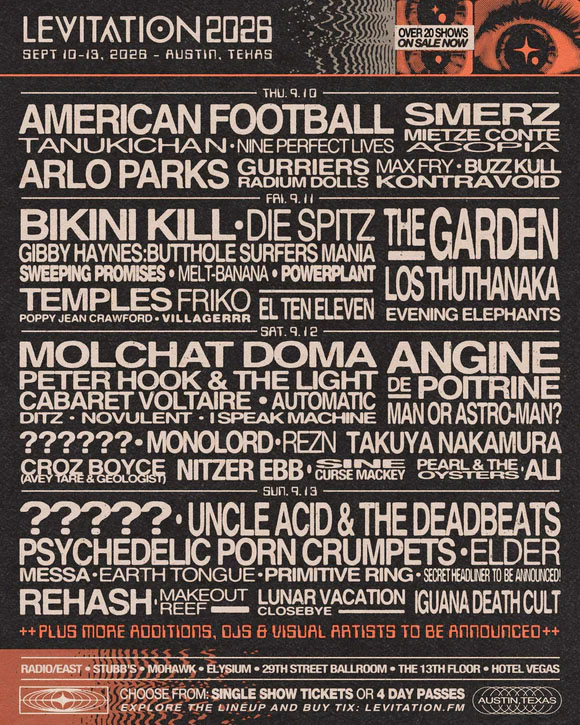
In the early 90s, a lot of indie bands were setting an alarming precedent for being piss-poor live bands, giving listless performances as if they were too cool to make an effort. Not so with post-hardcore/noise rockers The Jesus Lizard, who had the slavering frontman David Yow, Rowland S. Howard acolyte Duane Denison on guitar, and the truly groundbreaking rhythm section of David Wm. Sims on bass, and Mac McNeilly, who elevated the band into beast mode more than any of their peers. Nirvana gave a nod to their greatness by releasing a split 7″ with them on Sub Pop. They just played a fiery set at Levitation on Friday, and their latest album Rack picks up where they left off during their Touch and Go heyday. “Mouth Breather.”
The Jesus Lizard – Goat (1991)
The Jesus Lizard – Liar (1992)
The Jesus Lizard – Head (1990)
28. Tommy Ramone (Ramones)
One of the aspects of punk that caused a rift with some old school proggers and classic rockers, was the idea that anybody could be a musician. No one is born a musician, so really it should be, it’s never too late to become a musician. But even punks had to practice in order to be good enough to entertain an audience. Tommy Erdelyi was actually a musician at a young age, playing guitar in a mid-60s high school band with John Cummings. Nearly a decade later, both became Ramones and Joey was the drummer, but was unable to handle the fast tempos. Tommy switched to drums and the rest is history. He became the gold standard of fast, simple, but also pretty disciplined playing. When a friend of mine formed a band and had a novice drummer, he assigned him to listen to the Ramones’ live album repeatedly. “Cretin Hop.”
Ramones – Rocket To Russia (1977)
Ramones – Leave Home (1977)
Ramones – Ramones (1976)
29. Ramon “Tiki” Fullwood (Funkadelic)
Less than two weeks after Black Sabbath debuted on February 13, 1970, George Clinton and his crew unleashed their own version of psychedelic blues that not only had just as much simmering menace as the Brummies, but with an extra ton of DANK. Tiki Fullwood provides a gutter funk rhythm on “I’ll Bet You” that could perfectly match the rhythm of a zombie marching toward you and your inevitably eaten brains.
Funkadelic – Maggot Brain (1971)
Funkadelic – Funkadelic (1970)
Funkadelic – Standing On the Verge Of Getting It On (1974)
30. Phil Rudd (AC/DC)
One reason punks responded well to AC/DC during their first tours of the UK was that they channeled the caveman thud of The Troggs, stripping down blues rock to it’s barest essence, even more so than pub rockers Dr. Feelgood. The success of this approach was not only the simple rhythm ‘n’ riff interplay of the Young brothers, but the reliable whomps of Phil Rudd. “TNT” is a nice example of getting out of the way of the song and just get on with it.
AC/DC – Powerage (1978)
AC/DC – Highway To Hell (1979)
AC/DC – Let There Be Rock (1977)
- Neil Peart (Rush)
- Bill Ward (Black Sabbath)
- John Bonham (Led Zeppelin)
- Keith Moon (The Who)
- Ginger Baker (Cream, Blind Faith, Baker Gurvitz Army, Masters Of Reality)
- Stewart Copeland (The Police)
- Mitch Mitchell (Jimi Hendrix Experience)
- Nicko McBrain (Iron Maiden)
- Pete de Freitas (Echo & the Bunnymen)
- Bev Bevan (The Move, ELO)
- Dave Grohl (Nirvana, QOTSA, Probot, Them Crooked Vultures)
- Dale Crover (Melvins, Nirvana)
- Anton Fier (Pere Ubu, The Feelies, The Lounge Lizards, The Golden Palominos)
- Joey Waronker (Walt Mink, Beck, R.E.M., The John Doe Thing, Ultraísta, Atoms For Peace)
- Earl Hudson (Bad Brains)
- Jimmy Chamberlin (Smashing Pumpkins)
- Matt Cameron (Soundgarden, Pearl Jam)
- Frank Beard (ZZ Top)
- Mario Duplantier (Gojira)
- John “Drumbo” French (The Magic Band)
- George Hurley (Minutemen, Firehose)
- Dave Lombardo (Slayer)
- David Ruffy (The Ruts)
- Clem Burke (Blondie)
- Brann Dailor (Mastodon)
- Murph (Dinosaur Jr.)
- Mac McNeilly (The Jesus Lizard)
- Jon Theodore (Mars Volta, QOTSA)
- Ramon “Tiki” Fullwood (Funkadelic)
- Phil Rudd (AC/DC)
Bubbling Under
Hal Blaine (All the things)
Ringo Starr (Beatles)
Charlie Watts (Rolling Stones)
Andy Parker (UFO)
Simon Kirke (Free, Bad Company)
Alex Van Halen (Van Halen)
Bill Bruford (Yes, King Crimson)
Todd Trainer (Shellac)
Danny Carey (Tool)
Jon Theodore (Mars Volta, QOTSA)
Glenn Kotche (Wilco)
Budgie (Siouxsie & the Banshees)
Cozy Powell (ELP, Rainbow, Whitesnake)
DJ Bonebreak (X)
Ian Paice (Deep Purple)
Phil Collins (Genesis)
Carl Palmer (Atomic Rooster, ELP, Asia)
Carmine Appice (Cactus, Beck, Bogart, Appice)
Pete Thomas (The Attractions)
Ahmir “Questlove” Thompson (Roots)
Martin Lopez (Opeth)
Greg Errico (Sly & the Family Stone)
Christian Vander (Magma)
D.J. Fontana (Elvis Presley)
Earl Palmer (Little Richard)
Clifton James (Bo Diddley)
Non-Rock
Tony Allen (Fela Kuti)
Clyde Stubblefield & John “Jabo” Starks (James Brown)
Zigaboo Modeliste (The Meters)
Al Jackson Jr. (Stax roster, Al Green)
Benny Benjamin (The Funk Brothers)
Sly Dunbar (Upsetters, Aggrovators, Black Uhuru, Grace Jones, Sly & Robbie)
Carlton Barrett (Bob Marley & the Wailers)
May 31, 2026
Fester’s Lucky 13: 1996
April 2, 2026
Fester’s Lucky 13: 1986