The last time Electric Light Orchestra played in Chicago was November 5, 1981 at the Chicago Stadium. ELO had been my favorite band for a few years, though recently usurped from the throne by Rush with their Moving Pictures album. Arguably, Jeff Lynne’s ELO is not Electric Light Orchestra. It’s Lynne with a bunch of hired guns, not even Richard Tandy, who played on the 2015 European tour, preserved on the Live In Hyde Park DVD. But the musicians were exceptional, and it looked and sounded like classic ELO, with the only exception being the lack of Bev Bevan’s powerful Keith Moon inspired drumming. The reason for the name Jeff Lynne’s ELO is unclear, as after Bevan had been touring under the name Electric Light Orchestra Part Two through the 90s (drummers gotta eat too), he sold his 50% ownership of the name back to Lynne by 2000.
 ELO’s first proper North American tour in 37 years ultimately was a glorious return, one that must have been much more profitable considering the ease of using the simple digital backdrop compared to lugging around an actual replica of the Out of the Blue spaceship on thirteen 18-wheeler trucks. The setlist was pretty similar to the double live album Wembley Or Bust (2017), starting with the show with “Standin’ In The Rain,” the fabulous first part of the epic prog pop “Concerto For A Rainy Day” suite originally on side 3 of Out Of The Blue. That deep cut was a bit of a tease, as the rest of the set were strictly the hits. Yeah, even the lesser known, sweetly naive “Wild West Hero” reached #6 in the singles chart, the same as “Mr. Blue Sky” and “Sweet Talkin’ Woman.” In contrast to Smashing Pumpkins’ bloaty 3.5+ hour set earlier in the week at United Center, ELO’s 90 minute set felt too succinct, leaving me craving more. Lynne is 70, so I’ll give him a pass. I was surprised that Time (1981) was completely neglected, since they played “Twilight” last year at Wembley. Also strange is that they didn’t play anything from Secret Messages (1983), which was just reissued on August 3 as it’s originally intended double album format.
Nevertheless, the setlist was pretty much all killer, including the Traveling Wilburys tune “Handle With Care” and “When I Was A Boy” from Alone In The Universe (2015). Highlights included the joyous “Livin’ Thing,” “Rockaria!” (with Melanie Lewis McDonald singing the operatic soprano parts) “Turn To Stone” and “Shine A Little Light.” Lynne has never really liked touring, but then, there’s all that money to be made by more packed stadiums. Here’s hoping they come back again with a different setlist. My requests would include “Boy Blue,” “Tightrope,” “So Fine,” “It’s Over,” “Night In The City,” “Jungle,” “Summer And Lightning,” “Sweet Is The Night,” “The Diary Of Horace Wimp,” “I’m Alive,” “Twilight,” “Yours Truly, 2095,” “Here Is The News,” “Hold On Tight,” “Secret Messages,” “Bluebird,” “Buildings Have Eyes” and “Hello, My Old Friend.”
Another cool idea is that since it’s basically Jeff Lynne and friends, how about a smaller club tour where he plays songs he’s written throughout his career? There were plenty of baby boomers at the show who may have followed him ever since his days in Idle Race and The Move. Along with becoming the go-to producer with an impressive range of stars including 3/4 of The Beatles (all of them if you count his production of the two mid-90s Beatles singles “Free As A Bird” and “Real Love” — which was pretty controversial, but dang, what an honor to be chosen to do that), Dave Edmunds, George Harrison, Roy Oribison, Tom Petty and Joe Walsh, he usually wrote songs for them. His first production work outside of his bands was with childhood hero Del Shannon back in 1973 with “Distant Ghost” and “Deadly Game.”
 The Spotify playlist above starts includes a 1966 single by The Nightriders. Lynne had already played with several bands, earning a reputation as a hotshot guitarist while still just a teenager. In Idle Race, he quickly grew into lead songwriter. Getting to witness The Beatles work on their white album in Abbey Road Studios lit a fire under his aspirations to be a producer, as he took that role on their second self-titled 1968 album, critically acclaimed as prime psychedelic baroque pop. One of their prominent fans was Marc Bolan of Tyranosaurus Rex, who’s “Debora” they’d perform live. Bolan’s producer Tony Visconti’s work with string arrangements made an impression on Lynne. His “Imposters Of Life’s Magazine” and the amazing “Days Of The Broken Arrows” were collected on the second Nuggets compilation, Original Artyfacts from the British Empire & Beyond. Despite good reviews of the album, with highlights like “Skeleton And The Roundabout,” “Morning Sunshine,” “Follow Me Follow” and “End Of the Road,” it didn’t sell. When his friend Roy Wood invited him to join The Move with the idea of creating a new concept of fusing classical music with rock ‘n’ roll, Lynne was ready to flesh out his visions of expanding on the revolutionary ideas inspired by “Strawberry Fields Forever” and “I Am The Walrus.”
His contributions on The Move’s third album included “What?,” “Open Up Said The World At The Door” and “Brontosaurus,” a heavy proto-metal stomper that could very well have influenced fellow Birmingham band Black Sabbath. The heavy continued on “Message From The Country,” the title track of their last album from 1971. “No Time,” “The Minister” and “The Words Of Aaron,” showed Lynne’s production and songwriting skill progress, though they saved their experiments in orchestral fusion for their future project. A last single, “Do Ya,” didn’t make a big impact at the time, but he’d return to it later.
The beginnings of Electric Light Orchestra were rocky. While Roy Wood was the one who originally came up with the idea of a classical rock fusion, he was not as disciplined as Lynne in doing the work required to figure out arrangements and find their sound in the studio. They weren’t the only ones struggling, as Moody Blues, The Nice and Deep Purple also attempted to infuse classical into their early progressive rock with unsatisfying results. The first fruition was the sci-fi themed single about an escaped prisoner, “10538 Overture.” The single got some promising reviews and did pretty well, but it’s probably my least favorite ELO single. The rest of the 1971 album is an interesting experiment, but sounds pretty horrid. Tensions between Wood and Lynne boiled over during the recording of Electric Light Orchestra II (1973), made worse by their manager Don Arden, who’s motive was to split them into two hit-making entities, which actually kind of worked, as Wood had a few hits with Wizzard. While the album contained more clunky experiments, “Roll Over Beethoven” was a hit, and the 11:17 “Kuiama” showed promise.
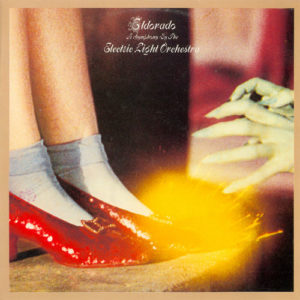 On The Third Day’s (1973) biggest hit was a funky tribute to Marvin Gaye, “Showdown.” Perhaps Marc Bolan’s mambo boogie influence was felt, as he was an uncredited participant in the sessions. The next big hit was inspired by Lynne’s dad throwing him some shade, saying his tunes got no tunes. His response was the ballad “Can’t Get It Out Of My Head,” which I have never been able to understand the appeal of. I really don’t get it. It’s little more than a bland ballad. But no matter, Eldorado (1974) overall was by far their most cohesive album yet, getting close to the sound Lynne is searching for in his head. The fusion isn’t complete, as much of the orchestral arrangements still quote compositions from dead composers, but “Boy Blue” is fabulous, and “Laredo Tornado,” “Poor Boy (The Greenwood),” and “Illusions In G Major” saw the band going in the right direction. Critical and fan support for the album has only grown over the years.
 Face The Music (1975) is a step back from the lush arrangements, with a more stripped-down rocking sound, aside from the lovely “One Summer Dream.” Continuing the groove of “Showdown,” “Evil Woman” swings, making it the biggest single yet. But the album is not exactly cohesive. The dark cover art of the electric chair and the spooky, gothic intro to the instrumental “Fire On High” suggest it was going to be an evil prog opus, but instead, “Nightrider,” “Poker” and “Down Home Town” brought to light Lynne’s blossoming obsession with country and western style Americana themes. It all came together, however, on A New World Record (1976). Finally the strings and the band sounded as one. Even on our shitty Montgomery Ward stereo, it sounded huge, with catchy choruses and joyous, sweeping melodies. ELO finally arrived at the peak of their powers, with half the album charting as hit singles, and another couple could have been hits.

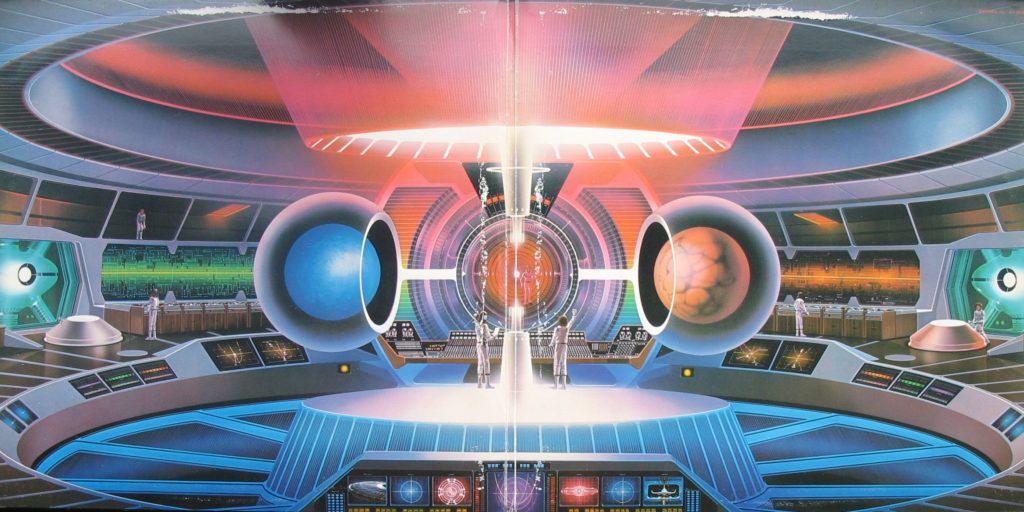
Lynne would go right back to the studio of he had his way, and forgo touring like The Beatles did. Soon he sequestered himself in a Swiss chalet, and sat for over a week with writer’s block as he gazed out the window at the gloomy, rainy weather. Finally the clouds broke, and he wrote the simple nursery rhyme like words to “Mr. Blue Sky,” and the rest of the songs poured out. The joyous childlike innocence of many of the songs (aside from the menace of “Standing In The Rain” and the proggy “It’s Over” which documented his divorce) and the awesome spaceship art by Shusei Nagaoka made it the ultimate album for 70s kids like me, but also sophisticated arrangements that appealed to adults. Check out the sweet sentiments of deep cut “The Jungle,” which have a menagerie of wild animals singing, “Wonderous is our great blue ship that sails along the mighty sun and joy to everyone who rides along.” They really should have done an animated video for this, or one with muppets. Here’s the closest I could find:
In retrospect, Lynne later acknowledged that the band had artistically peaked, and he had begun to burn out on the whole orchestral concept, with subsequent recordings relying less on strings, eventually phasing them out in favor of keyboards and synthesizers. While he would continue to experiment with different sounds and techniques, ELO would no longer be the leaders in these innovations. Lynne was not adverse to the extremely popular disco music, as evidenced on the danceable rhythms going all the way back to 1975’s “Evil Woman.” His first official solo recording, in fact, was the 12″ single “Doin’ That Crazy Thing”/”Goin’ Down To Rio” (1977). Obviously little more than a novelty bandwagon jump, it didn’t sell.
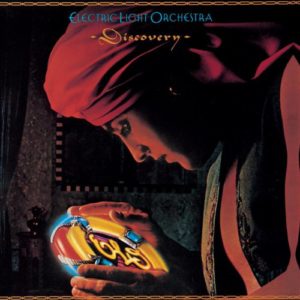 Much more successful were the more classy and subtle disco influences on the tracks “Shine A Little Love” and “Last Train To London,” recorded for Discovery (1979). The latter was released as a double A-side with “Confusion” and reached #8 in the charts. “The Diary Of Horace Wimp,” a sort of successor to “Mr Blue Sky,” also reached #8. Lynne wrote “Don’t Bring Me Down” at the last minute as he felt he needed another loud song to balance out the abundance of the sappy ballads “Need Her Love,” “Midnight Blue” and Wishing” (Lynne always denied autobiographical meaning, but he was soon to marry Sandi Kapelson). Built on a drum loop from “On The Run,” it was the first ELO song not to feature any strings. What I used to think sounded like the cocking of a shotgun, the final sound heard at the close of the song and album was a fire door at Musicland Studios being shut. It ended up being their highest charting single, reaching #4 in America, #3 in Britain, and #1 in Canada, and helped the album become ELO’s first #1 album. Instead of touring, the band made videos for each song, two years before MTV came on the air. All are available as a bonus on the 2015 reissue of the Out Of The Blue – Live At Wembley blu-ray.
Without the burden of a tour, Lynne was happy to go back in the studio, this time to record five songs for a movie project, Xanadu (1980) starring Olivia Newton-John. “I’m Alive,” “All Over The World” and “Don’t Walk Away” were released as singles, but failed to reach the top 10. Lynne produced Newton-John for the title track, and was pleased by her performance. It’s a nice, sparkling tune, and he’d re-record it with his own vocals for the 2000 box set Flashback. The film was not a critical success, but became a cult favorite because of the incredibly cheesy story, rollerskating sequences and set design.
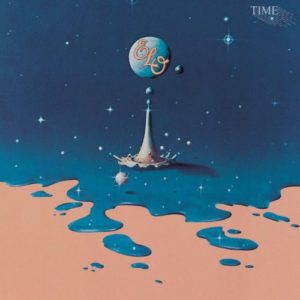 Early 1981 the group returned to Musicland Studios. The result would be both a return to their prog roots with strings conducted by Rainer Pietsch, and an exploration of synth pop pioneered by the likes of Gary Numan, Orchestral Manoevres In The Dark and Ultravox. The result was Time, released on July 2, 1981, a sci-fi rock opera about a man whisked from the 1980s to 2095, unable to return. True to most rock operas like The Pretty Things’ S.F. Sorrow, The Who’s Tommy, The Kinks’ Soap Opera and ELO’s own Eldorado, it’s thin on narrative plot. But when I first heard the dramatic intro of the vocodor robot voice on “Prologue,” leading into Bev Bevan’s blazing, phased drums on “Twilight,” I swore it was the greatest thing I’d ever heard. The album’s last track and first single, “Hold On Tight,” reaching #4 in Britain, was a bit different in that it fused Lynne’s lifelong love of rockabilly with synth pop into what I like to call, “robobilly,” which may or may not have been an influence on ZZ Top’s mega-successful sound on Eliminator, and Lynne’s work with Dave Edmunds. “Rain Is Falling” could be considered a sequel to their “Concerto For A Rainy Day.” Aside from the slight atmospheric filler of “Another Heart Breaks,” the album is consistently stronger than Discovery. Subsequent singles “Twilight,” “Ticket To The Moon,” and “Here Is The News” eeked into the top 30, while “That’s The Way Life’s Meant To Be” didn’t chart. Nevertheless, Time became the band’s second chart-topping album.
 This time they did embark on a world tour. Rather than lugging around an entire spaceship, instead they introduced a robot similar to the Star Wars droid R2D2, unofficially known as Fred. Its movements were controlled by roadies backstage via radio. Fred did the spoken parts, and conducted the band during the “Roll Over Beethoven” finale. Another change was that it was the first tour without any cello players, instead, as many as four people had to man keyboards on a few numbers to reproduce the sounds on the album. The set also included a Lennon tribute, “Across The Universe” and “A Day In The Life.” Like a lot of bands far into their career, they did a terrible job of choosing opening acts. For example, Hall & Oats created a rift between the fans, few of whom had come to see both acts. A much more interesting choice would have been OMD or Gary Numan. It would be their last world tour for 37 years.
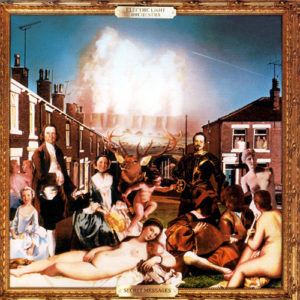 In 1982 they were back in the studio, at Wiseloord, Hilversum in the Netherlands. Secret Messages (1983) was a sarcastic response to allegations from American Christian fundamentalists of hidden satanic messages going all the way back to Eldorado. With the plan to include a live side to make it a double album to complete their contract with the record label, Lynne ended up writing 20 songs, resulting in an 18 track album, including the tribute “Beatles Forever.” While the album initially signaled ELO’s artistic decline, marred by the incredibly lame “Rock ‘n’ Roll Is King” single, it’s still pretty impressive, with the Roy Orbison inspired “Endless Lies,” and especially the closing epic 8:31 long “Hello My Old Friend,” a kind of summary of ELO’s artistic lifespan. “High-rise tower blocks with panoramic views of trains and coal, Tiehead railway tracks tread faithfully, The gas works to behold.” The label forced Lynne to edit and remix it down to a single album, losing it’s best track. While most of the cut tracks were released as B-sides and compiled on Afterglow, “Beatles Forever” remains unreleased, even when the album was finally released in a 17 track vinyl double album on August 3, 2018. While not as consistent as Time, there’s still some good tunes, like the title track, “Bluebird,” “Stranger,” and “Four Little Diamonds.”
Balance Of Power (1986), felt anti-climactic, like their heart wasn’t really in it. The single “Calling America” was fairly catchy, and “So Serious,” “Getting To The Point” and “Send It” were not bad, but none came close to the glorious heights the band regularly achieved at their peak. The b-side “Destination Unknown” was better than most of the album cuts. It was Lynne’s relatively low-key collaborations with Dave Edmunds in 1983 and 1984 that would lead to his dream come true, working with many of his musical heroes. Based on that work, George Harrison sent word that he wanted to meet Lynne. Lynne went to his home and they bonded immediately, becoming good friends. Their collaboration on Cloud Nine (1987) resulted in a revitalization of Harrison’s career, with the singles “Got My Mind Set On You,” “When We Was Fab” and “This Is Love.” Then the label requested one more track for a 12-inch single, which would spark a historic collaboration in the most casual manner. John Van der Kiste best described the scenario in Jeff Lynne: Electric Light Orchestra – Before and After (2015) —
George decided it would be easy for them to knock off a new song quickly together, and he asked Jeff, who was having dinner with Roy Orbison, to come along. They did not have a studio booked, but Bob Dylan had a suitable tape machine in his garage. George needed to go and collect a guitar which he had left at Tom Petty’s place, so Tom was invited along as well. Next day, all five were at Bob’s place. George and Jeff sat on the lawn working out a tune together, while Bob as the host was preparing a barbecue. ‘Give us some lyrics, you famous lyricist,’ George called out to him. Someone looked behind the garage door and found a cardboard box marked ‘Handle With Care’. That, they decided, was not a bad song title. Within the next few hours, they had all collaborated on the song to go with it, with Bob saying what they thought were ‘some hysterical things.’ George had the chorus already and Jeff wrote the verses at dinner time. Then they thought that if Roy Orbison was going to be involved, they would have to write him ‘a lonely bit.’
What a charmed world these rock legends live in where they can gather at barbeques and casually collaborate on music. I’d love to have seen that. The track was deemed too good for just a B-side, so they got back together and knocked out an entire album within 10 days as the Traveling Wilburys. This lead to a string of successful collaborations of Lynne producing albums with Roy Orbison, Tom Petty, The Beatles singles, and Paul McCartney’s Flaming Pie (1997). Lynne also recorded his debut solo album Armchair Theatre (1990), a low-key affair with a few good tunes that did not get a lot of attention, and a new ELO album, Zoom (2001). It took me over a decade to get around hearing it, and aside from “Alright” and “Moment In Paradise,” it’s no return to former glories. But at this point, Lynne had been anointed as rock royalty, the chosen successor to George Martin to produce the final Beatles single. The M.F.in’ BEATLES! I’m sure he still can’t believe it over 20 years later.
While ELO’s music had fallen deeply out of fashion for a number of years, tides began to turn with the increasing use of ELO songs in movie soundtracks like Eternal Sunshine Of The Spotless Mind (2004), The Game Plan and Martian Child (2007), Role Models (2008), A Smile As Big As The Moon (2012), Strange Magic (2015) and Guardians Of the Galaxy Vol. 2 (2017). The double album Lynne Me Your Ears (2001) was a tribute to Jeff Lynne’s songs going all the way back to Idle Race, featured former The Move vocalist Carl Wayne covering “Steppin’ Out.” Def Leppard even covered “10538 Overture” in 2006. The London 2012 Olympics opening and closing ceremonies featured “Mr. Blue Sky,” which created renewed demand for the track.
Success enabled Lynne to casually work when he feels like it, like the covers album Long Wave (2012), featuring Don Covay’s “Mercy Mercy,” which he used to perform with Idle Race, and Orbison’s “Running Scared.” Lynne had the misguided idea that with modern technology, he could make ELO classics sound better by re-recording them and releasing them as Mr. Blue Sky: The Very Best of Electric Light Orchestra (2012). That’s a head-scratcher, as clearly that was not the case, though it featured a new track, “Point Of NO Return.” Alone In The Universe (2015) is probably the most consistent album bearing the ELO name since Secret Messages, with the singles “When I Was A Boy,” “When The Night Comes” and “One Step At A Time.”
Given Lynne’s more relaxed work schedule and aversion to touring, another one very soon is unlikely, but we can hope. Either way, we were lucky to have Electric Light Orchestra’s ship land one more time on this recent tour.

September 27, 2025
Metal Day at Levitation 2025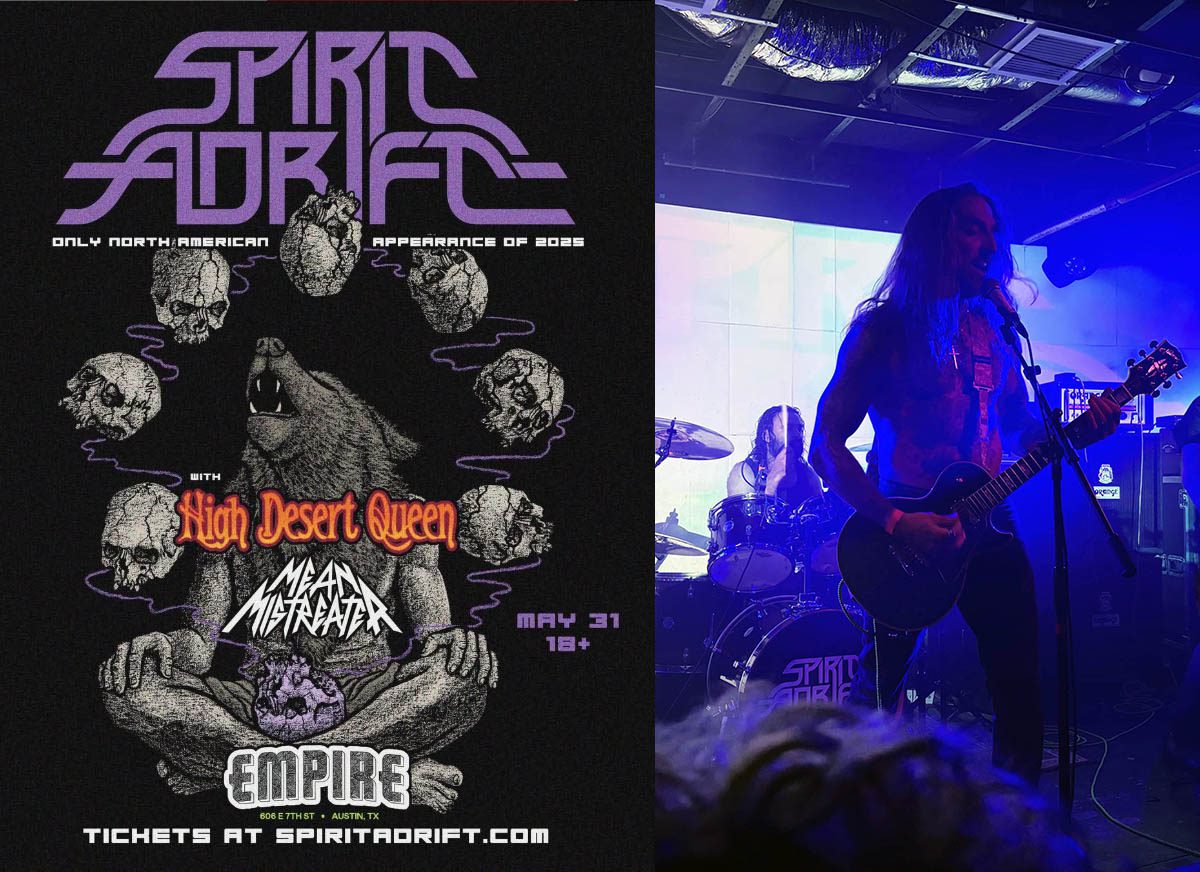
June 2, 2025
Spirit Adrift & Mean Mistreater Live at Empire
April 28, 2025
Austin Psych Fest 2025