“First I lost my father, then I lost my job and finally I lost my will to be a servant of everything that is not peace, love and freedom.”
Emile Bureau
These life events that happened to The Sonic Dawn’s Emil Bureau would soon become an all-too commonly shared experience with hundreds of thousands of people around the world. Emil proceeded to isolate himself in a remote, isolated location on the shores of the North Sea and engaged in a writing frenzy for six months. Then the band spent two months holed up in the gloom, “rocking out” and creating not only the fourth Sonic Dawn album just over a year after the last one, but a gorgeous solo album of psychedelic folk, the first side addresses personal themes in English, the second is a surreal, apocalyptic scenario related in Danish.
The band at this point has enough road experience to be an incredibly tight unit operating at peak capacity. Those who read the pre-release notes that describe a blazing live feel may be surprised to find that the album is not that heavy. It varies between dreamy and delicate to softly psychedelic rocking, the band’s performance subtle and sensitive along the lines of the most finely balanced playing on The Jimi Hendrix Experience’s Axis: Bold As Love.
This is by no means a bad thing. For example, “Children Of The Night” is a gentle rocker that includes some nice details like bits of backwards tracking and organ notes floating throughout, while the band swings like a killer jazz fusion band like Mahavishnu Orchestra moonlighting as a sixties psych pop singles band. Even more so with the Indian Classical flavored title track that would have had George Harrison drooling in envy at Emil’s sitar (and flute!) chops. Two minutes into the woozily delicate “Shape Shifter” introduces some nice fuzz guitar two minutes in that recalls some of my favorite parts of Colour Hazes’s All (2008).
This power trio’s rhythm section, Niels ‘Bird’ Fuglede (bass) and Jonas Waaben (drums) shine on “Soul Sacrifice,” where they lock into a funky groove that’s one of the more danceable tunes the band has done. Guest Erik Errka Petersson contributes Hammond organ. It’s not the Santana “Soul Sacrifice,” but it’s definitely worthy of that band circa 1969. The groove, as well as the Hammond, continue on “Join The Dead,” which does start to paint a picture of how killer this band is live.
The album wraps up with the beautiful “Sun Drifter” and the elegiac “Ufo,” ending with aliens beaming up the band to take them home amidst a wash of analog synthesizers. Despite the heavy trip that the songs emerged from, the album is actually buoyant, and literally uplifting. Guys — if you see Jimi, Sun Ra, Miles, and now Tony Allen up there, say hello, and thanks for the music.
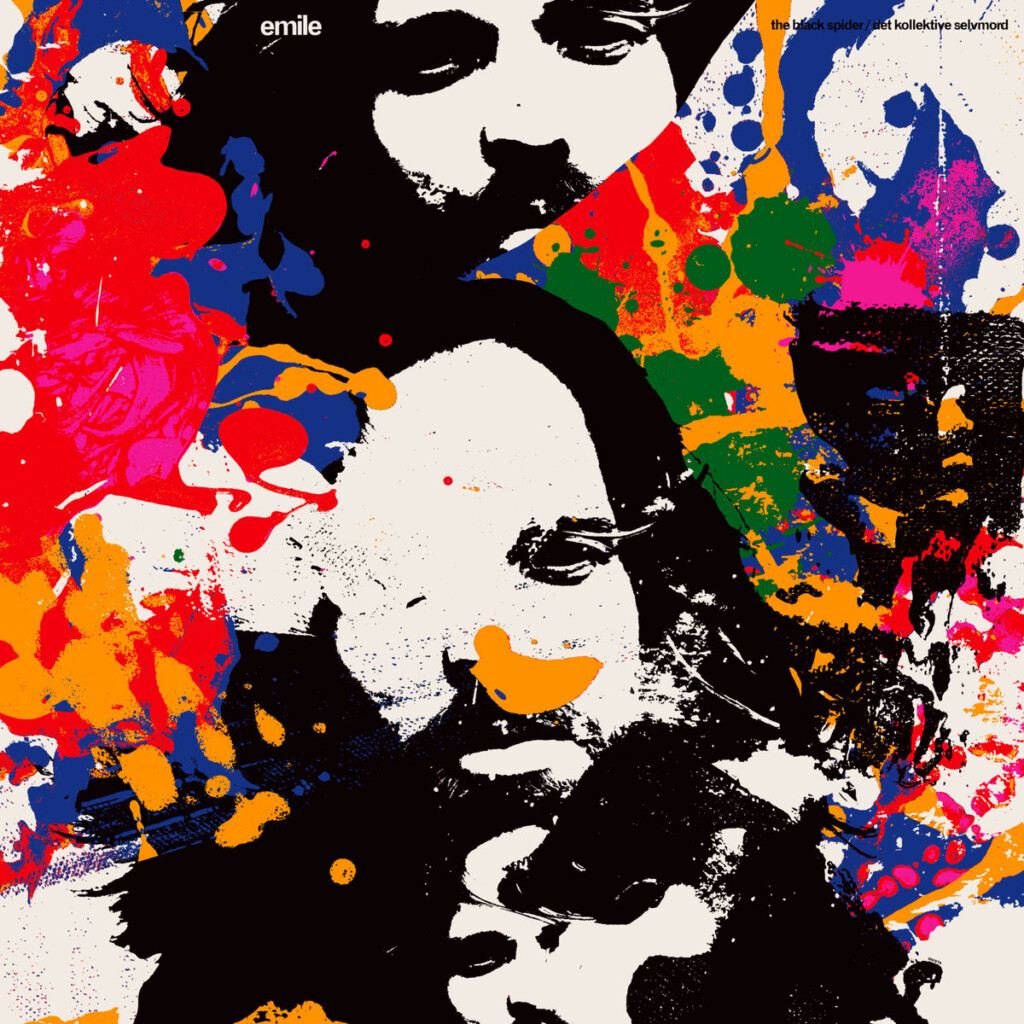
The heavy trip was channeled mainly into Emil’s solo debut, The Black Spider / Det Kollektive Selvmord (Collective Suicide). It was originally meant to come out a few weeks after Enter The Mirage, but now they are out the same day, which is a good thing. While it’s a completely different entity than The Sonic Dawn, it’s a must to own, or at least hear, for fans of the band.
While the melancholy subject matter could have ended up a stark, hopeless gaze into the abyss (see Witchcraft’s Black Metal, also out today) the acoustic guitar is accompanied by sometimes simple, sometimes intricate arrangements. Opener “Birds Fall” has Emil’s acoustic accompanied by organ, and later, the heartwrenching lyrics crescendo into string-assisted orchestral pop majesty. “The Black Spider” begins with simple, unadorned blues guitar (Emile’s picking is impressively clean and precise, reminding me of Nick Drake), but as the song progresses, psychedelic sound effects gradually insinuate themselves into the soundscape.
“Weight Of The World” features a full band treatment of drums, bass, flutes, xylophone, organs, making it the most Sonic Dawn-like track so far. It’s one of Emil’s most vulnerable vocal performances as he channels a bit of Paul McCartney. The jazzy guitar solo just after the two minute mark, stretches to a breathtaking 80 seconds of bliss. The spectral “Step Into The Universe” balances crushing sadness with overwhelming instrumental beauty. The zen-like, spare acoustic strums in the beginning of “Life Upside Down” channels some Pink Moon-era Nick Drake, eventually fleshing out into multi-tracked vocals, guitars, then a driving Ray Manzarek organ line. Thus ends the first half of the album, filled with Emil’s most personal, emotionally direct songs he’s ever written.
The second half’s six songs are darker, more abstract, overtly psychedelic, and sung exclusively in Danish, which for non-native speakers increases the disorientating effect of the set. I’m actually surprised more European bands don’t sing in their native languages. Dungen sticks largely to Swedish, and Opeth recorded a Swedish version of their last album, and the vocals still largely convey the emotional content even when one doesn’t understand the words. The looser, more experimental nature of these songs remind me of Dungen’s most recent work, except for the instrumental “Bundløs” in which Emile engages in some loud distorted guitar.
Still in the thick of Pandemic woes, both of these albums are just what the Dr. ordered. Bandcamp is again waiving its revenue shares for all purchases made today, May 1. You could do far worse than starting with these two.