Our favorite retrofuturists return with a great summer soundtrack on their 12th album, as if they’d never left.
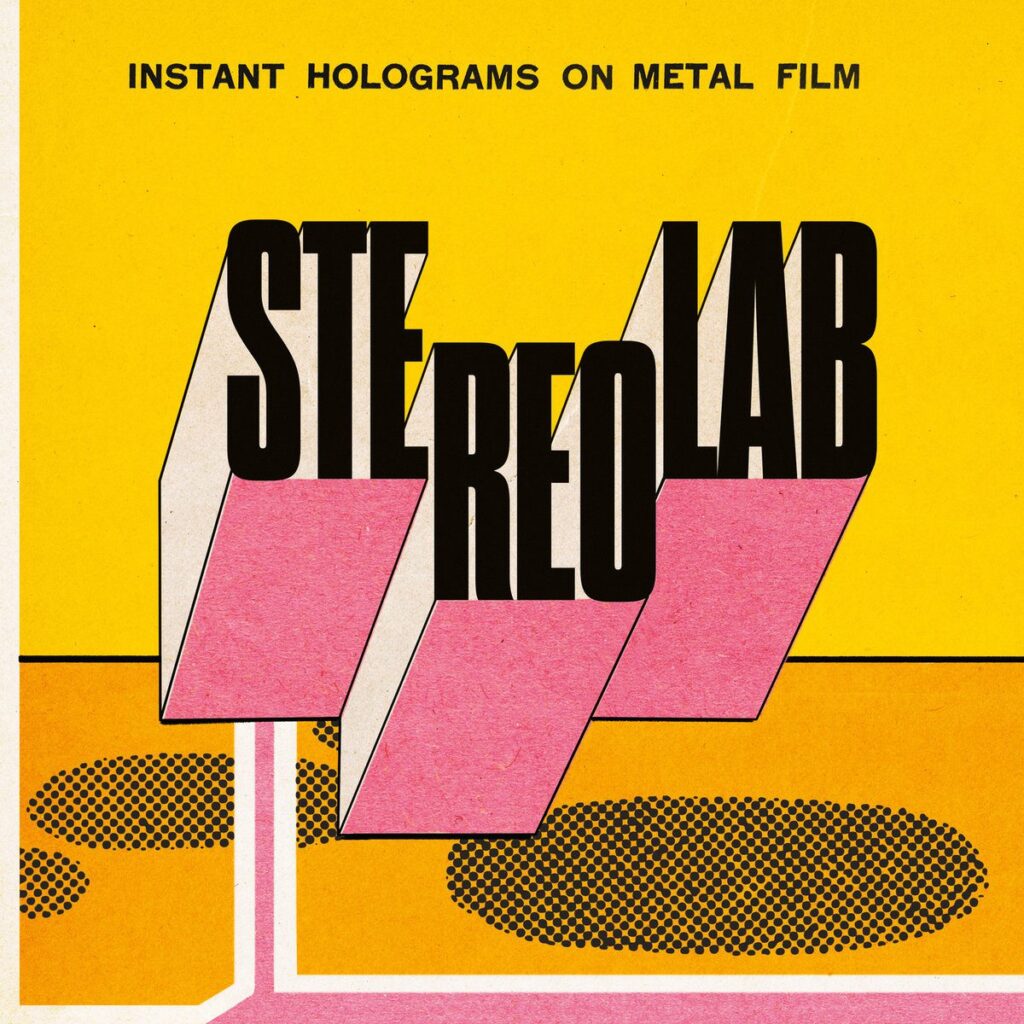
Stereolab rarely jumped about and demanded attention. Starting from when I first heard them on the Too Pure: The Peel Sessions (1991) with Th’ Faith Healers and PJ Harvey, they simply burrowed under my skin, established residence at the back of my brain and got on with trucking through the 90s and 00s with motorik choogles and the comforting hum of analog synths, seamlessly integrating new avant-pop influences (post-rock, ambient pop, downtempo electronic for example) with their massive menagerie of retrofuturist influences too numerous to tally. They were so prolific and omnipresent, I made the mistake of taking them for granted, despite adopting my former back yard (Chicago) as a second home, making use of the vanguard of local talent to produce their albums with John McEntire (The Sea and Cake, Tortoise) and Jim O’Rourke (Gastr del Sol, Sonic Youth and hundreds of other projects). With Mary Hanson’s sudden passing in 2002, the possibility of also losing Stereolab suddenly seemed a real possibility. Their spirit did seem to fade a bit on their last three albums, Fab Four Cuture (2006), Chemical Chords (2008) and Not Music (2010). It seemed like that might have been their last, which is why their first album in fifteen years is such a goddamn delightful surprise. Not only is it their best album since Sound-Dust (2001), but they sound completely contemporary. It shouldn’t be a surprise, given that Tim Gane maintained his chops in the Geramny-based trio Cavern of Anti-Matter, and Stereolab had resumed touring in 2019 to promote reissues in their catalog, as well as two more massive Switched On Vol. 4 & 5 compilations Electrically Possessed (2021) and Pulse of the Early Brain (2022), just 3 hours 40 minutes worth of music to get through! But given their unsatisfying last couple official album releases, there was no guarantee that Stereolab would ever sound vital again.
It helps that they’ve employed a new generation of Chicago talent in producer Cooper Crain (Bitchin’ Bajas and Cave). Cave is the lesser known of his bands, but they are crucial in his ability to inject some grimy punk textures amidst the electronic motorik drones. And of course the band are still cerebral with their post-Marxist politics and French Situationist perspectives, and lyrics often veering into French. However, the way I listen to music, they might as well be singing in Minion, as the words generally glide right over the surface of the left hemisphere of my brain and settles into the right, where they absolutely invoke all kinds of feelings. So without getting too analytical of their intentions, my gut reactions and instincts tell me that the band has revived their mojo, their passion, their je nais se quois. No small feat in such a soul-crushingly dispiriting time, which makes this band all the more precious.
First single “Aerial Troubles” starts off with a keyboard melody that recalls the sunkissed melancholy of Syd Arthur’s Apricity (2016), an album I’ve been obsessed with for nine years. It quickly shifts to a frisky, percolating beat, and the album takes off. The longest track is the mostly instrumental 7:37 “Melodie is a Wound,” which evokes nostalgia with the lo-fi analog synth whooses not to childhood, but rather hanging out on the beach with friends playing Stereolab. Nostalgia for having time to do that. There’s been some criticism of the last part of the album, starting with “Esemplastic Creeping Eruption.” It sounds fantastic to me, with live drums locked in to an early Can style groove. “If You Remember I Forgot How to Dream, Pt. 1” features some elastic bass tones and lovely cornet playing from Chicago avant-jazz master Ben LaMar Gay. The album does stretch to nearly an hour, in line with their CD-era habit starting with Transient Random-Noise Bursts with Announcements (1993).
Seemingly tuned to harmonize with a symphony of air conditioners as you sit in your back yard, poolside, lakeside, or even on the bone-chilly coasts of England, Instant Holograms on Metal Film has immediately become the key soundtrack to kick off the summer.
Ranking the Albums
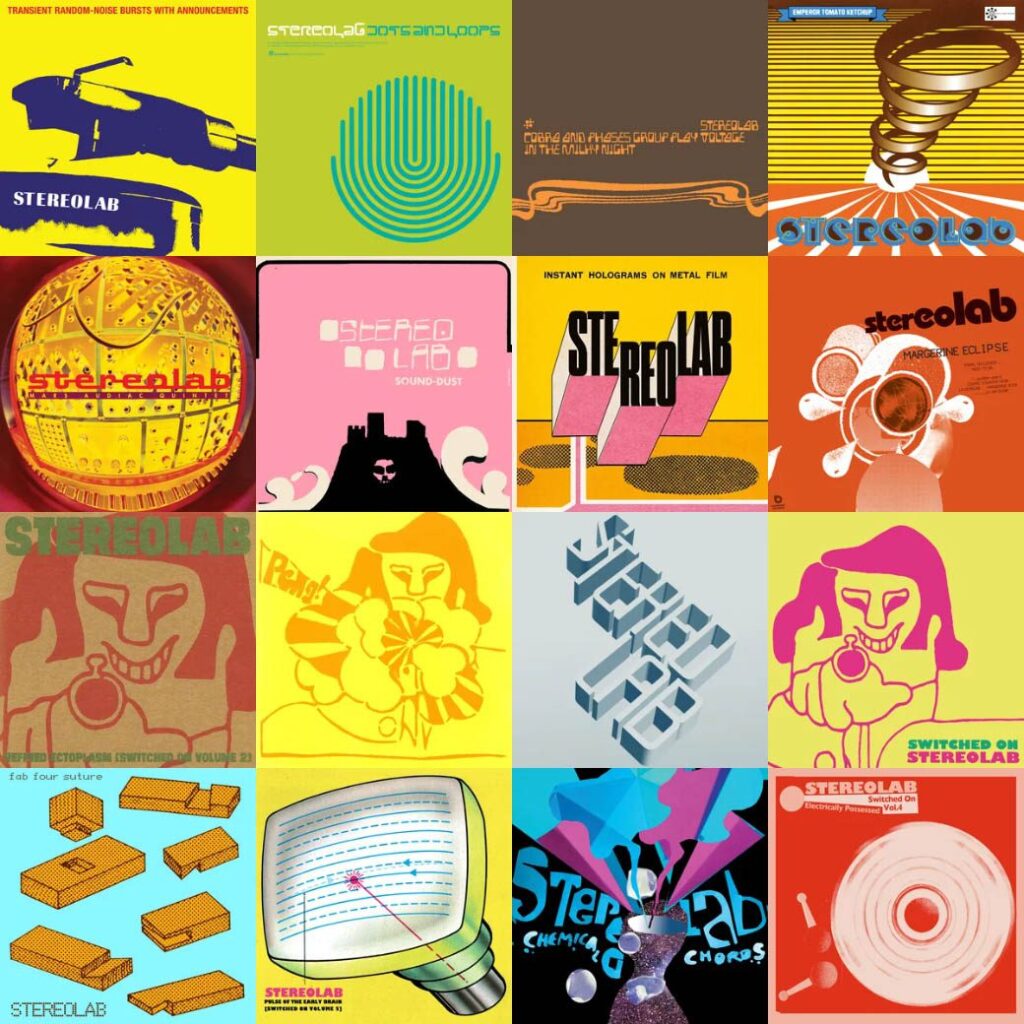
I won’t say that Transient is objectively their best album, it’s just the one that hit me just right, at just the right time. After some singles and a warm-up debut, they were bursting with sounds and ideas that were incredibly exciting amidst the major label feeding frenzy of grunge and the mainstreaming/whitewashing of alt and indie rock.
- Transient Random-Noise Bursts with Announcements (1993)
- Dots And Loops (1997)
- Cobra and Phases Group Play ‘Voltage’ in the Milky Night (1999)
- Emperor Tomato Ketchup (1996)
- Mars Audiac Quintet (1994)
- Sound-Dust (2001)
- Instant Holograms on Metal Film (2025)
- Margarine Eclipse (2004)
- Switched On Volume 2: Refried Ectoplasm (1995)
- Peng! (1992)
- Switched On Volume 3: Aluminum Tunes (1998)
- Switched On (1992)
- Fab Four Suture (2006)
Transient Random-Noise Bursts with Announcements (Elektra)

While Stereolab had a relatively long-lasting career (they made it through the 90s and the 00s, though they sadly lost Mary Hansen who was killed by a truck in 2002), and would have more highly acclaimed albums, their second album of 11 (and a bajillion singles and EPs) is still my favorite, where they best balanced their cerebral neo-marxist post-structuralist lyrics with loving homages to Neu! and other avant-garde artists of the 60s and 70s, and pop songraft with just the right amount of fuzz on those wheezy old analog organs and strumming guitars. In his kranky records book, Bruce Adams wrote, if they “didn’t exist, it might be necessary to invent them to advance the narrative of this book.” Probably another band would have filled that vacuum, including their kosmische-loving labelmates Th Faith Healers, Pram and Laika, but no one else would have pulled it off with quite the same “je ne sais quoi.”
Mars Audiac Quintet (Elektra)
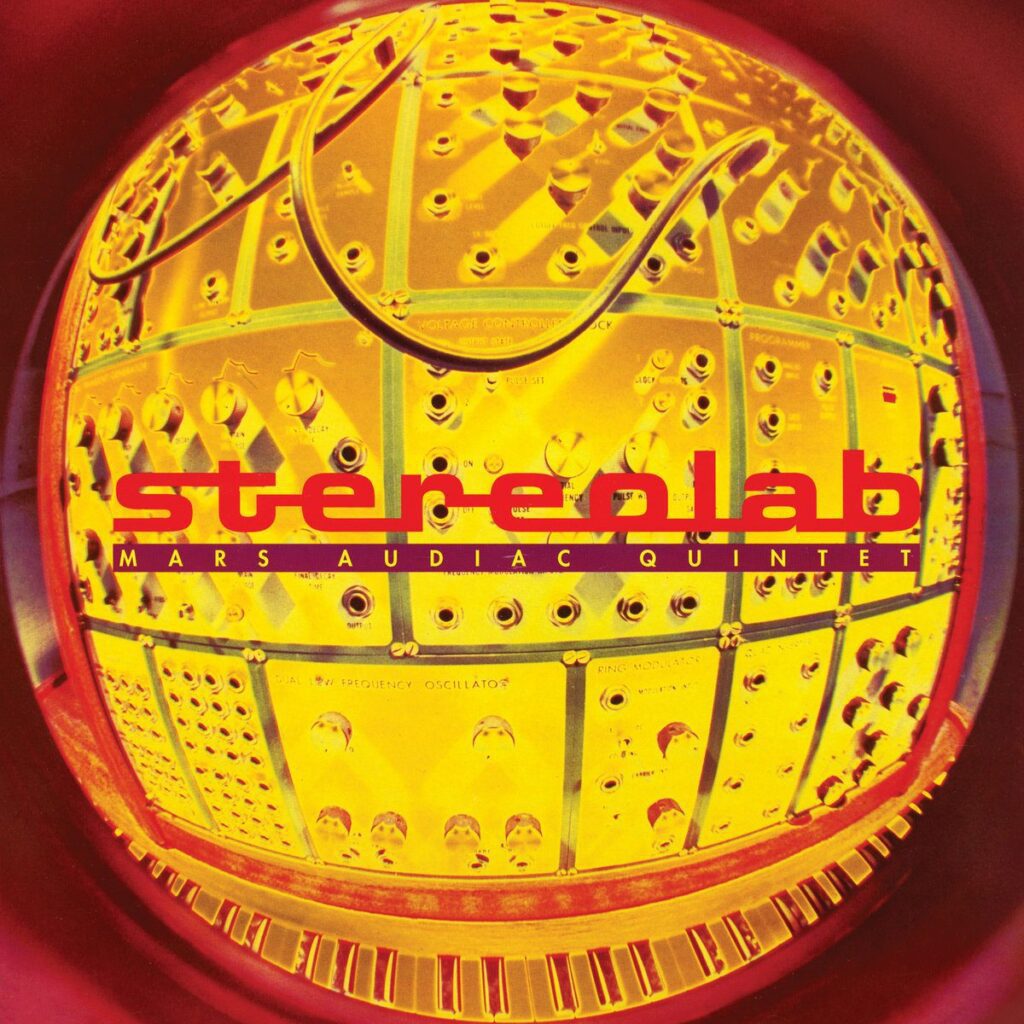
After just one album on Too Pure alongside Th’ Faith Healers, Moonshake and Pram, Stereolab quickly connected with a larger audience and moved to Elektra on Transient Random-Noise Bursts With Announcements (1993). While that major label debut best represents their early style at it’s giddy, energetic peak, their third album luxuriates in the sounds, like nestling into a cocoon with pleasantly warm analog tubes. I’m glad they did one more album with their original formula, space age pop mixed with Velvet Underground drones and kosmische motorik beats, Laetitia Sadier and Mary Hanson trading deadpan vocals like a friendly rivalry between Nico and Astrud Gilberto. Stereolab would soon move on to toy with various elements of trip hop, indietronica and ambient pop, but this remains a top notch document of their early analog sound.
Peng! (Too Pure)
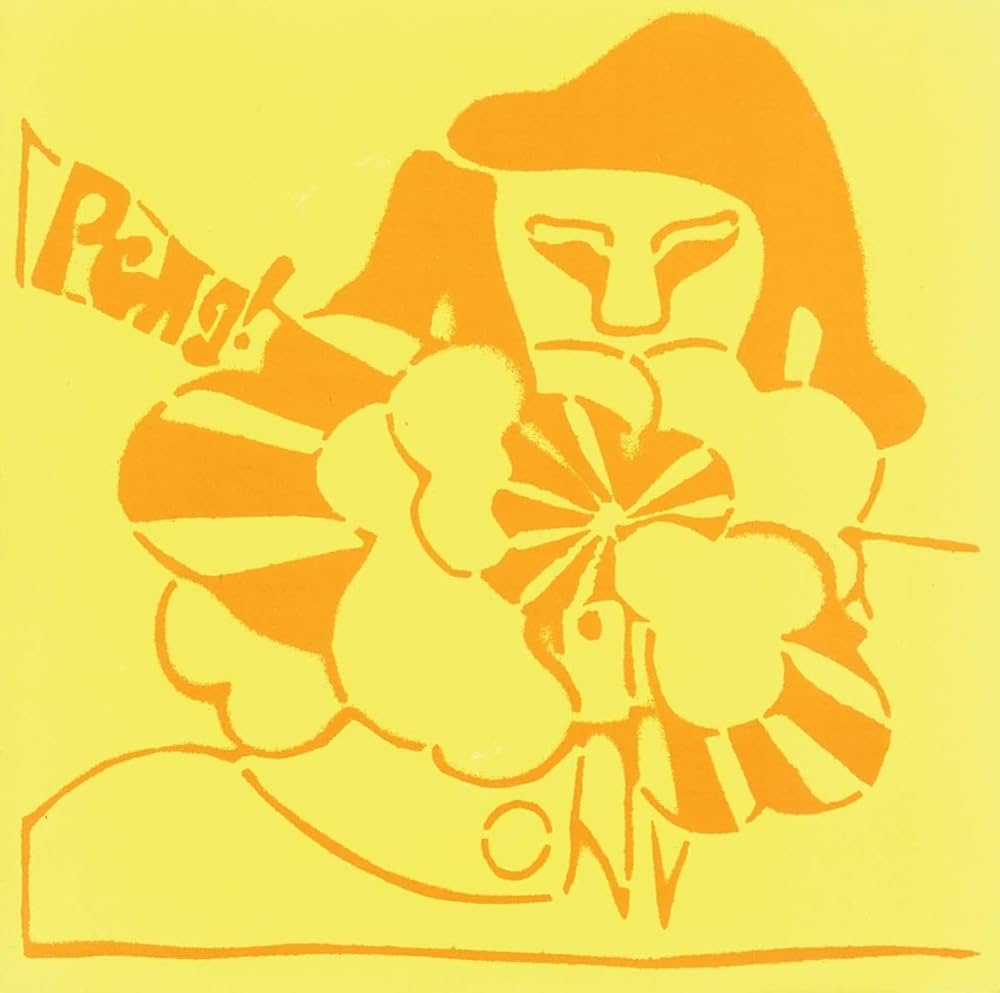
There’s some similarities between 1992 and 1985 in that a lot of music sounded immediately dated. Meaning, they sounded contemporary, of the time, but that sound was shit. All the arena rock bands trying to pass off as grunge like Alice in Chains, Stone Temple Pilots, even Pearl Jam — I hated them all. To my ears, the sound of the future, or one particularly enticing branch of it, was the Too Pure roster, including Moonshake, Pram, Th’ Faith Healers, PJ Harvey and Stereolab. Many of them picked up where Eno and Bowie left off in the 70s in tapping into the inexhaustible potential of German Kosmische musik. Humming, quivering and burping analog synthesizers and incessant rhythms take bits of Can, Neu!, Cluster and Velvet Underground’s “Sister Ray,” and come up with fresh sounds. The songwriting isn’t quite where it will be for their extraordinary run of the next six albums or so, but sonic blueprint is laid out, the post-structuralist theories drafted, and it’s still a pleasure to revisit. The companion compilation of their early singles, Switched On, has some more immediate tracks, along with more experiments.