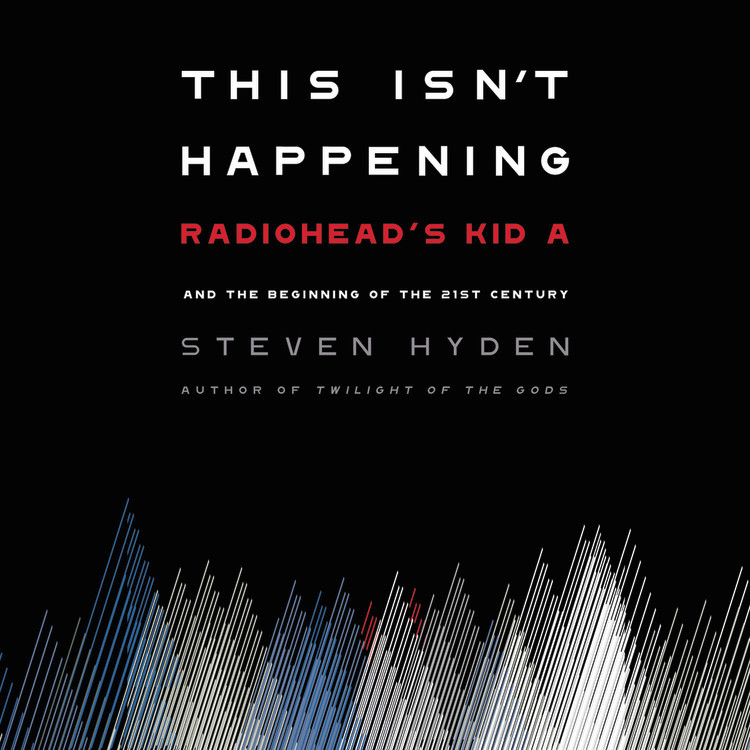
Radiohead’s Kid A and the Beginning of the 21st Century
It took me a few months before I decided it would be worth dropping $15 to download this book to my Kindle. I had reservations partly because I was still recovering from listening to the final episode of his old podcast, Celebration Rock, in which he discussed the “best albums of the decade” with critic Ian Cohen. It was one of the worst discussions about music I ever heard, mainly because of the atrocious tastes of both of those men. I’m sure his self description on Twitter as “The Ween of American rock critics” was intended as tongue-in-cheek self-deprecation, but yeah, dude has extremely questionable tastes.
He’s a good writer though, and after a reasonably articulate appearance on Sound Opinions, I dove in. It’s alarming to think about how one of the last big album release events where most people I knew were aware of the impending release of Radiohead’s fourth album, was over two decades ago. Unlike Hyden and many others, I wasn’t a fan of Radiohead until Kid A. The dramatic stadium rock of The Bends (1995) appealed to me at the time about as much as Smashing Pumpkins’ bloaty double album. Both seemed a bit out of touch with what I considered a pretty exciting time for adventurous pop music — Tricky, Björk, Tortoise, Laika, PJ Harvey, Stereolab, Jeff Buckley, Disco Inferno, Portishead, Pram, Dirty Three.
When OK Computer (1997) came out, I liked “Paranoid Android,” and thought, huh, looks like Thom Yorke likes Jeff Buckley too. In the hangover of the Britpop era of Oasis vs. Blur snits in the UK weeklies, it was becoming fashionable to declare rock dead (again) in light of all the electronic music. While I disagreed with that sentiment, I did enjoy me some Boards of Canada, Autechre, Mouse On Mars, Orbital, Basement Jaxx, Daft Punk and Asian Dub Foundation. And it did not seem entirely unreasonable to view Radiohead as slightly out of step, despite the progressive elements in their guitar rock that would grow on me after they’d mainly abandoned it. During a visit to London in 1997, I didn’t see much evidence of Radiohead dominating culture. I heard The Verve’s “Bittersweet Symphony” playing everywhere I went, and the buzz bubbling under was more about the likes of Talvin Singh’s Asian Underground club nights at the Blue Note. The critical consensus thing started to happen when best-of-decade lists started coming out in the second half of 1999.
In 2000 I was working at a “rich media” startup that was mostly a cool bunch of audio engineers, programmers and designers. We all remained friends with a couple exceptions, including one guy who insisted the only music worth listening to was Beethoven, Beatles and Radiohead. The rigidity of such an outlook offended me to the bottom of my blackened soul, and when it was my turn to commandeer the communal stereo, I took every opportunity to torment him with whatever it seemed he hated most. When Kid A was leaked a few weeks before its release, I immediately burned it to a CD-R and brought it in. I’d listened to some live bootlegs of some of the songs in the months leading up to it, and knew this was going to be a big change for Radiohead. They’d belatedly discovered post-rock and electronic music and were set to bring it to the mainstream. I was chuffed on the first listen, partly because it was really great. Challenging but accessible at the same time. But I was extra fluffed because my work enemy was going to fucking hate it so much.
It was glorious. I spun up the CD, and as Yorke’s chopped and manipulated voice came in, a couple heads perked up. As he sang, “Yesterday I woke up sucking a lemon,” it looked like the world’s lamest Radiohead fan had done just that. I turned it up for “The National Anthem” and before it even reached it’s amazing crescendo, he asked if I could turn that shit off. He thought I was joking when I said it was the new Radiohead album.
He wasn’t the only fan to hate on Kid A. Many of the major publications, including most of the British ones still wondering what happened to all the free cocaine from the 90s heyday, panned it, with a handful of exceptions of raves from Pitchfork, and this site. No, I didn’t get a mention, as my review was not the bombastic, overblown think piece that I suppose I should have made it. It was only two paragraphs, because I was into being succinct that year. I concluded with “Radiohead has assured fans that this spring they will release a more traditional rock record. Little do they know that Kid A will probably be their most memorably lasting legacy.”
From what I read, it seemed that Radiohead were having some self-doubts in light of the immediate backlash. “What have we done? Let’s tell them we’ll rock properly soon enough.” Hyden seemed to miss that. Of course, that follow-up album was Amnesiac, which was recorded at the same time as Kid A. Half of it was somewhat accessible, like the majestic “Pyramid Song,” “Dollars & Cents,” “Knives Out,” and “You and Who’s Army?” and half were even more experimental, some great (“Spinning Plates,”) others less consistent. Fans sequenced their own mixes of choice cuts from both albums to suit their tastes. I did this, soniclovenoize did it on his Albums That Never Were blog last year at the beginning of the pandemic, and Hyden devoted a chapter to his own mix that was fairly similar, though his inclusion of the B-side “Cuttooth” was a brilliant idea.
Realistically, Radiohead was never going to be a “proper rock band” ever again. They were never going to re-do The Bends and OK Computer, both of which I grew to appreciate more post-Kid A. Yet they’ve done quite well for themselves. They were inducted into the Rock & Roll Hall of Fame, released at least two more albums that appear to have grown in critical regard as part of the classic rock canon (2007’s In Rainbows and 2016’s A Moon Shaped Pool), and both Yorke and Jonny Greenwood have been fairly prolific making solo albums and soundtracks. Yorke even let his guard up to live his own version of the rockstar cliche, moving to L.A. and hanging with Flea, where he made a slightly suckass album as Atoms For Peace with him, Nigel Godrich on keyboards and my old college mate Joey Waronker (Walt Mink, Beck, R.E.M.) on drums. He was even spotted wearing leather pants.
For the most part, Hyden does an excellent job, through both personal anecdotes and examining the politics and music surrounding it, in showing how culture and critical consensus caught up with Radiohead and why Kid A came to be regarded by many as the best album of the first decade of the 21st century. He even compares the artistic and commercial path of Linkin Park, a very surprising contemporary comparison, when the usual narrative was that Radiohead kind of followed the progression of Talking Heads’ first four albums. Hyden’s unique, somewhat loosey-goosey approach gave some fresh perspectives, and a fairly engaging read, especially compared to many of the more dry 33-1/3 books that I couldn’t get all the way through.
Was Kid A prescient in predicting the shitshow that became 21st century garbage politics and the Internet as a weapon of propaganda and disinformation to disable democracy? Who the hell knows? Thom Yorke’s William Burroughs inspired cut-up technique guaranteed the lyrics would be too inscrutable to definitively mean any one thing, which allowed people to repurpose it for whatever meanings they wanted. Musically they were arguably at least six years late in being any kind of post-rock or avant electro pioneers, but that’s okay. They fused their mopey post-indie, progressive stadium rock with underground music into a pretty accessible package, that ended up being a perfect snapshot of what the dawn of the 21st century felt like.
May 31, 2026
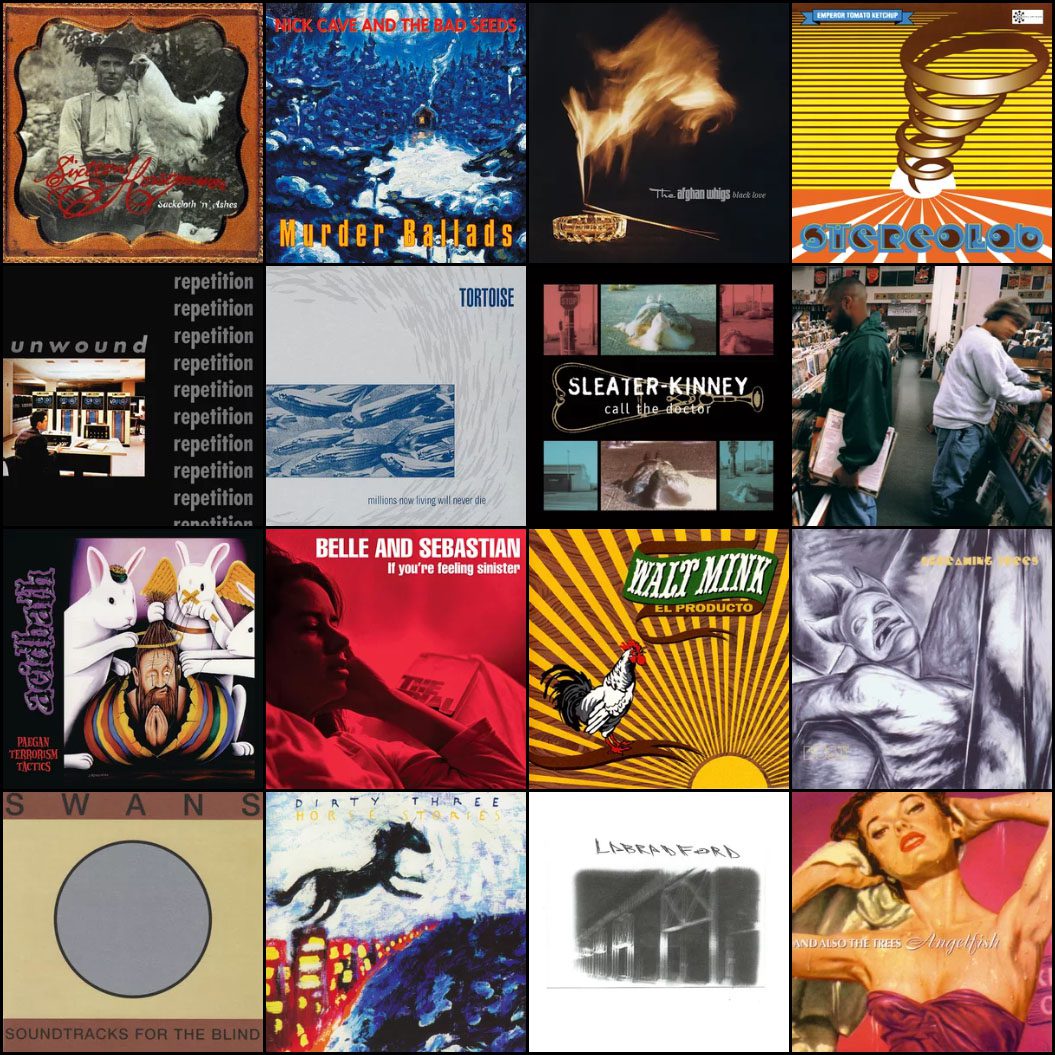
Fester’s Lucky 13: 1996
April 2, 2026
Fester’s Lucky 13: 1986