Cathi Unsworth, The Singer (2007)
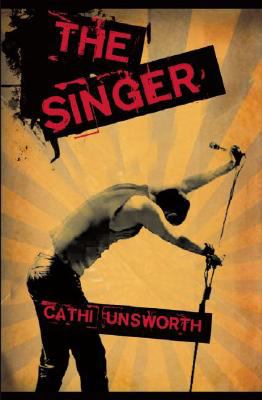 Punk rock fiction really should have become a popular sub-genre. It probably would have produced even more garbage than the current vampire fiction trend, but it’s a guilty pleasure I could get onboard with. Fortunately Cathi Unsworth is a far superior writer to the likes of Charlaine Harris (True Blood). Let’s not even bother comparing the others. Unsworth came from a British music journalism background, and dove into Derek Raymond-inspired crime noir with The Not Knowing, which I plan to read next. In The Singer, she tracks the story of a down-and-out music journalist who hopes to revive his career by writing a book about could-have-been post-punkers Blood Truth (a band seemingly modeled on The Birthday Party). This is the lightest part of the book, conveying the giddy excitement of forming a band after working class Hull boy Stevie Mullen is inspired by The Sex Pistols and recruits Lynton, the new tall skinny black kid in school, who grew up playing jazz, and learns bass in a couple days, and shy nerd Kevin on drums. Fittingly, they meet Vincent Smith at a Sex Pistols show after he gets whacked in the head for kissing Sid Vicious’ bass. Unsworth pulls out her tricks in describing the eerie charisma of Smith as if he were a vampire for teenybopper tweenies to slaver over.
Blood Truth released a series of acclaimed but not huge selling albums between 1978 and 1981 (with titles like King Of Nothing, Down In The World, Ruined and Butchers’ Brew). The band broke up when Vincent disappeared and was eventually presumed dead. The book flips back and forth between journalist Eddie Bracknell’s attempts to solve the mystery, and the stories of Blood Truth, their contemporaries Mood Violet (described as a mix between Siouxsie & the Banshees and proto-4AD ethereal), their singer Sylvana and other shadowy figures. The story gets grimmer as it goes along, continuing Unsworth’s affinity with noir fiction. HBO did such a great job taking the poorly written True Blood books and creating a brilliantly moody show, just imagine what they could do with something like this — with actor/musicians making the actual music ala Spinal Tap. None more black…
Air: Letters From Lost Countries, by G. Willow Wilson & M.K. Perker (2009)
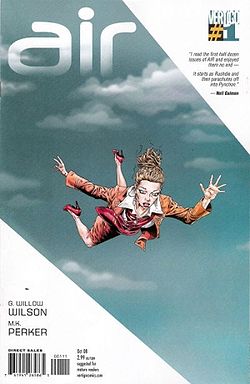 What initially seems like a fairly ordinary story involving a stewardess and would-be hijackers quickly dives down the rabbit hole into special powers, alternate realities and a global tussle over who can find and control an ancient lost Aztec technology. A promotional quote from Neil Gaiman provocatively says “…it starts off as Rushdie and then parachutes off into Pynchon.” I swear any modern fiction that has any imagination these days is compared to Pynchon. If that’s how they want to sell it, more power to them. To me it recalls some of the metaphysics that Gaiman himself dabbles in, along with work by Alan Moore and Warren Ellis. G. Willow Wilson is an exciting new talent. It’s refreshing to see a woman tackle this genre and may soon be as well known as the other aforementioned. Disappointed that Ex Machina ends in another three issues, I’m happy I found this. There’s two trade paperbacks collecting the first ten issues, and it’s currently up to issue 18.
Jonathan Lethem, Chronic City (2009)
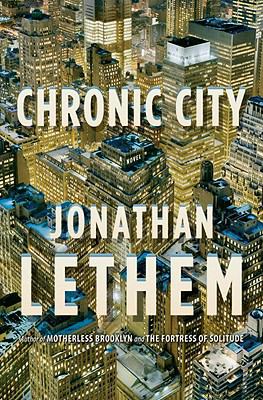 I can’t think of another writer with so many failed experiments (Gun With Occasional Music, As She Climbed Across the Table, You Don’t Love Me Yet) I’ve suffered through only to keep trying. One reason is I like his crackpot hybrid sci fi ideas, and find myself rooting for him to improve on the execution. Like his pal Michael Chabon, he seems to have the potential of writing the “next great American novel.” Scale down the ambition to great New York novel, and he’s already accomplished three of them, including Motherless Brooklyn, The Fortress Of Solitude, and this. Also like Chabon, his novels are slathered with despair, which made Fortress one of my top reads of the last decade, but one I admired more than loved. There are similar issues here — the characters aren’t intended to be all that loveable, and the third act gets pretty down and heavy, as time seems to grind to a halt during the ass-end of winter in January-February. Nevertheless it’s pretty damn brilliant, and definitely his most successful book yet. I noticed some similarities with Pynchon’s V., which I actually took a break from to read this. There’s so much packed into this, I feel like it might be worthwhile to write a spoiler review later for those who have read it.
Bill Willingham, Peter & Max (2009)
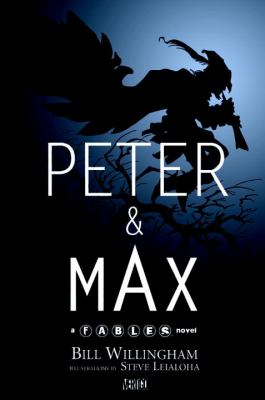 This book takes place in the world Willingham created for his ongoing Fables comic series, definitely one of the best around. Not unlike Neil Gaiman, Willingham takes bits of existing folkore and fables and has well known characters interact in the modern “mundie” world, with somewhat altered histories. Peter & Max follows the story of Peter and Max Piper (and also Bo Peep) in both the present day and also their long ago past in the magical Fable world. It’s written simply, as if for young readers, yet the content is darker than Germany’s Black Forests that part of the tale takes part in. Be prepared for a high body count, countless horrors, and what seems to be an inevitably hopeless conclusion. I’m not going to give it away, but after feeling a bit bludgeoned from the beginning, I think I liked the book much more after it was all over than when I was in the middle of it! Overall it’s a fine first book by one of the best comic writers around. So I wonder if Gaiman has a new one coming soon…
Nick Cave, The Death Of Bunny Munro (2009)
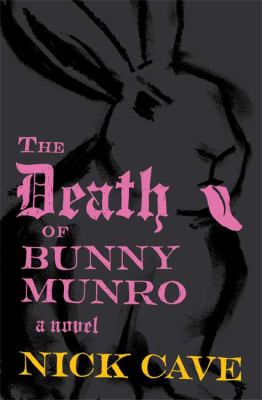 Possibly because Nick Cave’s songwriting has been refreshingly unhinged recently with Grinderman and his last album, I had a good feeling about this book. It’s definitely better than his first attempt at southern gothic. Bunny Munro is a door-to-door cosmetics salesman in England who’s indiscretions apparently drive his depressed wife to suicide. Stuck with caring for his 9 year-old son Bunny Jr, he takes him on the road for some sales calls, and eventually a visit to his dying father, all the while being haunted by his wife’s ghost. Mixed with guilt and grief, his chronic drinking, masturbation and womanizing reach epic proportions in a spiraling descent into madness straight out of a Birthday Party song. Bunny has some hilariously sick fantasies about Avril Lavigne and Kylie Minogue that are so demented I wondered if Cave was mad at them. At the end of the book he offers them thanks and apologies. This could have come off as cartoonish if it weren’t for Cave’s sensitivity to Bunny Jr’s character, a weird but charming and brave kid. Not recommended for those familiar with the romanticism of Cave’s mid-period Cohen-esque albums but not his dark side!
Thomas Pynchon, Inherent Vice (2009)
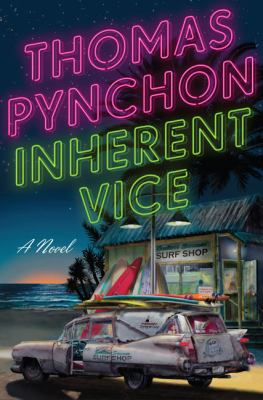 Every new Pynchon book comes with a lot of baggage. It’s hard to imagine what the pressure would be like when after his first three books (V., The Crying Of Lot 49, Gravity’s Rainbow) he’s considered one of the most vital American writers of his era. Mason & Dixon, which he had worked on since 1975, reflected some of that pressure to be an important work. The research and dialect was impressive, but I gave up halfway, exhausted. Inherent Vice returns to his much more lighthearted tone of his first couple books. While it’s a psychedelic noir based in 1970, it still packs in a lot more than your average crime novel. For example, there’s a lot going on beneath the surface of the contentious relationship between hippie private detective Doc Sportello and surly police detective Bigfoot. Sportello suffers a long string of unfortunate incidents, and things grow increasingly bleak amidst the black humor. By the end, the book clearly doesn’t rank up with his best work. Yet on the other hand, it’s much more readable than some of his best work, and still leaves something to chew on.
Nick Hornby, Juliet, Naked (2009)
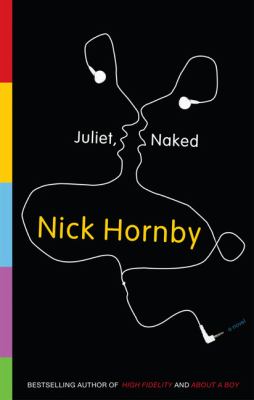 It’s funny that I continue to read Hornby, because I usually end up wanting to bang my head against the wall. His writing is so simple it borders on dull, yet they keep getting made into movies! Inevitably, the movies are better. I couldn’t resist the premise of Juliet, Naked, as he returns his focus to music geeks. In this case, they’re ten times more pathetic than the ones in High Fidelity. For a while, it gets a bit dreary and depressing, particularly with the sad sack superfan and his similarly hapless ex-girlfriend. What saves the book is the more compelling storyline of the reclusive American singer-songwriter who’s the object of their obsession(s). In the end, a fairly entertaining read. I’m already picking the actors for the upcoming roles.
Nathan Rabin, The Big Rewind: A Memoir Brought To You By Popular Culture (2009)
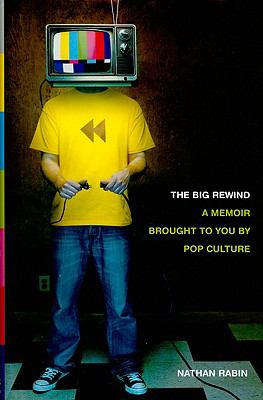 I wasn’t sure what to expect. I’ve enjoyed Rabin’s movie reviews, and though he’s been at it for a decade, he seems a bit young to merit a memoir. In the ’90s, he apparently grew up just a couple miles from where I lived, and probably went to some of the same shows as me. However it was pretty eye opening to learn how different his experience was, with his well-meaning but frail single father unable to care for him as he goes from a mental institution to a group home. There are no horrors worthy of the Oprah-sponsored incest canon, thank god. All things considered, his hardships were modest, but did put into context how Rabin developed such a deep passion for pop culture. I found myself rooting for him through his hapless relationship misadventures and his small victories, and glad to have that much more insight into his personality when I continue to read his writings. I also want to find some footage of that movie review show he was on!
Percival Everett, Erasure (2001)
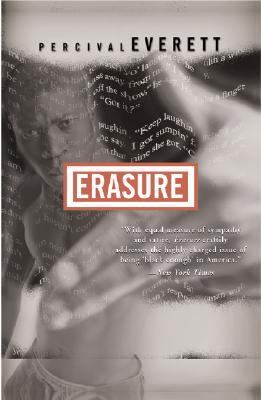 I’d borrowed this from a friend a couple years ago and finally read it. I was afraid it would be a bit of a chore and a downer like a lot of acclaimed books are. While it is definitely dark, Erasure is one of the most impressive books I’ve read in recent years. Thelonius “Monk” Ellison is an academic who writes dense postmodernist fiction and literary theory that no one reads, partly because his books are misplaced in bookstores in sections like “African American Studies.” He’s criticized for his writing not being “black” enough. Meanwhile, he deals with his ailing family after his physician sister is murdered by anti-abortionists, and mother develops Alzheimers and needs care that he can’t afford. Yet a woman who wrote a ridiculously exploitive book in embarrassingly fake “black dialect” called ‘We Lives In Da Ghetto’ gets universal acclaim and a plush movie deal. The middle act of this book consists of Monk’s parody of that book initially called ‘My Pafology,’ which he changes to the more succinct, ‘Fuck.’ The acclaim the novel gets, and the presumptions of what his nom de plume, Stagg R. Leigh is like become increasingly ridiculous and hilarious. Monk’s and Everett’s outrage over people’s ridiculous concepts of authenticity are spot on, making this a refreshing, brilliant middle finger in the face hivemind stupidity.
*For eerie real-world manifestation of said hivemind stupidity, see more on the movie Precious.
May 31, 2026
Fester’s Lucky 13: 1996
April 2, 2026
Fester’s Lucky 13: 1986