Earlier in the summer I went to the Chicago Blues Fest to see James Blood Ulmer. He was playing the “Front Porch” stage, but I was having a hard time finding it. There were several stages throughout Grant Park and it was crowded with tens of thousands of people. I approached one stage from the side, where it was so crowded I couldn’t get a good look at who was playing. I asked several people if this was James Blood Ulmer, and if it was the Front Porch stage, and no one had any idea who they were listening to. I finally spotted a big bearded guy in a CBGB’s shirt. He’d know. While he did know who he was listening to, he didn’t know who Ulmer was. It’s ironic, because Ulmer (who I eventually tracked down on the other side of the park) is probably the only musician at Blues Fest who actually played at CBGB’s. In his younger maverick days, he was an acolyte of Ornette Coleman, mixing his free jazz theories of “Harmolodics” with Hendrix’s innovations, and frequently played gigs with No Wave bands in New York.
I should have realized a t-shirt wouldn’t mean anything. Maybe twenty years ago it might have signified a decent chance that the person wearing it would be a music geek. But somehow its merchandising has reached such a large market that it signifies nothing. Ask any of the celebrity pop stars and actors (ER, Gilmore Girls, Colin Farrell), yuppies, Trixies, or even college students donning the CBGB & OMFUG shirt if they like Television, Patti Smith or the Voidoids, and you’re nearly guaranteed a blank look. The “blank generation” indeed. Many won’t even know that CBGB’s is a tiny, grubby, stinky NYC club where those bands, along with The Ramones, Blondie and Talking Heads got their start. To them it’s just a cool rock ‘n’ roll shirt that means nothing (actually it’s kind of ugly). You’re better off buying a lottery ticket than finding someone who can tell you the meaning of the letters (Country, Bluegrass, Blues & Other Music for Uplifting Gormandizers).

 On September 30, 2006, CBGB’s will close its current location’s doors for good. Many celebrities participated in and contributed to the Save CBGB’s campaign to help out Hilly Kristal, the owner since 1973. Even Mayor Michael Bloomberg offered help. In the end, it was his own damn fault for its failure. He could have used revenue from all the merchandising to keep up with the rent, keep the place in better repair, and do a better job with bookings. CBGB’s landlord, the Bowery Residents’ Committee (BRC), claimed the club owed about $80,000 in back rent, a figure Kristal disputed in court. While a judge ruled in Kristal’s favor last October, the BRC declined to renew CBGB’s lease.
CBGB’s should have been given landmark status. It wasn’t just another crappy bar. It was THE crappy bar. When it opened it December 1973, Manhattan was not exactly the most happening place, particularly for original music. The building on top of the bar was the city’s largest flophouse. While a decade later, even small college towns would have several places for bands to play, NYC in the early 70s was bankrupt and decaying. With Max’s Kansas City, the Electric Circus, Filmore East and Mercer Arts Center all gone, there was literally nowhere for original bands to play. The presumption was that music peaked in the 60s, and all people wanted to hear were familiar covers. CBGB’s didn’t change that notion overnight, but it certainly was a pioneer in allowing unproven bands to develop over a series of weekly residencies.
Suicide actually played a gig at the bar in 1972, when it was originally called Hilly’s. A few months after it became CBGB’s, Richard Hell, Tom Verlaine and Richard Lloyd stumbled upon Hilly as he was on a ladder fixing the awning. Soon, their manager Terry Ork convinced Hilly to let them play on a Sunday in April 1974. Hardly anyone showed up, and Kristal thought the band was excruciating, but he was convinced to let them come back. They even built a stage out of scrap wood. In May the Stillettoes opened for Television. Members went on to form Angel & the Snakes, which by their second gig in August became Blondie. The Ramones debuted that same month. At the time, Blondie were considered the worst band, and least likely to succeed. They were like the whipping boys (and girl) of the scene, whose members were poached by other bands – Ivan Kral joined the Patti Smith Group, and Fred Smith joined Television. At the time, Television were assumed to be the next big thing, and Blondie was just an inept cover band.
While they were the first to get signed to a label and release an album, it wasn’t until Valentine’s Day, 1975 that the Patti Smith Group played CBGB’s. The Talking Heads debuted in May. In July, things really got rolling with “The CBGB’s Festival of Unrecorded Rock Talent.” In addition to the aforementioned bands, Joey Ramone’s old glam band Sniper played, along with Mink DeVille and former New York Dolls guitarist Johnny Thunders with the Heartbreakers. By July 1976, The Dead Boys and The Dictators played there, Richard Hell & the Voidoids and The Cramps in November, and The Feelies, Pere Ubu and Devo were playing there by the next February.
After scoping out sites in lower Manhattan with no luck, Kristal decided to re-open CBGB’s in Las Vegas. A location was reportedly being eyed near the Aladdin Hotel and Casino, at the 475,000-square-foot Desert Passage retail and entertainment strip. Kristal said he intends to take the spirit of the club with him as well, adding that the new location “won’t be the same size or the same shape, but I am going to have all the things that matter there.”
“I am taking the bars with me, I am taking the stage–I’m taking the urinal that Joey [Ramone] pissed in with me. I’m going to take a lot of things–anything that makes this place CBGB… a lot of bands I’ve talked to say they have no place to play Vegas on their way west to L.A., Tucson, Portland or Seattle. It wouldn’t be as glitzy as the rest of the strip. Parts of New York are glitzy too. On the inside, it will be much the same. New York is getting too expensive. Las Vegas is very cheap and parking is much easier. I’ve had offers to set up other CBGB’s around the world. I’m not going to say from whom, but there may [someday] be a CBGB in South America or Asia. I’m not thinking like 50 or 100 of them, but quite a few if they can be done right.”
Many people are groaning “sacrilege.” Brandchannel.com contends that CBGB’s is a lost cause because “Kristal has so heavily diluted the brand across platforms ranging from baby clothing to pizzerias to shower curtains to chef’s aprons that ‘CBGB’ has lost all but the most feeble connection to anything it ever represented.” While it annoys me that a lot of people don’t know what the brand means, it doesn’t change the fact that CBGB’s is the most important landmark for any and all post-1960s American music. Kristal should franchise it. If the original spirit of CBGB’s can be carried on, even if in the smallest way, it’s worthwhile. There’s more diverse and influential talent that came out of one small, stinky, dumpy bar than any major American city, let alone scene or club. Just because thousands of people wear Ramones and Motorhead shirts without knowing anything about the bands doesn’t change the fact that they’re great bands. I say, buy your CBGB’s shower curtains, aprons, lighters, belt buckles and shirts to your heart’s content. Go to Vegas! But for crying out loud, listen to the music too! Read Clinton Heylin’s From the Velvets To The Voidoids: The Birth Of American Punk Rock, published in 1993. Updated last year, it’s the first and best history of the key bands that made their mark before, during and after CBGB’s heyday. Ironically, the author is British. Please Kill Me: The Uncensored Oral History of Punk (1997) is a less accurate, but entertaining oral history that is more concerned with the sex and debauchery than the music.
This mix has most of the key, landmark singles such as Patti Smith’s 1974 “Piss Factory” and Television’s 1975 “Little Johnny Jewel,” along with rarities like a 1975 version of Blondie’s “Heart of Glass,” lots of album tracks and a smattering of singles from the lesser known bands. It’s nearly a full GB, so be patient. It expires in six days. Enjoy!
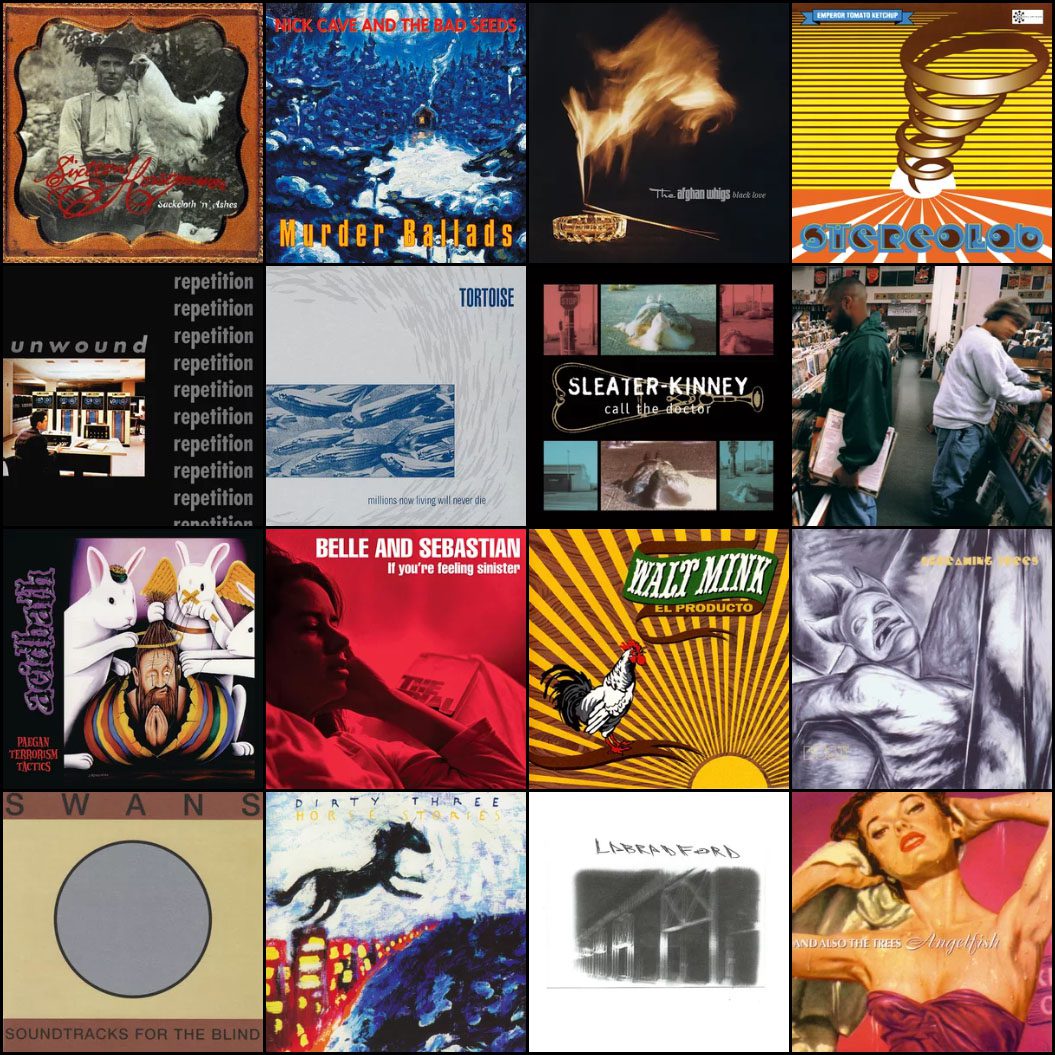
May 31, 2026
Fester’s Lucky 13: 1996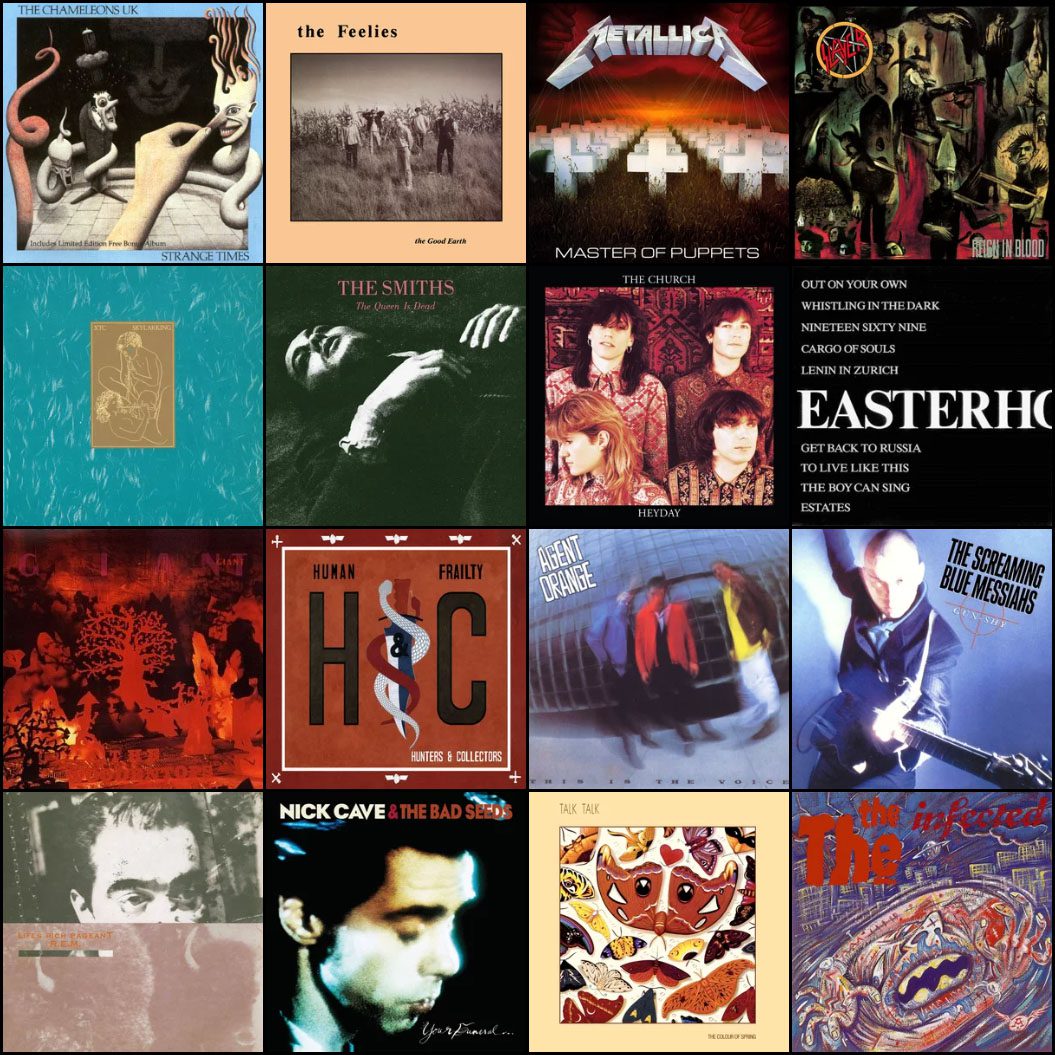
April 2, 2026
Fester’s Lucky 13: 1986
February 27, 2026
Fester’s Lucky 13: 1976