Rob Sheffield’s new book, Talking To Girls About Duran Duran: One Young Man’s Quest for True Love and a Cooler Haircut must have been titled by the publisher rather than the author. There was no questing for true love. Yearning and pining, perhaps, but no discernable actions were taken by the author to actually acquire a girlfriend. Despite having the advantage of three outgoing sisters who gamely attempted to transform him into a babe magnet and generally school him on the subtleties of elusive, mysterious minds and hearts of teenage girls, Sheffield was too paralyzed by fear and anxiety to talk to most girls, let alone bust a move. This is understandable for an awkward, gawky 15-16 year-old. But his neurosis extended throughout the entire decade of the 80s, well into his early 20s. It certainly takes balls to admit that, and makes me feel a little better that I at least managed to conquer my own fears just shy of 19.
So it’s not really about talking to girls, nor questing for love, and not even much about Duran Duran. Instead, it’s an episodic series of 25 impressionist vignettes using pop songs to talk about his life, which mainly involved listening to music, driving ice cream trucks, staying with his grandfather, thinking about religion, hanging around some girls and thinking about talking to them, but mostly not. Those looking for a compelling, heartbreaking narrative arc like his first book, Love Is A Mix Tape, will be left wanting. This book will appeal more to music trainspotter types who love the 80s. Really, really love the 80s. One of the most admirable things about the book is that Sheffield manages to be funny without using the crutch of irony. There’s very little irony, only sincere love letters to 80s pop as it coincides with his hapless adolescence and early adulthood. I enjoyed Sheffield’s enthusiasm for long-forgotten artifacts like Haysi Fantayzee, despite the fact that I hated the 80s. At least that aspect of it.
I was particularly struck with how he made 1986 seem particularly dreary, despite his enthusiasm. It seemed like a year that nothing really significant happened in music. And it does coincide with the conventional wisdom that the mid-eighties were a cultural wasteland. Sheffield characterized that era with Rambo and Top Gun, sources of repeated hilarity and guilty pleasures at the time, but best forgotten. Of course it was also the year of Aliens, Ferris Bueller’s Day Off, One Crazy Summer, Blue Velvet, The Name Of The Rose, Down By Law, The Big Easy, Matador, Something Wild, Sid And Nancy, Nine 1/2 Weeks and Pretty In Pink. Even the recent movie, Hot Tub Time Machine, while a great comedy, made music from 1986 seem like a depressing neon-lit apocalyptic wasteland. By now you’re realizing this isn’t really a review of Talking To Girls About Duran Duran, just like the book wasn’t really about girls or Duran Duran. Let’s talk more about 1986.
1986 was when MTV started to royally suck. Hit videos were repeated so often they would often appear twice in the same hour, including the likes of Tina Turner, Whitney Houston, Heart, Bon Jovi, Bruce Hornsby, Janet Jackson, Madonna, Billy Idol, Mr. Mister, Lionel Richie, Billy Ocean, Starship, Robert Palmer, Genesis, Steve Winwood, Huey Lewis & The News, The Bangles, Falco and Wang Chung. Not all of it was horrible, but just for the indignity of being force-fed the stuff so repetitively, every single one of them made me want to drive nails into my raging, sexually frustrated teenage skull. Or better yet, their skulls. Bon Jovi particularly irked me at the time, because I thought at first he sounded alright, a kind of metallized Bruce Springsteen. But then I saw the videos with his ridiculousy poofed hair and cheesy preening that was blatantly aimed toward an audience of screaming tweener girls, and I somehow felt betrayed. Similarly, the tunes from Madonna’s first album made me think she was like a former tough New York punk chick who discovered dance music, like Blondie. But her later hits like “Like A Virgin,” “Papa Don’t Preach” and “True Blue” drove me insane with their obviously, cynically calculated, cold feel. Mojo Nixon & Skid Roper’s “Stuffin’ Martha’s Muffin” expressed my sentiments perfectly — “MTV get away from me…I say Music Television/Should be covered in jism.”
1986 felt uneventful for some as it was an odd limbo between the blockbusters of Thriller, Purple Rain, Born In The USA,, and later hits like Faith, The Joshua Tree, Bad, Hysteria and, erm, Dirty Dancing. Other major post-punk bands (The Cure, Echo & The Bunnymen, Naked Raygun, The Replacements), indie and alternative (Green On Red, Thin White Rope, The Pogues, Tom Waits, The Jesus And Mary Chain, Dinosaur Jr., Lloyd Cole & the Commotions, Hoodoo Gurus, The Cult), hip-hop (L.L. Cool J) and mainstream (Fine Young Cannibals, INXS, Rush) also took a breather that year, when it was still common to put out albums every year.
1986 was pretty uneventful for me personally too. It spanned the spring of my junior year and the fall of my senior year in high school. I ran track and cross country, applied to colleges but didn’t know where I was going yet, and needless to say I had no girlfriend. But my relationship with rock ‘n’ roll was getting pretty dang mature, if you count our first date when I bought my first album, Gary Numan’s The Pleasure Principle in 1979. I had quickly graduated from buying 45s to albums that year, and I was hooked. I was always about the album. A single was over way too quickly, then you had to get up and flip it or put on something else. It was like a commercial or a movie preview. Listening to an album was more like the main event, or like reading a good book. It gave me time to read or do homework during the 16 to 20 minute sides. I was addicted, shoveling snowdrifts bigger than me at age 9-12 during the winter and raiding trash cans after summer house parties for beer and pop cans with 5 cent refunds to support my habit.
The liberating factor that easied my financial restrictions was the acquisition in the end of 1985, of my Aiwa double cassette deck mini stereo with graphic equalizer. It was not quite a real stereo, but it was bigger than a boombox, with detachable speakers. It was my sweet baby that allowed me to horde ten times the amount of music than I had previously. A local rock station would play new albums in their entirety on Sunday nights, and I could tape them. But most importantly, whenever I or my small group of friends would get tapes via the Columbia and RCA clubs, local stores The Asteroid or Musicland, or Target’s $5.99 sales, we could dub them for each other. At 16 I had a fair collection of 100 or so records and tapes. And a want list of another 500. When college/public radio station KUNI would play something enticing, I’d take notes. I had a long-standing ritual of scouring reviews in CREEM, Trouser Press, Rolling Stone and RECORD magazine, which was bought out at the end of 1985 by SPIN. I was well equipped to side-step the tyranny of MTV and top 40 radio and find out what else the world of music had to offer. By the time 1986 rolled around, I was 5’9″ and barely 100 lbs (with 4 more inches and 60 lbs of growth ahead) of quivering, twitchy teenage music obsession, ready to rock.
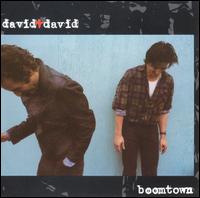
David & David – Boomtown (Released in January 1986)
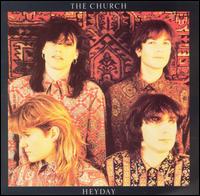
The Church – Heyday (January)
Boomtown was an album of slick but dark adult pop, dealing with themes of drug addiction, financial difficulties and domestic violence. I couldn’t exactly relate to it, but my desire to grow the hell up and have a life (and a girl) made it intruiging. It didn’t get heavy rotation, but I felt just a touch sophisticated when I did listen to it.
The Church were one of many post-punk groups that began lifting more overt influences from 60s bands like The Byrds. Fairly big in Australia for years, this was the first I’d heard of them, with KUNI playing the fierce “Tantalized.” It’s power and bite overshadowed the more jangly tunes, which reminded me pleasantly of R.E.M., whose Fables Of The Reconstruction was my favorite album from the previous year.
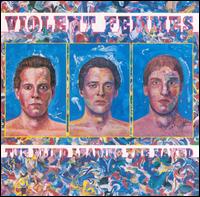

Violent Femmes – The Blind Leading The Naked (March 1)
Metallica – Master of Puppets (March 3)
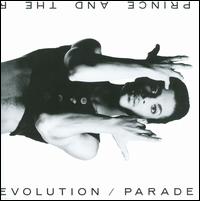
Prince – Parade (March 31)
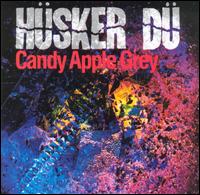
Hüsker Dü – Candy Apple Grey (March)
The first Violent Femmes album was perfect for a sixteen year-old boy. Hallowed Ground was a squirm-inducing weird trip, but still good enough to make me look forward to the day they released their third album. The new production was surprisingly polished, and it varied widely from silly to earnest, some (“Old Mother Reagan,” “No Killing,” “I Held Her In My Arms,” T. Rex’s “Children Of The Revolution,” “Good Friend”) more successful than others (“Candlelight Song”). It was a fun album. At least for me. My grandfather hated the vocals!
I first heard of Metallica when someone asked about them in Musicland the previous year. I heard bits of Ride The Lightning and was impressed. It was definitely the next level after Iron Maiden and Judas Priest. I hadn’t gotten any new metal since the last live Iron Maiden album. I heard some of Accept’s Metal Heart, but wasn’t motivated to get it. Metal seemed to be in a rut, as I had not yet heard any of the Megadeth, Slayer or Anthrax. The release of Master Of Puppets didn’t disappoint. It would be a few years before I started listening to metal again more regularly, but it was a good dose of the hard stuff.
I considered Prince as my mom’s artist. She was the one who bought Purple Rain, so I held him at arm’s length, though I thought he was a pretty badass guitar player. Eventually I had to admit that she found a good artist before me. I even agreed to go see the bizarely surreal Under The Cherry Moon with her. I don’t remember much about it, but I was impressed that Prince looked totally gay, but seemed to have a lot of girlfriends. That was some crucial information to be filed away for later. The sort-of-soundtrack had some great jams with “Mountains” and of course “Kiss.”
Fellow Twin Cities band Hüsker Dü was quickly becoming my favorite band even though I had only heard enticing fragments from Zen Arcade, New Day Rising and Flip Your Wig on a mix tape. Their major label debut was the easiest to find, and more accessible. I wasn’t crazy about the slower songs, but “Don’t Want To Know If You Are Lonely,” “Sorry Somehow” and “Dead Set On Destruction” made up for it. I was also belatedly getting into The Replacements, who’s Let It Be was the perfect companion to the first Violent Femmes album.
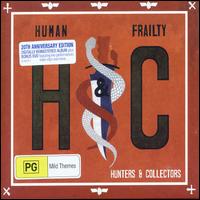

Hunters & Collectors – Human Frailty (April 7)
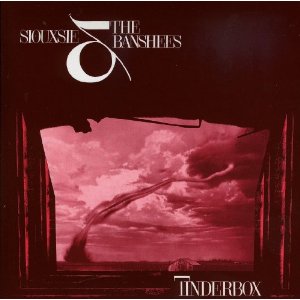
Siouxsie & The Banshees – Tinderbox (April 21)
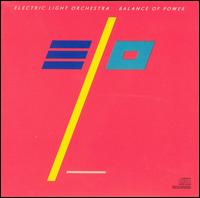
Electric Light Orchestra – Balance Of Power (April)
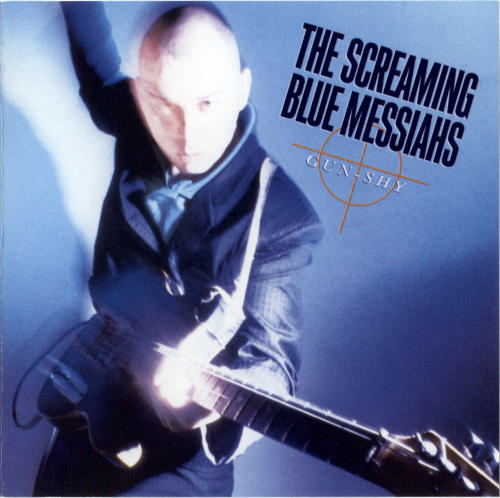
Screaming Blue Messiahs – Gun Shy (April)
Peter Gabriel – So (May 19)
When I hear cinematic drama in bands like Neutral Milk Hotel, The Arcade Fire and The Killers, I’m reminded of Australian band Hunters & Collectors. Their tortured epics were on the verge of crossing the line into too much bluster, much like The Alarm and U2. But I was intruiged by how they could sound pathetic and lovelorn, yet also still masculine. A couple songs were destined to be included on future mixtapes to girls. In the future. Hopefully near future.
I was introduced to the ice-queen of post-punk through a dubbed copy of Siouxsie & The Banshees’ 1981 singles compilation, Once Upon A Time. The proto-goth fairy godmother sounded quite different on the new album, with heavier sound and production aiming to expand their audience much like The Cure had done with The Head On The Door. If anyone deserved a bigger audience, it was Siouxsie Sioux. “Cities In Dust” was a worthy hit single, and should have been on heavy rotation on MTV.
Electric Light Orchestra had been by childhood favorite. I thought Time was the greatest album ever back in 1981. But that was 5 years ago, which is a long time when it’s over 30% of your lifespan. Secret Messages had its moments, but was pretty sure their run of greatness was over. I had to hear it of course, but Balance Of Power confirmed my fears. “Calling America” was a minor hit, and I thought it pretty much stank. For the next several years I would have denied ever liking ELO. Teenagers.
Now here was a cool new band. Screaming Blue Messiahs were Brits who sounded harder than anyone not counting their metal cousins. Combining the blues and The Clash with dense production, they had great menacing songs about serial killers and “playing” in the woods. This was most definitely not going on any mixtape for girls, as that would definitely creep them out. Someone in my group of friends used to play The Style Council at every party we went to. God I hated them, despite the fact that I loved The Jam once I’d discovered Paul Weller’s old band. Others must have been sick of them too, because when I took out the Style Council and put in Screaming Blue Messiahs, people clapped.
So was the second installment of my excursion into adult contemporary music after Boomtown. I got it before “Sledgehammer” pounded its way into my skull against my will. Aside from that garish piece of crap, it was a great album, and felt pleased with myself that I had used “In Your Eyes” in a mix tape long before it was used in Say Anything. Then again, Lloyd Dobler lost his virginity to that song, something that was very unlikely for me in 1986.
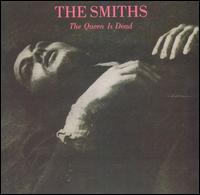

The Smiths – The Queen Is Dead (June 16)
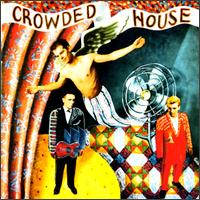
Crowded House (June)
A fifth generation copy of Hatful Of Hollow had been making its way through my circle of friends, so we had a heads up that the Grand Guignol of teenage music was coming. What’s left to say about Morrissey? I’ve read entire books dedicated to and inspired by him. Not only were bands named after Smiths songs and lyrics, so were movies and babies. He just felt so dang deeply, and whined so, so loudly. It was hard not to be annoyed, but at 16, you couldn’t ignore him because he was an amplified aspect of everyone I knew at that age. The Queen Is Dead, along with Pretty In Pink, was a defining artifact for so many kids my age. “And in a darkened underpass I thought oh god my chance has come at last/But then a strange fear gripped me and I just couldn’t ask.”
I didn’t know much Split Enz, and Crowded House were about as cool as fellow Aussies Men At Work. They just had some really well written, sunny Beatlesque songs, with a sort of California vibe. It turned out they recorded it with Mitchell Froom while living in L.A..
The Woodentops shared some of the qualities I would later love about The Feelies once I discovered them the next year. There’s also bits of early Talking Heads, XTC and Echo & the Bunnymen. All about the singleminded, propulsive rhythm. They should have been huge, but instead, they were forgotten. And when they reunited briefly not long ago, no one noticed.
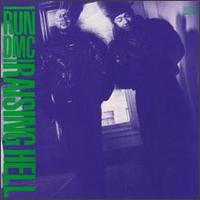
Run D.M.C. – Raising Hell (July 18)
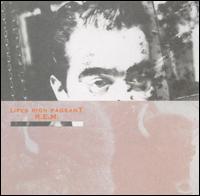
R.E.M. – Lifes Rich Pageant (July 28)
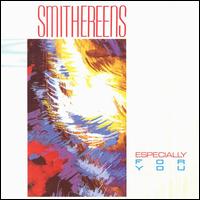
The Smithereens – Especially For You (July)
Run D.M.C.’s video with Aerosmith, “Walk This Way” was one of the few good things on MTV that summer. I first heard tracks from Run D.M.C.’s debut on KUNI a couple years before, and really liked “King Of Rock” from 1985. This album took hip-hop to new heights of popularity. They are also to blame for rap-metal, but that doesn’t take away from how massive this album is.
I liked Michael Stipe’s unintelligable vocals on R.E.M.’s first three albums, and the spooky, southern gothic feel of Fables Of The Reconstruction. The murkiness made for a great, mysterious sonic puzzle. By comparison, Lifes Rich Pageant sounded like crisply produced arena rock, and it took some adjustment to get used to. In the end, songs like “These Days,” “I Believe,” and “Superman” won me over.
The Smithereens were one of R.E.M.’s many progeny, expanding on the 60s Byds influences. “Blood And Roses” started with such a classic, ominous bass line that totally made the song. They made other albums that were supposedly good, but this is the most memorable.
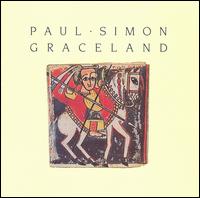
Paul Simon – Graceland (August 12)
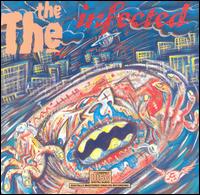
The The – Infected (August)
Paul Simon’s new album was interesting in that at least a couple generations were on board. I knew just as many parents and teachers who liked this as kids my age. I didn’t have any Simon & Garfunkel around the house, but the songs were practically as ubiquitous as Dylan and The Beatles. His use of South African musicians and their music lent it an infectiously bubbly, fresh sound that was pretty new to a lot of people. I was lucky enough to have heard a lot of King Sunny Ade on KUNI since 1982, along with some Fela and stuff that appeared on collections like The Indestructible Beat of Soweto. This would all lead me to explore a lot more African music a decade later when I had the resources. 24 years later, Graceland is sited as an inspiration for bands like Vampire Weekend.
The The’s Infected turned out to be, like Shriekback who I’d discover in the beginning of 1987, an important link between new wave and synth pop of the early 80s, and different types of dance music at the end of the decade including industrial and techno. The first time I heard Nine Inch Nails, it sounded to me like Trent Reznor owed a lot to Matt Johnson, e.g. The The.
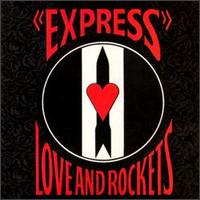
Love And Rockets – Express (September 15)
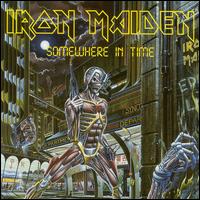
Iron Maiden – Somewhere In Time (September 29)
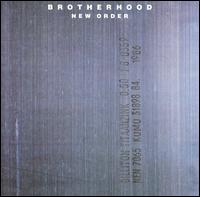
New Order – Brotherhood (September 29)
I had just recently heard a Bauhaus compilation for the first time and was blown away, so I knew a new album from offshoot band Love And Rockets could be seriously great. I wasn’t wrong. The thick wall of guitars in “It Could Be Sunshine” was deliciously heavy, taking The Jesus And Mary Chain’s wall of buzzsaw guitars and adding some psychedelic swirl. It was like healing balm for the brain after being assaulted by too many rotations of Wang Chung on the radio.
Iron Maiden were definitely my favorite metal band, even if I hadn’t put Piece Of Mind or Powerslave on the turntable as much since having my own cassette-only stereo squirrelled away in my bedroom. Somewhere In Time wasn’t necessarily horrible, but the high tech, lighter sound didn’t suit them, and too many cuts were boring. I liked the new Judas Priest album, Turbo even less. I chalked it up to a waning interest in metal that would be revived later on. I never would have imagined that I’d be rushing to buy Maiden’s 15th album on August 17, 2010! I should have been too busy flying around on my jetpack listening to music on my neck chip implant.
I was also cooling out a bit with New Order. Low-Life was amazing, but Brotherhood not so much. However, I’d still rank them as quintessential adolescent music of the era along with The Smiths, The Cure and The Replacements, especially after hearing some of the life-changing early singles on next year’s Substance compilation. I totally never got the love for their 1989 album Technique, though.

XTC – Skylarking (October 27)
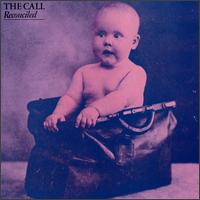
The Call – Reconciled (October)
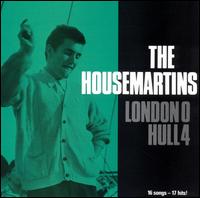
The Housemartins – London 0 Hull 4 (October)
For a long time I mistakenly thought Skylarking hadn’t come out until 1987. I most likely got it later in the winter, and associate it more with the following summer, because it was such perfect summer music. The symphonic lushness was not only evocative of bucolic splendor and lust. It was powerful. I’d go back and enjoy their first several albums just as much, but they’d never again match this.
The Call turned out to be a bit of a guilty pleasure. I liked how they reminded me of the big arena rock of the likes of Big Country, The Alarm and U2, but was embarrassed to figure out later that I was totally unaware of the Christian nature of the sometimes cheesy lyrics. Ah well, it still holds up as a solid album.
If Hunters & Collectors were the masculine side of sensitivity, The Housemartins would be the feminized version, whose leader was more of a torch singer than a rock vocalist. I really liked the gospel influences, along with the lefty politics.
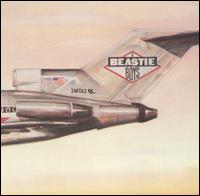
The Beastie Boys – Licensed To Ill (November 15)
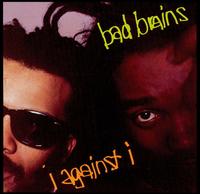
Bad Brains – I Against I (November)
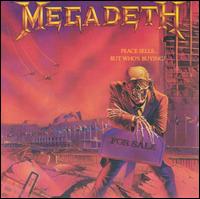
Megadeth – Peace Sells…But Who’s Buying? (November)
The Beastie Boys of course would up the ante set forth by Run D.M.C. and reach a massive new audience. The first time I heard it on a friend’s walkman I thought it was sort of throwaway jokey novelty music, like my beloved Dead Milkmen. They grew on me, as well as on Madonna, my arch nemesis, who asked them to open for her on her huge stadium tour. Maybe she was cooler than I presumed, if she liked the Beasties.
Bad Brains were like manna from god, or rather Jah. In a year severely lacking in ferocious punk rock, Bad Brains nailed a great album that mixed their roots in the D.C. hardcore punk scene with reggae, and The Police! The guitars had that sort of synthesized texture that seemed directly inspired by Ghost In The Machine, as was mid-80s Rush.
I knew Dave Mustaine was originally in Metallica early on. Peace Sells… was a solid Reagan-era classic that was nearly as great as his former band. Megadeth lost me when they took a dive with So Far So Good… so I didn’t realize they came back with better albums after than until 15 years later.
While 1986 seemed best forgotten between more culturally significant years, there was still a ton of great music, even if you didn’t grow up in that era. I’ve also come to terms with Bon Jovi and Madonna for the benefit of my wife. It’s only fair that she gets to take control of music programming now and then, so the NAS is now fully stocked with most of their albums, along with the likes of Pet Shop Boys, Cyndi Lauper, Journey, etc. I don’t even mind hearing “Livin’ On A Prayer” even though it’s more ubiquitous now than ever. Probably because most of the time I’m totally in control of what music I hear these days. I’m even trying out the a-Ha albums for the first time right now (not sure how well that’s going to turn out). No matter how dreary or small one’s hometown might have been, or how painful and awkward adolescence was, growing up was made just a bit more fun when accompanied by a (mostly) righteous soundtrack.
 Author with the only known photo of the aforementioned dual-cassette stereo of legend, Winter ’87 (click for mix).
There was plenty more great music from 1986 that I hadn’t gotten around to hearing until later. Once I started college, between the stacks in the radio station and used cassettes at Cheapo’s, I commenced a feeding frenzy that hasn’t really slowed down since. Even the list below is far from complete.
Afrika Bambaataa – Beware (The Funk Is Everywhere)
Big Audio Dynamite – No. 10, Upping St.
Big Black – Atomizer
The Blue Aeroplanes – Tolerance
Billy Bragg – Talking With The Taxman About Poetry
Butthole Surfers – Rembrandt Pussyhorse
Camper Van Beethoven
Nick Cave & the Bad Seeds – Your Funeral . . . My Trial
The Chameleons – Strange Times
The Chills – Kaleidoscope World
Elvis Costello – Blood & Chocolate
The Cramps – A Date With Elvis
The Dead Milkmen – Eat Your Paisley
Depeche Mode – Black Celebration
Died Pretty – Free Dirt
The Fall – Bend Sinister
Felt – Forever Breathes The Lonely Word
fIREHOSE – Ragin’ Full-On
Furniture – The Wrong People
Game Theory – Big Shot Chronicles
The Go-Betweens – Liberty Belle & The Black Diamond Express
Guadalcanal Diary – Jamboree
Head Of David – CD
Robyn Hitchcock – Element Of Light
Killing Joke – Brighter Than A Thousand Suns
Kool Moe Dee
Kukl – Holidays In Europe (The Naughty Nought)
Let’s Active – Big Plans For Everybody
The Lucy Show – Mania
Manilla Road – The Deluge
Mantronix – Music Madness
Meat Puppets – Out My Way
The Mekons – The Edge Of The World
The Mighty Lemon Drops – Happy Head
Ministry – Twitch
Motörhead – Orgasmatron
Mojo Nixon & Skid Roper – Frenzy!
Iggy Pop – Blah Blah Blah
Public Image Ltd. – Album
Ramones – Animal Boy
Stan Ridgway – The Big Heat
Saint Vitus – Born Too Late
Samhain III – November Coming-Fire
Shop Assistants – Will Anything Happen
Shriekback – Big Night Music
Slayer – Reign In Blood
Sonic Youth – EVOL
Soul Asylum – Made To Be Broken
Soul Asylum – While You Were Out
Stetsasonic – On Fire
Swans – Greed EP
Swans – Holy Money EP
Talk Talk – The Colour Of Spring
That Petrol Emotion – Manic Pop Thrill
Throwing Muses
The Triffids – Born Sandy Devotional
The Triffids – In The Pines
Yo La Tengo – Ride The Tiger
Read more: 1987: 20th Year Reunion
April 2, 2026
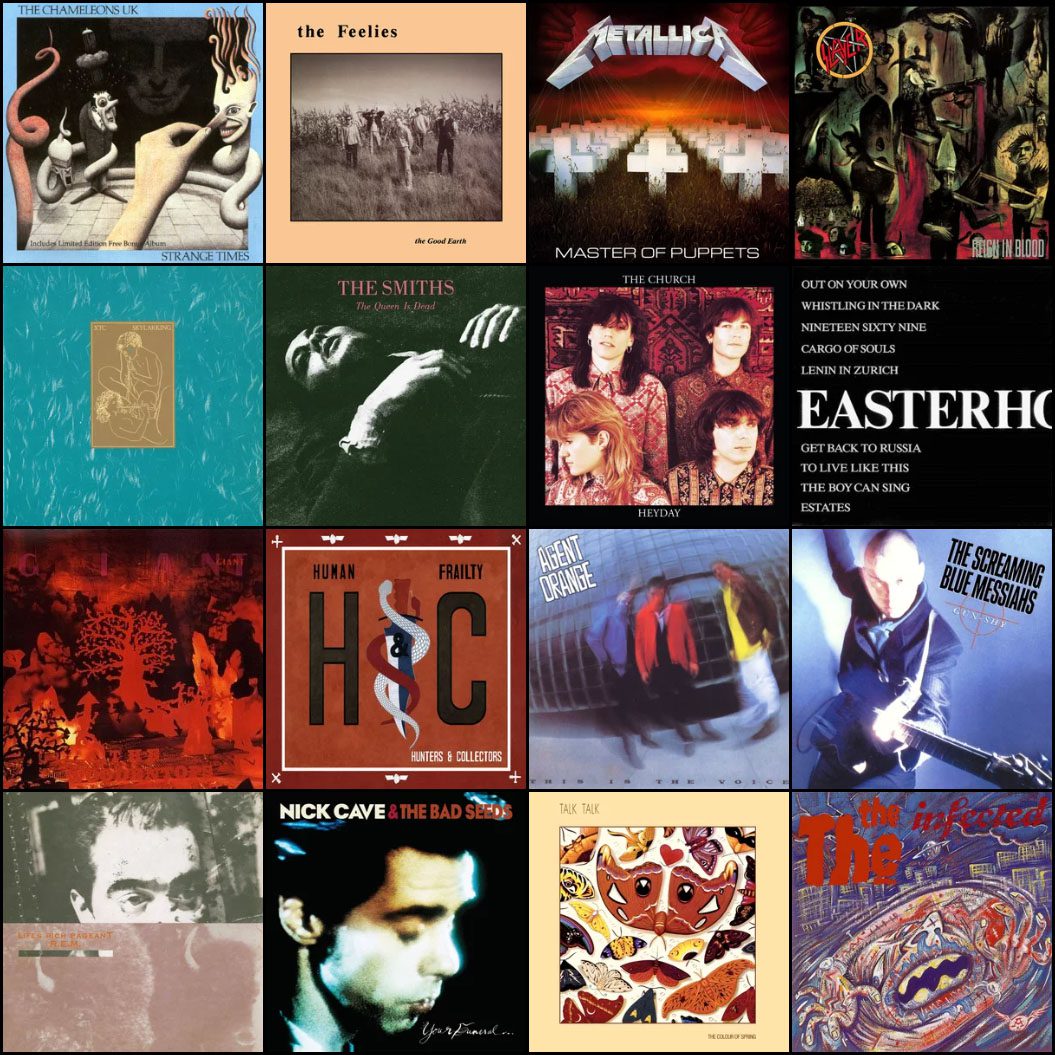
Fester’s Lucky 13: 1986
February 27, 2026
Fester’s Lucky 13: 1976
January 30, 2026
Fester’s Lucky 13: 1966