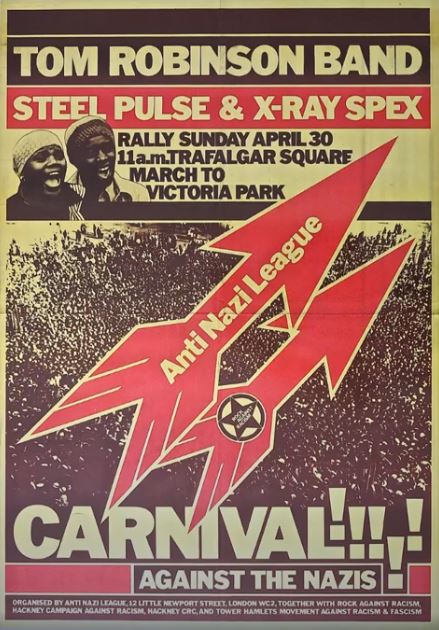
 Rock Against Racism was a movement that took place in a specific point of history in Great Britain from 1976 to 1982. Spurred by comments made by Eric Clapton during a 1976 concert in which he spewed racist slurs and stated his support of former minister Enoch Powell and his anti-immigration Rivers of Blood speech, RAR organized their first concert that year, which ended in a jam with black and white musicians playing together, which sadly was a rare and new thing at that time in Britain. The RAR collective made quick progress, however, and by April 30, 1978, they organized, in partnership with the Anti-Nazi League, a Carnival Against Racism where 100,000 people marched six miles from Trafalgar Square to the East End of London, a National Front hotspot, where an open air concert included The Clash (they confirmed too late to be included on the poster), Steel Pulse, Tom Robinson Band and X-Ray Spex. Another carnival took place in September that included Elvis Costello, Aswad and Stiff Little Fingers.
All the artists below either participated directly in RAR events or were associated with the 2 Tone label and scene. Some were featured on the 1980 compilation, RAR’s Greatest Hits.

“Oh Bondage Up Yours!” – X-Ray Spex (1977)
Poly Styrene, who had British and Somali parents helped set an early example in punk with her brilliant lyrics focusing on anti-consumerism and feminism. In the beginning Poly sings in a small voice, which makes it all more riveting when she goes full blast like an airhorn, “But I think “oh bondage, up yours! One-two-three-four!” For a few utopian minutes, patriarchy is tossed in a garbage can with a stick of dynomite.
“Sonny’s Lettah (Anti-Sus Poem)” – Linton Kwesi Johnson (1979)
UK based Jamaican dub poet relates a chilling incident of racist police violence.
“Winter of ‘79” – Tom Robinson Band (1978)
The most active participant of RAR who helped organize the events, this song talks directly about it. TRB were also vocal gay rights advocates.
“Jah Pickney – Rock Against Racism” – Steel Pulse (1979)
Not this Birmingham based reggae unit’s best known song, but the closest thing to an anthem RAR had. From their second album, Tribute to the Martyrs. Steel Pulse are best known for their debut album Handsworth Revolution (1978), featuring the title track and “Ku Klux Klan.”
“Babylon’s Burning” – The Ruts (1979)
The Ruts were arguably much more adept at fusing reggae rhythms with punk than any other band, including The Clash. They participated in many RAR events, and would have been better known had their lead singer Malcolm Owen not died on July 14, 1980.
“Easy Life” – The Bodysnatchers (1980)
The Specials were the flagship band of the 2 Tone label and scene, but The Bodysnatchers, who were lead by Rhoda Dakar, representing an enticing what-could-have-been, as they released only two singles. Rhoda also contributed vocals and screams to the harrowing Specials single, “The Boiler.” In 2014 Dakar released Sings the Bodysnatchers, which includes all the songs that made up the band’s live set before their premature breakup. She also just collaborated with the Dub Pistols for the inspiring “Stand Together,” released on April 21.
“(White Man) in Hammersmith Palais” – The Clash (1978)
“Police On My Back” – The Clash (1980)
While “White Riot” was The Clash’s first big single and was a staple throughout their career, I didn’t include it because it’s awkwardness and tone-deafness made for a muddled message. Written after they witnessed a riot at the Notting Hill Carnival in 1976 where mostly Caribbean youths fought with police. The Clash wishing they had a riot of their own may have been well-intentioned, but dumb. They showed a great leap in musical and lyrical maturity with “(What Man) in Hammersmith Palais,” an ambitious song that tackles many things — a craving for revolutionary rebel music, anti-violence, wealth equity, systemic racism, and the quickly evolving punk culture into a commercial entity. “Police On My Back” is one of the stand-outs of their triple album Sandinista. The song was originally done by The Equals, including Eddy Grant on guitar.
“Roots Radicals Rockers and Reggae” – Stiff Little Fingers (1981)
Perhaps best known for their firebomb first singles “Suspect Device” and “Alternative Ulster,” Stiff Little Fingers, who were tourmates with the major Rock Against Racism drivers Tom Robinson Band, sound exuberant and celebratory on this single from their third album. These Belfast ruffians have been on board with peace, love and solidarity from the beginning.
“Black Civilization” – Matumbi (1979)
Formed in London in 1972, Matumbi included producer Blackbeard (Dennis Bovell), who produced The Slits, Linton Kwesi Johnson and The Pop Group. This is from their second album, Point Of View (1979).
“Walls Come Tumbling Down” – The Style Council (1985)
While The Jam were originally a mod band with punk energy, Paul Weller wanted to explore different territory with his next band. The Style Council is basically a love letter to jazz, soul, funk and R&B, albeit with that particular 80’s pop sheen. Others have dabbled, such as Elvis Costello’s tribute to Motown and Northern Soul on his fourth album, Get Happy (1980), but Weller was all in for the lifetime of the band. The albums may not be as consistent as The Jam’s, but their music has aged surprisingly well, especially this uplifting anthem. It’s title was used to name the book about 2 Tone and Rock Against Racism. See below.
“Inner London Violence” – Bad Manners (1979)
Bad Manners were considered the goofy pranksters of the 2 Tone ska revival scene, but this song is intense, and one of the standout tracks on the Dance Craze soundtrack. See the clip from the movie. This is an amazing document of all the major 2 Tone players, and really needs to be reissued in HD.
“I Heard It Through The Grapevine” – The Slits (1979)
While this wasn’t originally included on their Dennis Bovell-produced debut album Cut (1979), this Marvin Gaye cover, a b-side of the “Typical Girls” single, was a great example of The Slits’ completely original style. There’s a lot of covers of this song, but none quite so weird and wonderful as the dada dub found here.
“A Message to You Rudy” – The Specials (1979)
If any band could be the singular embodiment of the Rock Against Racism movement, it’s the Specials. Indeed, RAR founder Red Saunders called them as “like a dream come true.” A multicultural and generational band that mixes ska, rocksteady and punk, their debut album, produced by Elvis Costello, was nearly perfect. Any song from their first album could work in this mix, but this one, a cover of a Dandy Livingston tune, is, well, special.
“Punky Reggae Party” – Bob Marley (1977)
Most of the artists here were directly involved with RAR. However I had to make an exception here. Inspired by Marley’s encountering punk first-hand during his stay in London, he gives his stamp of approval, namechecking The Clash, The Jam and The Damned in the song.
“Doesn’t Make It All Right” – Stiff Little Fingers (1980)
This anti-violence anthem was written by The Specials and also included on their first album. I’ve always liked the power and conviction in Stiff Little Fingers’ performance though.
Full Playlist:
Further reading:
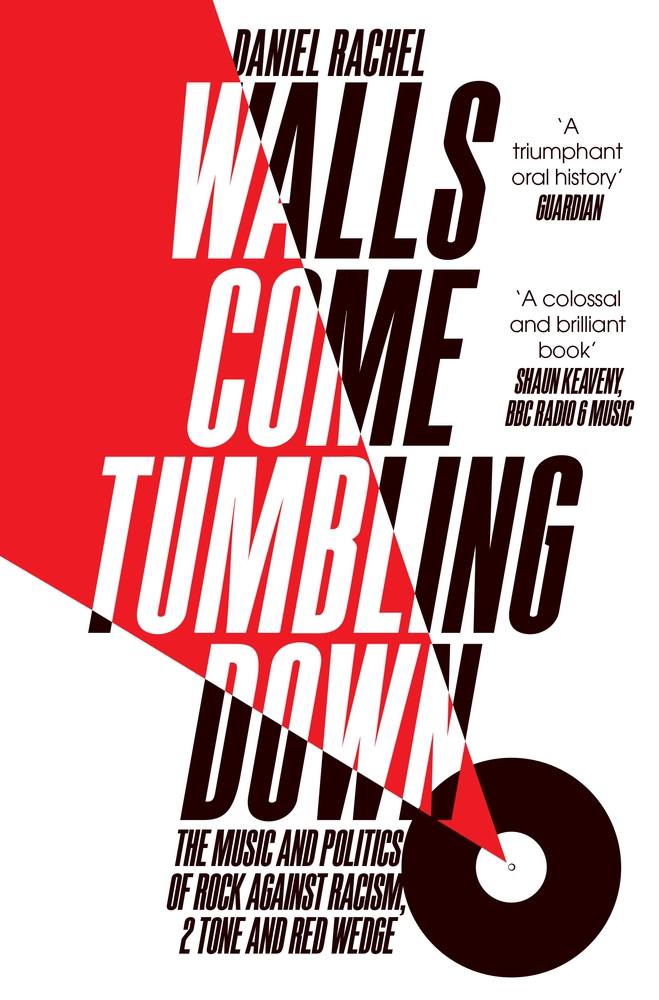
Much was made of music as instigators of social change in the 60s, but it really wasn’t until the late 70s in Britain that musicians appeared to genuinely have an impact on politics. Daniel Rachel gives an oral history via interviews with 150 campaigners, musicians, artists and politicians, of three key movements: Rock Against Racism, 2 Tone, and Red Wedge, which reaches a peak at the end of the eighties with an 11 hour concert in Wembley Stadium, with a worldwide audience of 600 million, demanding the release of Nelson Mandela.
Despite that particular triumphant victory, systemic racism has been allowed to fester and embed itself even deeper in the decades since. With the world so broken, would it be possible for music to have a remotely similarly positive impact again? Dunno, but this book is well worth checking out for the full story.
Hey, they made a movie!
White Riot: The Untold Story of how a Motley Crew of Punks Stood Up Against Racism. A film by Rubika Shah
Streaming now at Virtual Cinema. Read more in Trouser Press here.
May 31, 2026
Fester’s Lucky 13: 1996
April 2, 2026
Fester’s Lucky 13: 1986