I made an all-time list in 2015. Now it’s time to assess six album runs in the 21st Century, with a few updates to the all-time list.

When I do weight workouts in the basement, I’ve gotten into the routine of playing whatever YouTube shows pop up in my feed. Recently it was an old 2019 episode from Sea of Tranquility, “Bands That Released Three or More Classic Albums in a Row.” Three albums is a pretty low bar, which I’d already covered on my 2015 post, Who Had the Best Six Album Run?
I have a few tweaks to that list, but nothing too exciting, other than the fact that there are well over a hundred bands that have had runs of at least six great albums. That’s not including Van Halen, who are automatically disqualified due to Diver Down (1982), which in no way can be described as a great album, Deep Purple, Metallica, Tom Petty, The Doors and Pink Floyd. You just can’t call it a six album run when it’s interrupted by a disappointing dud. Even greats like David Bowie, who nearly had a 12 album run, was tripped up a bit with Young Americans (1975). It’s gotten reconsidered critically by some, and thanks to the strength of the the other albums, he’s still sitting pretty in the top 20. Prince, however, was never able to maintain the consistency to crack the top 100. X, The Cure, Genesis, Björk, and Siouxsie & the Banshees also just missed the top 100. We’ll get to that later.
More interesting to me are the bands who have accomplished this in the 21st Century. There’s more than you think. The bands most commonly considered contenders for classic canon/all-time greats either lacked the consistency to make the top 20 (Queens of the Stone Age, The White Stripes, Arctic Monkeys), or simply don’t have enough albums yet (Yeah Yeah Yeahs and Vampire Weekend have only four each). I’m sure many would make cases for the likes of Kanye West, Taylor Swift, and Beyoncé but even if they aligned more with my tastes, their runs are interrupted by dud albums.
1. Colour Haze
If I allowed for more than one album from the 90s, Radiohead would be on top. But the prolific Colour Haze’s expansive, consistent catalog wins out. Guitars may have fallen out of fashion twice already in the 21st century, but that hasn’t stopped bands like Colour Haze from creating the most consistently gorgeous and endlessly listenable guitar worship of this century so far.
2. Motorpsycho
If we’re talking prolific, Norway’s Motorpsycho has literally lapped the competition three times, as they have two other runs in 90s and 00s that are nearly as great. And remarkably, after 32 years, they’re still not done, as the upcoming Kingdom Of Oblivion seems to promise yet another adventurous album that holds up with their best.
3. Radiohead
Considering how massively popular The Bends (1995) and OK Computer (1997) are, Radiohead have to be happy with the fact that their legacy in the 21st century is even stronger. Even when they’re not at their best (The King of Limbs), every new album release is an event where diverse groups of people all stop what they’re doing and listen. That’s something that happens less and less as tastes and genres become more and more individualized as the flow of new music content shows no signs in slowing down. This isn’t necessarily a bad thing, but the days of popular consensus are waning. Should they continue releasing new music, though, Radiohead will always grab our attention.
4. Ufomammut
Am I getting too obscure with Italian cosmic psych doom? Don’t care, this is my list. Ufomammut’s ambition and artistic vision (both sonically and visually — they also do their own album and poster art as the Malleus collective, and check out their album length videos) have resulted in my favorite run of heavy albums. The quality did not suffer on 8 (2017) either, and I look forward to them extending their run.
5. & 6. Causa Sui & Papir
Two Danish bands initially inspired by Colour Haze have both forged their own impressive paths that include expansive kosmiche/space rock jams, psych prog, post-rock and jazz fusion.

7. The Luck of Eden Hall is a bit of a dark horse in that despite the fact that they were in my hometown, I missed out on them while they were active, up until Curvey departed for Michigan and started his excellent Custard Flux project.

8. Opeth’s 21st century run gives a nice range from the progressive death metal of Blackwater Park (2001) to folk on Damnation (2003) to full on prog rock on Heritage (2011). Their subsequent three albums are even better than Heritage, but can’t quite compare to the likes of Ghost Reveries (2005).

9. Gojira may have peaked the first decade with The Way Of All Flesh (2008) and From Mars To Sirius (2005), but L’Enfant Sauvage (2012) still has the good stuff. And five years since their last album, Fortitude comes out April 30, and sounds like their best since The Way Of All Flesh.

10. White Denim continue to be one of the more underrated bands of recent years. Thanks to their virtuoso musicianship and work ethic, they have built up a dedicated live following, but hopefully their great catalog will get more recognition.

11. I think there’s enough artistic continuity between Gareth Liddiard and Fiona Kitschin’s The Drones and Tropical Fuck Storm that they could have kept the same name. Nevertheless, The Drones catalog of garage noir/art rock/post-punk blues stands strong on seven consistently great albums.

12. The Lord Weird Slough Feg switched to just Slough Feg after Traveller (2003), but returned to their original unwieldy but superior name on their last album, New Organon (2019). You can’t find a better run of traditional heavy metal albums since 2000, even from Iron Maiden!

13. I kind of put metal on the backburner in the 90s, aside from the stoner doom of The Obsessed, Sleep and Electric Wizard. While Maiden’s Brave New World (2000) had me listening to them for the first time in 12 years, it still didn’t quite grab me the same way as other metal fans. Entombed’s Uprising (2000) got me tentatively on board with death ‘n’ roll, and Opeth with progressive death metal, but it was Mastodon’s Remission (2002) and Leviathan (2004) that fully re-awakened the metal beast within me and their live show inspired me to favor metal shows for the rest of the decade. Their evolution from sludge metal to the prog metal epic Crack The Skye (2009) was an extra bonus.
Just missing the lucky 13 is the quietly consistent, stripped down indie pop of Spoon, who deservedly got a couple hits late in their career after years of slogging it out in the tiny clubs. Unlike most of their indie pop contemporaries, they’ve never made a weak album. Dungen had a nice run, and helped kick popularize Swedish psych along with Witchcraft. Hopefully there’s more to come from them. The Galileo 7 is another great underrated psych pop band, while Finland’s Circle is incredibly prolific, though probably past their peak now.
- Colour Haze
- Motorpsycho
- Radiohead
- Ufomammut
- Causa Sui
- Papir
- The Luck of Eden Hall
- Opeth
- Gojira
- White Denim
- The Drones
- The Lord Weird Slough Feg
- Mastodon
- Spoon
- Dungen
- The Galileo 7
- Circle
- The Sand Pebbles
- Hammers Of Misfortune
- Orango
- All Them Witches
- High on Fire
- Papernut Cambridge
- The Black Watch
- Enslaved
- Elephant9
- Alec K. Redfearn and The Eyesores
- Queens Of The Stone Age
- Arctic Monkeys
- Moon Duo
- Gazpacho
- Triptides
- Greenleaf
- The White Stripes
- Pale Divine
- Nina Nastasia
- P.K. 14
- Wo Fat
- Kadavar
- Witchcraft
- Oh Sees
- The Ocean
- Boris
- The Black Keys
- The Ocean Party
- Franz Ferdinand
- Ryley Walker
- YOB
- The New Pornographers
- The Hellacopters
Bubbling under: Baby Woodrose, Madder Mortem, The Citradels, The Mars Volta, King Gizzard & The Lizard Wizard, The National, The Left Outsides, Ed Harcourt, Ice Dragon, Deftones, Rival Sons, Clutch, Cult of Luna.
Almost There! Bands with Five Album Runs
As far as I know, all these bands are active and could potentially have a sixth album. My top contender, TV On The Radio, have been dormant since Seeds (2014). That may have been their weakest album, but I still thought it was pretty great, and my fingers are crossed they still have another one in ’em. Truckfighters and Graveyard are two of Sweden’s hardest touring bands. Both have criss-crossed North America dozens of times in the past 12-15 years, and they understandably got burned out. Graveyard broke up briefly but are still in action as far as I know. Truckfighters took a hiatus, but seemed to be about to start playing live again just as the pandemic hit. We’ll hopefully hear more from both. I’ve gone back and forth on a couple of Baroness’ albums, but over time, even their departure albums stand the test of time. I have a feeling album number six will be a biggie. More music is always welcome from Uncle Acid & the Deadbeats, but they may have peaked on Blood Lust (2011). Of the top five, Elder are the band I’m most confident that they have several more albums in them, and a good chance their best is yet to come.
I was right about that. A year after this piece was first published, they came out with their best album. Also And Also The Trees, The Black Angels, Spidergawd, My Sleeping Karma, Snail, Crippled Black Phoenix, Garcia Peoples, Haunt, Bent Knee, Dinosaur Jr., Wovenhand, and Steve Gunn have entered the six album run club since 2021. I’ll do an updated piece once a few more bands come out with album #6 (come on Truckfighters, Graveyard, Uncle Acid!)

Later this week, Haunt will actually be releasing their sixth album, if we count Triumph (2020), a re-recording of their first two EPs. I’ll need some time to figure out how this factors in on their run.
Even if Tool, Shellac and The Breeders released a sixth album today, they wouldn’t qualify for the above list, as they all released too many 90s albums. But if the album was good enough they could possibly make the all-time list. We’ll be lucky to see #6 from Tool before 2030, if ever. Shellac told me recently they aren’t working on anything new anytime very soon, but The Breeders’ cover of His Name Is Alive’s “The Dirt Eaters” came out on the Bills & Aches & Blues compilation on March 10. Hopefully a new album is in the works.
Both Yeah Yeah Yeahs and Vampire Weekend seem to be running out of creative gas at album number four, and Savages might be done after just two albums. Wolf People are no more after four albums, SubRosa broke up at the top of their game after five albums. So the best bets for future contenders are younger artists like Rolling Blackouts Coastal Fever, Rosalie Cunningham, The Sonic Dawn, SAULT, Priests, Monarch, Bask, Vektor, Fontaines D.C., Mere Women, Groupie, Peluché, Bambara, RVG, Slift, Mother Island, The Greek Theatre, The Fast Camels, The Warp/The Weft, possibly Algiers, and I really hope Syd Arthur, though it’s already been five years since album number three.

- TV On The Radio
- Truckfighters
- Graveyard
- Baroness
- Uncle Acid & The Deadbeats
- The Dials
- Tool
- Chris Forsyth
- Torche
- Shellac
- Witch Mountain
- Castle
- Wand
- The Breeders
- The Buttertones
- Protomartyr
- Sugarfoot
- Wardruna
- Fiona Apple
- Tami Neilson
- Steve Gunn
- Wooden Shjips
- Real Estate
- Elephant Stone
Alltime List
Stuff has shifted around since my 2015 list. The major changes in the top 50 are in bold. The biggest jump was made by this band:
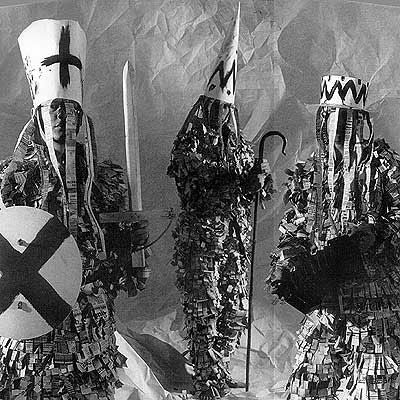
After reading Complicated Game: Inside the Songs of XTC (2016), I gained more appreciation for XTC’s mid-period albums like Mummer (1983) and The Big Express (1984), which were thought of as missteps I guess because they didn’t have hits like English Settlement’s (1982) “Senses Working Overtime” and “Ball and Chain.” But nowadays they’re more widely considered part of their extended creative peak of consecutive masterpieces that runs from Drums and Wires (1979) through Skylarking (1986). And a diverse group of fans have been acknowledging their influence, from pop stars like Peter Gabriel and Daman Albarn to the Discord and Rhyme podcast, and crusty metal/progheads like Martin Popoff and Pete Pardo (see the Sea of Tranquility video). Black Sea (1980) rose even further up my rankings as their best album, while I continue to be surprised by deep cuts from the English Settlement double. When I was younger I favored their first two albums that had a fun boingy factor that reminded me more of Devo than Talking Heads, as collected on my cassette tape of Waxworks: The Singles 1978-1982.

I was a relative latecomer to Free. I remember thinking the cover of their 1969 self-titled album looked cool, via my Harmony Encyclopedia of Rock Volume 3 (1981). But I didn’t realize how perfect their six album run was until I bought the reissued CDs in 2001. It makes sense that they were often cited as a favorite by musicians like Lynyrd Skynyrd. Their craft was subtle (aside from the thonking anomaly of their single “All Right Now” that became more of a blueprint for Bad Company) but beautiful. They’ve grown on me every year.

Tim Buckley got heavy rotation in my 5 disc changer in the mid-90s around the time I was seeing his son Jeff perform fairly often, but it took me a while to warm up to Goodbye And Hello (1967) and Lorca (1970). Toots & the Maytals was always a big favorite, but some of his early albums were reissued.

Rush inched just ahead of Thin Lizzy this time. I’m guessing a slight majority of Rush fans would advocate the run starting with 2112 (1976). For sure, it’s a hugely important album for their career, and even teenage Niamh the Prog Nerd picked it as her favorite, and was a factor in her becoming a YouTuber. Caress Of Steel (1975) was a flop, as the hard rock fans of “Working Man” and “Finding My Way” were not getting into “The Necromancer” and 20 minute epic “The Fountain Of Lamneth.” Their label was going to drop them if they didn’t produce something that sold. But instead of going more commercial, they doubled down with the side long sci-fi suite. I bought it around 1983, during the two year wait between Signals (1982) and Grace Under Pressure (1984). I could never get fully on board with 2112. It still felt like a pubescent Rush, slightly awkward and clunky compared to the elegance of A Farewell to Kings (1977). If course, I also had issues with Led Zeppelin’s Physical Graffitti (1975) at the time too. But when they released the video for “Distant Early Warning” ahead of the new album release, complete with references to Kubrick’s Dr. Strangelove, it felt like a huge event. To me Grace Under Pressure sounded like Rush still at the top of their game, pushing forward with a dense, dark futuristic sound, including the underrated “Between the Wheels” and the third installment of their “Fear” concept series, “The Enemy Within” (which they’d return to with “Freeze” in 2002). It may have been the beginning of contention over Rush’s choices in production in the 80s, but I’ll still take it over 2112.
While I was not keen on Elvis Costello & The Attractions’ shift from guitar rock to piano based songwriting on Trust (1981) and Imperial Bedroom (1982) at the time, they’ve grown on me over the years, and combined with the decision to not count albums filled with cover songs, removing his low-key country project Almost Blue (1981) out of the equation, Costello rose in the ranks to the top 20.
60s soul artists were known more for singles than albums, but pretty much everything Otis Redding sang was golden. I also gained more appreciation for Yes, after reading a couple epic prog books. Fragile (1971) entered my consciousness at the tender age of eight, along with the first three Black Sabbath albums, but it took me a while to fully dig into Close To The Edge (1972) and Relayer (1974). Joni Mitchell is so multi-faceted, of course, that it makes sense it takes nearly a full lifetime to understand her entire catalog. I just recently started digging into her post-90s material.
I excluded jazz artists because there’s a bunch who would have dominated the lists, and merit their own discussion. Possibly someday I’ll take a crack at one, but there are others more qualified. And obviously it’s all based on my subjective tastes, so there’s all kinds of six album runs others could argue for, from Elton John to Drive-By Truckers.
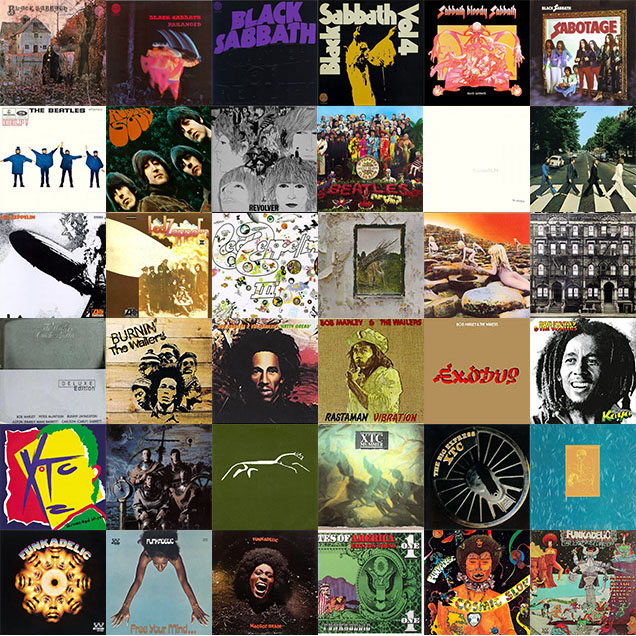
- Black Sabbath
- The Beatles
- Led Zeppelin
- Bob Marley
- XTC
- Funkadelic
- Free
- Iron Maiden
- Bob Dylan
- Tim Buckley
- The Rolling Stones
- Rush
- Thin Lizzy
- Can
- Radiohead
- Elvis Costello & The Attractions
- Toots & The Maytals
- The Kinks
- Colour Haze
- The Fall
- David Bowie
- Fela Kuti
- Fugazi
- Hüsker Dü
- R.E.M.
- Otis Redding
- Yes
- Motorpsycho
- Joni Mitchell
- Melvins
- AC/DC
- Judas Priest
- The Sound
- Captain Beefheart & his Magic Band
- Curtis Mayfield
- King Crimson
- Queen
- Nina Simone
- Electric Light Orchestra
- Popol Vuh
- Hawkwind
- Traffic
- Stevie Wonder
- PJ Harvey
- Ufomammut
- T. Rex
- Van Der Graaf Generator
- Sleater-Kinney
- Slayer
- The Feelies
- Amon Düül II
- Electric Wizard
- Talking Heads
- Santana
- The Stranglers
- Creedence Clearwater Revival
- Scorpions
- Opeth
- Sly & the Family Stone
- Opposition
- Bruce Springsteen
- The New Christs
- The Saints
- Aretha Franklin
- Stereolab
- Death
- Kraftwerk
- The Who
- Neil Young
- Al Green
- Van Morrison
- Arto Lindsay
- Family
- Killing Joke
- Gong
- Causa Sui
- The Lord Weird Slough Feg
- Papir
- Tom Waits
- Temptations
- The Luck of Eden Hall
- Nick Cave & The Bad Seeds
- Motörhead
- Brian Eno
- Gojira
- White Denim
- Trouble
- Kate Bush
- The Primevals
- Mastodon
- U2
- Spoon
- Sonic Youth
- Dungen
- The Scientists
- Unwound
- The Galileo 7
- Steely Dan
- Circle
- The Sand Pebbles
Bubbling under: The Jazz Butcher, The Church, Hammers of Misfortune, Orango, Prince, X, The Cure, Genesis, Björk, Siouxsie & the Banshees, All Them Witches, High on Fire, The Damned, The Flaming Lips.
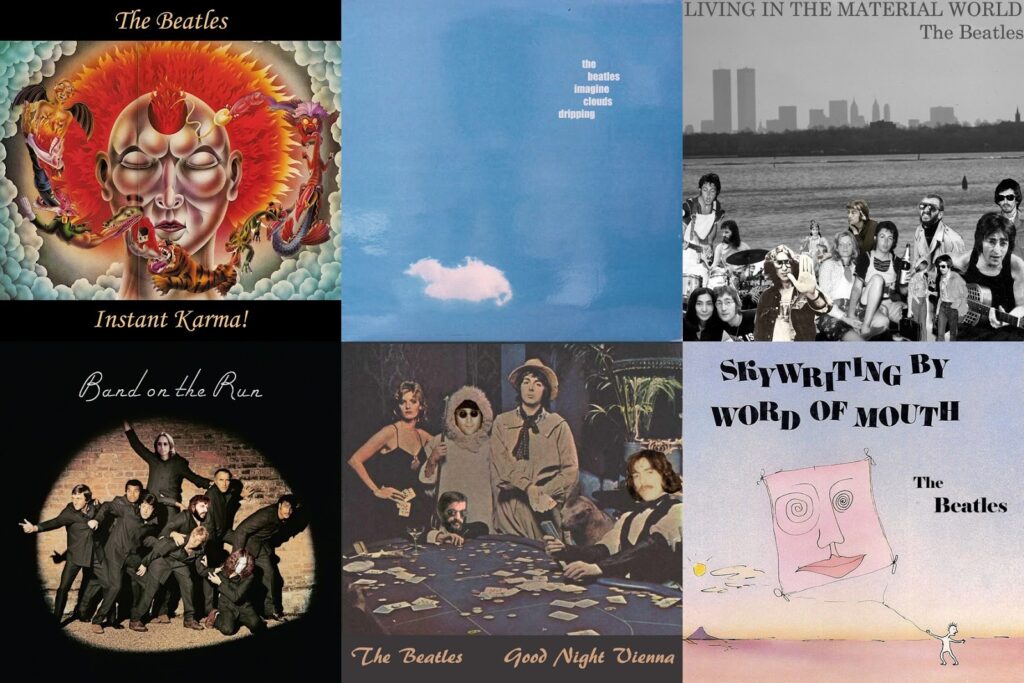
I thought I would get more shock and pushback at ranking Black Sabbath over the Beatles, but I didn’t! Ozzy himself would have a fit, as I’m sure he’d say he’s not worthy. And in some ways he’s not. I’m not saying the Sabs were a better band. But they did have a better six album run, and it seems that many agree. The only Beatles album that’s truly perfect is Revolver (1966). The rest have some inconsistencies that prevent them from ruling imperiously over all other bands in every way. Just most ways. Soniclovenoise of Albums That Never Were should do a Sgt. Pepper’s Magic Band that sifts off the chaff and includes the essential songs from Magical Mystery Tour (“Strawberry Fields Forever,” “Penny Lane,” “I Am The Walrus”). Check out his 1970s Beatles albums — I’ve listened to those a ton over the years.
April 2, 2026
Fester’s Lucky 13: 1986
February 27, 2026
Fester’s Lucky 13: 1976
January 30, 2026
Fester’s Lucky 13: 1966