Favorite book #2. A Young Lady’s Illustrated Primer, an undersung post-cyberpunk AI era classic.
After nailing cyberpunk in Snow Crash, Neal Stephenson essentially invented post-cyberpunk with his next book, in which an interactive book running on nanotechnology and AI was created for the grandaughter of an eccentric, powerful Lord, is stolen and falls into the hands of a poor girl named Nell. In a future suburb of Shanghai, society is divided into various “phyles” or tribes, including the powerful neo-Victorians. Nell is part of the Thetes, a tribeless cclass in a single parent household, with her brother Harv a part of a street gang. The primer adapts to it’s particular user and changes Nell’s life, educating her to become an independent thinker, a rebel, and possibly even a leader, not to mention self-defense, via interactive stories.
The book’s designer, John Percival Hackworth, lost the book because he made an unauthorized copy for his own daughter, and now has to retrieve it. Meanwhile there’s a complex power struggle between Neo-Victorians and Chinese nationalists to develop competing nanotechnologies that will shape the world.
While there are problems in this world, particularly the the dangers of tribalism, it’s less bleak and more optimistic than Stephenson’s previous book, showing just how striking a difference AI-assisted eductation could make if allowed.
“Nell,” the Constable continued, indicating through his tone of voice that the lesson was concluding, “the difference between ignorant and educated people is that the latter know more facts. But that has nothing to do with whether they are stupid or intelligent. The difference between stupid and intelligent people—and this is true whether or not they are well-educated—is that intelligent people can handle subtlety. They are not baffled by ambiguous or even contradictory situations—in fact, they expect them and are apt to become suspicious when things seem overly straightforward.”
I’m one of only a handful of fans who rate this as a favorite, despite the fact that it did win both the Hugo and Locus awards in 1996. Stephenson himself would be perplexed at this choice. And certainly with Cryptonomicon (2000) and the approximately 3,000 page Baroque Cycle, (2003-04) he’s accomplished more ambitious achievements. But a powerful AI educational tool falling into the hands of a girl in the ghetto struck a chord with me personally. It reminded me of when I realized at thirteen I could access a nearby college library to research a paper, and it’s vastly superior resources to the junior high’s expanded my world in an instant. Along with the politics and nanotechnology, there are themes of the enduring human desire for community and belonging. The book strikes a special balance between Stephenson’s youthful, giddy energy, and his subsequent rabbithole deep dive datadumps that can get to be a bit much. It’s a unique phase that Stephenson would never return to.
“We ignore the blackness of outer space and pay attention to the stars, especially if they seem to order themselves into constellations. “Common as the air” meant something worthless, but Hackworth knew that every breath of air that Fiona drew, lying in her little bed at night, just a silver flow in the moonlight, was used by her body to make skin and hair and bones. The air became Fiona, and deserving—no, demanding—of love. Ordering matter was the sole endeavor of Life, whether it was a jumble of self-replicating molecules in the primordial ocean, or a steam-powered English mill turning weeds into clothing, or Fiona lying in her bed turning air into Fiona.”
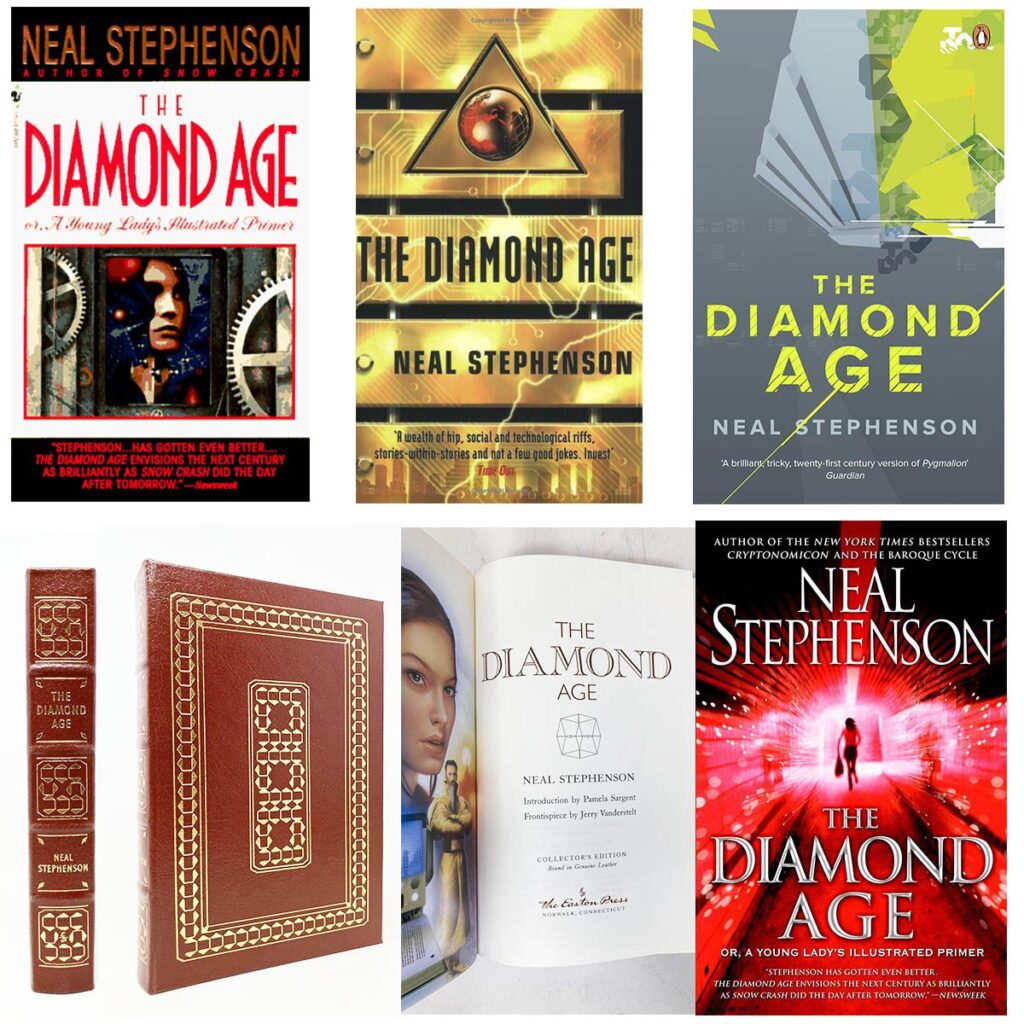
2. Neal Stephenson – The Diamond Age (1995)
3. Douglas Adams – The Hitchhiker’s Guide to the Galaxy (1978)
4. Neal Stephenson – Snow Crash (1992)
5. William Gibson – Neuromancer (1984)
6. Neil Gaiman & Terry Pratchett – Good Omens (1990)
7. John Kennedy Toole – A Confederacy of Dunces (1980)
8. Philip K. Dick – Do Androids Dream of Electric Sheep? (1968)
9. J.G. Ballard – Crash (1973)
10. Haruki Murakami – The Wind-Up Bird Chronicle (1994)
11. Ursula K. Le Guin – The Left Hand of Darkness (1969)
12. Rudy Rucker – Wetware (1988)
13. Philip K. Dick – A Scanner Darkly (1977)
14. George Orwell – Nineteen Eighty-Four (1949)
15. Christopher Moore – A Dirty Job (2006)
16. Johannes Johns – The Redwood Revenger (2021)
17. Neil Gaiman – Neverwhere (1996)
18. Haruki Murakami – Kafka on the Shore (2002)
19. Thomas Pynchon – Gravity’s Rainbow (1973)
20. William S. Burroughs – Naked Lunch (1959)
21. Haruki Murakami – 1Q84 (2011)
May 31, 2026
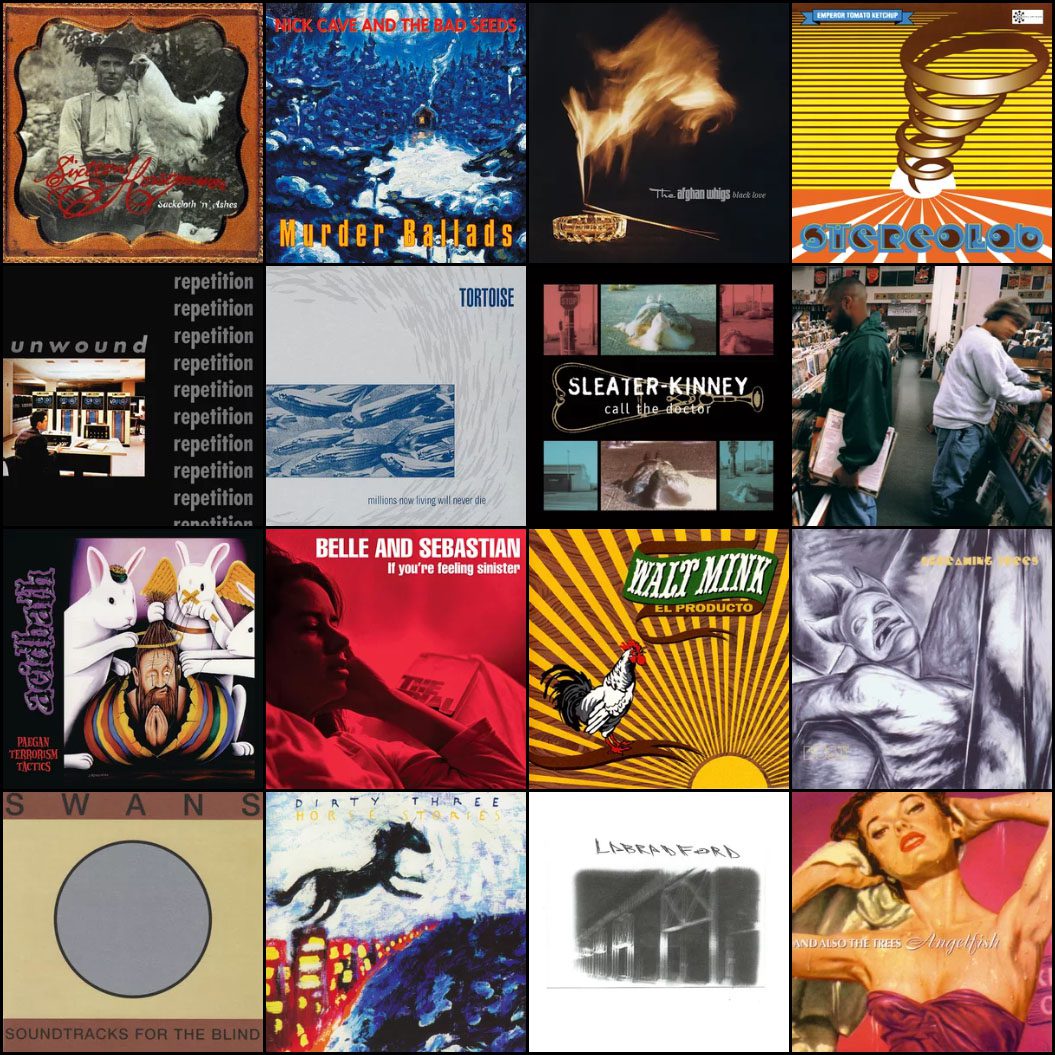
Fester’s Lucky 13: 1996

April 2, 2026
Fester’s Lucky 13: 1986