With Clinton Heylin’s From the Velvets to the Voidoids and Legs McNeil and Gillian McCain’sPlease Kill Me, the history of the American pre-punk and punk scenes of Detroit, Cleveland and New York are well documented. Yet even at the time it was happening, many scoffed at the authenticity of a punk scene in sunny Los Angeles and Orange County. With Neutron Bomb, the participants of that scene finally get well-deserved vindication. Spin writer Marc Spitz and Brendan Mullen, former owner of the underground Hollywood club the Masque, followed the same oral history format that served Please Kill Me well, and revealed a pre-punk and punk scene whose diversity and creativity at one point rivaled anything from New York or London. It tells a story of the (somewhat fleeting) success of a few (The Runaways, The Go-Go’s, The Germs, X, Black Flag) and the failure of many. The reasons are the same as usual — drugs, tragic accidents, and sheer ineptness in keeping shit together enough to record and tour as a functioning band. But the colorful personalities, strikingly original ideas and a briefly utopian sense of community are what make the book so compelling.
Even in the early 70’s, there was more going on than The Eagles, Linda Ronstadt and Jackson Browne. At The Troubador, The E Club, the English Disco and The Sugar Shack, one could dance to British glam records and hear proto-glitter bands like the Ziggy Stardust-influenced space suit-wearing Zolar X, Christopher Milk, Jobriath, Silverhead, Berlin Brats, Les Petites Bon-Bons and The Quick. Influenced by Suzi Quatro, The Sparks, T-Rex and David Bowie (who was a partner and semi-regular at the E Club), these artists were proof in the pudding that L.A. was hardly behind the times. Unfortunately none of them managed to record any lasting document, so they were quickly forgotten.
L.A. was the home of one of the earliest fanzine cultures, with Greg Shaw’s Who Put the Bomp starting in 1969. In 1973 Lisa Fancher began Records/Street Life and in March 1975, Phast Phreddie, Don Waller and D.D. Faye founded the mighty Back Door Man, featuring Iggy Pop on the first cover. The warning on the cover read, “For hardcore rock ‘n’ rollers only,” and it covered blues, garage rock, Roxy Music, Brian Eno, Patti Smith and Pere Ubu. At the same time, legendary scenester and letch Kim Fowley put together a group of underage girls known as the proto-punk/metal The Runaways. Formed in 1977, the Weirdos would become the catalyst in forming a punk scene. The Dils, The Zeros, The Germs and The Screamers frequently played with them in basements and lofts. It could be safe to say that the Weirdos and The Screamers were utterly unique. The Weirdos featured two guitars, bass, singer and no drums, while The Screamers two distorted keyboards and a drum kit, which was unheard of outside of Kraftwerk and Suicide. More punk zines popped up. French expatriate Claude Bessy switched from publishing a reggae fanzine called Angeleno Dread to doing Slash. Flipside and Lobotomy soon followed. Clubs like The Masque, Whiskey A Go-Go, Starwood, Atomic Café, Madame Wong’s, Hong Kong Café started booking punk bands. When The Damned visited in ’77, they were amazed by how extensive the punk scene was. The scene peaked in diversity and creativity by 1979, with the rootsy punk of Rank And File and X, the bluesy Gun Club, the poppy Dickies and The Go-Go’s, the early hardcore of Fear, the electro-noir of Wall Of Voodoo, the rockabilly Levi and the Rockats and The Blasters, The Avengers, The Middle Class, F-Word, Black Randy & the Metro Squad, The Bags, The Eyes, The Skulls, The Plugz, Hal Negro and The Flesheaters, some of which were featured on the Yes L.A. album put out by Dangerhouse.
The community soon became divided by two main causes. One was the Chinatown punk wars, involving a feud between the owners Madame Wong’s and the Hong Kong Café. Madame Wong banned most of the punk bands that played at the Hong Kong Café, and focused on Blondie and Cars-influenced power pop and new wave like Sensible Shoes, the Naughty Sweeties, 20/20, the Motels and the Knack. In conjunction with industry heavy-hitters like Sire’s Seymour Stein, Bomp’s Greg Shaw declared power pop and new wave as the next big thing. When the Knack hit number one that summer, the rift was finalized, and even bands like the Model Citizens, X and Wall of Voodoo were criticized for being too soft by those who resented the success of the more accessible bands. Then in the fall of ’79, Posh Boy Records put out the Beach Boulevard compilation, introducing younger, more hyper suburban hardcore bands like The Crowd, Covina, Negative Trend, The Simpletones and Rik L. Rik. Young, beefy suburban jocks would show up at T.S.O.L. (True Sounds Of Liberty), Black Flag, Vicious Circle and Circle Jerks shows and start fights. The bands often did little to stop the violence, and often encouraged it and participated. The older bands did not appreciate it, and even people like Darby Crash of the Germs were horrified by the violence. While there was a lot of good music that came from these bands, and newer bands that were embraced by the skate punks like The Descendents, Redd Cross, The Last, Bad Religion, The Adolescents, Social Distortion, Agent Orange and Suicidal Tendencies, it’s unfortunate that Penelope Spheeris’ The Decline Of Western Civilization, Part 1 focused on the drug and violence, and featured the hardcore bands to the exclusion of the more musically interesting bands. By the time the movie was out, Crash, wracked with depression and struggling over his homosexuality, had fulfilled his own prophecy and committed suicide. Many bands imploded while others moved on for a while before fizzing out. The only bands to reach greater heights of success were Social Distortion and Bad Religion. Bad Religion also enjoyed a boost when The Offspring sold nine million albums on their indie label Epitaph. Together with Rancid, Down by Law, Pennywise and NoFx, they spearheaded a punk renaissance.
Neutron Bomb isn’t the only book about L.A. punk. There’s also Don Snowden’sMake the Music Go Bang: The Early L.A. Punk Scene (1997) and Forming: The Early Days of L.A. Punk (1999) by Claude Bessy, Chris Morris, Sean Carillo, Exene Cervenka and John Doe, which work better as more visually-oriented supplements to the oral history that tells a more complete story. Let’s hope that the newfound attention will be followed by a more complete reissue program to make more of the recordings available again.
May 31, 2026
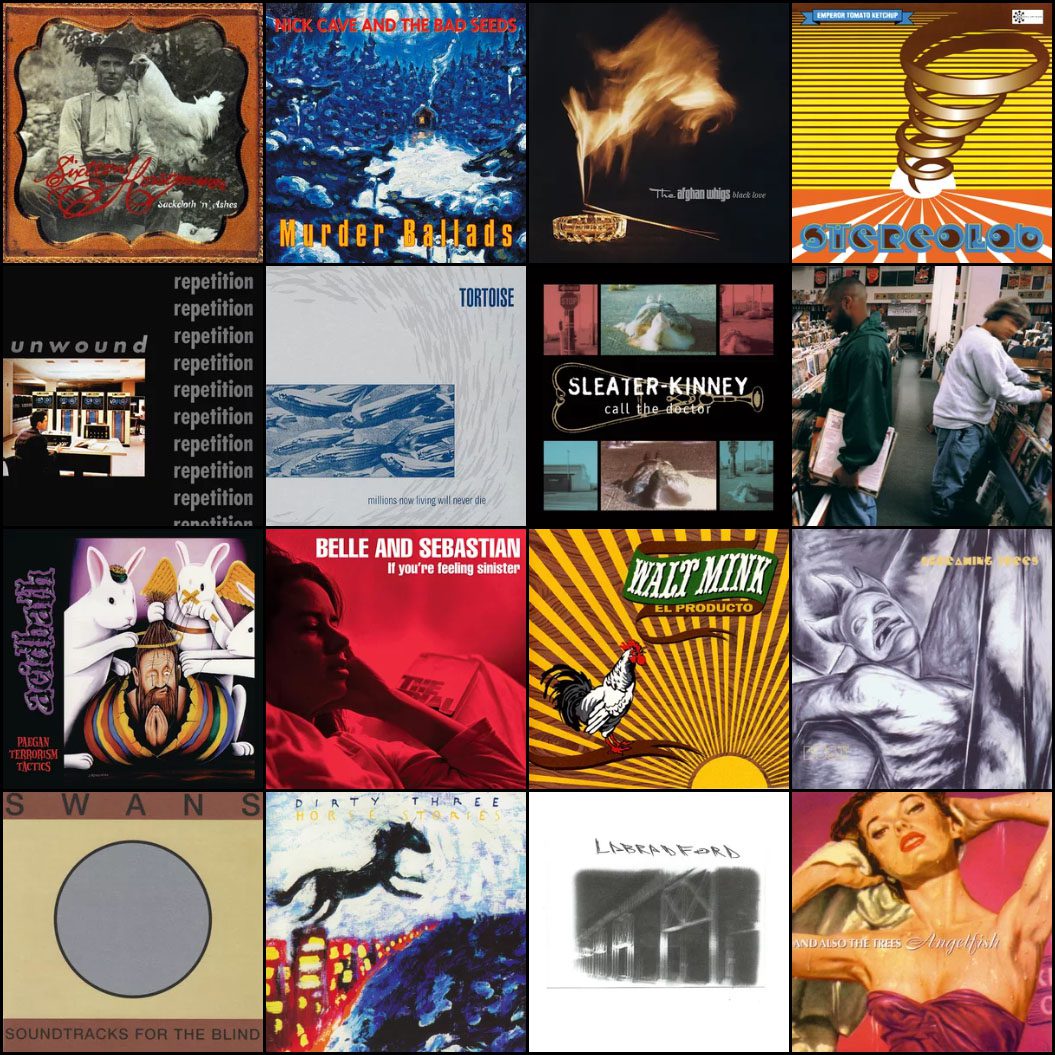
Fester’s Lucky 13: 1996
April 2, 2026
Fester’s Lucky 13: 1986