While I know I’m not the first person to use the term Wimp Pop to describe music, its category in the Lucky 13 lists seem to throw many of my readers for a loop. I’d say the spiritual godfather of Wimp Pop would be Johnnie Ray. You know that Dexy’s Midnight Runner’s song “Come On Eileen”? When he sings “Poor old Johnnie Ray?” That’s the bloke — pretty, bisexual, depressed, he really didn’t fit into the feel-good pop scene of the 40s and 50s. Growing up hearing-impaired (from a freak Boy Scouts accident) in Oregon, Ray listened to country, blues and jazz. He started playing piano and singing in Hollywood nightclubs in 1949, often as the only white performer. By the time he reached Detroit in 1951, he was working alongside legendary R&B and jazz innovators Jimmy Witherspoon, Billie holiday and LaVern Baker. His performances were intensely soul-baring and emotional, and he became known as “the weird white kid who cries and kicks the piano.”
The Prince of Wails, the Nabob of Sob, the Atomic Ray, the Guy With The Rubber Face And Squirt Gun Eyes found his niche, and one of his early records, 1951’s “Cry,” epitomized his approach and made him hugely popular. He combined the sadsack tales of heartbreak and loneliness of Hank Williams, Roy Acuff and Patsy Cline with Billie Holiday’s blues. All hail the rise of The Sensitive Guy, The Wimp. Even wimps like to get laid, and his sensitive, passionate reputation served him well when he cock-blocked notorious tough-guy Frank Sinatra at Ray’s debut at Manhatten’s prestigious Copcabana in April 1952. Sure, disappearing for a few days with Ava Gardner might not have been the wisest of ideas, as Sinatra’s wise guys made sure he was constantly hounded by cops and beat up for the next several years. But heck, it WAS AVA GARDNER! A major victory for wimps everywhere.
Jonathan Richman was a huge fan of The Velvet Underground, but not necessarily the scene they catered to, mainly the drug-addled degenerates that populated their New York shows. The songs he wrote for The Modern Lovers were proto-straight edge, with songs about being sober and thus much better relationship material than “Hippie Johnnie” in the song “I’m Straight,” and basically being sensitive, nice, and yearning for attention, mixed with a touch of teenage lust-inspired pre-punk rage that still managed to completely lack machismo. Richman’s rage dissipated later, as he affected a nearly asexual childlike innocence in his solo albums that were practically children’s songs, like “I’m A Little Dinosaur,” “Ice Cream Man” and “My Love Is A Flower Just Beginning To Bloom.” Despite his contrary eccentricity and increasing wimpiness, Richman maintained a loyal cult audience, and continued to get laid.
For a while, proto-glam rockers like David Bowie and Marc Bolan (T.Rex) tried the sensitive wimp thing by wearing hippie-ish long hair and dresses, and fey, sensitive folk songs. Not entirely comfortable in their wimpiness, they followed The New York Dolls’ lead by mixing their cross-dressing with Mick Jaggar’s outrageous macho swagger and heavy metal hot licks. The Dolls made a different sort of impression on young Mancunian Steven Patrick Morrissey. After writing a book about them, he went on to perform music that was much more effeminate than the macho-posturing Dolls. His band would combine the witty, melancholic sensibilities of Oscar Wilde, Marianne Faithfull, sixties girl groups and Billy Fury. After one false start with a band that had one gig supporting Magazine, Morrissey met Johnny Marr. Morrissey’s test was to show Marr his record collection and let him pick something out. Marr chose “Paper Boy” by the Marvelettes. The next time, Marr wrote the music to Morrissey’s lyrics to “Suffer Little Children” and The Smiths was born. The Smiths went on to huge success, with Morrissey putting a new spin on ambiguous sexuality by remaining completely celibate. Their songs were often self-pitying and whiny, but also literate, witty and passionate. Morrissey’s image with his square jaw and James Dean haircut was plastered on the bedroom walls of thousands of teenage girls and boys. All hail the rise of the unattainable wimp.
Dozens of bands cropped up around the same time as The Smiths, some directly influenced by them, others just sharing a similar cultural zeitgeist, including The Clean, The Chills, The Verlaines, and The Bats, Felt, The Blue Aeroplanes, The Go-Betweens, Lloyd Cole & The Commotions, Young Marble Giants, The Cannanes, The Vaselines, The Pastels, The Bluebells, The Apartments, Shop Assistants, Talulah Gosh, The Field Mice, The Orchids, Heavenly, Teenage Fanclub, The Bodines, The Wedding Present, and many more.
In Olympia, Washington, Calvin Johnson instigated an American equivalent of the “fey pop” movement with Supreme Cool Beings and Beat Happening and his label K Records, that has also been known as “twee-pop” and “love-rock.” Their emphasis on being horrible musicians at times was a little too precious and annoying, but they grew out of that. Influenced by seminal post-punk women-led bands like Delta 5, The Raincoats, The Slits and Liliput, along with wide-eyed innocence of The Modern Lovers and lo-fi pop bands like The Vaselines and Young Marble Giants, Half Japenese and The Shaggs, they formed relationships with like-minded bands, like Tokyo’s all-women Shonen Knife, Mecca Normal, The Cannanes, Heavenly, Girl Trouble, The Flatmates, Some Velvet Sidewalk, Unrest and Teenage Fanclub. At a time when eighties hardcore was become more and more brutally loutish, these bands were utterly refreshing. They managed to sound childlike, singing about sweets, hot chocolate, while also communicating intense sexual tension and energy. Album art featured hand-drawn images of bunnies and kitties. And unlike poor old Johnnie Ray and Jonathan Richman, they weren’t alone. They had a tight-knit community of like-minded wimps to battle against the growing popularity of proto-mook rock like Alice in Chains. This also insured that wimps like Calvin Johnson could still get laid. Despite his cutesy Hello Kitty image, he was a shark. In Michael Azzerad’s Our Band Could Be Your Life, Mudhoney’s Steve Turner confided that when they played a college gig with Beat Happening in Vancouver, “Calvin came up to me, put his arm around my shoulders, and said something like, ‘Ah yes, a college show. You know what that means, don’t you? Lots of young girls in striped T-shirts and no bras.” Even the wimpiest of wimps are not as innocent as they portray themselves.
By the late nineties, nearly all of the original wimp popsters have come and gone. But a new, much more diverse bunch of wimps have taken their place, including The Magnetic Fields, Belle & Sebastian, The Sea And Cake, Sam Prekop, Archer Prewitt, Tindersticks, The Aluminum Group, Arab Strap, Low, Everything But The Girl, Quasi, Spain, Luna, Cinerama, Tahiti 80, Toshack Highway, Idaho, Go-Kart Mozart, High Llamas, Air, Saint Etienne, Pernice Brothers, The Autumn Defense, The American Analog Set, Rufus Wainright, Kevin Tihista, Trembling Blue Stars, Her Space Holiday, and Ida.
Most wimps can’t deny that they want the same thing age-old rockers have always wanted — booty. But they sure are more pleasant and interesting than the fifth generation cliché’d cock-rockers stumbling about arenas and the Billboard charts today.
May 31, 2026
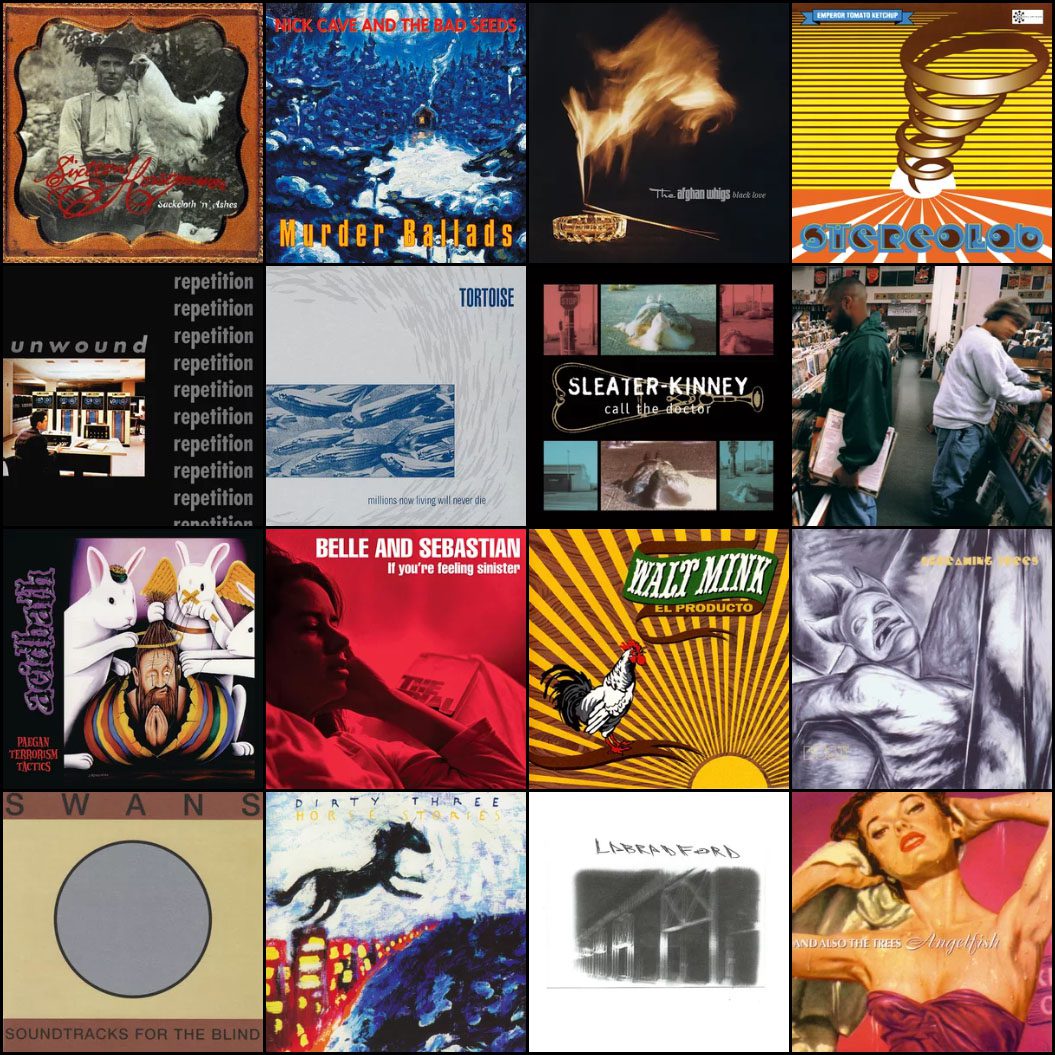
Fester’s Lucky 13: 1996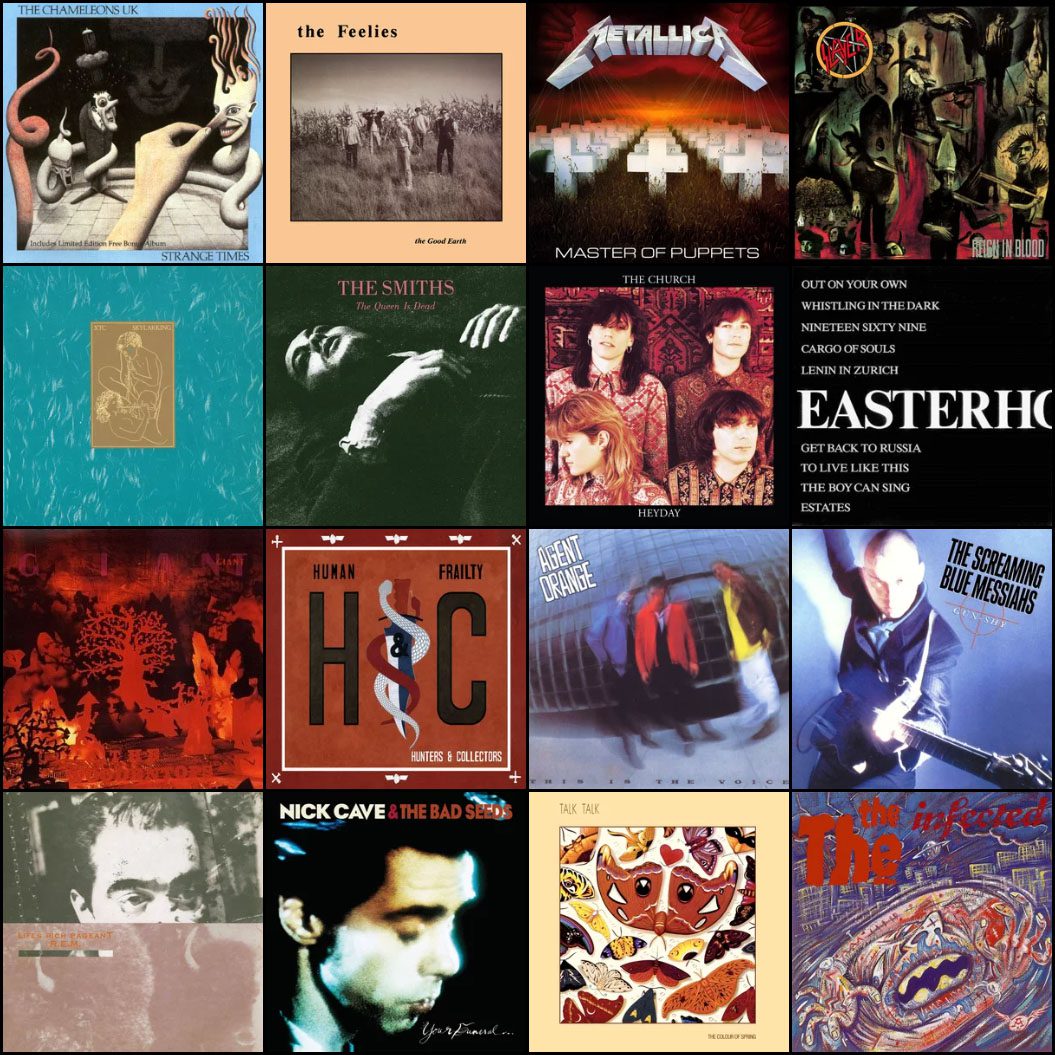
April 2, 2026
Fester’s Lucky 13: 1986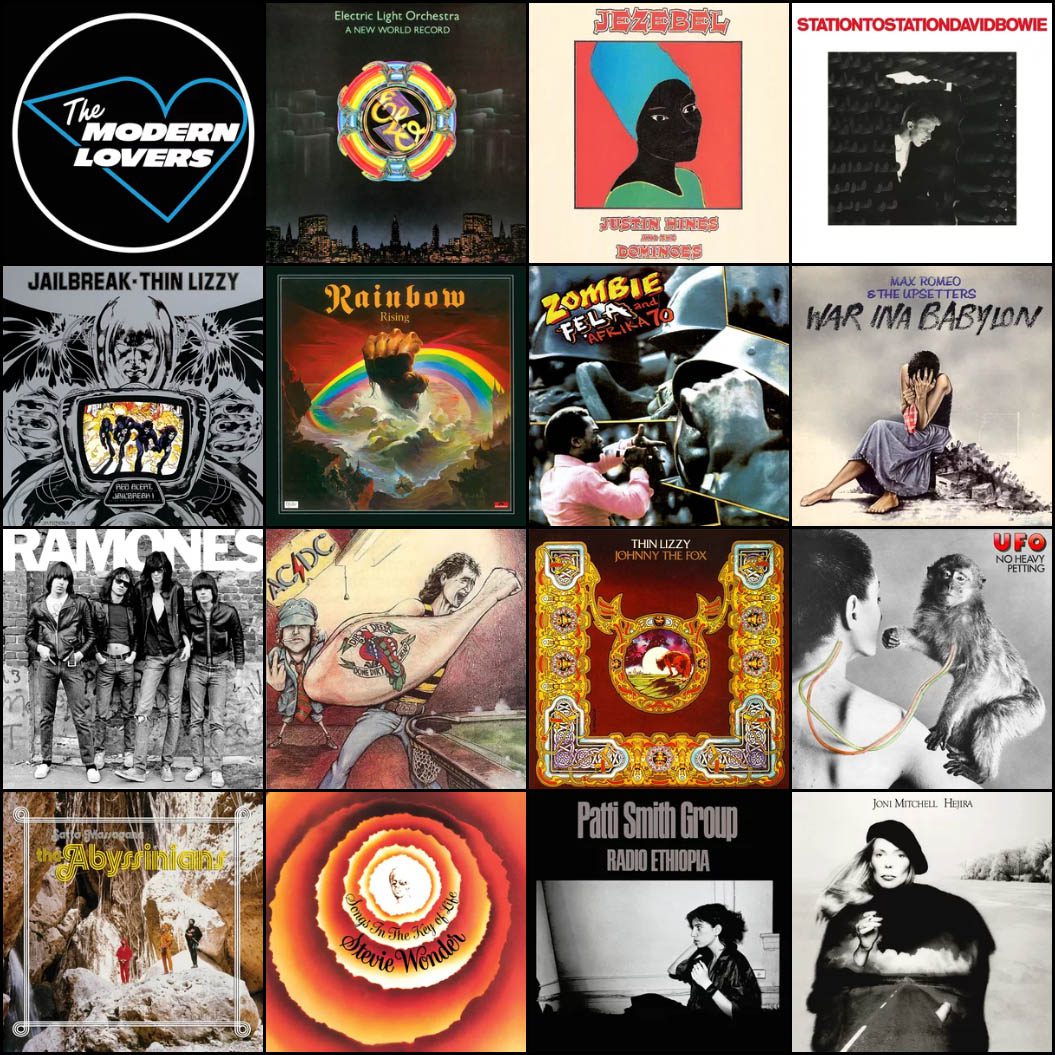
February 27, 2026
Fester’s Lucky 13: 1976