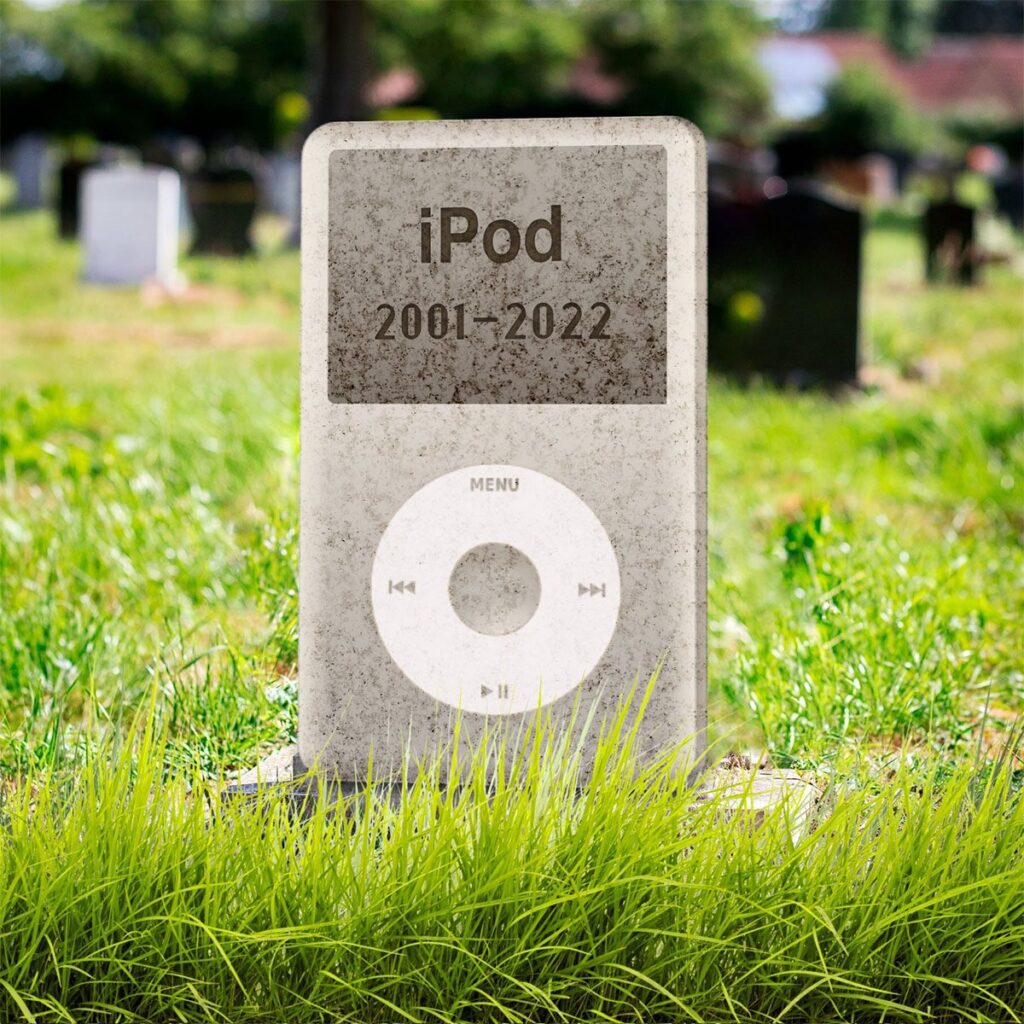
Apple killed off their last iPod, but that doesn’t mean digital audio players are no longer relevant.
On May 10, Apple announced they discontinued the last of their MP3 players, the iPod Touch. At first I didn’t think this was very interesting news, as this was inevitable. But also, fuck Apple. Fuck ’em sideways and good riddance to their iPod. iPod was hardly the only DAP on the market that mattered, and with the uncertain viability and future of music streaming, digital audio players may become even more relevant in coming years.
Apple has done more to damage the music business than any company by repeatedly trying to monopolize the market with their own proprietary file formats. All they did was fracture and confuse the market even more. 1999 to 2008 was a massive window of missed opportunity to make digital music just as viable a product as during the CD era. But rather than work together to create user-friendly platforms and consistent formats for purchasing music and reasonable pricing, record companies put their resources into suing their best customers for filesharing.
2008 is when Spotify, formed in 2006 in Stockholm, Sweden by billionaires Daniel Ek and Martin Lorentzon, launched in Europe. It launched in the US in 2011. It wasn’t the first streaming service — Last.fm started in 2002, and Pandora in 2005 — but it was the first to attempt to include, if not ALL the music, then a pretty vast selection, giving users free (at first) access to everything. 14 years later, they have 31% of the market share (approximately 524 million subscribers), compared to (ugh) Apple Music, which started in 2015, at 15%, Amazon Music at 13% Tencent Music (Chinese) also 13%, and dozens of others fighting for scraps. But scraps of what exactly? Spotify has been losing money this entire time. In 2021 they reported net losses of $38.8 million! While the company was founded by Swedish multi-billionaires, a company can’t lose money indefinitely. Meanwhile artists complain bitterly that they are barely paid anything for their music. Consequently, entire catalogs of artists have come and gone from streaming platforms over the years for various reason, including ethical choices from Neil Young and others. If no one gets paid, hundreds of thousands of artists could eventually pull their music. And if the streaming companies can’t afford to pay, they might just go bust, give up and dissolve, with barely a tune to be found in the cloud.
That would be almost funny, but I do have some empathy for all the poor bastards who got rid of their music collections, and the kids who grew up with nothing but streaming. This is why I still carefully curate my digital music collection in lossless FLAC files. When I discover a new or old album, if I wouldn’t want to lose access to it should it not be available to stream, then I buy it, pricing and budget allowing. I can’t imagine, after all the time, effort and money invested in my collection, not being able to listen to, say, Neil Young just because he switched to a streaming platform I’d rather not subscribe to (A**le Music, gag).
In order to avoid going out of business, I imagine the Swedish billionaires have a mustache-twirling scheme that involves a model similar to cable TV and video streaming apps (Netflix, Amazon Prime, Hulu, HBO Max, Showtime, etc.) — after hemmorrhaging money for over a decade to acquire subscribers at cheap monthly premiums, just keep raising the prices until they are profitable. If it works, then eventually there will be wheeling and dealing among the competitors to get exclusive rights from copyright holders, so that you’ll have to subscribe to multiple streaming services to get the full range of music you want, just like the TV apps. I’d rather not do that. I use Spotify mostly to listen to new releases, and decide what I might want to buy on Bandcamp and 7digital. Partly because I want my favorite artists to get paid, and partly because I want to be prepared for a potential streampoclypse, be it the mass migration of artists from streaming platforms, all the streaming companies going out of business, or the splintering of catalogs between streaming services that all cost $15+ a month.
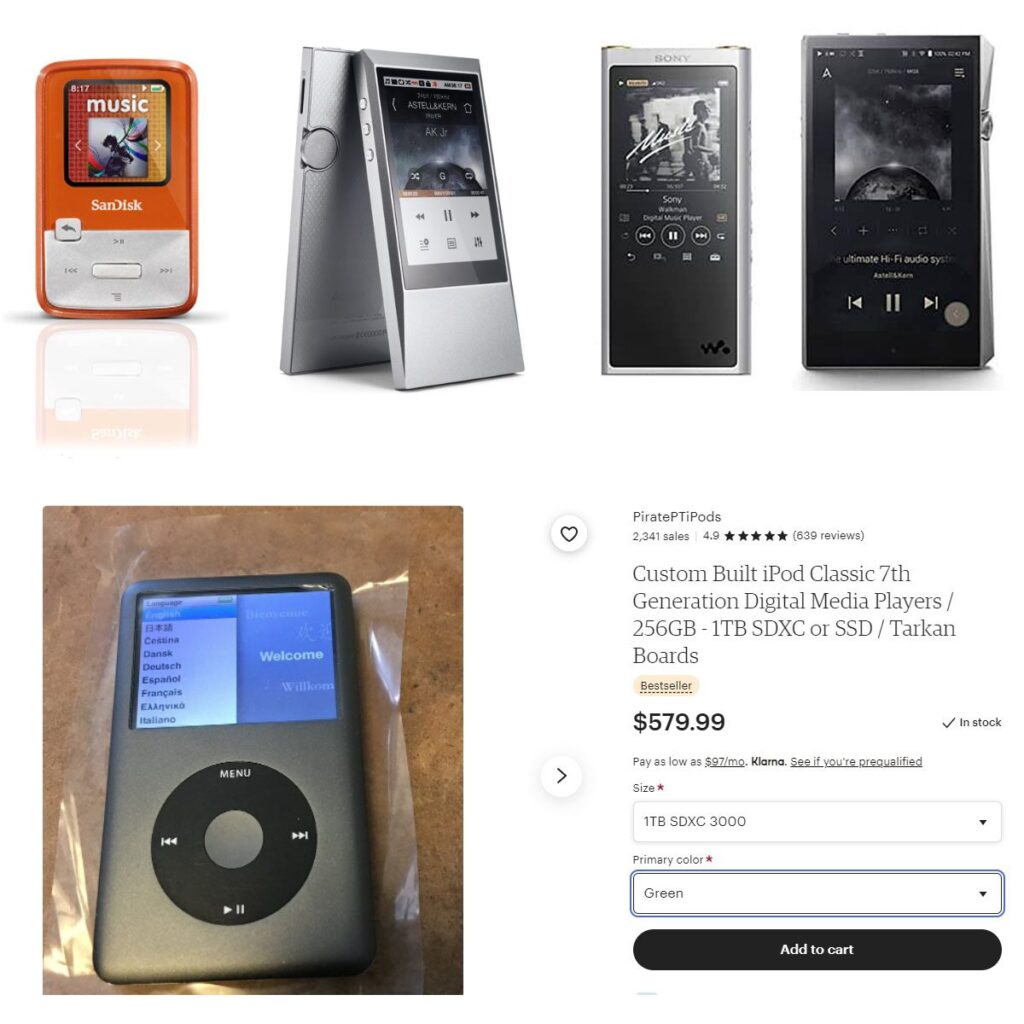
So back to DAPs (digital audio players). I have never owned an iPod, but in the late 90s, I was burning MP3s as files to CDrs, so I could fit several hours of music on one CD, playable on my iRiver portable CD player. For more compact players to use for working out or biking, I liked the SanDisk Clip players that had 2-8GB solid state storage capacity with a micro SD expansion slot, and also played lossless FLAC files. They were light, inexpensive, usually under $30. I waited quite a while to invest in a nicer DAP. Along with audiophile headphones, the market expanded greatly, including old (Pioneer, Onkyo . . . Sony revived it’s Walkman brand, adapted to DAPs) and new FiiO, Activio, iBasso, Questyle and more. In 2016 I eventually got an Astell&Kern (South Korean company, shares same parent company, Dreamus, as iRiver, formed by former Samsung executives) AK Jr, with 64GB of storage and a micro SD slot where I added 256GB. It’s not what I envisioned in 2009 when the SD Association announced they set a standard for 2TB SDXC cards. That’s still just 1/4 of my 8TB music collection, but more than enough storage to have on hand if you, for example, travel for a month or more. But it never happened. When the 160GB hard drive based 7th generation iPod Classic was retired in 2014, people had to settle for less storage, not more, as most players didn’t go beyond 32GB in solid state storage. The iPod Touch did eventually offer up to 256GB storage, and the 1TB SDXC card finally came out a decade later in 2019, initially costing well over $400. They can be found for a bit less now, and you can even get a customized iPod Classic with up to 1TB (SDXC or SSD) storage on Etsy. Yet 2TB cards still don’t exist. Supposedly because there’s no demand for them. We’ll see if that changes.
Admittedly ,the industry is still going through some growing pains with DAPs. I’m actually without a usable DAP right now because computers with Windows 10 don’t recognize my AK Jr, so I can’t load fresh files on it. Back in the 00s I owned very affordable (around $100) ChiFi portable headphone amps from both iBasso and FiiO, and figured they’d have affordable players. Not anymore. The FiiO M11 was recommended by this article just in February as the best overall player for the money at $400, but has already been discontinued and replaced by the $700 M11 Plus. For that kind of money, I expect a player to come with 1TB of solid state memory, with an additional couple SDXC slots to triple that. Only Astell&Kern offers anything close to that with 512GB, but for over $3,500. Screw that man. Instead, I ordered the $99 Hiby R2, something inexpensive I can play my FLAC tunes connected via Bluetooth to my JBL speaker by the pool. Unfortunately summer will be half over by the time it arrives by rowboat from China in July.
Once all the iPod Touch models are sold out, I imagine they will become highly desired items. Greg Joswiak, Apple’s senior vice-president of worldwide marketing, said the “spirit of iPod lives on”. Maybe, but not in iPhones. As much as I hate Apple, it is too bad that they can’t keep the actual iPod living on in at least one model, like a revived iPod Classic with solid state SSD drives ranging from 512GB to 8TB, to keep serving those Apple fetishists who think they’re the only option out there. Audiophiles know that there are a ton of other higher quality DAPs still available. Should there be some kind of streampocalypse, I imagine there would be shortages on all players beyond what we’ve already seen with pandemic supply chain and chip issues. I have to admit I’ve been streaming more than ever — while I do use my FLAC files in the DoomCave on my main computer using MediaMonkey, I’m currently unable to play them elsewhere in the house because I’ve been fighting with Roon. After initially having some technical issues during the trial period, I missed my window in getting a lifetime subscription for $499, and they upped the price to $699. Roon is a great piece of software that makes it easy to curate your music and play in various remote systems, including my Sonos Ports, but I hate to keep paying $119 a year to play my own music files. The Sonos setup can’t handle a collection my size.
What I do know is that regardless of formats and technology and pricing, people still listen to music more than ever, and that’s unlikely to change. How the business end will all work out, who knows, but I know I’ll soon have to upgrade to 10TB drives plus backups. I haven’t given up the dream of being able to carry my entire collection in my pocket. You can get 8TB SSD drives, so we’re getting there. Slowly. Also, A**le Music can suckit.

August 15, 2022
Adventures in Vinyl
December 29, 2020
Budget Audiophilia
December 10, 2020
Fester’s Lucky 13: 2020 Year-End Summary