This is an answer to the question, ‘where are the great rock bands?’ Here’s 48 that y’all have neglected or lost between the couch cushions, and two relatively well known ones overdue for new music after over a half decade.

The “rock is dead” claim is not a new one. It in fact can be dated as early back to 1960, when many of the pioneers like Chuck Berry, Little Richard, Fats Domino, Jerry Lee Lewis and others fell off the charts. Buddy Holly was dead, and Elvis was in the army. The Brits had to remind the Yanks what was going on in their own backyard. Elvis came back, but arguably, he came back broken. Only rare glimpses of his sheer joy and expressive beauty and freedom of rock ‘n’ roll were seen since, replaced by a zombified member of the establishment, sleepwalking through terrible Hollywood movies and slowly going mad in the gilded peanut butter and banana fried sandwich-lined cage the Colonel constructed for him in Las Vegas.
Anyway, rock survived, and has had it’s ebbs and flows. Most famously KISS’ Gene Simmons started blabbing around 2014 about rock being dead, asking, where is our AC/DC, Metallica, U2, Iron Maiden, Bowie and Eagles. He has recently revised his stance, admitting there are good rock bands out there, and rock is just on life support or uh, sleeping. Okay Gene. I don’t suppose you were giving a shout out to German psych jam band My Sleeping Karma, who are releasing their sixth album next month.
Last weekend I watched Daniel Sarkissian’s movie, Rock Is Dead? It was well meaning, but incoherent, and did not make much of a case for rock being alive by interviewing Wacka Flocka, some random British electronica artist, a DJ who’s primary audience seems to be mouth-breathing post-frat party bros as seen on the FYRE festival documentaries, and Greta Van Fleet. The best line is from Steve Albini: “They haven’t killed ska yet, so how can they expect to kill rock?”
A lot of people still love KISS, so I won’t call Simmons’ comments stupid, just misguided. He might as well have been asking, where is our Led Zeppelin? Our Beatles? Our Frank Sinatra? Our fucking Beethoven? There’s just no good answer for that other than inspiration strikes in every time and place differently, and they are particular to historical eras that will never be repeated. After the Grammy sweep of all the rock categories by Foo Fighters, it appears they are the last rock band standing according to the aging gatekeepers. They can keep ‘um, I’ve got better stuff to listen to.
I think a more appropriate question is to ask is, who are our Pretty Things, Procol Harum, Free, Traffic, Family, King Crimson, Van Der Graaf Generator, Uriah Heep, High Tide, Wishbone Ash, Hawkwind, Blue Öyster Cult, Lynyrd Skynyrd, Aerosmith, Thin Lizzy, UFO, Scorpions, Amon Düül II, Flower Travellin’ Band, Groundhogs, Atomic Rooster, Guru Guru, and ZZ Top? Then our options are greatly expanded, and we can answer with Motorpsycho, Colour Haze, Elder, Ufomammut, Opeth, Gojira, Mastodon, Queens of the Stone Age, Baroness, Graveyard, Truckfighters, Uncle Acid & the Deadbeats, Spidergawd, White Denim, Dungen, All Them Witches, Causa Sui, Horisont, Kadavar, Tool, Torche, Witch Mountain, and Castle just for starters. Expand genre boundaries to indie and art pop/rock and there’s Radiohead, Spoon, Arctic Monkeys, and Yeah Yeah Yeahs, who are finally coming off a 9 year break with an impending new album. Fingers crossed TV on the Radio will do the same. All these bands, save TVOTR, have been active and touring at some point in the past few years or are about to get back out there, with albums readily available on multiple platforms, and playing at clubs that can be found in your local listings.
But there’s a pretty sizable bunch of bands where it seems like just yesterday I was seeing them live and listening to new releases, but they haven’t been heard from for five to twelve (!) years. Back in the early days of rock, five years nearly always meant a band was D.O.A., and will never be heard from again, at least until all the reunion tours decades later. Remember being a fan of a band when you’re 11? I can’t think of an example of waiting five years between albums, and still being into the band when I’m 16. Perhaps had I known about the first Feelies album in 1980. But I didn’t until their second album in 1986. Imagine being into an album as a high school senior, then the next one comes out and you’re graduated from college, already in your first job or grad school, in a completely different stage of life. Nowadays it seems like just a blink in time, probably cuz I’m old. Some have broken up, others are mysteriously dormant, the future uncertain. I guess that’s the natural state of the future, and we should just be freakin’ delighted to live another day, let alone hear a new album from a favorite band. Nevertheless, these are amazing bodies of work, some of which are already forgotten, and it’s my duty to remind you that 21st century rock lives, including these digital artifacts.
I could have easily started in the 00s, where bands like Dozer, Sgt. Sunshine, Mammoth Volume, Terra Firma, Blind Dog, Numbah Ten and Dead Man left us hanging way too soon, but I need to draw the line somewhere. So why are the following bands MIA, dormant or gone? Well, they all have their reasons. Overall I’d say that while the rock scene is healthy in that there a a massive number of active bands doing great work. But there’s more competition for less overall money, and so many have to put projects on hold due to day jobs and life events. Because there’s so many releases to wade through, it takes more effort to ferret out the gems from the garbage. There’s more good quality albums released than ever, but you have to find them among 100,000 other releases every year. Case in point, the Italian Canterbury style psych prog band The Winstons released a great debut in 2016. I had them on a short list of bands to look out for their next release, yet I completely missed their 2019 follow-up, Smith. If they were reviewed on any magazines or sites I follow, I missed it. It’s not on Bandcamp like their first album and live albums, and just try googling that name, let alone the album name. It’s as if they’re trying to remain obscure.
Another band on my wishlist, Las Cruces, who I last saw live in 2014 and their last album was in 2010, just released Cosmic Tears on June 3. Good things come to those who wait!
Hypnos 69
Formed: 1994
Last album: 2010
I was chuffed to discover this Belgian band right around 2010. Starfall formed in Diest way back in 1994, and shortly became Hypnos 69. They still had some kinks to work by the time of their 2002 debut, Timeline Traveller, though it’s very promising psych prog mix combines the dynamics of prime The Who and early Rush, with a touch of space rock. Promise of a New Moon (2003) was a step back, as it may have been rushed, but they hit their stride after signing to Colour Haze’s Elektrohasch label with The Intrigue of Perception (2004). The just kept getting better with The Eclectic Measure (2006), and their fifth, Legacy (2010) which incorporates some jazz-rock. Then, nothing. No official announcement of a breakup, just radio silence ever since. Perhaps they’ll return some day, though unfortunately the number of people aware of them is probably dwindling, which isn’t helped by the albums not being available to stream on the major services. At least they’re on Bandcamp, and the fact that Lowrider reunited gives a project like this hope.
Been Obscene
Formed: 2008
Disbanded: 2013
Monthly listeners: 94
Also on Elektrohasch, Austria’s Been Obscene had a short run from 2008 and officially disbanding in 2013. Their two psych prog albums with hints of post-grunge alt rock and stoner rock were really promising and enjoyable. They likely could have connected with bigger festival crowds had they invested in a few more years touring, but they left behind The Magic Table Dance (2010) and Night O’ Mine (2011) to be enjoyed by all who belatedly discover them.
Sungrazer
Formed: 2009
Disbanded: 2013
Yet another short-lived band on the Elektrohasch label, the Netherlands’ Sungrazer are more directly influenced by the creamy guitar textures of Colour Haze, as well as French stoner psych band Glowsun. Their self-titled debut from 2010 and Mirador (2011) leave me wondering what could have been. They also contributed to half an album collaboration with The Machine in 2013, the year they broke up. Lead guitarist/vocalist Rutger Smeets formed a new band, Cigale, releasing a debut in 2015. Sadly, he died that same year.
Green & Wood
Formed: 2008
Last album: 2011
This Los Angeles rock ‘n’ doom band had a raw, garagey sound that I couldn’t get enough of, and was super bummed when they stopped at their sophomore album, Devil’s Plan (2011). Magic Circle picked up the baton with that sound, at least for their first two albums. More would be welcome.
Crag Dweller
Formed: 2012
Last album: 2012
I don’t know much about this Portland band, because I didn’t get much of a chance to. Crag Dweller released an amazing debut of hard rock and fuzzed-out stoner psych in 2012, Magic Dust, then disappeared into the Pacific Northwest mountains like bigfoot.
Om
Formed: 2003
Last album: 2012
Monthly listeners: 69,787
Om was a fairly high profile project because Al Cisneros was in stoner doom pioneers Sleep. Given the fact that Tyler Trotter replaced Rob Low on keyboards/synths in 2018, I assume they are still active, but their last album was their fifth and best, Advaitic Songs (2012). Their style, a super slow, meditative crawl, may appeal to a pretty narrow audience, but being legends in the scene will make tours always viable. Cisneros embarked on the reunion album and some tours with Sleep — hopefully they didn’t break him. I think we’ll see more material from them sometime.
Spirits Of The Dead
Formed: 2007
Last album: 2013
Monthly listeners: 99
I discovered Oslo, Norway’s Spirits Of The Dead after their second album, The Great God Pan (2011). Their combination of psych prog and hard stoner rock was right up my alley, and their third album was one of my most anticipated albums of 2013. Rumours of a Presence (2013) didn’t disappoint. In fact, it was my album of the year. Sometimes I worry that my enthusiasm cursed the band, because for some reason they struggled to record a follow-up. They prematurely announced an upcoming album around 2015-17, but it never happened, aside from one track, “Blueberry Chopper,” that they released to streaming platforms in 2019. I would love if they finally get that fourth album out, but hope is dwindling. It’s too bad, as their last album was a gorgeous production that balanced old influences with the likes of Queens of the Stone Age. They shoulda been huge!
The Hidden Masters
Formed: 2009
Disbanded: 2013
Monthly listeners: 23
I always loved XTC’s side project The Dukes of Stratosphear, but always wished they’d just gone all-in without just taking the piss and made it their full-time band. And rocked harder, with better songs. Dozens of bands tried since then, but none quite as successfully, in my mind, as Glasgow, Scotland’s The Hidden Masters. They rocked harder, were as tight as Cream, and wrote songs as good as prime era The Pretty Things and The Who, with a touch of more modern stoner psych prog feel. Alas, just as the album was released, my new favorite band broke up. David Addison went on to form The Strange Blue Dreams, an interesting country/rockabilly/mariachi/surf combo, but a step down from the thrilling heights of Hidden Masters. I stayed in touch with Alasdair C Mitchell, who joined former Purson frontwoman Rosalie Cunningham’s first album and touring lineup, as “Alpha Michelle.” However, their songwriting talents have not yet been put to good use.
Fuzz Manta
Formed: 2006
Disbanded: 2014
There’s a good number of European bands that explore stoner blues and psych who broke up before ever setting foot in North America. It’s a goddamn shame to see Rival Sons open for Black Sabbath in stadiums, yet amazing bands like Denmark’s Fuzz Manta remain completely unknown. It’s partially understandable, as there are large audiences in Europe who can support these bands, making it hard to be motivated to slog through the great expanses of the U.S. and Canada. My favorite of their four albums was their last, The Stonewolf (2013), a double album that digs deeper into psych prog via the sprawling 34 minute title track. I think I just heard bonus vinyl-only tracks “Marble Queen” and “Land of Sleep” for the first time on YouTube, and I’m kind of annoyed they just don’t put it on Bandcamp. Vocalist/bassist Lene Kjaer Hvillum and guitarist Morgan Cederborg formed Silverleaf, releasing one album in 2015. Nothing has been heard from ’em since.
The Devil’s Blood
Formed: 2007
Disbanded: 2013
This Dutch psych noir/prog band is one of the better known bands here, thanks to their legendary, literally bloody stage show that makes Ghost’s stage theatrics seem quaint in the face of this terrifying band. Here, actually The Devil’s Blood’s first of three albums was probably the best, The Time of No Time Evermore (2009). Not long after they broke up in 2013, Selim Lemouchi & his Enemies released an album in 2014, then Selim Lemouchi died. Some members formed Dool, while sister Farida Lemouchi formed Molasses, finally releasing an album for her triumphant return to music in 2020 with Through the Hollow.
The Crystal Caravan
Formed: 2002
Last album: 2013
Monthly listeners: 239
I nearly forgot about this band because I conflated them in my memory for a while with Iceland’s Vintage Caravan. It doesn’t help that this Swedish Caravan also plays hard blues and psych rock. I discovered them near the end of their journey, and said their proto-metal influenced high energy heavy rock is a pancake stack of riffs and hooks. Their third and last album, With Them You Walk Alone (2013), is a definite progression, exploring the creative and psychedelic possibilities of analog synths, adding backing female vocals from Lina Högstrom and expanding on a more soulful, almost twangy side they initially touched on with “Apple Hotel,” territory also explored by the great Troubled Horse. It’s too bad they didn’t continue releasing music and improving, as they the potential for at least Graveyard level success.
Jex Thoth
Formed: 2007
Last album: 2013
Monthly listeners: 30,131
When I saw Jex Thoth twice in 2014, she and the band radiated confidence and danger, reigning imperiously over the blossoming psych noir/occult doom scene. And with that, the witch queen vanished, never to be heard from again, without a peep on social media, or answers to my inquiries. A third album was supposed to be in the works, and I have no idea what happened. I hope all is well with Jex and her band, even if they never produce more music. At least we have the amazing self-titled 2008 debut and Blood Moon Rise (2013).
Fellwoods
Formed: 2010
Last release: 2014
These Portland bands sure don’t last long. Perhaps they’re being kidnapped by Yeti? After the killer full-length debut Wulfram (2012) loaded with well-written proto-metal and stoner blues tunes, they said, “expect big things.” And I did. What we got was a split release from the prolific Ice Dragon (an early template for King Gizzard & the Lizard Wizard?) another promising EP, Gyromancer (2014), and that’s it. There’s so much music that it’s hard to keep up, but I can’t help be disappointed when a band that pushes all the right buttons goes dormant.
The Sea Kings
Formed: 2010
Last album: 2014
Monthly listeners: 7
If I ventured much into indie, post-punk and other genres, this list would get out of control. I mostly am sticking with proto-metal/blues/psych/prog, but occasionally a band of “normals” really grabs me and they ascend to the top of Fester’s Lucky 13. I fear my enthusiasm might have killed this band too. Logically I know my site does little to affect the fates of any bands, but alas, I love and lose yet again. Even their Bandcamp page is gone.
Beautiful literate songs about horrible things from Glasgow: I just about lost my mind when I first heard the lead single from Glasgow’s The Sea Kings’ debut album. “Bible John” sounds like a long-lost single from 1984, a supergroup collaboration between The Smiths and Postcard groups like Aztec Camera, The Go Betweens and Josef K. Despite its celebratory ebullience, it’s actually a sinister tale about the 1960s Glasgow Barrowland killer. That’s pretty much the band’s m.o., tales about horrible things. Nick Cave would approve. The title track that kicks off the album is especially indebted to Cave, and also underrated Australian band The Triffids. Dark, heavy and brooding, it’s a magnificent start to the album. “Moonlit Range” is a plodding death waltz that made me wonder when they were going to pick up the tempo again. It turns out nothing else on the album remotely resembles “Bible John.” After adjusting expectations, the album’s brilliance spreads through you like the warm burn of a double Scotch. “The Night Of Broken Glass” takes place in 30s Germany where a young man fatally attempts to defect. “Is Paris Burning” has some particularly evocative imagery as a tragic love note from a jail cell. The band citing writer Alasdair Gray as an influence turns out to be no joke. These are truly literary songs. The album ends with another highlight, “Across The Coals,” a ghostly murder ballad with Ennio Morricone undertones and strings, like The Dirty Three with an excellent lyricist. You’d think the arrival of a colossal talent like this would call for some fanfare, but eh, it’s 2014 and everyone has their heads up their arses in their own particular micro scenes. Had I not been on the lookout for something like this for a while I might have missed it too, just as I missed their first Some Dark Matters EP (Iffy Folk, 2010). But if one catchy riff is enough to fuel a decade plus career for Interpol (“Say Hello To The Angels”), hopefully “Bible John” can bring similar attention to this well-deserving band.
The New Christs
Formed: 1980
Last album: 2014
Monthly listeners: 2,984
Okay, yeah I know, this band is getting old. But dangit, The New Christs only had five albums plus a compilation, and they seemed to be getting better than ever on Incantations (2014). I reckon if fellow Aussie Nick Cave can have career longevity, so can these garage noir/punkers. With the lineup remaining stable for eight years, Incantations is the band’s best album since Distemper. While the jagged edges are smoother than that earlier incarnations, the songwriting is glorious, piled high with the best hooks and melodies the band has ever come up with. The first half is a particularly impressive run, with opener “Ghostlike” featuring a psychedelic organ line that embodies the greatness that The Godfathers promised early in their career but failed to achieve when they were far better known in the late 80s than The New Christs. “Waves Form” kicks off with a great “Wipeout” style drum roll and invigorating surf guitar riff. Like a beach party interrupted by the discovery of a dead body, it invokes salty ocean air and spilled blood. Someone needs to make a beach noir movie and feature that song and earn the band their belated fortune. “We Are Lovers” is dark, brooding and sexy in a way that I fear Interpol will never again be able to pull off. That’s okay, these punk geezers show them how it’s done. “It Means Everything” is another killer, featuring a great wah-wah hook that will stick in your head for days. The hooks keep coming, on “It’s Not A Game” it’s in the vocal chorus. The next few tracks are a step down from the previous stunners, but remain well crafted, especially “This Is A Party” and “The Golden Street.” “Precious Little” can be a little draggy, but the Deep Purple organ line and dark psychedelic guitar solos sound cool. It’s hard to expect a full album at the level of those first five songs from any band, let alone one 30 plus years into their career. Had they managed to do so, it would definitely have been contender for album of the year. As it is, it’s still a solid candidate for my top 20. More.
Hits
Formed: 2005
Last album: 2014
Fiery garage noir from Brisbane: Hits are probably the best band Rob Younger (Radio Birdman, The New Christs) has produced lately. They bear the influences of The Saints and Younger’s bands, but with a heavier take on garage noir. The new album tightens up the Brisbane band’s loose but promising compositions from the debut Living With You Is Killing Me (2009), winding them up like little sonic boobytraps. The vocalist goes by Evil Dick. A tongue-in-cheek reference to The Dictators’ Handsome Dick Manitoba? Maybe not, as his vocals bear more similarity with Younger’s but more ragged, reminding me of Bill Carter from The Screaming Blue Messiahs, Scott McCloud of Girls Against Boys and a touch of Mark E. Smith’s sneer. Considering the extremes of terrifying sounds bands have achieved lately in noise rock, Black metal and such, it’s impressive that a mere rock band can still sound badass at all, like Hits manage to do. This album is immediate with it’s high energy and low spirits, and grows even more on subsequent listens. It’s a blast of rock power performed at an MC5 level, but with no particular retro feel, even when they ably cover Joy Division’s mighty “Shadowplay.” The cover fits in well with the band’s sound, which bears a consistent signature across the album despite the variety of song styles and structures. Highly recommended.
Serpent Venom
Formed: 2008
Last album: 2014
Monthly listeners: 93
UK doom metal band Serpent Venom rose above the masses with their super fun mix of occult horror imagery and album packaging, just enough psych and garage rockin’ bite added to their traditional doom to place them between Electric Wizard and Uncle Acid & the Deadbeats for your doom pleasure.
The second album, produced by Chris Fielding, who produced fellow Brits Electric Wizard and Conan, refines the formula only slightly, holding on to that gloriously heavy, fuzzed out sound. While five of the seven songs on the debut stretch beyond 8 minutes, the new one is more concise with just two of eight going to epic length. The playing seems both looser and more fluid, reflecting the years spent gigging and rehearsing. Gary “Gaz” Ricketts’ vocals have become stronger and unique too.
There’s a nice balance of pacing and variety throughout the album, a tricky thing to navigate when also trying to maintain a consistently doomy essence. “Death Throes At Dawn” features some of their best writing. Never has despair seemed so tantalizing. “The Lords Of Life” eases in with a seductively liquid psychedelic bass line. It goes on to a crushing stomp, and then a beautifully jazzy guitar solo towards the end. “Pilgrims Of The Sun” is the longest dirge at 9:23, and the closest tie to their earlier stuff, but it ties things together nicely. The concluding “Burning Free” ends it on a highpoint of furious riffing with an overlaying, eerie synth melody that closes it out perfectly. Some compare Serpent Venom to Warning, the band 40 Watt Sun’s Patrick Walker released two albums with. I don’t particularly hear it, other than the fact that Walking From A Distance (Miskatonic, 2006) was an incredible album, and so is this.
TV On The Radio
Formed: 2001
Last album: 2014
Monthly listeners: 1,741,111
Recently Greg Kot of Sound Opinions called TV On The Radio the best New York band of the 2000s. Thank you Greg for speaking up. Man, they’ve not been given much credit for a while. I distinctly remember them reaching a towering artistic peak with third album Dear Science (2008), while at the same time falling out of favor, as Animal Collective became the cool band to like. I think it’s clear that TVOTR’s albums hold up better, and as much as I love The Strokes, Interpol and Yeah Yeah Yeahs, they kick all their asses. I’d just about say they were the best band anywhere in the 00s, but that pesky Radiohead kind of gives ’em stiff competition. Tunde Adebimpe’s acting career has been coming along nicely, but I imagine they have more music in ’em. So get crackin’!
The Verner Pantons
Formed: 2012
Last album: 2014
Monthly listeners: 12
Ha, another Portland band, figures. Maybe those Portland rockers are just too flaky, and I should ignore ’em. But I can’t when they’re as good as The Vernor Pantons. What might be considered bog standard garage psych is elevated by great hooks, memorable tunes, and an irresistibly dark tinge of surf noir. That’s what drives me nuts about these bands is that they didn’t take the chance to follow through on their vision and see where they end up. I could have also included The Soft Pack in this listicle, but by their second album Strapped (2012), they seemed to already be creatively spent. I’d like to see bands at least give it a shot, and if their fail, at least there’s some closure. Yes, I need closure with all these bands! Or even better, new albums every 2-6 years ’til I die!
Golden Void
Formed: 2009
Disbanded: 2015
Monthly listeners: 1,812
Isaiah Mitchell you motherfucker. Had you just stuck with Earthless, and perhaps some noodly solo folk projects, I wouldn’t have known what I was missing. But then you went and formed Golden Void and pushed all the pleasure buttons for psych prog songs irresistible hooks and riffs and sounds and all the damn things. I suppose with Earthless’ Black Heaven (2018), you tried to apply some of what you accomplished with your superior side project, but it just ain’t the same. I know this is sacrilege and they’re worshiped by the general stoner psych community, but I’ve seen Earthless, somewhat unwillingly, many times. Too many times, opening for other bands I was there to see, like Graveyard, and I’ve always been bored. Please revive Golden Void!
Christian Mistress
Formed: 2008
Disbanded: 2015
Monthly listeners: 1,251
Olympia, Washington’s Christian Mistress may just have been another heavy metal band, or they may have had a special magic that no one can replicate, and will not be given credit for it ever. Well, I know a few people who give them credit, but they seem to be nearly forgotten already. After the raw ‘n’ ready Agony & Opium EP (2010) and Possession (2012), they just kept getting better with To Your Death (2015). My love for them may have gone beyond reason, but I was gutted when they broke up. No one has been able to quite fill that Christian Mistress-shaped hole in the universe since. Full Review.
Glowsun
Formed: 1997
Last album: 2015
Monthly listeners: 5,406
For a dramatic shift in texture to an abundance of guitars that evoke the blinding desert heat, we go not to the California desert, but to Lille, France, from where Glowsun hails. Pretty much the exact opposite of Tame Impala, Glowsun are instrumental, featuring gorgeous guitar fuzz tones, and riffs layered upon riffs. The lack of vocals and pop hooks of course limits them to a more focused cult audience, but they are quite comfortable with that. Heavily influenced by Kyuss and Colour Haze, The Sundering (2008) was a promising start, and they fine-tuned the tones to glorious perfection on Eternal Season (2012). Amazingly, Beyond The Wall Of Time is a concept album. From the album art, it’s clearly a steampunk theme along the lines of what Rush did with Clockwork Angels (2012). So how the heck does one tell a story without lyrics? Well, classical music has done a pretty good job with that over the centuries. While Glowsun are not quite as brilliantly expressive to really pull off a truly narrative story with their guitar, bass and drums, they do an excellent job with establishing moods and textures. I really was looking forward to hear what they did next, I figured by at least 2020 they would have had something. Not yet…
Orchid
Formed: 2007
Last release: 2015
Monthly listeners: 37,338
San Francisco doom band Orchid only had two albums, and while I never got around to review and rave about them at the time — Capricorn (2011) and The Mouths of Madness (2013) — they got under my skin and stayed there for years. Sign of the Witch EP (2015) maintained that promise. I figured they perhaps had the potential to be what Khemmis, Pallbearer, Spirit Adrift and Magic Circle became, leading lights in the American doom metal scene. Perhaps I was wrong! However, no split was announced, so who knows what the future holds, aside from our inevitable demise from an extinction event caused by dumb fucks (all of us).
Marriages
Formed: 2011
Last album: 2015
Monthly listeners: 32,450
There’s really no shortage of bands tackling the combination of shoegaze, post-rock and dream pop, but Marriages had a magic ingredient in their sole album Salome (2015) named Emma Ruth Rundle. Her dark gothy spirit infused the music with a touch of psych noir, and it seemed that the band had a brilliant future. Well, it was Rundle who had that future as a solo artist, and as amazing as her solo albums have been, I really would love to see her put out another album with Marriages.
Carousel
Formed: 2010
Disbanded: 2016
Monthly listeners: 15,556
Fans of Thin Lizzy style twin melodic guitar leads will love Carousel. I had to go all the way to Tilburg, Netherlands to see this Pittsburgh band at Roadburn 2016. They played a transcendent set in a small bar, and shortly after broke up. At least Dave Wheeler has another band, Outsideinside who’s second album came out in 2020. Original 2113 (2015) review:
Carousel formed in Pittsburgh in 2010, and came out with Jeweler’s Daughter in 2013 on Tee Pee, full of solid songwriting, guitar harmonies and Dave Wheeler’s vocals that have just the right amount of gritty hoarseness. On their second album, 2113, they add guitarist Matt Goldsborough, who also serves with former Trouble members in The Skull. Guitars blaze out the gate with “Trouble,” already with more sticky riffs than anything on the first album. On “Buried Alive In Your Arms,” they do some great vocal harmonizing to go along with the dual guitars, with one of their all-time best hooks. “Highway Strut” slows to mid-tempo and is my least favorite, probably because it reminds me a bit too much of 80s Aerosmith, but it’s still pretty good. “Strange Revelation” is even slower, but the textures make it an engrossing listen. “Man Like Me” is a satisfying rocker, while the title track, all 7:42 of it, stretches way out with some delicious guitar soloing and interplay. The album concludes with “Turn To Stone,” a slow-building burner that alternates between some acoustic strumming and a heavy, crunchy crescendo with perhaps just a bit of Neil Young & Crazy Horse influence.
Corsair
Formed: 2008
Last album: 2015
Monthly listeners: 254
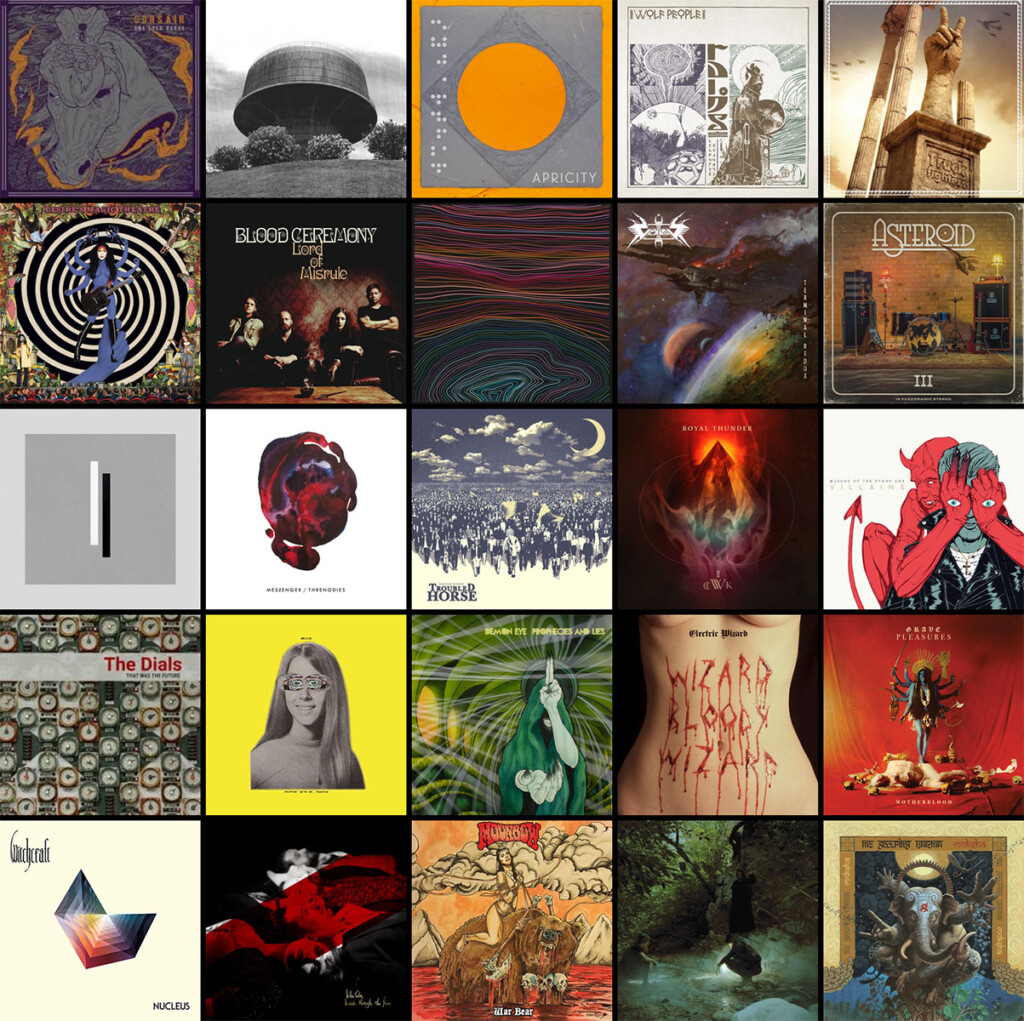
Like Carousel, this Charlettesville, VA band doles out twin guitar-based hard rock. Both of Corsair’s albums, self-titled 2012 debut and One Eyed Horse (2015) are essential listening to fans of this style. The band has been quiet since 2016, but there was no announcement of breaking up, so there’s a chance we’ll hear more from them someday.
Royal Headache
Formed: 2008
Disbanded: 2017
Monthly listeners: 35,889
Sydney, Australia’s Royal Headache come from a long lineage of Aussie garage punkers, and they were clearly special right out the gates with their self-titled 2011 debut. But even better was High (2015), where it didn’t seem possible to cram so many hooks into a 28:45 long album. Could they keep it up? Apparently not, as they imploded not long after. Original review:
I first heard Royal Headache on their indie self-titled debut in 2011, a scrappy, noisy, lo-fi album that seemed kind of minor at first, but grew on me. Skinny, awkward frontman Shogun really gets under your skin with his conviction and deceptively versatile voice, sounding like a young Paul Westerberg if he were influenced by gritty soul. While their early sound of soulful punk and oi has expanded to include comparisons to The Jam and other later British bands, I think even more important is the fiery passion they have reignited from the likes of countrymen The Saints and Hunters And Collectors, particularly their tortured love and heartbreak lyrics on Human Frailty (1986). More modern comparison might be Palma Violets, or Titus Andronicus, who have evolved along similar lines. However, that band kind of lost me on much of their sprawling double album, The Most Lamentable Tragedy, which contains far too much filler to qualify them as the “greatest rock band in the world” status that some have attempted to bestow them. On Royal Headache’s second album High, they administer twice the impact, devastation and jubilance at less than third of the running time.
Like all the greatest breakup albums, it successfully balances the wrenching pain, loss and regret with flashbacks to the giddy joy of love at first flush, and all the complicated and mixed emotions between the beginning and the end. Case in point, the surprisingly laid back sounding, acoustic-driven “Carolina” which sports a hook worthy of the best Saints tunes, and a gravelly, soulful vocal performance that reminds me of Rod Stewart at his peak, back when seemingly peerless rock titans like Robert Plant and Paul Rodgers would kiss his ring on bent knees. The video successfully shows how Shogun puts in the same emotional energy into the song as their more energetic rockers, as he looks like he’s literally going to leap out of his skin. Fuckin’ great.
You don’t have to wait for that deep cut to get slayed. Opener “My Own Fantasy” draws you in with an alluring melody, an ode to the virtues of rock ‘n’ roll getting an otherwise average guy way more love action than anyone would reasonably expect. “Need You” reminds me the rush I first got hearing The Strokes back when they were cocky and had a legitimate reason to be. “High” most certainly has fans already screaming along with the chorus at live shows. “Another World” is certainly a dead ringer for The Jam, but it’s just so damn excellent, and gone at 2:22 before you know it. That’s an impressive run of songs. “Wouldn’t You Know” slows the tempo down into a slowburn, propelled by a fabulous surf guitar and bass line which reminds me of the slower tunes like “Tides Of Time” and “Mexico” on the nearly as great self-titled album by The Soft Pack in 2010. “Garbage” is the hateful, sneering apex laced with acidic, distorted guitar to invigorating affect.
“Love Her If I Tried” and “Little Star” lovingly sandwich the aforementioned highlight “Carolina” with more killer hooks and choruses, and the albums ends with the noisy, punky “Electric Shock.” No longer really a punk band, and not all that heavy, on the surface one would have thought this was the kind of indie bullshit that’s drove me into the denim ‘n’ leather clad arms of heavy psych, doom and hard rock. But if more bands could deliver the quality that High does, I’d certainly make more exceptions. Royal Headache is without a doubt worthy of the horned salute.
Syd Arthur
Formed: 2003
Last album: 2016
Monthly listeners: 23,075
Hailing from Canterbury, Syd Arthur were often described as being influenced by the Canterbury prog scene with Caravan and Soft Machine. That may be true, but they grew up in the 90s with electronic music and hip hop, so when they modernized their approach on third album Apricity (2016), it felt very natural, as opposed to, say, Tame Impala, whose electropop felt awkward, forced and hollow to me. The songs on their last album were emotionally moving, but didn’t quite connect with a larger audience. I honestly felt they were destined for festival headlining popularity, but instead they hid away, serving, practically in secret, as the backing band for Jack Hues’ (Wang Chung) jazz-prog solo projects. Those recordings are fine, but if they don’t continue to make albums as Syd Arthur, it would be a massive waste of talent and potential. Full Review.
Wolf People
Formed: 2006
Disbanded: 2018
Monthly listeners: 35,752
Beyond the surface of their psychedelic folk/prog, what made Wolf People so special is that they evoke the eerieness of Grimm’s Fairytales, bringing the spirits of the dark English woodland to life in their music. After the brilliant Fain (2013), they reached an impressive peak with the powerful Ruins (2016), their fourth and best album. With a bit of work and touring, I could see them connecting with fans of the likes of Jethro Tull, Comus and the Strawbs, both young and old. Instead, they broke up, which was extremely frustrating news. However, the edge of that was blunted once I heard the singles from Jack Sharp’s new project, Large Plants in 2020. It was a relief to hear The Carrier (2022), which could easily have been Wolf People’s fifth album. So as long as Jack Sharp pursues this project, the creative arc of Wolf People remains intact.
Truckfighters
Formed: 2001
Last album: 2016
Monthly listeners: 123,934
Sweden’s most consistently hard working and hard touring stoner rock (or as they prefer to call it, fuzz) figureheads gave me a bit of a scare when they announced an indefinite, long hiatus in 2018. This was disappointing to hear. When many European bands have almost never set foot in North America, Truckfighters criss-crossed the continent well over a dozen times. Their shows never disappointed, with Ozo and Dango doling out heroic instrumental feats and impressive leaps in the air like the local ice cream man hopped up on amphetamines and steroids. They’ve also burned through not two, not nine, but eleven (11) drummers. None have blown up, but that’s a lot of used up drummers. Their shows are certainly physically demanding — the first time I saw them, their amp ignited on fire. They borrowed another band’s amp, then that started smoking as well. They have five albums and a documentary in the can, but have much more to offer. Thankfully, that hiatus was short lived, as they did a tour in 2019 to celebrate their first album Gravity X (2005). In 2022 they’ve resumed playing festivals in Europe, including Desertfest London, Desertfest Berlin, and their own Fuzz Festival in Sweden. Fingers crossed they are also writing and recording new material. Their recordings are not groundbreaking, but consistently engaging. Their last albums V (2016) holds up well next to all the others. Full Review.
Purson
Formed: 2011
Disbanded: 2017
Monthly listeners: 23,178
Since I heard the goth-prog-psych-folk-proto-doom of their 2012 single “Rocking Horse,” the massive potential of these paranormal psych Beatles freaks Purson was apparent. Their debut album The Circle And The Blue Door (2013) fulfilled that promise, and their second and last album, Desire’s Magic Theatre (2016) was th latest is another step in fleshing out a much more ambitious vision than being merely 60’s rock revivalists. It’s an art rock fever dream filtered through their own scintillating flavor of psych noir. I thought it was only the beginning. It was, but only for leader Rosalie Cunningham, who wrote and recorded the second album mostly by herself. She would soon disband the group and go solo, which is a shame, because when I saw them in 2016, they sounded and looked amazing. Cunningham has progressed and developed her songwriting, but one thing she’s lacking is a road-hardened band she can develop material and capture some explosive live energy with. Hopefully she can stick with a lineup and do just that.
Blood Ceremony
Formed: 2006
Last album: 2016
Monthly listeners: 33,629
Toronto’s Blood Ceremony made Sabbath worship a science, deconstructed it, and rebuilt their own kind of occult doom psych monster. They played a great set in 2016 at Roadburn, which I saw. For something that’s associated with Neanderthal like tendencies, Blood Ceremony is much more sophisticated, thanks to Alia O’Brien’s flute playing and fascinating lyrics. It’s no wonder they’ve been dormant, as O’Brien completed a Ph.D. in ethnomusicology and holds a full time job as a senior anthropologist. It’s unclear whether she’ll squeeze more music into her busy schedule, but the band is not officially broken up that I know of.
Dungen
Formed: 1998
Last album: 2016
Monthly listeners: 101,729
Swedish psych prog overlords Dungen helped popularize this music in America, when “Panda,” on second album Ta Det Lugnt (2004), despite being sung only in Swedish, became sort of a hit. 2004 was a big year for a new wave of stoner rock, expanding it’s reach into psych prog with touches of jazz rock (Dungen), Pentagram-inspired proto-metal and psychedelic doom (Sweden’s Witchcraft), beautifully textured fuzz tones with extended instrumental jams (Germany’s Colour Haze, who were already on their seventh album that year), and Norway’s eclectic and prolific Motorpsycho, who evolved in their nine albums from alt noise rock to psych pop, and were just gearing up for their own brand of stoner psych prog. Italy’s Ufomammut had also nailed down their unique brand of cosmic doom psych and space rock on their second album, Snailking. It was clear by 2004 that instead of the original 90s stoner scene petering out, they inspired a whole wave of bands that would only increase in numbers over the next decade. While Häxan (2016) is mainly an instrumental soundtrack, their last albums of full fledged songs is album number seven, Allas Sak (2015). Guitarist Reine Fiske has become sort of a hired gun, working with Motorpsycho, The Amazing, Elephant 9, and many other projects. What everyone wants, to hear, though, is some more Dungen tunes.
Vektor
Formed: 2002
Last album: 2016
Monthly listeners: 32,015
I’ve always followed the thrash and death metal scenes since the beginning, and while it’s not my primary go-to genre, I’ve had my favorites over the years. I was delighted to hear the subgenre of technical thrash metal, something that at least a dozen bands explored in the late 80s and early 90s (Coroner, Voivod, Annihilator, Deathrow, Sadus, Watchtower, Toxik, Mekong Delta, Realm, Artillery), was revived by Vektor, from Tempe, AZ. They sparked a few other bands to join in on the fun, like Revocation, Black Fast, Exmortus, Havoc and Sacral Rage, but none have eclipsed the perfect trio of albums Vektor released, with Black Future (2009), Outer Isolation (2011), and Terminal Redux (2016). I hope they have another one in ’em.
Asteroid
Formed: 2003
Last album: 2016
Monthly listeners: 76,536
Sweden’s Asteroid formed in 2003, and took six years between their second (II, 2010) and third (III, 2016) albums, released on Truckfighters’ Fuzzorama label, so they’re about due for a fourth. Original review of III:
I’m surprised to find an album that actually takes the edge off Graveyard’s recent breakup for me. Not to say that these Swedish bands are interchangeable, though there is some similarity in “Them Calling” and some of their bluesy moments. If anything, Asteroid influenced the younger band, having formed in 2003 at the tail end of the initial fertile stoner wave in Sweden that included Blind Dog, Numbah Ten, Dozer, Lowrider, Terra Firma, Truckfighters and Mammoth Volume.
The band has used their time wisely since their highly regarded second album II (2010), honing their musicianship and taking their time to create some rich textures. You can just about hear Johannes Nilsson’s fingers on the bass strings in the moody opener to “Pale Moon.” Like All Them Witches, they revel in the natural sounds of their instruments, letting the bass and drum (with new drummer immi Kohlscheen) interplay flow with a virtuosic groove that has more in common with the most accomplished classic rock than scruffy underground fuzz heads. They sparingly unleash the fuzz effects, such as at the end of “Pale Moon,” and most notably on “Wolf & Snake,” giving me a fond flashback to Sungrazer.
Robin Hirse’s vocals have also matured nicely beyond his initial influences from John Garcia and the late Layne Staley have into his own style. This is also the band’s most consistent, keeping the songwriting quality high on all seven tracks. “Til’ Dawn” begins with the kind of jangly western sound that Troubled Horse does so well with before turning up the juice. “Silver & Gold” is the most instrumentally spare, with an eerie noir vibe. The album ends with a bang with “Mr. Strange,” chock full of changes from guitar harmonies to space jams and “whoa whoa” vocals. III should seal Asteroid’s spot in the top tier of heavy rock bands not just in Sweden, but the world.
The Early Years
Formed: 2004
Last album: 2016
Monthly listeners: 846
This London shoegaze/kosmische/psych band split their inspiration between UK bands like Spacemen 3, Spiritualized and My Bloody Valentine with more obscure European bands and 70s kosmische musik. A not entirely uncommon combo, but The Early Years are just so enticing, wrapped in mystery and making great use in anticipation in both their music and releases (ten years spanned between their 2006 debut and II.
Messenger
Formed: 2012
Disbanded: 2016
Monthly listeners: 367
While you see psych prog mentioned throughout this piece, I’m a bit more picky with straight up prog. Partly because I really don’t like the production choices of a lot of the modern prog bands, that try so hard to be up to date, that they over polish the music so that it’s so densely packed with sound, all dynamics and soul are squeezed out. London’s Messenger avoid that pitfall, perfectly balancing 70s analog influences with more tasteful modern production. Think along the lines of Radiohead’s Moon Shaped Pool, a contemporary album that second album Threnodies (2016) nearly measures up to. It was an excellent evolution from folk-tinged prog of Illusory Blues (2014). Then they just quit. WTF? The prog scene needs more bands like this, who I liked quite a bit more than even Porcupine Tree. I look forward to their first album in 13 years, but was also okay with them wrapping it up, as Steven Wilson’s heart was clearly in exploring different styles solo. Original review:
I was on board with Messenger since their promising psych prog debut Illusory Blues (2014). Their second album is quite different, with the band expanding from three to five members, and evolving from a folkier sound to a heavier, sleek rock sound. “Oracles Of War” is the heaviest thing they’ve done, paying tribute to Sabbath and other bands on the Vertigo roster from the early 70s. It’s also the closest I’ve heard another band get to what Norwegian psych proggers Spirits Of The Dead have done. I’ve been dying for more of this sound, so I fully support this. The band doesn’t just measure up to past and recent influences. There may be similarities with Animals era Pink Floyd, but honestly I feel that Messenger is a more engaging listen with much more consistently on-point songwriting. “Celestial Spheres” has them forging forward into fairly uncharted territories, a master stroke of complexity and a sticky melody that peers should take notice of. The progtastic “Pareidolia” is just as impressive, while the more subdued “Balearic Blue,” “Nocturne” and “Crown Of Ashes” provide nicely varied pacing in mood and texture.
Troubled Horse
Formed: 2000
Last album: 2017
Monthly listeners: 10,235
2012 was a big year for two of my favorite Swedish bands reaching a peak with Witchcraft’s Legend and Graveyard’s Lights Out. Equally great were “newcomers” Troubled Horse, who actually had been playing off and on since 2000, with members having connections to both bands. On their belated debut Step Inside, they added a bit of a Western Americana twang to their style of hard psych rock, with brilliant results. Sadly, they dropped that twang on their second album, Revolution on Repeat (2017), so it’s not quite as great. But I still hope for more music from this band, and a chance to see them live at least once before they fold.
Royal Thunder
Formed: 2004
Last album: 2017
Monthly listeners: 35,593
I got to see Atlanta’s Royal Thunder’s majestic hard rock and psych several times live, as they were a hard touring band, at least for the five years span between their first three albums. They have an intriguing but alarming backstory about being sucked into a mind control cult that I’d like to learn more about sometime. Perhaps their fourth album would be a concept album about the experience. The topic certainly has sparked interest in a series of cult documentaries on Netflix and the true crime Mormon drama Under the Banner of Heaven. Either way, this band hopefully has more great music to release. Original review:
Another band that matriculated into the rock world with a debut in 2012, Atlanta’s Royal Thunder is just as original as Pallbearer. So why aren’t they getting as much attention and respect? While there are plenty of great bands lead by women, I still wonder if they aren’t getting their due because of the residual misogyny that’s been so rampant in the rock world. If any band can overcome it, it’s Royal Thunder as they are true road warriors. Most years they pass through town up to three times a year on various tours. They are relentless, and dedicated to honing their craft. The work is paying off, as Wick is pretty stunning, with Miny Parsonz’ vocal performance outdoing pretty much all their peers. Her range, from fragile vulnerability to blazing vengeance is stunning. The band is more than capable of framing the songs with a bewitching fusion of powerful hard rock and ornate, psychedelic touches, building moody backdrops. “We Slipped” features the prettiest melodies. Rather than revisiting the catchy chorus, however, they choose to spend the second half of song floating to the ether with some delicate overdubbed harmonies from Parsonz. They make sure to give Parsonz room to shine with a little bit of space in tracks like “Plans,” “Push” and the closer “We Never Fell Asleep.” While I won’t begrudge the talent of women in the pop world such as Beyonce and Adele, I find the music of the likes of Blues Pills and Royal Thunder much more satisfying. They are more convincingly soulful to my ears, and have clearly lived through some blues. Is it too late for bands like these to become stadium-filling stars? I wouldn’t think so, but until then consider ourselves lucky to get to witness giant talent like this in close proximity in small clubs.
Queens of the Stone Age
Formed: 1996
Last album: 2017
Monthly listeners: 5,675,686
By far the biggest band on this list, with Josh Homme’s roots in one of the original big four stoner pioneers Kyuss (along with Monster Magnet, Sleep and Fu Manchu), by Queens of the Stone Age’s second album R (2000), I imagined they would become the biggest rock band of the 2000s. How Foo Fighters got that honor instead still eludes me, aside from the obvious rockstar credentials of one-time QOTSA drummer Dave Grohl. Queens has way better, and even catchier songs, so go figure. It didn’t help that the band only released two albums in the 2010s, …Like Clockwork (2013) and Villains (2017). Homme’s production experience with Arctic Monkeys seemed to pay off on …Like Clockwork, as they seemed to be crossing over into the mainstream. While Villains was even better and more consistent, it was vastly critically underrated (though I probably a bit too enthusiastically overrated it). I hope that experience didn’t spook Homme. I expect his skin is tough enough, and there will be more great music from Homme and band someday.
The Dials
Formed: 2002
Last album: 2017
Monthly listeners: 149
Like a lot of obscure psych pop bands, I didn’t discover Brighton’s The Dials until the release of their fourth and latest album, That Was The Future (2017). Their whole catalog is amazing, but their last is definitely their best, which makes it so frustrating that they haven’t released anything since. Full Review.
Amplifier
Formed: 1999
Last album: 2017
Monthly listeners: 19,031
Amplifier are a Manchester psych prog band formed in 1999 who flew under my radar until over a decade into their career, after their fourth album, Echo Street (2013). I went back to the sprawling double The Octopus (2011), and then had to get everything, including the underrated The Astronaut Dismantles HAL EP (2015). They revisit that kind of ambition on their sixth album, which loosely adheres to a story that updates Faust for the 21st century. The Devil makes an appearance as “Big Daddy” as does the Egyptian god of the dead, “Anubis.” True to the tradition started by The Who, the narrative is a bit of a mess (rainbow machines! supernovas!), but makes for some damn fun rock ‘n’ roll lyrics. Amplifier are a little hard to pin down, because their influences are all over the place, ranging from classic stuff like The Who, Pink Floyd, Sabbath, some 90s grunge, Porcupine Tree, Muse, and Crack The Sky era Mastodon. While this might negatively affect the band’s marketability, it makes for each listening session like a treasure hunt, with numerous opportunities to unearth gold. An early standout for me is “Horse,” on which Sel Balamir layers his voice into a Yes-like harmony over a cascading guitar riff, accented by a floor-shaking bass lick. The sounds and textures are as diverse as ever, including guest vocalist Beth Zeppelin on “Big Daddy,” acoustic guitars on “Anubis,” and banjo on “Old Blue Eyes,” which escalates into a massive wall of squalling feedback. The album is overall the band’s heaviest since their debut, which they waste no time announcing on the slamming opener “Rainbow Machine.” Whacky concepts, space freakouts, big fat riffs and thunderous low-end bass tones, what more can one want? On second thought, shouldn’t Amplifier be ruling the earth, occasionally plopping down on stadiums and festivals to snack on the adoration of millions?
Demon Eye
Formed: 2012
Last album: 2017
Monthly listeners: 666
Raleigh, NC’s Demon Eye evolved out of the classic rock tribute band Corvette Summer. While that is not so unusual, lead singer Erik Sugg’s dayjobs are. He’s a reference librarian who hosts a storytime for young kids. Mixing stories with his take on traditional children’s songs and his own music, Mr. Erik’s Rockin’ Storytime has expanded to kids’ parties, and a children’s record. Let’s hope some of the less cool parents don’t discover his adult nighttime job with Demon Eye, as the North Carolina folk may fear he’s indoctrinating their children with Satanic themes. I don’t think discovering this music at a tender age would be a bad thing for anyone. Maybe in a different world if more bands followed the Sabbath, Deep Purple, Pentagram and Maiden templates instead of Cream, Hendrix and Zep, I’d take bands like Demon Eye more for granted. In reality it’s hardly a path towards financial success and stardom. It’s a style inhabited by lifers who are compelled to take this path, we’re lucky to have ’em. Suggs and band played in Chicago pretty often for a number of years, and I got to chat with him several times. Unfortunately, with the pandemic and my move to Texas, it’s been a long time since I’ve seen all my favorite bands, and I have no idea what their status is. Prophecies and Lies (2017) is my least favorite of their trio of albums (2012’s Leave the Light and 2015’s Tempora Infernalia), but I would love to see more from them.
Electric Wizard
Formed: 1993
Last album: 2017
Monthly listeners: 209,368
Another larger than life legend alongside QOTSA, Electric Wizard has roots in bands going back to 1988. Their somewhat volatile history has had them teetering on the edge of imploding and breaking up many times, which makes each new album kind of a surprise gift. Their ninth album, Wizard Bloody Wizard (2017) received some brutally harsh reviews, which are undeserved. It was a very solid album, but in a changing landscape where they have spawned literally hundreds of acolytes, all competing for the attention of new fans. Are they winning or losing? I don’t think they give a flying fuck, which is as it has been, and always should be. They are too big to be concerned about the stupid opinions of puny humans. We should all be so lucky to lick their acid-dusted boots and beg for more.
Grave Pleasures
Formed: 2010
Last album: 2017
Monthly listeners: 31,456
This Finnish band started life as Beastmilk, and changed their name in 2015 to Grave Pleasures. I prefer the first name, but I suppose the new name is appropriate given the added element of smarm to their brand of post-punk, deathrock and psych noir. I hope they come out with a fourth album, and that they still have guitarist Linnéa Olsson (The Oath, Maggot Heart) in the lineup. Motherblood (2017) is the perfect mix of Interpol and sleek, melodic goth rock that would be hugely popular if given the right exposure. Speaking of The Oath, I could have considered them for this list, but that was more like a brief clash of dominant Witch Queens rather than a fully functioning band, with the partnership ending before it was even released. Between Maggot Heart and Lucifer, both members have more than satisfied my curiosity of where their muses would lead them.
Witchcraft
Formed: 2000
Last good album: 2016
Monthly listeners: 243,914
What, you say Black Metal (2020) was a Witchcraft album? Could have fooled me. It sounded like Magnus Pelander in a dark room with an acoustic guitar, having a psychotic breakdown, or, to be fair, just an extremely heavy episode of depression. Either way, I’m concerned. He released a solo acoustic EP (2010) and album (Time, 2016) that were not bad, but Black Metal is truly awful. Since 2017, Pelander’s social media posts grew extremely erratic, and it’s clear he’s going through some shit. I still have hopes that he’ll come out the other end, achieving improved mental health and at least partially return Witchcraft to their original greatness. Original review of Nucleus (2016):
If Witchcraft were criticized for making a relatively more polished hard rock album with Legend (2012), I was unaware. It was a brilliant album, and by far their best. Fans nostalgic for their earlier sound seemed to perk up when Nucleus seemed to go back to a more progressive heavy doom sound. While I love all their albums, it does seem like somewhat of a retreat, especially on the ultra long cuts, “Nucleus” (14:08) and “Breakdown” (15:55). While previous “The Alchemist” and “Dead End” were highlights, the new ones kind of drag. There’s still much to enjoy, like “The Outcast” and “The Obsessed” a bit of a tribute the psychedelic doom of The Obsessed and Trouble. The sound overall is a combination of clean and crunchy that recalls Rick Rubin’s production work with Trouble and even Danzig. So perhaps the least great Witchcraft album, but still excellent, and still one of my favorite bands on the heaviest of rotations.
Lola Colt
Formed: 2013
Last rock album: 2016
Monthly listeners: 248
Lola Colt’s 2014 debut, Away From the Water, blew my mind with it’s potent mix of Americana garage noir, post-punk and psych. In the Guns, Peyote ‘n’ Dark Highways section of my Psych Noir piece, I wrote: Produced by the Bad Seeds’ Jim Sclavunos, this UK group has concocted a stirring hybrid of psychedelic garage noir with a strong female lead (a Danish singer named Gun) who reminds me of Leslie Woods of post-punkers Au Pairs. There’s so much evocative imagery in these songs, Morricone cowboys tripping on peyote, long drives on black unlit highways, being followed on twisting London streets, all with an underlying threat of violence. The pulp fiction crime paperback to Uncle Acid & the Deadbeats’ B-movies with big breasted murderous vampires, Lola Colt may end up THE definitive psych noir band for many.
Twist Through the Fire (2016, full review) was even better. Alas, like a lot of formerly great psych rock bands like Tame Impala, Lola Colt were lured by the narrative that guitars are out of fashion and to sound current, you gotta break out the synths (with their shiny new 50+ year-old technology) and go full electropop, which they did on their Human Made EP (2019). It’s not horrible, but it bears little resemblance to the great work of their albums. I swear, once that electro shit is a virus, and artists that get it rarely recover to rock properly ever again. Does it have something to do with letting the callouses on their fingers fade away. Dunno, but it sucks. Hopefully this defection away from rock is a brief blip on the map.
Moonbow
Formed: 2010
Last album: 2017
Monthly listeners: 74
This is kind of embarrassing but I’ll share because it’s funny. I had Moonbow on my wishlist, a Kentucky band with a cool mix of southern rock and stoner/blues/psych. But I totally missed their 2017 album, War Bear, even though it was on Ripple Music, where I’ve had a $5/mo subscription since they first offered it. I apparently lose track of some of their releases, because I never realized I had it available to download. So I’m just now getting acquainted with it. Hard to complain there isn’t a fourth release when I still hadn’t heard their third (I have now twice). This is what I wrote about ’em back in 2013:
Laidback Kentucky-based supergroup of sorts with members of Hank 3, Afghan Whigs, Hermano and Valley Of The Sun. Their debut The End Of Time is fairly unadorned but well written hard rock with touches of southern and stoner rock. Kyuss/Vista Chino’s John Garcia even wrote and sang on “Take It For Granted.”
Teen Judge
Formed: 2015
Last album: 2017
When John Kimbrough’s first full-on rock project in 20 years since the breakup of Walt Mink in 1998 arrived, it was a very exciting event for his fans. Kimbrough built a new home studio and assembled an amazing new band, including the bass player from David Bowie’s Blackstar album. They were amazing out of the gate, check out their ZZ Top cover from their very first gig in 2015. The new self-titled album was released in limited quantity in vinyl in 2017 before becoming more digitally available the next year. It reflects his musical journey since Walt Mink, adding more power pop and a touch of psych to his repertoire. In March 2019 they posted an enticing picture of new amps and announcing that they’re writing new songs. In late 2020 they released the single, “Awake!”. Then nothing. It turns out that Kimbrough got a steady gig writing the music for the great new cartoon The Great North starring Nick Offerman, Jenny Slate and Will Forte. Season 3 arrives in September, and as long as the show is a success, which is awesome, we’ll probably have to wait for new Teen Judge music. | Full Review.
My Sleeping Karma
Formed: 2004
Last album: 2015 (Atma out July 29)
Monthly listeners: 65,082
One band that was on my wishlist for a while, with their last album being Moksha (2015), was My Sleeping Karma, until they announced just last week their new album Atma is coming out on July 29. Yay! Review of Moksha:
Germany’s My Sleeping Karma continue their spiritual explorations from Satya (2008), Tri (2010) and Soma (2012) with their fifth album Moksha. Signing to Colour Haze’s Elektrohasch label in 2006, the band were also influenced by prog metal along the lines of Iron Maiden’s Seventh Son Of A Seventh Son (1987) and Tool. As they investigated more directly their interests in Eastern philosophies including Taoism and Buddhism, they have also incorporated Eastern musical influences, incorporating the melodies and scales into their work, with pretty gorgeous results. While to some it could easily reek of hippie mysticism and veer into noxious new age territory, the band retains the edge of their metallic roots. Like Glowsun they attempt to tell stories with their artwork, titles and music, with Soma addressing the world of dreams, and Moksha exploring the middle path between dreams and reality toward enlightenment.
Mirror Queen
Formed: 2009
Last album: 2017 (Inviolate out June 24)
Monthly listeners: 332
Like My Sleeping Karma, Mirror Queen are releasing a new album in the coming weeks after a long break. Unlike My Sleeping Karma, I hadn’t listened to the band’s first three albums at all since they came out, even though I really liked them at the time. I probably still do, just need to revisit. Original review of second album, Scaffolds of the Sky (2015):
I had a feeling just before the release of this NYC hard rocker’s second album that it would be something special. Since their decent debut From Earth Below (2011), they’ve worked hard touring the US and Europe, playing with Greenleaf, Truckfighters, Earthless and honing their craft. For the past month the album has constantly grown on me, their particular mix of psych prog and space rock unfolding more with each listen. Somewhat similar to Mondo Drag, they stake out their own cosmic territory in the spaces between classic hard rock (UFO), psych prog (Captain Beyond, Hawkwind) and NWOBHM, particularly its roots in twin-guitar pioneers like Wishbone Ash, Thin Lizzy, Maiden, Priest.
Mammoth Volume
Formed: 1996
Last album: 2002 (The Cursed Who Perform The Larvagod Rites out Aug. 19)
Monthly listeners: 1,114
Another cool surprise, Sweden’s Mammoth Volume is coming out with their fifth album, 20 years after the last one! By the late 90s, there were no shortage of Swedish bands enamored with Black Sabbath and Kyuss. Mammoth Volume’s twist was adding bits of Blue Oyster Cult, Yes, Gentle Giant, Mahavishnu Orchestra and Jethro Tull. After a solid debut album Mammoth Volume (1999, Music Cartel) and Noara Dance EP (2000, Music Cartel), they hit their peak with A Single Book Of Songs By Mammoth Volume (2001, Music Cartel), which added additional textures like folk without losing that beautiful, thick fuzzy guitar tone.
2018
I picked 2017 to wrap this list up, because these days, four years is a pretty reasonable gap between albums, though not always ideal for newer bands who need to keep developing and progressing. Bands that have been around for at least a decade, sure, who cares. So yeah, I’m not exactly jonesing for a new releases from them quite yet, but new ones would definitely be welcome in 2022 from Uncle Acid & the Deadbeats, MaidaVale, Spiders, Orango, Gozu, VOJD (formerly Black Trip), Sundays & Cybele, Wooden Shjips, Freedom Hawk and Moab. Dutch psych prog band Birth of Joy disbanded in 2019. Speaking of new-ish bands, San Diego’s Monarch released two brilliant psych prog albums tinged with jazz rock and Americana in 2016 and 2019 on the amazing El Paraiso label. I am indeed dying for more material from this band, and a chance to see them live. Bask delves in similar territory with a heavier sound, and has had three albums between 2014 and 2019.
I’m sure I missed some good ones (Vidunder, Arenna, Cherry Choke, Captain Crimson, House of Laurence) and everyone will have their own list, but this is a pretty good sized bag of rocks (50 bands!) that should keep y’all busy until more new releases emerge.
Steve Brooks just announced that he’s leaving Torche, so it’s likely their fifth album, Admission (2019) was their last. Bummer, I figured they had a great sixth album in them. But with Floor’s reunion for Oblation (2014), who knows what the future holds.

May 31, 2026
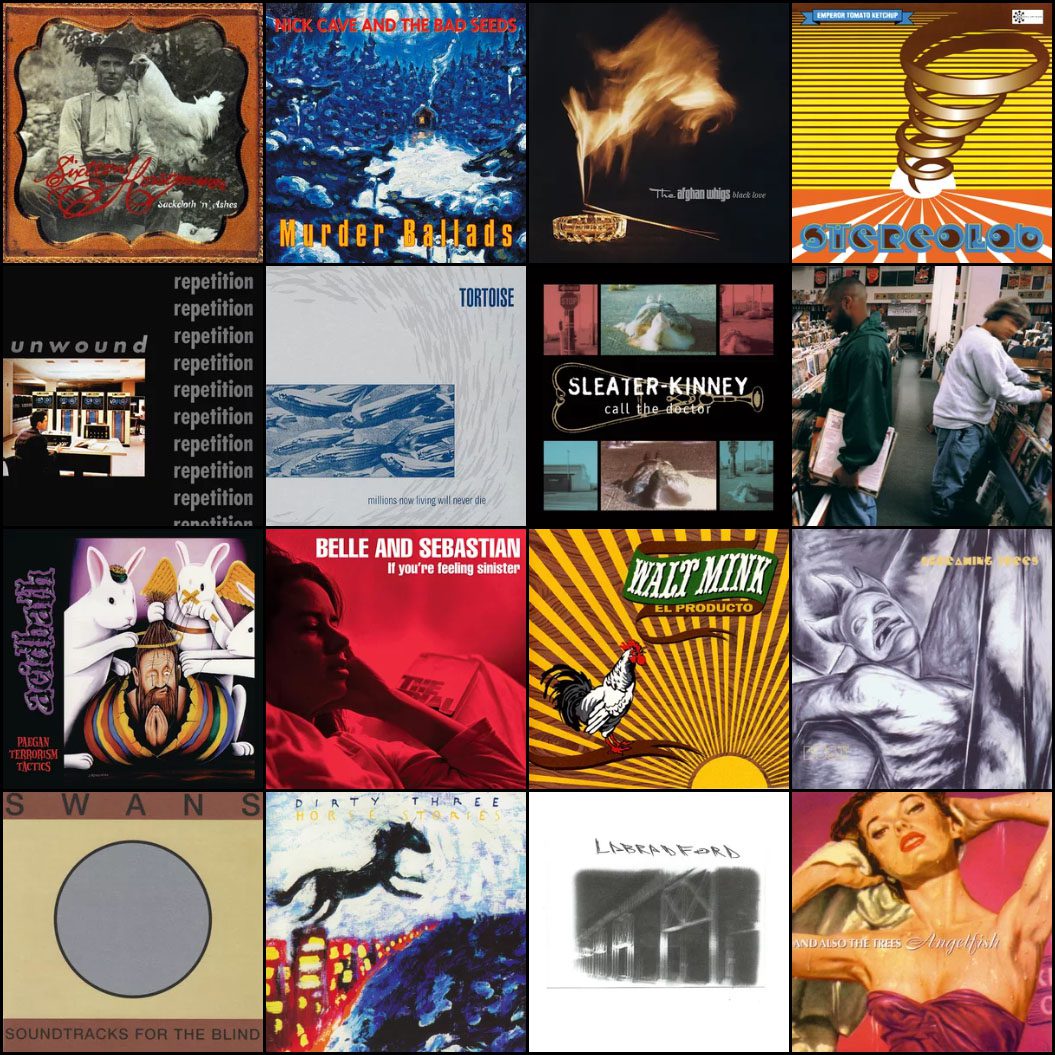
Fester’s Lucky 13: 1996
May 29, 2026
Elder – Through Zero (Stickman)
April 13, 2026
Spirit Adrift – Infinite Illumination (20 Buck Spin)