May’s daily countdown of forgotten favorites, also referred to as lost treasures and albums that fell between the cracks.
1. Justin Hinds & The Dominoes – Jezebel (1976)
Having been a key player in Jamaican music since the early 60s ska days (remember “Carry Go Bring Home”?), Justin Hinds made an astounding comeback in Jezebel. His soft voice was more rich and soulful than ever, and despite the cheap and quick recording conditions most 70s reggae musicians who weren’t Bob Marley had to deal with, it sounded perfect. From the rousing “Fire,” the remake of “Carry Go Bring Home,” the rollicking “Dip and Fall Back” and the rootsy “Prophecy,” this is tremendously spiritual, uplifiting music. The best track, “Spotlight,” is one of the most beautiful songs ever recorded. It’s ironic that this album was neglected by Island, who did not promote it and even misspelled Hinds’ name on the cover. While they were busy extending Marley’s world domination, Justin Hinds created an album that surpasses nearly all of Marley’s.
2. The Sound – From The Lions Mouth (1981)
The Sound were the most unfairly ignored post-punk band at least until their albums were re-issued on CD in 2005. It’s strange, given the impressive punk credentials of bandleader Adrian Borland, who died in 1999. His earlier band The Outsiders was the first punk band to release a record (Calling On Youth) on their own label in May 1977. By 1979, the band had evolved into The Sound, the most powerful live band at the time, with a voice that recalled the Bunnymen’s Ian McCullough, a heavy melodic bass style like Joy Division’s Peter Hook, and a fiery guitar style unmatched by anyone. The debut Jeopardy (1980) came out originally on Korova, recorded for only £800.
While it was a nearly perfect debut, From The Lions Mouth is even better. While it doesn’t have the hard-hitting singles of Jeopardy, it has a shimmering, cohesive fusion of lyrics and sound. The album reaches a dark apex with “Possession” (“There’s a devil in me/Trying to show his face”) and the red hot “The Fire” (“Drawn towards the heat/Too fierce to contain”), and “New Dark Age,” with thudding kettle drums of doom. The press went wild for it, but sales were dismal. Possibly because the album was too unique. It didn’t fit neatly into any of the synth pop/new wave/new romantic stuff that was popular in ’81. Nor did it have the bombast that would make Echo & the Bunnymen, U2 and Simple Minds so popular just a couple years later. Korova dumped The Sound onto its parent company, WEA as a write-off, who pressured them to go more commercial.
3. The Birthday Party – The Birthday Party (1980)
The mighty Birthday Party is hardly an unknown quantity, thanks to the long, successful career Nick Cave has enjoyed with his various projects. Basically the same band as Boys Next Door, who released a so-so album, Door, Door in 1979, their transformation into The Birthday Party suggests some sort of dealings with the devil at the crossroads, as the band glows like brimstone, smoke curling up from their boots as they perform a seething, groundbreaking hybrid of post-punk blues noir. The band widely was quoted as having worshipped The Pop Group, but honestly they were already better than the chaotic mess of that band. The result is a more sinister mix of The Cramps and The Gun Club, with a touch of art-damaged post-Beefheart skronk that went well with Pere Ubu at the time. For some reason their debut is much less celebrated than Prayers On Fire (1981), Junkyard (1982) and the EPs. But this contains some of my all-time favorite tunes that Nick Cave ever wrote, including “Happy Birthday,” “Guilt Parade” and “A Catholic Sin.” Bonus single “Release The Bats” became a go-to for the goth subculture.
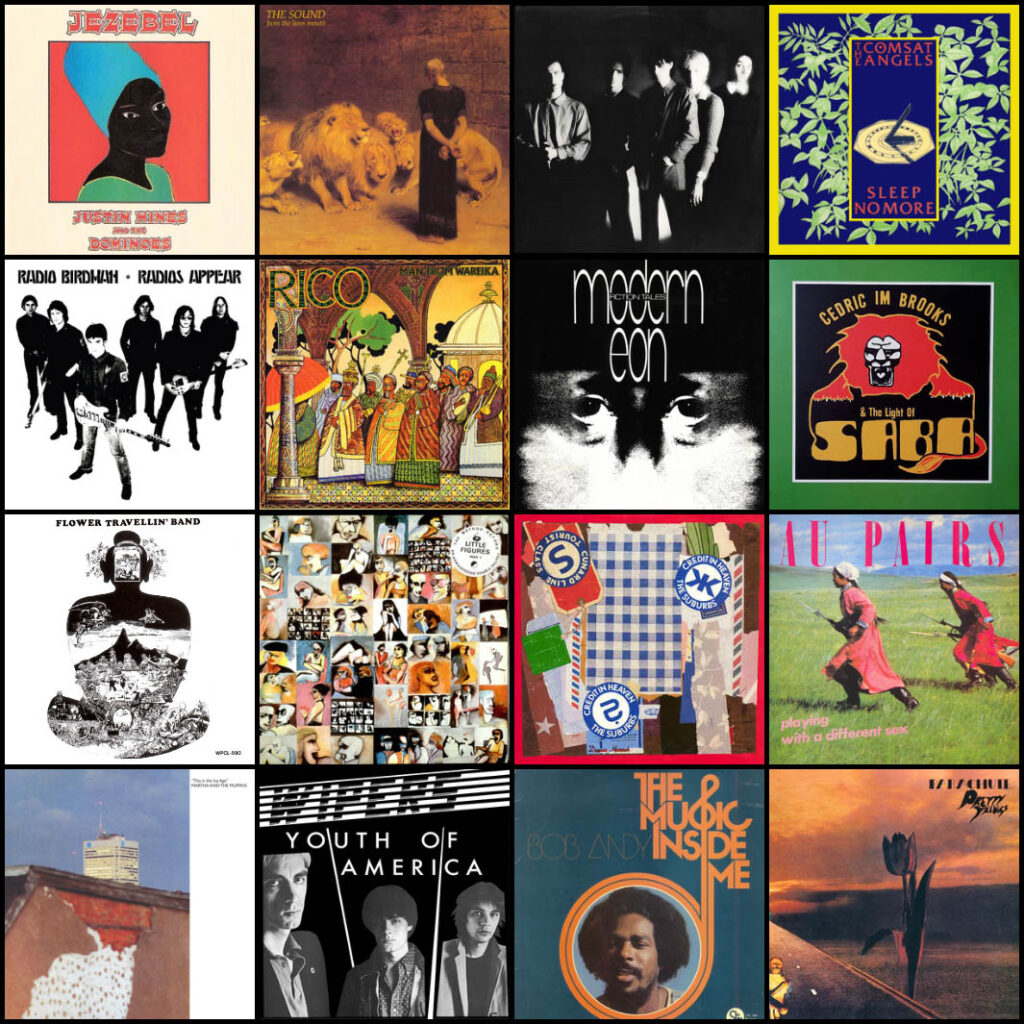
4. The Comsat Angels – Sleep No More (1981)
Sheffield band Comsat Angels have forever lingered under the shadow of contemporaries like Joy Division and The Cure. Culling their name from a short story by J.G. Ballard, Comsat Angels formed in 1978. They got a quick education early on by being blown away at a gig with Pere Ubu. They learned they could be arty and simple at the same time, emphasizing uncontrived power over complexity. Using Pere Ubu, Chrome, Television, Talking Heads’ Fear Of Music and Public Image Ltd. as spiritual guidance, the band developed the set that was to become Waiting For A Miracle (1980). It’s a remarkable debut with a spare sound that’s clean yet hits hard, and measures up to the best of that year’s post-punk efforts by Joy Division, The Associates, The Cure, Magazine, The Sound, Echo & the Bunnymen, The Teardrop Explodes and Simple Minds.
Sleep No More shows off the confidence and experience Comsat Angels have earned on the road by hitting hard from the start with the dense, thick “The Eye Dance.” The few tentative weaknesses in the previous album’s songwriting has evaporated. This album is as tight, cold and hard as titanium. The opening track sounds spritely compared to the glacial pace of most of the album. This results in a flow that is not as accessible as their first album, but once drawn in, the soundscapes created on each cut is truly awesome, from “Be Brave” to the ominous “Dark Parade,” which recounts the botched attempt of American Special Forces to rescue hostages in the embassy of Iran. The drums have a massive, cavernous sound that left engineers of that era scratching their heads as to how it was done (secrets revealed in the booklet). “Restless” offers some brief relief from the relentless intensity with a pretty, shimmering sound that sounds remarkably what U2 and Brian Eno would come up with a few years later. The Angels toured with U2 at that time, and Bono was impressed by their “terrible beauty.” Despite the fact that it’s The Comsat Angels’ peak moment, and one of the best albums of 1981, no singles were issued from the album. The band issued a separate single, “Eye of the Lens,” which is included along with extra demos.
5. Radio Birdman – Radios Appear (1977)
One of the towering pillars of what became an incredibly varied and deep Australian garage punk scene, this band has a direct connection to the Motor City via Deniz Tek, who emigrated from Ann Arbor to Sydney after being exposed to the Stooges, MC5 and Ramones. Named after misheard lyrics from the Stooges’ “1970” — “Radio burnin’ up above,” they took those influences, processed and integrated them into a uniquely brooding but propulsive sound that would become a big influence on practically every punk-adjacent band that emerged from down under in the next decade. The band’s logo looks great on a t-shirt, for those who want something not as overworm by clueless fashionistas like the CBGBs, Ramones and Motörhead shirts. “Aloha Steve & Danno” might also be one of the first instances of surf punk!
6. Rico – Man From Wareika (1976)
I first heard Rico on The Specials (1979) debut, his trombone adding a special sauce to “A Message to You Rudy” and “Nite Klub.” He also released a couple solo singles on 2 Tone, as well as the albums That Man is Forward (1981) and Jama Rico (1982). Rico Rodriguez was an older musician who’s first single was an R&B/jazz release on the Blue Beat label in 1960. He was in Count Ossie’s and Prince Buster’s groups, and released his first album of instrumental rocksteady in 1969. By far his greatest achievement was Man From Wareika. While no vocalists were involved, they weren’t merely riddim bones ready for dub treatments (though the subsequent Wareika Dub from 1977 was also glorious). His trombone carried what would have been all the vocal melodies. Combined with top notch instrumental support from the likes of Sly & Robbie and Junior Marvin, it’s a truly satisfying listen. Island’s 2007 reissue included really fun bonus cuts like “Take Five” and “Ska Wars,” as well as two guest vocal appearances by Ijahman Levi, another reggae artist who was pushing boundaries. While not exactly known and celebrated outside their core audience, Rico acknowledged how special that album was by returning to that theme with Wareika Vibes (2006). He was a global treasure that most people didn’t even know they lost when he passed in 2015.
7. Modern Eon – Fiction Tales (1981)
Hailing from Liverpool like Echo & the Bunnymen, Wah! and Teardrop Explodes, Modern Eon put out a handful of singles and just one album. But that album, the percussive, foreboding Fiction Tales (Dindisc, 1981) is really something. At a time when their peers, including The Sound and Comsat Angels, were at the peak of their powers, Modern Eon’s album measures up very well. The band did not achieve any sort of popularity due to some bad luck with drummer Cliff Hewitt breaking his wrist just before they were to record a Peel Session. Rather than persevere and record their second album, they gave up and Tim Lever ended up with Dead Or Alive. The only discernible impact they had is that their influence could possibly be heard in Sad Lovers and Giants, though the similarities could be a coincidence. While there was an entry for them in the Trouser Press Record Guide, it was so unenthusiastic I didn’t take note (“…not an easy album to like, Fiction Tales does convey originality and stylishness as well as flashes of accessibility; occasional use of odd instrumentation and a good drummer make this more than just a routine genre exercise.”)
8. Cedric Im Brooks – The Magical Light Of Saba (1978)
What if Sun Ra were dubwise? Fela Kuti a rasta? Curtis Mayfield, well, Curtis influenced countless Jamaican artists already… Who knew Sir Coxsone Dodd (RIP) had harbored such an adventurous spirit all those years? Since the early 60s, Brooks was one of Jamaica’s premier instrumentalists, playing on many of Sir Coxsone Dodd’s Studio One hits. His passion for jazz and African rhythms led him to Rastafarian drummer Count Ossie, with whom he formed Count Ossie And His Mystic Revelation Of Rastafari. At the end of the decade Brooks went to Philadelphia to go to music college. He ended up meeting saxophonist Sonny Rollins and Sun Ra. Ra’s communal-based approach of living and practicing together was not a far stretch from the dreads at home, and he was on the verge of joining the band when the birth of his daughter called him back. He formed The Light Of Saba, and recorded four albums in the seventies that built upon The Mystic Revelation’s brass and nyabinghi Rasta hand drumming, adding reggae guitars, dub effects, his own sax and wooden flute, and a wide variety of rhythms, from local Mento/calypso/rocksteady/reggae to Cuban, American funk and African burru, poco and kumina. Like Fela Kuti, he started with his native culture and expanded the influences to create something new and truly ahead of its time.
9. Flower Travellin’ Band – Satori (1971)
As with Krautrocksampler, Julian Cope once again was the first to introduce me to some long-neglected albums with Japrocksampler: How the Post-War Japanese Blew Their Minds on Rock ‘n’ Roll (2007). Satori was tied with Eve (1971) by Speed, Glue & Shinki as the greatest Japanese rock album of all time. I’m definitely on board with Flower Travellin’ Band, whose iconic cover from their debut Anywhere (1970) is featured on the cover of Cope’s book. Cope described Satori as their “most singular and demented work, coming over like some super-fit combination of Led Zeppelin’s “The Immigrant Song” and the Yardbirds’ “Happenings Ten Years Time Ago” as played by a non-blues guitarist such as Michael Schenker, or perhaps Uli John Roth’s power trio Electric Sun.” While I would categorize Satori as proto-metal, the song structures are so far out and guitarist Hideki Ishima’s playing is so original that the album resembles nothing else. It seems only recently that contemporary bands from Japan, Sweden and the U.S. have begun tapping into Flower Travellin’ Band as an influence.
10. The Method Actors – Little Figures (1981)
The Method Actors remained in London for an entire year, gigging and recording additional singles and EPs that took a grain of influence of their Athens, GA scene, the sometimes frenetic rhythms of The B-52’s and the stiff repetition of Pylon, and expanded the sound with Beefheart freneticism and The Pop Group’s sonic anarchy, Gang Of Four’s martial funk, the spareness of Wire and Young Marble Giants, weedy tonalities of both the voice and guitar of Tom Verlaine (Television), and vocal histrionics of The Associates. Then came their opus, the double album Little Figures. Their yawpy vocals and scratchy, non-virtuosic guitar are not exactly accessible ear candy for the mainstream, but neither were Talking Heads for the most part. It’s as adventurous as anything from Public Image Ltd. and The Pop Group, and to my ears, even more enjoyable, from the opening mini-suite of “Strictly Gossip/Repetition” to the absurdist party anthem “Rang-A-Tang” featuring guest steel drums from Junius Deane, to the insistently thwacking “Ask Dana” that may have made an impression on The Fall’s Mark E. Smith. The death disco of “Commotion” bleeds into cubist funk of “E-Y-E.” Steel drums return to lighten the mood on “Halloween,” while “Hi-Hi-Whoopee” is a fantastic closer, causing the listener to wonder, what just happened? It’s a towering achievement, and the best album from an American band in 1981, edging out X’s Wild Gift, The Gun Club’s Fire Of Love and Wipers’ Youth Of America, not to mention Minor Threat and The dB’s.
So why was this album not worshipped as the mythic multi-horned beast of post-punk and art rock from the American South that it is? The London Calling/Metal Box of the U.S. indie scene? First of all DB records stripped it down to just 10 tracks for its US release, clipping its wings in the process. Still a great record, but simply missing nearly half the tracks of the original. Secondly, it’s never been reissued. While Acute Records did a beautiful job in assembling the early singles and EPs on This Is Still It (2010), they could only fit 9 of the tracks from Little Figures. Aside from the early East Coast dates, it doesn’t appear that the band spent much time touring the U.S. like they did in Europe. They put out one other album, the more concise Luxury (Press, 1983) that’s also well worth hearing but out of print. In Cool Town: How Athens, Georgia, Launched Alternative Music and Changed American Culture, the book published in February by Grace Elizabeth Hale, The Method Actors get a few mentions, but the album gets no mention. Crazy. Hopefully someday it’ll get properly reissued and offered on Bandcamp. Until then, there’s a good vinyl rip on YouTube.
11. The Suburbs – Credit In Heaven (1981)
Another fertile music scene could be found in the Twin Cities, including The Suicide Commandos, Hypsterz, Curtiss A, The Suburbs, The Replacements, Hüsker Dü and many more. As of 1980, by far the best record released so far was The Suburbs’ In Combo (Twin/Tone), a wildly eclectic mix of punk, pop, new wave and funk. Their 9-song 7″ self-titled EP from 1978 is also great. Songs like “Cows” and “Baby Heartbeat” weren’t exactly hits, but were well-known at my high school in Iowa as they got heavy rotation at school dances and parties, as did “Rattle My Bones” from their third album Love Is The Law (1983). While I do think Credit In Heaven is The Suburbs’ artistic peak, as great as Little Figures, I can at least partially understand why it became lost in the shuffle. First of all, the damn thing was nearly impossible to find. Twin/Tone either did not print many, or those who bought it held tight and treasured it, because it took me several years of searching before I could get my hands on a used copy in the late 80s. Secondly, there weren’t really any stand-out hooky singles.
The Suburbs were gloriously weird on their first album, and while they remained weird, they evolved quickly, and Credit In Heaven was a very different sounding album. Aside from “Tape Your Wife to the Ceiling” and “Macho Drunk,” the rough ‘n’ tumble punk sound was gone, replaced by a smoother, hypnotic groove that remains pretty consistent through the album. Chan Poling’s vocals alternated between suave Bryan Ferry croons and conversational chats along the lines of Lou Reed rather than screams and yawps. Piano and horns are featured throughout, giving it a more sophisticated post-punk jazz-funk fusion sound. Opener “Tired Of My Plans” is a great fusion of Talking Heads with more accessible elements of James Chance & the Contortions style no wave. “Ghoul Of Goodwill” is a haunting highlight that reminds me of The Specials’ contemporary single “Ghost Town,” with a mesmerizing drum and bass outro, accented with tasteful synth lines. The trance-inducing effect continues through “Dish It Up” and really the rest of the album, giving a feeling of suspended time, or perhaps a time warp. I often ended up surprised that the 1:06:03 went by so quickly. Of course it was a different experience back when I was flipping the record three times, until it’s belated 2001 reissue on CD.
There are no duds to my ears, but tracks like “Cigarette In Backwards” do stand out. “Girl Ache” starts out sounding like a Talking Heads outtake, but ends up more like a time-warp early preview of Paul Weller’s interests drifted from The Jam’s mod pop into the sophisticated soul jazz he’d feature in The Style Council. “Spring Came” features a jazzy ska rhythm for one of the poppiest moments on the album, including an uplifting guitar solo. I would have picked that for a single rather than “Music For Boys,” hardly the best song on the album. Nevertheless, it maintains tip top quality all the way through the end of the title track. There’s no shorthand comparison one can make as far as this being an equivalent to an album by any other band. It’s just that unique, which is perhaps why it never really clicked with a large enough audience. It’s never too late for a critical re-evaluation though. Consider this: I think it’s better than their labelmates’ infinitely more celebrated album, Let It Be (Twin/Tone, 1984). It’s a much more successful fusion of punk, funk, disco and jazz which The Clash haphazardly tackled on the triple album Sandinista! (1980). Or, imagine if, instead of taking time off for various side projects (Tom Tom Club, Byrne’s Catherine Wheel), Talking Heads produced a sleek and funky double album, a bridge between the experimental Remain In Light and dance pop-funk of Speaking In Tongues. Who knows how that would have went (the band were sick of each other and might have just disintegrated in flames), and Credit In Heaven is probably better than anything they’d have come up with.
12. Au Pairs – Playing With A Different Sex (1981)
Considered by some at the time as Gang of Four’s “baby sister” band, Au Pairs, formed in Birmingham in 1978, may have been influenced by them like many bands at the time, but they were equally inspired by The Slits’ wildly innovative spin on dub reggae, and Two-Tone ska band The Selecter, and the sharp lyrics of Poly Styrene from X-Ray Spex and Patti Smith. By the time of their 1981 album debut, their barbed, feminist songs had far more impact than anything G04 were doing by then. Beyond the dance-floor banger “It’s Obvious” and dryly funny “Come Again,” the album is consistently great and holds up among the best of the time. Lesley Woods’ rich, deadpan vocals deserved to tap into the kind of fan devotion that Siouxsie Sioux achieved, but alas after just one more album the following year, they were gone, and forgotten by many.
13. Martha & The Muffins – This Is The Ice Age (1981)
When the reissue of Martha & The Muffins’ first album, Metro Music (1980) was announced, I only had the vaguest recollections of them as some sort of new wave one hit wonder on the order of Berlin or Yaz. Listening to the album set me straight. “Echo Beach” was a minor hit for the band, but the album was full of witty, powerful songs. For most bands of the era, it would have been downhill from there. But Martha & The Muffins were still holding back. After a modest-to-a-fault second album (Trance & Dance, 1980), the band earned the tag as the Canadian Talking Heads with This Is The Ice Age. Their secret weapon was a young Daniel Lanois, who would play the Brian Eno role for a trilogy of albums. It’s like the band went from black and white to Technicolor. Lanois incorporated incidental sounds and digital synthesizers filtered through delays and reverbs that made it sound less synthetic than their peers. The drum sounds themselves are impressively ahead of their time, like they used giant rubber mallets. It sounds like Tricky may have sampled them on Maxinquaye 14 years later. Embedded toward the end of the title track, you’ll hear a snippet of a scrambled, processed vocal that sounds suspiciously like the intro to Radiohead’s Kid A.
The songwriting is as equally stunning as the band’s vivid new sound. After an abrasive opening sound of what sounds like a traffic jam, “Swimming” slides in, smooth and oily, a sinewy bass track undulates around Mark Gane’s buttery baritone, and that incredible drum sound. From its sound, bittersweet lyrics and unconventional song structure, it’s one of the most singularly original songs of the 80s. Showcasing Martha Johnson’s vocals, “Women Around the World At Work” is a stunning single, with a metronomic rhythm that anticipates Stereolab, a searing guitar solo that echoes the dry, brittle tone of Television’s Tom Verlaine, and Andy Haas’ melancholy saxophone solo that’s too atonal to have that cliche’d 80s sound. If anything, it recalls a more introverted, melancholy mix of Roxy Music and Steely Dan. The simple, piano driven “One Day In Paris” is one of Martha’s finest showcases, in which Lanois hangs back with the most subtle of touches to let the song breathe. “You Sold The Cottage” is a grown-up followup to the lyrical theme of “Echo Beach.” The album concludes with the stunningly beautiful two-part “Three Hundred Years/Chemistry.” The first section is an instrumental synth and farfisa piece that rivals anything on Eno’s Another Green World or Bowie’s Low. It then gradually bleeds into a short, transcendent vocal number that ties the album up perfectly. It’s over far too quickly, which is why the two bonus tracks are more than welcome. On other albums they might be standouts, but here they’re just nice extras after a flawless album.
14. Wipers – Youth Of America (1981)
While Hüsker Dü and The Replacements were starting to emerge from their formative stage to make big waves in the indie scene within the next year, under the underground was the Wipers, formed in Portland in 1977. Like The Feelies and Mission of Burma, their unique approach to guitar rock made up the tabula rasa of 80s post-punk, the secret guitar language that dozens of bands would build upon. Even when Nirvana covered both “D-7″ and ” “Return of the Rat,” few people had a clue about who the Wipers were. The colossal, repetitive chug of the 10:27 long “Youth of America” was an underground post-hardcore anthem that was hugely influential in that small scene. Since those days the normal attendance was only sometimes over a hundred people, that means in the context of the wider mainstream world, Wipers are essentially a forgotten band.
15. Bob Andy – The Music Inside Me (1976)
After leaving The Paragons in 1965, Bob Andy wrote a string of hits for Coxsone Dodd at Studio One. Some of the songs from 1967 to 1970 were collected in Song Book, one of the great all-time early rocksteady and reggae classics. More can be found in the Trojan compilation Fire Burning, which also covers his collaboration with Marcia Griffiths, including the hit “Young, Gifted And Black.” To be honest it’s syrupy strings don’t do justice to the Nina Simone song, and the duo’s work was overly commercial. Their four albums together don’t exactly hold up as classics. However, Andy’s solo work is another matter. Tracks like “One Woman” (1971), “Life” (1972), “Honey Child” (1973) and “Fire Burning” (1974) showed he still had the spark. “Fire Burning” was re-recorded and became the centerpiece of his first official solo album, The Music Inside Me (1976). While he can’t quite match the sheer number of select songs that his previous album Song Book (which to be fair, were cherry picked from four years worth of singles), his songwriting, vocals and melodies are just as strong, but with the added benefit of a better, fuller sound of peak mid-70s reggae, and holds together as a better album. One example is the descending vocal melody that simply slays on “Check It Out.” Similar to Justin Hinds who was also better known for his 60s work with the Dominoes, it’s a brilliant, underrated gem along the lines of Hinds’ Jezebel (1976). This is sorely in need of a proper reissue. All but three of the songs show up in the Retrospective collection (available on Spotify and on CD in the UK but not the US), but the title track, “Make Mine Music” and “Feeling Soul” are killers, not fillers that deserve to be heard alongside his better known “Fire Burning.”
16. The Pretty Things – Parachute (1970)
This band was first known for co-leader Dick Taylor briefly being a Rolling Stone in 1962. Formed the next year, The Pretty Things beat the Stones at nailing down a dirty and dangerous sound to match their image by their self-titled debut in 1965. They really hit their stride, however, on their fourth album, the psych prog masterpiece S.F. Sorrow (1968). Forget The Zombies, this is the lost psych classic everyone needs. It’s in my top ten list of best 60s albums nestled between Love’s Forever Changes (1967) and Pink Floyd’s Piper at the Gates of Dawn (1967). The follow-up is nearly as great, thanks to the warm, lush sound created at Abbey Road studio, with the help of Beatles engineer Norman Smith, and despite Dick Taylor’s departure. Indeed, it sounds like the proper follow-up to the Beatles’ Abbey Road. Rolling Stone named it the album of the year, and yet it proceeded to disappear from the rock canon. Bonus Hypgnosis cover. Not to be missed!
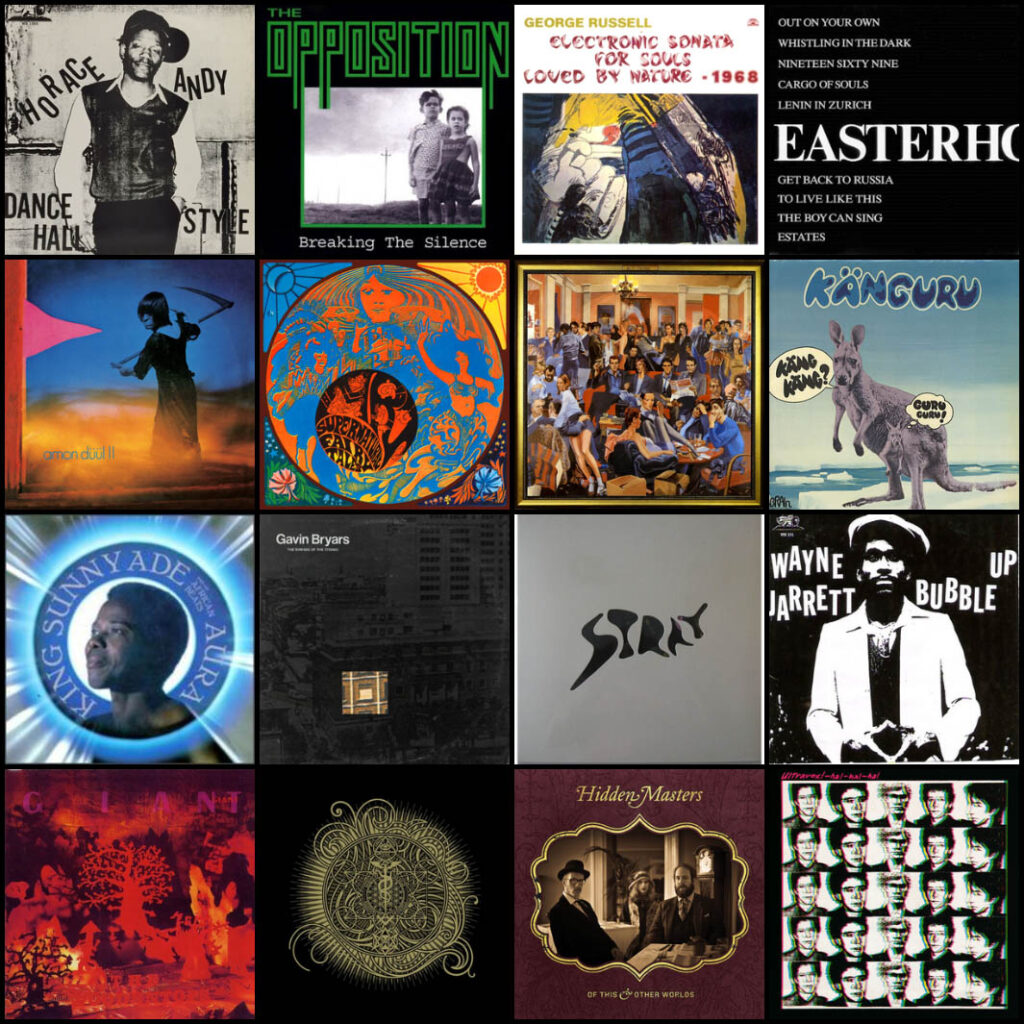
17. Horace Andy – Dance Hall Style (1982)
Reggae legend travels from Jamaica to Queens to record his greatest album with Bullwackie.
I first encountered Horace Andy via his contributions as part of Massive Attack in the early 90s. What a great band, nurturing the fledgling talent of a young Tricky, and also bringing to light an undersung reggae legend. Andy’s real last name is Hinds, and he’s Justin Hinds’ younger cousin. While the 1972 collection Skylarking (not to be confused with a later collection of the same name) is a great introduction to his haunting falsetto vocal talents from his Studio One singles, Blood & Fire reissued his In The Light (1977) album with it’s dub version, and for years that was my favorite thing by him.
However, there’s so much more. Nearly everything he did was gold, but his peak is likely the recordings he did in the Bronx, New York City studio of Lloyd “Bullwackie” Barnes in 1982. Dance Hall Style is just six cuts, but it stretches out to over 41 minutes. Every track is essential, including the excruciatingly beautiful “Spying Glass (aka Live In The City)”, which he later redid with Massive Attack fourteen years later, and it still sounded fresh. Probably because his and other Bullwackie sessions, particularly the tracks that integrate dub into the songs, were a huge influence on the Bristol scene, Portishead, and what was later called, for better and worse, trip hop.
More song-based, from the same sessions is Exclusively, which is nearly as great. They should be released together as a deluxe package. Showcase (1980) is also highly recommended. Hell, how about a box set of everything he did? While we’re at it, everything from Wackie’s is worth hearing, and if you’re a fanatic, you can buy pretty much everything that was reissued on Rhythm & Sound’s Basic Channel label, including John Clarke, Sugar Minott, Wayne Jarrett, Prince Douglas, Milton Henry, and a bunch of dub by the Bullwackie’s All Stars.
18. Opposition – Breaking The Silence (1981)
Opposition are responsible for yet another lost classic from 1981, Breaking The Silence (Double Vision/Red Sun). Formed in London’s southern suburbs in 1978, their 1980 single “This Year” was influenced by ska/reggae through the lens of 2 Tone and the Ruts. Sessions from that period were issued as Lost Songs in 2005. That lineup broke up and they re-formed as a trio with Marcus Bell, taking on a darker post-punk direction. Opposition could easily be credited for being the architects of the shimmering guitar sounds later employed by The Chameleons, had anyone actually noticed them. A listen to “Breaking The Silence” and “Very Little Glory” will leave no doubts that they were trailblazers, and the later cuts like “In My Eyes” display their angry power. Their greatness was recognized by at least one industry executive, as they were signed to Charisma records and released a string of consistently great albums — Intimacy (1983), Promises (1984) and Empire Days (1985). Unfortunately the label did no better than Breathless did in promotions, and all they had to show for their efforts was a strong cult following in France and the Netherlands. Marcus Bell and Mark Long recorded some dance pop in a side project called SO, achieving a minor 1988 hit, “Are You Sure.”
19. George Russell – Electronic Sonata For Souls Loved By Nature (1971)
I don’t include a lot of jazz because it would be hard to know where to stop, given how many people haven’t even gotten into Charles Mingus, for example. This album always seemed to be an extra special lost classic, given how George Russell’s excursions into Experimental Big Band and Third Stream Jazz seemed to culminate with this very unique album recorded in 1969. It’s been a while since I did some deep listening with it, but it combines contemporary classical composition with John Cage style electronic experimenation, and it works! Great title too.
20. Easterhouse – Contenders (1986)
Sharing the same label as The Smiths and The Woodentops, Easterhouse were a Manchester who should have been huge. Their debut was a brilliant mix of post-punk, jangle pop and fiery lefty political rage. Andy Perry’s voice was a potent amalgamation of the timbre and range of Billy MacKenzie (Associates) and grit of Paul Weller. Despite 1986 being the nadir of the Reagan/Thatcher era, American audiences didn’t connect. It’s not like they were the only band with a political message. Stiff Little Fingers were certainly an influence, The Jam, New Model Army and contemporaries The Housemartins and Billy Bragg were just as outspoken. The pomp, bluster of the more lyrically vague U2 and The Alarm were much easier to market. The album climbed to number 3 in the UK albums charts, but the band imploded, leaving only Andy Perry to carry on with the name. He put out the solid Waiting For The Redbird (1989), but the magical alchemy with his brother Ivor’s guitar was no more.
The album became nearly impossible to find, at least for us Yanks in the States, until it was reissued by Cherry Red in 2001. Unfortunately it’s a really poor vinyl rip. Someone has the proper masters, as the version on Spotify sounds excellent. Interpol must have been listening. They claimed to be ignorant of bands like Comsat Angels and The Chameleons, but it turns out perhaps they were studying Easterhouse, especially “Whistling In The Dark.” Word has it that they had a brief low-key reunion show in 2005 with The Smiths’ Andy Rourke joining them. How amazing would it be for a full-on reunion, new music and a proper reissue of their catalog?
21. Amon Düül II – Yeti (1970)
The German Kosmische bands are generally their own category, but there’s definitely prog elements in many of them. Grown like fungus from a harry, hippie commune, the first incarnation of Amon Düül managed one decent album in Pardieswarts Duul. However, it’s the offshoot that produced the most awe-inspiring music, starting with Phallus Dei (1969), translating to “God’s C**k.” The massive double album Yeti is even better, both heavier (lurching psychedelic guitar freakouts) and prettier (“Sandoz in the Rain”).
22. Art – Supernatural Fairy Tales (1967)
A band called the V.I.P.s formed in 1963 playing the freakbeat and R&B of the times. Briefly including Keith Emerson before he formed The Nice, they changed their name to Art in time for their first full-length album, they went all in with psychedelic rock, featuring fabulous cover art by Hapshash And The Coloured Coat. I don’t know if they ever gigged at the UFO club that year with Pink Floyd, Soft Machine and Tomorrow, but the band created some pretty innovative psych on the title track and “Think I’m Going Weird,” while still rocking as hard as anyone in ’67 with “Room With A View,” “Rome Take Away Three” and “Brothers, Dads And Mothers.” The album, however, was to be forgotten, at least until recently, and the band changed their name and style yet again, to Spooky Tooth.
23. The Ruts – The Crack (1979)
I sought this album out for my radio show in the late 80s because it was a key influencer of hardcore bands like Minor Threat, Bad Brains and Black Flag. The Ruts were ferocious, precise, and also handled reggae and dub with much more authentic feel and swing than any of their peers. Legendary among punk fans, it deserves to be more widely known among fans of fiery rock ‘n’ roll.
24. Guru Guru – Känguru (1972)
Guru Guru are kind of the Spinal Tap of the German avant rock scene, with the aptly named Ax Genrich peeling off gonzoid slabs of guitar madness inspired by Hendrix and Blue Cheer, but also anticipating the likes of Chrome and MX-80 Sound with flashes of brilliance that sounds positively post-punk. Their first and fourth albums, UFO (1970) and Guru Guru (1973) are often cited as their best. They’re wrong. Their third album Känguru reflects bandleader and drummer Mani Neumeier’s peak. Learning from his friends Conny Plank and Hans-Joachim Roedelius of Cluster/Harmonia, it’s also their best sounding album. Try Hinten (1971) next. Unfortunately, of their first half dozen albums, Känguru is the only one currently out of print. The cover may look familiar to Pavement fans…
25. King Sunny Ade and His African Beats – Aura (1984)
The third and final album of the trilogy on Island Chris Blackwell’s world music label Mango, at the time it was criticized as over-produced and too compromised from Ade’s more traditional juju arrangements, and failed to make him a global star like Bob Marley. I loved it from the beginning, and it was incredibly patronizing to presume King Sunny was not responsible for the experimentation. Of course he was — the man has recorded over 40 albums since the 60s. He wasn’t some naive bumpkin, he was in control of his art, and more than ready to evolve and progress. Stevie Wonder collaborated on “Ase,” as well as Fela Kuti’s musical director and drummer Tony Allen. Given how both of them influenced Talking Heads and Brian Eno’s Remain in Light (1980), how cool would it have been if he collaborated with Eno? At least we have this, what would eventually become a massively influential electro Afro Pop classic.
26. Gavin Bryars – The Sinking Of The Titanic (1975)
I might have never heard this modern classical outlier example of minimalism if it weren’t for the fact that it’s the first release on Brian Eno’s Obscure label. That connection to the pop world exposed many folks to this eerie hymn on the folly of hubris. There’s been many different recordings of this composition, originally written in 1969, and this is a great one to start with. On the flip side is “Jesus’ Blood Never Failed Me Yet” (written in 1971) which uses a tape loop of a homeless man singing the two lines, each time the speed changing subtly, backed by maudlin yet stately orchestration. Unsurprisingly, it’s a favorite of Tom Waits, who appeared on a 1993 version.
27. Stray – Stray (1970)
Signed to a contract way back in 1966 as young teenagers on the strength of precocious musical talent rivaling Free, Stray have plenty of experience with mod and psychedelia. On their debut album, they nod to their past with the rocking “Only What You Make It” and the psychedelic pop of “Around The World In Eighty Days.” But it’s the sprawling proto-metal of the 9:23 opener “All In Your Mind” that prompted Pentagram to cite them as an influence. Iron Maiden would later record that song as a B-side. The band is tight and cohesive despite exploring additional genres like prog, jazz fusion and Hawkwind-like space rock. Some of their more driving moments even remind me of some early MC5, but more musically diverse and complex. The closing title-track features some scorching Del Bromham guitar solos resembling Sir Lord Baltimore.
28. Wayne Jarrett – Bubble Up (Showcase Vol. 1) (1982)
Initially I thought of Jarrett as a kind of Horace Andy acolyte. With a similar range and a style definitely influenced by Andy, Jarrett didn’t have as long and accomplished career. He did, however, have experience recording with Glen Brown and Junjo Lawes in Jamaica. He came to the Bronx from his home base in Connecticut to record Bubble Up during the same time Andy was recording Dance Hall Style. As he sang in “Magic In The Air,” they were definitely sharing something special in the air, with the material nearly the equal (reference the performance, the bridge, and the dead cool fuzztone guitar on “Every Tongue Shall Tell”). Some fans even rate this album higher than Horace Andy’s classic. The Showcase format means each track includes an extended mix or dub version in the second half, and this is one of the best examples, with Clive Hunt lending Bullwackie a hand in production, as well as flute and keyboards. I wish more vocal reggae albums were done this way, because when the groove is so good, you don’t want it to end, and here, time stretches like taffy. It includes four Studio One versions — Azul on “Rockfort Rock,” Sleepy’s “Every Tongue Shall Tell,” Leroy Sibbles from The Heptones, and a killer Drum Song.
29. The Woodentops – Giant (1986)
Lead by Rolo McGinty, The Woodentops took bits of Suicide, The Talking Heads, XTC , Echo & the Bunnymen and especially the frenetic rhythms of The Feelies, all treated with acoustic folk, twisted with other instrumentation like marimbas, accordian and trumpet. While The Feelies also tackled acoustic guitars on their second album, The Good Earth, The Woodentops still sounded quite different. Their songs had a perfect balance of diverse experimentalism and pop hooks. Morrissey constantly talked them up at the time, which was a brave gesture, considering the strong possibility that Giant was more consistently great than The Smiths’ The Queen Is Dead. If it weren’t for Morrissey’s clever lyrics and two untouchable singles from that album, I’d even say Giant crushed it.
30. Spirits Of The Dead – Rumours Of A Presence (2013)
Third and best album by Norway’s Spirits Of The Dead. It kicks off with “Wheels Of The World,” with a wonderfully propulsive guitar riff that pays homage to Tony Iommi’s riff on “Wheels Of Confusion” from Black Sabbath’s Vol. 4 without copying it. The psychedelic interlude at 2:30 steps the song off to another level, introducing the kind of bittersweet melody that first made Radiohead stars. “Song Of Many Reefs” should please lots of folks who crave the feel of the early Queens Of The Stone Age, which the tune resembles but still retaining the band’s own sound, especially when they stretch out into a proggy excursion with some laid back, virtuostic soloing from Ole Øvstedal. It’s a nice introduction to many of the band’s key strengths. I don’t know if it’s officially a single, but it’s the first song made available from the album.
Psych pop gem “Golden Sun” keeps the hot streak aflame with a gorgeous melody that literally haunted my dreams the first night after I heard it. Amazing. Things take a darker turn with the interlude-length “Dance Of The Dead” with spooky vocal effects. “Rumours Of New Presence” demonstrates vocalist Ragnar Vikse’s versatility, where he starts out in a higher pitch over the watery ambiance that’s more delicate than many female leads in recent bands, but then drops to a more sinister, heavier, doomy style, but without overdoing it. On “Red Death” he shows he can belt it out even heavier to match the album’s loudest, doomiest track. In stark contrast, “Seaweed” is entirely acoustic, played simply but lovely with subtly understated vocals. The album wraps up with the longest track at 7:38, “Oceanus.” Propelled by some cavernous Bonhamesque drumming by Geir Thorstensen and a wickedly complex bass line from Kristian Hultgren, it’s a maritime-themed epic with a powerful groove, one of the band’s most impressive accomplishments. Sadly they struggled to complete another album but it never happened.
31. Hidden Masters – Of This & Other Worlds (2013)
Hidden Masters surpasses many of their with jaw-dropping instrumental prowess with touches of prog (early Jethro Tull and Yes) and proto-metal while writing really great originals.
The first time I heard “She Broke the Clock of the Long Now,” with it’s turn-on-the-dime tempos, unusual minor key progressions and impressive three-part vocal harmonies, I was immediately grinning. It’s a great introduction, with them showing off what they’re capable of. While they may not be as heavy as most of their Rise Above labelmates, they throw in an awesome Sabbath-worthy riff in the middle of “Into the Night Sky” just to remind everyone they could do heavy with the best of ’em. And the songs get even better, with the Beatlesy “Last Days of the Sun,” fantastic guitar lines in “There Are More Things,” and especially “Nobody Knows That We’re Here,” which taps into the vibe of the best The Doors had to offer and the Stones’ “Paint It Black” with the use of Middle-Eastern style progressions. “Like Candy” nearly goes overboard in sugary pop overdrive to the edge of cheesiness, but they pull it off because it’s so well written, performed and sung. Like most of the album, there’s so many surprising twists and turns to the song, it’s so fun to try to anticipate what’s going to happen next.
I’m pretty sure Hidden Masters could play polka styled covers of Katy Perry songs and still sound great. They’re that good.
- Justin Hinds & The Dominoes – Jezebel (1976)
- The Sound – From The Lions Mouth (1981)
- The Birthday Party – The Birthday Party (1980)
- The Comsat Angels – Sleep No More (1981)
- Radio Birdman – Radios Appear (1977)
- Rico – Man From Wareika (1976)
- Modern Eon – Fiction Tales (1981)
- Cedric Im Brooks – The Magical Light Of Saba (1978)
- Flower Travellin’ Band – Satori (1971)
- The Method Actors – Little Figures (1981)
- The Suburbs – Credit In Heaven (1981)
- Au Pairs – Playing With A Different Sex (1981)
- Martha & The Muffins – This Is The Ice Age (1981)
- Wipers – Youth Of America (1981)
- Bob Andy – The Music Inside Me (1976)
- The Pretty Things – Parachute (1970)
- Horace Andy – Dance Hall Style (1982)
- Opposition – Breaking The Silence (1981)
- George Russell – Electronic Sonata For Souls Loved By Nature (1971)
- Easterhouse – Contenders (1986)
- Amon Düül – Yeti (1970)
- Art – Supernatural Fairy Tales (1967
- The Ruts – The Crack (1979)
- Guru Guru – Känguru (1972)
- King Sunny Ade and His African Beats – Aura (1984)
- Gavin Bryars – The Sinking Of The Titanic (1975)
- Stray – Stray (1970)
- Wayne Jarrett – Bubble Up (Showcase Vol. 1) (1982)
- The Woodentops – Giant (1986)
- Spirits Of The Dead – Rumours Of A Presence (2013)
- Hidden Masters – Of This & Other Worlds (2013)
Bubbling Under
- Ultravox – Ha! Ha! Ha! (Island, 1977)
- This Heat – Deceit (Rough Trade, 1981) | Bandcamp
- Felt – Forever Breathes The Lonely Word (Creation, 1986)
- Spooky Tooth – Spooky Two (Island, 1969)
- Junior Delahaye – Showcase (Wackie’s, 1982)
- Gun – Gun (Epic/Repertoire, 1968)
- Noel Ellis – Noel Ellis (Summer/Light In The Attic, 1983)
- Melvins – Bullhead (Boner, 1991)
- Agent Orange – This Is The Voice (Enigma/Restless, 1986)
- Ijahman – Haile I Hymn (Mango/Jahmani, 1978)
May 31, 2026
Fester’s Lucky 13: 1996
April 2, 2026
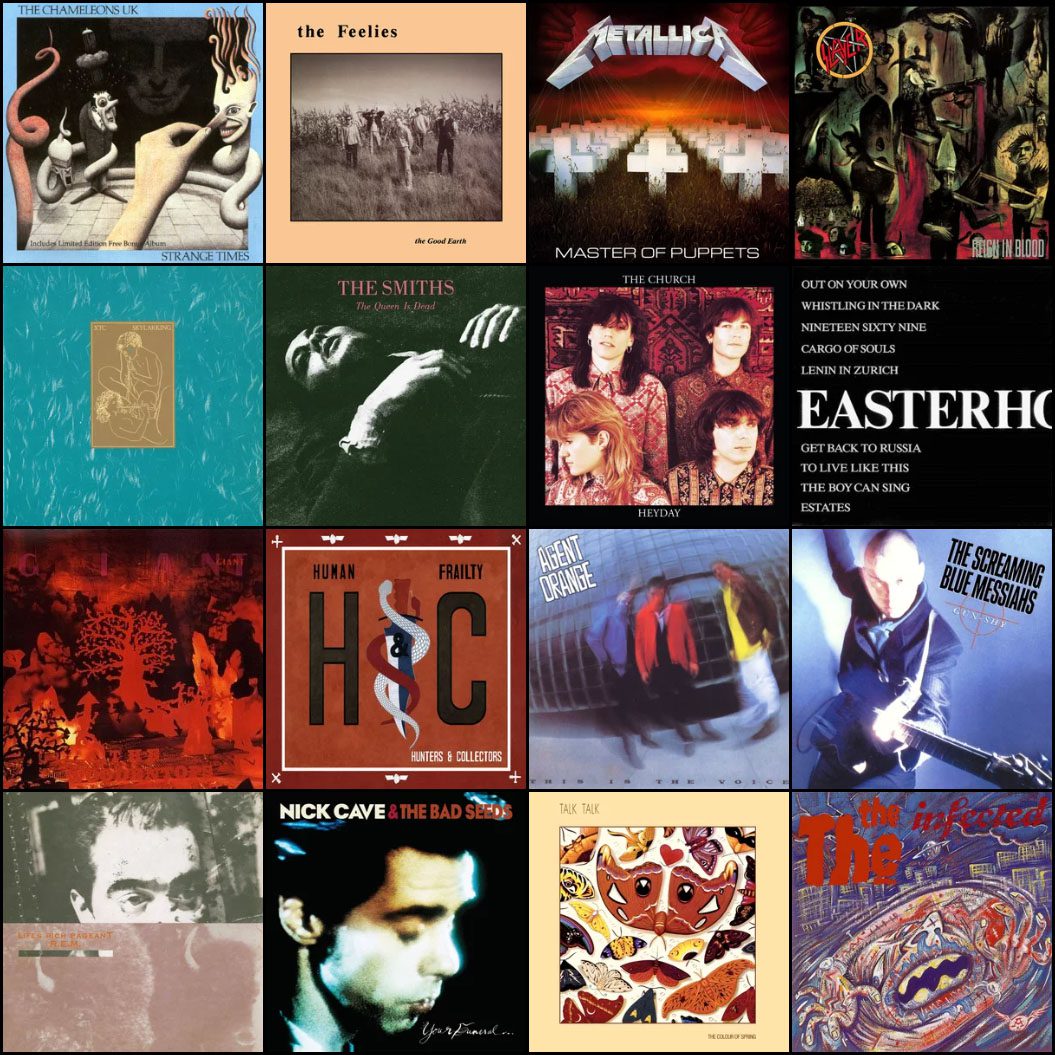
Fester’s Lucky 13: 1986