Coinciding with Sea of Tranquility’s Albums That Are 50 Years Old series, we take a fresh look ‘n’ listen to 1973, shift some favorites around and even discover new ones.

An oversimplified narrative about the mid-1970s was that classic rock had gone stale, prog was bloated beyond listenability, and only punk would save the decade a couple years later. While that is obviously absolute bullshit, there is a little bit a truth to the fact that several key bands and artists were in decline by 1973, and the releases wasn’t quite as impressive as the previous few years. The reception for Yes wobbled with the unwieldy (but still fairly awesome) double album Tales From Topographic Oceans. Opinions were divided over The Who’s second double album rock opera, Quadrophenia. I believe it could have been trimmed and tightened. T. Rex didn’t vary their approach, but had trouble holding onto the magic of their early peak popularity. The Rolling Stones’ Goats Head Soup was not bad at all, but hard to measure up to their classic run of albums up to Exile on Main Street. Wishbone Ash, Van Morrison, Alice Cooper, Santana, Amon Düül II, Guru Guru, Donovan, Deep Purple, Uriah Heep, The Pretty Things, Spooky Tooth, John Lennon among others were all starting to show diminishing returns to varying degrees. Most of the innovative psych prog bands of 1968-72 disappeared with a few exceptions like Pink Floyd transcending genre to become their own brand, and Hawkwind becoming a sort of Grateful Dead of the live circuit in the UK.
However, soul, psychedelic soul, funk, disco, reggae, dub, Afrobeat, jazz fusion, pre-punk, proto-metal, hard rock, space rock, kosmische and art rock were all flourishing. Queen, Lynyrd Skynyrd, Bruce Springsteen, Steely Dan, Electric Light Orchestra, Kraftwerk, ZZ Top were ascending in their careers and creative arcs, and there are easily over 200 good to great albums, more than most people have time to keep track of. So like pretty much every year, it’s still a very good year for music.
Like last year, I followed along with Sea of Tranquility’s Albums that are 50, 40 and 30 years old morning countdowns with my own choices.
1. Iggy & The Stooges – Raw Power

After creating the all-time best album in rock ‘n’ roll, Fun House (1970), the world thanked the Stooges by ignoring them, and occasionally beating Iggy Pop to within an inch of his life. Granted, he probably deserved it, provoking biker gangs and other degenerates at their shows, starting a precarious tradition of flirting with suicide-by-audience that would be carried on by Sid Vicious and the like. They added guitarist James Williamson, which was promising, then promptly got hooked on heroin and dropped by Elektra, which was foreboding. The band fell apart when Iggy took the traditional two year lost weekend in the seedy bars of Hollywood. It took David Bowie to scrape him off the sidewalk, ship him to London and sign him to Columbia. Bowie and management clearly had plans to make Iggy a solo act, but Iggy had other ideas, gradually smuggling one Stooge after another into the studio. While Bowie allegedly mixed the album, my theory was that no one was in the control room, and they just let the needles stay in the red. So it kind of sounds shitty, but just as much as the powerful songwriting and performances, it’s rawness was a definitive influence for thousands of bands to follow.
2. Roxy Music – For Your Pleasure

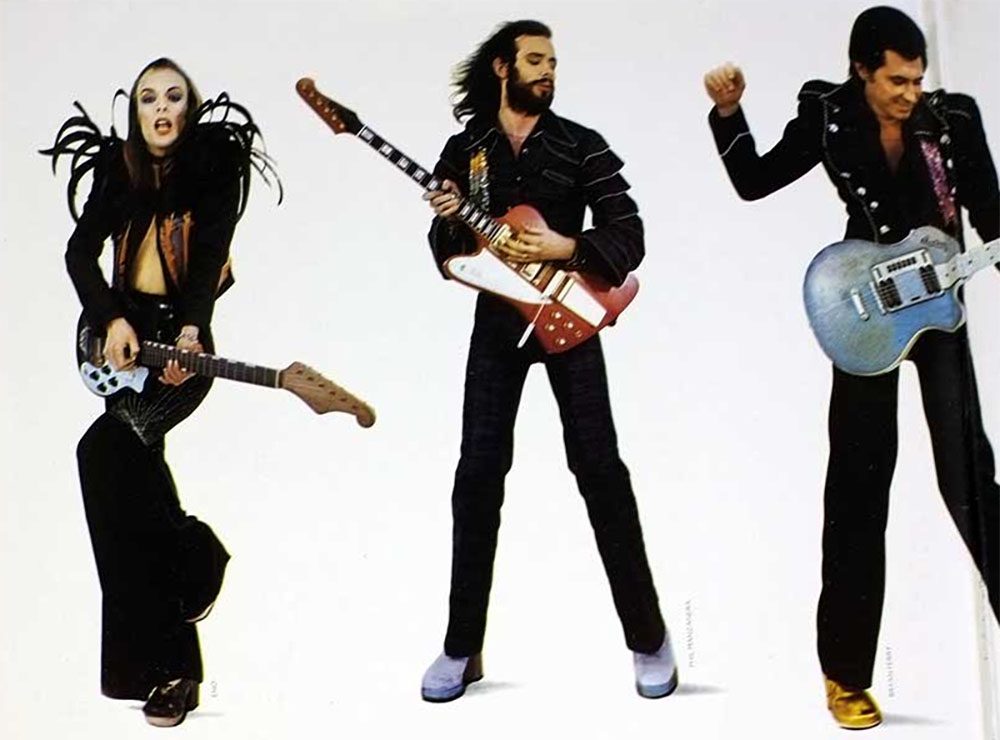
Roxy Music were always much more than a glam band. Guitarist Phil Manzanera also had a band called Quiet Sun with bona fide prog credentials, including Charles Heyward (Gong, This Heat). on drums. Brian Eno may have seemed non-essential with his pre-set synthesizer loops, giving him little else to do other than floof up his fashion game and outshine the rest of the band onstage simply by posing. Along with giving them a kooky flavor of sci-fi madness, Eno was a certified genius, as he would demonstrate on future solo albums and production work. Alas, Roxy Music would no longer benefit from that genius, as Brian Ferry was allegedly jealous that Eno smashed more ass than the rest of the band combined. Fair play mates, they would survive to put out three more excellent albums before faltering, but their second and last album with Eno was their best.
3. Black Sabbath – Sabbath Bloody Sabbath

After back-to-back albums and world tours, Black Sabbath went back to Los Angeles to record their fifth album in four years and were shocked to discover that they were kind of tired and had writer’s block. So they went back to the UK, spent a month rehearsing in a Welsh castle, possibly reduced their cocaine consumption from mountains to molehills in order to get in a few naps, and then banged out this album, with more elaborate prog arrangements and keyboards courtesy of Yes’ Rick Wakeman. It was another masterpiece. Those were different times. No one who knows their history should be surprised at the prog content — Tony Iommi did quit Sabbath to join Jethro Tull briefly before returning to the band with new inspiration. Shortly after its December 28 release, they commenced another world tour, culminating in a triumphant California Jam Festival to a crowd of over 200,000. Bits were televised and elevated their stardom to a new level.
4. New York Dolls – New York Dolls

When I first heard the New York Dolls I’d read about them for years previously. The build-up of how great they were live and an important influence on punk sort of warped my expectations, and their relatively traditional rock ‘n’ roll sound was a disappointment at first. But those songs dug their cheap press-on nails into my soul and didn’t let go, and for the decades since first hearing them, I’d rather listen to them than the contemporary Stones, Aerosmith, most British glam like T. Rex and Slade, and pub rock like Brinsley Schwarz and Dr. Feelgood. Plus I saw them live before half the members croaked and they were indeed glorious fun, even at their advanced ages.
5. David Bowie – Aladdin Sane
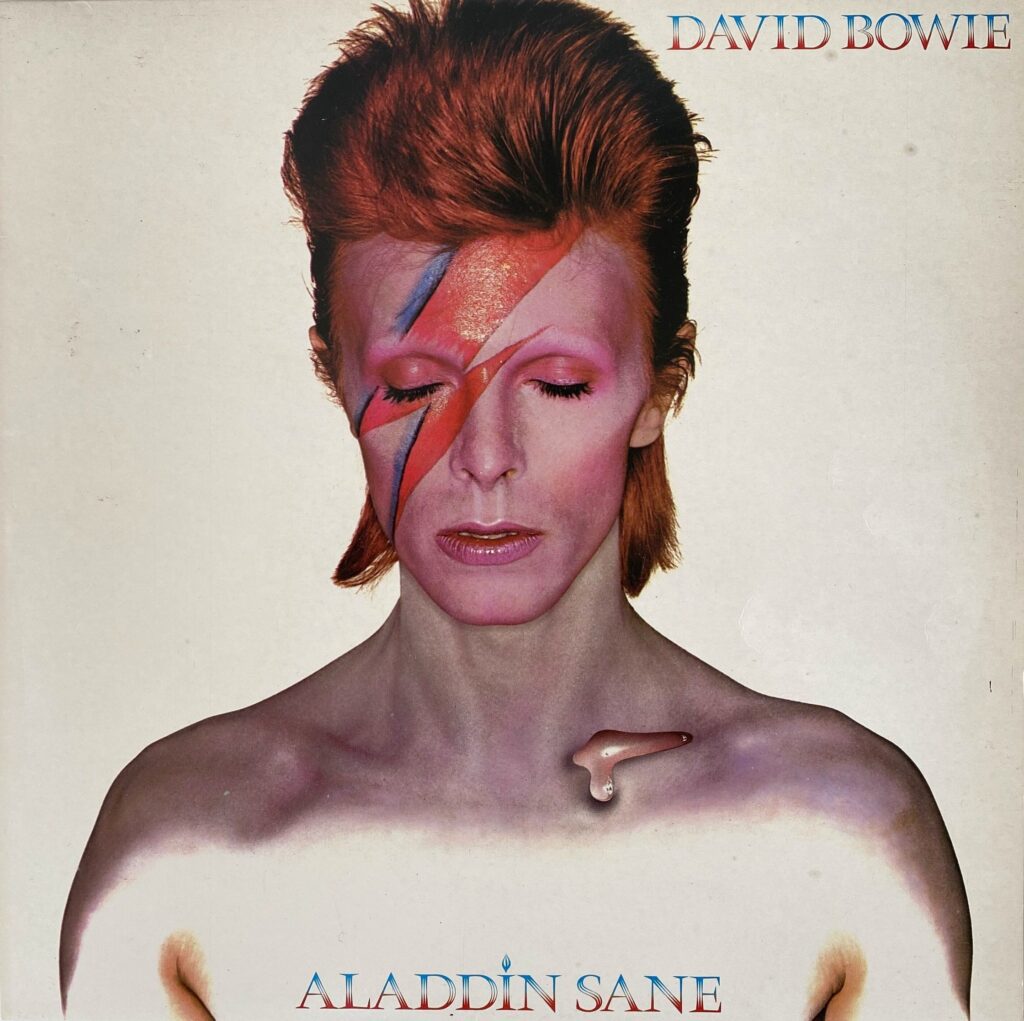
The fact that there are at least eight albums that could be considered Bowie’s best depending on who you ask shows how prolific and consistent he was. My choice has switched between Hunky Dory (1971), Ziggy Stardust (1972) and this over the years, and currently it’s in third position, which is no slouch given he has a baker’s dozen great albums. The remarkable thing is that he’s repeatedly dipped into extremely unpopular cauldrons of underground sounds (Velvet Underground’s avant-garde influences, The Stooges’ slavering, primal rock, German kosmische and on this album, Mike Garson’s edgy piano contributions, especially the title track and “Time”) while remaining a star. This sophisticated art rock would’ve had the glam kids scratching their heads if it weren’t for the irresistable hooks of “The Jean Genie” and “Drive-In Saturday.”
6. Toots & the Maytals – Funky Kingston
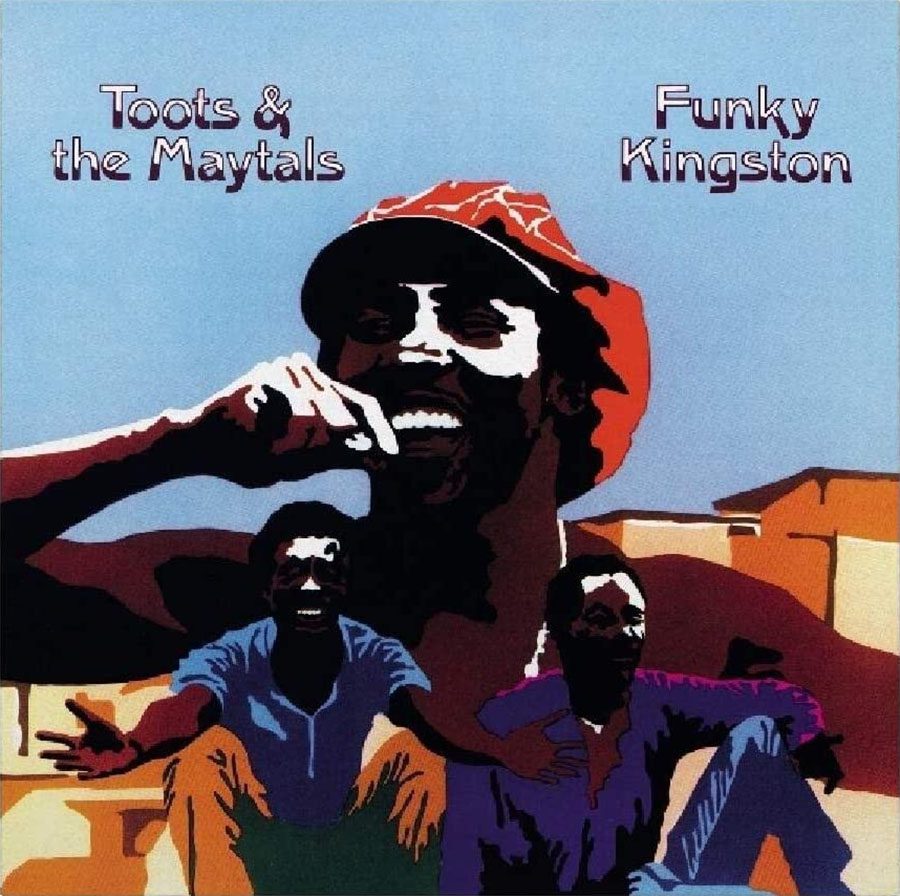
I’ve struggled with this — the Funky Kingston I first knew was more of a compilation that included tracks from In The Dark (1974), which had most of my favorites, “Got to Be There,” “Time Tough,” “Love is Gonna Let Me Down,” “Got to Be There,” jubilant covers of “Louie Louie” and “Country Road,” and their two best songs of all time, “54-46 Was My Number” and “Pressure Drop.” While the comp would rank as possibly my all-time favorite reggae album, the original Funky Kingston is only eight tracks, and feels more subdued, aside from the title track and the bubbly “Pomp and Pride.” So at the last minute, I had to downgrade this, though for the sheer joy I get from Toots’ music, it still edges out the Wailers.
7. Bob Marley & the Wailers – Catch A Fire
If you count The Wailing Wailers’s first album way back in 1965, this Island debut is their fourth album. While some say the Lee Perry produced Soul Revolution (1971) is the best version of the early Wailers, I have to admit I return to later albums much more often. Even with the double disc edition that includes the original more stripped-down Jamaican version, I mainly listen to it for “High Tide or Low Tide” and “All Day All Night,” which weren’t included on the official release that Chris Blackwell “rocked up” with overdubs and a remix to pave the way for American and global success. Whichever you prefer, you get both in that deluxe version, and it’s definitely one of the top ten reggae albums ever.
8. Can – Future Days
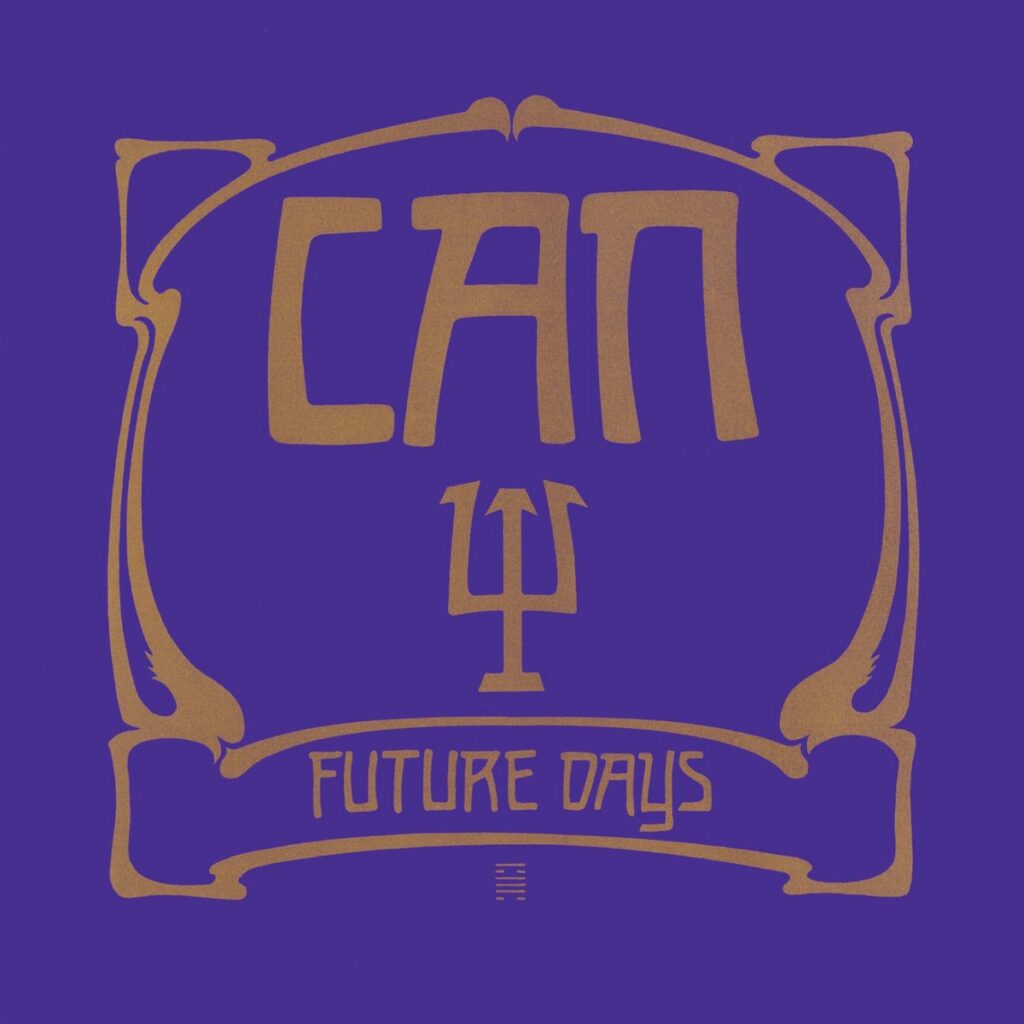
While Tago Mago (1971) and Ege Bamyasi (1972) often get the most critical love, which has gradually become more common the past couple decades in discussions of all-time lists, they continue their streak here. Vocalist Damo Suzuki’s final album with Can, Future Days (1973) calms down the wild experimentation enough to project a more cohesive sound. It aims to sound otherworldly and futuristic and succeeds, making good on the term “kosmische musik” (cosmic music). The band is locked into a hypnotic groove could be credited as an origin of the Western version of “trance” music, which wouldn’t be explored much more for another 20 years. It also anticipates Brian Eno’s ambient music. “Future Days” sets the pace with Jaki Liebezeit’s drums keeping a steady pulse rather than the usual chaotic eruptions, and Michael Karoli’s guitar floating ethereally in the background. Irmin Schmidt introduces more atmospheric keyboards and electronics on “Spray.” “Bel Air” is the 20 minute centerpiece, featuring several peaks and valleys. On the short “Moonshake,” Suzuki’s vocals play a larger role, at least augmenting the rhythm with his whispers. Overall though, he played a more key role in previous albums as the Wildman. Here, he’s not obtrusive, but certainly inessential. Fanboys like Julian Cope in his book Krautrocksampler dismisses later Can because of this, calling Future Days a “schizophrenic stalemate” and dismissing later albums as “patchy, flawed.”
9. Al Green – Call Me

I grew up listening to Otis and Aretha, and as I expanded my soul repertoire in my 20s as everything was being reissued on CD, this was the first I got by Al Green. It took a while to adjust to the more smoove production compared to 60s recordings, but he soon became a favorite and I got all his albums, with I’m Still In Love With You (1972) nudging this one and Let’s Stay Together out for my top spot. Can’t go wrong with Al Jackson behind the kit either.
10. Funkadelic – Cosmic Slop
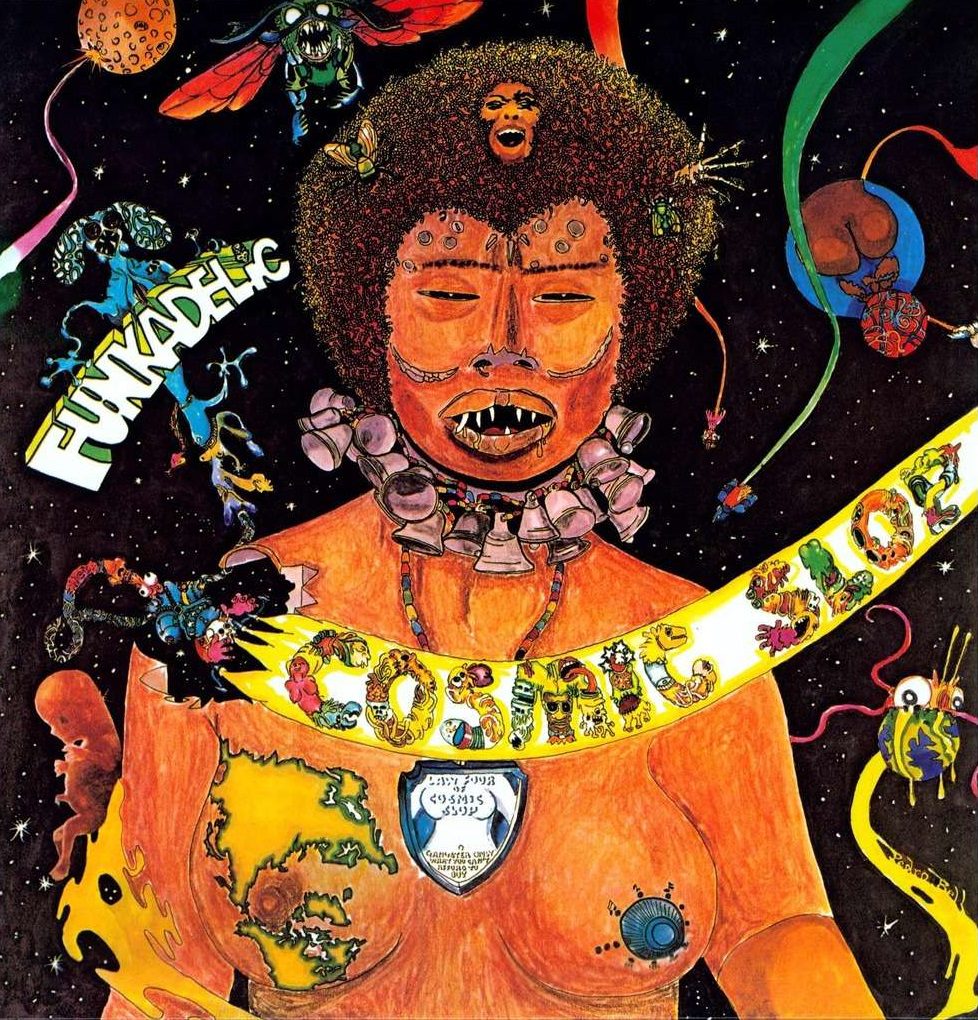
“Wouldn’t you like to come with me and do the cosmic slop?” Ever since the narrator asked, “Mommy, what’s a Funkadelic?” on their 1970 debut, George Clinton’s main crew has frolicked in the space between Sly & the Family Stone, The Isley Brothers and fellow Detroiters MC5 and The Stooges, mixing funk and heavy rock and psych with gleefully demented results, which range from serious social criticism to more whimsical songs. Their fourth album is a nearly perfect balance, and the bouyant title track is an unheralded classic that should be on the radio.
11. Hawkwind – Space Ritual
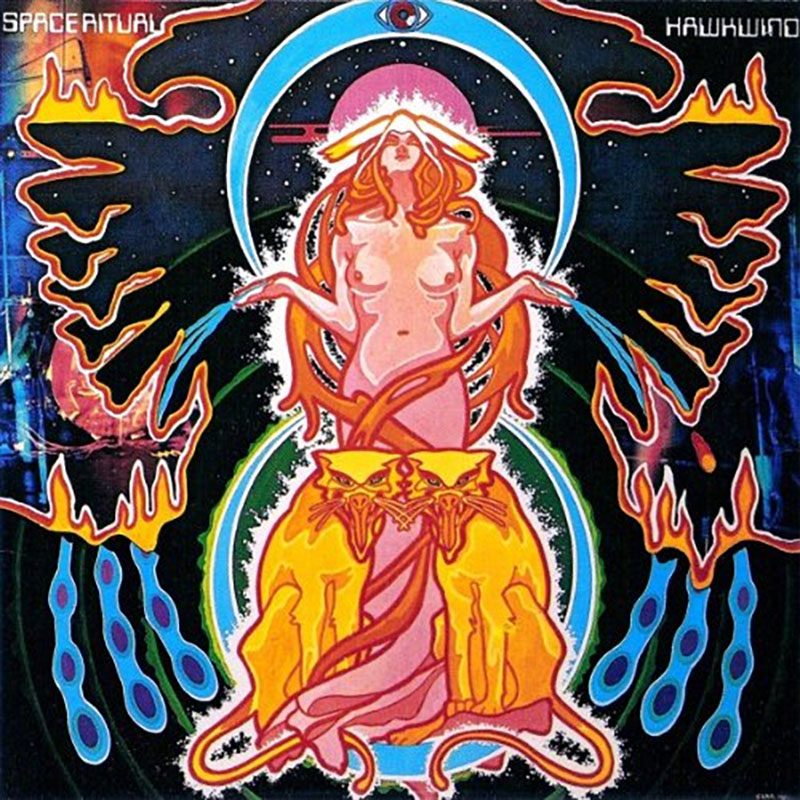
With massive UK pop festivals reaching peak attendance by 1970, hippie bands like Edgar Broughton, Pink Fairies, The Deviants and Hawkwind often played free concerts outside the gates. Along with taking the concept of space rock from Pink Floyd and making it heavier and expanded to a full-blown lifestyle with sci fi lyrics, Hawkwind became the Grateful Dead of the scene, a live juggernaut. So while they did have a run of four solid studio albums, it’s appropriate that they’re best known for this double live album, which has some of the definitive versions of many tunes and singles, and “Sonic Attack” (the “Do Not Panic” meme must have influenced Douglas Adams), “7 By 7,” and signature tune “Orgone Accumulator” not found on the albums. Bonus extra, they unleashed Lemmy onto the world.
12. Led Zeppelin – Houses Of The Holy

Following up Led Zeppelin IV was a tall order, but the band delivered a worthy follow-up, arguably their best-sounding album. A couple tracks aren’t quite up to snuff, but the creamy psych prog of Page’s guitar ebbs and flows on “No Quarter” my favorite track. Other highlights are “The Rain Song,” “The Ocean” and the most Zeppy of songs, “Over the Hills and Far Away.”
13. Free – Heartbreaker

Formed when they were still teenagers, Free were road-hardened veterans by the time of their sixth album, one more than Led Zeppelin had managed, and arguably as impressive a run. Paul Kossoff was only 23, yet he’d already influenced a whole generation of musicians, ranging from Lynyrd Skynyrd to post-punkers like Gang of Four and Modern Eon, who admired the spare economy of their arrangements.

- Bob Marley & the Wailers – Burnin’
It’s frustrating when Bob Marley & the Wailers is the only reggae group most people ever listen to, but at least in 1973, they, along with Toots & the Maytals, are at the top of the game, having been together for a decade at this point. This is their fourth album, and it’s up their with their best. - John Martyn – Solid Air
This is no ordinary British folk album. John Martyn self-produced and pushed himself out of his comfort zone into a unique mix of jazzy picking, Danny Thompson’s (Pentangle) buttery double bass, muted and mutated blues, and integrated sounds that would decades later be called ambient pop. It’s a maverick work along the lines of Van Morrison’s Astral Weeks (1968), Tim Buckley’s Starsailor (1970) or his mate Nick Drake’s Pink Moon (1972), for whom he wrote the title track. The way his slurred vocals are completely enmeshed with the music takes some brain calibration to adjust to, but it’s worth it. - Pink Floyd – Dark Side Of The Moon
It’s been a journey, circling back to the dark side of the moon, from indifference when it was omnipresent on the top 100 chart, disdain when I was supposed to draw a line in the sand when I got into punk, to cautious acceptance, if only for a sleep aid with it’s soothing tones, to actual appreciation. The albums significance with culture at large is as ever changing as my own listening experiences with it, but two things are for certain — it’s incredibly well crafted and an early peak in sound design, and has had a huge influence on a ton of bands I love. - Stevie Wonder – Innervisions
Possibly the peak of Stevie’s run of 5-6 classic albums, he’s smoothly integrated the synthesizers inspired by co-producers Malcolm Cecil and Robert Margouleff of Tonto’s Expanding Headband, while writing some of his best songs, the socially conscious “Living for the City” and “Higher Ground” balanced by the buoyant “Don’t You Worry ‘Bout A Thing.” A singular creative force and inspiration for the likes of Prince. - Herbie Hancock – Head Hunters
It’s been a while since I studied Miles Davis, and I feel like I need to read more books about the jazz giant, because it still boggles my mind the amount of talent he was able to pack into his bands throughout the decades. Coltrane, John McLaughlin, Tony Williams and Herbie Hancock, man. Hancock had already spread his wings with a series of landmark albums through the 60s, but his innovations with jazz-funk and fusion took an increasingly innovative path from Fat Albert Rotunda (1970), Mwandishi (1971), Crossings (1972) and Sextant (1973), peaking with the amazing Head Hunters. Sextant was also amazing, and for years was my top choice, but re-listening to them back to back, Head Hunters still sounds so startingly fresh with it’s use of electronics, that were it released today it would get rave reviews as innovative music. - João Gilberto – João Gilberto
The Brazilian bossa nova pioneer is responsible for at least three landmark albums — his debut Chega de saudade (1959), the samba-jazz of Getz / Gilberto with Stan Getz & Antônio Carlos Jobim (1963) and his self-titled white album. His most delicate, gentle batch of tunes was a massive influence on artists throughout the world, from breathy folk singers to indie slowcore bands like Low. - Lee Perry & the Upsetters – Blackboard Jungle Dub
“It was only four tracks written on the machine, but I was picking up twenty from the extra terrestrial squad. I am the dub shepherd.” — Lee “Scratch” Perry.
This groundbreaking album of early dub has a confusing release history. It was originally pressed in a blank sleeve with the label titled, Upsetters 14 Dub Blackboard Jungle. Only 200 copies were pressed, and Perry brought 100 to the UK and sold them to those ‘in the know’ for about £20 each. I firat got it in the 90s as part of Scratch Attack, with very poor sound quality and incorrect songtitles. Trojan finally set it right in 2004 in full sonic glory. No other album at the time could compare to Perry’s wildly imaginative transformations of ordinary rhythm tracks into a landmark dub release, Jamaica’s version of psychedelia.
- Thin Lizzy – Vagabonds of the Western World
While their third album still predates the band’s signature twin lead guitar lineup, Eric Bell was a shit hot guitarist, case in point, “The Rocker.” This is the album when Phil Lynott’s songwriting really stepped up, with “Mama Nature Said,” the title track and especially the gorgeous “Little Girl in Bloom.” While some note Fighting (1975) as the start of Thin Lizzy’s classic run, I’d say it starts right here. - Pink Fairies – Kings Of Oblivion
The Pink Fairies are the missing link between Neanderthals and humans. No wait, that’s not right, they’re the missing link between The Deviants (with Twink, Wally of The Pretty Things, Steve Peregrine Took of Tyrannnosaurus Rex and Mick Farren) and Motörhead, particularly on the lineup of their third album with Larry Wallis. As expected, it’s a blundering mix of goofy hippie acid whimsey and amphetamine-driven hard rock. Fuck yea! - Fela Ransome Kuti & The Afrika 70 – Gentleman
After Fela Kuti died in 1997, the consensus go-to entrypoint to his massive catalog became Zombie (1977), and a bit later, Expensive Shit (1975), partly just due to the attention-catching title and backstory. The King of Afrobeat’s work was pretty consistent, so it’s hard to go wrong with most of the albums, which can get overwhelming. Among the earlier albums, Roforofo Fight (1972) and Gentleman (1973) are highly rated, as well as Afrodisiac, also from 1973, which are re-recordings of older songs. In a way, Gentleman is an important part of Kuti’s personality boiled down to it’s simplest essence. Kuti, known for often wearing nothing but a pair of stained tighty-whities and a spliff as big as a baby’s arm, criticizes people who wear too many clothes. A nice breather before Kuti returns to politics that lead to him being repeatedly beaten and jailed. - Budgie – Never Turn Your Back On A Friend
The third and best album from the Welsh proto-metal/hard rock power trio has been perpetually underrated from the beginning. I’m not sure why — did they not tour North America? Did they have a terrible stage show? Whatever the case, there’s no shortage of undersung heavy bands, but Budgie are definitely an important one, and have been gradually getting more attention over the past 15 years thanks to the efforts of Martin Popoff, the 2005 reissues, and now Pete including them in his countdown. - John McLaughlin & Carlos Santana – Love Devotion Surrender
The Miles Davis/Mahavishnu Orchestra guitarist teams up with Santana to pay tribute to John Coltrane. How cool is that? - Tom Waits – Closing Time
For his debut album, Tom Waits was 24 going on 74, sounding like he was possessed by a ghost from the Tin Pan Alley era, especially with the heartbreakingly bittersweet ballad “Martha.” On footage of his TV appearaches through the 70s, he appeared as an insufferably insincere pseudo-beatnik hipster asshole drunk. But at the very beginning, he sounded incredibly genuine. Thankfully, he eventually aged gracefully into a persona that was far more likeable. - Tom Zé – Todos Os Olhos
While he was not included in the landmark compilation, Tropicália – Ou Panis et Circenses (1968), Tom Zé was very much part of Brazil’s revolutionary Tropicália movement. While most artists and writers declared it to be over before the 1970s, before most people even heard of it (much like punk at the time), it’s influence and sort of post-modern pastiche approach to mixing sounds, cultures nad genres, grew exponentially over the following decades. While Zé’s fourth album was mainly categorized as MPB (Música popular brasileira), he was by far the most experimental of his era, kind of the Brazilian equivalent to Captain Beefheart, subverting traditional samba and folk with avant-garde approaches while still retaining some accessibility. This one falls in the middle of a three-album run of classics that will peak with his most highly regarded album, Estudando o samba (1976). - Lonnie Liston Smith & The Cosmic Echoes – Astral Traveling
Smith’s first album as a band leader shows his roots as a Pharoah Sanders acolyte, but with his own dreamy spin on spiritual jazz/fusion. I can’t say it’s necessarily artistically superior to other albums that year by Donald Byrd, Rahsaan Roland Kirk or The Mahavishnu Orchestra, but to my ears it sounds prescient of what’s going on in recent years, and sounds all the more fresh for it. - Etta James – Etta James
When I learned that Esther Phillips covered James’ “All The Way Down” (on Capricorn Princess), and that they were old friends, it made sense. They share a lot in common, and can both relate to that song. Both became professional singers, discovered by Johnny Otis in the ’50s when they were very young, barely in their teens (Esther was 13, Etta 14). Both developed heroin addictions that haunted them through their careers. And both, despite being tremendous talents, spent the 60s jumping between jazz, R&B, pop and soul, not finding consistent success, much like Aretha Franklin did in her Columbia years. James of course did come up with the timeless “At Last” in 1961, destined to be used in tons of movies and every freakin’ wedding until the end of time. And Tell Mama (1967), recorded in Muscle Shoals, was a soul classic. Nevertheless, her 70s albums are even more neglected and forgotten than Esther Phillips’. Her self-titled album in 1973 featured heavier funk and rock-influenced production (by Steppenwolf and Three Dog Night producer Gabriel Mekler) that was well suited to James’ deepening voice. The songs and performances are consistently great, making this another true lost gem, that again, MOJO missed. The aformentioned centerpiece, co-written by Mekler, “All The Way Down,” became a top 30 hit, and was wildly popular in gay clubs that celebrated its vividly sordid subject matter. She even performed it at The Continental Bathhouse. The landmark album was reissued by Hip-O Select. Come A Little Closer (1974) was nearly as great, despite the fact that James was in rehab the entire time she recorded it. Bettah Than Evah (1976) and Deep In The Night (1978) suffered somewhat diminishing returns, but well worth hearing for fans. - John Cale – Paris 1919
Like Berlin, it took people a while to come around to Cale’s fourth solo album as his best album. When I was in college everyone was all about Fear (1974) for it’s prickly proto-punk influence. It took another couple decades for baroque art pop and chamber folk to become fashionable again. I don’t recall there ever being a narrative of Cale being held over a barrel to create a make-or-break hit like Springsteen and to an extent Reed. I suppose there were different expectations due to Cale’s credentials as a classically trained avant-garde musician. With his first three solo albums he mixed baroque pop with country rock, art rock, experimental post-minimalism and modern classical. Basically John Cale did whatever the fuck John Cale wanted. Here he teamed up with producer Chris Thomas, fresh off projects with Procol Harum and Roxy Music, as well as mixing assistance and “supervision” for Pink Floyd’s Dark Side, so of course it sounds lush and fantastic. Recorded in sunny L.A., his backup band was an incredibly tight Little Feat. Cale would return to this kind of literate art pop from time to time, but never with such beautiful, emotional resonance. - Lou Reed – Berlin
After Lou Reed’s first solo album tanked, it seemed like he was teetering between retreating to life in the suburbs and a day job, or spiraling into junkie depravity. Bowie saved/doomed him with his pixie dust, turning Transformer into a hit, and enabling Reed to continue being an addict and an asshole, but with enough support from his entourage to prevent him from dying in a gutter. His maudlin art rock opera confused some folks at the time, but in retrospect, Berlin’s overreach aged well into a bold, powerful statement, one of Reed’s best.
Bubbling Under

Former Procol Harum guitarist Robin Trower leaned hard into Hendrix worship on this first solo album with scintillating results, a trilogy that peaked with next album Bridge of Sighs (1974). It’s hard to beat his timeless self titled solo debut from 1970 and the soundtrack for Super Fly (1972), but Curtis Mayfield comes close with his meditation on the challenges facing a returning Vietnam vet. It without a doubt contains all the grit, sincerity and heart missing from Marvin Gaye’s overrated What’s Going On (1971). John Mahavishnu McLaughlin was on fire with his tribute album to John Coltrane in collaboration with Carlos Santana, and his second album with The Mahavishnu Orchestra. While not as highly regarded as There’s A Riot Goin’ On (1971), Sly & The Family Stone’s Fresh sounded just that, a jubilant bounce back from the downer vibes of the last album.
Back then I can see why some might have thought guitar pioneer Link Wray would be assumed to be as out of touch as other 50s artists. 1958, when he released “Rumble,” seemed a long time ago. But when he started his classic run of early 70s albums, it had only been 11 years since his 1960 debut album, which nowadays is just a blink of the eye. The amazing mix of country, blues, swamp rock, gospel, Native American chants and folk rock on his Shack Trilogy (recorded on a three track at his family’s former chicken shack), concluding with Beans and Fatback, deserve revisiting, and a deluxe reissue.
Bands inspired by Led Zeppelin (Queen) and Free (Lynyrd Skynyrd) released strong debut albums with very much their own spin on their influences, soon to become legends themselves. More top-notch kosmische (Neu!), jazz (Donald Byrd), prog (King Crimson) and soul (Terry Callier) fill out the top 42.
But don’t stop there. I give a rare peek at my rating system, which garnered so much damned whingeing over the years that I just hid it. There was approximately just under 10,000 albums released worldwide in 1973. Given the fact that there are now over 100,000 albums released every year, it is indeed quite impressive that there are no less than 65 albums that got a 10- rating that year. The top 20 were 10s.
New Discoveries
I knew these artists, but had not heard their particular albums from 1973 until this month. Judee Sill, Margie Joseph, Peter Hammill, The Fatback Band, Sir Joe Quarterman & Free Soul, Skull Snaps, The Dramatics, MFSB, Elaine Brown.
Top 200
- Iggy & The Stooges – Raw Power (Columbia) | 10
- Black Sabbath – Sabbath Bloody Sabbath (WB) | 10
- Toots & the Maytals – Funky Kingston (Mango) | 10
- Roxy Music – For Your Pleasure (EG) | 10
- New York Dolls – New York Dolls (Mercury) | 10
- David Bowie – Aladdin Sane (Rykodisc) | 10
- Bob Marley & the Wailers – Catch A Fire (Tuff Gong) | 10
- Can – Future Days (Spoon) | Bandcamp | 10
- Al Green – Call Me (Hi) | 10
- Led Zeppelin – Houses Of The Holy (Atlantic) | 10
- Hawkwind – Space Ritual (United Artists) | 10
- Free – Heartbreaker (A&M) | 10
- Bob Marley & the Wailers – Burnin’ (Tuff Gong) | 10
- John Martyn – Solid Air (Island) | 10
- Stevie Wonder – Innervisions (Tamla) | 10
- Mott The Hoople – Mott (Columbia) | 10
- Herbie Hancock – Head Hunters (Columbia) | 10
- Donny Hathaway – Extension Of A Man (Atlantic) | 10
- João Gilberto – João Gilberto (Polydor) | 10
- Pink Floyd – Dark Side Of The Moon (Harvest) | 10
- Genesis – Selling England By The Pound (Atlantic) | 10
- Lee Perry & the Upsetters – Blackboard Jungle Dub (Upsetter) | 10
- Mahavishnu Orchestra – Birds Of Fire (Columbia) | 10-
- Roxy Music – Stranded (EG) | 10-
- Robin Trower – Twice Removed From Yesterday (Chrysalis) | 10-
- T. Rex – Tanx (Mercury) | 10-
- Lynyrd Skynyrd – Pronounced Leh-Nerd Skin-Nerd (MCA) | 10-
- The Who – Quadrophenia (MCA) | 10-
- Funkadelic – Cosmic Slop (Westbound) | Bandcamp | 10-
- Alice Cooper – Billion Dollar Babies (WB) | 10-
- Raspberries – Side Three (Capitol) | 10-
- Curtis Mayfield – Back To The World (Curtom) | 10-
- Budgie – Never Turn Your Back On A Friend (MCA) | 10-
- Mahavishnu Orchestra – The Lost Trident Sessions (Legacy) | 10-
- Thin Lizzy – Vagabonds of the Western World (Deram) | 10-
- Ollie Nightingale – Sweet Surrender (Pride) | 10-
- Queen – Queen (Elektra) | 10-
- Cockney Rebel – The Human Menagerie (EMI) | 10-
- Granicus – Granicus (RCA/Free) | 10-
- Return To Forever – Light As A Feather (Polydor) | 10-
- Montrose – Montrose (WB) | 10-
- Pink Fairies – Kings Of Oblivion (Polydor) | 10-
- John Cale – Paris 1919 (WB) | 10-
- Lou Reed – Berlin (RCA) | 10-
- Esther Phillips – Black-Eyed Blues (Kudu) | 10-
- Fela Ransome Kuti & Africa 70 – Gentleman (Universal) | Bandcamp | 10-
- Carlos Santana & Mahavishnu John McLaughlin – Love Devotion Surrender (Columbia) | 10-
- Ian Matthews – Valley Hi (Elektra) | 10-
- The Temptations – 1990 (Motown) | 10-
- Betty Davis – Betty Davis (Just Sunshine/Aztec) | Bandcamp | 10-
- Lonnie Liston Smith & The Cosmic Echoes – Astral Traveling (RCA) | 10-
- ZZ Top – Tres Hombres (WB) | 10-
- Etta James – Etta James (Chess/Hip-O Select) | 10-
- Sly & The Family Stone – Fresh (Epic) | 10-
- The Rolling Stones – Goats Head Soup (Rolling Stones ) | 10-
- Space Opera – Space Opera (Columbia) | 10-
- Link Wray – Beans And Fatback (Virgin) | 10-
- Neu! – Neu! 2 (Brain) | 10-
- The Temptations – Masterpiece (Motown) | 9+
- Donald Byrd – Black Byrd (Blue Note) | 10-
- King Crimson – Larks’ Tongues In Aspic (Atlantic) | 10-
- Herbie Hancock – Sextant (Columbia) | 10-
- Yes – Tales From Topographic Oceans (Atlantic) | 10-
- Return To Forever – Hymn of the Seventh Galaxy (Polydor) | 10-
- Rahsaan Roland Kirk – Prepare Thyself to Deal With a Miracle (Atlantic) | 10-
- Fela Ransome Kuti & Africa 70 – Afrodisiac (Universal) | Bandcamp | 10-
- Buffalo – Volcanic Rock (Vertigo) | 10-
- Tom Zé – Todos Os Olhos (EW ) | 10-
- Bobby Womack – Facts of Life (United Artists) | 10-
- Milton Nascimento – Milagre dos peixes (Odeon/Universal) | 10-
- Bruce Springsteen – The Wild, The Innocent & The E Street Shuffle (Columbia) | 10-
- Serge Gainsbourg – Vu De L’ Exterieur (Philips Fr) | 10-
- The Isley Brothers – 3 + 3 (T Neck) | 10-
- Faces – Ooh La La (WB) | 10-
- Augustus Pablo – This Is (Kaya/Heartbeat) | 10-
- Mahavishnu Orchestra – Between Nothingness And Eternity (Columbia) | 10-
- Gong – The Flying Teapot (Radio Gnome Invisible Pt. 1) (Virgin/Charly) | 10-
- Magma – Mekanïk Destruktïw Kommandöh (Vertigo/Seventh) | 10-
- Larry Young – Lawrence of Newark (Perception) | Bandcamp | 10-
- Procol Harum – Grand Hotel (A&M) | 10-
- Gentle Giant – In A Glass House (PolyGram ) | 10-
- Rory Gallagher – Tattoo (Polydor) | 10-
- Joe Henderson & Alice Coltrane – The Elements (Fantasy/OJC) | 10-
- Traffic – Shoot Out At The Fantasy Factory (Island) | 10-
- Soft Machine – Six (Columbia) | 10-
- 10cc – 10cc (UK) | 10-
- Klaus Schulze – Cyborg (Ohr) | 10-
- Steely Dan – Countdown To Ecstasy (MCA) | 10-
- Gong – Angel’s Egg (Radio Gnome Invisible Pt. 2) (Virgin/Charly) | 10-
- McCoy Tyner – Extensions (Blue Note) | 10-
- Blue Öyster Cult – Tyranny And Mutation (Columbia) | 10-
- Todd Rundgren – A Wizard, A True Star (WB/Rhino) | 10-
- Fripp & Eno – (No Pussyfooting) (EG/Island) | 10-
- Jobriath – Jobriath (Elektra) | 9+
- Judee Sill – Heart Food (Asylum) | 9+
- Strawbs – Bursting At The Seams (A&M) | 9+
- Sparks – A Woofer In Tweeter’s Clothing (Bearsville ) | 9+
- Bruce Springsteen – Greetings From Asbury Park, NJ (Columbia) | 9+
- Terry Callier – I Just Can’t Help Myself (Verve) | 9+
- Caravan – For Girls Who Grow Plump In The Night (Deram) | 9+
- Terry Reid – River (Atlantic) | 9+
- Nazareth – Razamanaz (A&M) | 9+
- Eddie Kendricks – Eddie Kendricks (Motown) | 9+
- Nazareth – Loud ‘n’ Proud (A&M) | 9+
- Camel – Camel (MCA) | 9+
- Santana – Welcome (Columbia) | 9+
- Wishbone Ash – Wishbone Four (MCA) | 9+
- Marvin Gaye – Let’s Get It On (Motown) | 9+
- Airto – Fingers (Arista) | 9+
- Socrates Drank The Conium – On The Wings (Polydor) | 9+
- Paul McCartney & Wings – Band On The Run (EMI) | 9+
- The Staple Singers – Be What You Are (Stax) | 9+
- String Driven Thing – The Machine That Cried (Charisma) | 9+
- Mike Oldfield – Tubular Bells (Virgin) | 9+
- Tom Waits – Closing Time (Asylum) | Bandcamp | 9+
- Bob Seger – Back in ’72 (Reprise) | 9+
- Nektar – Remember The Future (United Artists) | 9+
- The Beatles – Band On The Run (soniclovenoize) | Free | 9+
- Ike & Tina Turner – Nutbush City Limits (United Artists) | 9+
- James Brown – The Payback (Polydor) | 9+
- Tangerine Dream – Atem (Relativity) | 9+
- Faust – The Faust Tapes (Cuneiform ) | 9+
- Hugh Hopper – 1984 (CBS/Cuneiform) | Bandcamp | 9+
- David Blue – Nice Baby and the Angel (Asylum) | 9+
- Neil Young – Time Fades Away (Reprise) | 9+
- Secos & Molhados – Secos & Molhados (Continental) | 9+
- Agitation Free – 2nd (Vertigo) | 9+
- The J.B.’s – Doing it to Death (Polydor) | 9+
- Area – Arbeit macht frei (Cramps) | 9+
- Maynard Ferguson – M.F. Horn 3 (Columbia) | 9+
- Henry Cow – The Henry Cow Legend (Virgin) | Bandcamp | 9+
- Labi Siffre – For the Children (EMI) | 9+
- Dr. John – In the Right Place (Atco) | 9+
- Silverhead – 16 and Savaged (MCA) | 9+
- Elis Regina – Elis (Philips) | 9+
- Captain Beyond – Sufficiently Breathless (Capricorn) | 9+
- Irma Thomas – In Between Tears (Alive) | 9+
- Billy Cobham – Spectrum (Atlantic) | 9+
- Ainigma – Diluvium (Arc/Garden of Delights) | 9+
- Kraan – Wintrup (Spiegelei) | 9+
- Status Quo – Hello! (Vertigo) | 9+
- Le Orme – Felona e Sorona (Philips/Universal) | 9+
- Renaissance – Ashes Are Burning (Capitol) | 9+
- Incredible Hog – Volume 1 (Dart) | 9+
- Battiato – Sulle corde di Aries (Bla Bla) | 9+
- Margie Joseph – Margie Joseph (Atlantic) | 9+
- Poco – Crazy Eyes (Epic) | 9+
- Son Seals – The Son Seals Blues Band (Alligator) | 9+
- Emerson Lake & Palmer – Brain Salad Surgery (Atlantic) | 9+
- Egberto Gismonti – Egberto Gismonti (Odeon) | 9+
- Michael Nesmith – Pretty Much Your Standard Ranch Stash (Island) | 9+
- Joe Walsh – The Smoker You Drink, The Player You Get (Dunhill) | 9+
- Syl Johnson – Is It Because I’m Black (Hi ) | 9+
- Billy Paul – War Of The Gods (Philadelphia International/EMI) | 9+
- Weather Report – Sweetnighter (Columbia) | 9+
- Groove Holmes – New Groove (Groove Merchant) | 9+
- Kebnekaise – Kebnekaise II (Silence) | 9+
- Kool & The Gang – Wild and Peaceful (De-Lite) | 9+
- Jackie Wilson – Beautiful Day (Brunswick) | 9+
- Lowell Fulson – I’ve Got the Blues (Jewel) | 9+
- Gram Parsons – GP (Reprise) | 9+
- NRBQ – Workshop (Kama Sutra) | 9+
- Waylon Jennings – Lonesome, On’ry and Mean (RCA) | 9+
- Jane – Here We Are (Brain) | 9+
- Jerry Jeff Walker – Viva Terlingua! (MCA) | 9+
- Elton John – Goodbye Yellow Brick Road (Polygram) | 9+
- The O’Jays – Ship Ahoy (CBS ) | 9+
- Paul Kossoff – Back Street Crawler (Island) | 9+
- The Doobie Brothers – The Captain And Me (WB) | 9+
- Dusty Springfield – Cameo (Philips) | 9+
- Little Feat – Dixie Chicken (WB) | 9+
- Tower Of Power – Tower Of Power (Columbia) | 9+
- Steeleye Span – Parcel Of Rogues (Chrysalis) | 9+
- Electric Light Orchestra – On The Third Day (Jet) | 9+
- Kevin Coyne – Marjory Razorblade (Virgin) | 9+
- Soft Machine – Seven (Columbia) | 9+
- Bill Withers – Live At Carnegie Hall (A&M) | 9+
- Paul Simon – There Goes Rhymin’ Simon (WB) | 9+
- Rory Gallagher – Blueprint (Polydor) | 9+
- Eagles – Desperado (Asylum) | 9+
- Yes – Yessongs (Atlantic) | 9+
- Roy Harper – Lifemask (Resurgent) | 9+
- Genesis – Live (Charisma) | 9+
- Eloy – Inside (Harvest) | 9+
- Wishbone Ash – Live Dates (MCA) | 9+
- Uriah Heep – Live (Mercury) | 9+
- Sweet – Live at the Rainbow (RCA) | 9+
- Eddie Henderson – Realization (Capricorn) | 9+
- Grover Washington Jr. – Soul Box Vol. 1 (Kudu) | 9+
- Sandy Denny – Like an Old Fashioned Waltz (Island) | 9+
- Tempest – Tempest (Island/Esoteric) | 9+
- David Ruffin – David Ruffin (Motown) | 9+
- The Fatback Band – People Music (Perception) | 9+
- Burning Spear – Studio One Presents Burning Spear (Studio One) | 9+
- The Beach Boys – Holland (Reprise) | 9+
- Sun Ra & his Arkestra – Space Is The Place (Blue Thumb) | Bandcamp | 9+
- Sir Joe Quarterman & Free Soul – Sir Joe Quarterman & Free Soul (GSF) | 9+
- Willie Nelson – Shotgun Willie (Atlantic) | 9+
- Jethro Tull – A Passion Play (Reprise) | 9+
- Peter Hammill – Chameleon in the Shadow of the Night (Charisma) | 9+
Books
- William Golding – The Princess Bride
- Madeleine L’Engle – A Wind in the Door
- Thomas Pynchon – Gravity’s Rainbow
- J.G. Ballard – Crash
- John Bellairs & Edward Gorey – The House With a Clock in Its Walls
- Robert A. Heinlein – Time Enough For Love
- Kurt Vonnegut – Breakfast of Champions
- Susan Cooper – The Dark is Rising
- Mary Stewart – Hollow Hills
- Graham Greene – The Honorary Consul
- Erica Jong – Fear of Flying
- Gore Vidal – Burr
- Roger Zelazny – The Guns of Avalon
Movies
- Sleeper (Woody Allen)
- The Exorcist (William Friedkin)
- Enter the Dragon (Robert Clouse)
- Fantastic Planet (René Laloux)
- The Holy Mountain (Alejandro Jodorowsky)
- Mean Streets (Martin Scorcese)
- Westworld (Michael Crichton)
- Don’t Look Now (Nicolas Roeg)
- American Graffiti (Francis Ford Coppola)
- The Spirit of the Beehive (Víctor Erice)
- Belladonna of Sadness (Eiichi Yamamoto)
- Badlands (Terrence Malick)
- Coffy (Jack Hill))
Bubbling under: The Long Goodbye, Cries and Whispers, Last Tango in Paris, Soylent Green, Heavy Traffic, The Emigrants, Blume in Love, The Iceman Cometh, Fellini’s Roma, Live and Let Die, The Way We Were, Cleopatra Jones, The Satanic Rites of Dracula, Don’t Be Afraid of the Dark, Baba Yaga, Black Caesar, The Paper Chase, The Reincarnation of Isabell, The Mack.
April 2, 2026
Fester’s Lucky 13: 1986
February 27, 2026
Fester’s Lucky 13: 1976
January 30, 2026
Fester’s Lucky 13: 1966