With many people working at home since March, some have the opportunity to listen to music more than they would in the office. Those fortunate enough to have stayed employed may want to enhance their listening rigs, but not go too crazy (a purely subjective assessment usually coming from family and spouses). Here’s my latest findings.
Streaming
My Logitech Squeezebox system had a decent run for a decade, but Logitech discontinued the product and stopped supporting it years ago. I replaced two of my Duet receivers that died a few years back, but the replacements too stopped working reliably, and the prices on the old gear was going up rather than down. Time to move on. I simultaneously experimented with two systems. First, bought a year subscription ($120) to Roon, which sets up a control center like Logitech but with much more modern UI and features. Then I got a used Sonos Connect receiver, and also assembled a Raspberry Pi kit via HiFiBerry. The Digi+ Pro bundle shipped was $177, which, at that price I feel like I shouldn’t need to assemble like it’s some toy ham radio. Getting everything into the case was not fun, nor was getting the software installed (you need to hardwire it to the network at first via Ethernet cable to install) and working properly. It worked eventually, but the wifi receiver is spotty and sometimes disappeared from the network. It works more reliably in the living room where I can connect it via ethernet. I like how I can group it with my computer in the office and play in the same zone. I can’t do that with Sonos.
However, the advantage with Sonos is that it just works, and also can work with my Echo Dot, and play music via both Spotify and Roon with Alexa voice commands, ideal for the bedroom. I ended up upgrading to the newer Sonos Port by virtually trading in the Connect for a 30% discount off the $449 price. Yes, I agree that’s a bit much for a pretty basic wifi streaming device. If you’re okay to lose the Alexa compatibility, then Raspberry Pi is the only option that’s under $200 right now, other than perhaps Apple products. Most gear has bluetooth capabilities, which is okay in a pinch, but is not the best sounding option. When I (used to) travel or work in the yard, I’d play my JBL Flip 4 bluetooth speaker connected to Spotify on my phone. It’s certainly the best sounding speaker I’ve used at that size. The current Flip 5 ($90) is waterproof.
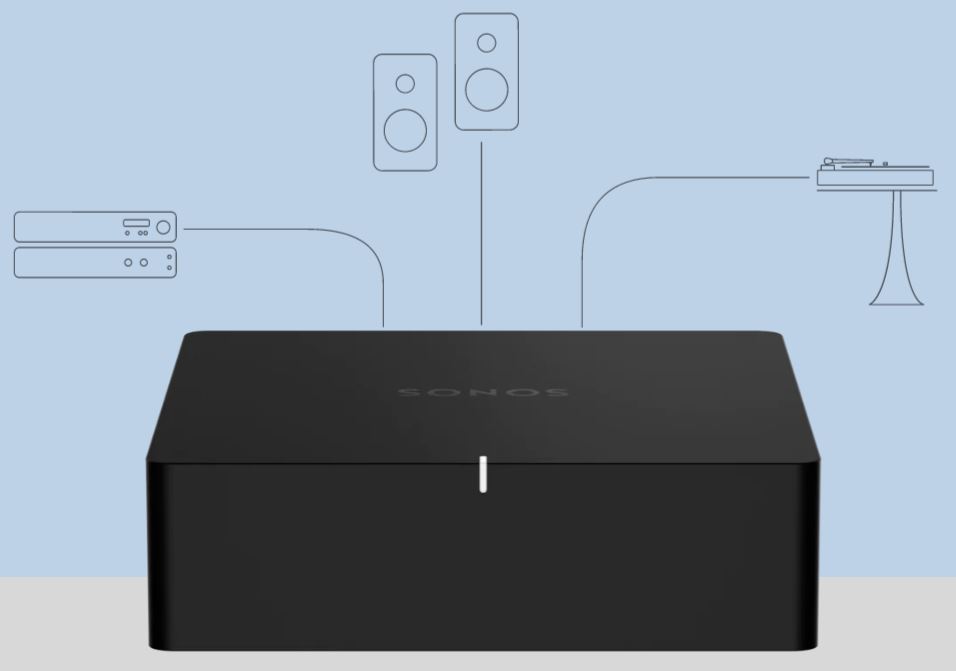
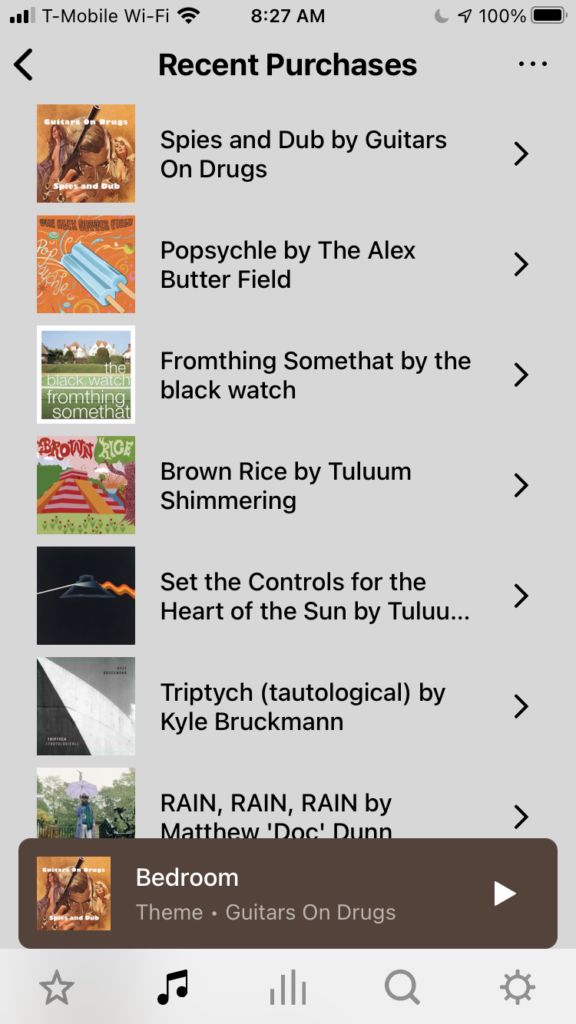
I’m not completely happy with the price, but at least the 30% upgrade credit took some sting out. Product of the year in the streaming category is the Sonos Port. It’s performed flawlessly since I’ve set it up, and was pleased to find on the new S2 network supports Bandcamp, and automatically connected to my app giving me access to all my music on it. I have access to all the files via Roon, but it’s fun to browse my recent purchases.
DAC & Amp
A guaranteed way to improve the sound coming from your computer or streamer is a DAC. In the guest dungeon I have both a smart TV and a Sonos plugged digitally into a Schiit Modi ($99), which is plugged into the RCA of my NAD C355BEE integrated amp. Best DAC you can get for a hondo, and if you want to use headphones, add a Schiit Magni ($99) amp, good enough to drive most audiophile headphones you can get for under $1K. It has pre-pro RCA outputs where it could go directly to a speaker amp if you like. I do that in my office from my iFi stack to a Crown XLS 1502 amp to drive my big floorstanding speakers. The 215W XLS 1002 can often be found for under $300. More on amps later. Other low cost DAC options are Topping D10s ($100) and AudioQuest DragonFly Red ($199).
If you think you’ll want to try out headphones with balanced connections, you can do worse than the Drop + Grace Design Standard DAC Balanced ($150) paired with the Drop + THX AAA 789 Linear Amplifier ($299). I’m a big fan of Grace Design, and used the Drop + Grace Design m9XX ($545) for my work rig for a few years. $449 for a DAC/amp combo may sound like a lot, but there’s a lot of gear that runs from $1K to over $12K. The modular Schiit Asgard DAC/amp combo is cheaper, at $299 and has plenty of options. Yet another balanced stack that’s just now available on Drop is S.M.S.L. SU-8 DAC and SH-8 amp ($362). There’s all kinds of interesting products from China that you can try. Hermi Flagglenack just got a Douk Audio P1 Bluetooth 5.0 Vacuum Tube Preamplifier Hi-Fi Valve Headphone Amplifier Wireless Receiver Audio Decoder Preamp USB DAC APTX ($100). Whew, that’s a mouthful. It has a fun steampunk look, and he reports that it sounds good, definitely vastly improving his computer to 15 year old Pioneer receiver sound.

DAC/Amp stack of the year is the Schiit Audio Modi/Magni combo. You can’t go wrong starting with the starter rig from this great American based company that offers excellent value, elegant design, customer service and upgrades.
Headphone
My favorite budget headphone for the past couple years has been the Drop + Sennheiser HD 58X Jubilee headphones ($170), still an astounding deal, considering it’s essentially the same design as ones that have sold for $600. If I needed work/travel headphones with bluetooth capability, I’d probably try the Drop + THX Panda Wireless headphone ($399). There’s been lots of enthusiastic buzz about those. Want to try an open planar-magnetic sound? Drop + HiFiMan HE4XX ($180) are a great entrypoint, as well as the HE5XX ($220). The HE6se has been my main headphone lately. Drop + Dan Clark Audio Aeon Open X ($499) are also a good deal, considering the original Aeon, which I owned, ran for $700, and the Aeon 2 starts at $900.
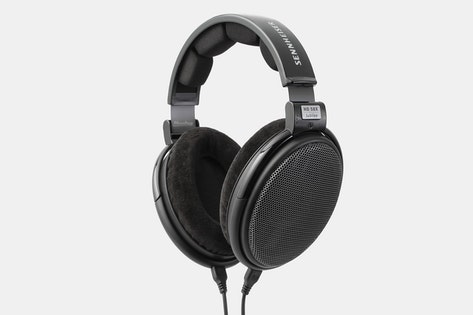
Drop + Sennheiser HD 58X Jubilee wins as I’ve bought it three times this past year, giving it last Xmas to a cousin, one to a friend, and one to the winner of the Fast ‘n’ Bulbous quiz contest in February.
Integrated Amplifier
Currently the most widely available and well regarded budget integrated amp for it’s price ($350) is the Yamaha R-N303. A basic but solid 100W 2 channel amp, it can be found for $250 right now. I’ve written about Yamaha in the past, and used a couple of their multi-channel home theater receivers for years. A step up would be the NAD C316BEE v2 40W ($449). The older series of C315BEE, C325 and C355 can be found used and in good shape for prices comparable to the Yamaha if you’re so inclined. If you have limited shelf space, the compact NAD D3020 v2 50W ($449) is a great option. I upgraded to that for the bedroom, plugged into the Sonos. It elimintates the noise floor issues I had with my PS Audio Sprout, and drives my Zu Audio Omen Dirty Weekend II speakers nicely, as well as headphones.
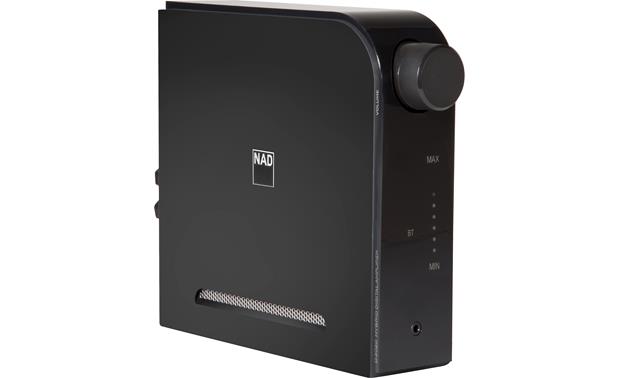
Product of the year for me is NAD D3020 v2.
Speakers
Powered speakers are getting increasingly popular, and there’s a few more options in recent years, but I’m not in love with them. Audioengine A1 15W ($199), Kanto YU2 25W ($220) and PSB Alpha AM3 35W ($299) are decent options if it’s just you listening at your desk for solo nearfield listening. But if you need something to fill the room, SVS Prime 200W ($599) is a good option. But then at that pricepoint, you have even more options with the traditional amp/passive speaker setup.
I remain a steadfast advocate of floorstanding speakers. Standmount speakers often take the same space and footprint, so why not use all that cubic footage for something that’ll push more air with lower dynamic range? The now famous Andrew Jones designed ELAC Debut 2.0 B5.2 are a great value ($500, marked down from $700). However it’s not the only great speaker in that range, and if you do some hunting, you could get a similarly great deal on speakers by Tannoy, Wharfedale, Canton, Polk, Martin Logan, XTZ, JBL, Fluance, Q Acoustics, Dali, Mission, Definitive Technology and more.
That said, I did make the change from Yamaha HT receiver/passive speakers to a powered soundbar and subwoofer in the workout room in order to save space. The old setup was a bit murky with voices. This holiday season, I got the Definitive Technology Studio Advance 5.1, 120W with an 8″ 50W subwoofer (originally $1,499, now $799, I got a “scratch & dent” model for under $700). The deep discount is because it’s being discontinued, replaced with the Studio 3D Mini ($899) with Dolby Atmos, Alexa/Google/Siri voice control, etc. However, that’s not available yet, and I don’t need Atmos. Mine does have Google Cast built in, so I can stream Spotify and Roon, which works great, and it has 3 HDMI inputs, so I can use my Roku Ultra and also an old DVD player when needed. Dialog is clear and easy to understand, the bass fills the room well, so I’m happy I went with that rather than the cheaper JBL Bar 5.1 ($499).
The next steps up would be the Yamaha YSP-5600 ($1,599, available for $999) and Dali Katch One ($999), both of which would need subwoofers added on, which is more than my budget allowed. The fanciest powered soundbar around is the Sennheiser Ambeo ($2,500) which doesn’t need a subwoofer. I imagine it would rattle the heck out of the lightweight wooden table I currently have, and would require something more solid.
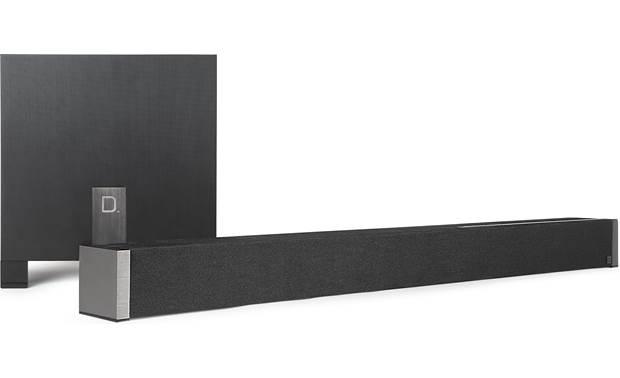
Shocker of the year, this household dabbled in powered home theater speakers, at least in the dungeon gym. Product of the year, Definitive Technology Studio Advance!

August 15, 2022
Adventures in Vinyl
May 25, 2022
Rest in Pieces iPod Touch – Long Live the DAP
December 10, 2020
Fester’s Lucky 13: 2020 Year-End Summary