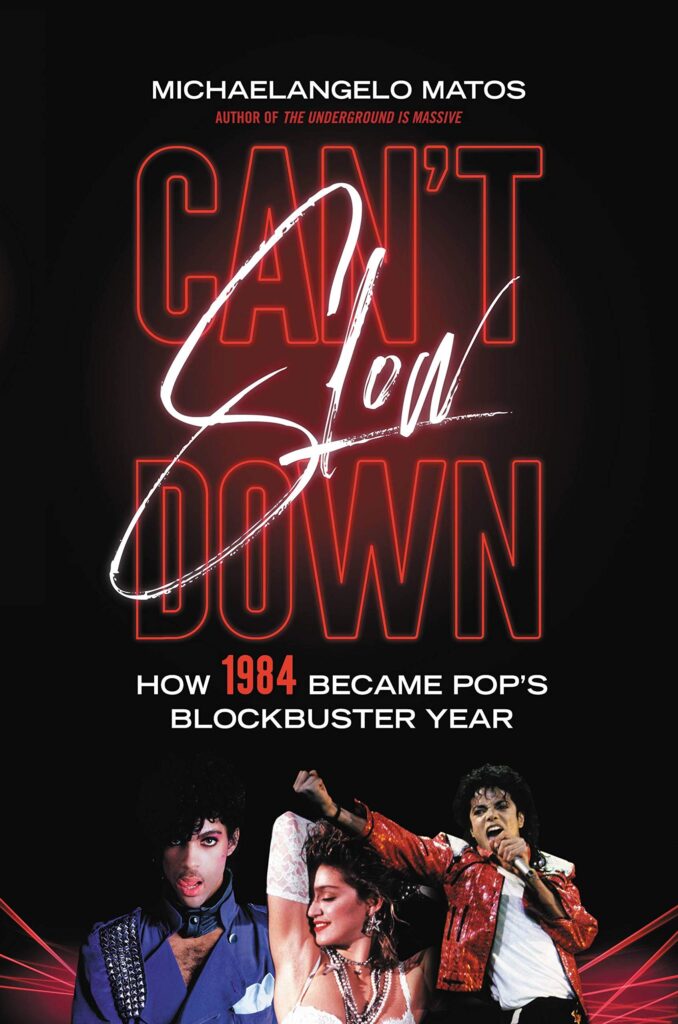
A glaring warning that this book was going to be problematic and haphazard at best, is the fact that the book’s title refers to the adult contemporary song (a so-so Michael Jackson rip, not exactly a big hit) and album by Lionel Richie that was actually released in 1983. Beyond the obvious fact that the big three — Bruce Springsteen, Prince and Madonna, put out three of the biggest top selling albums of all time (30, 25 and 21 million sold to date respectively), turning around the decline in album sales that had started in 1979, what makes 1984 so interesting? According to Matos, he was inspired by the memory of taping two pop radio stations for several hours without hearing a bad song. I would love to hear that tape, or at least see the playlist, and see Matos defend the likes of “Hello,” “Oh Sherrie,” “Radio Ga Ga,” “Say Say Say,” “Missing You,” “I Just Called to Say I Love You,” “Nobody Told Me,” “Think of Laura,” “Hard Habit to Break,” “To All the Girls I’ve Loved Before,” “Almost Paradise,” “I Want to Know What Love Is,” “When You Close Your Eyes,” and many other of the year’s top hits that made radio an instrument of torture rather than entertainment. Huey Lewis and Phil Collins were inescapable, and even if you found yourself quietly singing along to “Footloose,” it was accompanied by multiple cringes at the dumb, oh so dumb words.
Disappointingly, Matos offers almost zero critical content, aside from some bitchy asides now and then that showed he wasn’t exactly a fan of every artist mentioned, one correct critical assessment (Don Henley’s “Boys of Summer” is better than anything he did with the Eagles) and one incorrect (Billy Joel’s “The Longest Time” is his best single). But hey, he talks a lot about Michael Jackson, who’s last album at the time was in 1982. Jackson did grudgingly embark on the Victory tour that year with his siblings, and set an early precedent of price-gouging, preventing young and poor fans from being able to afford tickets. Matos touches, barely, on payola, which was a major driver for some of the garbage becoming so ubiquitous through the rest of the decade. Between the gradually swelling egos of Jackson, Prince and Sting and some of the disenchantment behind the scenes of Live Aid, the book could have just as easily been called, “How 1984 Sparked the Downfall of the 80s.”
Nevertheless, there’s few books about music that I can resist, and his random collection of stories were paced pretty well. There was a lot of good information about the making of Prince’s Purple Rain movie. Inexplicably, other than the fact that in his research he stumbled upon a single issue of Matter magazine, he spends a chapter talking about the U.S. indie underground, primarily the SST bands (Black Flag, Minutemen, Meat Puppets, Husker Du) and Naked Raygun and Big Black, and of course, R.E.M. The Replacements barely get a mention. While I loved all those bands, none of them were anywhere near the charts. Similarly, while the snapshots of the Wax Trax’s post-industrial dance, house music and hip-hop scenes were well done, they were still overwhelmingly underground, and definitely under the radar of the mainstream. Looking for another global superstar along the lines of Bob Marley, labels tried promoting Fela Kuti, King Sunny Adé and Rubén Blades, with little immediate success (I was exposed to Kuti and Adé via a college station, KUNI starting in 1982, along with early Run-D.MC. tracks), though they did help spark the gradually growing popularity of global music. Former Jam leader Paul Weller’s globalist sophisti-pop group The Style Council, Sade and Everything But the Girl were sneak peaks of how big names like Sting, Peter Gabriel and Paul Simon would dabble in Afro pop the next few years with even better chart success.
So I kept waiting for him to also cover the British counterparts. Beyond U2, that didn’t happen. Which makes no sense, as The Smiths were freaking huge already in the UK, their first self-titled album debuting at #2 in the charts on March 3. They had yet another top ten album by the end of the year with Hatful of Hollow (#7), as did Echo & the Bunnymen (Ocean Rain #4), Ultravox (Lament #8), The Cure (The Top #10), Depeche Mode (Some Great Reward #5), and OMD (Junk Culture, #9). Pop metal (Van Halen, Quiet Riot, Twisted Sister, Motley Crue, Def Leppard) got plenty of words, but not Dio, Iron Maiden, and Rush. While the thrash scene, including Anthrax, Slayer and especially Metallica, which Matos covered, was quickly gaining traction, they were nowhere near as big as Dio’s The Last In Line (#4), Maiden’s Powerslave (#2), and Rush’s Grace Under Pressure (#5).
The Cure, Depeche Mode, Iron Maiden and Rush in particular all became global live juggernauts, playing to massive audiences that rival those of many of the artists that got more attention in the book. The criteria of what qualified as blockbusters came from a strictly North American point of view, apparently, as the charts in the UK were very different, thanks to the fact that weekly music papers like Melody Maker, the NME, and Sounds helped keep the smaller market more up to date on new artists. A lot of pages were devoted to Bob Geldof’s perspective as he organized his African aid projects, and he excluded all the new artists like New Order, The Cure and The Smiths, who were only mentioned because of Geldof’s withering hatred of them, with some particularly nasty comments for Morrissey. Sure, it turned out eventually Morrissey would deserve that, but at the time, they released some of the very best songs that year, including “How Soon Is Now?,” “This Charming Man,” and “William, It Was Really Nothing.”
Matos was wrong that early 80s music was boring and anodyne, unless he was talking strictly of mainstream chart hits in the U.S. Most of the biggest artists in 1984 were inspired artistically by the burst of creativity in the punk, post-punk, new wave and synthpop music of 1977-82, which often charted in the UK. From my perspective, the 1984 artists were huffing on creative fumes a couple years past their expiration date. Looking at the number of albums from each year that made my all-time top 2,000, the tally looked like this:
1976 61
1977 78
1978 84
1979 80
1980 80
1981 84
1982 67
1983 38
1984 36
1985 30
1986 67
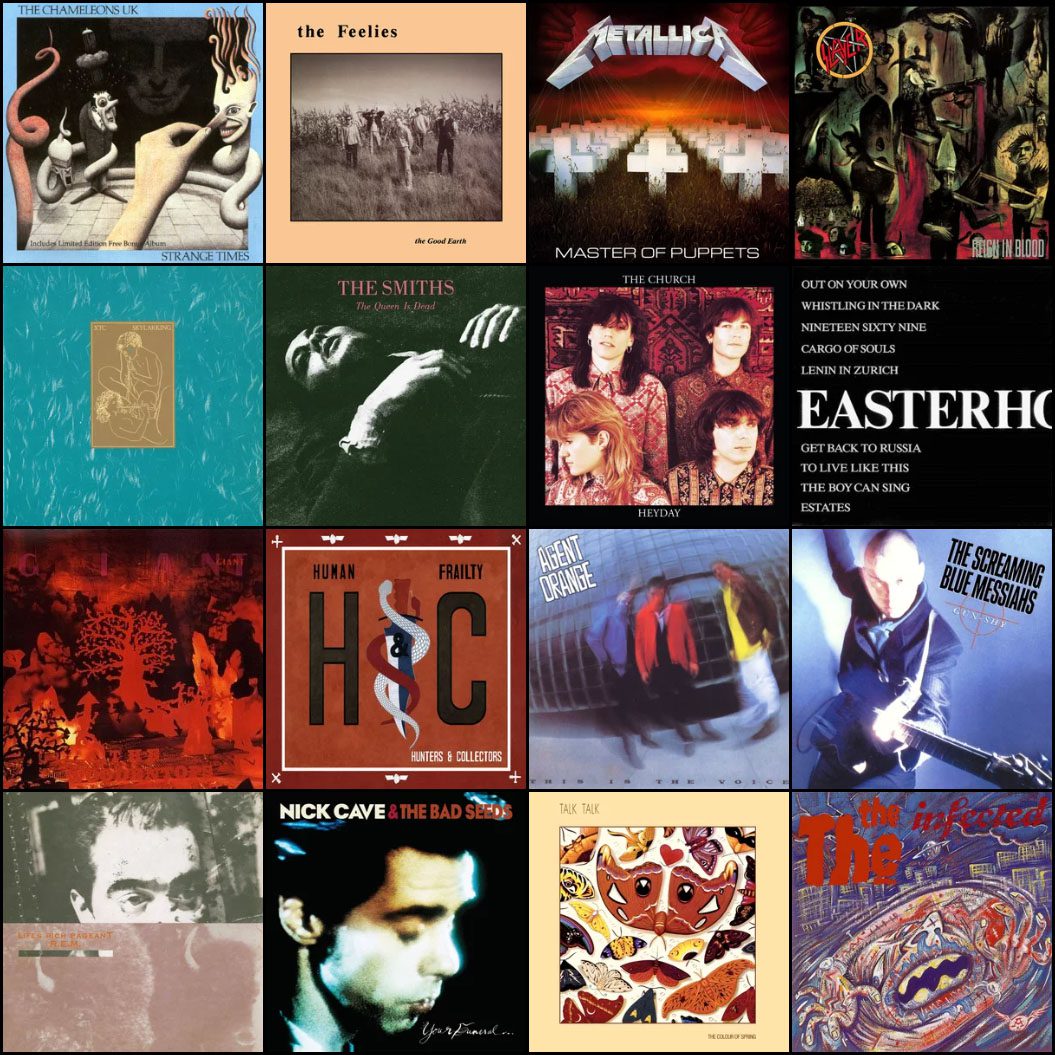
The peak years of 1978 and 81 tied with 1971, which also had 84. It’s just one person’s critical view, but by my account, 1984 was smack in the middle of a nadir of quality music that bottomed out the next year. Overall, I’ve enjoyed reading the year summary books by David Hepworth (Never A Dull Moment: 1971 – The Year That Rock Exploded), Andrew Grant Jackson (1965: The Most Revolutionary Year in Music, 1973: Rock at the Crossroads), and even Matos’ book, while revisiting the old songs in playlists. But too often the focus is taken away from the music and into political, cultural and economic events, or simply what was at the top of the charts, rather than what made the actual music great. Despite the fact that chart hits continued to suck badly in 1986, I’d love someone, ideally one of the journalists who was covering the music at the time, to dig into what instigated the burst of great post-punk, alt rock, pop and metal albums in 1986.
April 2, 2026
Fester’s Lucky 13: 1986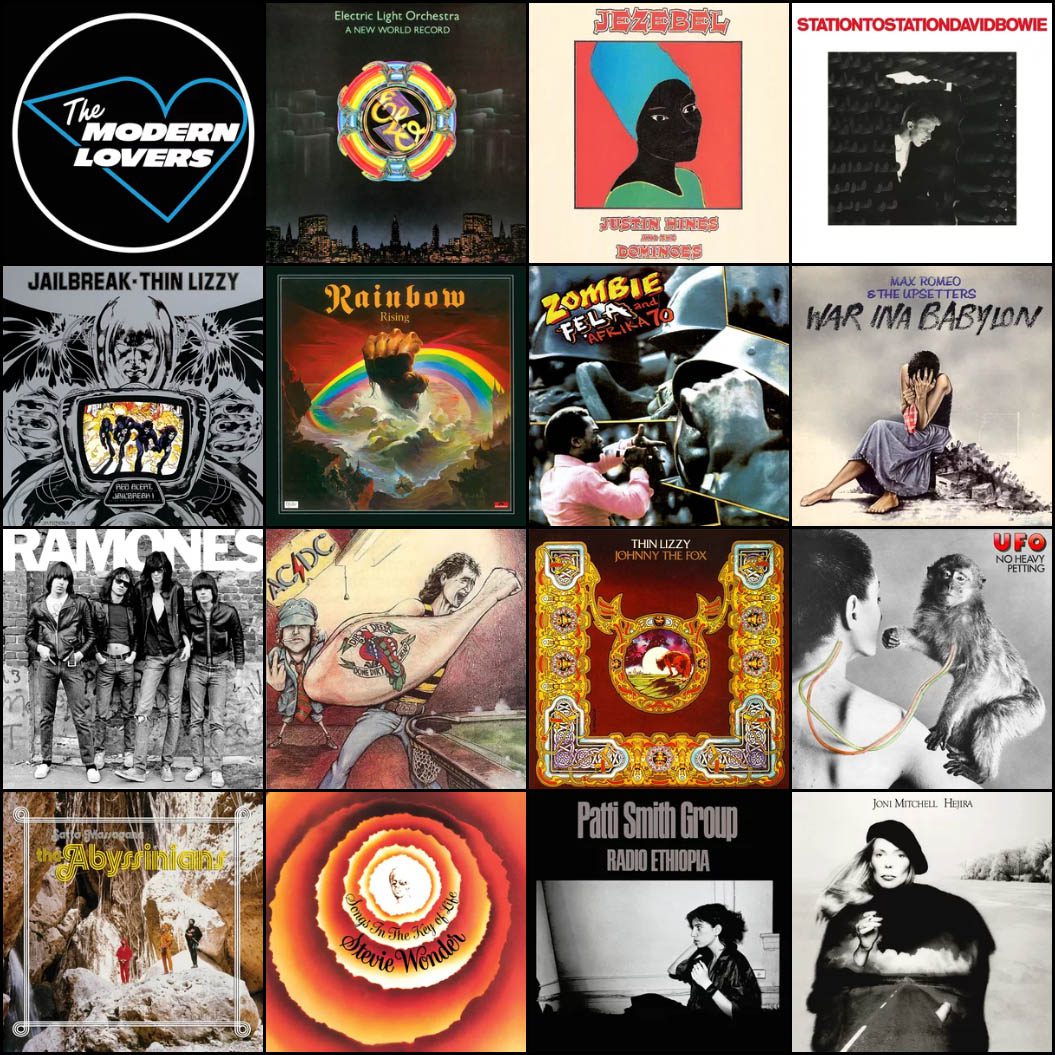
February 27, 2026
Fester’s Lucky 13: 1976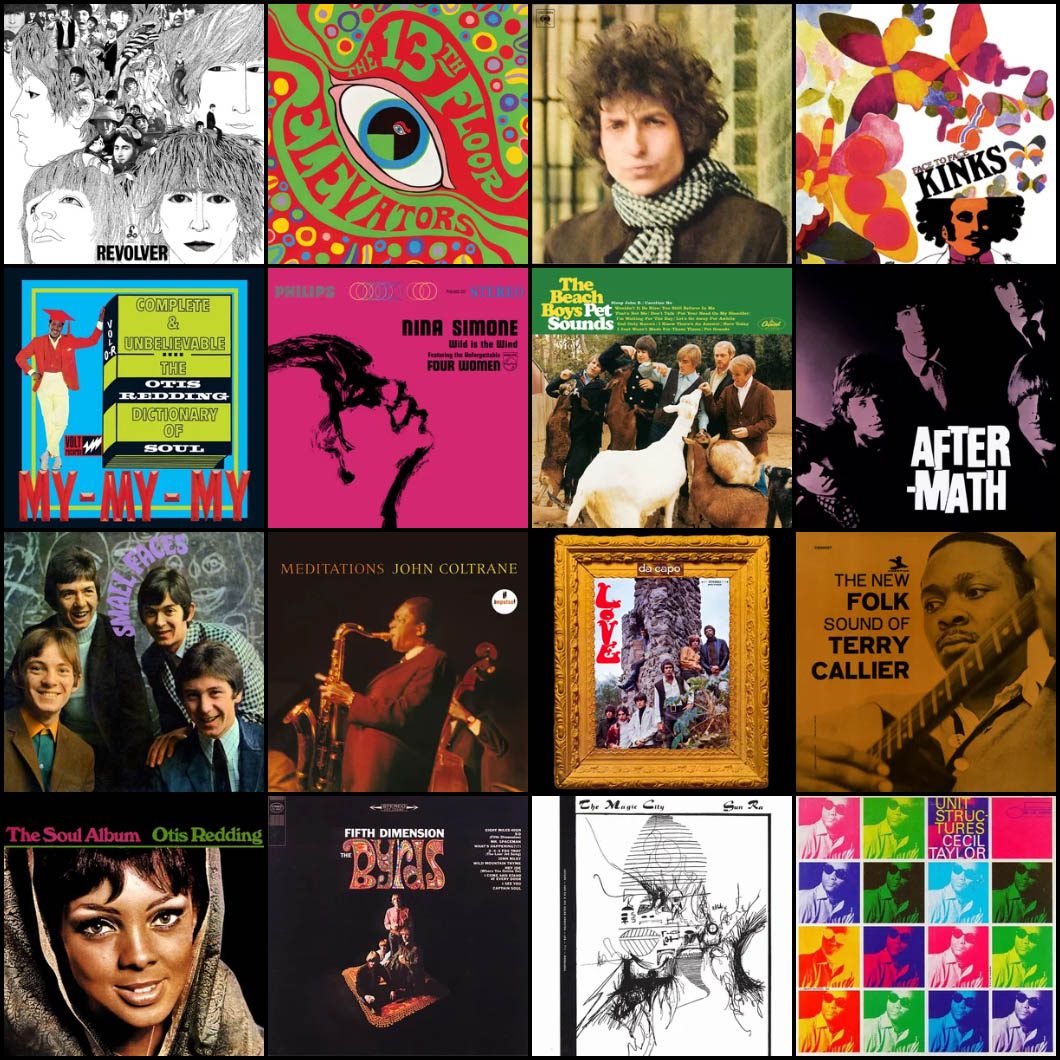
January 30, 2026
Fester’s Lucky 13: 1966