Alltime favorite books, #18. “That’s what the world is , after all: an endless battle of contrasting memories.”
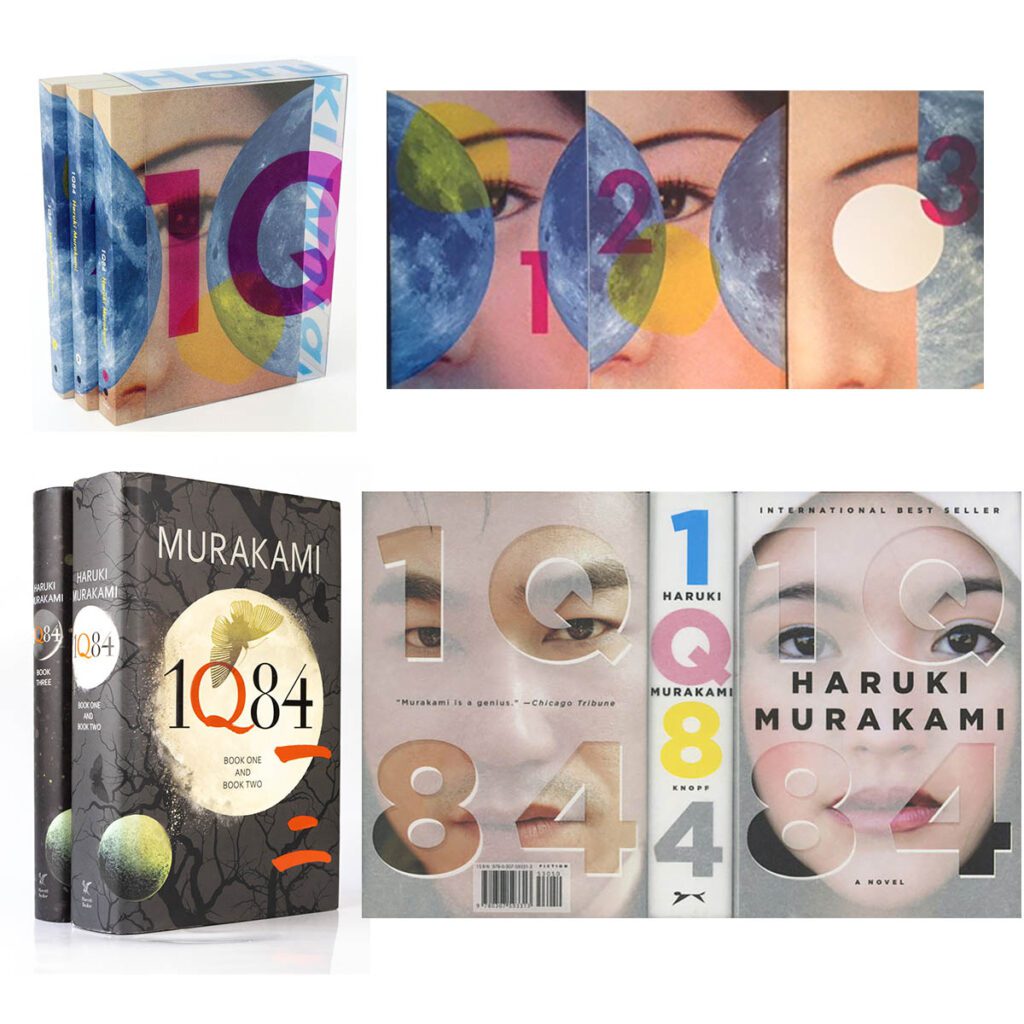
A chonker at 934 pages, 1Q84 is actually a bind-up of a trilogy originally published in Japan in 2009-10. When the English translation came out, it was one book, which was fine by me, and I started reading it the day it was released on Kindle and actually didn’t even notice that it was that long. While I found it thoroughly readable and enjoyable at the time, some people have issues with it, particularly the final third. Murakami’s flavor of surrealism and magical realism often make it as difficult to retain the plot as it is a long, vivid dream. I remember Kafka on the Shore (2005) even less, and on a re-read, perhaps it could usurp 1Q84 of it’s position.
But for now, it feels like a very significant 21st century work, a tribute to George Orwell with a dystopian society set in 1984. It’s a parallel narrative of two childhood classmates, Aomame and Tengo who share a brief meaningful moment, and remain linked thereafter. Aomame becomes an assassin, particularly of abusive men. Stuck in traffic, she exits the cab into a secret emergency staircase, and enters an alternate world with two moons that she calls 1Q84. Meanwhile, Tengo is a math teacher and novelist. He’s asked to ghost write for a dyslexic young author named Fuka-Eri. Air Chrysalis is a memoir about her upbringing in the secret Sakigake religious cult disguised as magical realism. Such fantastic elements such as Little People are assumed to be fictional, and yet Tengo starts to notice that elements of his world seem to be changing as his writing fleshes out so-called imaginary universe of Air Chrysalis. The extra moon, which can’t be blinked away, is one of the more obvious signs. The Little People do in fact exist and hold an influence over the cult leader, who Aomame eventually assassinates. It’s around this time that Fuka-Eri has sex with Tengo while he’s somehow paralyzed, and through their mystical connection, Aomame becomes pregnant.
Wait, what? Welcome to the batshit crazy world of Murakami! I look forward to some insane, ambitious director to try to make a movie out of this.
“It’s just that you’re about to do something out of the ordinary. And after you do something like that, the everyday look of things might seem to change a little. Things may look different to you than they did before. But don’t let appearances fool you. There’s always only one reality.”
There’s enough intellectual substance to chew on and ponder such as the butterfly effect of seemingly insignificant changes, fate, freewill and loneliness. Or you can just let the details wash over you and go with the flow of the emotional waves. Like certain dreams that stick with us for a lifetime, Murakami’s books haunt me. Despite the somewhat darker context if 1Q84, the reading experience is similar to his other books, lulling you into a serene, meditative state, where you accept all kinds of unlikely twists and just flow with it.
There’s been an increasing amount of criticism of sexism in his writing, especially in this book. I’ve long felt (one of my three majors I completed 34 years ago was gender studies) it is important to take in account feminist perspectives and critiques. While it may be valid to be repelled by the details of his unusual depictions of sex and attention to particular bodyparts, there are other valid perspectives. In A Feminist Critique of Murakami Novels, With Murakami Himself, novelist Mieko Kawakami gets a rare interview with him and he provides as direct answer as you’ll ever find, that he is less concerned with individuistic characters’ roles, both male and female, as filtered through political or Western cultural lens, than with their role in engaging with the story and the worlds they exist in.
“I will say that 1Q84 was the most time I’ve spent engaging with a female character. Aomame is incredibly important to Tengo, and Tengo is incredibly important to Aomame. They never seem to wind up crossing paths. But the story centers on their movement toward each other. They have shared status as protagonists. At the very end, they’re finally brought together. Two become one. There’s nothing erotic, up until the end. In that sense, I’d say they’re equals, in the broad scheme of the novel, since the book depends upon them both in equal measure.”
He also says, “These women aren’t just novelistic instruments for me. Each individual work calls for its own circumstances. I’m not making excuses. I’m speaking from feeling and experience.” He acknowledges that his own thoughts and feelings as a novelist can be flawed.
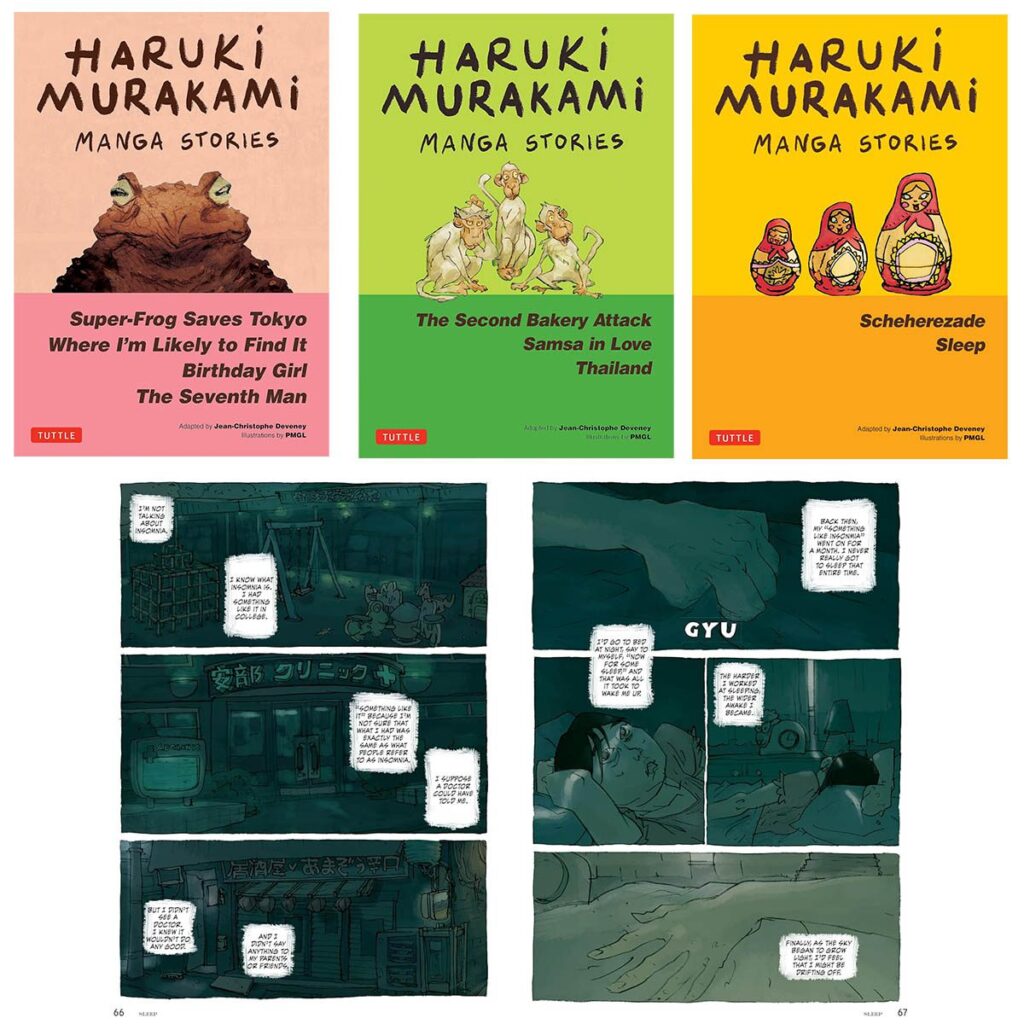
Kawakami brings up the short story, “Sleep,” which was published in the New Yorker in 1992. She says, “I’ve read lots of female characters written by women and lots of female characters written by men, but to this day, I’ve never encountered another woman like the character in “Sleep.” It’s an extraordinary achievement.” Many women had written to him at that time, assuming he was a female author, thanking him for the story, which was surprising to him. The story is also featured at the end of the third volume of the series of Manga adaptations adapted by Jean-Christophe Deveney and illustrated by PMGL.
18. Haruki Murakami – 1Q84 (2011)
19. Thomas Pynchon – Gravity’s Rainbow (1973)
20. William S. Burroughs – Naked Lunch (1959)
May 31, 2026
Fester’s Lucky 13: 1996

April 2, 2026
Fester’s Lucky 13: 1986