My fellow music fiends, people who have a good grasp of music history and large album collections, have very diverse tastes when it comes to older music, from jazz, blues, gospel, folk, country, rockabilly, soul, Cuban, ska, reggae, psychedelic, etc. Generally anything from before 1970 is a pretty diverse smorgasboard. Yet more recently, it seems tastes have become more divergent and specialized. People are dismissing entire genres with few or no exceptions. Most often they’re contemporary genres of rap/hip-hop, soul, dance/techno/electronica, country, metal and global music. The music industry is partly responsible for the proliferation of many of these genres as separate entities, for the purposes of marketing. This can be useful, yet also limiting, when many people chafe against the artificially imposed restrictions of genres. Others disregard everything in certain genres.
It seems that one’s listening habits would naturally be fluid and not limited by genre. Could it be that the marketing of specific genres over others be partially responsible? I myself am guilty of not covering contemporary blues and jazz. Nor modern classical, opera, or much avant-garde experimental. Part of it may be only having time to only cover so much. But where there’s a will, there’s a way, so I suspect that’s not the real reason. Like many people, the way I learn about music is going through stages of obsession. My first encounter with jazz was as a trumpet player. In looking for frames of reference, I listened to Armstrong, Beiderbecke, Gillespie, Davis, Cherry and others by the time I was 12. I later stopped playing and focused on rock, like most teenagers. In college I became obsessed with John Coltrane, which extended to Ellington, Charlie Parker, Charles Mingus, Ornette Coleman and much, much more. After digging into the entire catalogs of those giants, it’s easy to understand why jazz after 1970 was left wanting.
Despite some minor variations, I have not heard anything that surpasses the aforementioned artists as their peaks. I had hundreds of jazz CDs and didn’t feel like I needed any more, considering I’m only in the mood for jazz maybe 10% of my listening time. I’ve got some James Blood Ulmer, Sonny Sharrock, more recent Coleman, John Zorn, James Moran, and I’m sure there are piles of other worthy albums out there. I’ve heard some of them, but it’s hard to be compelled to buy a new jazz album when I could instead get the latest Archie Shepp and Sun Ra reissues. Being in Chicago, I see my share of jazz shows at the Jazz Showcase, Green Mill, Green Dolphin, the Empty Bottle jazz series, etc. Since 1992 I’ve watched Ken Vandermark blossom into a major contender with great interest. I’ve seen some good jazz, but just have not been inspired to obsessively seek out recent recordings. Though a good writer who makes a convincing case could always change that.
Regarding blues, I’m even less forgiving. I love my Howlin’ Wolf, Charles Brown, Lightnin’ Hopkins, T-Bone Walker, Sonny Boy Williamson, Little Walter, Muddy Waters, etc. I think they perfected the form by the early 50s, if not before. So I consider Magic Sam’s 1967 West Side Soul one of the last great blues albums. Because after what Jimi Hendrix and Captain Beefheart did to the genre, it’s hard to go back. I don’t enjoy going to the tourist-ridden blues bars to see aging blues guys plod through the same set they’ve done since the 70s, always with “Sweet Home Chicago.” While I don’t doubt that a few people, like Buddy Guy, can still perform with convincing passion and energy, I’m just not interested. It’s like going to a museum. When Hendrix and Beefheart paid homage to the blues, they killed it for me. This is a good thing. I’m not talking about the old stuff, but rather the endless rehashing ever since.
While most mainstream music press usually includes a smattering of hip-hop, soul, electronica and country (and for metal, there’s always Terrorizer!), it’s global music that really gets neglected, aside from the occasional blockbuster and its coffee table book accessory, like Buena Vista Social Club (not to say it wasn’t a good album). It’s easy to see why — most people aren’t used to listening to music when they can’t understand the lyrics, unless it’s danceable, like Cuban and some African. Others get sidetracked by concerns of authenticity. Those expecting field recordings of authentically indigenous musical traditions may get thrown for a loop in this era’s internationalist environment when an artist like Natacha Atlas was born in Brussels to an English mother and a Sephardic Jew father from Egypt, and grew up in a Moroccan suburb. Fluid in French, Spanish and Arabic, she chose to explore most fully her Egyptian-Arabic roots. She’s also lived in England and the U.S., but not Egypt. It’s hard to identify exactly what category she is, other than utterly unique.
Artists with pan-cultural roots seem to be coming up with the most fascinating synthesis of Western and Non-Western influences. It is only natural for the best music to evolve and incorporate new styles. This goes back hundreds of years to the history of the Afro-Brazillian and Afro-Cuban diasporas. Very little music develops in a void. African rhythms informed the music of Cuba, which in turn went back to Africa and lent Caribbean and Latin rhythms to African musicians. Jazz is sometimes called the only truly American artform (I don’t know why they forgot country, blues and gospel), yet it has roots in music from Africa, Haiti, Europe and American blues and gospel. Nitin Sawhney and Talvin Singh grew up in the UK, but their roots are in their ethnic Indian communities. Hip-hop is also considered American, although arguably the very first practitioner, DJ Cool Herc, is originally from Jamaica. No matter where music originates, there’s brilliant stuff to be found everywhere, and the majority of the critics aren’t doing a great job in tracking down as much of it as they could, especially when it comes to global music.
In looking at the relatively narrow range of most year-end album lists, I’m reminded that I too could do much better in seeking out other music besides white indie rock and pop. 40 of my top 150 albums were non-rock and pop in 2001, which isn’t bad, but does it truly reflect what’s out there? With over 30,000 albums releases a year, we can only do our best. But even as a publisher of a very minor, sickly green little webzine, I owe it to my audience to do better.
April 2, 2026
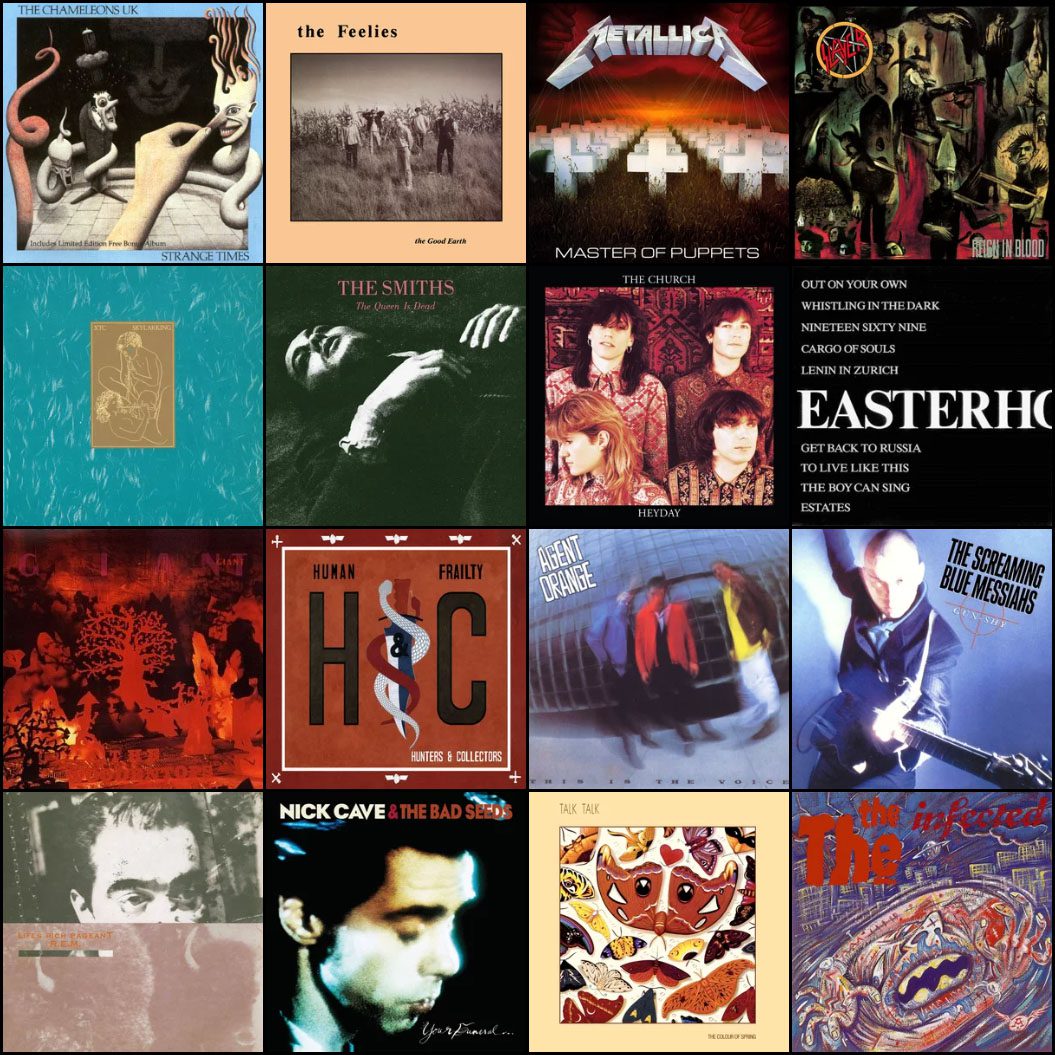
Fester’s Lucky 13: 1986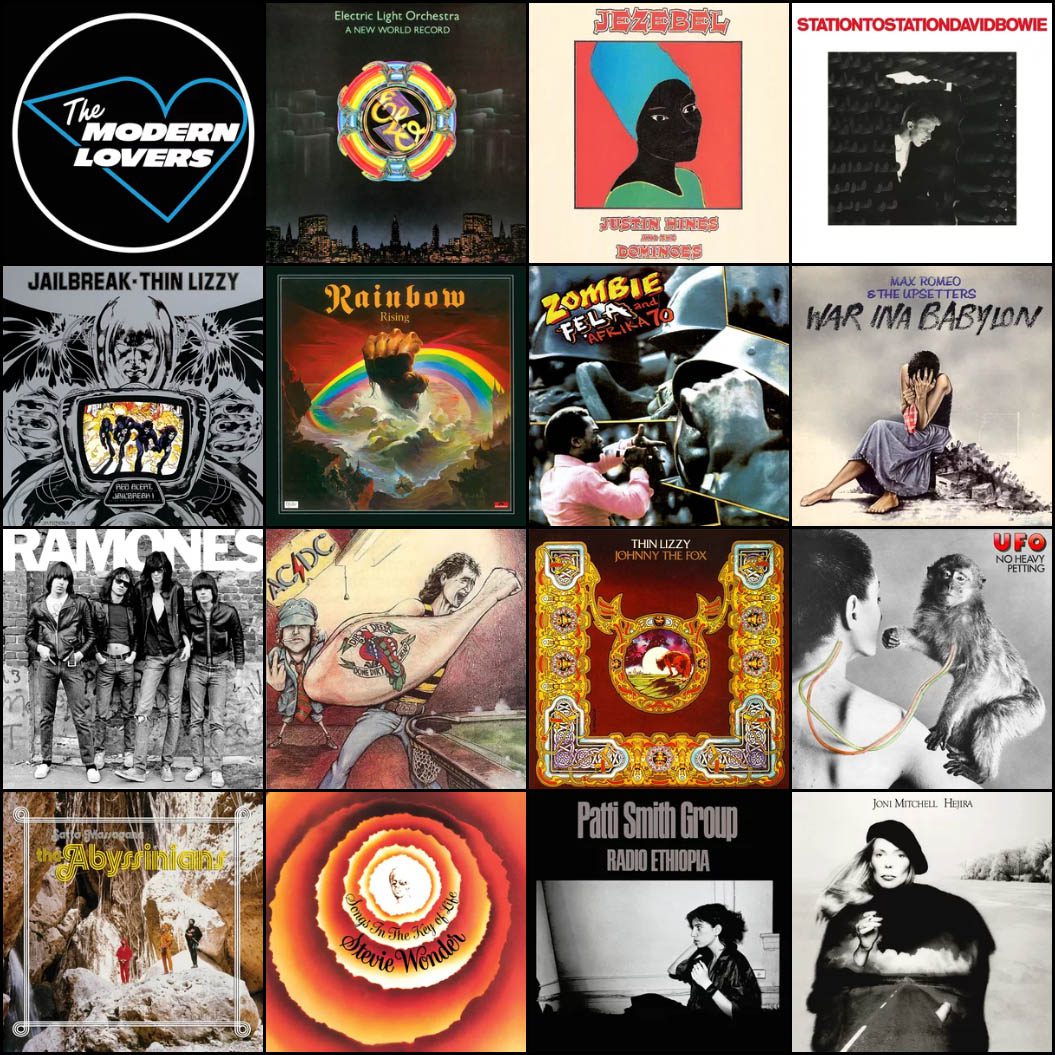
February 27, 2026
Fester’s Lucky 13: 1976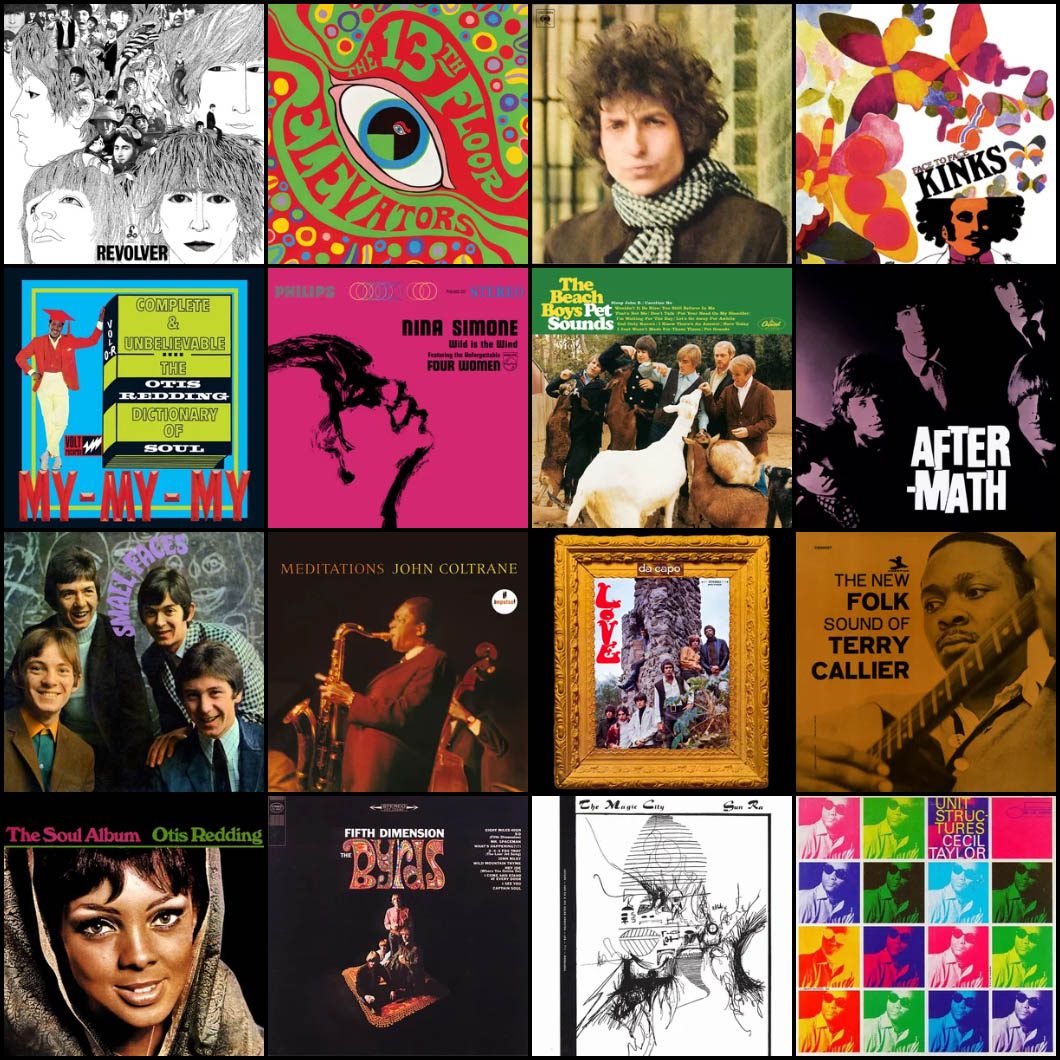
January 30, 2026
Fester’s Lucky 13: 1966