It’s been over two years since my last gear report, after my first visit to Axpona (Audiophilia Cultom: Paranormal Sound Worship). One of the biggest stars of the show as far as personal audio was concerned, was MrSpeakers.
I had already pre-ordered the ÆON Flow closed headphones the month before, to be delivered later in the spring. A compact, semi-portable successor to the Ether C Flow, but for $1,000 less. I compared the ÆON Flow to the Ether C Flow at Axpona, and the differences were minimal. Being able to travel with a near-flagship quality planar magnetic headphone? What next?
Something big. An electrostatic headphone was a dream of Dan Clark’s for a long time. As he began work on the first MrSpeakers electrostatic, work was somewhat delayed when he got inspired to make a planar magnetic headphone that borrows some electrostatic design principles. They reduced the distortion and loss of low-level detail due to diffraction and reflection of air as it moved around the magnet assemblies with a waveguide system they called TrueFlow. The result was an upgrade of the Ether to the Ether Flow in 2016.
Finally, an electrostatic prototype started making the rounds at audio shows starting with the Rocky Mountain Audio Fest in Denver In October 2016. In February 2017, The Source AV held an Electrostatic Extravaganza event. Headphone.guru had this to say: “The combination of the MrSpeakers Ether E Electrostatic Headphone [what they called the prototype before it was Voce], the HeadAmp Blue Hawaii Special Edition Electrostatic Headphone Amplifier and the Chord DAVE FPGA DAC ($15,500) were without question my favorite sound of the event.” This comparison included the Orpheus and Shangri-La Sr! Needless to say, I was excited to finally hear it for myself at the April 2017 Axpona. After listening to both the HiFiMAN electrostatic flagship Shangri-La, and the Stax SR-009, I went downstairs to listen to the Ether E. While not an ideal setting for real comparisons, the Ether E was extremely impressive, especially considering the planned pricepoint of “well under $3,000,” compared to the $3,800 Stax and $50,000-ish Shangri-La. It would be the most affordable electrostatic flagship yet.
It’s not necessary, however to pay $6,000 for a Blue Hawaii to drive an electrostatic. iFi Audio had come out with the much more affordable Pro iESL, for $1,499. I had already purchased the Pro iCAN amplifier in the beginning of the year, and the iESL can plug directly into the iCAN with an HDMI cable with no need for its own power supply. It can also work with other amps. It was on sale for several hundred dollars off, so I went ahead and got it. It seemed I was destined to try the MrSpeakers new electrostatic.
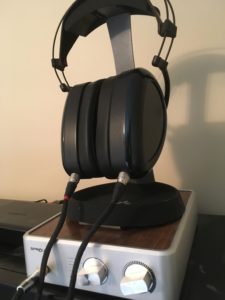 The projected July 2017 ship date was blown, as it often happens, but in the meantime, the ÆON Flow arrived. Given that my planned use for it was travel and at work, I first tried it on my iPhone. Compared to my previous portable headphones, the NAD HP50, they definitely had a wider soundstage and a fuller sound. That’s to be expected, as they are full-sized planar magnetics that cost nearly three times as much as the HP50. They don’t have the mic/volume control that most portables have, and do require a bit more juice to drive, meaning I had to up the volume over 70% levels. Still, both the iPhone and my Amazon Kindle Fire sounded just fine for both music and movies on the ÆON. As expected, they sound even better on an amp, with the bass tones filling in on both the Massdrop x Grace m9XX and the iFi Pro iCAN. While they don’t have quite the same slam and impact for heavy rock as the Audeze LCD 2.2 and HiFiMAN HE-6, or even the low end of the dynamic Denon AH-D2000 and Massdrop x Fostex TH-X00, the details in the mid-range are impressive for their pricepoint ($799).
I took the ÆON Flow on some flights, and the unique half teardrop design and thick earpads were ideal for comfort when lying back on the seat, or even lying in bed. It was well matched with my Astell & Kern AK Jr portable DAP, though it couldn’t get the same low end benefits as my iCAN, especially with the XBass boost. The headphones are sturdy enough that I would put them in my backpack without a case without too much worry. However I feel they are a bit too big and expensive looking to feel safe walking around and wearing them on the train. So I decided to restrict them to home/office listening (it also pairs nicely with the PS Audio Sprout in my bedroom, and use the Meze 99 Neo for commuting. The downgrade in SQ took some adjusting, and because the less than fullsize headphones are so snug and close to the ears, they feel and sound claustrophobic compared to the more open feeling ÆON. But for price I paid for a used pair, they sound great, and I feel better about being out “in the wild” with ’em.
After an excruciatingly long wait, the MrSpeakers Voce officially became available to order on January 2, 2018. The resources that went into developing the headphone made it impossible for them to sell for less than $3,000 as previously hoped, so they went on sale for that exact pricepoint. I was probably one of the first to pre-order, but had to wait nearly three more months to receive them, when I would finally enter the peculiar subculture of the audiophile community, the electrostatic enthusiasts.
Japanese company Stax came out with the first electrostatic headphone in 1960 with the SR-1. Koss came out with the ESP/6 in 1968, and by 1976, beyerdynamic, Sennheiser, Sony and Toshiba had their own versions, making electrostatic the gold standard of audiophile headphone technology. In 1991, Sennheiser came out with the audaciously priced flagship Orpheus system, consisting of the HE90 headphone and HEV90 energizer amp for $16,000. Only 300 units were made, so only a small portion of the audiophile community ever got to hear them. The unobtainable, unaffordable headphone that allegedly far surpassed any other headphone.
Audiophilia is a funny thing, considering the fact that most musicians, producers, recording, mixing and mastering engineers use pro studio monitors and headphones that cost a fraction of what much audiophile gear costs. So the goal is to somehow hear more detail in the music than the people who created it even experienced. Is that even possible? In most cases, fuck no, that’s ridiculous. The idea that pro audio gear is somehow lacking in the technical ability to properly reproduce sound is ludicrous. So why do people bother spending $16,000 on a headphone setup, or upwards of a half million on loudspeakers and amps? Through a combination of technology, art, marketing and magical thinking, it’s fun for some to at least attempt to get closer to the music we love. Be surrounded by the soundwaves and feel like we can hear every last bit of detail.
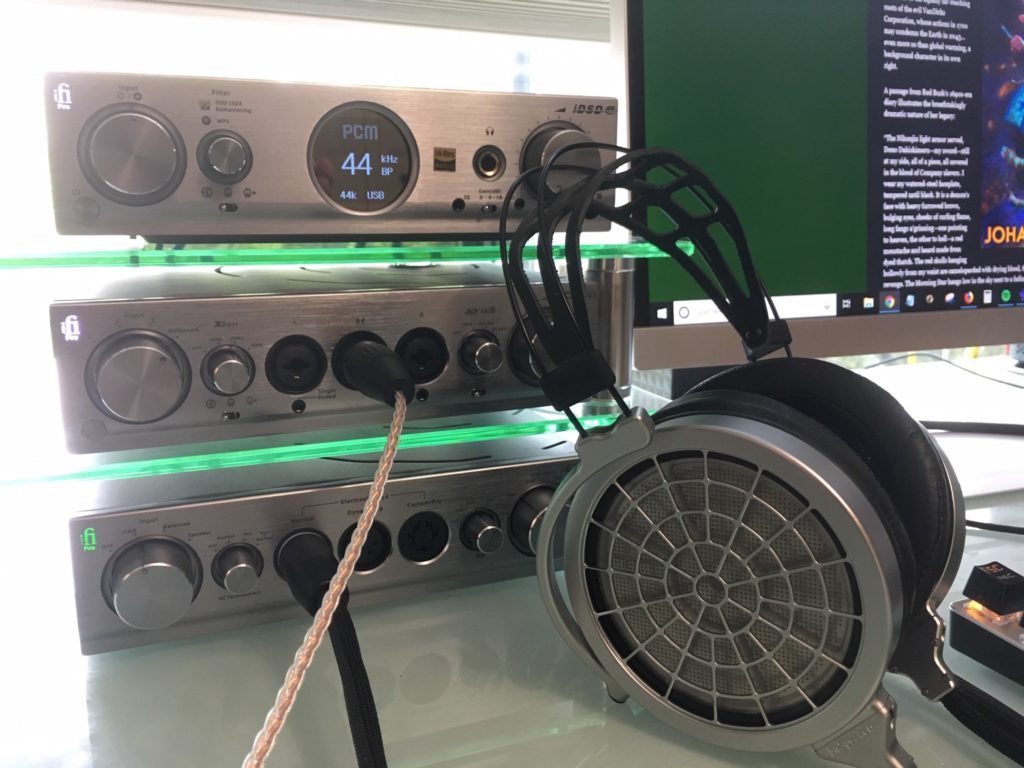 So after all that buildup, did the Voce deliver? In many ways, yes! After tweaking the settings on the amp and iESL (I learned it needed plenty of power, boosted the gain to 18dB, impedance at 96 ohm, 580V, I ended up jumping out of my chair to go turn off my Crown XLS 1502 amp that powers my large Wharfedale Opus 3 loudspeakers. My headphone amp feeds into that amp with balanced XLR cables when I want to listen to speakers. On a couple occasions, I forget to turn them off, accidentally blasting music into the house and disturbing anyone who might be sleeping. But this time, the speakers were off. It’s just that the soundstage of the Voce were so realistic, I thought I was hearing the loudspeakers. Color me impressed.
Rather than doing any critical A/B comparisons, I just enjoyed the Voce for the next few months, luxuriating in detail, enjoying hearing my music, both old favorites and new releases, with its unique sound signature. And it is indeed unique, because Clark and his team tuned the Voce to not necessarily be accurate (an ideal that’s really hard to judge), but to be pleasurable to listen to. More than any electrostatic I’ve heard aside from the $55,000 Sennheiser Orpheus 2 HE1060/HEV1060 (which I heard twice) the Voce features more prominent bass. There’s enough differences in tuning that it sounds quite different than any other electrostatic. Which means that a Stax fan may need to adjust to the sound, or might even just dislike it.
Once I started doing A/B comparisons with my HiFiMAN HE-6 and other headphones, I realized it’s not ideal for many of the types of music I like (metal, proto-metal, stoner/doom/psych, garage, punk and post-punk). They lack the punch and impact in the midrange for guitar music, and while the bass would be sufficient for most, it doesn’t reach the sonic depths of my HE-6 or even my Denon AH-D2000. That doesn’t necessarily mean it’s not as good. It’s just that for the past 13 years, I have been using fairly bass-centric headphones, including the beyerdynamic DT-770 Pro and Audeze LCD 2.2. After that amount of time, they have wired my brain to expect a certain sound that may not meet any sort of objective standard for good sound. But for better or worse, stoner/doom/psych has broken mah brain.
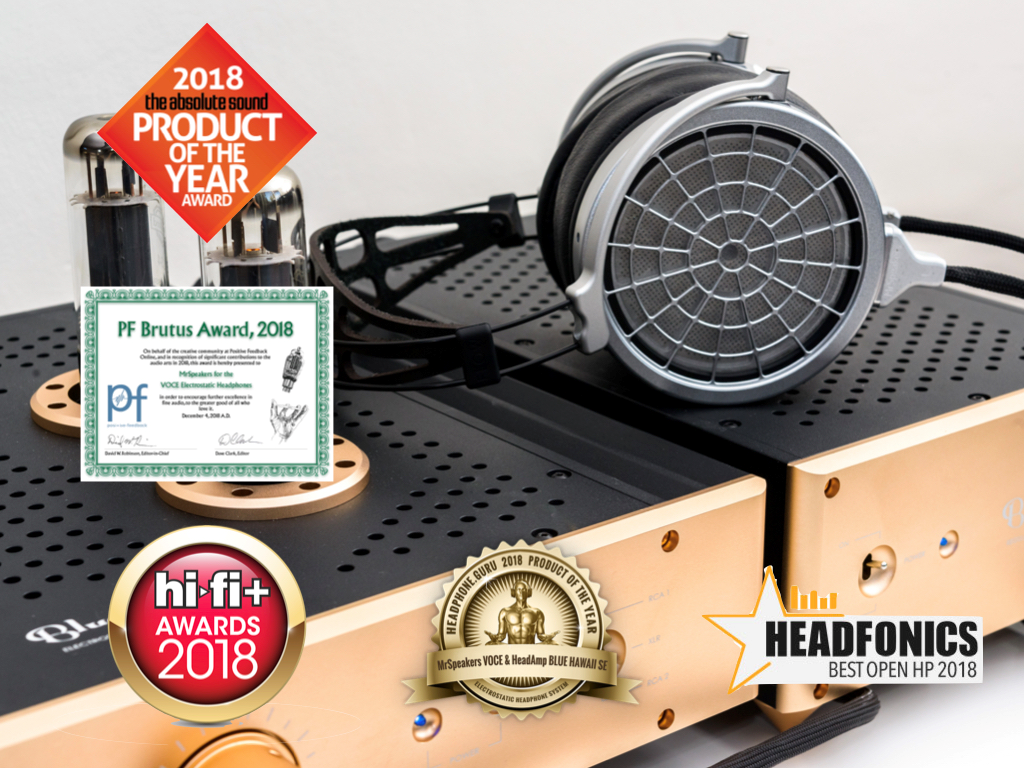 If I were to spend more time listening to classical, jazz, acoustic folk and electronic, the Voce would likely remain my main headphone. In the past year the Voce has already won five product of the year awards. Listening to it on its own, it handles all genres well enough. It’s only when I switch back to my other favorite headphones that I realize, oh yeah, I want that grit and slam. For that reason, after just over a year with them, I decided it was time to try something else, and traded them with a friend in the Head-Fi community for the HiFiMAN Shangri-La Jr. Other headphones I’d considered trying are the HiFiMAN Susvara, Meze Empyrean, Rosson Audio Design Zero (RAD-0), ZMF Verite and ZMF Auteur and the fourth and latest version of the Abyss AB-1266, the Phi TC (Total Consciousness).
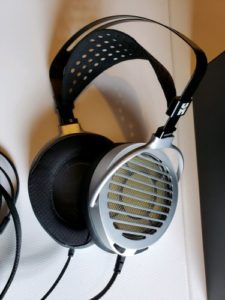
The best deal available by far at the time was the HiFiMAN Shangri-La Jr.. It’s impressive. Their weight and comfort seemed comparable to the Voce, though the Voce would get the edge in that regard. Considering the hype over the bass extension of the Voce, Shangri-La Jr. seemed to go even deeper, without leaving the hollow-feeling dip in the midrange of the Voce. I’ve enjoyed their spectacular electrostatic style detail for a few months, but ultimately, I kept returning to my HE6. I ended up snagging the newer HE6se on Black Friday for an amazing price. The new model does not differ significantly from the original HE6 sound wise, though it is lighter and has a more comfortable headband. Looks like HE6se is my new workhorse headphone, while I will be looking to sell/trade the Shangri-La Jr. and try something else.
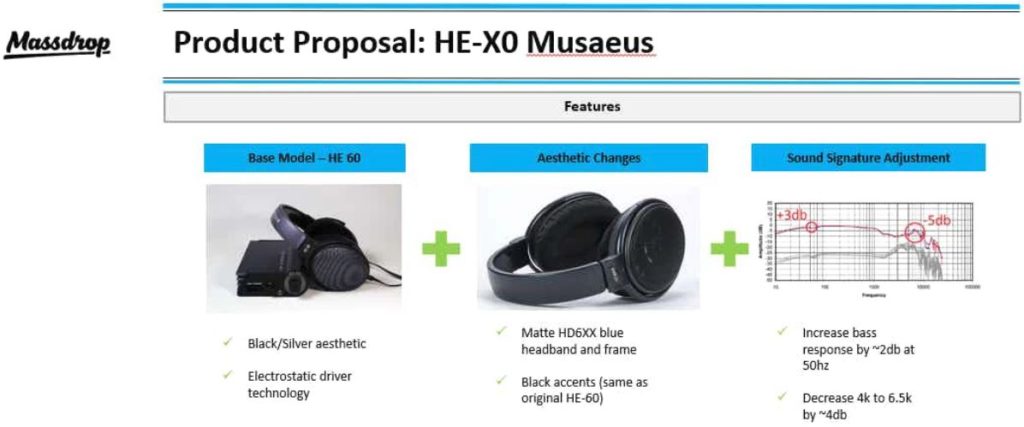
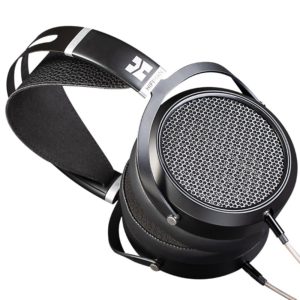 I’m keeping my ESL, as I might end up with another electrostat if the trend in making more affordable ones continues, such as the HiFiMAN Jade. I’d also love to see a Drop (formerly Massdrop) x Sennheiser HE OX collaboration. Ideally it would be a revival of the HE60 (otherwise known as the Baby Orpheus), with technology trickled down from the 2015 flagship HE-1, at an affordable (under $1,000) price. Too good to be true? Perhaps, but it’s not as if Sennheiser isn’t capable of it. Based on their 1995 HD 580 Jubilee, which originally sold for $450, they collaborated with Drop to offer the Drop x Sennheiser HD 58X Jubilee for the amazing price of just $150 (currently it’s $160). Benefiting from technical improvements from the more recent HD 600 and 650, the headphone looks and sounds very similar to those models, that still run for around $500. I got to spend a few weeks listening to a pair last year, and it blew me away how great it sounded. By far the best headphone available at that pricepoint. There was a proposal last year for an HE-XO Musaeus. Nothing has happened yet, but enough support could make it happen. Look at the Drop x Koss ESP/95X collaboration ($500). That happened. Indian company Kaldas Research came out with the $500 electrostat, RR1 Conquest. Anything can happen!
After a ridiculously long wait for the iFi Audio iDSD, I finally got a deal on one. In a lot of ways, it didn’t make much sense for me, as I have no use for 24/192 audio files, or any desire to subscribe to Tidal for MQA capabilities. However, I got it for a good used price, and it’s a good DAC, featuring a quad stack of Bit-Perfect DSD and DXD DACs by Burr-Brown. I really don’t know if it’s an improvement over my Grace m9XX, which I relocated to work, but it does look sweet stacked with the iCAN and iESL. I bought two tempered glass monitor stands for under $30 instead of the hilariously priced Pro iRack ($270 each).
My previous rig was the Meier Audio Corda Classic + Daccord, which served me well for several years, but both units did end up having problems and they had to be shipped to Germany for repair. Jan Meier paid for the shipping, but it was still several weeks I had to go without my my rig. I’ve listened to the insanely priced Chord DAVE, and the difference in sound in these electronics are really minimal compared to differences in headphones. For me, it’s all about the features, and the iFi Pro stack is full of them, particularly the ability to switch between digital, tube and tube + hybrid options for a variety of sound signatures. the iCAN has tons of power, ably driving my power-hungre HE-6. While my favorite feature of the Meier gear was his crossfeed circuit, iFi offers a 3D option that serves about the same purpose, to simulate the natural crossfeed your ears experience in a room so that your brain doesn’t get fatigued trying to make sense of totally separate L/R input. The benefits are subtle, but I think it helps. Also, gotta love that XBass!

August 15, 2022
Adventures in Vinyl
May 25, 2022
Rest in Pieces iPod Touch – Long Live the DAP
December 29, 2020
Budget Audiophilia