Let It Blurt is the first biography written about a rock journalist. Lester Bangs was a slob, a drug addict, a sociopath who died lonely and pathetic. So why does he merit a biography? One could look at Psychotic Reactions and Carburetor Dung, a collection of his writings compiled from his work in Rolling Stone, Creem and The Village Voice, and edited by Greil Marcus, to see that his writing was often brilliant and incisive, even at his most self-indulgent. He often managed to dig through the façade and get at music’s emotional core, if indeed it had one. But it’s almost more revealing to see how Bangs affected people. He utterly dominated the editorial voice of Creem, and garnered nearly all the fanmail. Since when did lowly rock critics get fanmail? He served as a mentor to future celebrity rock writers. In the forward to his The Dark Stuff collection, Nick Kent wrote that he had already scored a cherry gig at NME, yet he felt ill prepared. So he traveled to Detroit and showed up at the Creem offices. “I mush-mouthedly asked Lester if,” wrote Kent, “as the greatest writer of his day, he could, if not teach me, then at least indicate to me how to achieve some vague approximation of his creative intensity, he good-naturedly replied, ‘Sure.'” After a two month tutorial on figuring out how to penetrate music and ask the right questions (“So you like this music? Why? What do you mean, it’s got a nice middle-eight and the cow-bell sounds cute on the finale? That’s not good enough. What are these guys really trying to sell us here? What does this music say to your soul? Do these guys sound like they even have souls to you? What’s really going on here? What’s gong on behind the masks?”) Kent went on to revolutionize British music journalism from being music industry lackeys to the equivalent of wartime correspondents in the trenches of punk’s guerrilla culture-war.
DeRogatis, who interviewed Bangs for a high school project just weeks before his death, made an incredibly well-researched effort to cover his entire life, beginning even before his birth. True to the book’s title, it paints a cultural portrait of the times of Lester Bangs, from when he first fell in love with jazz and garagey 60s rock, to his discovery of beat writers. William Burroughs in particular influenced Bangs’ attempts of becoming a serious fiction writer. He witnessed the horrors of the Stones at Altamont, trashed the MC5 album in Rolling Stone (and later changed his mind), championed Captain Beefheart, The Velvet Underground and The Stooges, moved to Detroit to join the Creem staff, helped name and define the aesthetics of heavy metal and punk, grew tied of that scene and moved to New York, where he never seemed to feel very comfortable among the beautiful people. He even had a couple bands, recording an album and playing with Robert Quine of the Voidoids. More interesting to me was how Bangs brought principles of New Journalism of the 60s into rock writing. For a while, it seemed possible that criticism could indeed be art. A perfect example of the difference between music journalism then and now are the legendary near-violent confrontations between Bangs and his sometimes idol Lou Reed, which often escalated into screaming matches. Something that today’s celebrity sycophant publishers would never print.
Bangs was far from infallible. Near the end of his short life, he seemed to stop being able to connect with music. For the 1981 Village Voice annual Pazz & Jop critic’s poll, he sent in a protest ballot, insisting that nothing of merit was released that year. We’re talking about 1981, which saw the release of career-defining albums by The Birthday Party, The Raincoats, Au Pairs, Gang Of Four, This Heat, X, Minor Threat, The Sound, Replacements, Rip, Rig + Panic, Gun Club, Wall Of Voodoo, Killing Joke and many more. Many critics lose touch with youth culture as they get older, but Bangs had only recently turned 30! If anything can give clues to what drove and failed to drive Lester Bangs, it’s Let It Blurt. As people dig for clues and enjoy the anecdotes, let’s hope it also inspires rock scribes to interrogate themselves as to why must criticism today is so bloodless and lackluster. DeRogatis himself is a prime example. Long a champion of great bands like Wire and The Flaming Lips (he even played drums in a Wire cover band), he too has lost touch with the new generation of bands, and his reviews for the Sun Times are utterly bland. To his credit, DeRogatis had the cajones to stand up to Rolling Stone publisher Jan Wenner, just as Bangs did decades ago, and got fired for refusing to write a positive Hootie And The Blowfish review. He published it elsewhere and was promptly fired. Sadly, such integrity is becoming a rare commodity. Let It Blurt is a worthwhile history of another era. Now let’s hope someone publishes a more complete anthology of Bangs’ work.
May 31, 2026
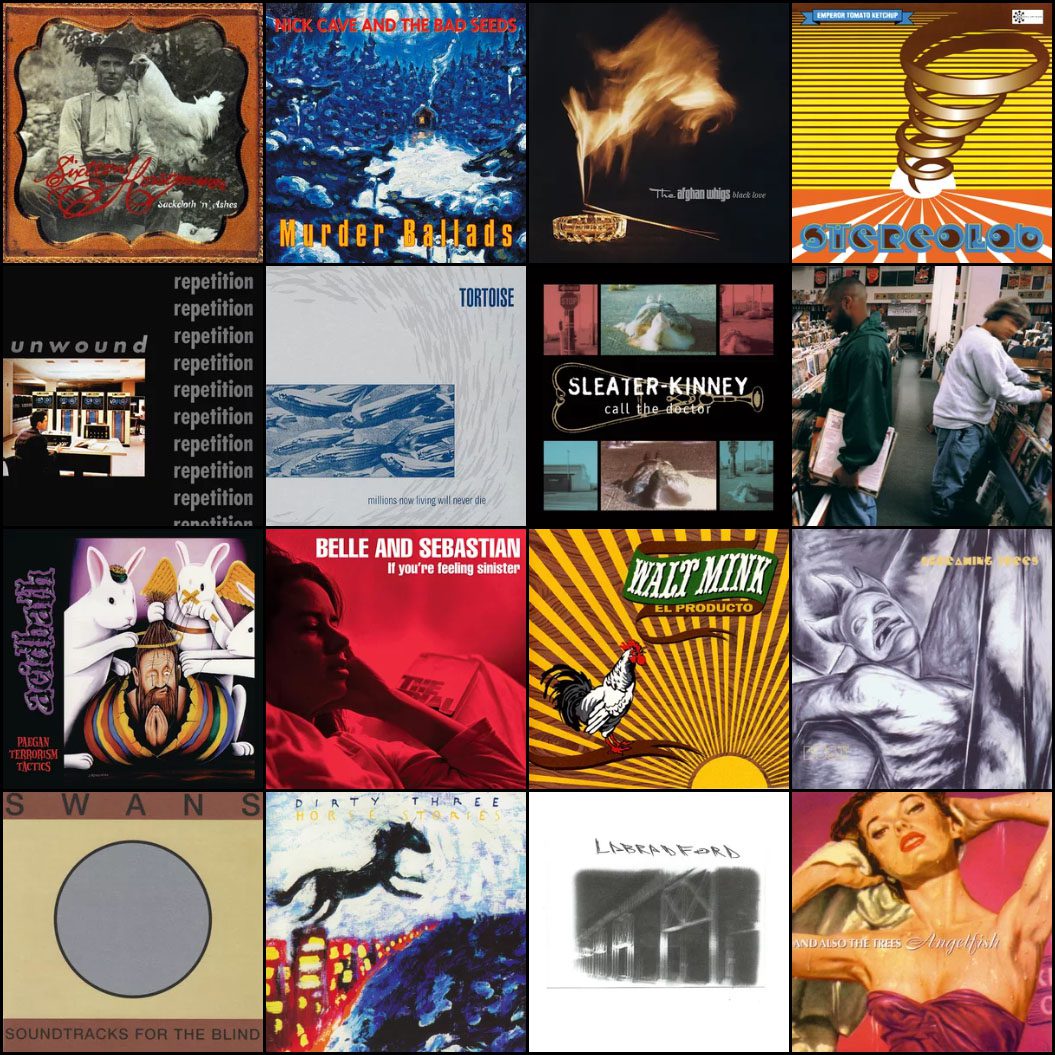
Fester’s Lucky 13: 1996
May 30, 2026
All Them Witches – House of Mirrors (BMG)
May 29, 2026
Elder – Through Zero (Stickman)