Olias Nil of the recently defunct The Fire Show wrote a nice tribute to seven artists who deserved a bigger audience than they had — The Velvet Underground, The Fall, Robert Wyatt, Public Image Ltd., Arto Lindsay (DNA, Ambitious Lovers & solo), The Birthday Party and This Heat.
What would you add? Here’s mine:
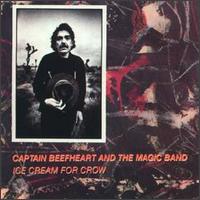
Captain Beefheart: Often misunderstood with Trout Mask Replica as a Zappa protégé delving in weirdness for weirdness’ sake, Beefheart was much, much more. Combining blues, psychedelia, free jazz and dada poetry, Beefheart’s songs were often quite emotionally direct. And on parts of Lick My Decals Off Baby (1970), Clear Spot (1972), Shiny Beast (Bat Chain Puller) (1978), Doc At The Radar Station (1980) and Ice Cream For Crow (1982), Beefheart was actually as lucid, sharp, terse and powerful as anything in post-punk’s oeuvre.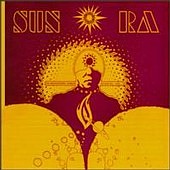
Sun Ra: Wrongly written off as a loony by many jazz fans, Sun Ra set up camp in Chicago in 1946, gradually formed his Arkestra while also recording on doo wop sessions. Ra was a mentor to John Gilmore, who was a big influence of John Coltrane, Marshall Allen and Pat Patrick, and by the late fifties, the Arkestra took big band jazz to another level with exotic instrumentation and adventurous arrangements, as heard on albums like Jazz In Silhouette (1958). They were evolving at supersonic speed, and by 1961 Ra was pioneering avant-garde jazz with Art Forms Of Dimensions Tomorrow, peaking with the mind-blowingly cacophonous Afro-polyrhythms, Middle Eastern modalities and special echo effects of “Adventure-Equation” on Cosmic Tones For Mental Therapy(1963). When Sun Comes Out (1963), Other Planes Of There (1964), The Magic City (1965), Heliocentric Worlds (1965) and Atlantis (1967) continue the explorations. With a body of work larger than Duke Ellington and Miles Davis combined, Sun Ra and his Arkestra was finally given due respect in the 90s when Evidence launched a massive reissue program that still only scraped the surface.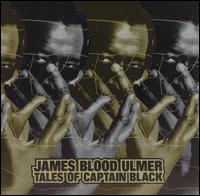
James Blood Ulmer: A protégé of Ornette Coleman, hugely influenced by Jimi Hendrix, his unique mix of jazz, blues, rock and avant-garde was hard to pigeonhole, and he never fully got the acclaim he deserved. Even Beefheart’s later albums had more influence among the post-punk crowd than Ulmer’s Tales Of Captain Black (1978), Are You Glad To Be In America? (1980), Free Lancing (1981), Black Rock (1982), Odyssey (1983).
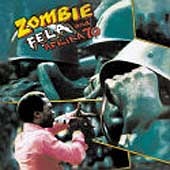 Fela Kuti: Often maligned by critics for his somewhat rudimentary horn playing, and James Brown influence, Fela deserved far more respect than that. Inventing Afro-Beat is nothing to sneeze at, he was a dynamo performer and band leader. His political awakening occurred during a visit to Los Angeles in 1970, when he was exposed to the writings of Malcolm X and Eldridge Cleaver. There his band recorded the ’69 Los Angeles Sessions which became the blueprint for his band Africa 70’s direction, and he went on to become a cultural hero and rebel, and a target of Nigeria’s brutal military dictatorship, who burned down his communal rehearsal and recording studio, Kalakuta Republic, tortured and jailed Kuti, and even murdered his mother in 1977. After a brief exile in Ghana, he returned even more determined in 1978, forming his own political party, while managing to keep churning out albums (totaling over 50 throughout his career) and touring. Who’s willing to go through that for their art these days? It’s hard to pick highlights, but Open And Close (1971), Gentleman (1973), Confusion (1975), Zombie (1977), Shuffering And Shmiling (1977), I.T.T. (1980) and Original Suffer Head (1982) are a start.
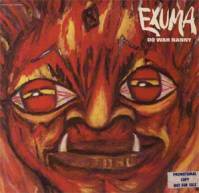 Exuma the Obeah Man: Born McFarlane Anthony McKay on Cat Island in the Bahamas, raised on junkanoo, a West-African based Bahamian folk version of Calypso, he began performing in the sixties New York folk scene after dropping out of architecture school. Influenced by the politics of the Black power movement, Hendrix and Sly Stone, McKay soon took on the name Exuma the Obeah Man, an Afro-Caribbean version of Haiti’s Vodun lwa, Baron Samedi, a spirit balanced between the worlds of the living and the dead. Exuma The Obeah Man, Exuma II (1970), Do Wah Nanny (1971) and Snake (1972) brilliantly mixed shamanistic lyrics with Afro-Caribbean rhythms, folk, rock and protest. Neither Mercury Records nor Kama Sutra had any idea how to market his records.
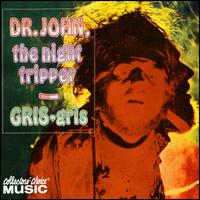 Dr. John: Born Mac Rebennack in New Orleans, he was a veteran on the R&B circuit before undergoing a transformation into an alternative hoodoo identity. Similar to Exuma the Obeah Man, Rebennack became Dr. John the Night Tripper, named after Bayou John, a New Orleans roots doctor who was busted in the 1840s for practicing voodoo. Adopting costumes worn by Mardi Gras Indians, Dr. John mixed tribal percussion with swamp blues, psychedelic rock, free jazz and Middle Eastern melodies with truly menacing results in 1968’s Gris-Gris, exemplified by “Gris-Gris Gumbo Ya Ya,” “Danse Fambeaux,” and “I Walk On Guilded Splinters.” On Babylon (1969), Remedies (1970) and The Sun, Moon And Herbs(1971), his music got progressively darker and murkier, and less accessible than Gris-Gris. Verging on being dropped by his label he came up with a compromise in the more festive Dr. John’s Gumbo (1972), his last great album.
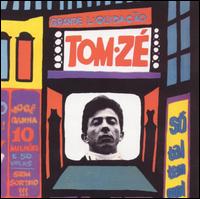 Tom Zé: Caetano Veloso and Gilberto Gil founded Tropicália and were jailed and deported by the corrupt Brazilian dictatorship. But along with Os Mutantes, Zé gave the Tropicálistas their wildly anarchic, creative edge. The classically trained trickster was presumed missing/in hiding in the 70s, but actually he made four of his most brilliant albums — Se O Caso É Chorar (1972), Todos os Olhos (1973), Estudando o Samba (1975), and Correio da Estação do Brás (1978). It wasn’t until David Byrne reissued a compilation in 1989 that more than a handful of people heard of him.
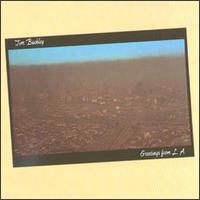 Tim Buckley: Starting as a straight folk minstrel, Tim Buckley’s restless muse drew him towards increasingly avant-garde influences, from Coltrane to Xenakis, Stockhausen and singer Cathy Berberian, who inspired him to use his voice like a free-jazz instrument, incorporating scatting and even a song in Swahili. His fifth album, Lorca (1969) was the wind-up, and Starsailor (1971) was the knockout punch. With its cosmic wails and oceanic eroto-mysticism, it’s the sound of Buckley trying to simultaneously return to the womb and escape into space. The multitracked vocals of “Starsailor” was both tortured and ecstatic, sexually mature and a baby’s babble. Greetings From L.A. (1972) comes back to earthly concerns, and is so extremely earthy and sexually frank (“Get on top/Let me see what you learned tonight/Then I talk in tongues mama/Oh when I love you/Yes I talk in tongues”) it would make Isaac Hayes and Barry White (if not Blowfly) blush with embarrassment. A brilliant bedroom album, it’s the most underrated of its kind. His son Jeff Buckley drew much more attention in the nineties. Though he was potentially even more talented than his father, he was far less accomplished, with only one album before his untimely death, and his major influence Robert Plant.
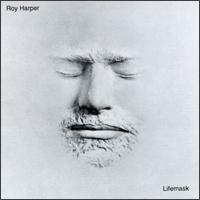 Roy Harper: A former folkie who was pals with Pink Floyd and Led Zeppelin (who paid tribute to him on “Hats Off To Harper” on III), he put out a string of stunning albums that were unknown to the mainstream audiences of both bands, and is just now are starting to show influences on people like Jim O’Rourke. On Stormcock (1971), “The Same Old Rock” features some hot guitar playing by Jimmy Page (playing under the pseudonym S. Flavius Mercurius). Lifemask (1973), Valentine (1974) and HQ (1975) are increasingly adventurous.
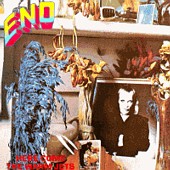 Brian Eno: Known mainly for his production and writing work with Devo, Ultravox, David Bowie, Talking Heads, and U2, the former member of Roxy Music made some of the most perfect art-pop albums with Here Come The Warm Jets, Taking Tiger Mountain (By Strategy) (1974), Another Green World, Discreet Music (1975) and Before And After Science (1977). Most of his many ambient albums are more interesting to talk about than to listen to, but not to be missed are his collaborations with Robert Fripp (1973’s No Pussyfooting), German space-rock band Cluster, and David Byrne (1981’s My Life in the Bush of Ghosts).
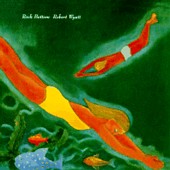 Robert Wyatt: As the drummer/leader of The Soft Machine which came from The Canterbury Scene, Wyatt helped develop the tastefully jazzy, post-psychedelic side of progressive rock. Soon after his strong, quirky solo debut on 1971’s The End Of An Ear, Wyatt fell from an open window at a party and became paralyzed the waist down. He recounts the painful recuperation in the classic, harrowing Rock Bottom (1974) with his heart-breakingly fragile tenor. The trance-like Ruth Is Stranger Than Richard (1975) is a series of surrealistic fables, while Nothing Can Stop Us (1981) a collection of singles and covers recorded for Rough Trade epitomize his gentle humor, Old Rottenhat (1985) his fiery politics. It wasn’t until 1997’s acclaimed Shleep that the indie community learned who the heck he is.
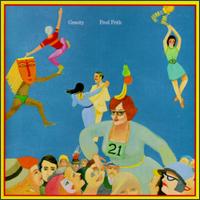 Fred Frith: A member of Henry Cow, Art Bears, Massacre and Material, Fred Frith nearly equals Brian Eno in groundbreaking creativity in his albums Gravity (1980), an experimental guitar album that avoids pretension by delving into celebration of dance cultures and Speechless (1981), a collection of “happy accidents,” improvisations and studio manipulations that somehow hold together. Step Across The Border (1990) is the soundtrack for a well-deserved documentary.
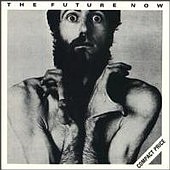 Peter Hammill: Like Robert Wyatt, Robert Fripp and Fred Frith, Hammill is a prog player (Van Der Graaf Generator) who transcended the genre in his solo albums: Nadir’s Big Chance (1974), Over (1975), and The Future Now (1978) are dark, intense albums. John Lydon cited him as an influence along with Can and Beefheart.
April 2, 2026
Fester’s Lucky 13: 1986
February 27, 2026
Fester’s Lucky 13: 1976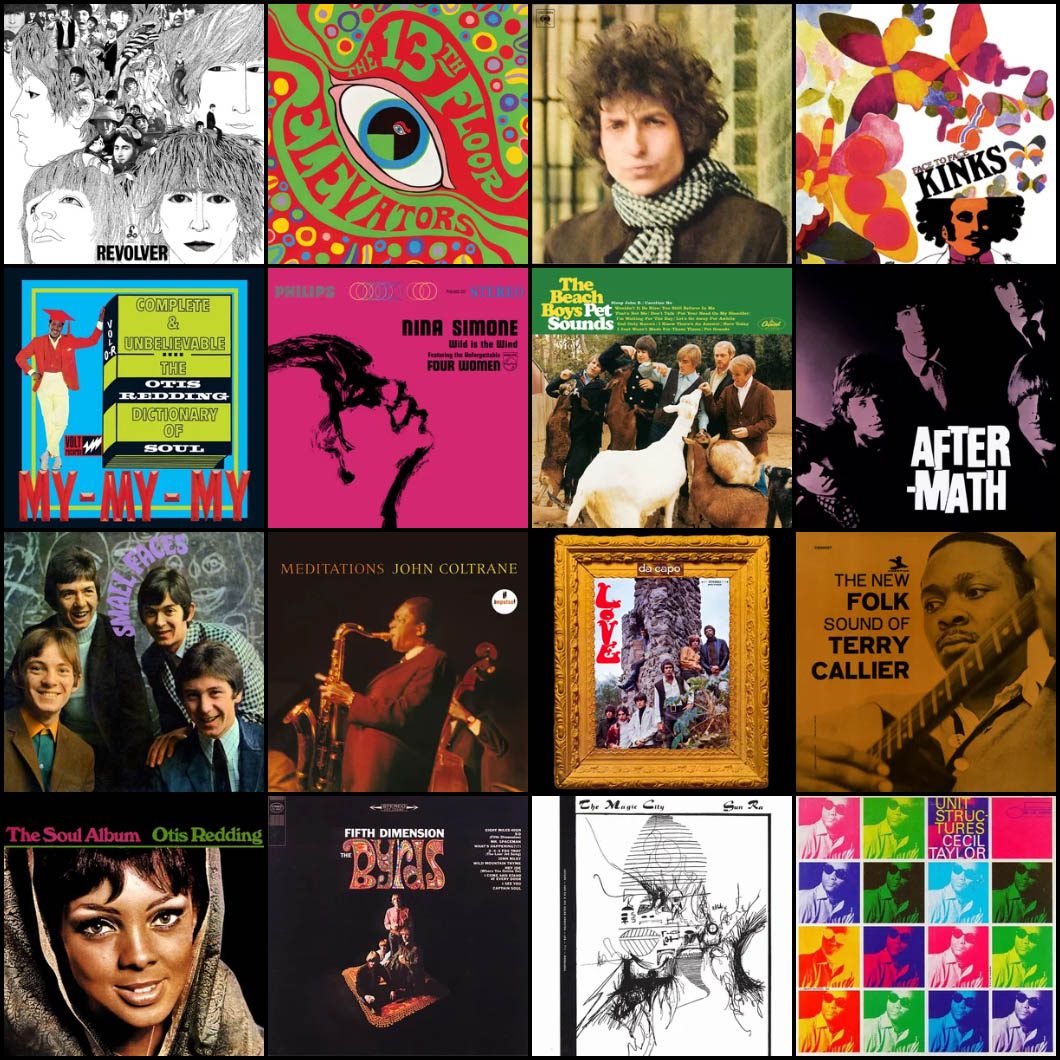
January 30, 2026
Fester’s Lucky 13: 1966