Bands and artists that came back from long periods of disappointing albums, breakups, losses and deaths of key members.

I mentioned it further down, but it’s worth noting that six years of inactivity in the 60s-80s was a bigger deal than it is now, when that’s getting to be barely over the average gap between albums for many artists. Imagine if the Beatles took a break from 1965-71, then resumed if it were no big deal. I will acknowledge the obvious that very few of these comebacks ever measured up to the artists at their peak. Has anyone had a second peak greater than their first? It’s been argued, but I don’t think so. Nevertheless, it’s always a relief to fans when an artist releases an album that isn’t complete garbage later in their career.
Muddy Waters – Electric Mud (1968)
Folk Singer (1964) was an important album, but Electric Mud was the first time he kind of took ownership of the music that came up fourteen years previously. Despite all the rock and roll artists who covered his songs, I fear that he probably didn’t get as much money from it as he should have.
Elvis Presley – From Elvis in Memphis (1969)
Last good album, Elvis is Back! (1960). Not that he didn’t have some great songs in the 60s, but overall he was a ghost of what he’d been before the Army. Especially on his two 1956 albums he was wild, fun, a bit rebellious. He came back from Germany a tamed, Very Good Boy, doing whatever the “Colonel” told him.
Captain Beefheart & his Magic Band – Shiny Beast (Bat Chain Puller) (1978)
For years I avoided listening to the two albums after Clear Spot (1972) where Beefheart tried out more commercial approaches after the Magic Band imploded. They’re not so bad in retrospect, but still not great. He was fighting with his bud Frank Zappa, and legal bs prevented the release of Bat Chain Puller in 1976, so he ended up re-recording it with a slight change in tracks. I’ve heard both and I think Shiny Beast is better. Six years was a long time in the 70s, but this was worth the wait for the triumphant comeback of a revitalized Magic Band.
Black Sabbath – Heaven and Hell (1980)
Some uberfans rate Technical Ecstasy (1976) but I just can’t, it’s a too huge of drop in quality from Sabotage (1975). Ozzy was there but not there, and the rest of the band were all dealing with various issues. So five years later, with new singer Ronnie James Dio, who fine-tuned more epic heavy metal lyrical themes and broke through new barriers with his singing on Rainbow Rising (1976), Sabbath was completely revitalized.
King Crimson – Discipline (1981)
Of course Robert Fripp would break up the band while at their peak with Red (1974), and of course when he reformed it with an updated lineup, the sound would be totally fresh too. Between his early ambient/drone tape experiments with Eno and collaborations with Peter Gabriel, David Bowie and Talking Heads, and his successful (artistically at least) solo album Exposure (1979), Fripp was mixing with all the top talents during his “off” time. This isn’t the first time new wave merged with prog (kind of symbolic of his marriage to Toyah also), but it was one of the best times.
Leonard Cohen – I’m Your Man (1988)
In 1988, not many musicians had disappeared for a decade plus and come back yet. Leonard Cohen had four years between albums, which was an eternity back then, and his voiced seemed to drop a couple octaves. Perhaps too much of the whiskey soaked Playboy lifestyle catching up to him? Or was it an artistic choice and he had been listening to Tom Waits? I’m Your Man was his best since New Skin for the Old Ceremony (1974). Thanks to a goofy movie with Christian Slater, Pump Up the Volume (1989), “Everybody Knows” was a hit of sorts. I got to see him live about 23 years later and he was a dynamo, moving around the stage constantly, taking only a 5 minute break for a four hour show.
Roy Orbison – Mystery Girl (1989)
Roy Orbison’s first great album, In Dreams (1963), pre-dated the album era. Almost as good was Many Moods (1969), when the cultural and musical landscape changed drastically in just six years. Twenty years later, after a couple stints with supergroup The Travelling Wilburys, fellow Wilbury Jeff Lynne produced and showed that master of lonely weepers still has it. Or had it, as sadly Orbison died of a heart attack a few months before the album’s release date. We’re lucky to have been left his one last gift from one of the all-time greats.
AC/DC – The Razors Edge (1990)
I know that Flick of the Switch (1983) is a favorite of Martin Popoff’s, known for his inexplicable tastes, but it did nothing for me. In terms of following up Back in Black, For Those About the Rock (1981) is about as good as one could expect. AC/DC had a pretty basic formula that’s deceptively simple, difficult for other bands to duplicate, and apparently very easy to F up with 80s production. I got Fly on the Wall (1985) from a dollar bargain bin not long after it’s release, and it wasn’t even worth that. Blow Up Your Video (1988) was marginally better. Really the best follow-up to BiB was The Cult’s Electric (1987). At that point most realized AC/DC would never reach the heights they did in the beginning, but “Thunderstruck” was a triumphant reminder of what they were once capable of. The rest of the album is pretty solid, with at least half the tracks being memorable.
Television – Television (1992)
A lot of times a band’s comeback album is exciting mainly because I finally get to see them live. Such was the case with Television, who broke up when I was too young to have had a chance to see them after their second album, Adventure (1978). The first couple Tom Verlaine solo albums contained some songs written while in Television, which I sought out and greedily lapped up, basically huffing on any secondhand fumes that remotely had a whiff of Marquee Moon (1977). Their third album bore little resemblance to how Television sounded in the 70s, but it was pretty cool in it’s own way. And I did get to see them on that tour, and it was fecking glorious.
Pentagram – Be Forewarned (1994)
Considering it took the band fourteen years to come out with their debut album in 1985, the seven year gap after their second album Day of Reckoning (1987) seems pretty short especially by today’s standards. But back then, it was not taken for granted that Pentagram would ever get it together again, or that Bobby Liebling would even be alive. But somehow they put together a mostly excellent third full length of doom metal.
Dan Penn – Do Right Man (1994)
Dan Penn was known mostly for the songs he wrote for other soul artists, but he actually had a really great voice himself, as evidenced on compilations of his Fame recordings, and his solo debut Nobody’s Fool (1973). I have no idea why it took him 21 years to do a follow-up, but I’m glad he did.
The Raincoats – Looking in the Shadows (1996)
The Raincoats held a lot of mystique for me when I was doing my post-punk radio show in ’88 to ’92, as their records were really hard to find and not a lot were known about them. When Geffen licensed the reissues for their three albums in the U.S. in ’93, it was super exciting. The band had such a unique, fresh take on post-punk that they sounded timeless. So of course it was a major event when they released their first album in twelve years. They picked up right where they left off on Moving (1984).
Iron Maiden – Brave New World (2000)
Like Judas Priest, Iron Maiden had a rough patch in the 90s, and while some hardcore fans bought the Blaze Bailey albums and saw them in small clubs (which I totally wished I’d done), instead I’d written them off and was skeptical that even with Bruce and Adrian back, they could recapture the magic of their first six album run. I was still pretty critical of Seventh Son of a Seventh Son (1988), but gradually came around to it, just as I came around to their first comeback album of the 21st century. Nothing can beat the early albums, but I think they did manage to improve from Brave New World on a couple later albums. Most importantly, it was the supporting tours that made them into the touring juggernauts that made them the global stars that they are.
The Chameleons – Why Call it Anything? (2001)
Interesting timing, when one of the UK’s most underrated post-punk bands came out with their first album of original material in fifteen years since Strange Times (1986), not counting The Sun and the Moon (1988) side project, Interpol are in the midst of recording essentially a tribute album, then go on to deny having even heard of The Chameleons (that may have changed after the early interview I read). The new music doesn’t move the initial classic trio of albums forward, but sounds pretty great. The band’s impact and reach would continue to grow to the point where they’re more known now than they were originally, at least in North America. They still play live shows now and then, but haven’t released new material since 2002.
Rush – Vapor Trails (2002)
I wasn’t going to put this, since it’s only marginally better than Test for Echo (1996) and not as good as Counterparts (1993) where a strong case could be made for that after three disappointing albums. However I just finished Geddy Lee’s My Effin’ Life, and was reminded what a big deal it was, as no one knew if Rush would ever do another album, after Neil Peart suffered the crushing loss of both his daughter and wife within less than a year. He went through his grieving and nomadic existence on his motorcycle for a few years, and gradually got the urge to play again. The fact that the gap was only six years given the double tragedies, makes all other bands and their struggles seem weak in comparison. Also, like Iron Maiden, Rush upped their live game with more elaborate sets, and were finally accepted in the mainstream thankd to movies like I Love You Man (2009) and Beyond the Lighted Stage (2010), becoming a global phenomenon themselves.
The Soft Boys – Nextdoorland (2002)
A lot of bands in the UK post-punk scene had roots in the psychedelic era, but in particular, The Teardrop Explodes and The Soft Boys were really digging deep into Syd Barrett era Pink Floyd and lesser known cronies. Robyn Hitchcock was as much as a Captain Beefheart fan as he was the jangle of the Byrds, and all of these were audible on the formative Can of Bees (1979). Improvements in Invisible Hits wouldn’t be released for some reason for another four years, but they nailed an alltime post-punk/psych/jangle pop classic with Underwater Moonlight (1980). Then Hitchcock was off to a solo career, leaving behind the distinct feeling of unfinished business. Two decades later, this was a welcome addition to their catalog, and the band treated us to a tour before calling it for quits for real. At least for another couple decades, as we know, anything can happen. Fans regularly say this is underrated, and I would agree.
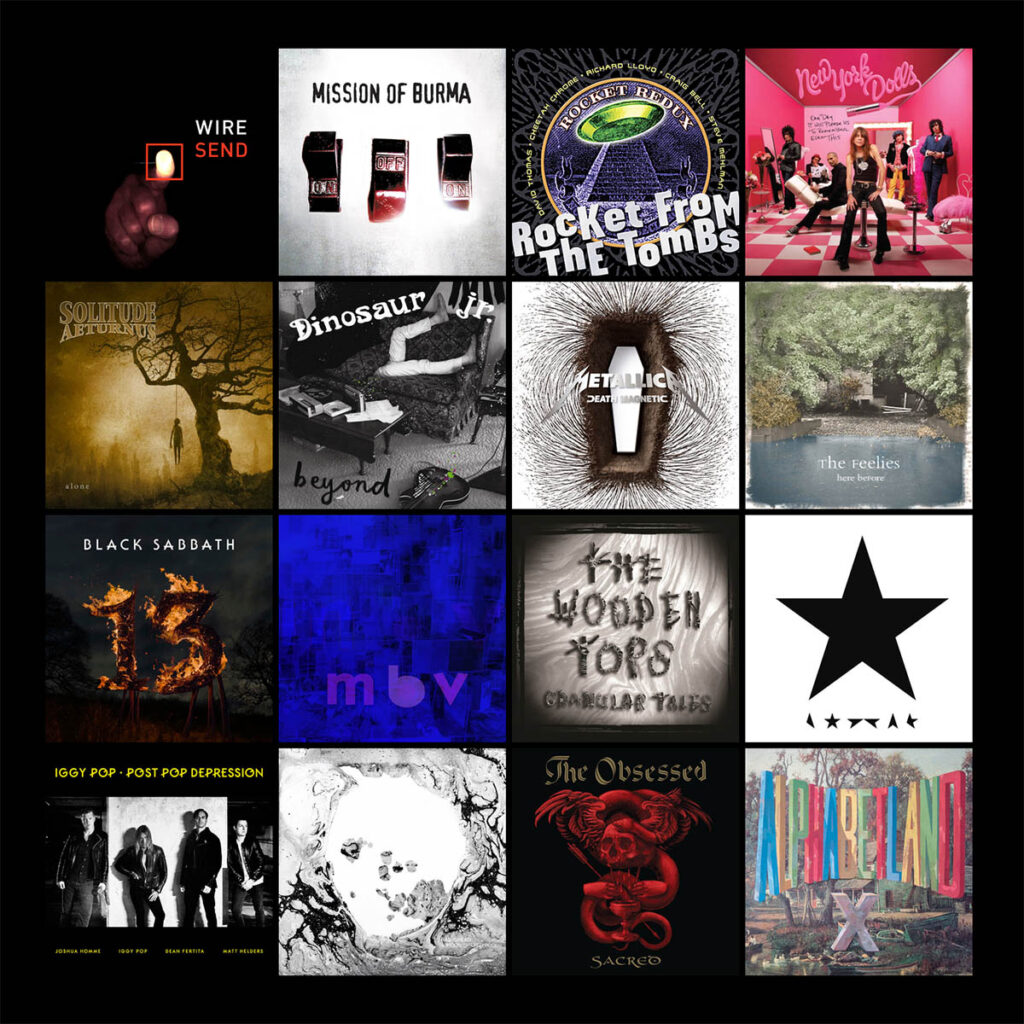
Wire – Send (2003)
One could easily say the only Wire you need to hear is their first three absolutely stunning, classic groundbreaking albums. Nothing they’ve done since even remotely sounds like the same band. That’s just how it goes sometimes. Wire understandably don’t want to repeat themselves, so they made a couple solid synthpop albums, the best of which was A Bell is a Cup (1988). Then they fell into an awful, oily, industrial-techno dance sinkhole in the early 90s and were dunzo. Yet remarkably they returned with a series of excellent Read & Burn EPs, the cream of which was issued as Send. They’ve continued exploring an industrial flavor, but this time with the muscle of Killing Joke and the intensity of Motörhead. Nothing earth shattering, but tons of fun, which is more than you can say for their subsequent eight (!) albums.
Mission of Burma – ONoffON (2004)
This one’s an unusual comeback story because I didn’t think it was even possible. After a brief but classic body of work of the “Academy Fight Song” (1980) single, an EP (with the much-covered “That’s When I Reach for My Revolver”) and the classic post-hardcore/post-punk classic Vs. (1982), the Boston band broke up because Roger Miller developed tinnitus from the massive volume of their shows. I didn’t think you could come back from that, but they did. I guess Miller was able to use sufficient hearing protection to carry on. After the massive influence they had on the indie scene in between albums, ONoffOn wasn’t exactly a revelation, but it was still a welcome return, and gave me the opportunity to see them live, which I though would never happen.
Rocket from the Tombs – Rocket Redux (2004)
Aside from some cruddy demos and live bootlegs, and two tracks, “Amphetamine” and “30 Seconds Over Tokyo” included on the 1996 Pere Ubu box set Datapanik in the Year Zero, Cleveland’s Rocket from the Tombs was the stuff of legends you read about rather than heard. Both spinoff bands Ubu and the Dead Boys culled some of their best songs from the RFTT setlist, but this album was a fabulous opportunity to hear the band, of course without Peter Laughner, bang it out on a decent recording, and then subsequently play their songs live. It’s a great reminder that they were THE reason British weeklies as enamored with Cleveland rock as much as Detroit and NYC. Also a cool full-circle moment, Peter Laughner went to NYC to temporarily fill in for Richard Lloyd who had quite Television briefly. Now on this album, Lloyd contributed guitar in place of Laughner!
New York Dolls – One Day It Will Please Us to Remember Even This (2006)
Another legendary band who broke up before I was in kindergarten, I never thought I’d get the chance to see them live. But just as Too Much Too Soon (1974) was better in hindsight than people gave it credit for at the time, surviving members David Johansen and Sylvain Sylvain could still tap into that magic 32 years later. Newbies of course thought they sounded like a glammier Aerosmith or Kiss, but it was of course the other way around. The Dolls were the influencers, and they got to take a well-deserved victory lap, even if it was in small clubs like the Double Door where I saw them in Chicago. I know people like to complain about biopics, but I’d gladly see one made on the Dolls, as the whole Max’s Kansas City scene has never been satisfyingly portrayed.
Solitude Aeturnus – Alone (2006)
When doom metal itself was under the radar, Solitude Aeturnus were the most underrated in the 90s. Formed in 1987 in Arlington, TX, same place Pantera came from, they may have been influenced by Sweden’s Candlemass, but but their explosive rock ‘n’ doom energy rivaled Saint Vitus and Trouble at their best. Based on the strength of their first three classics, Solitude Aeturnus has the best RPM (riffs per minute) ratio. After an eight year break, not only is sixth album Adagio (1998) great, it’s better than the previous couple albums. After a crushing set at Hell’s Heroes this year, many hope they’ll record another album.
Dinosaur Jr. – Beyond (2007)
Not only had it been a decade since J. Mascis’ last album as Dinosaur Jr. with Hand it Over (1997), but this is the first time the original trio with Lou Barlow and Murph were together since Bug (1988). I figured The Smiths or Husker Du would reunite before that happened (e.g. never), but they finally grew up and learned to communicate. Or at least get along enough to work together. It’s also the best album since Where You Been (1993).
Metallica – Death Magnetic (2008)
It took 17 years to sort of properly follow up Metallica (1991). It’s rare to find a hard rock/metal band who’s heads weren’t messed with in the 90s. Load (1996) wasn’t all garbage, but it was a detour from what made Metallica special. Some were disappointed by this one too, but brickwalling issues aside, I like it.
The Feelies – Here Before (2011)
When I discovered Hoboken, NJ band the Feelies, especially Crazy Rhythms (1980), it was like finding a musical holy grail, up there with Velvet Underground, the Modern Lovers and Television. They formed in 1976, played at CBGBs, and became known for mostly only play on holidays. They got some mainstream exposure appearing as The Willies in Something Wild. Director Jonathan Demme had an idea to feature the band in a movie, but sadly it never happened. They did tour with Lou Reed in 1990, which I saw. By their fourth album, Time for a Witness (1991), I was starting to take them for granted. But after a 20 year absences, I was chuffed to hear a new album, and just my second opportunity to see them live, this time at the outdoor Pritzker Pavilion in Chicago. They’ve since released the excellent In Between (2017) and released an album of live VU covers from a tribute show last year.
Black Sabbath – 13 (2013)
The first Sabbath album with Ozzy in 35 years, of course it’s a comeback! It’s the first Sabbath album to top both the U.S. and UK album charts, and while there were plenty of haters, a decade later I still stick by my original assessment that it’s their best at least since Dehumanizer (1992), if not Mob Rules (1981). It was a long road to get there, as there were several possible opportunities with the original members getting together a few times, even recording a couple tracks in 1997. When they announced their reunion on 11/11/11, I tried not to get my hopes up. Shortly after they announced Tony Iommi was diagnosed with lymphoma, then Bill Ward pulled out due to some diva fit about contracts. Perhaps he was afraid Ozzy would set him on fire again, but really he just hadn’t been in shape to drum for a tour in many years. I’m just glad Iommi pulled through and they finally made it happen, and I got to see their glorious set at Lollapalooza 2012, and again on their final tour a few years later. It’s about as dignified wrap up to a career one could hope for from one of the greatest bands ever.
My Bloody Valentine – m b v (2013)
Man, the followup to Loveless (1991) that would never come. Just 22 years, no biggie! A bit anti-climactic, since many of the original fans aged out of MBV and couldn’t be arsed to buy albums anymore. But still, it was a relief that Kevin Shields didn’t pull an Axl Rose and lose all his marbles. Just their third full-length, there’s no way it could have the cultural impact of the first two, but it did succeed in continuing their creative arc and not just rehashing what they did before. So, success! Though apparently there’s been some kind of TikTok inspired shoegaze revival happing the past couple years. The more current tweens who hoover up MBV the better for everybody.
The Woodentops – Granular Tales (2014)
The mid to late eighties was known mainly for the tyranny of pop in the charts, hair metal for the mainstream, thrash for the underground. Post-punk and new wave fizzled in the U.S., only bubbling under in the indie underground. But in the UK, 1986 was a particularly period where more many bands came up with brilliant hybrids of post-punk, new wave and pop, and often made the charts. This included The Woodentops, whose debut Giant was released June 30 on Rough Trade, with distribution help from Columbia, and reached #35 on July 6. It took bits of Suicide, The Talking Heads, XTC, Echo & the Bunnymen and especially the frenetic rhythms of The Feelies, all treated with acoustic folk, twisted with other instrumentation like marimbas, accordian and trumpet, and created something colorful and accessible. They experimented with dub with Lee Perry on the followup Wooden Foot Cops on a Highway (1988), but their moment had passed. Yet a devoted core of fans didn’t forget, and they were able to come back with a third album 26 years later. And then just last week, they released their fourth album, the more experimental Fruits of the Deep!
David Bowie – Blackstar (2016)
I was slow to coming around to Bowie, because my mom was into him first, with Scary Monsters and Let’s Dance. He was on my Queen record of course, but it wasn’t really until college that I fully listened to his entire catalog. By then he was truly in a creative nadir, and while there were glimpses of his greatness in Tin Machine, Outside (1995), Heathen (2002) and The Next Day (2013), it was sadly when he had terminal cancer that he really went out blazing. This gnarly, experimental work of art/jazz-rock may be overrated by fans grieving his loss just days after it’s release, but no matter how you approach it, it’s impressive.
Iggy Pop – Post Pop Depression (2016)
Back when David Bowie was scraping Iggy off of the sidewalks of L.A., no one would have guessed Bowie would be the first to go, and Iggy would still be bouncing around stages like a young man. Was it down to Iggy kicking drugs and even smoking in the 80s, and keeping physically fit his whole life? Maybe, but it’s also a lot of luck and genetics. Either way, we’re lucky to still have Iggy baring his sweaty, leathery torso for us still, no matter how spotty his solo albums became after New Values (1979). I’ve got a mix with at least one good song from each album through the years, and I grew to quite like Blah-Blah-Blah (1986), which coincidentally had hid old pal Bowie as co-producer. Two Stooges reunions came and went with brilliant tours but not great albums. It took a collaboration with Josh Homme of Queens of the Stone Age, who’s starting to make a habit of swanning with rock gods (Them Crooked Vultures with John Paul Jones) to come up with his best album since New Values. The focus on this album is also reflected in the comments of, funny enough, Geddy Lee’s memoir, where he said, “The only other exception I can think of was when my pal Josh Homme told me that the band he put together in 2016 for the Post-Pop Depression tour with Iggy Pop rehearsed for well over a month. (It showed. That band was note-perfect and incredibly tight.)” At the time it felt like Iggy was working with the same fervor as Bowie as death approached, and I started to get worry that Iggy’s time was up too. Perhaps he was spooked by his friend’s passing, and wanted to make a lasting statement. Either way, I’m grateful that not only this exists, but even his indulgently arty Free (2019) and his rudimentary garage punk banker Every Loser (2023).
Radiohead – Moon Shaped Pool (2016)
While King of Limbs (2011) isn’t necessarily a bad album, it’s the closest thing to a misstep Radiohead has ever taken, kind of flailing about in a jammy IDM sinkhole. And with all the side projects going on, and the fact that the band seemed disgusted with being a rock band since 1997, fans can’t take any new album for granted. So Moon Shaped Pool was a pleasant surprise, nine years after In Rainbows (2007). What perked my ears up was that they were dabbling in some psych prog with a touch of folk noir along the lines of what Wolf People were doing, and I was all in. For all we know, this could be the last Radiohead album. If that’s how it must be, it was a damn great swan song.
The list:
- Muddy Waters – Electric Mud (1968)
- Elvis Presley – From Elvis in Memphis (1969)
- Captain Beefheart & his Magic Band – Shiny Beast (Bat Chain Puller) (1978)
- Black Sabbath – Heaven and Hell (1980)
- King Crimson – Discipline (1981)
- Leonard Cohen – I’m Your Man (1988)
- Roy Orbison – Mystery Girl (1989)
- AC/DC – The Razors Edge (1990)
- Television (1992)
- Pentagram – Be Forewarned (1994)
- Dan Penn – Do Right Man (1994)
- The Raincoats – Looking in the Shadows (1996)
- Iron Maiden – Brave New World (2000)
- The Chameleons – Why Call it Anything? (2001)
- Rush – Vapor Trails (2002)
- The Soft Boys – Nextdoorland (2002)
- Wire – Send (2003)
- Mission of Burma – ONoffON (2004)
- Rocket from the Tombs – Rocket Redux (2004)
- New York Dolls – One Day It Will Please Us to Remember Even This (2006)
- Solitude Aeturnus – Alone (2006)
- Dinosaur Jr. – Beyond (2007)
- Metallica – Death Magnetic (2008)
- The Feelies – Here Before (2011)
- Black Sabbath – 13 (2013)
- My Bloody Valentine – m b v (2013)
- The Woodentops – Granular Tales (2014)
- David Bowie – Blackstar (2016)
- Iggy Pop – Post Pop Depression (2016)
- Radiohead – Moon Shaped Pool (2016)
Bubbling Under
The Obsesssed – Sacred (2017)
Slowdive (2017)
Cirith Ungol – Forever Black (2020)
X – Alphabetland (2020)
Picks from SoT Community
Can – Future Days (1973)
Scott Walker – Climate of the Hunter (1983)
John Fogerty – Centerfold (1984)
Deep Purple- Perfect Strangers (1984)
Fleetwood Mac – Tango in the Night (1987)
The Allman Brothers Band – Seven Turns (1990)
Neil Young & Crazy Horse – Ragged Glory (1990)
Mercyful Fate – In the Shadows (1993)
UFO – Walk on Water (1995)
Jimmy Page & Robert Plant – Walking into Clarksdale (1998)
Candlemass – Candlemass (2005)
Celtic Frost – Monotheist (2006)
Portishead – Third (2008)
Uriah Heep – Wake the Sleeper (2008)
Testament – The Formation of Damnation (2008)
Alice In Chains – Black Gives Way to Blue (2009)
Accept – Blood of the Nations (2010)
Magazine – No Thyself (2011)
Rush – Clockwork Angels (2012)
Van Halen – A Different Kind of Truth (2012)
Angel Witch – As Above, So Below (2012)
Mazzy Star – Seasons of Your Day (2013)
Satan – Life Sentence (2013)
Queensryche (2013)
The Sonics – This is the Sonics (2015)
Jeff Lynne’s ELO – Alone in the Universe (2015)
Blue Oyster Cult – The Symbol Remains (2020)
May 31, 2026
Fester’s Lucky 13: 1996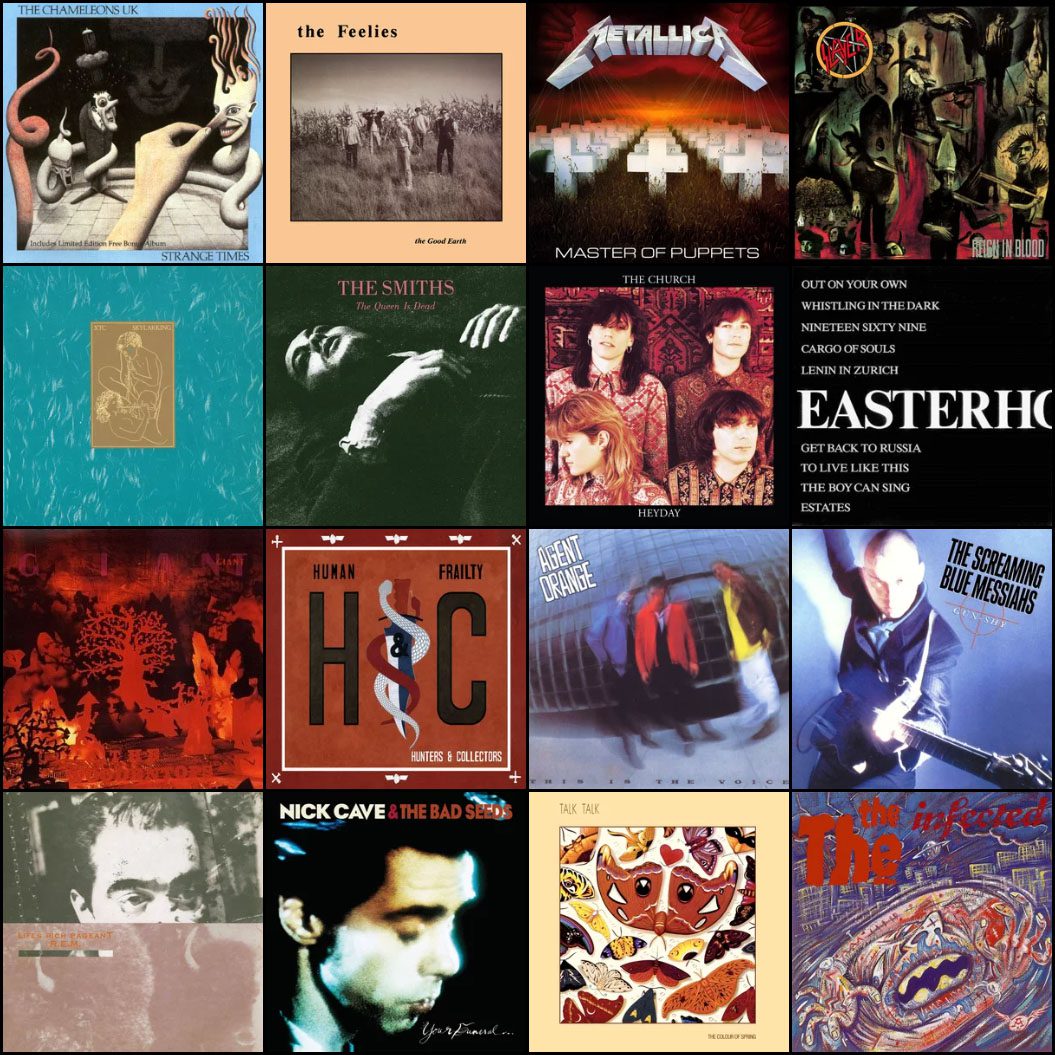
April 2, 2026
Fester’s Lucky 13: 1986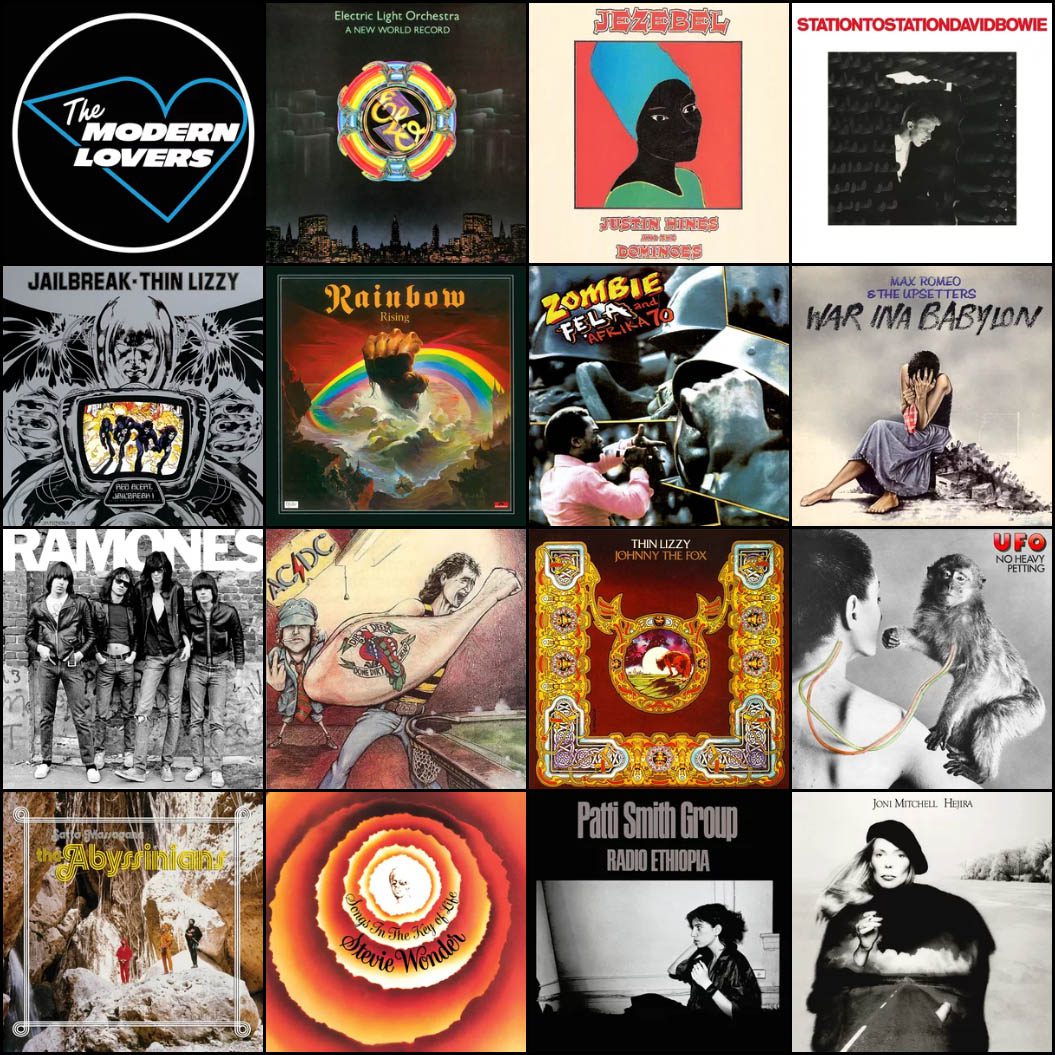
February 27, 2026
Fester’s Lucky 13: 1976