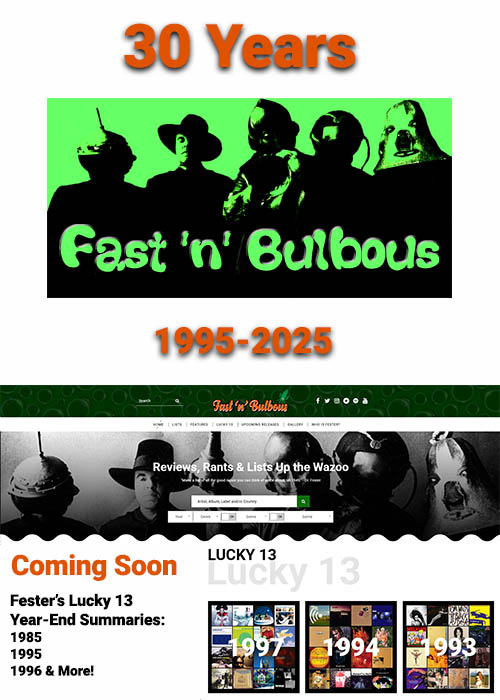
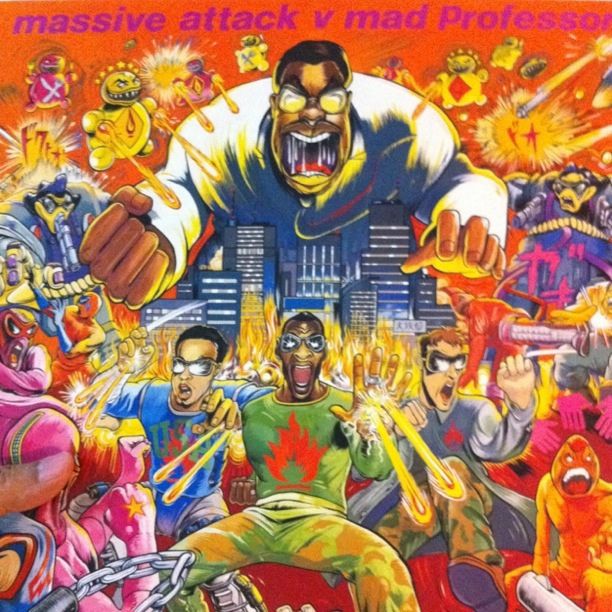
Massive Attack v. Mad Professor – No Protection (Wild Bunch, 1995)
1995 was the year dub returned. One could argue, however, that dub was never here in the first place. Outside of Jamaica, the only reasonably well-known influences of dub were found in bands affiliated with Adrian Sherwood, P.i.L.’s Metal Box/Second Edition, a handful of songs by The Slits, The Clash, Generation X and other punk bands, and Rhythm Collision Dub Vol. 1 on ROIR, The Mad Professor’s mix of The Ruts D.C.’s 1982 swansong. Until last year, most people had no idea what dub was, even if they were familiar with reggae.
The roots of dub can be traced all the way back to the late forties, when sound systems first appeared in Jamaica. Young deejays would play R&B imports from the U.S. on a setup of an amplifier, massive homemade speakers and a turntable. Sound systems became more prominent when Jamaica was emancipated from Britain in 1962. The best sound systems had deejays who could introduce the songs and coax the dancers using the latest “jive.” U. Roy became the biggest star, deejaying for Clement “Sir Coxsone” Dodd’s Downbeat, and then King Tubby’s Hometown Hi-Fi. As American R&B was replaced by rock & roll, deejays played more and more homegrown records. The two-track recordings reserved the B-side of the record to test sound levels. The instrumental B-side, or the “version,” became popular with deejays like U. Roy who had the freedom to toast throughout the record without competing with recorded vocals. Duke Reid, a sound system “selector” who branched into recording at his Treasure Isle Studios, began making “specials” in 1969, using U. Roy’s voice-overs. In experimenting with the versions and specials, Reid’s studio engineer, King Tubby, began making versions of songs in which the vocals dropped in and out amongst a cacophony of echo, reverb and heavy, heavy bass. The first dubs were “You Don’t Care” by the Techniques, and songs by the Melodians and Phyllis Dillon.
While Lee “Scratch” Perry insists that he invented dub first, there is no recorded evidence to prove it. However, his dubs of Bob Marley & the Wailers from 1970 (Soul Revolution Vol. 1 & 2, Trojan) indicate that he developed the technique almost concurrently with King Tubby. Perry represented a more mystical aspect of dub. He produced a kaleidoscopic variety of eerie sound effects, explaining that they were “the ghosts in me coming out.” Indeed, dub is rooted in the word “dup,” which is Jamaican patois for “ghost.” Perry suggests that dub is not only a doubling of sounds, but of one’s soul from the spirit-world into the technological world. For more information, see Dick Hebdige, Cut ‘n’ Mix (1987) and S.H. Fernando Jr., The New Beats (1994).
With the help of labels like Blood & Fire, several dub classics were re-issued, including King Tubby, Lee Perry, Horace Andy, Yabby U and Keith Hudson. Adrian Sherwood’s post-dub experiments were reissued on a handful of On-U Sound compilations. 1995 also saw entire albums worth of re-mixes of Ui, Scorn, Jon Spencer Blues Explosion and Tortoise. These albums featured creative re-mixes that went far beyond the definition of dub by such people as John McEntire, U.N.K.L.E., Moby, Aphex Twin, Bill Laswell, Germ, Coil, Jack Dangers, Steve Albini and even Beck.
As interesting as the results are, my favorite was British reggae producer Mad Professor’s dub of Massive Attack’s 1994 album, Protection. It’s coherence can be attributed to the fact that the mixing job is limited to one person who happens to have at least twenty years of experience in the genre. The Mad Professor does more than fuck with the songs — he improves them. He takes near-duds like “Weather Storm” and “Heat Miser” and turns them into rhythmic juggernauts, textured with fascinating and hypnotic effects. When former Massive Attacker Tricky released Maxinquaye, it was given that he had left his old band chewing on his dust. No Protection suggests that if they signed on the Mad Professor as a permanent member or producer, Massive Attack might have a fighting chance not just against Tricky, but the hordes of young “trip-hop” artists who have become so popular in the rebirth of dub.
Macro Dub Infection, Vol. One (Virgin, 1995)
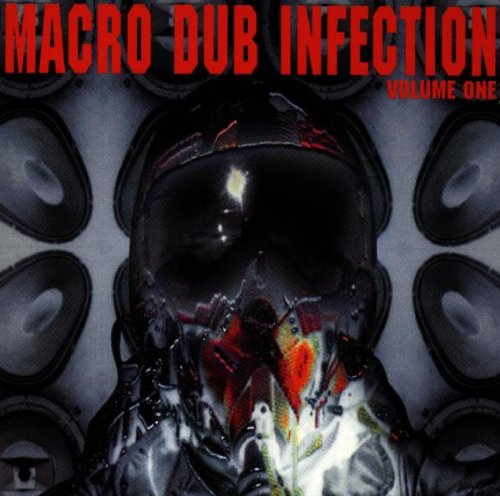
Macro Dub Infection was compiled by Kevin Martin, leading member of God, Ice and Techno-Animal, and contributor to The Wire. Like his 1994 compilation Isolationism, Martin includes a group of artists so diverse in sound, style and philosophy, it’s sometimes hard to see why they should be sharing the same album. There are only a couple tracks that could be considered dub. The rest, to quote the cover sticker, explore “today’s diverse dub genres of trip hop, jungle, techno, and ambient.” I found the techno and jungle tracks by Spring Heel Jack, Bedouin Ascent, Omni Trio and Wagon Christ to be an annoying interruption to an otherwise infectious collection of dark grooves. I have yet to figure out how jungle is supposed to fit into my life. I can’t dance to it, and it doesn’t stand up to repeated, concentrated listenings. The best tracks are by bands that cannot be easily pegged into any particular “dub genre,” like Tortoise, Laika, Scorn and Tricky. There’s something for everyone here, but beware of the ridiculous import price for the double CD set.
Headz: A Soundtrack of Beathead Jams (Mo Wax, 1995)
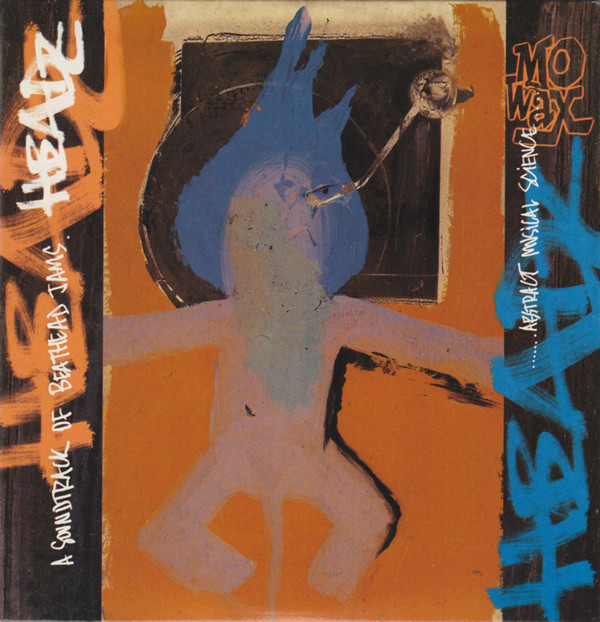
1995 saw the release of several “trip hop” compilations on labels such as Shadow Records, Moonshine Music, Below 2 CD and Mo Wax. While many of the compilations failed to accomplish anything more than mildly funky aural wallpaper, the artists on the British Mo Wax label represent the cream of the “trip hop” crop. This includes the legendary DJ Shadow, Nightmares on Wax, LA Funk Mob, Autechre, U.N.K.L.E. and an amazing piece called “Wildstyle – The Krush Handshake!” teaming Howie B with former Japanese gangster, current hip-hop artist and Mo Wax’s most prolific member, DJ Krush. As a self-described “collage of 16 instrumental excursions from the hip-hop avant garde,” Headz will someday be regarded a classic of early instrumental hip-hop, just as DJ Kool Herc, Sugarhill Gang, Spoonie Gee, Grandmaster Flash and Afrika Bambaataa are reverently anthologized now. Only time will tell if the Mo Wax artists will sound as dated (or timeless, depending on who you ask) as the early rap pioneers, 5 to 10 years from now.
I can only hope that the rich, dub-inspired soul and hip-hop fusion of Massive Attack and Tricky, the wildly experimental sounds on Macro Dub Infection and the impressionistic hip-hop collages of Mo Wax will continue to evolve and surprise, rather than devolve into the next big thing to be consumed by the lowest common denominator.
April 2, 2026
Fester’s Lucky 13: 1986
March 12, 2026
Ranking the Oscar Nominees