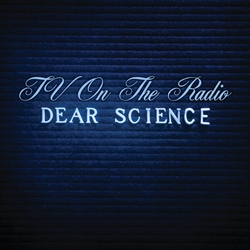
TV On The Radio’s second album, Return To Cookie Mountain (2006) divided its audience. Some were disappointed, others think they’ll never top it. It was an oppressive wall of sound that accomplished exactly what it set out to do. It was a dark, prickly, heavy album that took me two months to properly absorb, and still holds up two years later. Dear Science, is just as complexly layered, but more immediate. The melodies are sweeter, and there’s more air between the layers, making instruments and vocals more discernable. I see it less as flaws in David Sitek’s production, but rather the band’s evolution. On the first couple listens it was obviously catchier, funkier, even sexier. Polished but still rough where it counts. My third listen on headphones is what floored me. After finishing it I felt wobbly with catharsis, like I’d spent a day traveling in an unfamiliar country with a lover, having deep conversations, getting drunk, arguing, and ending the night at 3 a.m., exhausted from intense make-up sex. The feeling wasn’t diminished after my 20th listen.
“Halfway Home” starts off strong, with the droney beginning a bridge from their previous work. Tunde has expanded his range, developing a falsetto that would make Morrissey proud, and packing in more melodies. A guitar line emerges out of a Gary Numan electro pulse to some nice Surfer Rosa style distortion. “Crying” has a complex arrangement of electronic beats and sounds like recent Radiohead, but funky like Prince. This time Kyp handles the falsetto, and does so beautifully, setting up a chorus that is pure pop gold. The song slowly builds, and then fades with fabulous horns from their pals in Antibalas, the Afrobeat inspired band.
The pace quickens on “Dancing Choose” with Tunde’s rapping, rapid-fire delivery that recalls R.E.M.’s “It’s the End of the World…” or even Dylan’s “Subterranean Homesick Blues.”, except where the R.E.M. song is overly long and annoying, the band keeps it a short, focused blast at 2:56. The mic is tossed to Kyp again, who gets the wrench out for “Stork And Owl,” grabs your heart and twists. This is where we have liftoff into “this album is incredible” territory. Kyp is on fire, reminding me of Hawksley Workman’s flamboyance that cracks with vulnerability on his first two albums. Strings are used in a perfectly balanced effect, with a nice plucked melody that recalls mid-80s Cure. “Golden Age” has an ascending exuberance that TVOTR haven’t gotten enough credit for in the past. Especially when I listened to this on the train, it gave me vertigo, assigning a rush of corresponding memories and emotions to the neighborhoods as I whizzed by. This is probably the first big single of the album.
“Family Tree” is the kind of stunning weepy ballad that Coldplay would do if they weren’t so empty. It’s backed by electronically enhanced Boards Of Canada style nostalgia. The music is so stunning here it’s easy to forget they are also masterful lyricists. The beautiful ruminations of childhood and family are laced with a shadow of dread and mystery. “And in the shadow of the gallows of your family tree / There’s a hundred hearts soar free / Pumping blood to the roots of evil to keep it young.” The album just keeps getting better as it progresses.
“Red Dress” is raucously messy, funky and noisy, like Bowie’s Scary Monsters and early 80s Talking Heads, had they employed Fela Kuti’s Nigeria 70. It’s one of the albums lesser tracks, but it’s still great. “Love Dog” is another ballad bursting with feeling. When Tunde sings “Howling hallelujah,” he doesn’t leave it at that. He does howl, and somehow manages to not sound ridiculous doing it. Lyrics, vocals and original sound aside, it’s the emotional response they elicit that has made them my favorite band of the decade. “Shout Me Out” is another high point. It starts out recalling the stripped down sound of theYoung Liars EP, until the beat goes double time. The most amazing guitar sound comes in at the punked-out freakout part that somehow recalls both early New Order and Velvet Underground, on top of almost junglist breakbeats. Awesome. The band relishes the moment, as they can be heard shouting “Hey!” in the background. They’re probably also jumping and doing scissor kicks. Guitars are more scarce on this album, but when Sitek lets loose with the squalls, it feels like a tsunami. “DLZ” keeps the energy running in the red, with a heavy Radiohead inspired dubstep beat, while Tunde rages about the “death professor.” This would be the part in the live show where you see nothing but flashing white light, twitching limbs and perhaps some spraying spittle.
“Lover’s Day” appropriately ends the album on a strong, elegiac note. Katrina Ford of Celebration reprises her role of contributing vocals to “Wolf Like Me.” It manages to sound bittersweet, joyous and sentimental, while also letting loose bluntly unsentimental lines like “I’m gonna take you / I’m gonna shake you / I’m gonna make you come.” Too late man, I did that four tracks ago. When it’s hard to choose between six tracks as the best song on the album, you know it’s a monster. It’s become harder to identify classic albums in the last 15 years. Music has splintered into more and more styles and subgenres, catering to an expanding palatte of specific tastes. No longer can an album appeal universally to a majority of a generation, never mind cross-generations. Partly for those reasons, critics are afraid to go out on a limb and crow about a great album without reservations. They’re forever hedging their bets, timidly saying, this might be the best album of the year. Fuck that, Dear Science, is the best album since at least 1995.
“How can I get more like this? Who sounds like TV On The Radio?” I’ve been asked these questions for the past five years, and now that the band as at the peak of their powers, I’m sure I’ll hear it more. The answer is sorry friends, there is no one else. All the more reason to treasure these recorded documents, and catch them live every chance you get.
April 2, 2026
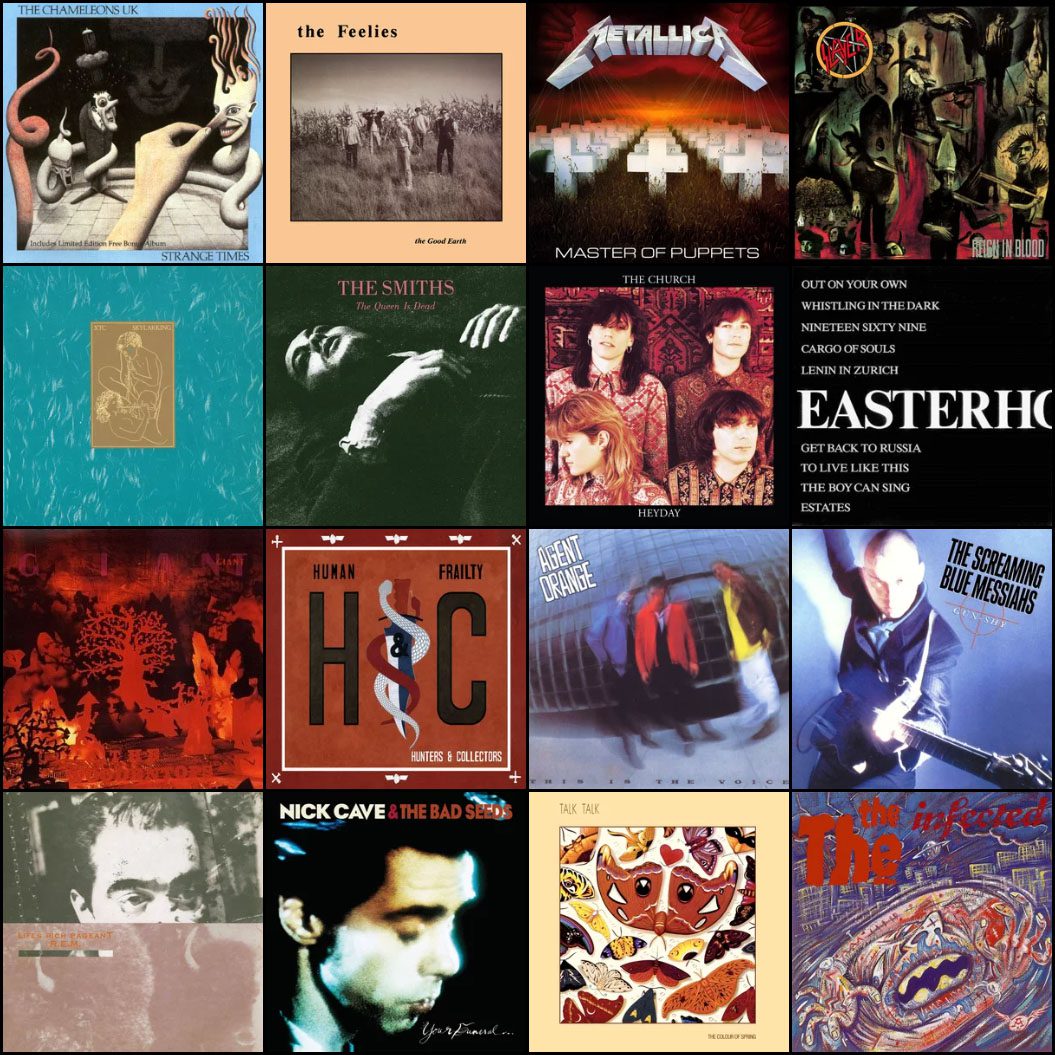
Fester’s Lucky 13: 1986
March 12, 2026
Ranking the Oscar Nominees