I’ve been asked why don’t I rank songs too. The answer is that I may be obsessive, but I ain’t crazy. There’s just no way that’s possible. Songs float in and out of our conscience and subconscience, their meaning changing over time and context. And there’s too many. There’s just no way. But identifying a few personal favorites that I thought could have been more popular, that I can do. Justifying a song as underrated is a tricky thing. We all have favorites that have personal meaning to us that simply would not translate for other people. And some songs we consider underrated because they’re basically obscure. I did my best not to just rattle off some favorite songs, but think about why these songs should have a more widespread appeal. In this context, I focused mainly artists that are fairly known in the mainstream, and have other songs that are far more popular.
The Kinks
“Fancy” (1966)
In 1966 the Kinks were rolling on a hit train that was about as successful as The Who. Face To Face was their first consistently great album, which means while everything was overshadowed by “Sunny Afternoon,” “Dandy,” and even “House in the Country,” (Davies wrote it, but it was first a hit for The Pretty Things) the deep cuts were great too. Even the b-side “Dead End Street” is incredible. My favorite was “Fancy.” While their single “See My Friend” from the previous year got credit as one of the very first psychedelic songs with its use of sitar, “Fancy” is more subtle and ethereal, beautiful in its simplicity. A perfect song.
The Temptations
“Smiling Faces Sometimes” (1971)
I know a lot of soul albums that were underrated, but for the most part, the best songs were also the best known singles, from Sam Cooke to Solomon, Percy, Otis, Aretha, Stevie, Marvin and Curtis. And Sly Stone, Bill Withers, Donny Hathaway and of course Al Green. One exception is found on a somewhat forgotten album by The Temptations, who were on a roll with a series of groundbreaking albums of psychedelic soul. They reached their peak with Sky’s The Limit, which included the massive songs “Just My Imagination (Running Away With Me),” and the epic single “Ball Of Confusion (That’s What The World Is Today).” But my favorite song was the 12:37 long psychedelic rager “Smiling Faces Sometimes”. It was one of Eddie Kendricks’ finest performances, and his last with The Temptations. Their following single “Papa Was A Rollin’ Stone” became their signature song, but I still prefer this one, which also grinds the better known single version by The Undisputed Truth into the dirt.
Eddie Kendricks
“If You Let Me” (1972)
Eddie Kendricks hit the ground running with his solo debut after leaving The Temptations, All By Myself (1971) and the hot centerpiece, “Something’s Burning.” People…Hold On is his masterpiece. Much like Curtis Mayfield, Kendricks used his lovely high tenor to expand on his composition, arrangements, and socio-political concerns with some hard hitting jams. Ridiculously, Kendricks hardly made a blip with the album, and it continues to be a lost classic.
Captain Beefheart & the Magic Band
“Big-Eyed Beans From Venus” (1972)
Captain Beefheart & the Magic Band got plenty of credit for their groundbreaking blues psych on the debut Safe As Milk (1967) and the gnarly, experimental third album Trout Mask Replica (1969). But relatively overlooked is the fact that Clear Spot (1972) is their best album. Produced by Ted Templeman (Van Morrison, Montrose, Van Halen), it’s their best sounding and most accessible album, and should have sold much better than it did, and be prominently featured on all the best-of 70s lists. It has everything from soul (“Too Much Time”) bluesy pop (“Circumstances”), and a lovely ballad (“Her Eyes Are a Blue Million Miles”). Probably the best song on the album is the title track, but that’s a nugget for the hardcore fans of Lick My Decals Off, Baby (1970) and later, Doc at the Radar Station (1980). “Big-Eyed Beans From Venus” is the closest the inscrutable Don Van Vliet ever got to an epic classic rock song, albeit still very original and unconventional. It’s packed with tension, build-up, and the release of a storm of amazing guitar solos. It’s their “Stairway to Heaven.” “Mister Zoot Horn Rollo, hit that long lunar note and let it float!”
Etta James
“All The Way Down” (1973)
Etta James delivered great songs consistently since she was a teen, with “At Last” (1961) and “Tell Mama” (1967) standing out as her most well known hits. Like her friend Esther Phillips, her 70s albums were overlooked. Her self-titled album in 1973 featured heavier funk and rock-influenced production (by Steppenwolf and Three Dog Night producer Gabriel Mekler) that was well suited to James’ deepening voice. The centerpiece, co-written by Mekler, “All The Way Down,” did become a top 30 hit, and was wildly popular in gay clubs that celebrated its vividly sordid subject matter. She even performed it at The Continental Bathhouse. But since then it seems it’s been forgotten.
Queen
“It’s Late” (1977)
By their sixth album, Queen were no strangers to epic songs. Not just “Bohemian Rhapsody,” but also “The March of the Black Queen” and “The Prophet’s Song.” But the simple, concise stadium shakers “We Will Rock You/Whe Are The Champions” hogged the spotlight, and the stage, given that there seems to be no decent live document of this song, which to my ears is by far the best track on a pretty solid album. This should have dominated classic rock radio. It kicks the living shit out of songs like Aerosmith’s “Dream On.” The lyrics may be iffy (what Queen songs weren’t?), but it does connect emotionally, and my god, it’s explosive! Brian May shreds his fingers off! The drums! Freddie’s passion! Come on world, WAKE THE FUCK UP AND WORSHIP THIS SONG THE WAY IT’S DESTINED TO BE.
Bob Andy
“Check It Out” (1976)
For about 20 years, from the mid 60s to the mid 80s, the small island of Jamaica produced a disproportionate amount of the very best music. There was so much, and if the only reggae anyone is only familiar with Bob Marley (and don’t tell me it’s only via the inadequate compilation Legend, I don’t wanna know), that’s an injustice that must be corrected immediately. There’s a ton of compilations that cover the other major players such as Toots & the Maytals, Burning Spear, The Congos, Culture, etc. But in 1976, arguably the peak year for the genre, a couple songs have been terribly overlooked. After leaving The Paragons in 1965, Bob Andy wrote a string of hits for Coxsone Dodd at Studio One. Some of the songs from 1967 to 1970 were collected in Song Book, one of the great all-time early rocksteady and reggae classics. The Music Inside Me was his best moment, featuring a re-recorded version of the 1974 single “Fire Burning.” And my favorite moment of all his work is the descending vocal melody that simply slays on “Check It Out.”
Justin Hinds & The Dominoes
“Spotlight” (1976)
Having been a key player in Jamaican music since the early 60s ska days (“Carry Go Bring Home”), Justin Hinds made an astounding comeback with Jezebel. His soft voice was more rich and soulful than ever, and despite the cheap and quick recording conditions most 70s reggae musicians who weren’t Bob Marley had to deal with, it sounded perfect. From the rousing “Fire,” the remake of “Carry Go Bring Home,” the rollicking “Dip and Fall Back” and the rootsy “Prophecy,” this is tremendously spiritual, uplifiting music. The best track, “Spotlight,” is one of the most beautiful songs ever recorded. It’s ironic that this album was neglected by Island, who did not promote it and even misspelled Hinds’ name on the cover. While they were busy extending Marley’s world domination, Justin Hinds created an album that surpasses all of Marley’s.
Electric Light Orchestra
“Jungle” (1977)
I love this song so much I bought a second pricey ticket to Jeff Lynne’s ElO to see them play just a year after the last tour, solely on the off chance they played this song. Unfortunately, they played the EXACT SAME SET as the previous tour. WTF Jeff?! Give this deep cut some love. We need it. Granted, it was a favorite childhood song of mine because of the fun chorus “Chooka chooka hoo la ley / Looka looka koo la ley” and the imagery of “A hundred animals were gathered `round in the night / And they were singing out a lovely song under the pale moonlight.” And that song within the song goes, “Wondrous is our great blue ship / That sails around the might sun / And joy to everyone that rides along!” What a lovely sentiment indeed. I also had a dance to go with the dance part. I get that this album is full of hits, from “Mr. Blue Sky” to “Turn to Stone,” and “Sweet Talkin’ Woman.” What gave me hope is on the first of the recent tours, they played the deep cut “Sandin’ in the Rain,” a great kickoff to the Rainy Day Concerto of side 3. But seriously, “Jungle” is a great song. If Lynne gave it some more love, I’m sure people would love it back.
Gary Numan
“Metal” (1979)
Pleasure Principle was the first album I ever bought based on the “Cars” single that I already had. I figured that song was so great, the album had to be worth hearing. And it was. But it scared the crap out of me, much like Talking Heads’ aptly titled Fear Of Music also freaked me out. Gimme a break, I was just 9 going on 10. But “Metal” was always mysterious and mesmerizing. Many fans agree of course, but it’s just too bad that for casual listeners, “Cars” is the only song they know.
The Sound
“I Can’t Escape Myself” (1980)
Alright, I broke my own rule here and picked a fairly obscure band. Like Comsat Angels, The Sound were a British post-punk band who really should have had just as much acclaim and popularity as Joy Division, The Cure, Echo & the Bunnymen and U2. “I Can’t Escape Myself” is a sticky anthem of angst and self-doubt/hatred from their debut Jeopardy (1980). It was a close call between this and their cold war dread of “Missiles” from From The Lion’s Mouth (1981).
Talking Heads
“Listening Wind” (1980)
Talking Heads’ best album, Remain In Light has had its share of acclaim. However, this track is often overlooked, partially I think because it makes people uncomfortable, getting into the head of a terrorist named Mojique in an undetermined country that is overdriven by American colonialists. The sensitive subject matter is likely the reason why Byrne shied away from performing the song live. It’s too bad, because music can be a powerful tool for understanding perspectives completely different from our own. Not to mention it’s just a beautifully poetic, haunting song, arguably the most powerful on one of the best albums ever. “The wind in my heart, the wind in my heart / The dust in my head, the dust in my head / The wind in my heart, the wind in my heart come to / Drive them away, drive them away.”
XTC
“No Language In Our Lungs” (1980)
Should XTC have been bigger than they were? Rather than Swindon’s Talking Heads, should they have been considered more a new wave Steely Dan? Whatever the case, their prog pop, from their caffeinated zolo early work through their complex, arguably overproduced later albums, have always been a mix of catchy tunes and insrutable tracks. Come for “Statue of Liberty,” “Making Plans For Nigel,” “Towers Of London,” “Senses Working Overtime,” “Earn Enough For Us,” stay for literally all the rest. Black Sea seems to have the most hidden treasures in it’s inky depths, including “Respectable Street,” “Generals & Majors,” “Living Through Another Cuba,” “Rocket From A Bottle,” “Paper & Iron,” “Burning With Optimism’s Flame,” and “No Language In Our Lungs.”
Iron Maiden
“Still Life” (1983)
Listening to a neighbor’s Black Sabbath and Yes albums when I was 8 years old left a permanent imprint on me, and I favor a lot of music, especially metal and psych, that have a prog influence. Many people, like me, were introduced to Iron Maiden via their video of “Run to the Hills” on MTV in 1982. Many of us had no clue at first that the band started way back in 1975 and had their influences in psych prog like Wishbone Ash, Stray, Jethro Tull and Yes. There were clues in early songs like “Remember Tomorrow” and “Prodigal Son,” but before I heard those, “Still Life” was a highlight for me on Piece Of Mind. Neglected even by the band in their setlists in favor of “The Trooper,” and “Where Eagles Dare,” I was hopeful I’d hear it at their show last year as they had several cuts from the album, including one of the best, “Revelations.” But “Still Life” remains neglected.
Rush
“Distant Early Warning” (1984)
This is actually the most prominent song on Grace Under Pressure, featured in a video with a kid rising a nuclear missile in reference to Stanley Kubrick’s 1964 classic movie Dr. Strangelove. 20 years after that movie, nuclear dread was worse than ever, with two batshit crazy countries butting heads at the peak of the cold war. The album marked an era of more mixed reviews and divided fans for Rush, despite the fact that it’s a really great album, one that in a way has some parallels to Radiohead’s OK Computer (1997). 1984 was a transitional year when U2 and R.E.M. were starting to compete for my attentions as my favorite bands, but I still think this song is more powerful than anything from The Unforgettable Fire. RIP Neil Peart.
R.E.M.
“Life And How To Live It” (1985)
R.E.M.’s third album, produced by Joe Boyd, the man behind many British psychedelic and folk classics, was considered by many, including the band, as a somewhat awkward, not entirely successful experiment. I beg to differ. It was a dark, moody, Southern gothic masterpiece, and my second favorite of all their albums behind Murmur (1983). Michael Stipe was still mumbling his vocals, and arguably was much more emotionally effective with this impressionist approach compared to their 90s work. Hearing his words stripped away the mystery. They’d never do anything as unique as “Driver 8” and “Can’t Get There From Here” again, and “Life And How To Live It” is a thousand times more moving than “Everybody Hurts”. No, a jillion times.
The Woodentops
“Last Time” (1986)
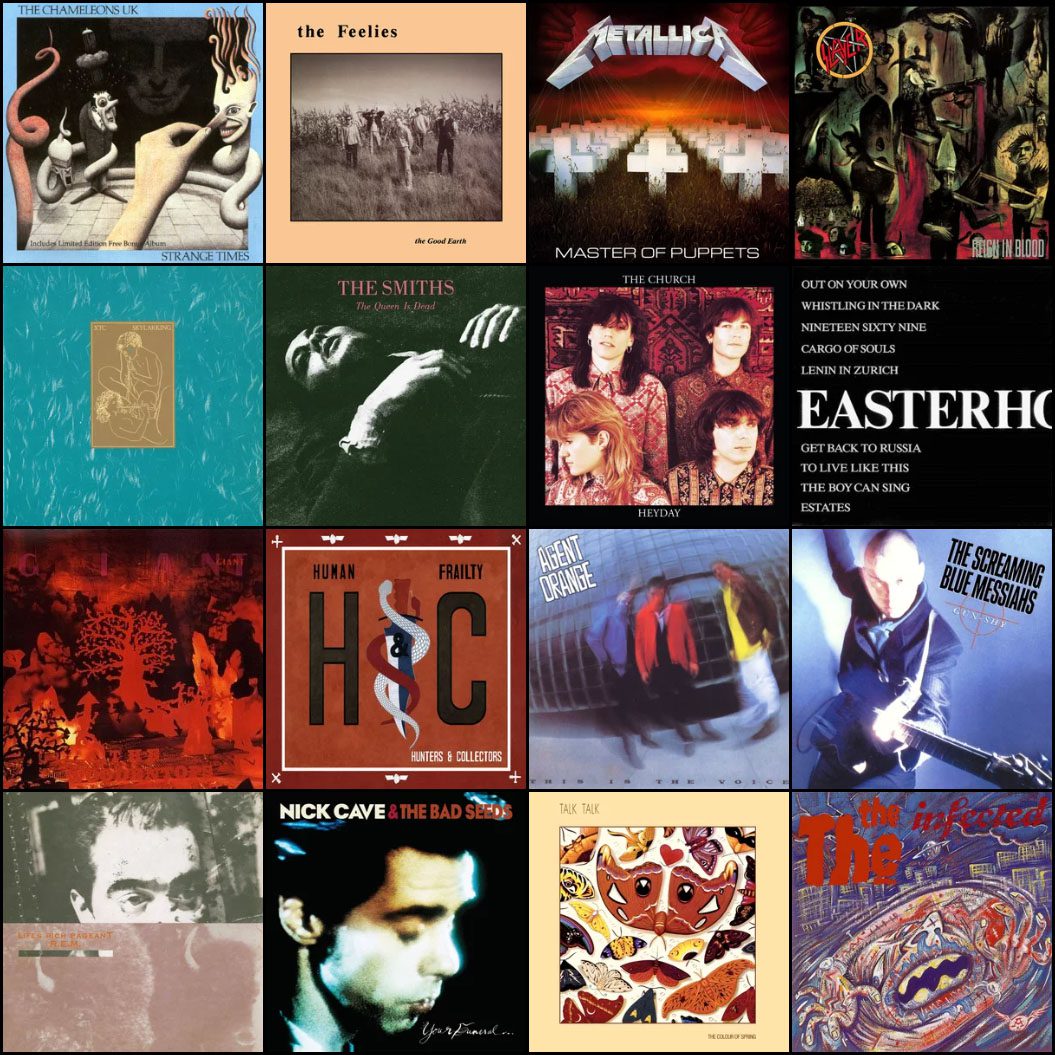
I’ve written about The Woodentops many times over the years, most recently in last summer’s Between The Cracks piece. One fact I never mentioned before is that they were credited for influencing the Balaeric beat dance scene that sprung up in mid-80s Ibiza, and in turn Primal Scream and acid house. It was mainly their propulsive early tracks like “Well Well Well” and “Why.” Their live album Hypno Beat Live (1987) has been featured on a couple greatest albums lists, but for the most part, this band lurks under the radar for most people. To me, Giant was just a rich, varied album that was just about as good as The Smiths, but without a Morrissey to annoy the crap out of me. Their penultimate track was also one of their most achingly beautiful. The closer “Everything Breaks” was also one of their most distinct songs.
Tom Waits
“Cold Cold Ground” (1987)
After an impressive run of 70s albums, Waits reinvinted himself with Beefheart inspired cubist art blues on Swordfishtrombones (1983) and Rain Dogs (1985). Franks Wild Years (1987) is somewhat forgotten, but “Cold Cold Ground” is one of his most heart wrenching. Which is saying a lot, as the guy probably has a shed full of ’em.
The Breeders
“Oh!” (1990)
A friend from Boston knew Kim Deal and snaked me a tape of this album months before its release. This was the first song I played from it on my radio show, because it was just so charmingly haphazard and awkward. The spareness was brilliant, and sounded completely fresh compared to her other band the Pixies, who were already sounding like mainstream college rock by their second album. I love how her voice cracks too. I don’t know what she was listening to at the time, possibly Young Marble Giants and Slint, but Pod sounded completely original in 1990.
Nirvana
“Sliver” (1990)
It’s weird to think how in 1989 Nirvana was just a band I randomly zeroed in on from the record stack among stuff like Tad, The Fluid, Screaming Trees and Cat Butt. Their track on the Sub Pop compilation was promising, but it was when “Sliver” came out that I started to think they would cross over. Well, either them or Buffalo Tom, I wasn’t sure.
Seam
“Bunch” (1993)
When Sooyoung Park of Bitch Magnet released Headsparks (1992) with his new band Seam, it was a beautiful mix of slowcore with shoegaze elements, roughed up with his noise rock background. The Problem With Me was their best album, and “Bunch” was a perfect encapsulation of that brief, lovely moment in time, just before that sound became dime a dozen and drowned in the avalanch of landfill indie/alt rock in the 90s.
Walt Mink
“Turn” (1993)
Walt Mink was a band that had no trouble converting packed rooms and halls into fans for life. They should have also sold a ton of albums, but had really crap luck with label (Caroline, Columbia, Atlantic) support during a weird goldrush period in the industry. This is from their second of their four albums, Bareback Ride, before drummer Joey Waronker left to play with Beck and R.E.M. among others. “Turn” is a shimmering jewel, and one of many examples why the band should have been far more popular. John Kimbrough’s hovering guitar riff keeps listeners suspended in a state of anticipation through two brief verses, and then it’s just a relentless series of ascending hooks topped with an ecstatic melodic chorus. It’s all over in 2:30, leaving us desperate for more, as it should be. The album also features the punked out “Fragile,” re-recorded from their first single. Kimbrough is rocking again with Teen Judge, working on their second album. Since the first three albums aren’t on Spotify, I included “Lost In The World” from their last studio album, Colossus (1997), recorded in a garage and released on an indie after they gave up on the major label hamster wheel. I also tacked on a Teen Judge track at the end of the playlist.
Tortoise
“Gamera/Cliff Dweller Society” (1995)
Tortoise fans are mostly split between Millions Now Living Will Never Die (1996) and TNT (1998) as their best work. My vote is for this EP, which encapsulates everything great about the band. “Gamera” starts with an acoustic guitar, and soon enters a kosmische groove with propulsive but varied drum patterns like Can’s Jaki Liebezeit. It bleeds into “Cliff Dweller Society” that goes from sampled swaths of sound and collage for five minutes before swelling with horns and emotions like something out of Charles Mingus’ The Black Saint And The Sinner Lady. One of the most moving pieces of music of the 90s.
Asian Dub Foundation
“Taa Deem” (1997)
During the yobbish blokey heyday of Britpop, there as also a lot of exciting stuff going on in the UK such as the Asian Underground (documented in the movie Buy More Incense) that seemed like a new globalism was going to change the world. Asian Dub Foundation were one of the major players starting in 1993, mixing Indian classical music with dance music, hip hop, dub, industrial and punk. They peaked with third and fourth albums Rafi’s Revenge (1998) and Community Music (2000), but my favorite moment is this version of a Nusrat Fateh Ali Khan song on the Star Rise tribute album. 20+ years later, it was two steps forward, three steps back.
Queens of the Stone Age
“In The Fade” (2000)
While I agree that QOTSA’s third album Songs For The Deaf (2002) is their best overall, my favorite tune features Mark Lanegan on vocals from their second album. The moody, meditative tune is also my favorite thing Lanegan’s ever done, solo or with Screaming Trees.
PJ Harvey
“We Float” (2000)
Along with Björk, PJ Harvey ruled the 90s, and Stories From The City, Stories From The Sea was like the pop icing to her earlier gothic blues punk. It’s her celebratory New York album, paying tribute to Patti Smith’s poeticism and Chrissie Hynde’s sultry vocal tones. She has since gone in much less engaging directions of art rock that have gained her plenty of acclaim, but leaves me nostalgic for when she used to make me feel things, like on this elegiac final track.
Schneider TM
“Reality Check” (2002)
Who knew that electronic music could be so emotional? This nearly forgotten track may feature electronically processed vocals and bleeps and blips, but also manages also to evoke Federico Garcia Lorca — “The night soaks itself / along the shore of the river / and in Lolita’s breasts / the branches die of love.”
Four Tet
“Hands” (2003)
For a short period, I actually enjoyed listening to electronic albums all the way through from the likes of Boards Of Canada, Autechre, Orbital, Amon Tobin and Four Tet. It’s not like the genre lost the plot, but aside from Burial, I haven’t really heard anything that transfixed me as much as this track since then.
The Rakes
“Binary Love” (2005)
The early 2000s were a giddy time for those who felt rock ‘n’ roll needed saving, and those saviours came in the form of The White Stripes, The Strokes, The Libertines and Interpol. I liked all that stuff, but rock never went anywhere. By 2005, the British post-punk guitar pop trend was peaking with the likes of Bloc Party, The Futureheads, Franz Ferdinand, Maxïmo Park, Razorlight and Editors. With the exception of Arctic Monkeys, it would soon become unfashionable. One of my favorite tracks from that era was from a slightly less celebrated band, The Rakes. “22 Grand Job,” “Strasbourg” and “Open Book” were the big singles, brilliant all. But I’ve always had a special place for the melancholy of “Binary Love.” I miss ’em!
Maxïmo Park
“Books From Boxes” (2007)
This is actually the most popular tune by Maxïmo Park, with nearly 25 million streams on Spotify. Was it on some soundtrack? At the time, critics sniffed their noses at them, and the public were obsessed with Arctic Monkeys. When I saw them on I think their only US tour at a small club (now gone) called the Double Door, the place was packed and over half the audience sang along. I think they’re still together, but seemed to have missed their window for Arctic Monkeys level success. Their debut A Certain Trigger (2005) is great fun, with “Apply Some Pressure,” “Graffiti,” “Going Missing,” “Postcard Of A Painting” and “Limassol.” Second album Our Earthly Pleasures is probably their peak, including “Our Velocity,” “Girls Who Play Guitar” and the introspective breakup song “Books From Boxes.” What The Jam might have sounded like if they decided they wanted to rock stadiums rather than disintegrate.
Pete & The Pirates
“She Doesn’t Belong To Me” (2008)
Like The Rakes and Good Shoes, this was another lesser known UK guitar band who I loved. “Mr. Understanding,” “Knots” and “Come On Feet” are all great tracks, but this little 1:59 slip of a songs destroys me every time. Sadly the band only made one other album, One Thousand Pictures (2011) before breaking up. A small consolation is that they essentially turned into the electropop Teleman, who are very good, but have never given me goosebumps like their old band.
Colour Haze
“Turns” (2008)
I feel like most stoner rock I like is quite well known, at least in their own world of European festivals and the in the hundreds of blogs that have popped up. Also, individual songs don’t stand out to me as often, as it’s more about texture and groove. Colour Haze is no exception. In fact, their ninth album, All, was a kind of turning point. It was the last time they had pretty succinct, melodic psychedelic tracks like “Turns” before going on to experiment with more sprawling abstract soundscapes that dabble in, for example, modern classical. I hope someday Stefan Koglek will again try his hand at some more concise psych pop songwriting, given how gorgeous “Turns” is.
TV On The Radio
“Will Do” (2011)
TV On The Radio were no doubt a hot item in 2004-08. Then they weren’t at least as far as critics and hacks were concerned. I never saw any specific criticisms of Nine Types Of Light. It was simply ignored and forgotten, when this track should have been a huge hit.
White Denim
“Street Joy” (2011)
White Denim’s range really is remarkable, as they veer between garage punk, jammy psych, prog pop and more. Here they sound like freakin’ Radiohead circa 1995, no joke.
Troubled Horse
“Sleep In Your Head” (2012)
This Swedish band has been under the radar, despite the brilliance of their Americana infused stoner psych of debut Step Inside. Revolution On Repeat (2017) lost some twang and charm, and I nervously hope that the band doesn’t break up before I ever get to see them play “All Your Fears,” “Tainted Water” and this powerful tune.
Witchcraft
“Ghosts House” (2012)
Sweden’s Witchcraft spun some heads and ears toward the stoner doom psych scene upon their self-titled debut in 2004. Their fourth album Legend is their most traditionally produced hard rock, and also has many of their best songs, including “Ghosts House.” Since then, there’s only been one album, and leader Magnus Pelander would release a spew of erratic messages on social media then disappear. It looks like they might have peaked, and if they have it’s a fine legacy to leave behind.
Graveyard
“Slow Motion Countdown” (2012)
Members of Graveyard were once in Norrsken along with members of Witchcraft. Graveyard’s approach involved a touch less doom and more garage blues, with their most popular song “The Siren” from their second album, Hisengen Blues (2011), which remains a fan favorite judging by the Spotify streams. I think Lights Out is a close contender, but shockingly none of the songs make their top 10, which range from 1.8 to 8.2 million plays. “Slow Motion Countdown” is a prime example of the emotional range the band would go out to explore, each album featuring a couple slow roll but tough garage blues ballads, along with forays into soul. Graveyard are a great band with plenty of creativity left in the tank, and I look forward to seeing the hard working band with Opeth next month.
Christian Mistress
“Haunted Hunted” (2012)
Of the great traditional heavy metal bands this past decade, some of the most memorable songs were by Christian Mistress, who released two nearly perfect albums, Possession (2012) and To Your Death (2015). I’ve heard no news from the band in several years, and if that’s all they leave us, this track will continue to hunt me in my most haunted dreams.
Magic Circle
“Winter Light” (2013)
Boston’s Magic Circle are made up of members of various hardcore punk bands, but you wouldn’t know it. Their debut sounds like they were born playing this style of rock ‘n’ doom, and it became a relatively big word-of-mouth success considering the album was difficult to find, buy or stream for a long time, and the band had zero social media presence. Journey Blind (2015) was even better, yet for some reason this best kept secret lost its luster for some fickle fans. I could just as well have picked a track from that album, but lately I’ve been returning to “Winter Light.” This band deserves more attention. It would help if they did a proper tour, but they are taking a step in the right direction this year, playing the Hell’s Heroes III fest in Dallas and Decibel’s Beer & Metal Fest in Philly this spring.
Spirits of the Dead
“Golden Sun” (2013)
Norwegian psych proggers Spirits of the Dead were chooglin along at a good clip, with three albums in four years. Rumours Of A Presence blew my mind and was my album of the year, and I’m afraid I jinxed it. They supposedly had an album being mastered back in 2017, but still nothing, aside from the track “Blueberry Chopper” released last year. It’s not often that a song haunts my dreams multiple times, but “Golden Sun” is one of ’em.
Hidden Masters
“She Broke The Clock Of The Long Now” (2013)
Another band I jinxed, I went apeshit when I heard Of This & Other Worlds. Then they broke up. I love everything on the album, but this songs exemplifies everything I love about them, with the playful psych lyrics and mutliple changes keeping you on your toes. Fortunately, Alasdair C Mitchell can now be found on another album of the year, Rosalie Cunningham’s solo debut.
Peluché
“Sin” (2015)
While Utopia Village EP (2016) and Unforgettable (2018) are breathtaking, my favorite tunes by Peluché remain their earlist, “Cinnamon,” “Ohio” and especially the Slits meets Specials skank of “Sin.” I’m dying for more Peluché music. They should also revive their shed session series of live jams in their homemade garden she-shed studio.
Royal Headache
“Carolina” (2015)
This may be a case where the band underrates themselves. By all accounts, people loved the shit out of this band, who released two albums before imploding. The album is packed with amazing soulful garge punk songs, including “Wouldn’t You Know,” “Need You,” “Another World,” and the one that sticks with me the most, “Carolina.” No one needed to save Carolina. She needs to save Royal Headache. They’re too great to leave it at this. Fingers crossed they change their minds.
Syd Arthur
“Sun Rays” (2016)
After the bubbly complexity of Canterbury psych prog on their first two albums, I thought I would be disappointed by their simplified electropop approach on Apricity, but it’s one of my favorite albums of the decade. Last year they took a far different approach supporting Jack Hues (of Wang Chung!) on the sprawling 22:00 long jazz track, “Nobody’s Fault But My Own.” I really hope they have a new album due soon. ‘Til then, and all the horrors that have gone on since 2016, they leave us with this — “Brother don’t you cry / Said it’s gonna be alright / I’ll meet you on the other side / Said it’s gonna be alright.”
Dazey And The Scouts
“Groan” (2017)
Wet Lips
“Shame” (2017)
It really stings that the bands behind two of the best songs of 2017 both broke up shortly after. It was early days for both of these queer punk bands based in Boston and Melbourne, and this was just a hint of what could have been. From their ashes no doubt there will be many more, such as RVG and Body Type.
Teen Judge
“Horns Of Envy” (2018)
My Walt Mink selection wasn’t available on Spotify, but this is just as great. Picking up where we left off with that 1993 track, John Kimbrough and Candice Belanoff were highly respected for their musicianship, and had no problem replacing Joey Waronker with equally great drummers in Orestes Morfin/Delatorre (Bitch Magnet) on El Producto (1996) and Zach Danzinger on Colossus (1997) and Goodnite (1998). Since then the band has gotten together for a handful of one-off shows over the years, while Kimbrough wrote music for film and TV (winning a couple Emmys), produced Tenacious D’s Rize Of The Phoenix and contributing some songs and guitar heat to power pop band Valley Lodge. He finally assembled a band of stellar musicians with impressive pedigrees, even scoring the bassist from David Bowie’s Blackstar band. The debut Teen Judge album was initially released vinyl only, and remains pretty much unknown. There’s a lot of great songs, but my pick is “Horns Of Envy,” which has a dreamy post-shoegaze feel, with a hook and vocal chorus that is right up there with the best of anything by Swervedriver or Bob Mould’s Sugar, without the dated production.
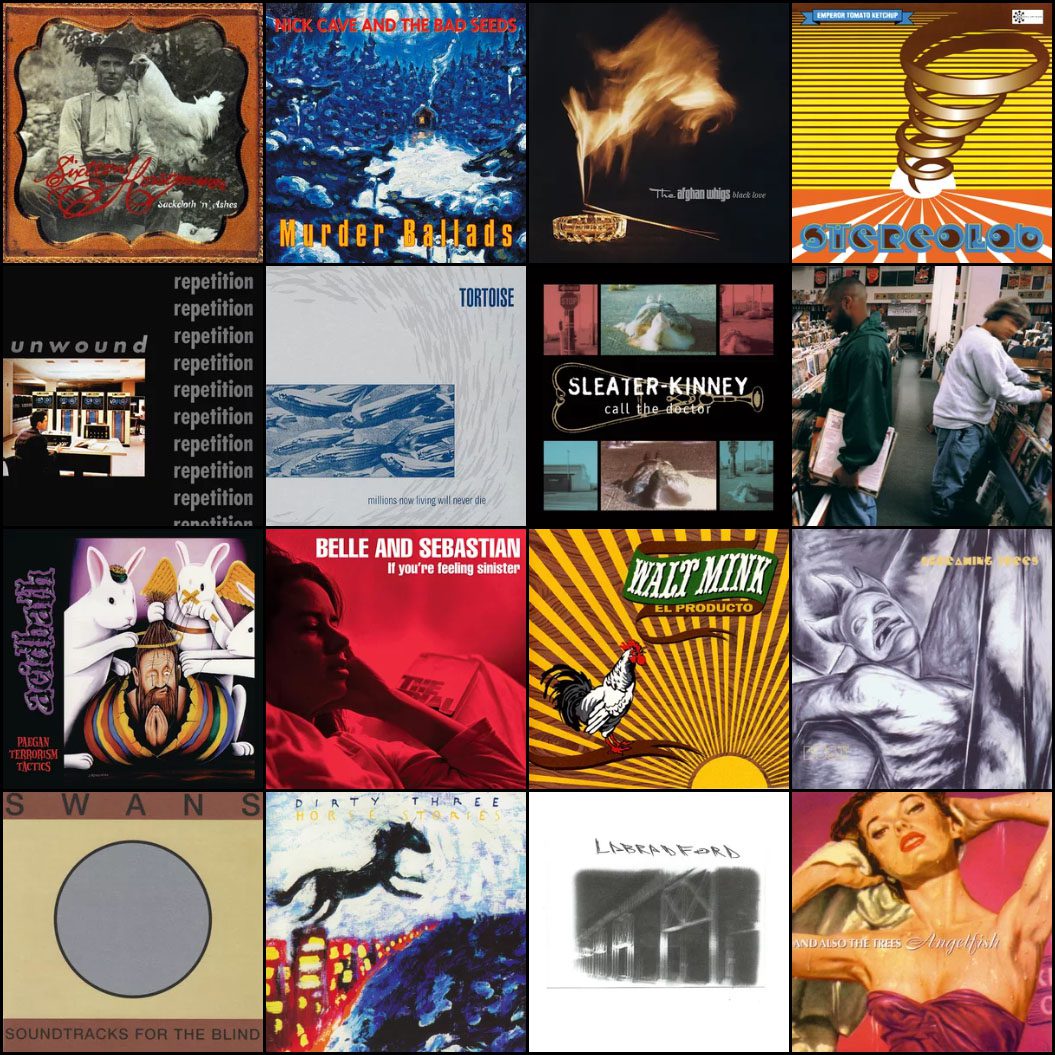
May 31, 2026
Fester’s Lucky 13: 1996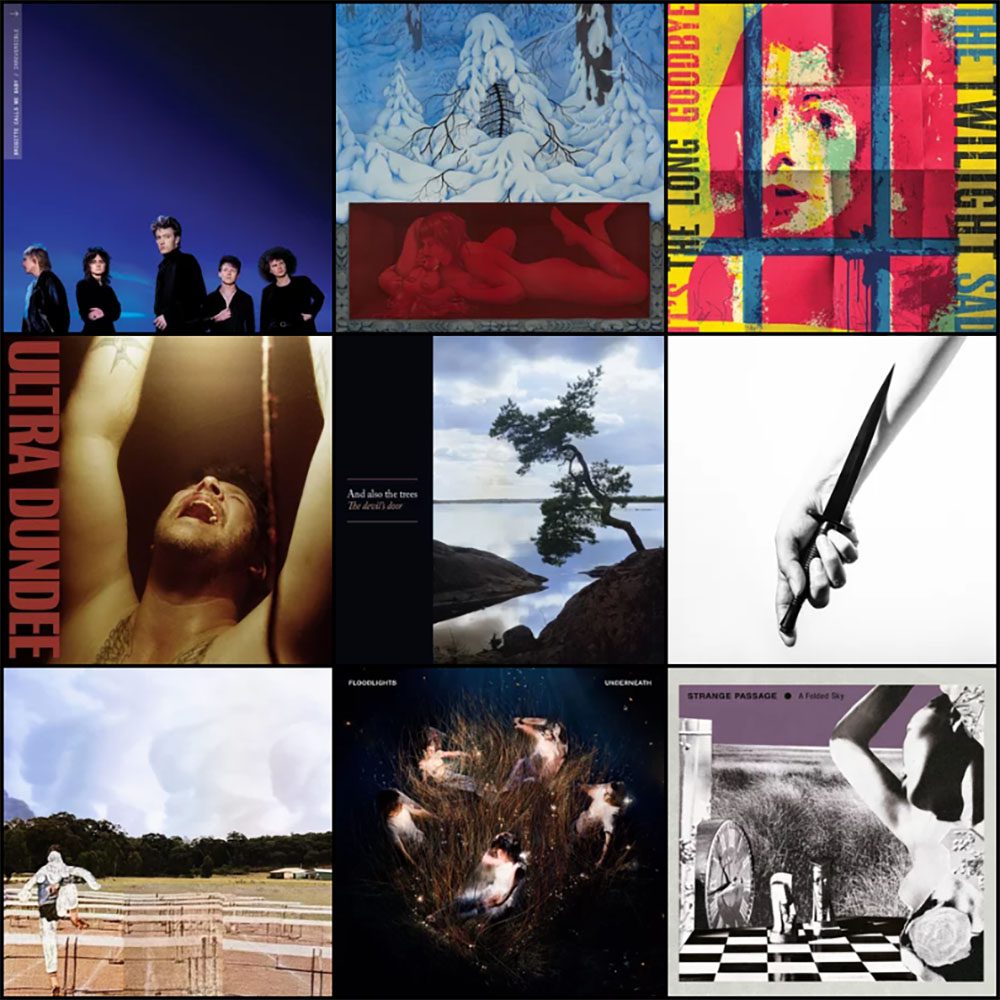
April 2, 2026
Fester’s Lucky 13: 1986