Have you ever been so excited by an upcoming release of a favorite artist that you mark the release date on your calendar, re-listen to their entire catalog in the preceding weeks to prepare yourself, even lie in bed wondering what it will sound like as you drift to sleep? When it finally comes out you?re willing to stand in line at midnight on a Monday to be one of the first to get it (if you have the money). If you happen to know enough people who care as much about the band as you do, you might even throw a listening party.
I remember attending small ones in friends? dorm rooms as we listened intently to the new Butthole Surfers and Flaming Lips albums. Nothing quite matches the excitement of listening for the first time to an album you’ve anticipated for months, possibly even years. Whether or not the albums stand the test of time is irrelevant for the moment. It’s one of your favorite bands, and you’re just happy to savor every new note of every song while you study the cover art and carefully read the lyrics if there are any.
Does this still happen? Most likely if you’re over the age of 25, not as often. Maybe albums just aren’t quite as life-changing for you now as they were as a teenager. But is it because you’re getting older and don’t get as excited over albums, just like you don?t get in quite the same frenzied state for birthdays and holidays? Is it because there just aren’t as many great “event” albums as there once was? Are there so many more good albums being released that It’s difficult to sort out the great ones? Or is it because file-sharing has killed the buzz because everyone’s heard and absorbed the MP3s weeks or even months before an album’s release? This was certainly the case with the last albums by Wilco, Radiohead, TV On The Radio and Bloc Party. There is a small thrill that comes from hearing a leaked copy months before most people, but It’s not quite the same. It’s possible that the excitement over albums will never again match the anticipation that’s now reserved for the next Harry Potter book or epic sci fi/fantasy movies. The dilemma now is whether you want to exert the willpower to wait to hear the albums you’re most excited about until at least just before the release date.
As I recall some of my highly anticipated albums, think about your own. They may not currently be your favorite albums, and most likely there’s at least a couple skeletons in the closet you’d rather keep out of daylight. But there were reasons why they mattered to you at that point in your life. At least they seemed like good reasons at the time. Right now there are probably thousands of stories gelling as kids experience their first big anticipated blockbuster in the form of, say, the latest Coldplay album. For many poor suckers, it will become a gateway album to many more bands like Radiohead, Mercury Rev, Echo & the Bunnymen as they become hooked and spend their allowances, drug money, and delay paying off college loans to feed their addiction. It’s a beautiful thing. I’d hate to see a whole generation of little bastards miss out on the experience.
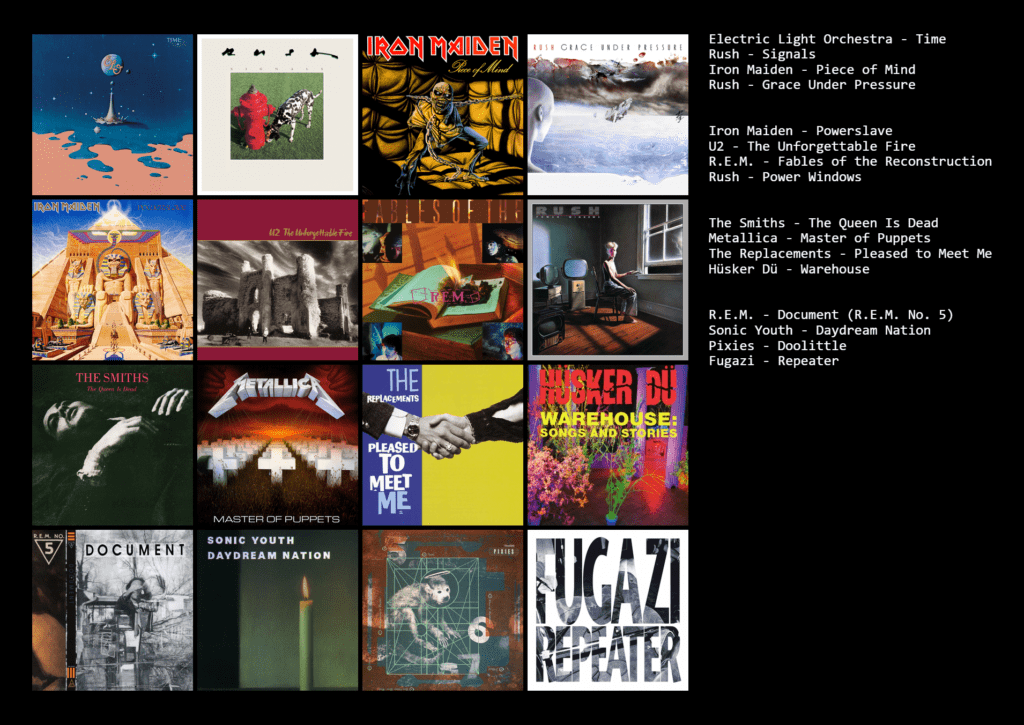
ELO – Time (Jet) 1981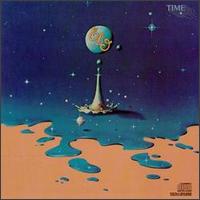 In a case of accidental good taste, the first two albums I ever bought were Gary Numan’s The Pleasure Principle and Talking Heads’ Fear Of Music, based on the singles “Cars” and “Life During Wartime.” However, the albums’ coldness and paranoia were a little over my head as I was just turning ten, so my favorite bands were Queen and Electric Light Orchestra. While Discovery sounded a little too much like the Bee Gees for my taste, Out Of The Blue was by far my favorite album at the time. It was perfect for a kid my age, with cartoonish imagery of spaceships and jungles, a big sound that wasn’t too dissonant, with simple Beatlesque melodies. Even the dorky clerks at the record store/headshop The Astroid were excited about the new ELO album.
As soon as I saw the cover, I was fluffed. The liquidy cover art resembled the science fiction books I?d been reading. I sensed it would be the most groundbreaking, futuristic album ever. Hearing the robot voice introduce the record (“I have a message from another time”) send a shiver of excitement down my spine as intense as anything I’d experience until, well, I was no longer a virgin. The ringing synthesizer and drumroll that introduced “Twilight” got my heart pounding. It would be one of my favorite songs for months to come. The cool, burbling computer sounds that introduced “Yours Truly, 2095” were mindbending. It was about a love affair with a robot, which coincidentally parallels the theme of Rudy Rucker’s early cyberpunk classic Software that was also published in 1981. “She has an IQ of 1001/She has a jumpsuit on/She’s also a telephone.” Three tracks in I’d decided Time was the most awesome album ever. In fact I think I wrote my first ever review saying as much, in order to convince friends to check it out. While the rest of the album didn’t really hold up and I quickly outgrew ELO, I remember attending a hipster party several years ago at Steve Albini’s old house and discovering Time in the collection. I hadn’t heard the album in over 15 years, and put it on. It sounded pretty great! Half the guys at the party ended up bonding over ELO. Hipster synchronicity alert: Pitchfork just gave an ELO collection a good review! What’s happening here?
Rush – Signals (Mercury) 1982
1981 I made a transition midway through, from my favorite band being ELO, who’s Time exceeded expectations, to Rush. A childhood friend played me Rush’s 1980 album Permanent Waves early in the year and I was intrigued, especially by “Spirit of the Radio.” While Moving Pictures was out February 9, it wasn’t on my radar until later in the year when I finally picked it up, and it melted my brain. It was the best album I’d ever heard, and I was right on top of it when Signals came out. It was hard to beat Moving Pictures, and it didn’t, but I was still very happy with it. I kind of looked forward to Queen’s Hot Space, but already had accepted that their albums have been a bit too spotty for me to get too excited about since Jazz (1978), and I would spend more time getting into their first six albums. Men At Work, Asia and Iron Maiden were all new to me, and The Number of The Beast (1982) usurped Signals’s position of favorite album by the end of the year.
Iron Maiden – Piece of Mind (Capitol) 1983
I hate to say it, but I bought Styx’s Kilroy Was Here, and was severely disappointed. I kind of knew I would be. Same with Asia’s Alpha. Having heard the singles for ELO’s Secret Messages, I wasn’t too excited either, but I bought it, and actually did like it. I’d have liked the full double album had Lynne been allowed to release it as originally intended. The album I was really anticipating was Piece of Mind, and it did not disappoint. It remains my favorite Maiden album. U2’s third album War was my first exposure to that band, yet another contender for favorite band by the next year. I’d heard bits of R.E.M.’s Murmur on college radio, but it was like whispering ghosts during waking dreams, it didn’t quite sink in yet. I was listening to New Order, but they were always second tier for me, as opposed to when I finally heard Joy Division a couple years later. DIO’s Holy Diver and The Violent Femmes, were big ones, but new to me that year.
Rush – Grace Under Pressure (Mercury) 1984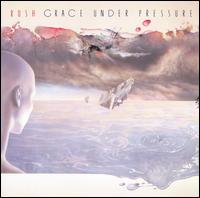 The battle for my soul was being waged between corporate radio and “independent music,? as I called American post-punk back then. My musical diet still consisted of Journey, Styx and Queen, as they were easy to get through the Columbia Record Club. Along with getting into heavy metal, the college radio of KUNI was turning me on to songs by The Violent Femmes, The Replacements, Minutemen, Hüsker Dü and U2 that spoke to me and my burgeoning teenage hormones a lot more than Foreigner. Yet I was still really, really feeling Rush. Signals in particular seemed to pick up on the future-music vibe I was so blown away with Time. Rush was updating its aging prog rock with a new wave sheen, and I liked it. When I saw the video for “Distant Early Warning” with a kid riding a missile like Dr. Strangelove, my interest was piqued. I picked up Grace Under Pressure the week it was released and I wasn’t disappointed. Before I figured out that Neil Peart’s lyrics were problematically inspired by Ayn Rand, they at least seemed more sophisticated than ELO. “The Enemy Within” (which featured a bizarre reggae beat), seemed sooo deep because it was the final installment in the Fear trilogy begun on the previous two albums. The music was much more dense and hard than ELO. Grace Under Pressure rocked hard enough that even the metal heads dug it. And there was another song about robots in “The Body Electric,” this one is running for its “life.” Who didn’t love robot songs? My mom hated it, so I figured I was on the right track.
Iron Maiden – Powerslave (Capitol) 1984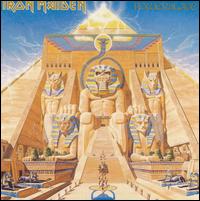 I had been catching up on the history of metal from a radio show coming out of Platteville, Wisconsin, from Deep Purple and Black Sabbath to the New Wave of British Heavy Metal. My favorite was Iron Maiden. One of my best friends had The Number Of The Beast and Piece Of Mind, which he played constantly when we hung out. I loved the serpentine complexity of the twin lead guitars, and Bruce Dickinson’s quasi-literary lyrics. I couldn’t believe it when the radio actually played “2 Minutes To Midnight” prior to the release. The station rarely played metal, but it made an exception for Iron Maiden’s most focused, hookiest song yet. As soon as I saw the detail-rich Egyptian themed album art, I knew Powerslave would be great fun. While “Rime of the Ancient Mariner” would eventually grow tiresome, I was engrossed. I dabbled in some of the hair metal like Motley Crue and Ratt, but no metal band would hold my attention again like Iron Maiden until the harder-edged progeny of Metallica flourished, such as Slayer and Napalm Death.
U2 – The Unforgettable Fire (Island) 1984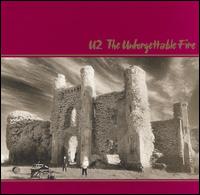 Six months after War had been released, it quickly became my favorite album. An Irish band with postpunk roots and anthemic, political songs, my introduction to U2 was timed perfectly to coincide with my political awakening, as I began learning how truly fucked up the world was. While “Pride (In The Name Of Love)? would grate on me eventually, I found it really moving at the time, as Bono sang earnestly about Martin Luther King. The gauzy salmon colored cover art of the castle reflected Brian Eno and Daniel Lanois’ soft-focus production within. The Unforgettable Fire ironically lacked fire in its belly compared to War, but cool-sounding cuts like “Wire,” “Bad” and the title track were enough to keep U2 my favorite band for another year, even as I gradually started hearing superior albums by The Replacements, The Minutemen and Hüsker Dü.
R.E.M. – Fables of the Reconstruction (IRS) 1985
I’d probably first heard the “Radio Free Europe” single as early as 1981 on college radio, but it took a while for me to figure out what’s what. After reading a feature article on R.E.M., and not having heard their first two albums in their entirety, I was focused on buying their third as soon as it came out. The Joe Boyd (Fairport Convention, Nick Drake) produced album was difficult for some to get into, but I loved it, it’s murky sound lending it a rustic air of mystery. It’s still one of my top 3 favorites.
Rush – Power Windows (Mercury) 1985
During this transitional time, Rush was still up there as one of my favorites, and while I convinced myself that Power Windows was brilliant, I had niggling doubts about the production, which was going in the opposite direction of my interests – sleek and synthetic, as opposed to my newfound interests in jangle and distortion.
The Smiths – The Queen Is Dead (Sire) 1986
My collections of The Smiths songs were piecemeal, songs dubbed off the radio, and a mix of early stuff dubbed from a fifth generation tape. They were still a kind of mysterious band at that point, that had just a touch more allure for me than The Cure at that point, not to mention Echo & the Bunnymen and New Order. There were a few tracks that annoyed me, but overall, The Queen is Dead would be their most consistent album, not counting their compilation Louder Than Bombs the next year that I liked even more.
Metallica – Master of Puppets (Elektra) 1986
I first heard of Metallica probably in early 1985, when I overheard a longhaired dude ask the clerk at Musicland, “Do you have any Metallica, dude?” They did not. I liked how the name rolled off the tongue. I must investigate. It took a while to finally track down their second album Ride The Lightning (1984) but hoo boy! At a time when I was soon to be massively disappointed by Maiden’s Somewhere In Time and Judas Priest’s Turbo, this was definitely something new that laid waste to all things metal (I had not yet heard Slayer). I’ve gone back and forth whether Master of Puppets surpasses Lightning, but I knew it was the start of something big in the metal world.
The Replacements – Pleased to Meet Me (Sire) 1987
This came out about a week or two before I graduated from high school, and it was the perfect soundtrack to my hopes and fears of starting to enter adulthood. Like a lot of bands that time, it was my first purchase, cuz with my limited budget, I’d only heard songs from previous albums dubbed from mix tapes. They were an important band for my teen years, and little did I know this would be their last great album.
Hüsker Dü – Warehouse: Songs And Stories (WB) 1987 The Joshua Tree was generally the big anticipated event album my final spring of high school. While I was curious to hear it, U2 were already starting to sound a little too bombastic and overblown for my evolving tastes. I was drawn more to a couple mix tapes I dubbed from a friend?s older brother who was in college. One was a who’s who in indie rock at the time — Big Black, Naked Raygun, Butthole Surfers, Minutemen, Meat Puppets, The Fall and Scratch Acid. The other was older stuff like Bauhaus, Joy Division, The Birthday Party, Gang of Four, P.i.L. and Killing Joke. I had been aware of punk since I read about the Sex Pistols, The Clash, The Damned and The Buzzcocks in Creem magazine at the age of nine, but I was only just now getting my hands on much of it, and “getting? it. I also liked much of the typical high school fare of Psychedelic Furs, Echo & the Bunnymen, New Order, The Cure and The Smiths, all of whom released decent to great albums that year.
But after the incredible run of Zen Arcade, New Day Rising and Flip Your Wig, Hüsker Dü were top dog. Such was my confidence in them, I felt certain that their major label debut, 1986’s Candy Apple Grey, was just a brief misstep, not a decline. Indeed, another double album seemed to indicate another burst of creativity, with its blacklight-neon psychedelic cover, I was ready to be impressed. Song after great song, so far so good, it seemed like they nailed it. However, somehow the parts seemed better than the whole. There seemed to be a sameness to the brittle, crystalline production. Something was missing. The performances were tight but stiff. They didn’t seem to be having any fun. That fall the band would be no more. What should have been a triumphant breakthrough turned out to be an end of an era, or at least a passing of a torch.
R.E.M. – Document (IRS) 1987 1985’s dark, mysterious Fables of The Reconstruction was my favorite R.E.M. album so far. Lifes Rich Pageant seemed to follow so quickly I didn’t even have time to anticipate it. In a way it was a practice run for their later mainstream dominance, with its bright production and upfront rhythm section and Stipe’s newly intelligible vocals. R.E.M. were more of a comfortable old pair of shoes rather than an exciting new thing. Yet the timing of Document destined it to be an era-defining record, at least personally. It came out the day I started college, which for many people, can be a very giddy time indeed. And how appropriate to have the soundtrack to that day be a giddy song called “It’s The End of the World As We Know It.? And as my education and political activism became more intensified, I was glad to know R.E.M. were infiltrating the mainstream with songs like “Exhuming McCarthy,? “Welcome to the Occupation,? “Disturbance at the Heron House? and “King Of Birds.?
And it was the end of the world as I knew it, in every possible way — socially, physically, intellectually. And while it might seem that amidst all the life changes, music might not seem so important as it did as a lonely kid stranded in a boring town, that didn’t happen. If anything, I got deeper into music, as I started my radio show and rampaged the stacks, guzzling down albums to fill the holes of bands I had read about in my trusty Trouser Press Record Guide but had not yet heard. I constantly had revelations like, “oh my god, how could I have never heard Funhouse before?!?!? I filled out my knowledge of pre-punk, punk and post-punk, while quickly absorbing new favorites like Bad Brains, Sonic Youth, Dinosaur Jr. and the strange little EP by a new band called The Pixies. My college years were such a constant flow of new information and music that in a way, I was too busy to anticipate any one particular new album. There were a couple key exceptions, however.
Sonic Youth – Daydream Nation (Blast First) 1988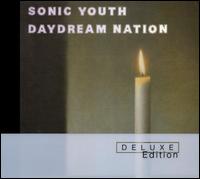 During my first week of college a friendly sophomore introduced me to Sonic Youth’s Sister. I never remember any snobbery amongst the students running the radio station. There were plenty of kids who knew more music than I did, who had the resources to already have huge record collections. But they were just happy to share the wealth and enthusiasm with other likeminded music geeks. I quickly devoured the rest of Sonic Youth’s discography, and by the time Daydream Nation was due, I was slavering. It was also just after I started buying CDs, so it was the first time I heard an anticipated new album that wasn’t on my mom’s beat-up cheap record player, or a crappy boombox. Well, the CD player was hooked up to a boombox with enough power for a dorm room. And I could also take it into the radio station’s studio and hear it on the wall-shaking monitors. And let me tell you, the buildup of the first cut, “Teen Age Riot” from It’s first, quietly tentative notes and Kim Gordon’s whispers, to the explosive intro, was unforgettable. And the album simply sustained the energy and surprising sounds the whole way. After relative disappointments that year with Metallica and The Feelies, it was the most satisfying first listen I’d ever had, not counting unexpected surprises like the previous year’s Dinosaur Jr’s You’re Living All Over Me and The Pixies? Surfer Rosa.
The Pixies – Doolittle (Elektra) 1989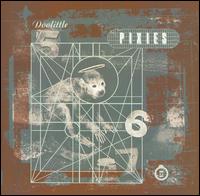 Come On Pilgrim and Surfer Rosa had such explosive energy and unique, almost alien beauty, I was hooked. This was definitely an important band that was going to accomplish something big. In retrospect, it was all downhill after Surfer Rosa, but it was still a fun ride. I was immediately disappointed that Doolittle lacked the weird, hard edge of its predecessor, but my roommate who usually didn’t listen to my music loved it. I knew their popularity would only grow. I didn’t know I’d be paying fifty bones fifteen years later to see their reunion show and smile as I do it. From the stories I overheard, if as many people were actually listening to The Pixies in 1988 as they said they were, then The Pixies would have been multi-platinum like Guns ‘N’ Roses or Poison. Ah, revisionist history. You can thank Kurt for that.
Fugazi – Repeater (Dischord) 1990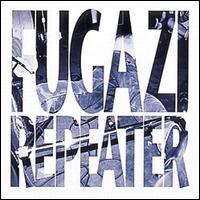 I was too young to experience the excitement of the exciting hardcore scene of the early 80s, with Black Flag, Minutemen, Bad Brains and Minor Threat. But Minor Threat’s Ian MacKaye had a new band with a couple of astounding EPs that really seemed to be doing something new, mixing dub and impressionistic yet hard hitting arrangements that would anticipate post-rock. Seeing Fugazi play in some nondescript warehouse building in Minneapolis one hot, sweaty summer night was like going to indie rock church. It’s like they took everything that was exciting about American hardcore and pushed things forward. Repeater may not have been as structurally ambitious as some later albums, but it was a powerful statement that felt just right at the time.
May 31, 2026
Fester’s Lucky 13: 1996
April 2, 2026
Fester’s Lucky 13: 1986
February 27, 2026
Fester’s Lucky 13: 1976