In Part One I covered the albums I most anticipated while growing up, between the ages of 11 and 21. Part Two addresses albums that came out in the gay nineties.
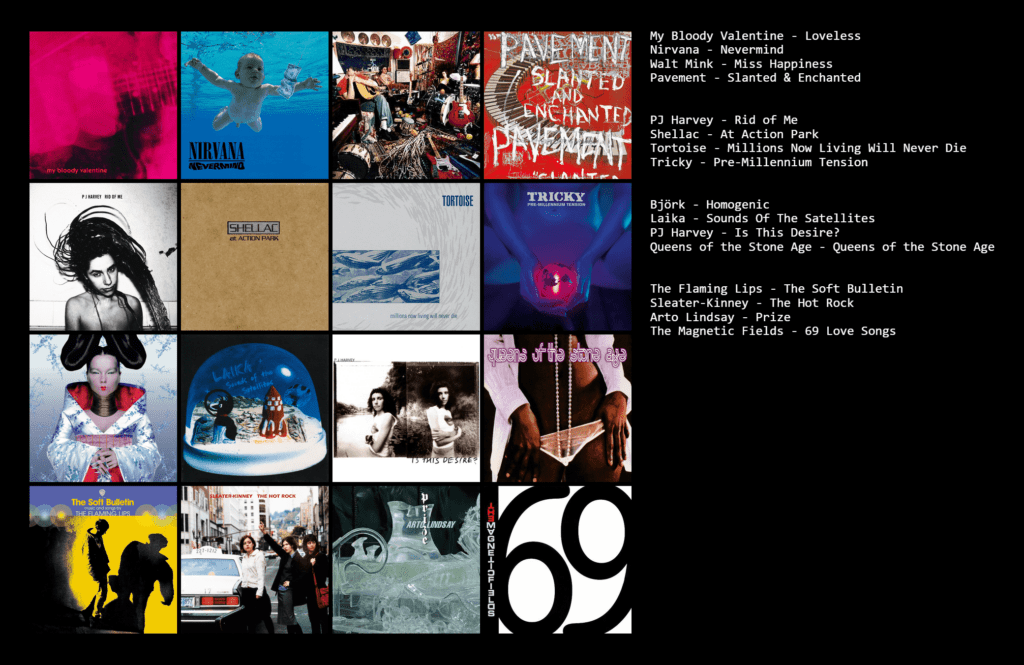
My Bloody Valentine – Loveless (Sire) 1991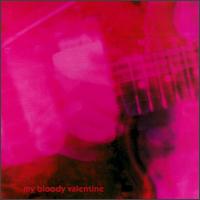 As I was graduating from college, it seemed that nearly every band I loved was more concerned with breaking into the mainstream than challenging themselves as artists. The Pixies, Dinosaur Jr., Sonic Youth, Eleventh Dream Day and others were dumbing it down, turning down the loudness, fury and passion to give their major labels something to work with and market to radio. I was growing up, entering the real world, and so were my flagship bands. I didn’t want that to mean becoming dull and neutered. Hip-Hop was also growing up, but at the time The Beastie Boys, Public Enemy, De La Soul and The Jungle Brothers didn’t speak to me as personally as my favorite rock bands. I wanted my bands to succeed, but I also wanted to hear new, exciting sounds. Ironically it came from an English pop band I had not paid much mind to. While I didn’t dislike bands like the Cocteau Twins, This Mortal Coil and My Bloody Valentine, I didn’t get into them at first because they seemed a little wimpy for my tastes. But I started to hear some interesting buzz about an epic new album My Bloody Valentine was working on. I re-listened to 1988’s Isn’t Anything and realized they were evolving from twee Jesus & the Mary Chain copycats into a different kind of beast. One made of marshmallow, perhaps, but with sharp fangs. I was fluffed for more.
Loveless turned out to be much, much more. More layers, more sound, more everything. It could have been ponderous overkill, but it worked. The symphonic sheets of distortion were melodic yet wobbly. It wasn’t just the notes that were bending and stretching. It felt like reality was warped. My Bloody Valentine created a new kind of psychedelic space rock. It sounded like a druggy trip, like drowning in a mix of sweet molasses and burning lava. It makes me feel like 2001 A Space Odyssey’s astral baby with the universe as its womb. Loveless was certainly the powerful antidote the all the past couple years’ weak disappointments. 1991 turned out really well with other groundbreaking works from Slint, Massive Attack and Talk Talk.
Nirvana – Nevermind (Geffen) 1991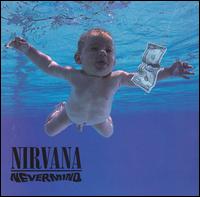 I knew it was inevitable that one of the grunge-era bands were going to hit big. Soundgarden had already made an attempt to break through to the big leagues, but didn’t make it yet. Dinosaur Jr. was top dog to my ears above strong candidates like Mudhoney, Tad, Buffalo Tom and Screaming Trees. But Nirvana was the obvious leader. On Bleach, the lyrics were hardly deep, but Kurt Cobain’s powerful voice gave Mark Lanegan’s good competition, and hinted at some real emotional depth. And with the recent single “Sliver,” Nirvana showed they had a real knack for melodic hooks. Despite my low opinion of my favorite bands’ recent attempts at accessibility, I imagined Nirvana could best marry melodic pop song structure with loud, heavy indie rock. And that’s pretty much what they did. Unfortunately I was put off by the production for a long time. It was so compressed it seemed to suffocate the band’s dynamic range, making them sound more like Boston than one of the best rock bands of the early 90s. That combined with my impression that some of the songs seemed unfinished, I didn’t even buy the album until years later. But one can’t underestimate the power of a hit single. Nirvana’s status became inflated beyond their relatively modest achievements. I always maintained the opinion that they were a great band, but Nevermind was merely a very good album, not a classic, with at least eight albums bettering it that year alone.
Walt Mink – Miss Happiness (Caroline) 1992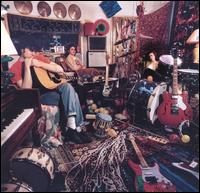 I will have to acknowledge that my objectivity regarding this album is compromised by the fact that I went to school with these folks and saw nearly every show they played on campus, at basement house parties, outdoor shows and local rock venues. While Jane’s Addiction may have had an edge in artiness and Nirvana in angst and rage, nearly everyone who’s witnessed Walt Mink live would contend that they were one of the best live bands of the 90s. In the year since graduating from college I went from desperately trying to find work to survive during the recession to working insane 80 hour weeks to catch up. Listening to music at work and good live shows after work kept me sane. Walt Mink’s first album was definitely the album I had anticipated more than anything else that year. While it’s impossible to live up to the blurred memories of rhythm, moshing, jaw-dropping guitar playing and catharsis, Miss Happiness did not disappoint. The clean production took some getting used to, but it gave a clearer image of John Kimbrough’s cracking songwriting. While there was bits of many influences, Walt Mink emerged on their debut album with a fully formed musical identity. Their relative lack of success compared to other 90s rock peers has more to do with label politics than their great music. There’s a movie that will hopefully be completed that will tell that story, and include an entire one-time reunion concert filmed in the summer of 2005. During those 12 hour work days, I played that CD to death, and fifteen years later, I’m still not sick of it.
Pavement – Slanted And Enchanted (Matador) 1992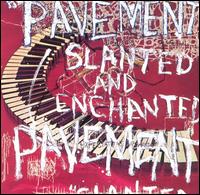 It had been years since I heard a current band tapping into my favorite post-punk era for influences. So when I read in some fanzines about a band that sounded like a mix of The Fall, Pere Ubu and Swell Maps, I took notice. I tracked down all their singles and their Perfect Sound Forever EP. They were almost more noise collage than songs, but they offered a dozen fascinating fragments, ideas and even brief glimpses of catchy melodies that showed a lot of potential. As either a prescient exercise in hype building or a screw-up, tapes of the upcoming album were leaked to the press months before the album was to be released, and Spin gave it a rapturous review. I was surprised by the hype, considering how inaccessible and noisy the stuff I heard was. When I finally heardSlanted And Enchanted I certainly liked it. “Summer Babe” is a great opener, and the rest is a fun ride with melodies slyly packed within unusual, off-kilter song structures. It sounded fresh, and the album certainly inspired some rabid fans. I enjoyed their show at the tiny Uptown bar in Minneapolis, but they did not end up becoming an all-time favorite.
PJ Harvey – Rid Of Me (Island) 1993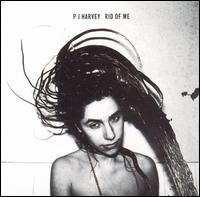 Before I heard her music, I read an interview with PJ Harvey and immediately felt a connection to her. Just a couple months younger than myself, Polly grew up in rural England as a quiet, shy kid who listened to a lot of her parents’ records. Like me, her favorite was Captain Beefheart. I loved Dry on first listen. When I moved to Chicago in Fall 1992 with a girlfriend, it was a difficult time because I didn’t know anyone, and found the city unfriendly at first. Only PJ Harvey’s songs could comfort me during that time, with her anger and angst mixed with a joyous, sly wit. And when I heard that my musical crush was also in Chicago, recording a new album with Steve Albini, I was stoked. I wasn’t lucky enough to run into her at a club, but I was probably the first person in town to snatch up Rid Of Me when it came out. I had been digging Albini’s engineering work with The Pixies, Slint, Breeders and The Jesus Lizard (he loathed to call himself a producer), and was pleased to hear PJ Harvey’s sound beefed up and focused. When Polly unleashed her rage, it was presented unhindered by “production,” like a severed, sparking live wire. I had also anticipated albums that year by Seam, Nirvana, Afghan Whigs, Yo La Tengo, The Flaming Lips and Fugazi. But none of them were as satisfying and cathartic as Rid Of Me.
Shellac – At Action Park (Touch And Go) 1994 Having been a fan of Steve Albini’s Big Black, I was quick to snatch up the first singles by his new band Shellac. “The Guy Who Invented Fire,” “The Rambler Song,” “The Admiral,” “Doris,” and “Wingwalker” were all awesome, from their explosive arrangements to the handmade covers. Their first show at Lounge Ax in ’93 was electrifying. I knew the album was going to be great. To hell with the Smashing Pumpkins, Liz Phair and Urge Overkill, this is where the excitement was in the Chicago music scene. But despite Albini’s dislike of record collector scum, he released the vinyl record first, delaying the CD release for several weeks. Then it turned out the mastering on the CD was intentionally sabotaged to sound like crap compared to the vinyl. It was a dickhead move, one that, in hindsight, now that it’s common knowledge that the only thing wrong with CDs in the first few years was that engineers didn’t know how to master them properly, really makes him look like a reactionary ass. Despite that, At Action Parkwas good, though not quite as great as the singles. It’s high time Albini makes up for his blunder and reissues the album properly mastered, and include all the singles.
Tortoise – Millions Now Living Will Never Die (Thrill Jockey) 1996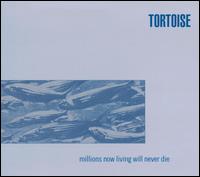 I didn’t know it at the time, but Shellac became sort of a milestone for the end of indie rock’s creative reign, at least for the time being. Ironically it was another album recorded by Albini in 1994 that signaled a new creative renaissance that went beyond rock – the debut album by Chicago’s Tortoise. Disco Inferno, Laika, Portishead, God, ‘O’rang, Bark Psychosis, and Tortoise produced the most fascinating albums that year. Sonically they had little in common, other than the fact that rock as a musical palate was overshadowed by a myriad of other elements such as dub, ambient, avant-garde jazz, German kosmiche, hip-hop and electronica. Critic Simon Reynolds created the term “post-rock” to group these bands together. It was probably the first time a sub-genre was defined mainly by what it was not. Regardless, for a short time the snooty British difficult listening magazine The Wire was actually fun to read, as it actually covered artists that hop-scotched between avant-garde and pop with exciting results, such as Tricky and Labradford. Tortoise played expressive instrumental music that, with its diverse influences, sounded revelatory at the time. Their live shows exuded such a playful sense of discovery that there was some major intrigue regarding what direction they would take on their next album. The only clue was an epic 27 minute EP, “Gamera/Cliff Dweller Society” which was jaw droppingly great, sounding like a post-rock Charles Mingus. I was confident that with the restless, giddy sense of creativity bubbling within the group, they would not repeat themselves. Millions Now Living Will Never Die definitely delivered. The albums starts right off with the 20:58 “Djed,” an eerie piece that incorporates sampled found sounds, electronic effects and DJ cut ‘n’ paste turntablism into its nearly symphonic structure. While Tortoise would later find themselves in a dull rut, at the time they were the shit.
Tricky – Pre-Millennium Tension (Island) 1996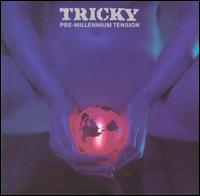 While Beck’s Odelay would get much more attention and was arguably better, I had my eye on Tricky, who had released the best album of the 90s the previous year with Maxinquaye. Another album recorded under the cocky nom de plume, Nearly God was seemingly a casual toss off with a bunch of collaborations, yet was nearly as great. Tricky was on a roll and seemed unstoppable. Pre-Millennium Tension, in its own way, was very effective in its singular intent – to invoke the paranoia the world felt as the end of the millennium approached. On the other hand, it was also apparent that when Tricky went to Jamaica to record, he smoked entirely too much weed. There were scattered powerful moments in the album, but it lacked the elegance, melody and sensuality that made his first album sparkle. Unfortunately Tricky would never even match this album on subsequent albums.
Bjork – Homogenic (Elektra) 1997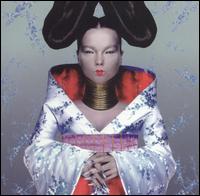 I was not a big fan of the Sugarcubes, mainly because Einar Benediktsson sabotaged most of the songs with his excruciatingly annoying attempts to be The Fall’s Mark E. Smith. Bjork, however, was fascinating. I had reservations at first because Bjork’s initial solo work focused on seemingly mundane dance music. However closer listens revealed some really adventurous arrangements. It was clear that her third album was going to be a doozy. And it certainly was. Per the title, the sound is more singularly focused than her more eclectic explorations. While I was unsure about it when I first reviewed it, it’s probably her best album. The classical strings could have made the music pompous, but in Bjork’s hands the music remains eccentric and quirky, though more intense and less whimsical than previous efforts. It was way better than Radiohead’s album that year.
Laika – Sounds of the Satellites (Too Pure) 1997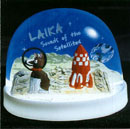 Laika is part of the class of ’94 that impressed me so much with their new sounds. Margaret Fiedler came from another band on the Too Pure label, Moonshake. Named after a Can song, I saw them open for PJ Harvey, who was also initially a labelmate. Like Stereolab and Th’ Faith Healers, Laika were strongly influenced by Can’s repetitive rhythms. Rather than drenching their sound in vintage organs or guitars, Fiedler and Guy Fixsen created a dense layer of sampled sounds and laptop electronics that percolated beneath Fiedler’s sensous, nearly whispered vocals. They didn’t get popular for anyone to make up some funny name for their sound like “trip hop,” but they were about six years ahead of their time. I was really happy with the results. Though the rhythms were less frantic thanSilver Apples of the Moon, the songwriting was more assured, and the mood more laid back and often sensuous.
PJ Harvey – Is This Desire? (Island) 1998
My favorite solo artists that decade were definitely Bjork and PJ Harvey, with Polly Jean pulling ahead with the moody and potent Is This Desire?, which seemed to take some inspiration from her brief relationship with Nick Cave. One of her all-time best.
Queens of the Stone Age – Queens of the Stone Age (Loose Groove) 1998
I was certainly a fan of the early stirrings of stoner rock, from Melvins and Monster Magnet to Kyuss and Fu Manchu. I just didn’t realize how much it would taken over my listening habits in the next decade. I had friends who knew Josh Homme, so I knew this was coming before some were even aware that this post-Kyuss band existed (of course the 1997 split EP with Kyuss was a tip-off). It fulfilled all expectations!
The Flaming Lips – The Soft Bulletin (WB) 1999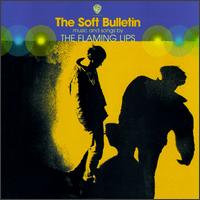 I had been listening to the Flaming Lips since 1987, but didn’t really start getting into them until 1993. Chicago loved the Lips, and they loved them back, playing nearly every New Year’s Eve here. While at first I thought their childlike whimsy was an annoying put on, their live shows showed their sincerity, and they just kept getting better. Zaireeka the album where four CDs had to be played simultaneous was a gas. I got to experience it at a party and it really added a festive element to how listening to an album that required a bit of collaboration to set up, became an event. The Soft Bulletin brought the Flaming Lips to a whole new level of obsession in the studio, and it went over well, retaining their joyous sense of playfulness, while addressing some challenging metaphysical issues. Not long after its release I had to make a long drive to a friend’s funeral, and music was truly healing. It’s hard to think of a higher recommendation.
Sleater-Kinney – The Hot Rock (Kill Rock Stars) 1999
After the brilliant Dig Me Out (1997), of course I was anticipating this. It lacked any killer heart-wrenching songs like “Good Things” and “One More Hour,” but otherwise delivered the goods.
Arto Lindsay – Prize (Righteous Babe) 1999
The fourth album in what would be an incredible six album run, Arto Lindsay encapsulated all the giddiness of discovery I experienced in the 90s, between hearing reissues of his no wave project DNA for the first time, or exploring Brazilian Tropicalia and newer global releases.
The Magnetic Fields – 69 Love Songs (Merge) 1999
A very cool, smart girl I was dating at the time was a huge fan, and her enthusiasm was infectious in looking forward to this album, even though I’d only sporadically listened to their previous work. It was a lot of fun to share the experience of exploring the gloriously sprawling, triple album with someone.
May 31, 2026
Fester’s Lucky 13: 1996
April 2, 2026
Fester’s Lucky 13: 1986
February 27, 2026
Fester’s Lucky 13: 1976