Texas band achieves their magnum opus with their 11th album, and a history of slow-growin’ double albums

Austin’s …And You Will Know Us by the Trail of Dead may have receded from the spotlight since their critically acclaimed third album Source Tags & Codes (2002), but they’ve reliably released many solid albums over the years, shifting from their post-hardcore noise rock origins into more prog and art rock territory, while still maintaining a core element of their signature sound. I always have time for a new album from them, but the backstory leading up to this release grabbed my attention and prompted me to re-listen to their first ten albums in anticipation of the new double album. Yep, their first double album was self-produced and recorded in a large Texas barn, in quadrophonic sound no less, in order to reconnect with the Golden Age of rock production.
From my inclusion of “Troubles With Doubles” in the title, you might have thought I was going to complain about double albums. Nope. I love double albums in all their sprawling ambition and inconsistency. It’s true that when artists strive to touch the stars with over 70 minutes of original compositions, they often flounder. Even Hendrix’s Electric Ladyland goes off the rails at times. But that’s the beauty of an artist striving to surpass their past accomplishments. In recent years, I’ve probably listened more to Fleetwood Mac’s Tusk (1979) than any of their others because it remains a kind of mysterious puzzle. It may not be as catchy as their commercial peak, but it’s also harder to get sick of because it’s not overplayed. Many such double albums can confound and frustrate, but remain just as interesting decades later. More on those later.
XI: Bleed Here Now may be sprawling and diverse, with folk picking (with Spoon’s Britt Daniel making an appearance on “Growing Divide”), strings, electronics, and, uh, Amanda Palmer (“Millennium Actress”). But it’s also their most accessible album. When I first played new releases on Friday in a playlist set to random, songs would come up in between those from the difficult but interesting black midi, Tami Neilson, Birth, Interpol, C.Ross, Nightlands, Lizzo, M. Geddes Gangras and Vladislav Delay, and really stand out. The soaring and anthemic “Penny Candle” reminded me of what I used to love about Sunny Day Real Estate, “Kill Anyone” is a short hardcore punk palate cleanser, and “Golden Sail” is a stunning psych prog banger, just for starters. “No Confidence” is a heavy rager with a prog twist along the lines of Baroness or Motorpsycho. It may be partially thanks to the Norwegian band, with no less than seven double albums, got me wishing more bands would attempt it.
Conrad Keely grew up with hippie New Age parents with Ram Dass’ Be Here Now (1971), the 416 page manual for conscious being that was a spiritual inspiration for the likes of George Harrison, poet Lawrence Ferlinghetti, and even Steve Jobs. The pandemic spurred Keely to really meditate on those teachings, and how his art can be a force for goodness in a world in crisis. I’m slow to decipher and digest lyrics, but with songs as compelling as the 11:12 long epic centerpiece “Taken by the Hand,” the sweeping “Water Tower,” I’m more than up for the repeat listens to fully absorb his messages.
Catching up with the Trail of Dead

Incredibly it’s been 20 years since I first reviewed an album by …And You Will Know Us by the Trail of Dead, their most acclaimed album, Source Tags and Codes. While their latest album arguably surpasses it, the band has been unfairly overlooked with many of their albums. When they first moved toward an art rock and prog direction in the 2000s, it wasn’t exactly fashionable. In terms of the mainstream, it’s still not, but the audience has grown. It’ll be interesting to see how XI: Bleed Here Now fares on the year-end lists. In the meantime, I’ve been re-listening to the entire catalog, and pretty much like it all. Fantastic cover art too.
…And You Will Know Us by the Trail of Dead (Trance Syndicate, 1998)
Named after a prayer to Mayan corn gods, it’s the sound of the birth of a beast, roaring it’s first cry. The band initially called themselves anti-musicians, and with this self-produced mess of noise, you can see why — they don’t play their instruments at much as use them as weapons. A promising, visceral start.
Madonna (Merge, 1999)
A powerful progression from the debut, their towers of distortion earn them positive comparisons to Sonic Youth, Unwound and At the Drive-In. It’s the favorite for those who favor them at their noisiest and most feral.
Worlds Apart (Interscope, 2005)
The band shifts toward more prog-influenced, epic-scale, orchestrated rock, and critical opinions are split. To my ears, their retain plenty of their signature sound, remaining contemporary while drawing from ambitious conceptual album rock like Pink Floyd, and achieve grandiosity without excessive . . . excess, more successfully than, for example, Smashing Pumpkins and Arcade Fire.
So Divided (Interscope, 2006)
Disheartened by poor album sales, the band nearly broke up, then decided to ease into making just an EP. It gradually blossomed into accessible, diverse collection. Many bands have had a crisis in faith when they’ve gone against the grain and had trouble finding their audience, like Rush in 1975. Fortunately, like Rush, …Trail of Dead stuck it out for a long rewarding career.
The Century of Self (Superball, 2009)
Major label Interscope wasn’t interested in developing a band for the long haul, an increasing common occurrence in the 21st century. Their loss, as the band would continue to grow and evolve. They shed the click track but retain the epic scope, while also adding more fiery post-hardcore punk energy from their early work.
Tao of the Dead (Superball, 2011)
Emboldened by the freedom of being independent from major label fuckery, the band let loose with a grand experiment based on Conrad Keely’s steampunk graphic novel, the album split between two specific tunings. The first half is the kind of prog punk the band does best, while the second features a 16-minute suite with five movements and kosmische interludes. This audaciousness might have been unfashionable in the yanks, but they’d be headlining festivals if they were in Europe.
Lost Songs (Superball, 2012)
The band get more political here, such as on “Up to Infinity,” inspired by the Syrian war and dedicated to jailed Russian punks Pussy Riot. Can you believe that was a decade ago? The righteous fury reaches an urgent fever pitch, before cooling down on the final three tracks. Another excellent album in the books.
IX (Superball, 2014)
Named after a planet in Frank Herbert’s Dune, the title and cover art suggests a sci-fi epic, but instead we get their most subtle and instrospective batch of songs yet.
X: The Godless Void and Other Stories (Dine Alone, 2020)
Conrad Keely lived in Cambodia for a number of years, but returned to Austin for their first album in six years. They continue their introspection here, reflecting on their 25 year history, their music reflecting a new shade of delicacy, such as the jangling “Don’t Look Down.” They still save room for bombast on “Blade of Wind.” With the pandemic interfering with tour plans, the band hunkered down and would take another significant creative step forward.
Troubles With Doubles

After Bob Dylan’s Blonde On Blonde (1966), The Beatles’ White Album and Jimi Hendrix’s Electric Ladyland (1968), it was a daunting, audacious leap for other bands to tread in the tracks of those giants.
Donovan – A Gift From a Flower to a Garden (22 tracks, 60 min, Epic, 1967)
Many may not have even heard of this double album. While some might know his Sunshine Superman (1966) album, most really only know his hits, as collected on Donovan’s Greatest Hits (1969). While not as catchy as his psych pop singles, this hippie folk is at least as compelling as early Tyranosaurus Rex.
The Who – Tommy (24 tracks, 74 min, Polydor, 1969)
Inspired by The Pretty Things’ S.F. Sorrow (1968), Pete Townshend made his first of several attempts at ambitious rock operas. It’s kind of a mess and hard to follow, and their audiences weren’t happy to be subjected to hearing the entire album in subsequent live shows, though the band would sprinkle some of the hits compiled on Meaty Beaty Big and Bouncy, and eventually people were won over.
Funkadelic – America Eats It’s Young (14 tracks, 69 min, Westbound, 1972)
After the guitar-drenches Maggot Brain (1971), this experimental, almost proggy album must have been quite a surprise. It’s also the most political George Clinton & co would get, and it’s a pretty amazing trip.
The Who – Quadrophenia (17 tracks, 81 min, Polydor, 1973)
Pete Townshend never learns. In attempting to top Tommy, he nearly lost his mind trying to create the overly ambitious sci-fi mixed media experience of Lifehouse. After his handlers scraped him off the floor and put him to bed, they pieced together Who’s Next (1971) instead. But Pete was back at it with this mod opera, and some consider it their best album. With the lack of standout tracks, I’ve puzzled over this album for decades, and ever so slowly, it’s been growing on me.
Yes – Tales From Topographic Oceans (4 tracks, 81 min, WB, 1973)
This was held up as an example, along with ELP, as prog at it’s most bloaty self-indulgence. And yeah, it is, but it’s also pretty awesome.
Genesis – The Lamb Lies Down on Broadway (23 tracks, 94 min, Atlantic, 1974)
This disjointed story about Rael the Puerto Rican kid from New York City, may be the sound of Peter Gabriel losing his marbles, but it’s a pretty entertaining one.
Led Zeppelin – Physical Graffitti (15 tracks, 82 min, Atlantic, 1975)
I grew up with this album, and it always sounded like Led Zeppelin were falling apart. Yet many cite is as their favorite. The fact that many songs were scraps from previous years makes sense, but still, yeah it’s impressive. It’s fucking Led Zeppelin.
Stevie Wonder – Songs in the Key of Life (21 tracks, 105 min, Motown, 1976)
When some people called this Stevie Wonder’s best album, I thought they were crazy. No way does it match the groundbreaking previous few albums. But I grew to appreciate that a double album is a slightly different art form, and this is about as good as it gets.
Marvin Gaye – Here, My Dear (14 tracks, 73 min, Motown, 1978)
Sometimes this is my favorite Marvin Gaye album. Forced to hand over all the proceeds of this album for a divorce settlement, he proceeds to sing all about that divorce in uncomfortable details. No doubt Gaye was probably a bit of a dick, but a genius dick.
Pink Floyd – The Wall (26 tracks, 80 min, Sony, 1979)
Oh how I loved to hate this album. I blame it on being forced to watch that fucking movie adaptation multiple times with friends. So boring. However, if I could grow to love Animals (1977), there had to be stuff worth hearing on The Wall. It’s still overrated, but a pretty massive bucket of sound worth slopping around in.
Fleetwood Mac – Tusk (20 tracks, 78 min, Warner, 1979)
Like I mentioned above, I’ve listened to Tusk more than their better acclaimed self-titled album from 1975, and Rumours (1977), because it’s like an interesting puzzle. It can be as confounding as a Rubik’s Cube, and I can’t say I’ve solved it, but I am compelled to pick it up every couple years.
The Clash – Sandinista! (36 tracks, 124 min, Sony, 1980)
One of the original punk bands goes nuts with a triple album. Bolstered by the confidence of making one of the greatest double albums of all time in London Calling (1979), certainly my favorite, the band’s creativity spills over onto two more album sides with dub, electro-funk, early hip hop and much, much more. Many fans have created pared-down mixtapes, burned CDs and playlists for a more concise experience, but it’s nice to know all those indulgent tracks are there when you want ’em.
XTC – English Settlement (15 tracks, 72 min, Virgin, 1982)
While Drums and Wires (1979) is the critical and popular favorite, my own favorite, Black Sea (1980) is slowly getting recognition as the decades whizz by, and the original criticisms of English Settlement seem increasingly clueless, as prog pop has become a more widely established subgenre. It’s taken many people a long time to realize, but it’s a very strong entry in an incredible six album run that ends with Skylarking (1986). And they could have made it a triple album and it would have been just as strong! Full review.
Electric Light Orchestra – Secret Messages (17 tracks, 71 min, Jet, 1983/2018)
This has been true since childhood, but I’ve finally acknowledged that yes, Out of the Blue (1977) is my second favorite double album of all time. “Mr. Blue Sky” has been scientifically proven to be the happiest song ever made, and I just keep returning to the whole thing repeatedly. Secret Messages is trickier. ELO abandoned the orchestra completely by Time (1981). And to be fair, synths are much cheaper to tour with. But it was the beginning of the end of the band, and despite all their previous success, Jeff Lynne didn’t have enough clout with the label to get them to release it as the double he originally intended. It’s too bad, because while the missing tracks were released on various compilations and box sets, it wasn’t until 2018 when the album was officially re-released as a double, and the sarcastic response to allegations from American Christian fundamentalists of hidden satanic messages going all the way back to Eldorado, which was originally a slight disappointment, became a much more satisfying album, especially with the Roy Orbison inspired “Endless Lies,” and the amazing 8:31 long career-summarizing closer, “Hello My Old Friend.” “High-rise tower blocks with panoramic views of trains and coal, Tiehead railway tracks tread faithfully, The gas works to behold.” One track, “Beatles Forever,” was not included, and remains elusive. Lynne probably thought the overt Beatles tribute wasn’t strong enough to put on the album, but come on, how about a bonus digital track? It can’t be worse than “Rock ‘n’ Roll is King.”
The Cure – Kiss Me, Kiss Me, Kiss Me (18 tracks, 74 min, Elektra, 1987)
After the singles “Let’s Go to Bed” and “The Lovecats” and The Head on the Door (1985), The Cure were riding a career peak that would go even higher with Disintegration (1989). Their double album was frustrating at times, but it got heavy replay throughout the summer it was released, and decades later, I get more satisfaction re-listening to this album rather than the more acclaimed follow-up.
Hüsker Dü – Warehouse: Songs and Stories (20 tracks, 69 min, WB, 1987)
By the time Hüsker Dü became my favorite band for a while around 1986, they were arguably in decline, due to growing pains with being on a major label on Candy Apple Grey (1986), and the band’s personal problems and Grant’s heroin addiction. Nevertheless, this was a pretty astounding batch of songs that, while the production could have been improved — they never were able to match the feral roar of their live shows — indicated the band had a lot more music left in them, as Grant and Bob proved subsequently on their solo work.
Prince – Sign O’ The Times (16 tracks, 80 min, NPG, 1987)
I’ve always been frustrated by all the filler tracks on Prince’s albums, and while this surpassed his first double album, 1999 (1982), I still wished he would be more consistent. As the years have gone by though, this has become my top album to return to, filler and all.
Game Theory – Lolita Nation (27 tracks, 77 min, Enigma, 1987)
Game Theory were an indie band that deserved to be known at least nearly as much as R.E.M. and The Smiths, but remained a relative secret, thanks partly to their enigmatic, arty approach that could be compared in theory, if not sound, to XTC. Their greatest album definitely took time to digest, but while not as difficult or groundbreaking as Troutmaskreplica (1969), it’s definitely a lost classic. Full review.
Smashing Pumpkins – Mellon Collie and the Infinite Sadness (28 tracks, 121 min, Virgin, 1995)
I was a fan of Smashing Pumpkins’ first two albums, but checked out with this one, because it felt like it was aimed toward teenagers, and it just wasn’t where my head was at. Having seen them play a chunk of this album a few years ago, I figured it was time to revisit this album and gain more appreciation. The band still annoys me at times, but there’s plenty to like here.
Tool – Lateralus (13 tracks, 78 min, Volcano, 2001)
It took me a long time to get onboard with Tool, because when they first emerged in the early 90s, I associated them with what I considered mainstream AOR disguised as fake grunge — Alice in Chains and Faith No More. In retrospect, both bands formed in 1985 and pre-dated grunge, so any subsequent marketing wasn’t their fault, and they were solid alt metal bands. Tool came out of that, with a bit of influence from Rollins Band, but soon became a full blown prog metal band. Ænima (1996) could also be included, at 77 minutes, but it’s tricky in the CD era to identify double albums, since a CD could hold up to 80 minutes. There was a massive amount of anticipation for Lateralus, making it more of an event album, and it seemed to really please all sorts of fans, many who would not listen to anything remotely similar like Katatonia or The Mars Volta.
Baroness – Yellow & Green (18 tracks, 75 min, Relapse, 2012)
I was chuffed when I heard Baroness were coming out with a double album, three years in the making after the brilliant Blue Album (2009). What came out threw a lot of fans, including myself, for a bit of a loop. I fully expected them to pursue a heavy psych prog direction, but did not expect them to take a deep dive into indie rock. It’s still heavy at times, retaining some post-hardcore elements when they were inspired by Fugazi in early days, which in turn works nicely alongside Fucked Up and …And You Will Know Us by the Trail of Dead.
Mastodon – Hushed and Grim (15 tracks, 86 min, Reprise, 2021)
Mastodon’s prog metal peak of Crack the Skye (2009) felt like a double album, but it was only 50 minutes compared to third album Blood Mountain’s (2006) 67 minutes. The band’s experiments with simpler, more accessible styles on their three albums in the 2010s were less than satisfying, so there really wasn’t a lot of anticipation or expectation for their double album Hushed and Grim. However, it is the closest they’ve sounded to their ambitious, proggy selves from the Crack the Skye era, and I’m still absorbing this unwieldy monster of an album.
Top 100 Double Albums
- The Clash – London Calling (Epic, 1979) | UK
- Electric Light Orchestra – Out Of The Blue (Jet, 1977) | UK
- Public Image Ltd. – Metal Box/Second Edition (Virgin, 1979) | UK
- Can – Tago Mago (Spoon, 1971) | Germany | Bandcamp
- The Rolling Stones – Exile On Main St. (Rolling Stones, 1972) | UK
- Sonic Youth – Daydream Nation (Enigma, 1988) | USA | Bandcamp
- The Beatles – The Beatles (Apple, 1968) | UK
- Hüsker Dü – Zen Arcade (SST, 1984) | USA
- Simple Minds – Sons And Fascination/Sister Feelings Call (Virgin, 1981) | UK
- Bob Dylan – Blonde On Blonde (Columbia, 1966) | USA
- Captain Beefheart & His Magic Band – Trout Mask Replica (Reprise, 1969) | USA
- The Suburbs – Credit In Heaven (Twin/Tone, 1981) | USA
- The Method Actors – Little Figures (Press, 1981) | USA
- XTC – English Settlement (Geffen, 1982) | UK
- Miles Davis – Bitches Brew (Columbia, 1970) | USA
- Hawkwind – Space Ritual (United Artists, 1973) | UK
- Cecil Taylor – Nefertiti, The Beautiful One Has Come (Freedom, 1962) | USA
- Minutemen – Double Nickels on the Dime (SST, 1984) | USA
- Amon Düül II – Yeti (Liberty, 1970) | Germany
- Led Zeppelin – Physical Graffiti (Atlantic, 1975) | UK
- The Jimi Hendrix Experience – Electric Ladyland (Reprise, 1968) | USA
- Stevie Wonder – Songs In The Key Of Life (Motown, 1976) | USA
- Motorpsycho – The Tower (Rune Grammofon, 2017) | Norway | Buy
- Colour Haze – Los Sounds de Krauts (Elektrohasch, 2003) | Germany | Bandcamp
- Hüsker Dü – Warehouse: Songs And Stories (WB, 1987) | USA
- The Smiths – Louder Than Bombs (Sire, 1987) | UK
- The Who – Quadrophenia (MCA, 1973) | UK
- The Clash – Sandinista! (Epic, 1980) | UK
- Motorpsycho – The All Is One (Rune Grammofon, 2020) | Norway | Buy
- The Who – Tommy (MCA, 1969) | UK
- Klaus Schulze – “X” (Brain, 1978) | Germany
- Colour Haze – She Said (Elektrohasch, 2012) | Germany | Bandcamp
- Carla Bley and Paul Haines – Escalator Over The Hill (ECM, 1971) | USA
- Soft Machine – Third (CBS, 1970) | UK
- Genesis – The Lamb Lies Down On Broadway (Atlantic, 1974) | UK
- Ufomammut – Oro: Opus Primum & Opus Alter (Neurot, 2012) | Italy | Bandcamp
- Prince – 1999 (WB, 1982) | USA
- Funkadelic – America Eats Its Young (Westbound, 1972) | USA | Bandcamp
- Crass – Christ, The Album (Crass, 1982) | UK | Bandcamp
- Motorpsycho & Ståle Storløkken – The Death Defying Unicorn (Rune Grammofon, 2012) | Norway | Buy
- Godspeed You Black Emperor! – Lift Your Skinny Fists Like Antennas To Heaven (kranky, 2000) | Canada | Bandcamp
- Game Theory – Lolita Nation (Enigma, 1987) | USA | Buy
- Unwound – Leaves Turn Inside You (Kill Rock Stars, 2001) | USA | Bandcamp
- The Cure – Kiss Me, Kiss Me, Kiss Me (Elektra, 1987) | UK
- Motorpsycho – Black Hole/Blank Canvas (Rune Grammofon, 2006) | Norway | Buy
- The Damned – The Black Album (Big Beat, 1980) | UK
- Donovan – A Gift From A Flower To A Garden (Epic, 1967) | UK
- The Black Angels – Wilderness of Mirrors (Partisan, 2022) | USA | Bandcamp
- Captain Beefheart & his Magic Band – It Comes In A Plain Brown Wrapper (soniclovenoize, 1968) | USA | Free
- Monster Magnet – Dopes To Infinity (A&M, 1995) | USA
- The Velvet Underground – 1969: The Velvet Underground Live (Mercury, 1969) | USA
- Electric Light Orchestra – Secret Messages (Jet, 1983) | UK
- Prince – Sign O’ The Times (Paisley Park, 1987) | USA
- Motorpsycho – Timothy’s Monster (Rune Grammofon, 1994) | Norway | Buy
- Tangerine Dream – Zeit (Ohr, 1972) | Germany
- …And You Will Know Us By The Trail of Dead – XI: Bleed Here Now (Dine Alone, 2022) | USA | Bandcamp
- Chicago – Chicago Transit Authority (Columbia, 1969) | USA
- Yes – Tales From Topographic Oceans (Atlantic, 1973) | UK
- Motorpsycho – Demon Box (Voices Of Wonder, 1993) | Norway | Bandcamp
- Molassess – Through The Hollow (Season Of Mist, 2020) | Netherlands | Bandcamp
- Milton Nascimento & Lô Borges – Clube da Esquina (Odeon/Universal, 1972) | Brazil
- Swans – Soundtracks For The Blind (Young God, 1996) | USA | Bandcamp
- Motorpsycho – Trust Us (Rune Grammofon, 1998) | Norway | Buy
- Miles Davis – Agharta (Columbia, 1975) | USA
- The Magnetic Fields – 69 Love Songs (Merge, 1999) | USA
- The Mothers of Invention – Freak Out! (Verve, 1966) | USA
- New Order – Substance (Factory, 1987) | UK
- Custard Flux – Phosphorus (Custard Flux, 2022) | USA | Bandcamp
- Dave Holland & Sam Rivers – Dave Holland & Sam Rivers Vols. 1 & 2 (IAI, 1976) | USA
- The Bevis Frond – New River Head (Reckless/Fire, 1991) | UK | Bandcamp
- Random Hold – The View From Here (Polydor, 1980) | UK
- Cream – Wheels Of Fire (Polydor, 1968) | UK
- Out Of Focus – Four Letter Monday Afternoon (Kuckuck/Esoteric, 1972) | Germany
- Swans – To Be Kind (Young God/Mute, 2014) | USA | Bandcamp
- Metallica – …And Justice For All (Elektra, 1988) | USA
- Swans – The Great Annihilator (Young God, 1995) | USA | Bandcamp
- Tool – Lateralus (Volcano , 2001) | USA
- Soft Machine – Six (Columbia, 1973) | UK
- The Beach Boys – SMiLE (soniclovenoize, 1967) | USA | Free
- Lift To Experience – The Texas-Jerusalem Crossroads (Bella Union, 2001) | USA
- Klaus Schulze – Cyborg (Ohr, 1973) | Germany
- Santana – Lotus (Columbia, 1974) | USA
- Tool – ænima (Volcano, 1996) | USA
- My Dad Is Dead – The Taller You Are, The Shorter You Get (Homestead, 1989) | USA | Bandcamp
- Laurie Anderson – United States Live (WB, 1984) | USA
- Thin Lizzy – Live And Dangerous (WB, 1978) | Ireland
- The Beach Boys – The Smile Sessions (Capitol, 2011) | USA
- Wilco – Being There (Reprise, 1996) | USA
- Joanna Newsom – Have One On Me (Drag City, 2010) | USA | Bandcamp
- The Deep Freeze Mice – I Love You Little Bo Bo With Your Delicate Golden Lions (Cordelia, 1984) | UK | Bandcamp
- Rush – All The World’s A Stage (Mercury, 1976) | Canada
- Chicago – Chicago II (Columbia, 1970) | USA
- David Sylvian – Gone To Earth (Virgin, 1986) | UK
- Caustic Resin – Fly Me To The Moon (Up, 1995) | USA
- Meatbodies – Flora Ocean Tiger Bloom (In The Red, 2024) | USA | Bandcamp
- Swans – Children Of God (Caroline, 1987) | USA | Bandcamp
- Amplifier – The Octopus (Kscope, 2011) | UK | Bandcamp
- James Brown – The Payback (Polydor, 1973) | USA
- Temples – Exotico (ATO, 2023) | UK | Bandcamp
- Kate Bush – Aerial (Columbia, 2005) | UK
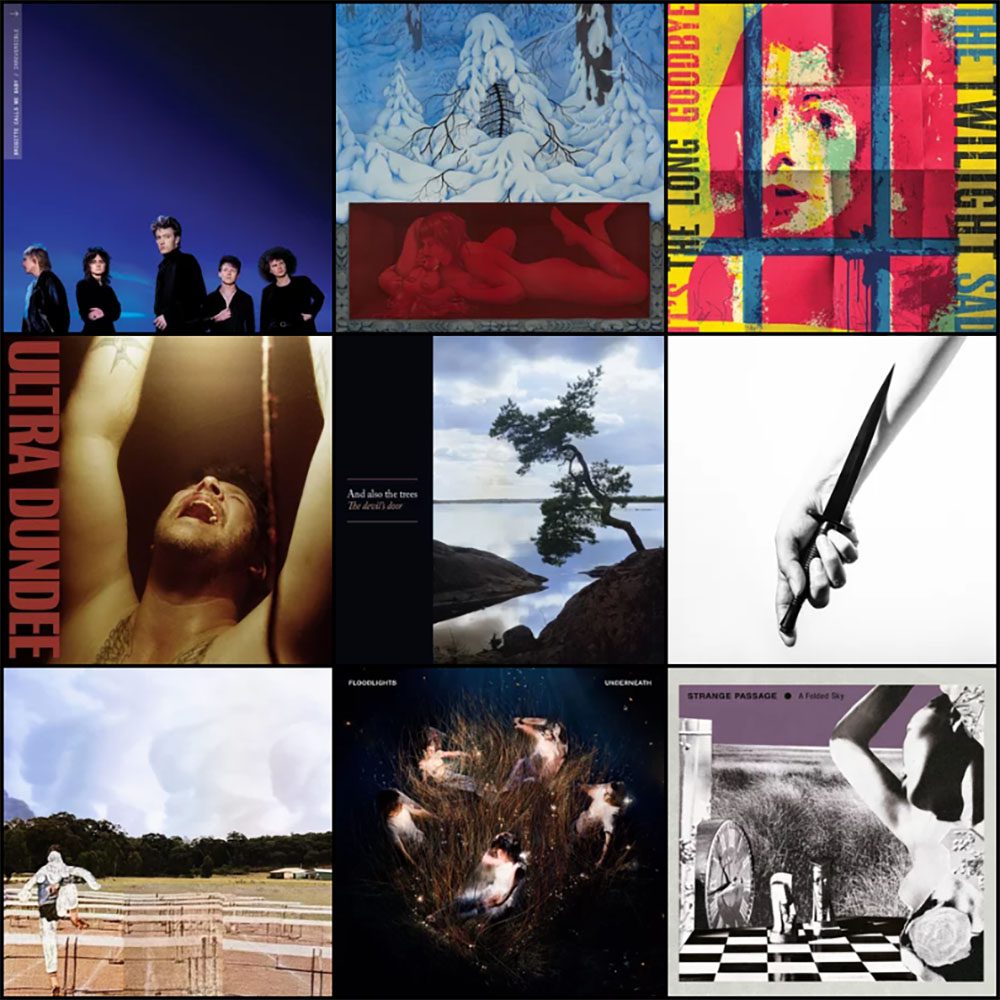
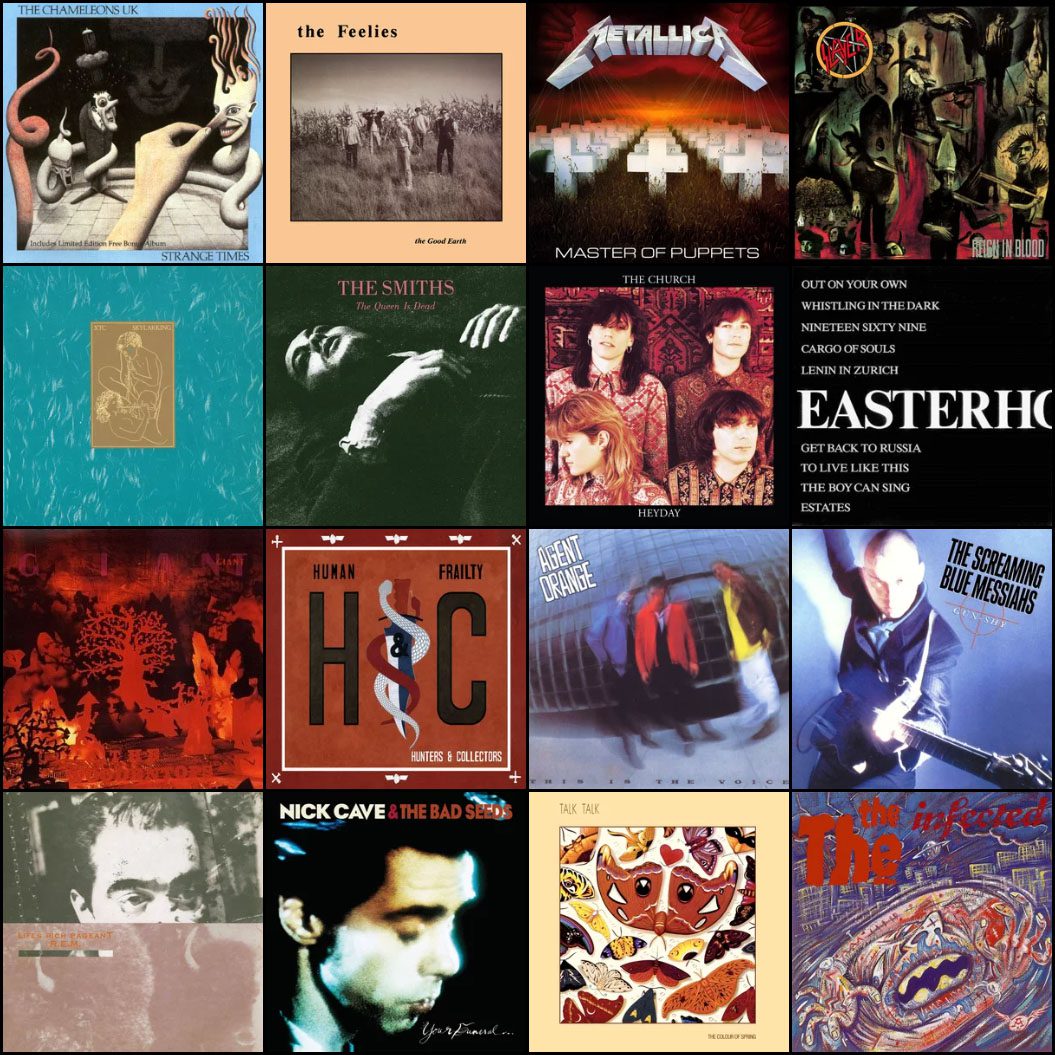
April 2, 2026
Fester’s Lucky 13: 1986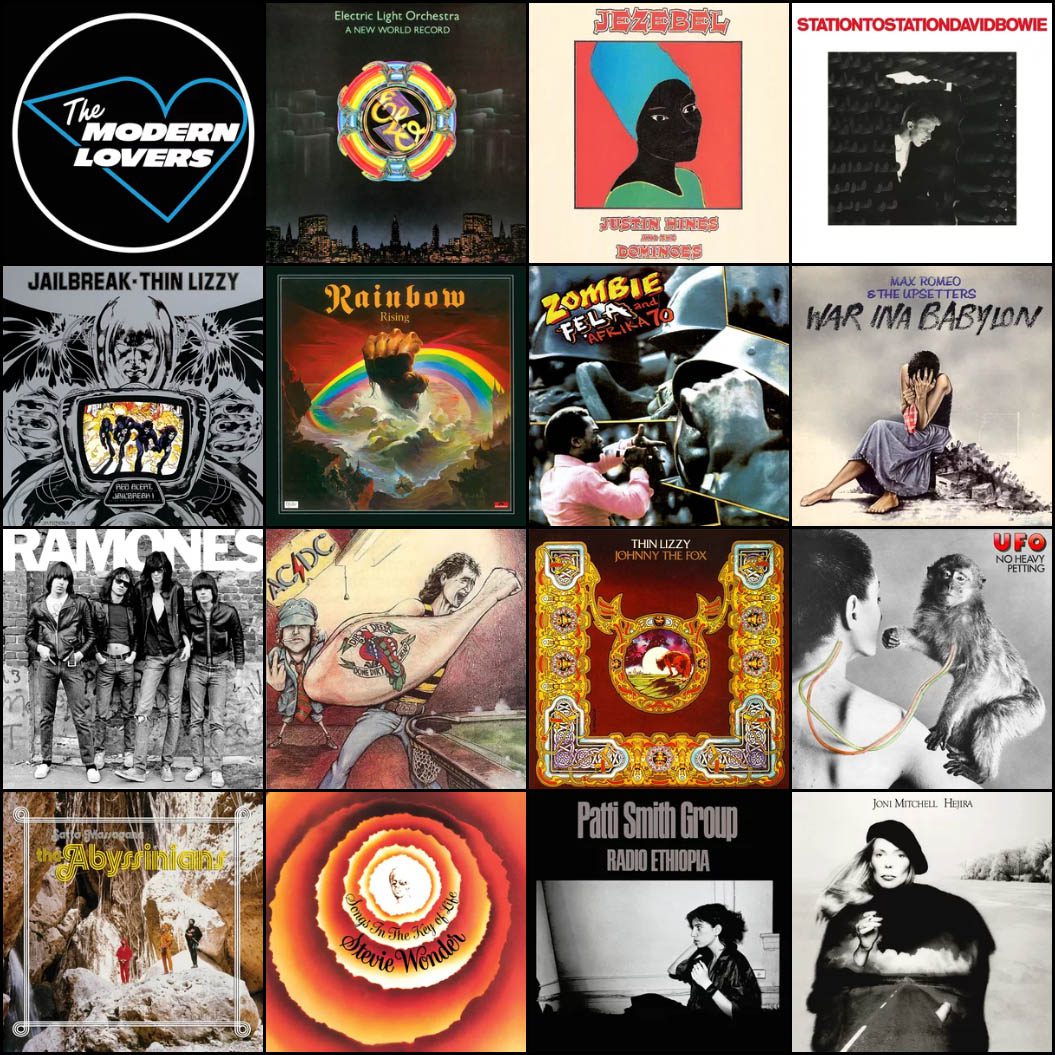
February 27, 2026
Fester’s Lucky 13: 1976