Favorite book #18. “Memories warm you up from the inside. But they also tear you apart.”
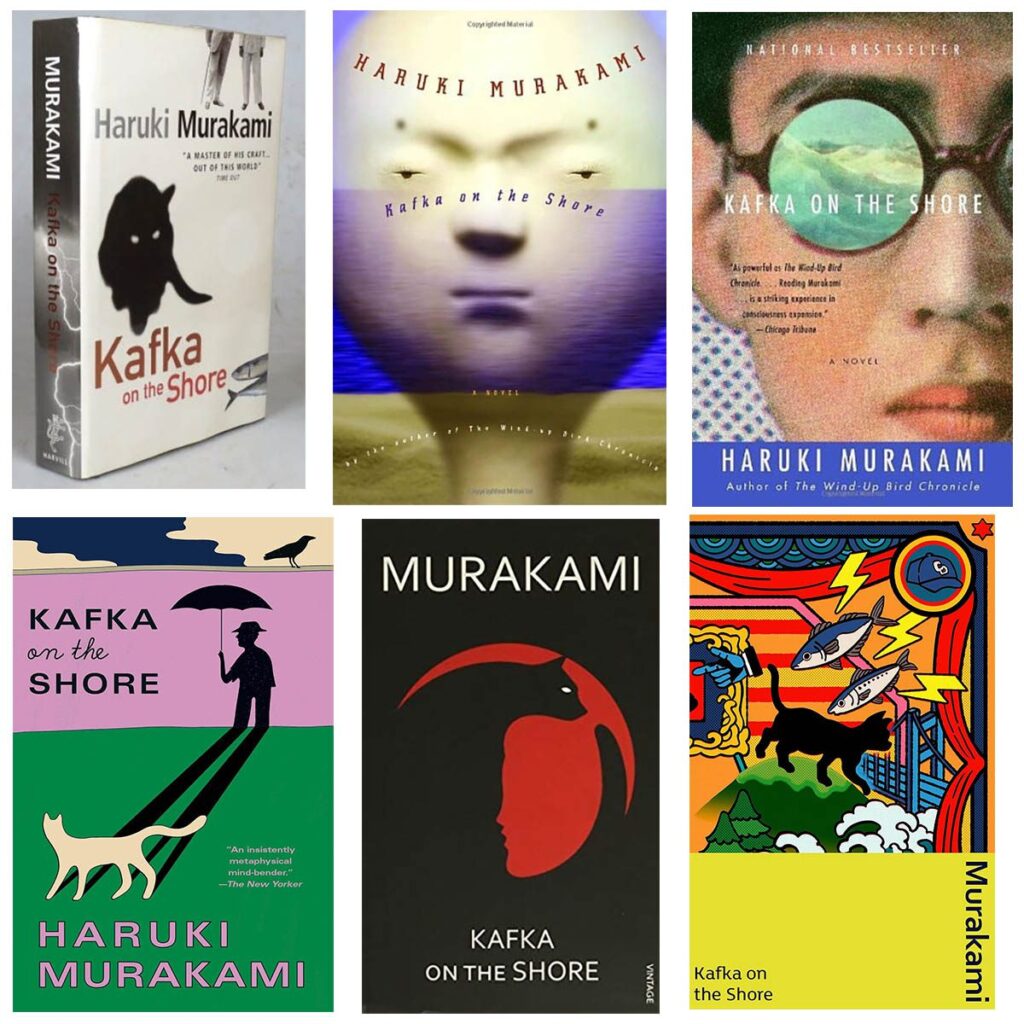
A strong contender for Haruki Murakami’s best book, Kafka on the Shore is the perfect combination of his magical realism, philosophical musings, music, history, and dry humor, with surreal appearances by Johnnie Walker and Colonel Sanders. Fifteen year-old Kafka Tamura runs away from home in an attempt to avoid his father’s Oedipal prophecy that he will murder him and be with both his mother and adopted sister. In a parallel storyline, Satoru Nakata is an elderly man who can talk to cats, and due to a childhood incident, lost his memories and ability to read. What begins as a routine job to find a missing cat, develops into an epic mystical journey that eventually will intertwine with Kafka’s path, which ends up at the small private Komura Memorial Library, run by the inscrutable Miss Saeki and her intellectual transgendered assistant Oshima. They allow Kafka to take sanctuary there as he escapes the world and seeks guidance for his internal question in books.
One of the major complaints of his books are the frequency of seemingly random sexual encounters and dreams. But every instance here is indeed meaningful, and after all, the main character is a 15 year-old boy. Taking in account of the scope of literature from the 20th century through the millennium, it doesn’t seem like an outlier to me. And while Murakami isn’t alone in being able to expertly weave conversations about history, war, art and literature into his stories, he stands out in also writing intelligently about music. His first career was running a jazz cafe in the 70s, after all. Kafka brings a Walkman with three tapes — John Coltrane’s My Favorite Things, Prince’s Very Best Of, and Radiohead’s Kid A (which was a spanking new album when he was writing what would originally be published as two separate books in Japanese in 2002). I also loved how Hoshino, an average truck driver who is drawn to become Nakata’s devoted assistant, also develops an appreciation of the sublime, in this case Beethoven’s “Archduke” Trio, via a cafe he spends time in, symbolizing an understanding of his own role in helping someone with a bigger purpose than his own.
“Time weighs down on you like an old, ambiguous dream. You keep on moving, trying to slip through it. But even if you go to the ends of the earth, you won’t be able to escape it. Still, you have to go there—to the edge of the world. There’s something you can’t do unless you get there.”
Some have said this is one of the most challenging Murakami books, but I disagree. It’s pretty easy to follow the threads, as strange as they may seem at first, and also to see how they fit together like a puzzle toward the end. Along with the power of art and music, the themes of fate versus freewill, the symbolism of choice of accepting responsibility for inner demons and actions in the face of being seemingly powerless, like a leaf tossing in a atorm, memory, loss and ultimately healing are all simple enough to discern from the tapestry of prophecies, dream states and surreal metaphysical figures, but it’s the details of the journey that make it such a rewarding experience.
Re-reading this 20 years after the first time confirmed that this needs to replace 1Q84 (2011) in my #18 spot of all-time favorites.
13. Philip K. Dick – A Scanner Darkly (1977)
14. George Orwell – Nineteen Eighty-Four (1949)
15. Christopher Moore – A Dirty Job (2006)
16. Johannes Johns – The Redwood Revenger (2021)
17. Neil Gaiman – Neverwhere (1996)
18. Haruki Murakami – Kafka on the Shore (2002)
19. Thomas Pynchon – Gravity’s Rainbow (1973)
20. William S. Burroughs – Naked Lunch (1959)
21. Haruki Murakami – 1Q84 (2011)
May 31, 2026
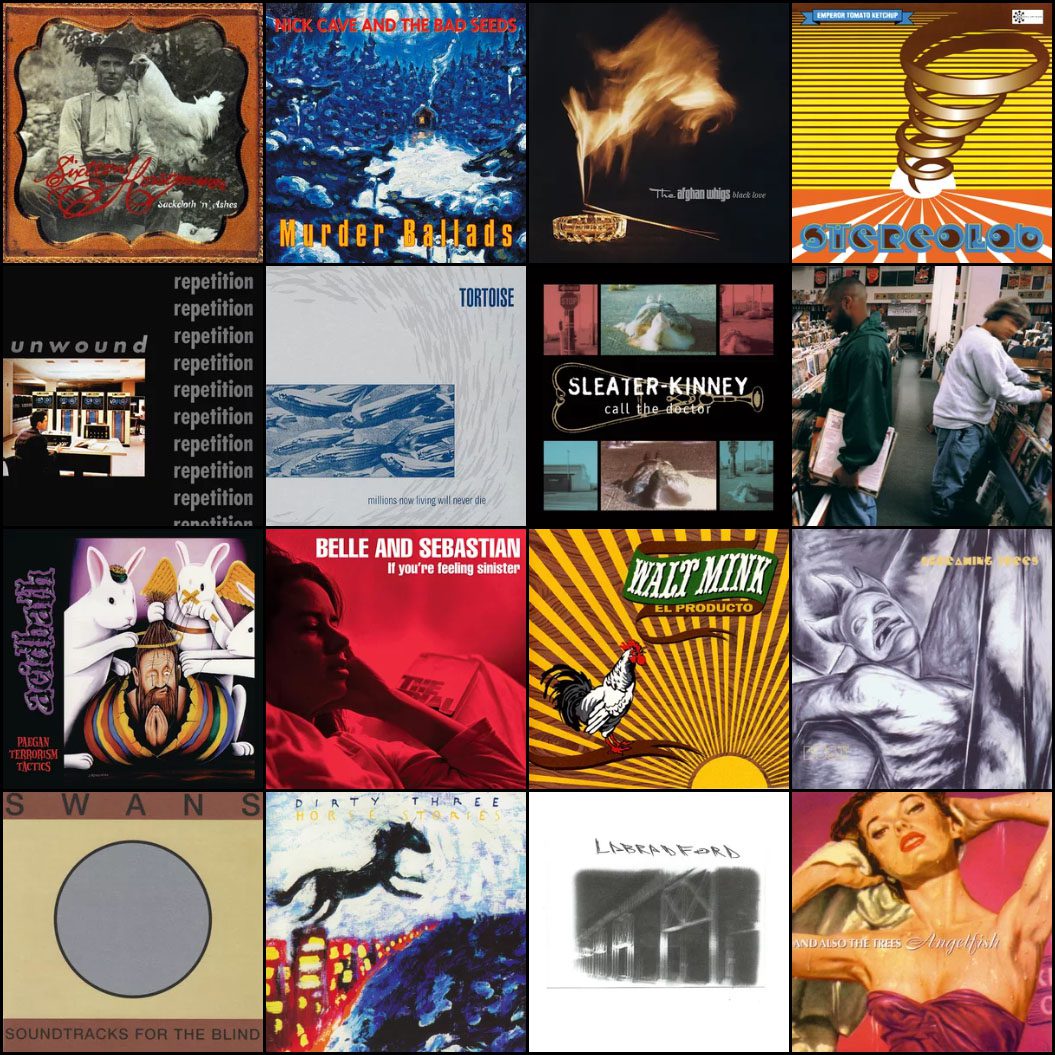
Fester’s Lucky 13: 1996
April 2, 2026
Fester’s Lucky 13: 1986