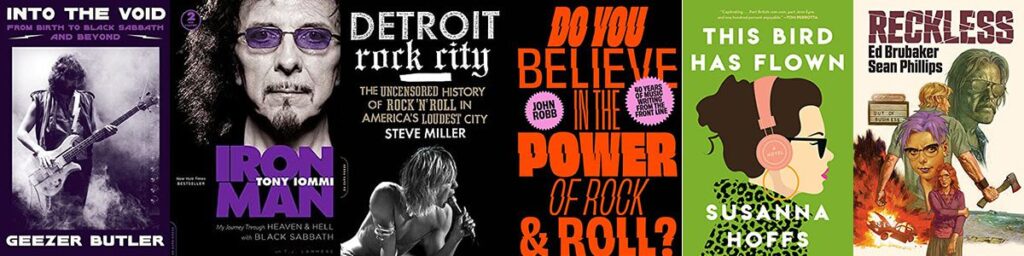
Rundown of music books by Dan Franklin, Martin Popoff, Seth Kim-Cohen, Tony King, Susan Rogers, Emma Brodie, Geezer Butler and more.

Heavy: How Metal Changes the Way We See the World by Dan Franklin (2020)
Unlike JR Moores’ Electric Wizards: A Tapestry of Heavy Music, 1968 to the Present (2021) and J.J. Anselmi’s Doomed to Fail: The Incredibly Loud History of Doom, Sludge and Post-Metal (2020), Dan Franklin’s book isn’t a history of metal. And contrary to the title, he doesn’t really show that metal changes the way we see the world. What he does accomplish is show how a bunch of bands he likes loosely fit into the context of other heavy culture in art, literature and film. And by loosely I mean the loosiest, goosiest sense of the word, as he comes up with comparisons that would never have existed in the brain of anyone else in the planet. But for those of use who were drawn in by a similar taste in music and made it through, the jokes on us. It’s now in all our brains! Now I can’t listen to Sleep’s Dopesmoker without contemplating Alejandro Jodorowsky’s failed adaptation of Dune, and Ursula K. LeGuin’s Earthsea when listening to Dio and Black Sabbath’s “Children of the Sea.”
The book kicks off with an account of a Baroness show, days before their horrific van crash. Franklin’s girlfriend, having never heard the band before, was so moved by their passion that she hugged John Dyer Baizley. Along with playing guitar and vocals, Baizley is a kickass visual artist, who’s lushly detailed, pre-Raphaelite paintings adorns all their album covers and many others. And we’re off like a cocaine addled magpie, finding connections between William Friedkin’s controversial 1980 film Cruising with Al Pacino going undercover in the New York S&M and “heavy leather” gay scene, and Judas Priest’s British Steel. I’ll buy that, actually. The Dio section on LeGuin, Boorman’s film Excalibur (1981) concludes with the message that wizards and kings must pay the highest price for hubris. “It’s a long way to climb the tower, and further to fall.” As it is in Arthurian legends, so it goes in metal.
Franklin goes on to discuss Kyuss and Queens of the Stoneage, Cormac McCarthy, Death, Bloodbath, Carcass, Sunn O))), High On Fire, Electric Wizard, Elder, Scorn and Dan Simmons’ The Terror, where a Sasquatch-like creature the Tuunbaq bites off a victim’s tongue to make an alien form of music by blowing on his vocal cords. So metal. After Mastodon and Herman Melville, Franklin starts to veer off course with politics and war via Gojira and space whales and climate change and Iron Maiden’s interest in World Wars I & II history. Then inexplicably he spends nearly two chapters on Pantera’s Phil Anselmo’s racist outbursts and his weak defensive posturing after the fact. The point? I have no idea, other than despite Anselmo’s massive shortcomings in character, he’s still a great front man? Being a dumb, drug-addled thug is metal AF? He lost me there, but it’s the only place he really went off the rails. I’d love to swap that out for a chapter on Italy’s Ufomammut and their Malleus artist collective. In the end, the world is death and suffering, life is heavy, and heavy metal is life. Beach read of the summer!
Come My Fanatics: A Journey into the World of Electric Wizard by Dan Franklin (2023)
I gotta hand it to Franklin, after his chaotic but enjoyable book Heavy, he could have gone in a much more commercial direction like a book on Pantera, but instead he chose much more underground bunch of misanthropic, depraved musicians. Jus Osborne’s inner life couldn’t be considered particularly inspiring or rich to the average reader. There’s no lessons learned or massive obstacles overcome. Just a truly antisocial dude who revels in Lovecraft, pulp horror novels and films, and any low art that is transgressive. The story of his stubborn dedication to his vision of heavy doom metal is probably only compelling to big fans of Electric Wizard. Even my patience gets tested, however, when Franklin goes down rabbit holes of the history of Osborne’s dreary hometown of Wimborne Minster, Dorset. So much so that I took a month long break. It gets better once Franklin gets into the meat of the recording of their albums, and his detailed song-by-song account, complete with an exhaustive account of every single pulp fiction story, occult book, horror novel and bad biker and vampire lesbian film that inspired every lyric. The chaotic tours and multiple former rhythms sections left at the side of the road as burned out husks are a bit of a slog, and clearly this will appeal only to those already huge fans of the Electric Wiz. Such fans are lucky to have this book. We should be so lucky if someone ever writes something as well researched about other important bands in the stoner psych doom scene like Monster Magnet, Kyuss/QOTSA, Sleep/High On Fire/Om, Colour Haze and Ufomammut.
Anthem: Rush in the ’70s by Martin Popoff (2020)
Limelight: Rush in the ’80s by Martin Popoff (2020)
Martin Popoff is like a machine, cranking out dozens and dozens of books. It’s truly impressive how he’s accumulated so many interviews to the point that he’s able to put out multiple books about Rush (I have two huge coffetable sized hardcovers) with very little repetition. I still think he may have an army of enslaved goblins in his basement working around the clock. While the quality of his writing on his older metal guides has been variable, the care and effort he put into these books is obvious. I mean, he had to, he’s Canadian, and Rush are royalty. Even the nerdiest of die hard fans are bound to learn something new in these volumes. Yes, there’s a ’90s volume, but I haven’t gotten to that yet.
Rock and Roll vs. Modern Life by Seth Kim-Cohen (2023)
While Dan Franklin tackled heavy culture in a scattershot but entertaining manner, Seth Kim-Cohen approaches music with a heavy dose of theory. Kim-Cohen is a longtime musician, playing guitar in indie rock band Number One Cup in the 90s, and as Olias Nil in the brilliant experimental post-punk project The Fire Show. He also did plenty of fanzine music writing, demonstrating a sharp, analytical mind. His completion of a Ph.D. from University of London in 2006 seemed destined. At first I thought this might be an edited version of his dissertation, This Not Knowing Needn’t Bother Us: Artistic Uses of Incompetence. Instead, it came about from classes he taught in Boston and then at School of the Art Institute of Chicago, where he’s been Assistant Professor since 2014. Like Heavy, this isn’t a linear history of rock and roll. Nor is it straightforward in defining what is meant by “modern life” and how rock and roll is in opposition to it. Perhaps with an academic background in art, film and post-structuralist theory, one might have a clearer picture. I do, but it’s well over 30 years in my past, and my theoretical synapses have shriveled a bit.
Even with my decaying brain, it’s definitely a stimulating read that’s enhanced even more if you dig into the source materials that Seth-Cohen undoubtedly presented in class, such as footage of The Stooges and Alice Cooper’s performances at the 1970 Midsummer Cincinnati Pop Festival that was aired on television, FBI footage of the MC5 playing at the Festival of Life in Grant Park during the Democratic National Convention, just before all hell broke loose and Chicago cops started breaking faces, Bob Dylan in a 1965 press conference in San Francisco, a televised James Brown performance and The Last Poets performing “Die N***a!” The book then takes a whirl around the globe, to Plastic People of the Universe during the 1968 Prague Spring, Fela Kuti’s Kalakuta Republic in Lagos, Nigeria, and the arrests and exiles of Tropicalismos Caetano Veloso and future Minister of Culture Gilberto Gil in Brazil. A good amount of time is also spent analyzing the 5-1/2 hour film Carlos (2010), about Venezuelan terrorist Ramírez Sánchez, aka Carlos the Jackal, with a soundtrack featuring post-punk bands like The Feelies, Wire, A Certain Ratio and New Order, leading into a discussion of more politically minded Gang Of Four, Crass and Scritti Politti, who were particularly inspired by Antonio Gramsci and Jaques Derrida.
Aretha Franklin, Patti Smith, Astral Weeks, Red Krayola, The Buggles, The Sex Pistols, it’s entirely possible to get dizzy and lost amidst the dizzying tour of music and theory, time and space. But unlike a book like Paul Morley’s Words and Music: A History of Pop in the Shape of a City (2004), which I literally threw across the room in aggravation because of the nonsensical, masturbatory language, this book is clearly well thought-out, and the challenging portions are very much worth revisiting if you don’t catch everything the first time.
The Tastemaker: My Life with the Legends and Geniuses of Rock Music by Tony King (2023)
Tony King left school at 16 for a dream job as a promoter for Decca records, and subsequently worked closely with The Beatles, Stones, Ronettes, and Elton John, who he had a particularly close friendship with, as well as Queen’s Freddie Mercury. I’m always a bit reluctant to start these kind of music biz insider autobios, because they inevitably feature a whole lot of starfucker namedropping, empty debauchery leading inevitably to addiction, tragedy, blah blah blah. Surprisingly, while King was inevitably guilty of most of those things, he also somehow maintained a sort of innocence, a fairly pure love of music and a genuine love in his friendships with many of these stars. A rare industry bio that didn’t leave a part of me even more dead than before.
This Is What It Sounds Like: What the Music You Love Says About You by Susan Rogers (2022)
Susan Rogers has a remarkable life story, where she was barely getting her feet wet as sound engineer when she landed a dream gig as Prince’s chief engineer for Purple Rain. After a successful career, she started all over again, going back to school to get a Ph.D. in her 40s. She uses her life experiences to introduce readers to relatively rudimentary applications of cognitive neuroscience to how people’s brains process music. While it’s not nearly as revelatory as Dr. Daniel J. Levitin’s This Is Your Brain on Music, it’s a pretty entertaining read which gives you homework to follow along with listening exercises to better understand your own musical personality and tastes. Though it can’t quite explain how a brain can like Barenaked Ladies’ “One Week” without being broken.
Songs in Ursa Major: A Novel by Emma Brodie (2023)
Fans of the TV series Daisy Jones & The Six, and the original 2019 book by Taylor Jenkins Reid, should enjoy this one, which starts at a folk festival on a small island outside of Massachusetts in 1969, where the headliner Jesse Reid is a no-show due to a motorcycle accident, so local no-names Jane Quinn and her band fill in and are a sensation. The subsequent love story is nothing special, but Brodie really does a great job in portraying the creative process of songwriting, getting more in depth than Reid. And while Reid’s fictional band seems based loosely on Fleetwood Mac, and the music created for the show was quite well done, Jane Quinn is more of a genius along the lines of a Joni Mitchell creating something along the lines of Van Morrison’s Astral Weeks or Tim Buckley’s Starsailor. If this story gets optioned for a film or series, they’ll have a hell of a challenge getting someone to write and perform music that measures up to what is described.
Into the Void: From Birth to Black Sabbath—And Beyond by Geezer Butler (2023)
Iron Man: My Journey through Heaven and Hell with Black Sabbath by Tony Iommi (2012)
I realized that while I read Ozzy’s book I Am Ozzy (2010), I missed Tony Iommi’s, which popped up in a Kindle deal, so I got that too. Geezer was relatively humble about the fact that he was the chief lyricist, giving Ozzy credit for some key songs. But he was clearly an essential part of Black Sabbath. Iommi’s riffs, Geezer’s bass and lyrics, Ozzy’s vocals and personality, and Bill Ward’s drumming with a subtly jazzy swing were all essential elements to their first six albums being arguably the greatest run in not just metal, but rock & roll. Some have wondered if Bill Ward will also come out with a book. I can just imagine him complaining about all the abuse, being set on fire, etc. Poor Bill. Anyone truly familiar with Black Sabbath’s music know that they were never Satanic. Quite the opposite, they all at various religious upbringing, with the Catholic raised Butler once aspiring to be an altar boy (he overslept and missed his potential calling). The band were so spooked when they refused to do a gig for some Satanists, that when they were threatened by a hex, the band all started wearing large metal crosses made by Ozzy’s dad out of spare metal from car parts. The protagonist in “Iron Man” was a Christ figure, but instead of forgiving the people who crucified him, he sought revenge. Clearly the band were no altar boys, and all three memoirs are pretty candid about their drugs and debauchery, where they might as well have been dancing with the devil. The metal cliches had to start somewhere. The fact that they all lived to tell their stories is amazing, and we’re lucky to be able to read them.
Detroit Rock City: The Uncensored History of Rock ‘n’ Roll in America’s Loudest City by Steven Miller (2013)
I don’t know if the oral history format is just overdone, or if Steven Miller simply did a terrible job, but I learned why this book remained under the radar for me for an entire decade. Despite my love of just about all music that came out of and around Detroit — The Rationals, Mitch Ryder and the Detroit Wheels, SRC, The Frost, The Bog Seger System, The Amboy Dukes, Frigid Pink, MC5, The Stooges, Sonic’s Rendezvous Band, The Dogs, Destroy All Monsters, Death and and many more that came after, the book is nearly unreadable. As with many oral histories, there’s very little talk about actual music, and way too much bullshit about interpersonal drama, drugs, sex, violence, and honestly, a whole lot of plain old sociopathic personalities using rock and roll as an excuse to be just horrible, evil people. Even the non-psychos just came across as dull or unlikeable. Steven Miller has credentials as a real journalist, and a musical background, but he utterly failed to coax out any truly great stories here, beyond what was already widely known. And the big, most obvious failure here, is the complete exclusion of Funkadelic. Clearly there was a ton of racism and tension, especially around the 1968 riots, but Funkadelic regularly played gigs with many of the artists included in the book, and were hugely important. Not to mention Motown artists The Temptations were essentially a psychedelic rock band for several years. Seriously Miller, what the funkin’ funkity funk?!!!
Do You Believe in the Power of Rock & Roll?: Forty Years of Music Writing from the Frontline by John Robb (2023)
John Robb is a member of post-punker The Membranes, and as a music writer, has covered much more than just punk, which is monthly magazine Louder Than War specializes in. This collection appears to focus on the most popular bands that he covered, not all of which has aged all that well. Or maybe it’s just me, as my interest in The Charlatans, The Soup Dragons and even early Primal Scream, Stone Roses and Manic Street Preachers (covered twice, ugh) was pretty much zero from the beginning. My pre-Britpop tastes ran more along the lines of My Bloody Valentine, Ride, Catherine Wheel and Swervedriver, none of whom were covered. He did include The Jesus and Mary Chain, Nirvana, The Fall, Sonic Youth, Aphex Twin, The Cure, Nirvana, Einsturzende Neubauten, and post-millennium interviews with Tony Wilson, Mick Jones, Lemmy, Michael Gira, Peter Hook, Daniel Ash, Echo & the Bunnymen and Steve Albini. One mildly interesting discovery was a piece on World Of Twist, a forgotten band of some interest that was kind of a bridge between 80s psych pop, baggy and Britpop. Judging from the variable quality of their long-forgotten album, Quality Street (1991), I get the impression that you had to be there to see their live performances to fully appreciate the band, as is often the case.
Long Players: Writers on the Albums That Shaped Them – Tom Giatti (2021)
This is a pretty cool collection of fifty writers, mainly novelists, who pick an album that was important to them. Unlike most music critics, most of these are surprisingly succinct. Probably because they don’t need to dissect song-for-song, but simply tell the story of their relationship to the music. There’s much to recommend here, from the likes of George Saunders, David Mitchell, Neil Gaiman and Ian Rankin. A quick, pretty lightweight read.
This Bird Has Flown: A Novel by Susanna Hoffs (2023)
Since Emma Brodie’s Songs in Ursa Major was a satisfyingly enjoyable summer read, I was optimistic that The Bangles’s Susanna Hoff’s literary debut could be just as fun. On the surface, it seemed it could be. The main character is a musician who was a one-hit wonder in a creative rut and just suffered an embarrassingly public breakup. However, a new romance does not really serve as a creative muse, and the character simply spins her wheels and wallows in self-pity the whole time. Even worse, the few times she actually acts like a musician seem fake, as if Hoffs herself has forgotten what it’s like to be a productive songwriter. Overall, the story is painfully shallow, coming off like the worst version of a boilerplate romance novel. A huge disappointment.
April 2, 2026
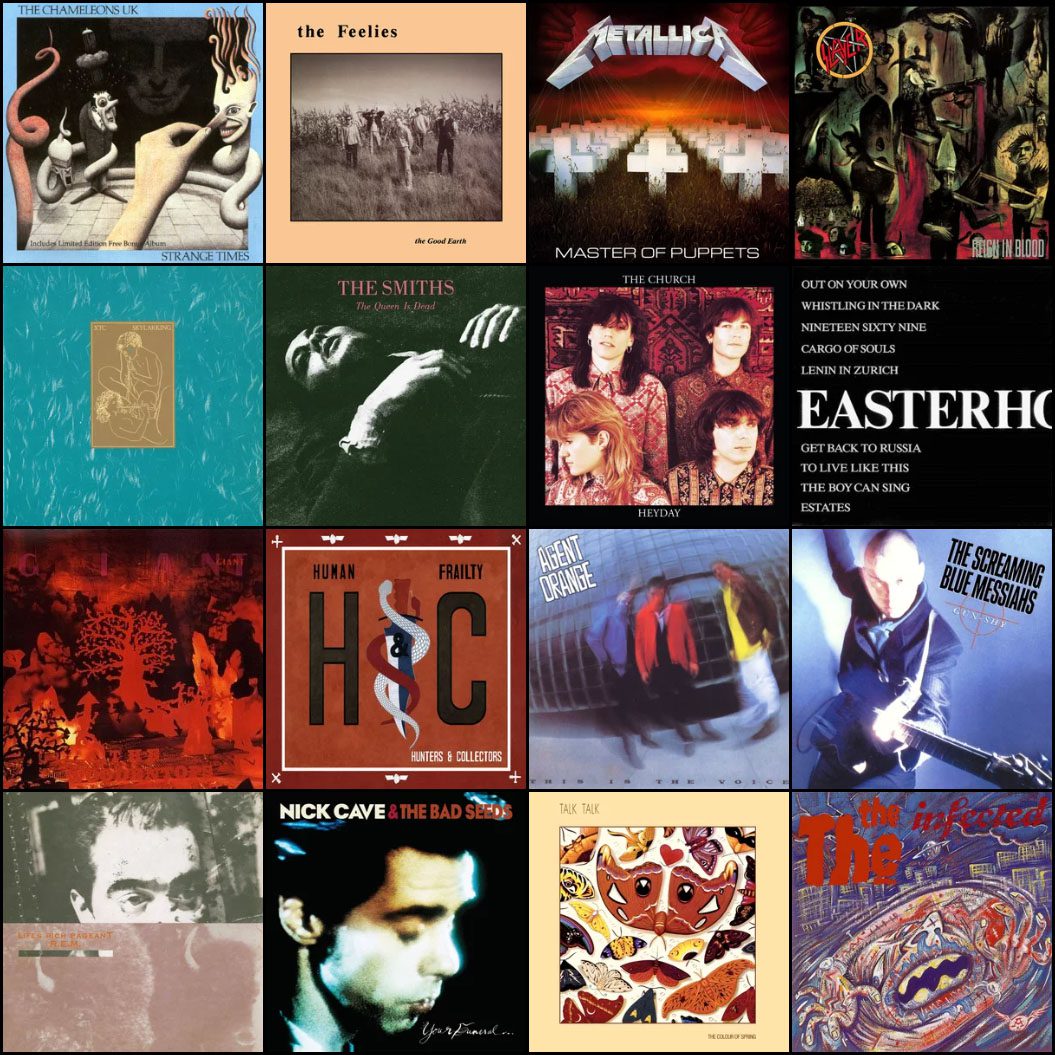
Fester’s Lucky 13: 1986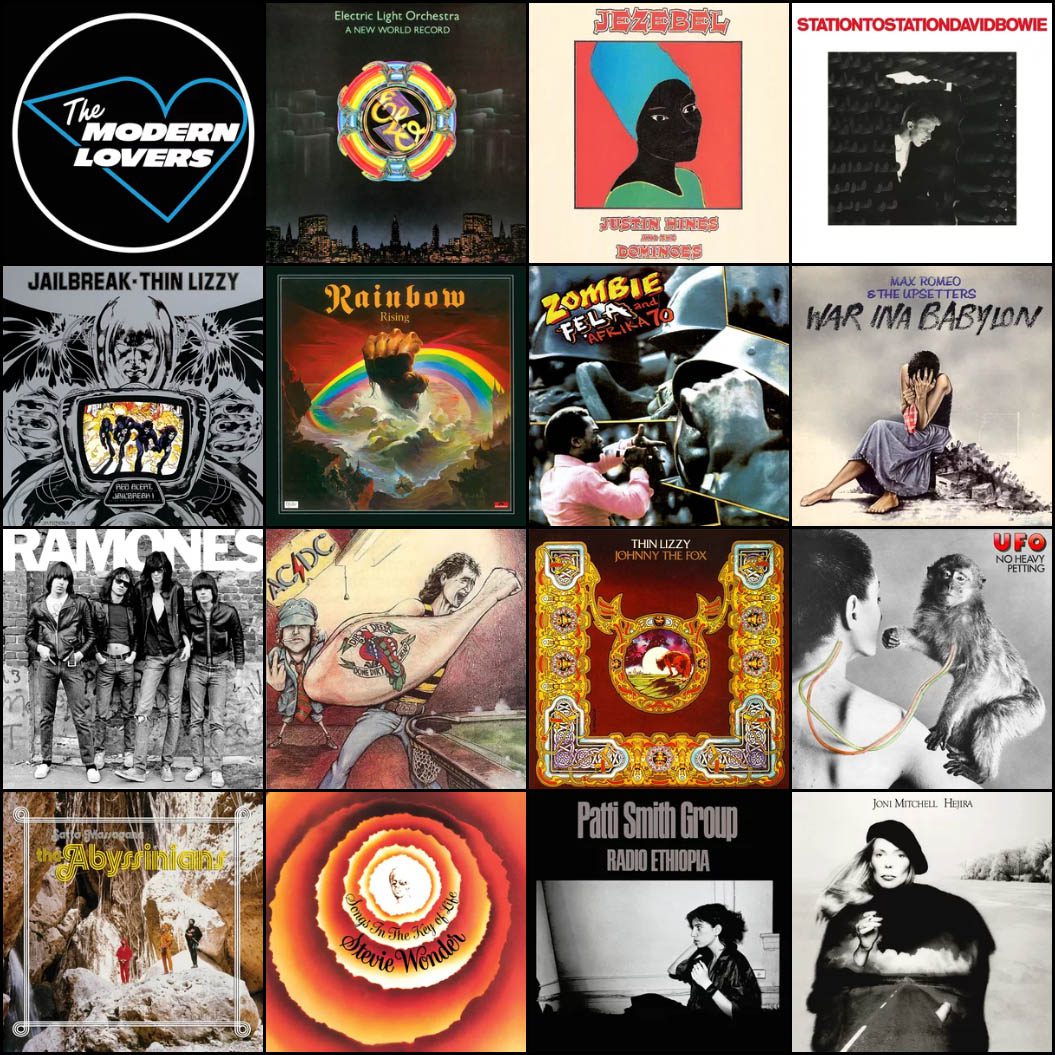
February 27, 2026
Fester’s Lucky 13: 1976
January 30, 2026
Fester’s Lucky 13: 1966