Revisiting my favorite post-punk band to never make the UK charts, and the new book by Simon Heavisides, Destiny Stopped Screaming.
When I wrote about the Renascent reissues of The Sound albums in 2005, I said they were the most unfairly ignored post-punk band of all time. Renascent was the first label to ever issue the albums on CD, a good fifteen years after most other bands. Since then, however, things have gradually changed. UK magazines featured them, and word of mouth spread via blogs and fan sites. Crowd sourced music curating/rating site Rate Your Music has Jeopardy at #12 for 1980 and From the Lions Mouth #13 for 1981, the sort of hindsight adjustment that feels satisfyingly just for albums that never even touched the UK charts when they were released. Even The Comsat Angels, who had shared a lot of parallel challenges in their career, reached #51 with their second album, Sleep No More (1981), and their next two, Fiction (1982) and Land (1983), broke the top 100. Most of their contemporaries made the top 100, whereas The Sound had a handful of champions in critics awarding five star reviews, and a fervent fanbase throughout Europe, particularly the Netherlands. Edsel’s two boxed sets did end up both reaching #17 in the UK charts in 2014 and 15. In 2016, director Mark Waltman released the documentary Walking in the Opposite Direction.
While the music is the main story for me, there’s also the tragedy of Borland’s life ending far too soon in 1999 after flinging himself in front of a train. From what I can tell, no one can agree on whether his official illness was diagnosed as schizoaffective disorder, depression, bipolar or schizophrenia. The lack of a proper diagnosis and treatment regimen did not help, and unfortunately options for medications were more limited in the 90s.
Definitely not just Joy Division acolytes, those who dig into their history know that Adrian Borland’s first band The Outsiders were known as the first band to self-release a punk record, Calling All Youth in May 1977. Technically they were not quite punk, more along the lines of The Only Ones, as acolytes of Patti Smith and Iggy Pop. Renascent’s archive release, Propaganda, is a revealing glimpse of the transition from The Outsiders to The Sound in 1979, with their garage proto-punk evolving into their powerfully beautiful signature post-punk sound. They may not have developed as quickly as pioneers Magazine, Joy Division, Public Image Ltd. or Siouxsie & the Banshees, but they certainly had their own identity distinct from labelmates Echo & the Bunnymen, and U2.
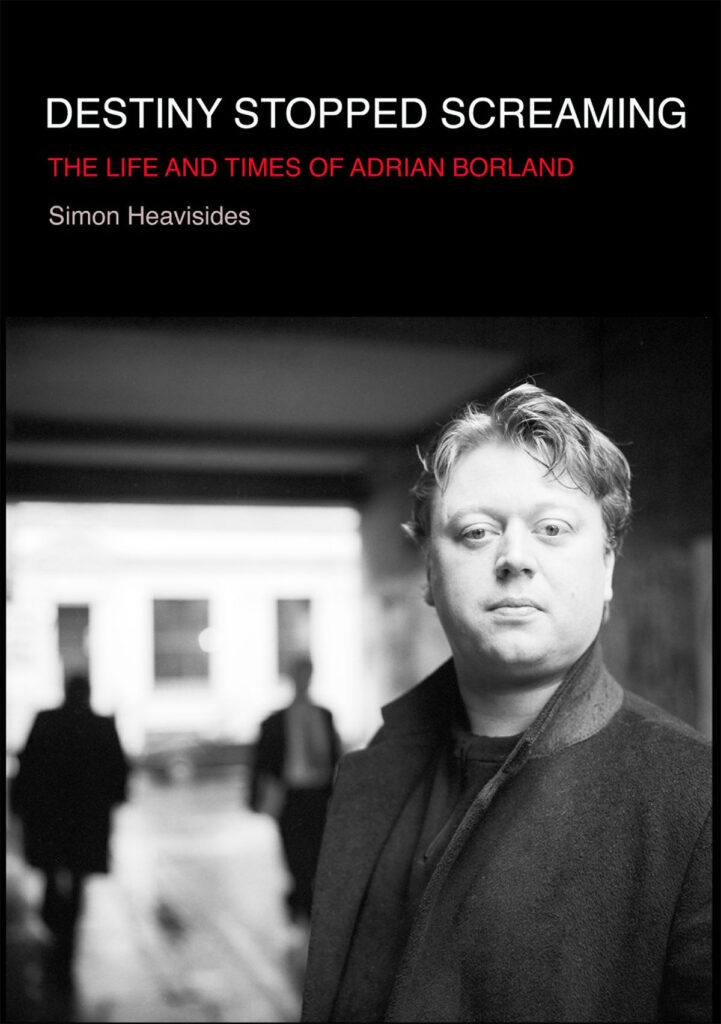
April 2024 saw the release of Simon Heavisides’ book Destiny Stopped Screaming: The Life and Times of Adrian Borland. Borland was his first interview subject for his fanzine back in 1991, and even more so than the film, Heavisides tenaciously tracked down an impressive number of family, bandmates and even ex-girlfriends to give a more well rounded picture of who Adrian Borland was. But even more importantly, Heavisides provided plenty of detailed critical analysis of Borland’s most important legacy — his albums with The Sound.
Coincidentally, Rhino Records is reissuing the first three albums on colored vinyl on September 13. Some digging shows that they may not be coming out at all in the U.S., despite the band’s growing posthumous popularity. They can be pre-ordered at Piccadilly Records and Rough Trade.
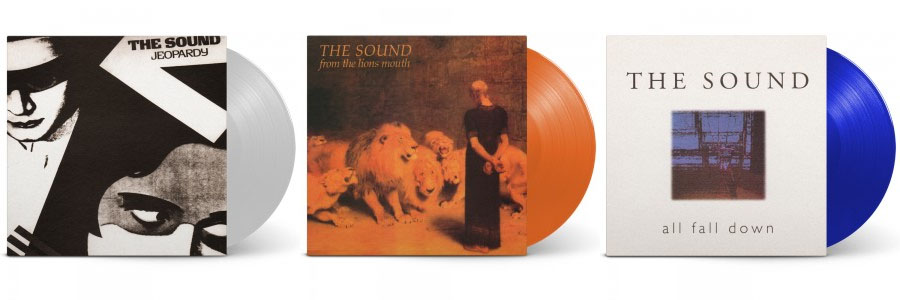
After signing to Korova, things got off to an ominous start when the label was unable to pay for studio time after putting money in to the release of Echo and the Bunnymen’s Crocodiles on July 18, 1980. So they released the band’s self-produced demo as Jeopardy in November, possibly the cheapest major label recording in history. And remarkably, as great as Crocodiles is, Jeopardy is better. The album kicks off with what should have become a classic post-punk anthem — “I Can’t Escape Myself.” Nouvelle Vague did later cover it in 2006, and I’m just glad I found the record in the used bins when I was still a teenager. The lyrics can obviously be interpreted to foreshadow Borland’s future mental health challenges, but also it’s just a perfect expression of teen existential angst. The spare intro which explodes when the guitars come in could certainly have been much different with a more elaborate production, but unlikely improved, other than an extra-feral live BBC session from October. It might have made a bigger impact than the first single “Heyday,” framed by frenetic, slashing guitars, backed with “Brute Force.” Heavisides adds that “Hour of Need” also particularly benefits from the “non-production.” “Heartland” is another highlight on an album with no weak tracks with the possible exception of closer “Desire,” which is a bit too on the nose.
Hugh Jones (Echo, Teardrop Explodes, Simple Minds) produced From the Lions Mouth, resulting in arguably the band’s pinnacle. The album kicks off with “Winning,” which could have become a massive anthem heard in sports stadiums around the world. Truly a lost opportunity. Instead, the solidly muscular, but not quite an earworm “Sense of Purpose” was released as the sole single from the album, backed with “Point of No Return.” “Contact the Fact” is a slow burning grower, while “The Fire” shreds along the lines of “Heyday” from the previous album. But it’s quieter numbers like “Silent Air” and closer “New Dark Age” that have become cult fan favorites. After more consistently rave reviews from the inkies like NME, Sounds, Melody Maker and Record Mirror, the album reached only 164 on the UK album chart. One more single was released after the album’s release, a new song, “Hot House” backed with a live version of “New Dark Age.”
Their third album, All Fall Down (1982) triggered a lot of backlash, which is strange, because in hindsight, it’s simply a bold, adventurous album along the lines of what Peter Gabriel and Berlin era David Bowie were doing. Part of the direction was driven by using songs Borland was initially writing for a second installment of his electro-trash garage synth band Second Layer, which certainly introduces a different flavor. But balancing out some of the somewhat dissonant electronic-tinged tracks like “In Suspense” were moments of stunning beauty like “Monument” and the hooky “Party of the Mind.” “Song and Dance,” “Glass and Smoke” and “Red Paint” provide further highlights.
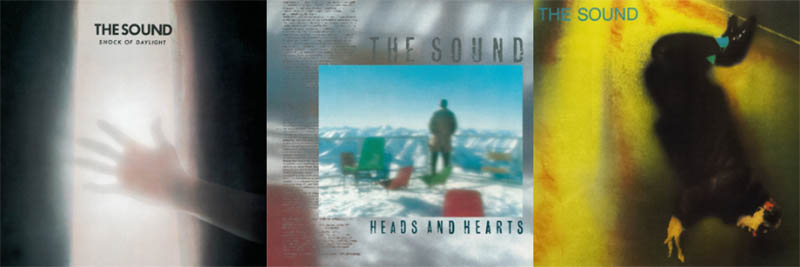
The relationship with Korova ran it’s course, and The Sound’s second act started with signing to Statik, a small label who had at least one other post-punk band on their roster, Scotland’s Positive Noise. But more importantly, they were flush with cash from a hit single by Men Without Hats. The Shock of Daylight (1984) mini LP was considered by some as their best album. With just six songs, it certainly has good killer to filler ratio with one of their most alluring singles, “Counting the Days,” and the barnstorming opener “Golden Soldiers.” The album was certainly a consolidation of The Sound’s strengths without giving in to production and stylistic trends that would date them. The result sounds like another timeless classic.
The production of Heads and Hearts (1985) by Wally Brill (Thomas Dolby, Icicle Works) is slightly less muscular and more shimmering, but has also aged well. The keyboard work is slightly more upfront than previous albums, but not obtrusive. It makes me wonder if American band The Call didn’t listen closely to this before recording Reconciled (1986). “Total Recall” is a fantastic song that would have been a thousand times more effective in John Hughes’ Pretty In Pink film instead of OMD’s “If You Leave.” “One Thousand Reasons” and “Temperature Drop” were fine picks for singles, the “Total Recall” inexplicably remained just an album track.
Thunder Up (1987) is the band’s sixth and last album on their third record label, Play it Again Sam. It wasn’t quite clear that it would be the band’s last until Borland’s behavior due to his mental health struggles forced them to cancel their tour. Like All Fall Down, this album had been dismissed and long forgotten, but now has champions like Heavisides, who does his best to rehabilitate it as a lost classic, with singles “Hand of Love” and “Iron Years,” the unique “Barria Alta,” the big “vampires flying off into the sunset’ Hollywood ending of “You’ve Got A Way,” as described by Borland. For 1987, it definitely holds up well compared to the more well known efforts by their peers The Cure, Echo & the Bunnymen, The Jesus and Mary Chain, New Order and even U2.
Despite Borland’s condition contributing to the break up of the band (he wasn’t the only factor — two of the members were on heroin), remarkably he was able to assemble a new band, Adrian Borland and the Citizens, and release the solid Alexandria (1989) and Brittle Heaven (1992). Despite his struggles, his passion to continually create new music resulted in three more solo albums, Beautiful Ammunition (1994), Cinematic (1995) and 5:00 AM (1997). He was working on another one at the time of his death.
From when I first read about The Sound in 1983 to when I first found a used copy of Jeopardy for about $3 in 1988, no one at the record stores I visited had heard of them. Of course this was in the U.S. where us Yanks are ignorant of many things, but these are record store clerks, who were supposed to be our founts of knowledge pre-internet! I never would have predicted that eventually there’d be a movie, a book, several rounds of reissues, and even a foundation called Opposite Direction, who helped organize an exhibit at Poppodium Boerderij, which kicked off on April 26. If there is ever a way to remember and honor a lost legend, it’s this way.
Post-Punk in the Charts
1 U2 – War (1981, 148 wks)
1 U2- The Unforgettable Fire (1984, 132 wks)
1 Simple Minds – Sparkle in the Rain (1984, 58 wks)
1 Tubeway Army – Replicas (1979, 31 wks)
2 David Bowie – Low (1977, 30 wks)
2 Echo & the Bunnymen – Porcupine (1983, 17 wks)
3 Simple Minds – New Gold Dream (81, 82, 83, 84) (1982, 53 wks)
4 Echo & the Bunnymen – Ocean Rain (1984, 26 wks)
4 Bauhaus – The Sky’s Gone Out (1982, 6 wks)
5 Siouxsie and the Banshees – Kaleidoscope (1980, 6 wks)
5 Joy Division – Unknown Pleasures (1979, 3 wks)
5 Joy Division – Still (1981, 13 wks)
5 XTC – English Settlement (1982, 11 wks)
6 Joy Division – Closer (1980, 9 wks)
7 Siouxsie and the Banshees – Juju (1981, 17 wks)
7 The Cure – The Head on the Door (1985, 13 wks)
8 The Cure – Pornography (1982, 9 wks)
10 The Associates – Sulk (1982, 20 wks)
10 Echo & the Bunnymen – Heaven Up Here (1981, 16 wks)
10 The Cure – The Top (1984, 10 wks)
11 U2 – October (1981, 43 wks)
11 Siouxsie and the Banshees – A Kiss in the Dreamhouse (1982, 11 wks)
11 Killing Joke – Night Time (1985, 9 wks)
11 Simple Minds – Sons and Fascination/Sister Feelings Call (1981, 7 wks)
11 Public Image Ltd. – Flowers of Romance (1981, 5 wks)
12 Japan – Tin Drum (1980, 50 wks)
12 Siouxsie and the Banshees – The Scream (1978, 11 wks)
12 Killing Joke – Revelations (1982, 6 wks)
13 Bauhaus – Burning from the Inside (1983, 10 wks)
13 Siouxsie and the Banshees – Join Hands (1979, 5 wks)
14 Tubeway Army – Tubeway Army (1979, 10 wks)
14 The Cure – Faith (1981, 8 wks)
15 The Psychedelic Furs – Mirror Moves (1984, 9 wks)
15 Siouxsie and the Banshees – Hyaena (1984, 6 wks)
16 XTC – Black Sea (1980, 7 wks)
17 Echo & the Bunnymen – Crocodiles (1980, 6 wks)
17 The Sound – Jeopardy/In The Lions Mouth/All Fall Down (2014, 1 wk)
18 Public Image Ltd. – Metal Box (1979, 8 wks)
18 The Psychedelic Furs – The Psychedelic Furs (1980, 6 wks)
20 The Cure – Seventeen Seconds (1980, 10 wks)
20 The Psychedelic Furs – Forever Now (1982, 6 wks)
22 Public Image Ltd. – Public Image (1978, 11 wks)
21 Orange Juice – You Can’t Hide Your Love Forever (1982, 6 wks)
24 The Teardrop Explodes – Kilimanjaro (1980, 35 wks)
28 Magazine – The Correct Use of Soap (1980, 4 wks)
29 Magazine – Real Life (1978, 8 wks)
29 The Teardrop Explodes – Wilder (1981, 6 wks)
29 Killing Joke – Fire Dances (1983, 3 wks)
30 The Psychedelic Furs – Talk Talk Talk (1981, 9 wks)
30 New Order – Movement (1981, 9 wks)
30 Bauhaus – Mask (1981, 5 wks)
30 Simple Minds – A Life in a Day (1979, 6 wks)
30 Iggy Pop – The Idiot (1977, 3 wks)
33 Au Pairs – Playing With a Different Sex (1981, 7 wks)
34 XTC – Drums and Wires (1979, 7 wks)
38 Magazine – Secondhand Daylight (1979, 8 wks)
39 Orange Juice – Rip it Up (1982, 8 wks)
39 Killing Joke – Killing Joke (1980, 4 wks)
39 Wire – 154 (1979, 1 wk)
41 Simple Minds – Empires and Dance (1980, 3 wks)
42 Killing Joke – What’s THIS For (1981, 4 wks)
44 The Cure – Three Imaginary Boys (1979, 3 wks)
44 The Chameleons – Strange Times (1986, 2 wks)
45 Gang of Four – Entertainment (1979, 3 wks)
48 Wire – Chairs Missing (1978, 1 wk)
51 Japan – Gentlemen Prefer Polaroids (1980, 10 wks)
51 The Comsat Angels – Sleep No More (1981, 5 wks)
52 U2 – Boy (1980, 32 wks)
52 Gang of Four – Solid Gold (1980, 2 wks)
53 Japan – Quiet Life (1979, 8 wks)
54 The Fall – This Nation’s Saving Grace (1985, 2 wks)
60 The Chameleons – What Does Anything Mean Basically (1985, 2 wks)
61 Gang of Four – Songs of the Free (1982, 4 wks)
62 The Fall – The Wonderful and Frightening World of the Fall (1984, 2 wks)
71 The Fall – Hex Enduction Hour (1982, 3 wks)
72 Bauhaus – In the Flat Field (1980, 1 wk)
73 Birthday Party – Junkyard (1982, 3 wks)
79 Au Pairs – Sense and Sensuality (1982, 3 wks)
91 Easterhouse – Contenders (1986, 1 wk)
92 The Comsat Angels – Land (1983, 2 wks)
94 The Comsat Angels – Fiction (1982, 2 wks)
More Brave Navigators of Chartless Waters
The Sound were one of the most consistently great post-punk bands to never scare the UK top 100, and there were plenty more.
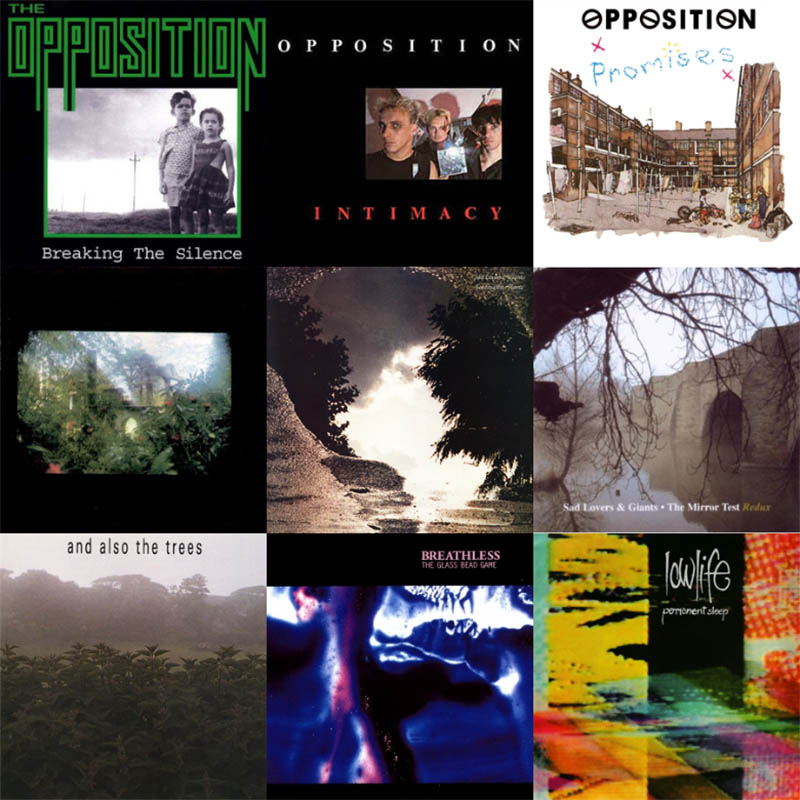
Opposition is probably the next band overdue for some love and attention. Like The Sound, they formed in 1979 in London, and their first recorded effort was shelved until 2005, when it was released as The Lost Album. It was a fascinating hybrid of 2 Tone ska and post-punk. By their official debut Breaking the Silence (1981) they dropped the ska and added some darker goth elements to their post-punk. They signed to Charisma and released a trio of uncompromising, underrated albums — Intimacy (1983), Promises (1984) and Empire Days (1985), which were never officially issued on CD until the band remastered them and released them in a couple handmade box sets.
Watford, Hertfordshire’s Sad Lovers and Giants seem to be the go-to band to namedrop when referring to under-appreciated post-punkers, cited as a primary example by the Post-Punk Magazine Kickstarter campaign discussed above. They actually had been on my radar for many years, having gotten a relatively enthusiastic write-up in The Trouser Press Guide. I didn’t unearth any recordings for my radio show in 87-92, but I was one of the first in line to buy the E-Mail From Eternity: The Best of Sad Lovers and Giants compilation in 1999. It’s a great introduction, but is just a gateway to the inevitable realization that their entire albums are essential documents of the era, and were finally reissued in 2009. Epic Garden Music (Cherry Red/Midnight Music, 1982) is actually a mix of their first singles with new songs, while Feeding The Flame (1983) has them blazing to full flight for an early peak, given that the band temporarily broke up after its release. In The Breeze (1984) collects studio out-takes and a 1981 Peel Session. The band reconvened and released the underrated The Mirror Test (1987), and finally suffered a lapse in quality with Headland (Voight-Kampff, 1990) and Treehouse Poetry (1991), but came back strong with Melting in the Fullness of Time (Voight-Kampff, 2002).
There’s many more that I’ve touched on in the past (see “Greatest Post-Punk Bands You Never Heard,”) — And Also The Trees and Breathless and Lowlife continue to see heavy rotation at Rancho Bulboso. The only band that isn’t active is Lowlife, who were meant to be the subject for the movie, Eternity Road: The Story of Lowlife, e.g. “the greatest band you never heard.” However it never seemed to happen.
While they later teased the charts a little bit, the debut albums from The Comsat Angels and The Chameleons didn’t. Formed in 1981, The Chameleons came roaring out the gate with the “In Shreds” single in 1982, and released three classic albums between 1983 and 1986. Their albums have been kept in print much more consistently than The Sound, and the band continues to get together for short tours, so they’re definitely cult favorites able to make some money on the road.
May 31, 2026
Fester’s Lucky 13: 1996
April 2, 2026
Fester’s Lucky 13: 1986