Favorite book #5. “The sky above the port was the color of television, tuned to a dead channel.”

I had a subscription to Omni magazine as a kid, which is where I first encountered a short story by Gibson, “Johnny Mnemonic” in 1981. Later came “New Rose Hotel,” and “Burning Chrome,” in July 1982. In general, sci fi was interested in the utopian possibilities of science. But his stories were more in line with Philip K. Dick and J.G. Ballard, with a darker noir vibe with a strong William S. Burroughs influence. They were more dystopian, described by some as “realism.” They were unlike anything I’d read before, the first steps in his virtual world building of the Sprawl, and the blueprint for cyberpunk. He was a third of the way through writing his first novel, Neuromancer (1984), when he saw Bladerunner (1982), based on Dick’s Do Androids Dream Of Electric Sheep? (1968). He was afraid of being accused of derivativeness, and re-wrote the beginning numerous times. He worried too much, it was brilliantly original. Katsuhiro Otomo’s manga series Akira also began that year. There was just something in the air.
“All the speed he took, all the turns he’d taken and the corners he’d cut in Night City, and still he’d see the matrix in his sleep, bright lattices of logic unfolding across that colorless void…”
Case was a formerly notorious console cowboy who’s washed up because his nervous system was damaged by a toxin, preventing him from jacking into the cyberspace matrix. He’s approached by street samurai razorgirl with mirror eyes, e.g. Molly Millions, a cybernetically augmented mercenary who offers to hire him on behalf of a mysterious employer named Armitage, for a “shopping expedition,” at Villa Straylight, the fortress of the wealthy Tessier-Ashpool family located in Freeside, an orbital space habitat. This data heist is far more complex than originally presented. In exchange for Case’s hacker skills, Armitage offers to repair him so he can once again enter the matrix. But in the procedure, additional sacs of poison were installed, set to release if Case doesn’t complete the mission within the allotted time, and they need to recruit the help of the recorded consciousness of Case’s former mentor, Dixie Flatline, and to Istanbul to recruit sociopath, drug addict magician Peter Riviera, whose implants allow him to project holographic illusions. Meanwhile, they realize Armitage is not just a sick bastard, but probably not human, but rather an AI controlled meat puppet. They’re being manipulated into a much bigger scheme when it turns out the “data” is the super powerful AI Wintermute, seeking to be let loose into the matrix, and in turn, the universe.
This all may seem old hat to younger generations, but in 1984, Gibson invented the the matrix, can claim co-credit for cyberpunk, as well as the gritty, dystopian setting of the Sprawl, where governments have been replaced by corporate rule, cities and nation-states blended. It was a disorientating read for many a the time, but as a 14 year-old obsessed with both speculative fiction and computer technology, it was mind-expanding. The previous year, I had already written a paper on AI (alas, I no longer have it, but there was a surprising number of source materials already written about AI). Even now, some people find Gibson’s dense language in his debut novel a challenge, but one well worth the effort.
We monitor many frequencies. We listen always. Came a voice, out of the babel of tongues, speaking to us. It played us a mighty dub.”
There were numerous failed attempts to adapt Neuromancer for a movie, including Timothy Leary in the 80s with the assistance of William S. Gibson and Devo, Chris Cunningham, Vincenzo Natali, and Deadpool director Tim Miller in 2017. However, the wait is finally over, as a ten episode series for Apple TV+ is in post-production, by Graham Roland (Dark Winds) and J.D. Dillard (Devotion), casting Callum Turner as Case, Briana Middleton as Molly, and Mark Strong as Armitage. It’s a baller move, given not only the complexity of the project that has eluded so many, but the history of other Gibson adaptations failing, such as Johnny Mnemonic (1995), and Prime’s The Peripheral (2022). A release date hasn’t been announced, but it should be sometime next year. The thing is, The Peripheral was actually really great, and a second season was greenlighted. It was due to 2023 entertainment industry strikes that killed it through production delays, not bad reviews. Thus, I’m optimistic that this series will do a good job. And with two more volumes in the Sprawl Trilogy, as well as some short stories, there’s no shortage of material to kick off a franchise that could rival, and surpass Blade Runner, with themes that feel much more prescient and relevant.
5. William Gibson – Neuromancer (1984)
6. Neil Gaiman & Terry Pratchett – Good Omens (1990)
7. John Kennedy Toole – A Confederacy of Dunces (1980)
8. Philip K. Dick – Do Androids Dream of Electric Sheep? (1968)
9. J.G. Ballard – Crash (1973)
10. Haruki Murakami – The Wind-Up Bird Chronicle (1994)
11. Ursula K. Le Guin – The Left Hand of Darkness (1969)
12. Rudy Rucker – Wetware (1988)
13. Philip K. Dick – A Scanner Darkly (1977)
14. George Orwell – Nineteen Eighty-Four (1949)
15. Christopher Moore – A Dirty Job (2006)
16. Johannes Johns – The Redwood Revenger (2021)
17. Neil Gaiman – Neverwhere (1996)
18. Haruki Murakami – Kafka on the Shore (2002)
19. Thomas Pynchon – Gravity’s Rainbow (1973)
20. William S. Burroughs – Naked Lunch (1959)
21. Haruki Murakami – 1Q84 (2011)

April 2, 2026
Fester’s Lucky 13: 1986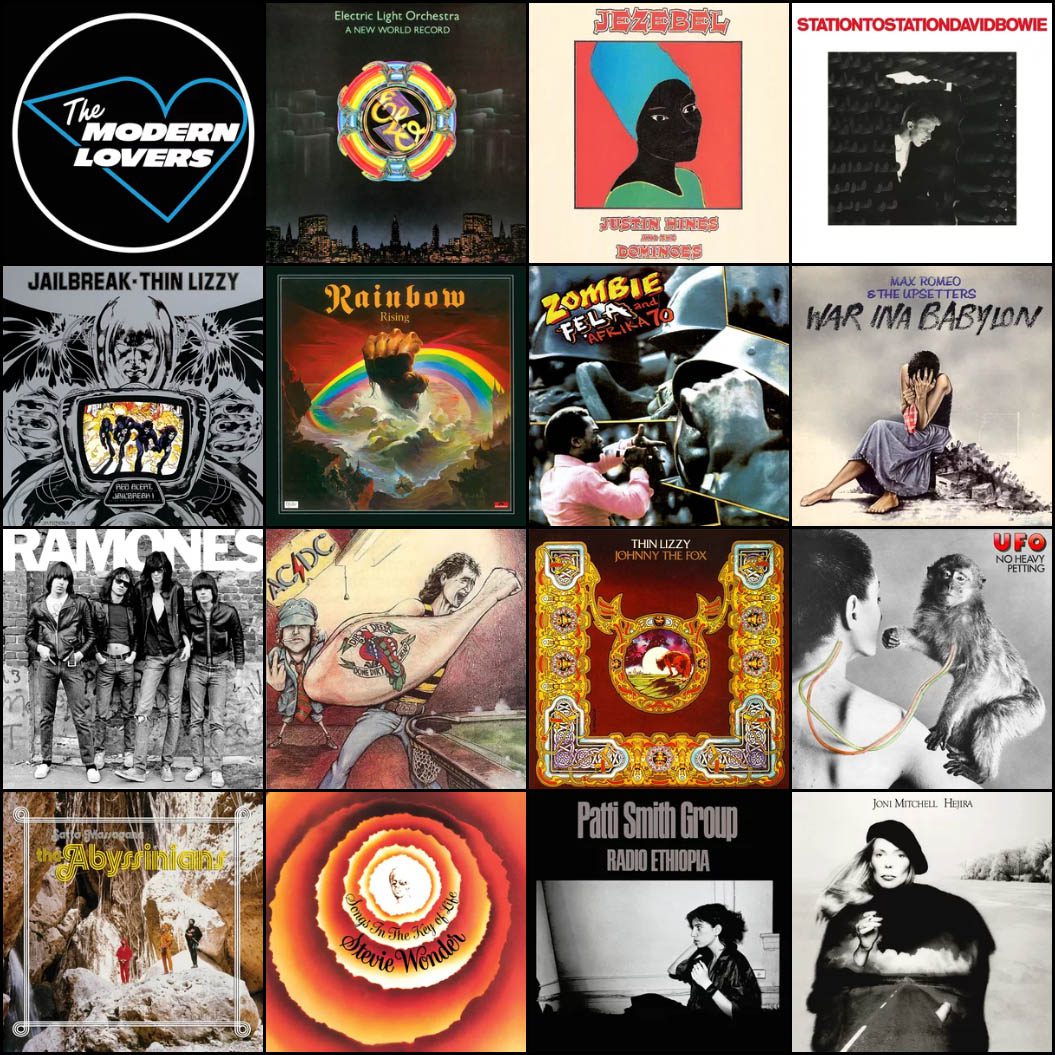
February 27, 2026
Fester’s Lucky 13: 1976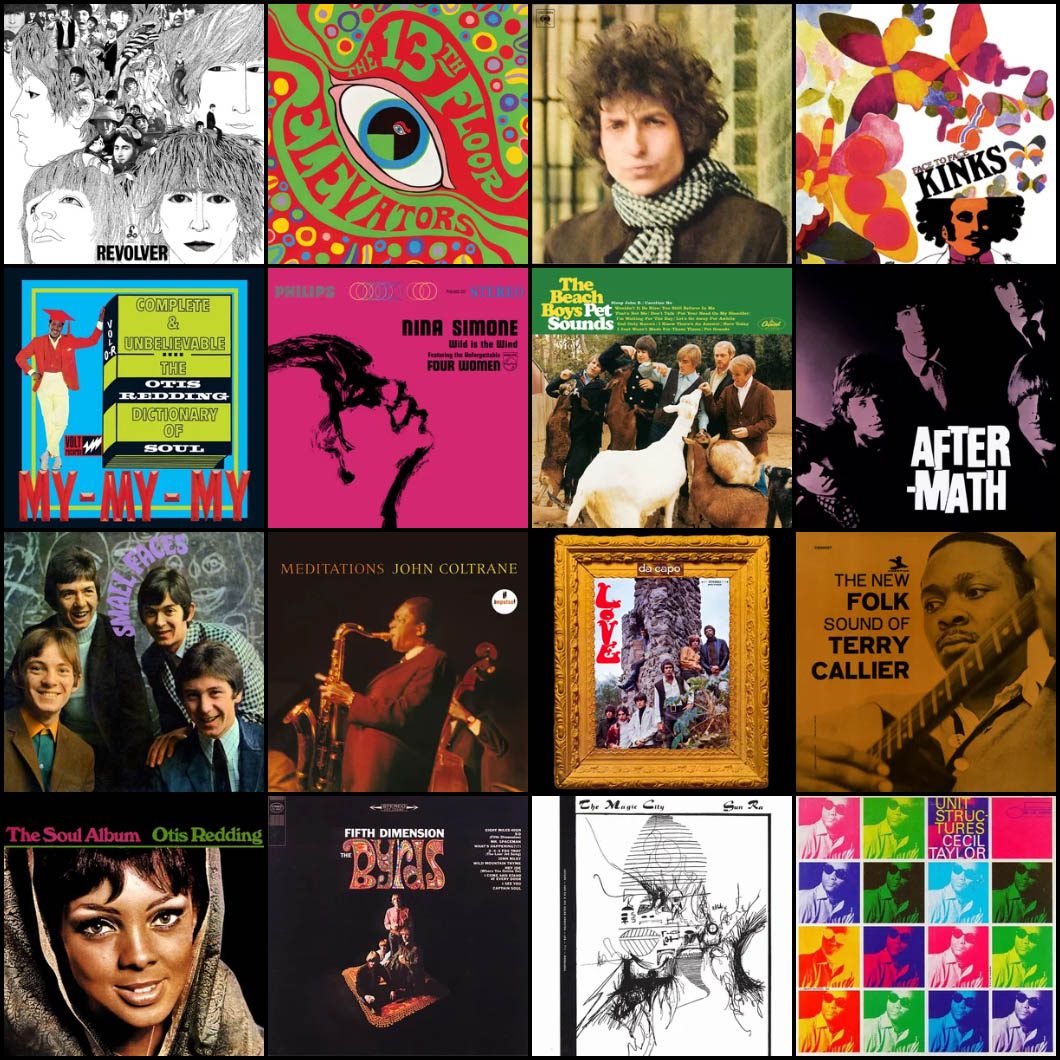
January 30, 2026
Fester’s Lucky 13: 1966