Favorite book #1. A WWII book disguised as SF, or vice-versa, or The Children’s Crusade, A Duty Dance With Death. “And so it goes…”

Published the year of my birth, 1969, I was assigned this by my favorite high school lit teacher, Mrs. Maddox at the perfect time, at the age of 14-15, coming off a several year binge of SF. My sense of humor was greatly influenced by Douglas Adams’ Hitchhiker’s Guide, which itself was influenced by Kurt Vonnegut. The quotes “Everything was beautiful and nothing hurt.” and “And so it goes..” had already become part of the public consciousness.
I don’t like war novels, and yet it’s a testament to Vonnegut’s genius that my all-time favorite is a war novel. It’s a very personal story, with all the details from the war coming from his direct experience as a POW in Dresden, Germany, who survives the horrific bombings. The bombing of Dresden was highly controversial due to the sheer number of civilian casualties, the city’s lack of significant military importance, and the timing of the attack near the end of WW II in 1945. Many regarded it as an unnecessary act of terror bombing, and with up to 50,000 civilian deaths (as many as Berlin experienced through the entire war), with many condemning it as a war crime. That’s open to debate of course, but it certainly compromises the simplistic notion of the Allies as always being the good guys, given it was more an act of retribution and a demonstration of force for the Soviet Union. That experience and the aftermath of having to collect bodies haunted Vonnegut the rest of his life, and he struggled to document the experience in a book for the next 24 years, finally nailing it on his sixth and greatest novel.
The first chapter, Vonnegut introduces the book in his own voice, starting with, “All this happened, more or less. The war parts anyway, are pretty much true.” At the end of the introduction he says:
“I have told my sons that they are not under any circumstances to take part in massacres, and that the news of massacres of enemies is not to fill them with satisfaction or glee… I have also told them not to work for companies which make massacre machinery, and to express contempt for people who think we need machinery like that.”
With the use of SF elements, where Billy Pilgrim becoming unstuck in time so that he experiences all the stages of his life — the war, abduction by aliens and being displayed in a zoo in Tralfamadore, his career as a dentist, marriage and kids, and ultimately his murde simultaneously. Every page is infused with brilliant humor. By looking at humans through the beady green eyes of Tralfamadorians, stripped of all pretentions our monumental crimes, grief and inevitable fate, the result is not cynical. It uses humor to alleviate and prevent more human suffering in the face of inevitability with awe and clarity. Billy Pilgrim is my Job, a big influence on developing my own morals and anti-violence beliefs as a teenager.
Here is an example of his wisdom and social commentary that has stuck with me for decades:
“America is the wealthiest nation on Earth, but its people are mainly poor, and poor Americans are urged to hate themselves. To quote the American humorist Kin Hubbard, ‘It ain’t no disgrace to be poor, but it might as well be.’ It is in fact a crime for an American to be poor, even though America is a nation of poor. Every other nation has folk traditions of men who were poor but extremely wise and virtuous, and therefore more estimable than anyone with power and gold. No such tales are told by the American poor. They mock themselves and glorify their betters. The meanest eating or drinking establishment, owned by a man who is himself poor, is very likely to have a sign on its wall asking this cruel question: ‘if you’re so smart, why ain’t you rich?’ There will also be an American flag no larger than a child’s hand – glued to a lollipop stick and flying from the cash register.”
What the heck, is my number one favorite damn book of all freakin’ time, here’s another quote.
Americans, like human beings everywhere, believe many things that are obviously untrue. Their most destructive untruth is that it is very easy for any American to make money. They will not acknowledge how in fact hard money is to come by, and, therefore, those who have no money blame and blame and blame themselves. This inward blame has been a treasure for the rich and powerful, who have had to do less for their poor, publicly and privately, than any other ruling class since, say Napoleonic times. Many novelties have come from America. The most startling of these, a thing without precedent, is a mass of undignified poor. They do not love one another because they do not love themselves.”
I hadn’t been much for re-reading books, but I did give this a second read a few decades after I first read it, and it’s better than ever. I’m gradually working through all of Vonnegut’s books, and while Cat’s Cradle (1963), The Sirens of Titan (1959) and Mother Night (1961) are all high up in my list, I don’t think there’s any danger of Slaughterhouse-Five being knocked off it’s perch. I saw him speak in St. Paul around 1990 and some earnest student asked him that cliche’d question, “What advice do you have for aspiring writers?” “Don’t fucking do it,” he replied. Love that guy!
1. Kurt Vonnegut – Slaughterhouse-Five (1969)
2. Neal Stephenson – The Diamond Age (1995)
3. Douglas Adams – The Hitchhiker’s Guide to the Galaxy (1978)
4. Neal Stephenson – Snow Crash (1992)
5. William Gibson – Neuromancer (1984)
6. Neil Gaiman & Terry Pratchett – Good Omens (1990)
7. John Kennedy Toole – A Confederacy of Dunces (1980)
8. Philip K. Dick – Do Androids Dream of Electric Sheep? (1968)
9. J.G. Ballard – Crash (1973)
10. Haruki Murakami – The Wind-Up Bird Chronicle (1994)
11. Ursula K. Le Guin – The Left Hand of Darkness (1969)
12. Rudy Rucker – Wetware (1988)
13. Philip K. Dick – A Scanner Darkly (1977)
14. George Orwell – Nineteen Eighty-Four (1949)
15. Christopher Moore – A Dirty Job (2006)
16. Johannes Johns – The Redwood Revenger (2021)
17. Neil Gaiman – Neverwhere (1996)
18. Haruki Murakami – Kafka on the Shore (2002)
19. Thomas Pynchon – Gravity’s Rainbow (1973)
20. Tom Robbins – Still Life With Woodpecker (1980) & Jitterbug Perfume (1984)
22. William S. Burroughs – Naked Lunch (1959)
23. Haruki Murakami – 1Q84 (2011)

April 2, 2026
Fester’s Lucky 13: 1986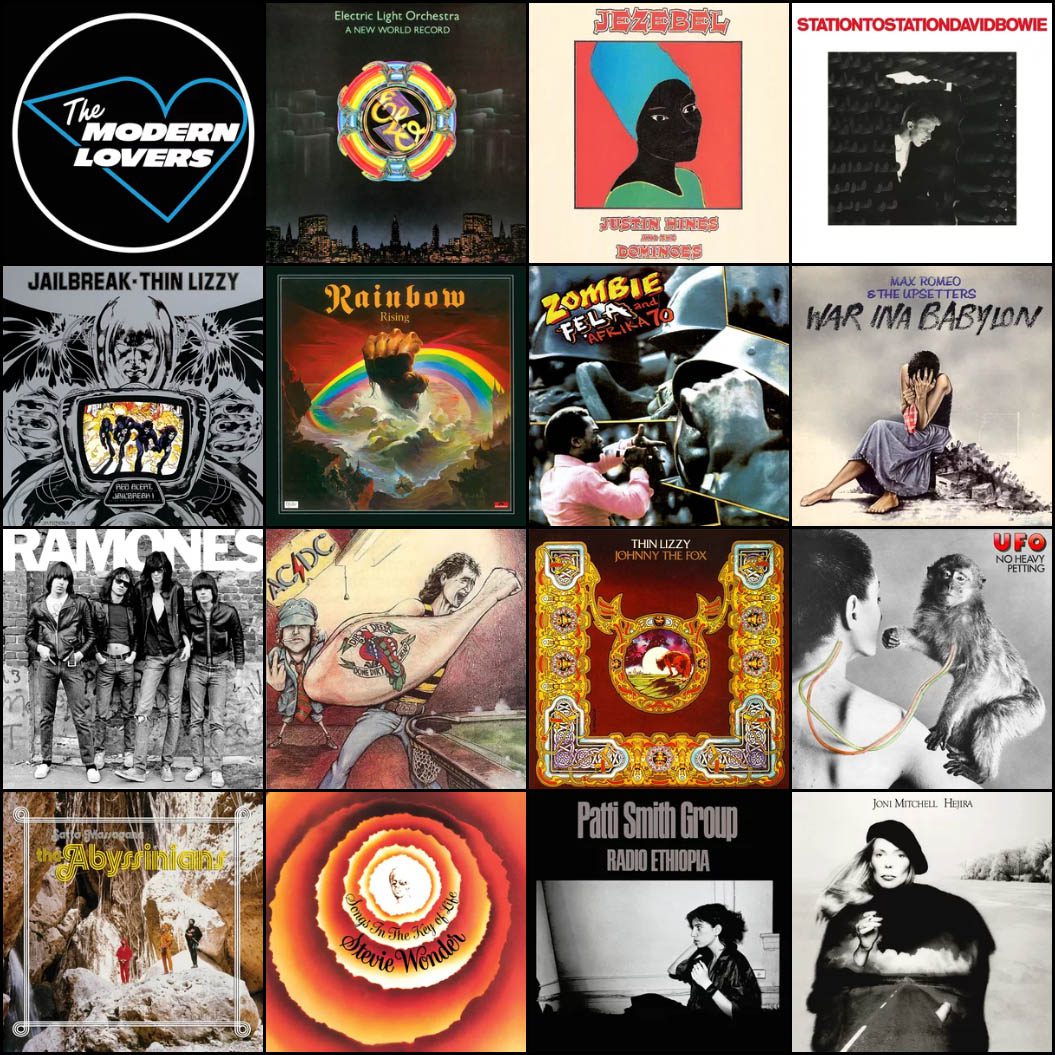
February 27, 2026
Fester’s Lucky 13: 1976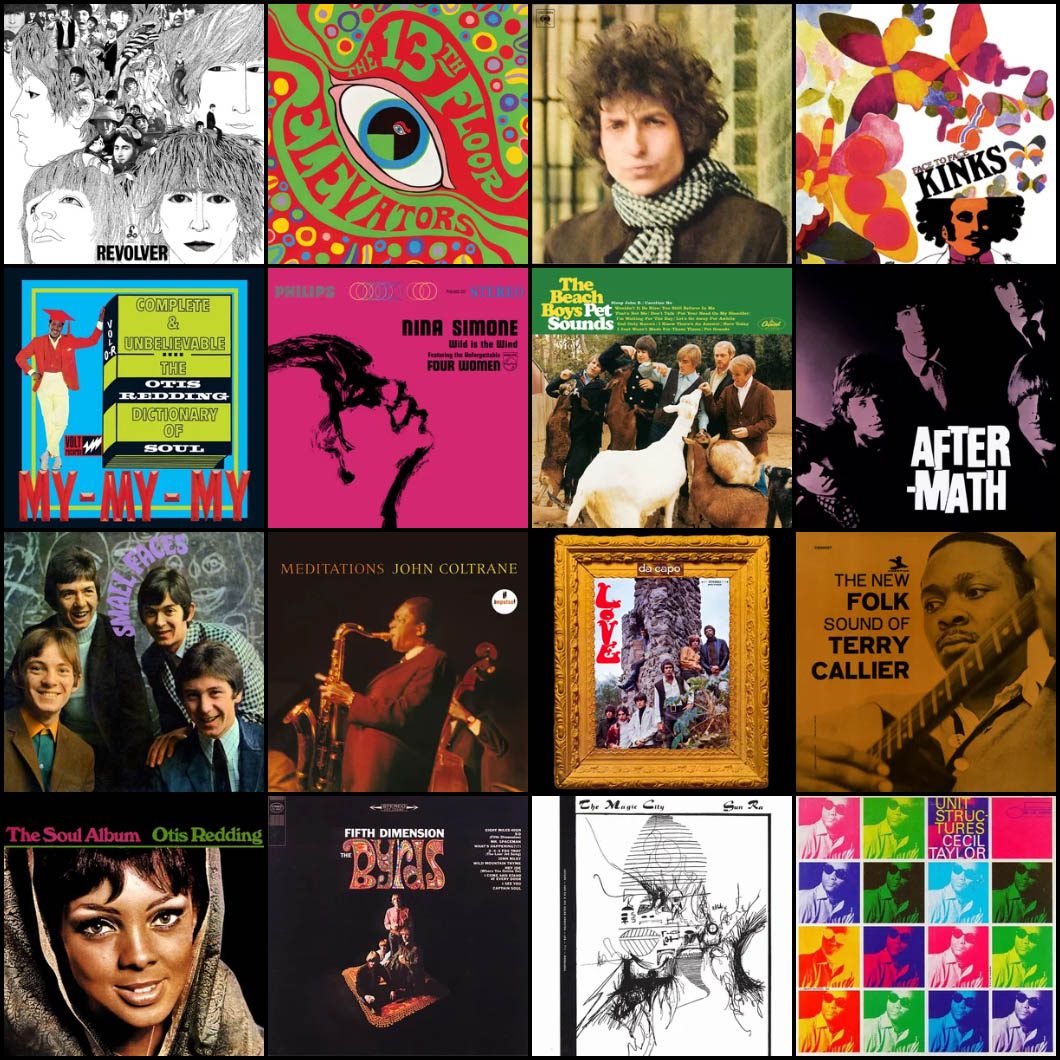
January 30, 2026
Fester’s Lucky 13: 1966