Alltime favorite books, tied at #20. “People are never perfect, but love can be.”

The princess and the outlaw, the environmentalist activist and the Woodpecker. It’s a postmodern fairy tale, and “a sort of a love story” between Leigh-Cheri and Bernard Mickey Wrangle, who’s meet-cute begins in Hawaii where she’s exiled, and begins with intense dislike and clashing politics, but soon ignites into something more. But one political bombing too many winds up with Bernard in prison, and Leigh-Cheri engaged to an Arab prince, who builds a pyramid for her. Eventually both she and Bernard are trapped in it the night before the wedding by the jealous prince and left to die. While subsisting on cake and champagne, the couple engage in philosophical discussion about love, redheads, the moon and pyramids. It’s an uplifting book about how opposites can not only attract, but build a love that lasts.
Tied for my favorite Tom Robbins novel is his next book, Jitterbug Perfume (1984), also a unique postmodern love story, this one is more expansive in scope, with two storylines from differerent timelines. In ancient Bohemia, King Alobar is due to be killed, as all monarchs are when they start to get old. He escapes, and travels for centuries, eventually meeting a widowed perfumer Kudra in India, who herself escaped the ritual of suttee, burning the widow with her dead husband on a funeral pyre. They fall in with a Bandaloop community, who practice “Erleichda” (lighten up, embrace absurdity) that leads to virtual immortality, though their resident deity Pan is fading, as humanity’s attentions shift from nature to rational logic as the Enlightenment approaches.
In modern day Seattle and Paris, two competing perfumers, traditionalist Marcel LeFever and the amateur Priscilla seek to make the perfect scent. Eventually they cross paths with Alobar and Kudra in Mardi Gras in New Orleans, as they find the essential ingrediant to the perfume.
Lurking within the folds of humor are some valuable life lessons that truly influenced my life when I first read them in my 20s. In my 50s, it’s definitely time for a re-read, not to remind me of the philosophical points as much as they’re just so god damned delightful. Though it’s always a good reminder to eat your beets (“Breathe properly. Stay curious. And eat your beets.”).
“The beet is the most intense of vegetables. The radish, admittedly, is more feverish, but the fire of the radish is a cold fire, the fire of discontent not of passion. Tomatoes are lusty enough, yet there runs through tomatoes an undercurrent of frivolity. Beets are deadly serious.
Slavic peoples get their physical characteristics from potatoes, their smoldering inquietude from radishes, their seriousness from beets.
The beet is the melancholy vegetable, the one most willing to suffer. You can’t squeeze blood out of a turnip…
The beet is the murderer returned to the scene of the crime. The beet is what happens when the cherry finishes with the carrot. The beet is the ancient ancestor of the autumn moon, bearded, buried, all but fossilized; the dark green sails of the grounded moon-boat stitched with veins of primordial plasma; the kite string that once connected the moon to the Earth now a muddy whisker drilling desperately for rubies.
“The beet is the most intense of vegetables. The radish, admittedly, is more feverish, but the fire of the radish is a cold fire, the fire of discontent not of passion. Tomatoes are lusty enough, yet there runs through tomatoes an undercurrent of frivolity. Beets are deadly serious.
Slavic peoples get their physical characteristics from potatoes, their smoldering inquietude from radishes, their seriousness from beets.
The beet is the melancholy vegetable, the one most willing to suffer. You can’t squeeze blood out of a turnip…
The beet is the murderer returned to the scene of the crime. The beet is what happens when the cherry finishes with the carrot. The beet is the ancient ancestor of the autumn moon, bearded, buried, all but fossilized; the dark green sails of the grounded moon-boat stitched with veins of primordial plasma; the kite string that once connected the moon to the Earth now a muddy whisker drilling desperately for rubies.”
Also, I was gutted when the world lost Robbins in February. Yes, he was 92, but he always looked far younger and seemed like he’d live forever. When he published his autobiography, Tibetan Peach Pie (2014), I took it for granted that he would write more novels. We’re left with his body of work of eight novels, five of which are perfect tens, Wild Ducks Flying Backward (2005) short story collection, and the kiddie book B is for Beer (2009). Critics started dismissing Robbins as frivolous, but I’m confident critical consensus will eventually circle back around and place him alongside greats such as Vonnegut and Pynchon.
1. Kurt Vonnegut – Slaughterhouse-Five (1969)
2. Neal Stephenson – The Diamond Age (1995)
3. Douglas Adams – The Hitchhiker’s Guide to the Galaxy (1978)
4. Neal Stephenson – Snow Crash (1992)
5. William Gibson – Neuromancer (1984)
6. Neil Gaiman & Terry Pratchett – Good Omens (1990)
7. John Kennedy Toole – A Confederacy of Dunces (1980)
8. Philip K. Dick – Do Androids Dream of Electric Sheep? (1968)
9. J.G. Ballard – Crash (1973)
10. Haruki Murakami – The Wind-Up Bird Chronicle (1994)
11. Ursula K. Le Guin – The Left Hand of Darkness (1969)
12. Rudy Rucker – Wetware (1988)
13. Philip K. Dick – A Scanner Darkly (1977)
14. George Orwell – Nineteen Eighty-Four (1949)
15. Christopher Moore – A Dirty Job (2006)
16. Johannes Johns – The Redwood Revenger (2021)
17. Neil Gaiman – Neverwhere (1996)
18. Haruki Murakami – Kafka on the Shore (2002)
19. Thomas Pynchon – Gravity’s Rainbow (1973)
20. Tom Robbins – Still Life With Woodpecker (1980) & Jitterbug Perfume (1984)
22. William S. Burroughs – Naked Lunch (1959)
23. Haruki Murakami – 1Q84 (2011)

April 2, 2026
Fester’s Lucky 13: 1986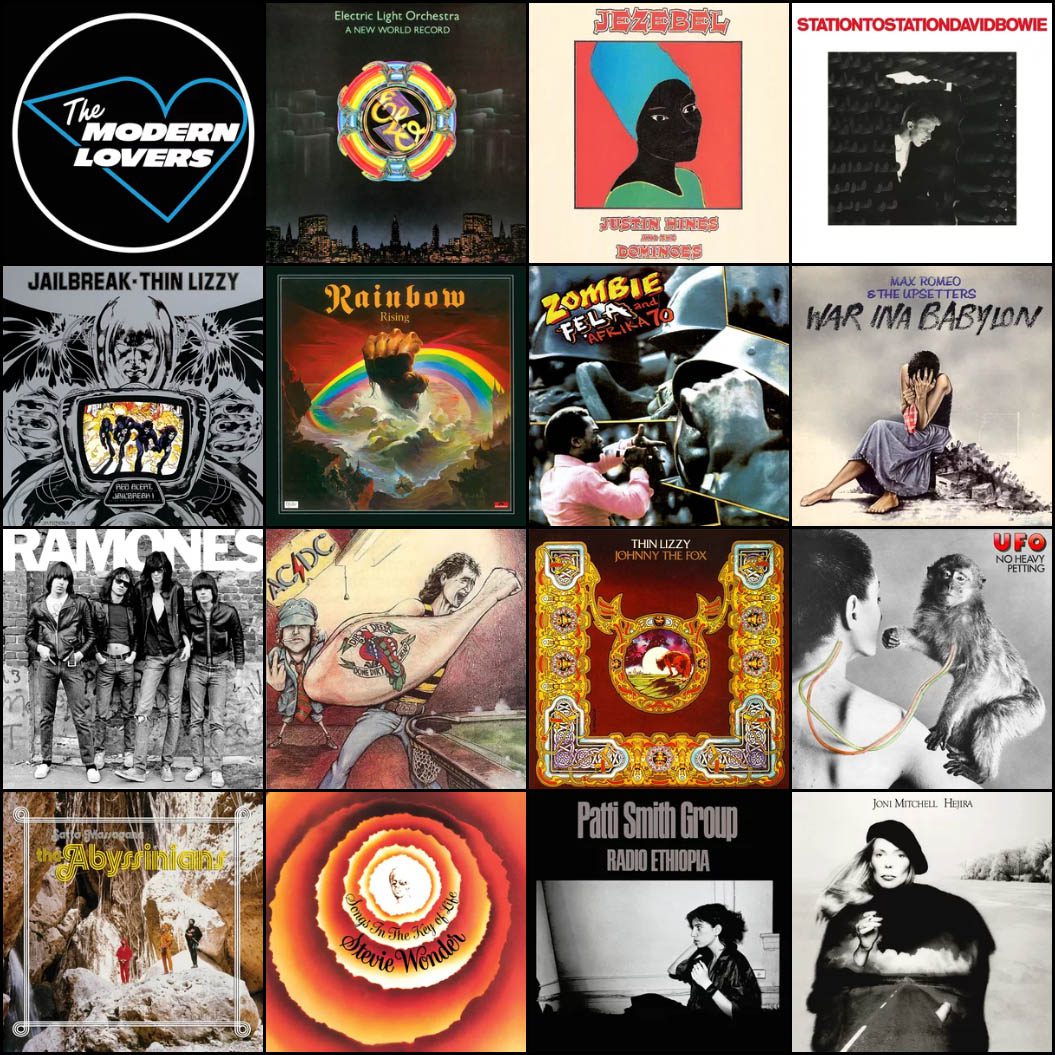
February 27, 2026
Fester’s Lucky 13: 1976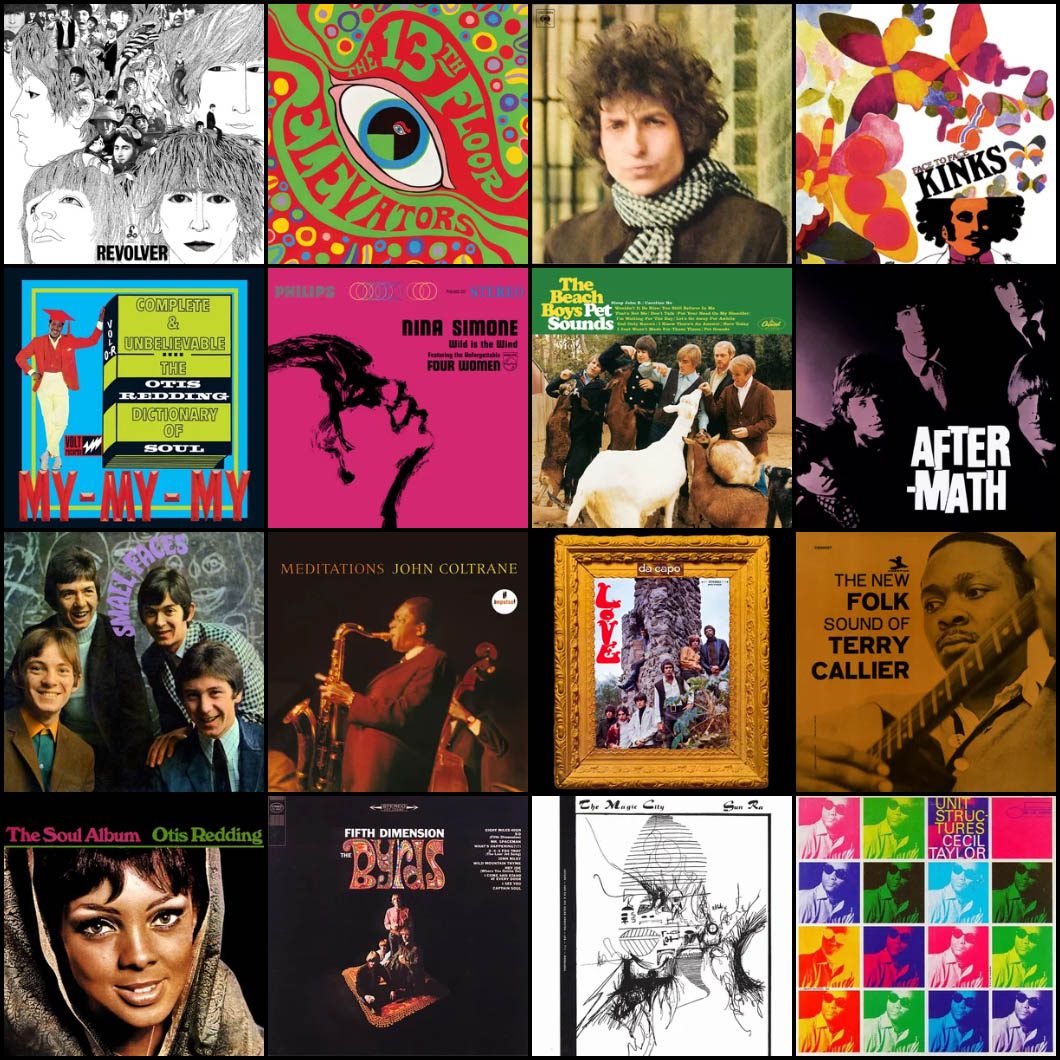
January 30, 2026
Fester’s Lucky 13: 1966